TL;DR
- Refinishing a butcher block countertop means sanding back to bare wood (start at 60-80 grit, finish at 150-220), then applying oil, varnish, or stain.
- The job takes one to three days depending on finish and drying time.
- Materials run $30-$120 for a typical kitchen section.
- A good refinish lasts 5-10 years before it needs stripping again.
What does refinishing butcher block countertops actually involve?
Refinishing means removing the old finish and surface damage down to clean wood, then applying a new protective coating. It is not cleaning, oiling, or spot-treating a stain. You're starting over.
Most butcher block countertops are end-grain or edge-grain maple, walnut, or teak. The species matters for finish absorption and how hard you can push a sander. Maple is dense and takes fine sanding well. Walnut runs softer in some grades and more porous. Teak carries natural oils that can repel water-based finishes unless you wipe the surface with mineral spirits before coating [1].
The work breaks into four stages: assess the damage, sand up through the grits, apply the finish in several coats, and cure before the counter goes back into service. Skipping the cure time is the single most common reason a refinished counter fails fast.
Before you touch a sander, decide whether the counter is a food-contact surface or a decorative one. That call controls everything: which finish you can safely use, how you sand, and how much maintenance you sign up for. The FDA regulates food-contact surfaces under 21 CFR Part 175 [2], and finishes marketed as food-safe cure to an inert state. Most consumer polyurethanes and penetrating oils clear that bar once fully cured, but confirm it against the product's safety data sheet.
When should you refinish instead of just cleaning or oiling?
Oiling is maintenance. Refinishing is repair. The line between them is clearer than most people think.
Oil your countertop when it looks dull or dry, when water stops beading, or when the wood feels rough after normal use. A monthly or quarterly wipe with food-grade mineral oil (a few dollars a quart at any pharmacy) usually brings it back in 20 minutes.
Refinish when you see deep scratches that catch a fingernail, raised grain that won't sand out at 220 alone, black mold rings that reach below the surface, or old varnish that is peeling, clouding, or flaking. The mold staining is the one that surprises people. A bleach wipe won't reach the fungal hyphae that have wicked into the fibers. Only sanding below the stain line removes it for good.
Stains sit on a spectrum. Water rings are almost always surface-level and lift out at 150-220 grit. Dark heat marks from hot pans sometimes go deeper and want a start at 80 grit. Rancid oil stains penetrate the grain and need sanding plus a mineral-spirits pass before you refinish.
For how these surfaces stack up against stone, the butcher block countertops overview covers the durability differences in detail.
What grit sandpaper do you need for refinishing butcher block?
The grit sequence is the backbone of a good refinish. Skip a step and you leave scratches the finish can't hide.
For a counter with intact but worn oil or wax, start at 100 and finish at 150 or 220. For peeling varnish or polyurethane, start at 60 or 80 to cut through the film, then move through 100, 150, and finish at 180-220. Going straight to 220 on top of peeling poly wastes your afternoon. The paper loads up with finish chips before it does any real cutting.
Sand with the grain on flat-grain or edge-grain surfaces. End-grain is forgiving because the fibers run every direction, but you still finish with one hand-block pass in the dominant grain direction to kill swirl marks from a random-orbit sander.
Here's how the tools compare:
| Tool | Best for | Typical rental cost |
|---|---|---|
| Random-orbit sander (5") | General refinishing, most kitchens | $20-$40/day |
| Belt sander | Heavy stock removal, thick old finish | $25-$45/day |
| Hand sanding block | Final pass, edges, corners | No rental needed |
| Cabinet scraper | Tight spots near sink lip | No rental needed |
Dust collection matters more here than on stone work because fine wood dust is genuinely dangerous. NIOSH classifies hardwood dust as a potential occupational carcinogen and recommends holding exposure at or below 1 mg/m³ [3]. A sander with a bag or a shop-vac hookup is not optional.
After the final pass, wipe the counter with a tack cloth or dry microfiber to pull every speck of dust before you crack a single can of finish.
Oil, varnish, or stain: which finish is right for your countertop?
This is the decision that shapes the rest: how the counter looks, how it performs, and how much maintenance you'll do for the next decade.
Penetrating oil finishes (food-grade mineral oil, pure tung oil, Danish oil, or blends like Waterlox Original) soak into the wood instead of sitting on top. They bring out the grain without a surface film. They wear gracefully too. You clean and re-oil, and the fix is invisible. The tradeoff is the least water and stain resistance of any option, plus more frequent maintenance, roughly every 1 to 6 months depending on how hard you use the counter.
Food-grade mineral oil is the cheapest and safest pick for active food prep. It never cures to a hard film, so it can't crack or peel, but it also won't stop a water glass from leaving a ring. A quart runs about $8-$12 at a pharmacy and goes a long way.
Pure tung oil (not "tung oil finish," which is usually cut with mineral spirits and varnish) cures harder and more water-resistant than mineral oil. It's slow, often 5-7 days for a proper cure. Real 100% tung oil is hard to source. Most hardware-store products wearing the name are blends [4].
Film-forming finishes (polyurethane, conversion varnish, water-based lacquer) sit on the surface as a hard layer. They beat oils on stain and water resistance by a wide margin. The cost is the look (they can read plasticky) and the repair path. When they fail, they fail in patches, and you usually strip the whole surface instead of spot-fixing.
For counters that see heavy use but aren't food prep, a satin or matte water-based polyurethane is a smart choice. It dries faster than oil-based (2-4 hours between coats versus 8-24), carries lower VOCs, and cleans up with water. Oil-based poly is harder and more amber, which some people like on walnut.
Staining butcher block countertops is a separate step between sanding and topcoat. Stain changes color and provides zero protection on its own. Want gray, dark walnut, or near-black? Apply stain, let it dry fully (usually 24 hours), then topcoat over it. Gel stains work well on end-grain because they don't drink in unevenly the way liquid stains do.
Water-based stains raise the grain a little, so many refinishers do a grain-raise step first: wet the sanded surface with water, let it dry, sand lightly at 220, then stain. That keeps the surface from turning rough mid-application.
One hard truth: a dark stain on butcher block is very difficult to reverse. Sanding back is the only way out. If the color is a maybe, test it on the underside or a hidden corner first.
How do you remove old stains from butcher block before refinishing?
Old stains fall into two buckets: surface stains that sand right out, and deep stains that need aggressive sanding or a chemical treatment before you sand.
Light water rings and food stains usually vanish within a few passes starting at 150 grit. Dark black mold rings, the kind from a wet sponge left overnight, may drive you down to 80. If a stain hangs on below 80, brush on a mild oxalic acid solution (sold as "wood bleach" at hardware stores) before your first sanding pass. Oxalic acid reacts with the iron-tannin compounds behind dark staining in maple and other light woods and lightens the area a lot [11]. Rinse well with water, let it dry, then sand.
Chlorine bleach shows up in a lot of online advice, but it raises and damages wood fibers and leaves chlorine residue that fights finish adhesion. Oxalic acid is the better tool for wood. Never mix the two.
Heat stains from hot pans are stubborn. They often involve real pyrolysis of the surface fibers, more than discoloration. The cells are physically changed, so sanding is the only fix. If the mark runs deeper than 1/16 inch, you may sand through the counter's structural glue joints before it clears, which is a sign the section needs replacement, not a refinish.
For shops handling customer counters, tracking job-specific material costs and finish types is far easier with dedicated software. SlabWise (slabwise.com) runs job costing and material tracking for stone, and the same quoting logic maps onto wood counters if your shop does both.
How long does refinishing butcher block countertops take?
The sanding runs 1-3 hours for an average kitchen run, say 25-30 square feet. The finish schedule is what stretches the job across days.
| Finish type | Coats needed | Time between coats | Full cure before use |
|---|---|---|---|
| Food-grade mineral oil | 3-5 | 20-30 min | 24 hours |
| Pure tung oil | 2-3 | 24-48 hours | 5-7 days |
| Water-based polyurethane | 3-4 | 2-4 hours | 72 hours |
| Oil-based polyurethane | 2-3 | 8-24 hours | 7 days |
| Waterlox Original (tung-based varnish) | 3-4 | 4-6 hours | 5-7 days [5] |
Full cure is the number most people ignore. A surface can feel dry to the touch in hours and stay chemically soft for days. Set a heavy cutting board or a pot on an oil-based poly at 24 hours and you'll press a permanent dent into it. Waterlox's technical data sheet states that "full cure takes approximately 30 days" for maximum hardness, though the surface handles light use after 5-7 days [5].
Plan to lose the counter for at least two days with mineral oil, and up to a week or more with film finishes. Most homeowners do this over a long weekend and move the kitchen to a folding table in the next room.
What does refinishing butcher block cost in materials?
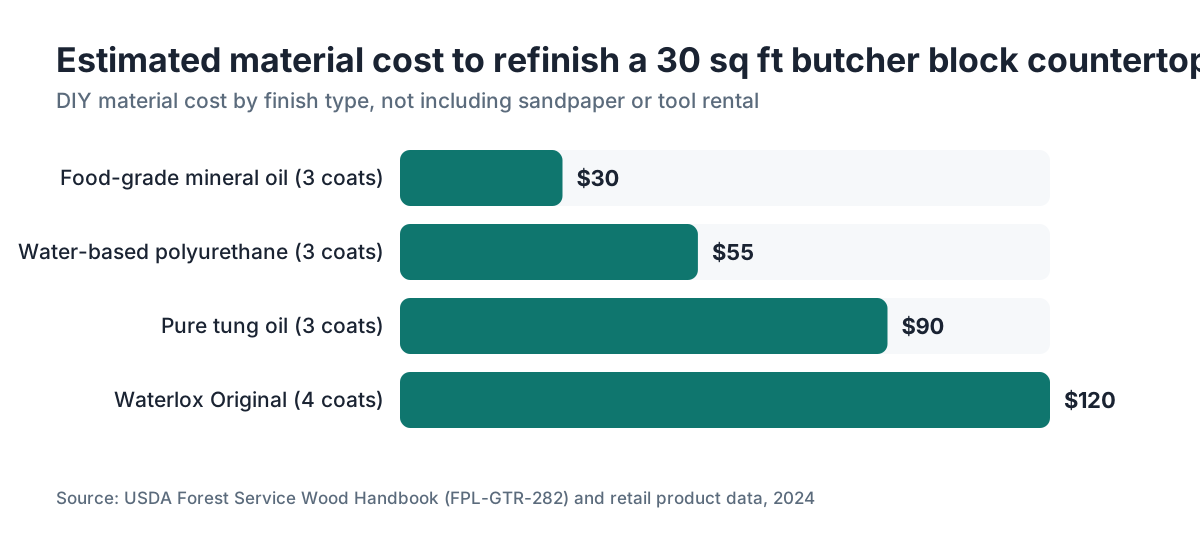
Materials are cheap next to replacement. A typical 30-square-foot kitchen counter costs $30-$120 in materials, depending on the finish.
| Material | Approximate cost | Coverage |
|---|---|---|
| Food-grade mineral oil (1 qt) | $8-$12 | 30-40 sq ft per coat |
| Pure tung oil (1 qt) | $25-$40 | 25-35 sq ft per coat |
| Waterlox Original (1 qt) | $35-$50 | 100-125 sq ft per coat |
| Water-based polyurethane (1 qt) | $20-$35 | 100-125 sq ft per coat |
| Sandpaper assortment (60-220) | $15-$30 | One project |
| Oxalic acid wood bleach | $10-$15 | As needed |
| Tack cloths (pack) | $5-$8 | One project |
Renting a random-orbit sander adds $20-$40 a day. A pro who sands and recoats in place typically charges $8-$15 per square foot in labor, so that same 30-square-foot counter lands around $240-$450 installed. Still well under a new butcher block counter. The USDA Forest Service notes hardwood panels run $40-$200 per square foot depending on species and thickness [6].
For comparison, a new kitchen countertops install in granite or quartz runs $60-$150 per square foot installed, which makes refinishing butcher block look very attractive on cost alone.
Can you stain butcher block countertops a different color during refinishing?
Yes, and it works well as long as you respect the limits.
You can go darker. Natural maple to a medium walnut or a dark ebony is straightforward with wood-compatible stains. Going lighter from a dark stain is brutal. It takes aggressive sanding (which eats material) or a two-part wood bleach (oxalic acid, then sodium hypochlorite), which can wreck the wood if you botch the sequence.
The most reliable products for staining butcher block:
- Gel stain (oil-based): Great on end-grain because it doesn't absorb unevenly. Goes on like paint, wiped off after 5-10 minutes. General Finishes and Minwax both make widely available versions.
- Oil-based penetrating stain: Faster and easier on flat-grain surfaces. Can blotch on soft-grain sections of maple. A pre-stain wood conditioner cuts the blotching a lot.
- Water-based stain: Dries fastest, raises the grain slightly (do the grain-raise step above), and cleans up easy.
Once the stain is fully dry (24 hours minimum for oil-based, 4-6 hours for water-based), apply your topcoat as normal. The stain layer does not replace the protective topcoat.
The gray or "driftwood" look has held on for several years. It usually means a diluted gray or white gel stain, sometimes a whitewash where thinned white paint gets wiped on and off. The result is striking but fragile without a good topcoat, especially on a working kitchen counter.
Comparing these looks to stone? Marble countertops and granite countertops carry their own maintenance profiles that suit some households better.
How do you prep the kitchen and protect cabinets during refinishing?
Sanding in place throws off staggering amounts of fine dust. It gets everywhere.
Clear the counter and the cabinets below. Tape off cabinet fronts with painter's tape and plastic sheeting. Close the HVAC vents in the kitchen so dust doesn't recirculate through the house. Open-concept kitchen? Hang plastic sheeting across the doorways.
Disconnect the sink before sanding. You don't have to pull it, but the basin needs to be dry and the stainless or composite needs protection from scratches. Tape cardboard over the sink opening.
Sanding within 6 inches of the wall means hand sanding, because a random-orbit sander won't fit. Use a block at the same grit you're running on the main field so the finish level matches.
For application, natural bristle brushes go with oil-based products, synthetic (nylon/polyester) with water-based. Foam rollers lay a thin, even coat on flat surfaces but they can leave small bubbles with some products, so test first.
Ventilation during application is not optional. Even water-based poly releases VOCs while it applies and cures. Open windows and run a box fan in exhaust mode. With oil finishes, watch the rags. Linseed and tung oil-soaked rags can self-ignite through spontaneous combustion as the oil cures and gives off heat [7]. Spread them flat outside to dry, or drop them in water in a metal can before disposal. The CPSC recommends airtight metal containers or water submersion for exactly this reason [10]. It sounds like boilerplate until you read an actual fire report.
How do you maintain a refinished butcher block countertop?
Maintenance rides entirely on the finish you chose.
Oiled surfaces: re-oil when the wood looks dry or water stops beading. For most households that's every 1-3 months on a food-prep surface and every 6 months on a mostly decorative one. Apply oil, let it soak 20-30 minutes, wipe the excess. That's the whole ritual.
Polyurethane or varnish: clean with mild soap and water, never ammonia cleaners or bleach, both of which cloud and break down the film. Re-coat when you see scratches or dull spots. You usually don't sand to bare wood. A light scuff at 220 and a fresh topcoat bonds fine if the existing finish is otherwise sound. That's a refresh coat, and it stretches the life of a varnished counter by years.
Standing water is the enemy of every butcher block in a kitchen. Dry spills within a few minutes. Put a mat or trivet under the dish rack. The sink edge is the highest-wear zone on any counter and needs more attention than the rest of the field.
The EPA's Safer Choice program keeps a database of finishes and cleaners with lower hazard profiles, handy when you're picking maintenance products for a house with kids or a food-prep surface [8].
For care on other natural surfaces, how to clean soapstone countertops and how to clean stone countertops cover the same principles.
How many times can you refinish a butcher block countertop before it wears out?
Butcher block has a finite amount of material to give. Standard residential panels are typically 1.5 inches thick. Each refinish takes a little: a light pass removes maybe 1/64 to 1/32 inch, an aggressive one with heavy stain removal 1/16 inch or more.
In practice, a quality counter refinishes 5-10 times before material loss becomes a structural or looks problem. The edges and the sink cutout thin out before the field does. If the glue joints on an end-grain counter start darkening unevenly, or the panel reads noticeably thinner than the cabinet edge, it's time to weigh a replacement section.
Commercial butcher block in restaurants gets refinished harder and more often. The National Sanitation Foundation sets standards for food-contact wood under NSF/ANSI 2, which specifies minimum thickness and surface finish criteria for commercial equipment [9]. Residential use is lightly regulated, but the principle carries: keep the surface smooth, sealed, and above minimum thickness.
Most homeowners will never sand a butcher block to death. The more likely failure is water damage at the sink edge delaminating the glue joints, and that calls for a section replacement, not a refinish.
Should you refinish butcher block yourself or hire a professional?
Most homeowners can do this. The tools are everywhere, the materials are cheap, and the technique forgives mistakes. Sanded unevenly? Sand more. Applied too much oil? Wipe it off.
Hire a pro if the counter has severe water damage in the glue joints, if you want a conversion varnish or catalyzed finish (those need spray gear and real respiratory protection), if the undermount sink makes the job a nightmare to work around, or if you simply can't lose the kitchen for a week.
For shops that offer wood counter services, tracking refinishing jobs next to stone work in one quoting flow saves real time. SlabWise's quoting tools (slabwise.com/demo) handle the material and labor cost structures that map onto these service jobs.
On an oil finish, professional results aren't dramatically better than careful DIY. Where a pro genuinely wins is film finishes like conversion varnish, which need spray application for a bubble-free coat and multiple passes in a controlled space. A brush-applied water-based poly from a patient amateur is hard to tell from pro work at normal viewing distance.
Deciding between refinish and replace? Stack the full cost of replacement (details at countertop installation) against $30-$120 in refinish materials and the answer usually writes itself.
Frequently asked questions
Can you use regular wood stain on butcher block countertops?
Yes, standard oil-based or water-based wood stains work on butcher block. The key is a food-safe topcoat over the stain once it fully dries, usually 24 hours for oil-based products. The stain itself provides no protection. On end-grain sections, use gel stain to prevent uneven absorption. Pre-stain conditioner reduces blotching on maple and other tight-grained species.
How do you get black stains out of butcher block before refinishing?
Black stains are usually iron-tannin reactions from mold or long water contact. Start by sanding to 80 grit. If the stain holds, apply oxalic acid wood bleach (follow the package, rinse well, let dry), then keep sanding. Chlorine bleach is less effective and damages wood fibers. Deep stains that survive aggressive sanding may mean the affected section needs replacement.
What is the best oil for refinishing butcher block countertops?
Food-grade mineral oil is the safest and cheapest for active food-prep surfaces, roughly $8-$12 a quart at any pharmacy. Pure tung oil cures harder and more water-resistant but takes 5-7 days. Blends like Waterlox or Danish oil land in the middle. Avoid raw linseed oil on food surfaces. It can harbor bacteria and takes a very long time to cure.
How long after refinishing can you use the countertop?
Mineral oil, light use in 24 hours. Water-based polyurethane, 72 hours minimum. Oil-based polyurethane and pure tung oil, 7 days for normal use. Waterlox reaches usable hardness in 5-7 days but full cure takes about 30 days. Set heavy objects or cut directly on a film finish too early and you'll leave permanent impressions.
Can you put polyurethane on butcher block countertops used for food prep?
Once fully cured, standard polyurethane is considered food-safe. The FDA regulates food-contact surfaces under 21 CFR Part 175, and cured polyurethane meets those requirements. The key word is cured. The finish must be completely dry and hard, well past dry to the touch. Water-based poly at 72 hours and oil-based at 7 days are the typical minimums for food contact.
Do you have to sand all the way down to bare wood when refinishing?
For oiled surfaces, no. A light scuff at 150-220 grit and a fresh oil application often works if the wood is otherwise in good shape. For peeling or clouding varnish or polyurethane, yes. New finish won't bond to a compromised film, so you sand to bare wood. Spot-sanding over peeling poly just moves the problem around.
What grit should I start and finish with when sanding butcher block?
For a counter with intact but dull finish, start at 100 and finish at 150-220. For peeling varnish or polyurethane, start at 60-80, then progress through 100, 150, and finish at 180-220. Never skip more than one grit step or you'll leave scratches the finish can't fill. Always finish with a hand-block pass in the grain direction to remove swirl marks.
How often does butcher block need to be refinished?
For oiled surfaces, a full refinish (sanding to bare wood) runs every 5-10 years under normal use, with re-oiling every 1-6 months as routine maintenance. For varnish or polyurethane, a full strip-and-redo every 10-15 years is realistic, with refresh coats every 3-5 years. Heavy use near the sink shortens all of these noticeably.
Can you refinish butcher block without removing the sink?
You can sand and refinish around an undermount sink without pulling it, but it's awkward and you risk getting finish on the bowl or caulk line. At minimum, tape off the sink thoroughly and dry the basin completely. For an overmount sink, removal is easy and worth the 20 minutes. A clean finish edge at the cutout is much easier without the sink in the way.
What causes butcher block countertops to turn black near the sink?
The black near sinks is almost always mold or a mix of mold and an iron-tannin reaction. Standing water from dish draining, a leaky faucet, or a failed silicone seal lets moisture wick into the wood. The fungi produce dark pigments that reach into the grain. Surface cleaning won't fix it. Sanding below the stain line, sometimes with an oxalic acid treatment, is the only real solution.
Is it cheaper to refinish or replace butcher block countertops?
Refinishing is dramatically cheaper. DIY materials run $30-$120 for a typical kitchen counter. A pro refinishing in place runs roughly $8-$15 per square foot in labor. New butcher block panels average $40-$200 per square foot for material alone, plus installation. Even hiring a pro to refinish costs a fraction of replacement. The math only changes with structural damage from delaminated glue joints or severe water rot.
Can you stain butcher block a dark color and still use it for food prep?
Yes. Apply a wood stain (oil or water-based), let it cure fully, then apply a food-safe topcoat such as mineral oil, cured polyurethane, or tung oil over it. The topcoat seals the stain from food contact. Gel stains work especially well on end-grain sections. Just know that very dark stains are nearly impossible to reverse without aggressive sanding.
What's the difference between sealing and oiling butcher block?
Oiling uses a penetrating product like mineral oil or tung oil that soaks into the wood instead of forming a surface layer. It needs regular reapplication. Sealing uses a film-forming product like polyurethane or varnish that sits on top and makes a hard barrier. Sealed surfaces resist stains and water better but show wear differently and need stripping when they fail. Neither wins outright. It depends on how the counter gets used.
Sources
- USDA Forest Service, Wood Handbook: Wood as an Engineering Material (FPL-GTR-282), Chapter 16: Teak contains natural oils that can repel water-based finishes; surface preparation with mineral spirits is recommended before coating
- U.S. Food and Drug Administration, 21 CFR Part 175 - Indirect Food Additives: Adhesives and Components of Coatings: FDA regulates food-contact surface finishes under 21 CFR Part 175; cured coatings must be inert under intended conditions of use
- NIOSH, Hazard Review: Occupational Exposure to Wood Dust: NIOSH classifies hardwood dust as a potential occupational carcinogen and recommends exposure limits at or below 1 mg/m3 for hardwood dusts
- USDA Forest Service, Wood Handbook: Wood as an Engineering Material (FPL-GTR-282), Chapter 16: Most hardware store products labeled 'tung oil finish' are blends containing mineral spirits and varnish rather than pure tung oil
- Waterlox Coatings, Technical Data Sheet: Waterlox Original Sealer/Finish: Waterlox Original reaches full cure and maximum hardness at approximately 30 days; safe for light use after 5-7 days
- USDA Forest Service, Wood Handbook: Wood as an Engineering Material (FPL-GTR-282): Hardwood butcher block panels average $40-$200 per square foot depending on species and thickness
- NFPA (National Fire Protection Association), Fire Hazard of Finishing Materials: Rags soaked in linseed oil and tung oil can self-ignite through spontaneous combustion; proper disposal requires spreading flat to dry or submerging in water in a metal container
- U.S. Environmental Protection Agency, Safer Choice Program: EPA Safer Choice program maintains a database of finishes and cleaning products with lower hazard profiles, including products suitable for food-contact surfaces
- NSF International, NSF/ANSI 2: Food Equipment: NSF/ANSI 2 specifies minimum thickness requirements and surface finish criteria for food-contact wood surfaces in commercial equipment
- U.S. Consumer Product Safety Commission, Proper Disposal of Finishing Rags and Spontaneous Combustion Guidance: Spontaneous combustion of oil-soaked rags is a documented fire hazard; CPSC recommends specific disposal steps including airtight metal containers or water submersion
- USDA Forest Service Forest Products Laboratory, Finishing Wood Floors and Other Interior Surfaces: Oxalic acid (wood bleach) reacts with iron-tannin compounds causing dark staining in maple and other species, effectively lightening affected areas before sanding
Last updated 2026-07-09