TL;DR
- Quartz island countertops typically cost $50 to $150 per square foot installed, depending on color complexity, edge profile, and slab size.
- Most kitchen islands run 25 to 50 square feet.
- Quartz is non-porous, scratch-resistant, and needs no sealing, which makes it one of the most practical island surfaces you can buy.
What does a quartz island countertop actually cost?
The honest installed price range for quartz island countertops is $50 to $150 per square foot, including fabrication and installation but not removal of an old top. That range sounds wide because it is. A basic white or gray quartz from a domestic brand at a big-box store sits closer to $50 to $70 per square foot. A premium brand like Cambria or Silestone in a complex pattern with a waterfall edge can hit $130 to $150 per square foot without breaking a sweat.[1]
Material alone runs $25 to $75 per square foot for the slab. Fabrication (cutting, edging, polishing) adds $15 to $40 per square foot depending on complexity. Installation typically adds $10 to $20 per square foot. Delivery and template fees show up as line items, usually $150 to $400 total for a single island.
A standard kitchen island around 4 feet by 6 feet is 24 square feet. At mid-range pricing of $90 per square foot installed, that's $2,160. Add a waterfall edge on one side and you're adding roughly 8 to 12 square feet of vertical surface, which can push the job to $2,800 or more. These numbers are ballpark, not quotes. Prices swing hard by region, by fabricator overhead, and by whatever slab inventory sits on the racks that week.
The National Kitchen and Bath Association tracks kitchen remodel spending and consistently finds countertops absorbing 10 to 15 percent of a full kitchen remodel budget.[2] On a $40,000 remodel, that's $4,000 to $6,000 for all countertop surfaces, which gives you a realistic ceiling for what the market expects.
How big should a quartz island countertop be?
The minimum comfortable island size for a countertop overhang is 4 feet by 2 feet, but most working islands run 4 feet by 6 feet or larger. The National Kitchen and Bath Association recommends at least 42 inches of clearance between the island and surrounding cabinets for a one-cook kitchen, and 48 inches for two cooks.[2] That clearance rule limits how large the countertop can get more often than anything else does.
For seating, a standard 12-inch overhang holds bar stools at counter height (36 inches). If you're doing a raised eating bar, the overhang needs 15 to 18 inches and the surface height rises to 42 inches. Most fabricators will tell you a 12-inch unsupported overhang is fine for quartz. Anything beyond that needs corbels, brackets, or a steel support plate underneath, because quartz is strong in compression but brittle under an unsupported cantilever load.[3]
Slab size matters too. A standard quartz slab from most manufacturers is roughly 55 inches by 120 inches (about 4.5 feet by 10 feet). A large island can eat a full slab, and if your countertop dimension runs past what one slab covers, you'll have a seam. More on that below.
For islands over 8 feet long, I'd always ask the fabricator to show you the exact slab and mark where the seam will land before you sign anything. Seam placement on an island matters more than on perimeter counters. You see the island from every side.
How does quartz compare to other island countertop materials?
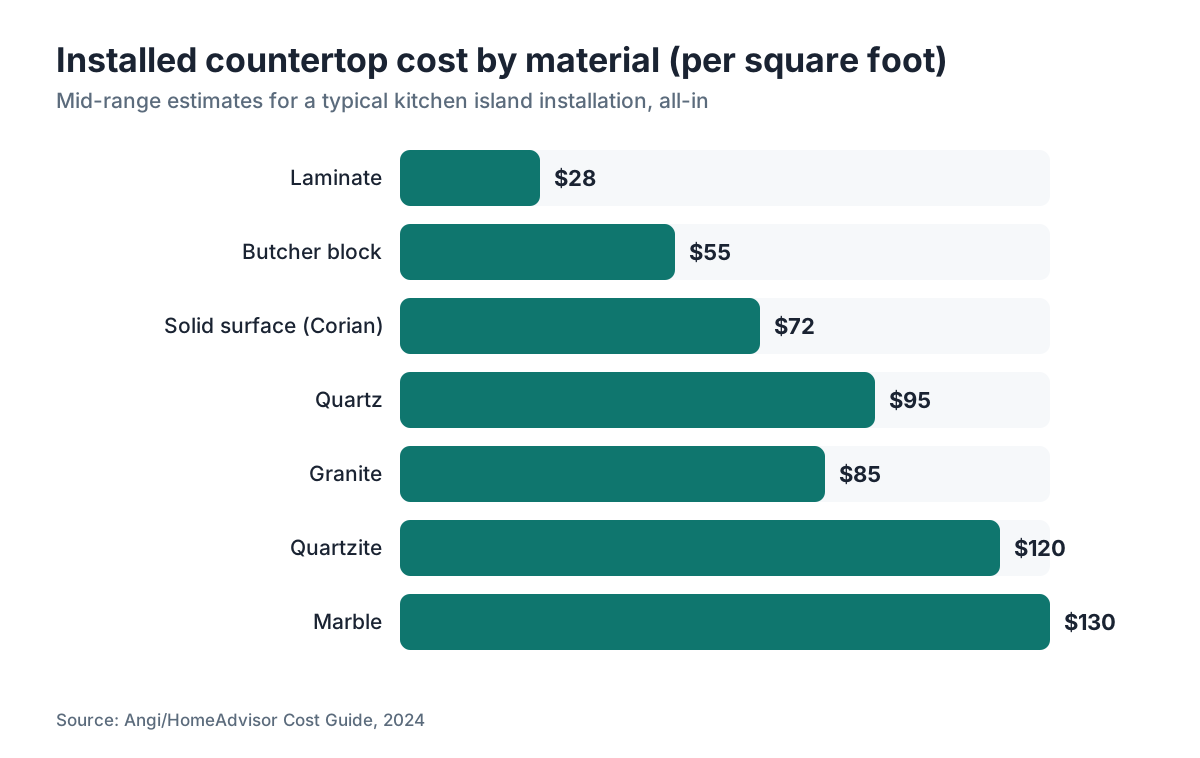
Here's a direct comparison across the materials homeowners actually consider for islands:
| Material | Installed cost/sq ft | Sealing required | Heat resistance | Scratch resistance |
|---|---|---|---|---|
| Quartz | $50, $150 | No | Poor (resin can yellow) | Very good |
| Granite | $45, $125 | Yes (1x/year) | Excellent | Good |
| Marble | $60, $200 | Yes (2x/year) | Good | Poor (etches easily) |
| Quartzite | $65, $175 | Yes (1 to 2x/year) | Excellent | Good |
| Butcher block | $30, $80 | Yes (oil regularly) | Good with care | Moderate |
| Laminate | $15, $40 | No | Poor | Moderate |
| Solid surface (Corian) | $45, $100 | No | Poor | Moderate |
Quartz's biggest advantage on an island is the non-porous surface. Islands get abused: raw meat, spilled wine, coffee rings, markers from kids doing homework. You don't want to think about sealing or staining. Granite countertops are genuinely competitive, especially if you find a large slab that matches well and skip the annual sealing chore by using a penetrating sealer with a longer cycle.
Marble countertops look stunning on an island but etch from lemon juice, vinegar, and wine. That's not a scare tactic. It's chemistry. Calcite in marble reacts with acid and leaves dull spots. If your island is a working prep surface, marble will show it within six months.
Butcher block countertops are warm, easy to repair, and genuinely nice for baking, but they need regular oiling and don't do well near sinks unless the wood is sealed right.
For most homeowners who want a low-maintenance island they never have to think about, quartz is the right call. That's my honest opinion, not a sales pitch.
Will there be a seam, and where should it go?
Most quartz slabs are roughly 55 inches by 120 inches. If your island is longer than 120 inches (10 feet) or wider than 55 inches (about 4.5 feet), you'll have a seam. Even inside those dimensions, a fabricator might add a seam to work around a sink cutout or to squeeze more yield out of the slab.
On an island, seam placement matters. The best spots sit near a sink or cooktop, where your eye goes to the fixture anyway and the seam disappears into the visual break. The worst spot is the dead center of a clean, open island top, right in your sightline. Ask the fabricator to show you the seam location during template, not after fabrication.
Quartz seams are epoxied and color-matched. On a solid white or consistent gray quartz, a good seam is nearly invisible. On a heavily veined quartz trying to mimic marble, a seam can jump out because the pattern won't line up perfectly. Some fabricators do "book-matching" (cutting adjacent slabs from the same block) to mirror the pattern across a seam, but that means ordering two slabs and it raises cost.
If a nearly invisible top matters to you, choose a low-movement quartz pattern or design the island to fit inside one slab. Your fabricator can tell you exactly what slab sizes your chosen material comes in before you commit to a dimension.
What edge profile should you choose for a quartz island?
Edge profiles affect price, safety, and cleaning ease. Here are the options most fabricators stock:
Eased edge (square with a slight chamfer): the most common, lowest cost, very easy to wipe down. Looks clean and contemporary.
Bullnose (fully rounded): soft and kid-friendly. Popular on islands where kids sit at bar stools. Tends to show chips at the curve over time.
Ogee and double ogee: traditional carved profiles that add $15 to $30 per linear foot over a basic eased edge. They look great on heavy slabs (2cm or 3cm) and terrible on thin ones.
Mitered edge (two pieces laminated to create a thick appearance): popular for the "thick slab" look without paying for 6cm material. Adds a seam on the edge face, which usually hides well if it's matched right.
Waterfall edge: the quartz wraps over the end(s) of the island and runs vertically to the floor. This is the premium look right now. A full waterfall on both ends can add $800 to $2,500+ to an island job depending on material and complexity.[1] It needs careful grain and pattern matching and solid structural support at the base.
For most islands, I'd do an eased or slightly beveled edge on the perimeter and save the money there, unless the island is a real focal point and budget allows. Kids and sharp ogee profiles are a bad combination.
What thickness of quartz is right for an island?
Quartz comes in 1cm, 2cm, and 3cm thicknesses. For islands, 3cm (about 1.25 inches) is standard and what you should use unless you have a specific reason not to.
3cm is thick enough for most edge profiles, strong enough to span a 36-inch base cabinet run without flexing, and it gives you real visual weight. It also doesn't need a plywood substrate underneath, which 2cm technically does for structural support.
2cm (about 3/4 inch) mostly shows up in backsplashes and vertical applications. A few designers use it for ultra-thin contemporary island tops with a laminated edge to fake the 3cm look, but it's a more complicated install and the savings shrink to nothing once you add the lamination labor.
1cm is for furniture panels and cabinet cladding. Not for horizontal countertop surfaces.
Weight matters for installation. A 3cm quartz slab weighs about 18 to 20 pounds per square foot.[3] A 24-square-foot island top weighs 430 to 480 pounds. Your base cabinets need to be solid, level, and secured to the floor. Most kitchen base cabinets handle this fine, but if your island is a freestanding furniture piece on legs, verify the structure can carry it.
Does quartz hold up to heat and cutting on an island?
Quartz is weaker against heat than most people expect. The resin binders in engineered quartz can discolor or crack under sustained heat above 150°C (about 300°F).[4] A hot pan straight off the stove set directly on quartz can cause permanent yellowing or cracking, especially in darker colors.
This is the main durability weakness against granite or quartzite, both of which take direct heat without flinching. On an island that doubles as a landing spot for hot cookware, always use trivets. That's not optional.
For cutting, quartz is hard enough that cutting directly on it dulls your knives faster than it damages the surface. You'll want a cutting board anyway. The quartz won't show obvious knife marks under normal use, but the edge of a heavy cleaver hitting the same spot will eventually wear it.
On staining: the non-porous surface means most things wipe clean. The exceptions are certain chemicals, including cleaners with high pH or bleach, and some permanent markers or dyes. For routine cleaning, mild dish soap and warm water is all you need. For stubborn spots, a non-abrasive cleaner made for stone surfaces works well. See our guide on how to clean stone countertops for specific product guidance.
How is a quartz island countertop installed?
Installation has three phases: template, fabrication, and installation day. Each matters.
Template (also called measure) happens after your base cabinets are set, level, and secured to the floor. A fabricator sends a tech to measure the exact island dimensions, check for square (kitchen islands are rarely perfectly square), locate the sink or cooktop cutout, and confirm seam placement. Templates get done digitally with laser measuring tools or with physical templates cut from cardboard or thin plastic. Digital is more accurate and increasingly the norm.[5]
Fabrication takes 3 to 7 business days for most shops. The slab is cut to shape, edges are profiled on a CNC router or edge machine, cutouts are made, and the piece is polished. This is where most of the labor cost sits.
Installation day: the countertop arrives in pieces (if there's a seam) or as a single piece. Installers carry it in, set it on the cabinets, check level, then epoxy the seam (if any) and set the top to the cabinets with epoxy or silicone. Most fabricators run a thin bead of silicone around the perimeter rather than full coverage, to allow for minor seasonal movement in wood cabinets. The sink usually goes in from below the same day.
For a countertop installation that runs smoothly, make sure your cabinets are fully installed and walls are painted before template day. Painting after countertop install is possible but annoying. Most fabricators won't schedule template until cabinets are done.
Shops that run fabrication management software like SlabWise can often give faster, more accurate quotes because the quoting and nesting workflow ties directly to the template measurements, which cuts errors between what got measured and what gets cut. Ask your fabricator how they handle the handoff from template to shop floor.
What brands of quartz are worth knowing?
The quartz market has dozens of brands. A few matter more than others.
Caesarstone: one of the original engineered quartz brands, Israeli-owned, wide distribution in the US. Quality is consistent. Prices run mid to upper range.[6]
Cambria: US-manufactured in Minnesota, family-owned, sold only through certified dealers. Consistently ranked well for quality and warranty. Premium priced. Their patterns tend to be bolder than Caesarstone's. Cambria countertops have a strong reputation in the fabrication trade.
Silestone (Cosentino): Spanish-owned, one of the largest global volumes. Added antimicrobial technology to some lines using silver ion compounds. Range runs from basic to premium.
Vicostone: Vietnamese-manufactured, sold through distributors, priced noticeably below the European and US brands with quality that has improved a lot. Good value option.
MSI Q Premium Natural Quartz: big-box friendly pricing, distributed through MSI (a major US stone importer). More basic patterns but far lower slab costs.
For an island seen up close from all angles, I'd pick Cambria or Caesarstone over budget options. On perimeter counters, the savings of a value brand matter more because you have less linear footage getting scrutinized. That's a practical distinction, not brand loyalty.
What questions should you ask a fabricator before signing a quote?
Most fabricators are honest, but quotes vary wildly because they're measuring different things. Here's what to clarify before you sign.
What's the slab price, and am I paying for the full slab or just what's cut? Most fabricators charge for the full slab even if your job uses 60 percent of it. That's standard. If a fabricator quotes "square footage used only," ask how they handle remnants.
What's included in the edge profile price? Basic eased edges are usually included. Upgraded profiles are line items. Get the linear footage of your island perimeter and multiply by the edge upcharge to see the real number.
Where will the seam be? Get this in writing or marked on a diagram. If it changes on install day without your approval, that's a problem.
What's the warranty, and who backs it? Most reputable brands warranty the material itself (Cambria's is lifetime). The fabricator's labor warranty is separate and typically runs 1 to 2 years.
How many pieces will the island top be? One or two? This affects seam count and handling logistics.
What's the lead time from signed contract to install? In normal inventory conditions, 2 to 3 weeks from contract to installation is typical. During high-demand periods or for unusual slabs, 4 to 6 weeks is realistic.
For homeowners who want to sanity-check a quote before meeting with fabricators, tools like SlabWise's instant quote calculator can give you a market-rate range to compare against.
How do you maintain a quartz island countertop long-term?
Quartz needs less maintenance than almost any other countertop material. No sealing, no oiling, no special annual treatments.
For daily cleaning, a damp cloth with dish soap is fine. Dry it after cleaning to head off hard water spots if your tap water is mineral-heavy. The resin binder in quartz can hold mineral deposits over time, and they're harder to remove once they set.
For stubborn stains: non-abrasive cleaners like Bar Keepers Friend (used wet and gently) or countertop-specific cleaners work. Skip anything with strong acids (concentrated vinegar or lemon juice) or abrasive pads. The surface is hard but the resin can micro-scratch.
For dried food or stuck-on residue: a plastic scraper, not metal, and warm water. Metal scrapers can leave gray marks from the metal itself.
Avoid: bleach-based cleaners on a regular basis (they can attack resin over time), paint removers, oven cleaners, and any solvent-based products. The quartz itself would survive most of these, but the epoxy in seams might not.
The non-porous surface also means quartz doesn't harbor bacteria the way porous surfaces can. The US Food and Drug Administration recognizes that non-porous surfaces are easier to sanitize in food preparation contexts, which is one reason quartz shows up in commercial kitchen specifications.[7]
For a broader primer on keeping stone-family surfaces in shape, see the guide on how to clean stone countertops.
Is quartz a good choice for an outdoor kitchen island?
No. This is a firm answer.
Quartz is engineered with polymer resins that break down under UV exposure. Direct sunlight makes the resin yellow and the surface fade, sometimes within a single season of outdoor use. Manufacturers explicitly void warranties for outdoor applications.[6]
For outdoor kitchen islands, your real options are granite, porcelain, quartzite, concrete, or stainless steel. Granite handles UV and heat well with proper sealing. Porcelain slabs (different from ceramic tile) are increasingly popular for outdoor islands because they're UV-stable, non-porous, and come in very large format slabs.
If you have a covered outdoor kitchen with no direct sun, some fabricators will install quartz, but you'll lose warranty coverage and the yellowing risk is real even in ambient UV. I wouldn't do it. Use granite or porcelain and be done with it.
For a covered indoor-outdoor connection space that sees filtered light, ask the quartz manufacturer directly about their UV policy before committing. Some brands have tested specific product lines at higher UV exposure and can give you real data.
Frequently asked questions
How much does a quartz island countertop cost for a 4x8 foot island?
A 4 by 8 foot island is 32 square feet. At the mid-range installed price of $80 to $100 per square foot, expect to pay $2,560 to $3,200. Add a waterfall edge on one end and you're adding 8 to 12 more square feet of vertical surface, pushing the total to $3,200 to $4,400. Higher-end quartz brands or complex edge profiles push costs further.
Does a quartz island countertop need support for overhangs?
Quartz can cantilever up to 12 inches without added support. Beyond 12 inches, you need corbels, steel support brackets, or a steel plate embedded in the cabinet below. Most fabricators follow the standard that overhangs past 1/3 of the total countertop depth need support. Always confirm with your fabricator for your specific slab thickness and span.
How long does it take to get a quartz island countertop installed?
From signed contract to installation typically takes 2 to 4 weeks for in-stock materials. Template happens first, then 3 to 7 business days of fabrication, then installation gets scheduled. Custom or special-order slabs can push lead time to 6 to 8 weeks. Your cabinets must be fully installed and level before a fabricator will even schedule a template appointment.
Can you cut on a quartz island countertop?
Technically yes. Quartz is hard enough that normal knife use won't scratch it noticeably. But cutting directly on quartz dulls your knives quickly, since quartz is harder than most knife steel. Use a cutting board. Heavy cleaver strikes in the same spot over years can eventually chip or crack quartz, especially near edges.
What color quartz is best for a kitchen island?
There's no single best color, but white, soft gray, and warm beige quartz consistently sell the most and tend to date less quickly than trendy patterns. If your island is a focal point, a bold veined pattern can look great. Low-movement patterns are easier to seam invisibly. Dark quartz shows fingerprints and water spots more than light quartz.
Is quartz or granite better for a kitchen island?
Quartz wins for low maintenance: no sealing, non-porous, very consistent look. Granite wins for heat resistance: you can put a hot pan directly on it without damage. Granite also has natural variation that some people find more authentic. If you never want to think about the surface again, choose quartz. If you cook with heavy pots over a cooktop built into the island, granite is safer.
Will a quartz island countertop scratch or chip?
Quartz rates 7 on the Mohs hardness scale, so everyday kitchen use won't scratch it. Chips are the real risk, particularly at corners and edges. Quartz is brittle compared to granite, and dropping something heavy on a corner can chip the edge. Bullnose edges chip less visibly than sharp eased edges in practice.
Can you put a hot pan on a quartz island countertop?
No. Quartz contains polymer resins that can discolor or crack under sustained heat above roughly 150°C (300°F). A hot pan fresh off the stove or out of the oven can cause permanent damage, including yellowing and cracking. Always use a trivet. This is the most important maintenance rule for quartz, and it differs from granite, which handles direct heat without issue.
How thick should a quartz island countertop be?
3cm (about 1.25 inches) is standard for island countertops and what most fabricators recommend. It's strong enough for unsupported spans across base cabinets, suits all edge profiles, and looks proportionally right on a large island. 2cm exists but requires a plywood substrate and is less common in residential island applications.
What is a waterfall edge on a quartz island, and what does it cost?
A waterfall edge is when the quartz countertop continues vertically down the side(s) of the island to the floor, creating a continuous stone panel. It requires extra slab material and careful grain-matching. Cost varies widely, but adding a full waterfall on one end typically adds $800 to $2,500+ to an island project, depending on material, height, and fabricator rates.
Can quartz island countertops be used outdoors?
No. Quartz contains polymer resins that degrade and yellow under UV exposure. Virtually all manufacturers explicitly void warranties for outdoor installations. For an outdoor kitchen island, use granite, quartzite, or large-format porcelain slabs instead. Even in a covered outdoor space with ambient UV, the risk of quartz yellowing over time is real.
How do you clean a quartz island countertop?
Daily cleaning needs only a damp cloth and mild dish soap. Dry the surface afterward if you have hard water to prevent mineral deposits. For stubborn stains, use a non-abrasive cleaner like Bar Keepers Friend applied wet. Avoid bleach, vinegar, abrasive pads, and solvent-based products. Dried food lifts easily with a plastic (not metal) scraper and warm water.
Are there alternatives to quartz for a kitchen island that cost less?
Yes. Laminate countertops cost $15 to $40 per square foot installed and have improved a lot in appearance. Tile is another low-cost option, though grout lines are a maintenance headache on a working surface. Butcher block runs $30 to $80 per square foot and looks great on islands used for baking. Solid surface like Corian sits at $45 to $100 per square foot and offers integrated sink options with no visible joint.
How many slabs does a quartz island countertop require?
A standard quartz slab is roughly 55 inches by 120 inches (about 4.5 by 10 feet). Islands that fit within those dimensions can come from one slab, meaning no seams on top. Larger islands or those with waterfall ends need more slab material, potentially a second full slab. Your fabricator should confirm slab count during quoting.
Sources
- HomeAdvisor (Angi), Quartz Countertop Cost Guide: Installed quartz countertop prices range from $50 to $150 per square foot; waterfall edges add significant cost
- National Kitchen and Bath Association, Kitchen Planning Guidelines: NKBA recommends 42-inch minimum clearance around islands for single-cook kitchens and 48 inches for two-cook kitchens; countertops absorb 10 to 15% of full kitchen remodel budgets
- Natural Stone Institute (formerly Marble Institute of America), Fabrication and Installation Standards: Overhangs beyond 12 inches require structural support; 3cm quartz weighs approximately 18 to 20 lbs per square foot
- Breton S.p.A., Engineered Stone Technical Documentation: Engineered quartz polymer resins can discolor or crack at sustained temperatures above 150°C (approximately 300°F)
- NKBA, Kitchen & Bath Industry Show Technology Reports: Digital laser templating is increasingly the standard method for accurate countertop measurement in the trade
- Caesarstone, Product Warranty and Care Documentation: Caesarstone and most quartz manufacturers explicitly void warranties for outdoor or UV-exposed installations
- U.S. Food and Drug Administration, Food Code (Characteristics of Materials for Equipment): FDA Food Code requires food-contact surfaces to be smooth, non-porous, and easily cleanable; non-porous surfaces like quartz meet these criteria
- U.S. Geological Survey, National Minerals Information Center (Dimension Stone): Dimension stone and engineered stone market data; quartz (engineered) has grown as a share of kitchen countertop installations over the past decade
- Cambria, Product Warranty: Cambria offers a lifetime warranty on its quartz products when installed per guidelines
- Joint Center for Housing Studies, Harvard University, Improving America's Housing (Remodeling Expenditure Data): Kitchen remodels represent one of the largest categories of home improvement spending; countertop replacement is a top sub-category
Last updated 2026-07-09