TL;DR
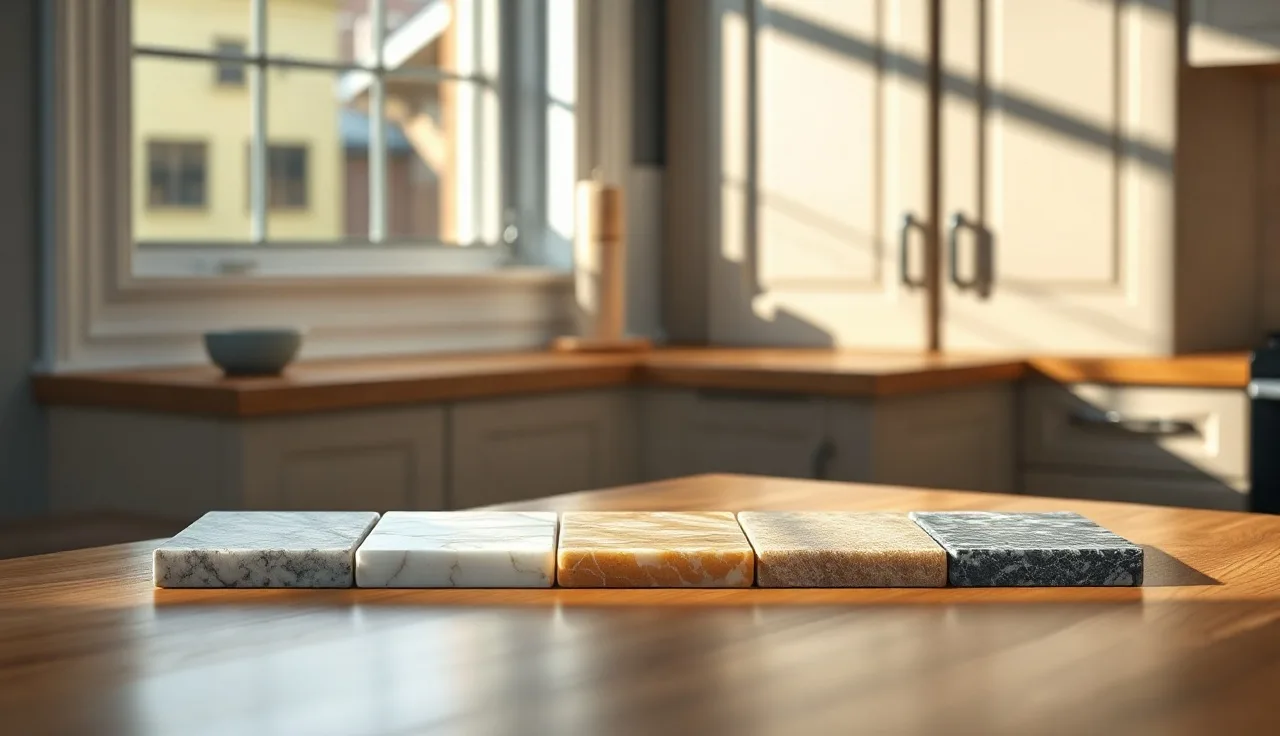
- Quartz countertop samples are small cut pieces, usually 4x4 to 6x6 inches, free or under $15 from showrooms, big-box stores, and brand websites.
- Bring several home to check color under your own lighting, test how the finish handles a scratch or a cleaner, and compare finishes before you order a slab.
- Most fabricators expect you to show up with a few at your first appointment.
What exactly are quartz countertop samples, and why do they matter?
A quartz countertop sample is a small cut piece of engineered stone, usually 4x4 to 6x6 inches, that shows how the full slab will look and feel. The material is identical: roughly 90 to 93% ground quartz bound with polymer resin and pigment, then pressed under heat and vacuum [1]. Same finish. Same surface hardness. If the supplier bothered to show one, the same edge profile.
Here's why they matter more than people think. Quartz shifts hard under different light. A color that reads warm white in a showroom under halogen spots can turn gray or faintly green under the cool LEDs in your kitchen. Designers call that metamerism, and it catches a lot of homeowners who skip the at-home step.
Your countertop runs $3,000 to $8,000 for an average kitchen, and you'll live with it for 15 to 20 years [2]. A sample that cost you nothing is the cheapest insurance in the whole project.
For fabricators, samples do double duty. Showing a full slab is ideal, but that's not happening when a client calls from the other side of town. A tidy sample library lets your team quote against specific material codes, which keeps the job from unraveling when the homeowner "changes" the quartz after the number is written.
Where can you get free quartz countertop samples?
Five channels are reliable, and each fits a different situation.
Brand websites. Caesarstone, Cambria, Silestone, MSI, and most major manufacturers mail samples straight to you at no charge, though some cap you at 3 to 5 per order [3]. Pick the color online, and a chip shows up in 5 to 10 business days, usually 4x4 or 6x6 inches. Best route if you already know which brands your local shops carry.
Showrooms and stone yards. This is where the useful samples live. A good showroom lets you borrow or keep chips on the spot, and you can often walk the yard to see partial or full slabs, which tells you what you're actually buying. Bring your cabinet door and a paint chip. The staff can match material codes to your project on the same visit.
Big-box stores. Home Depot and Lowe's both stock quartz sample boards in their countertop sections, usually free for in-store pickup [11]. The selection is thinner than a specialty showroom, and some samples are bolted to a display board you can't take, but smaller chips are generally yours to grab.
Fabricator shops. Many fabricators keep sample libraries from the distributors they buy through. If you're already collecting quotes, ask whether they have samples of the slabs they actually stock. A shop that carries Silestone through a local distributor may have offcuts far bigger than a standard brand chip, which gives you a much more honest preview.
Remnant pieces. If you already know the exact quartz you want, ask a fabricator for a remnant of that material. A true remnant is a leftover from a past job, often a square foot or more. Sometimes there's a small handling fee, but the size lets you run real durability tests.
Cambria mails up to 5 free samples per order straight to your home, one of the more generous policies among premium brands [3]. If that brand is on your list, the Cambria route is easy.
How much do quartz samples cost if they aren't free?
Most quartz samples cost nothing. Some situations do carry a charge. Specialty and luxury lines sometimes bill $5 to $15 per sample to keep people from ordering the whole catalog on a whim. A few distributors ask for a refundable deposit of $10 to $25 that comes back when you return the chip. Remnant pieces big enough to test on run $20 to $50 depending on size and material.
Fabricators ordering through a distributor program almost always get samples free on a normal trade account. The cost sits inside the distributor relationship. What you actually pay for is time. Organizing, tracking, and refreshing a sample library is real overhead, and shops routinely underestimate it.
Shipping adds a few dollars if you order online instead of picking up. Most brands cover standard shipping on sample orders. Expedited shipping is rarely on the house.
How do quartz samples compare to the actual slab? What's different?
Most homeowners never ask this, and they should. A quartz sample tells the truth about some things and lies about others.
Accurate: the color base (dominant hue), the finish type (polished, honed, or leathered), the approximate veining for that colorway, surface hardness, and porosity behavior. Quartz is non-porous no matter the finish [1].
Sometimes misleading: the pattern. Because these slabs are engineered, the veining or aggregate tiles across the surface at intervals, usually every 24 to 36 inches on veined styles. Your 4x4 chip shows one slice of that repeat. It might land on a dramatic vein cluster that barely appears elsewhere, or a quiet stretch that undersells how busy the full counter reads. Ask the showroom or fabricator for the pattern repeat length before you commit.
Edge profile isn't on a standard sample either. If you're eyeing an ogee or a waterfall, ask for a separate edge sample or look at the fabricator's edge profile boards.
Scale hides things too. Quartz that looks like one clean color on a 4x4 chip can show subtle banding across a full 55x120-inch slab. Ask to see a full slab image, or better, drive to the yard and look at the actual slab tagged for your job.
What's the difference between quartz and quartzite samples?
This mix-up causes real headaches. Quartz is engineered stone. Quartzite is a natural metamorphic rock. They're different materials with different care, pricing, and looks, and showrooms love to display them right next to each other.
Engineered quartz feels uniform, and the pattern repeats because it's manufactured. The back of the chip is usually flat gray or white resin. Quartzite is natural: the pattern is one of a kind, the back often shows cleft texture, and color can swing a lot from slab to slab.
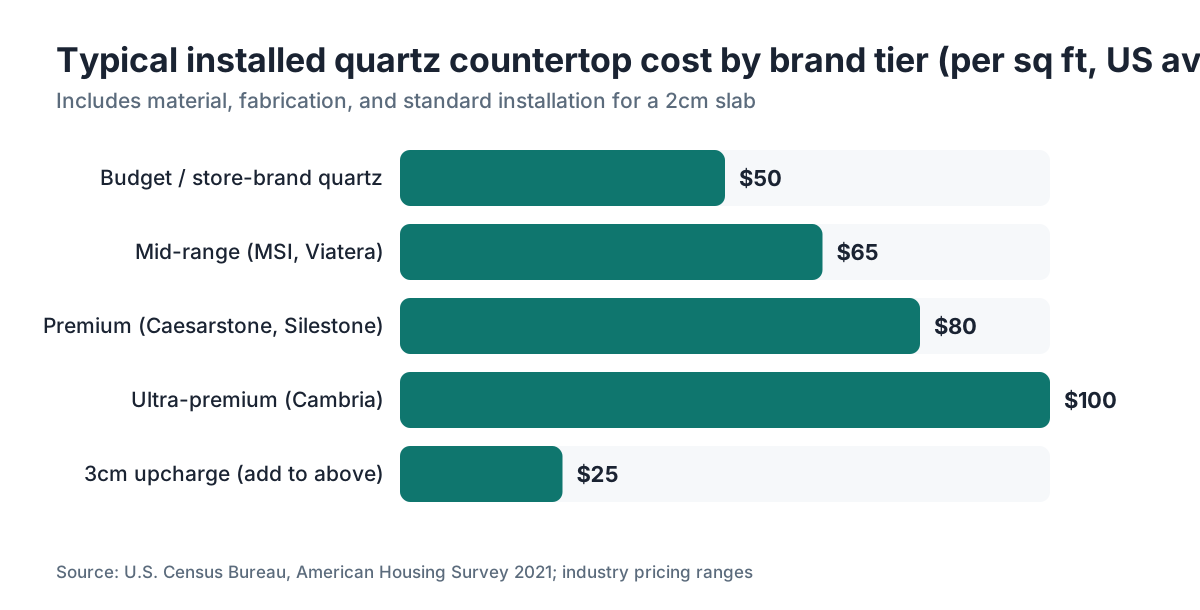
Quartzite needs sealing, sometimes yearly. Quartz doesn't [4]. Quartzite runs roughly $60 to $120 per square foot installed, against $50 to $100 for quartz [2]. If two chips are sitting side by side and you can't tell them apart, flip them over and read the material code, or ask the staff. The field test is scratching glass (quartzite will, and some soft stones mislabeled as quartzite won't), but honestly, just read the spec sheet. For sealing and maintenance on the natural side, how to clean quartzite countertops covers it in detail.
How do you test a quartz sample at home?
You've got the sample in hand. Here's what to actually do with it.
Lighting check. Hold the chip against your cabinet doors under every light your kitchen throws at it: morning daylight, direct afternoon sun if you face south, evening under your overheads or pendants, and under-cabinet lighting if you run it. Photograph each one. Colors shift, and the camera catches the shift faster than your eye does.
Undertone matching. Quartz carries undertones, often cool gray, warm beige, or a hint of green, that stay hidden on a showroom display. Lay the sample flat on your existing counter or against a cabinet door and step back 10 feet. An undertone clash shows at distance long before it shows at arm's length.
Finish durability check. On a polished chip, drag a key or a butter knife across a hidden corner. Quartz sits around 7 on the Mohs scale, so steel at 5.5 to 6.5 won't scratch it [1]. If it marks up easily, that chip might be a softer material. On a honed finish, a water drop darkens the surface for a moment, then dries clean on real quartz. If it stains, you're probably holding natural stone, not engineered quartz.
Heat behavior. Don't set a hot pan on quartz, not even to test it. The resin binder can discolor or crack under sudden thermal shock, generally above 300 to 400 degrees F [1]. Treat that as a known limitation, not something to prove destructively.
Scale reference. Tape two or three chips edge to edge on your counter and shoot from above. It won't fully mimic the finished top, but it beats staring at a single chip.
Fabricators, if your shop is slammed, a printed comparison sheet with photos of common slabs under different lighting closes the gap when a homeowner can't make it to the yard. Tools like SlabWise let you pin material codes and slab images to a quote, so the material talk and the price talk sit in one document. That cuts scope creep later.
How many quartz samples should you order before choosing?
Order more than you think you need. Three minimum. Six to eight is reasonable. It costs you nothing, and choosing wrong means a five-figure counter you resent every morning.
Start with a shortlist from online photos, then narrow. Most designers push you to pick colors across two or three value ranges (light, medium, dark) so you make a real decision instead of defaulting to the first thing you liked. Once the chips are in hand, cut fast and put your real attention on two finalists.
Doing a whole kitchen? Pull samples for your kitchen countertops island material too if you want a contrast, plus any bathroom surfaces riding on the same project. Fabricators who handle multi-room jobs often discount package quotes when you commit several surfaces at once, and that conversation goes better once you've settled the materials.
What quartz brands have the best sample programs?
The major brands split on how many samples you get, how fast they ship, and how faithful the chip is to a real slab. Quartz remains the most specified countertop material in U.S. kitchen design according to the NKBA's 2023 trends report [8], so most of these programs are built to move volume.
| Brand | Sample cost | Max per order | Ship time | Notes |
|---|---|---|---|---|
| Caesarstone | Free | 5 | 5 to 10 business days | Good online selector tool [5] |
| Cambria | Free | 5 | 5 to 10 business days | Premium brand, US-made [3] |
| Silestone (Cosentino) | Free | 5 | 7 to 14 business days | Wide color range |
| MSI Quartz | Free | 6 | 5 to 10 business days | Budget to mid-range pricing [12] |
| Viatera (LG) | Free | 4 | 7 to 10 business days | Often available at Lowe's |
| Hanstone | Free | 3 | 7 to 14 business days | Greenguard Gold certified [6] |
Ship times track your distance from the brand's distribution centers. A West Coast order from an East Coast brand can eat the full 14 days. On a deadline? Call ahead or pick up locally.
One honest caveat: none of the major brands publish independently verified data on how well their chips predict actual slab color consistency. Tight color control is generally strongest in the solid and aggregate styles, where the pattern repeat is short, and weakest in the large-vein styles, which can drift noticeably from chip to full slab.
How do quartz samples help fabricators write better quotes?
For a fabricator, the sample is more than a sales prop. It's a specification anchor.
When a homeowner picks a material by name during a quote, that name can map to dozens of SKUs across thickness levels (usually 2cm and 3cm), finish options, and distributors that each price it differently. A material code tied to a physical sample kills the ambiguity. Quote against something vague like "white quartz with gray veins" and you've basically scheduled a substitution argument for the day the real slab shows up.
Good practice: log the brand, the exact color name, the material code if you can get it, the thickness, and the finish on every quote. When the homeowner holds a physical sample that matches those fields, material-selection scope creep drops hard.
Digital quoting makes this easy. Attach a slab image or material code to each line item. SlabWise puts material fields right on the quote form for this reason. A shop that quotes against a specific code and tracks remnants from past jobs in the same tool can also flag when a leftover piece covers a small job, saving the shop and the homeowner money.
Nesting ties back to sample accuracy too. A 3cm slab costs roughly 20 to 30% more than 2cm of the same material, and plenty of customers don't realize they spec'd 3cm off a showroom display until the quote lands [2]. Catch that at sample selection and you skip the re-quote.
Can quartz samples be used to test cleaners and chemicals?
Yes, and it's genuinely worth doing. Quartz sells itself as stain-resistant, but it isn't bulletproof, and the resin binder has real chemical weak spots.
Things that can damage quartz, and that you can test on a sample first: harsh alkaline cleaners (pH above 10), paint strippers, oven cleaners, bleach products left in long contact, and some acetone nail polish removers. The Marble Institute of America notes that prolonged exposure to strong chemicals can break down the polymer resin in engineered quartz surfaces [7].
Run a 24-hour contact test with any cleaner you use often. Put a small amount on the sample, cover it with plastic wrap so it can't evaporate, and check at 24 hours. Color change or dullness means that cleaner isn't safe for your counter. Worth doing especially if you're weighing quartz against a natural stone. The general advice at how to clean stone countertops overlaps in spots, but quartz tolerates chemicals differently than granite or marble.
For daily cleaning, mild dish soap and water is the manufacturer-recommended method for basically every quartz brand. Nothing fancier does anything extra.
What should you bring to the fabricator when you're ready to buy?
Your sample, a cabinet door or a painted wood piece in your cabinet color, and a paint chip or paint name for your walls. Those three let a fabricator or designer tell you in about five minutes whether your pick works or whether it's headed for a clash.
Bring measurements too, or better, a rough sketch with dimensions of your layout. You don't need exact numbers yet, but knowing you've got an L-shape, a U-shape, or a straight run helps the fabricator hand you a realistic estimate. Most shops price per square foot including material, fabrication, and standard install, so layout complexity (corners, cutouts, angles) moves the number [2].
Comparing quartz to granite countertops or marble countertops? Bring those chips too. A side-by-side under real conditions beats any amount of online reading. On a tighter budget, samples for laminate countertops or Corian countertops are just as easy to get and follow the same drill.
Once you've locked and confirmed your material, countertop installation starts with a template visit, where the fabricator measures the real space precisely. That happens after the cabinets are in and level. Don't put off material selection thinking you'll settle it later. The template often gets scheduled the same time the slab is ordered, and material changes after that push your timeline back weeks.
Frequently asked questions
Are quartz countertop samples really free, or is there a catch?
They're genuinely free from most major brands and showrooms, though some cap you at 3 to 5 per order. The only real catch is that brand websites want your mailing address, so expect marketing emails. Specialty or luxury lines occasionally charge $5 to $15 per chip. Shipping is usually free but can add a few dollars on expedited orders.
How accurate is a quartz sample compared to the actual countertop slab?
Color base and finish are accurate. Pattern repeat is where samples mislead: veined quartz tiles its pattern across a large slab, and a small chip may hit a dramatic section that's rare across the full surface, or a quiet section that understates the pattern's intensity. Ask the fabricator or showroom about the repeat interval, and try to view a full slab image before committing.
Can I take quartz samples to Home Depot or Lowe's to compare on the spot?
You can, but it's more effective to bring your own samples home under your actual kitchen lighting. Big-box stores run display lighting that flatters the material. If you pick up chips in-store, take them home the same day and check them in the morning under daylight and at night under your typical kitchen overheads before deciding.
How do I know if a sample is quartz (engineered) or quartzite (natural stone)?
Look at the back. Engineered quartz has a uniform, flat resin back, usually white or light gray. Quartzite shows natural stone texture on the back. Engineered quartz also has a repeating or uniform face pattern; quartzite is unique and irregular. The label or material code should say outright. Still unsure? Ask staff to confirm it in writing on your quote.
Do quartz samples show the edge profile finish?
Standard samples don't. They show the top surface only. To judge edge profiles, ask the showroom or fabricator for a dedicated edge profile board, which displays 6 to 12 common profiles (eased, beveled, ogee, waterfall, and so on) cut from a representative material. Edge choice affects looks and price, with decorative profiles adding $10 to $30 per linear foot over a standard eased edge.
How long do quartz countertop samples last, and can I keep them indefinitely?
Quartz samples last essentially forever indoors. The material doesn't degrade or change color on its own. Homeowners: keep them until the job is done. Fabricators running a sample library: refresh every 1 to 2 years, because brands discontinue colors regularly, and holding dead samples wastes client time and breeds confusion at the quote stage.
Can I order quartz samples for a bathroom countertop the same way as a kitchen?
Yes, the process is identical. Same brands, same ordering methods, same evaluation steps. The main difference is scale: bathroom counters are smaller, so pattern repeat matters less. Still check lighting, since bathrooms often mix natural light with artificial vanity lighting that can shift color perception a lot.
What's the best quartz sample size for making a real decision?
Bigger is better. A 6x6-inch sample gives you more context than a 4x4 chip, and a 12x12 piece beats either. If a fabricator or stone yard will lend or sell you a larger offcut, take it. For veined styles especially, the small brand-website chips are good for elimination but not for final selection. You really want to see a big chunk of the slab before committing.
Should I bring quartz samples to a kitchen designer appointment?
Yes. Designers expect it and will pair your samples with their own material library to check compatibility with cabinet finishes, hardware, backsplash tile, and flooring. Bring your two or three finalists instead of one pick. Designers are quick to rule out an option based on undertone or value conflicts that aren't obvious when you're working alone.
Do quartz brands charge more for samples of premium or limited-edition colors?
Some do. Standard colorways are almost always free. Limited-edition, designer-collaboration, or ultra-premium lines sometimes charge $10 to $15 per sample, or make you order through a showroom instead of the website. Check the brand's sample page before ordering, since this policy varies and changes seasonally.
How many samples should a fabricator keep in their showroom sample library?
There's no single standard, but quartz-focused shops typically carry 60 to 120 samples from their primary distributors. Focus on what's actually in stock or reliably available in your market, not the whole brand catalog. A current, curated library of 80 beats an overwhelming wall of 200 stuffed with discontinued colors. Refresh at least annually based on what distributors are actively stocking.
Can a quartz sample help me decide between quartz and another countertop material?
Directly, yes. Order quartz samples alongside whatever you're comparing, granite, marble, or a solid surface like Corian. Put them all next to your cabinet door under your kitchen lighting. That covers looks. For function, weigh porosity (quartz beats natural stone), heat resistance (natural stone wins), scratch resistance (quartz and granite are close), and maintenance (quartz needs almost none; natural stone usually needs periodic sealing).
Sources
- NSF International, Standard 51: Food Equipment Materials: Engineered quartz is composed of approximately 90 to 93% ground quartz bound with polymer resin, making it non-porous and resistant to bacteria; Mohs hardness approximately 7; resin binder can be damaged by sustained heat above 300 to 400°F.
- U.S. Census Bureau, American Housing Survey 2021: Kitchen countertop replacement costs range from approximately $3,000, $8,000 installed for an average kitchen; quartz and quartzite run $50, $120 per square foot installed; 3cm slab pricing is roughly 20 to 30% higher than 2cm for the same material.
- Cambria, Sample Order Page: Cambria offers up to 5 free samples per order shipped to the consumer's home; Cambria is manufactured in the United States.
- Marble Institute of America (MIA+BSI), Care and Maintenance Guidelines: Quartzite, as a natural stone, requires periodic sealing (often annually depending on porosity), while engineered quartz does not require sealing due to its non-porous resin matrix.
- Caesarstone, Sample Order Page: Caesarstone offers up to 5 free samples per order with standard shipping; samples are available through their online selector tool.
- UL, GREENGUARD Gold Certification Program: Hanstone Quartz holds GREENGUARD Gold certification for low chemical emissions, indicating compliance with UL 2818 chemical emission standards for building materials.
- Marble Institute of America (MIA+BSI), Engineered Stone Surface Care Guidelines: The Marble Institute of America notes that prolonged exposure to strong alkaline or acidic chemicals, bleach, and paint strippers can break down the polymer resin binder in engineered quartz surfaces, causing discoloration or surface damage.
- National Kitchen and Bath Association (NKBA), Design Trends Report 2023: Quartz remains the most specified countertop material in U.S. kitchen design, cited in the majority of new kitchen projects surveyed by the NKBA in 2023.
- U.S. Occupational Safety and Health Administration (OSHA), Silica Standard for Construction (29 CFR 1926.1153): OSHA's silica standard requires fabricators cutting engineered stone containing crystalline silica to implement engineering controls including wet methods or local exhaust ventilation to limit worker exposure.
- Caesarstone, Technical Data Sheet for Engineered Quartz: Caesarstone specifies that its engineered quartz is non-porous, does not require sealing, and is manufactured in thicknesses of 2cm and 3cm.
- Lowe's, Countertop Samples Product Page: Lowe's offers in-store and online quartz countertop samples from brands including Viatera and others at no charge.
- MSI Surfaces, Sample Order Program: MSI offers up to 6 free quartz countertop samples per order through their website, covering budget to mid-range pricing tiers.
Last updated 2026-07-09