TL;DR
- Quartz countertops need no sealing, resist most stains, and clean up with mild dish soap and warm water.
- Skip heat above 150°F, bleach sprays, and abrasive scrubbers.
- The resins in engineered quartz can discolor or crack from sudden heat, and that damage is permanent.
- Most homeowners spend $0 a year on maintenance beyond regular wiping.
What makes quartz countertops different to maintain?
Quartz countertops are engineered stone, not a solid natural mineral. A typical slab runs 90 to 94 percent ground quartz crystals bound with 6 to 10 percent polymer resins and pigments [1]. That resin content drives every maintenance decision you'll make.
Natural stone like granite or marble is porous, so it needs periodic sealing to keep liquids from soaking in. Quartz does not. The resin matrix fills the pores and makes the surface non-porous, which is why brands like Cambria and Silestone sell it as stain-resistant with no sealing. For everyday spills, that claim holds up.
But the resin is also where quartz is weak in ways granite isn't. Resins are plastic compounds. They soften, discolor, and crack under sustained heat. They react to some solvents. Natural stone mostly shrugs at heat. Quartz can't. Once that tradeoff clicks, the care rules stop feeling arbitrary and start making sense.
For a side-by-side look at how quartz stacks up against other surfaces on durability, cost, and care demands, the kitchen countertops overview is a good place to start.
How do you clean quartz countertops every day?
Warm water and a few drops of mild dish soap on a soft cloth or non-scratch sponge handles almost everything. Wipe down, rinse with clean water, dry with a soft cloth. Daily cleaning really is that simple.
The drying step matters more than people expect. Quartz is non-porous, but hard water leaves mineral deposits if you let water air-dry on the surface again and again. In high-mineral areas, those deposits build into a dull film over months. Wiping dry takes ten seconds and prevents it entirely.
For stuck-on food, let warm soapy water sit on the spot a few minutes to loosen it, then wipe. A plastic scraper, the kind sold for ceramic cooktops, lifts hardened residue without scratching. Don't reach for steel wool, green Scotch-Brite pads, or abrasive cleaner. Quartz is hard at about 7 on the Mohs scale [2], but abrasives scratch the polished surface and cut micro-grooves that trap grime.
Spray cleaners made for quartz or stone work fine for daily use. So does isopropyl alcohol diluted to around 70 percent for greasy residue. The products to avoid get their own section below.
Does quartz need to be sealed?
No. Sealing quartz wastes money. The polymer resin already makes the surface non-porous, so a topical sealer has nothing to bond to and nothing to do. It sits on top, hazes over, and wears off within weeks. Any shop that charges you to seal quartz is either misinformed or padding the invoice.
That's a real contrast with granite, marble, and quartzite. All three are porous natural stones that genuinely benefit from sealing every one to three years [3]. If you have natural stone elsewhere in the house, the guides on how to clean stone countertops and how to clean quartzite countertops cover the sealing those surfaces actually need.
One exception is worth a mention. Matte and leathered quartz finishes are more textured, so they can hold residue in the grain. They still don't need sealing. They just need a bit more attention when you wipe, working the cloth into the texture pattern.
What cleaners are safe for quartz, and which ones damage it?
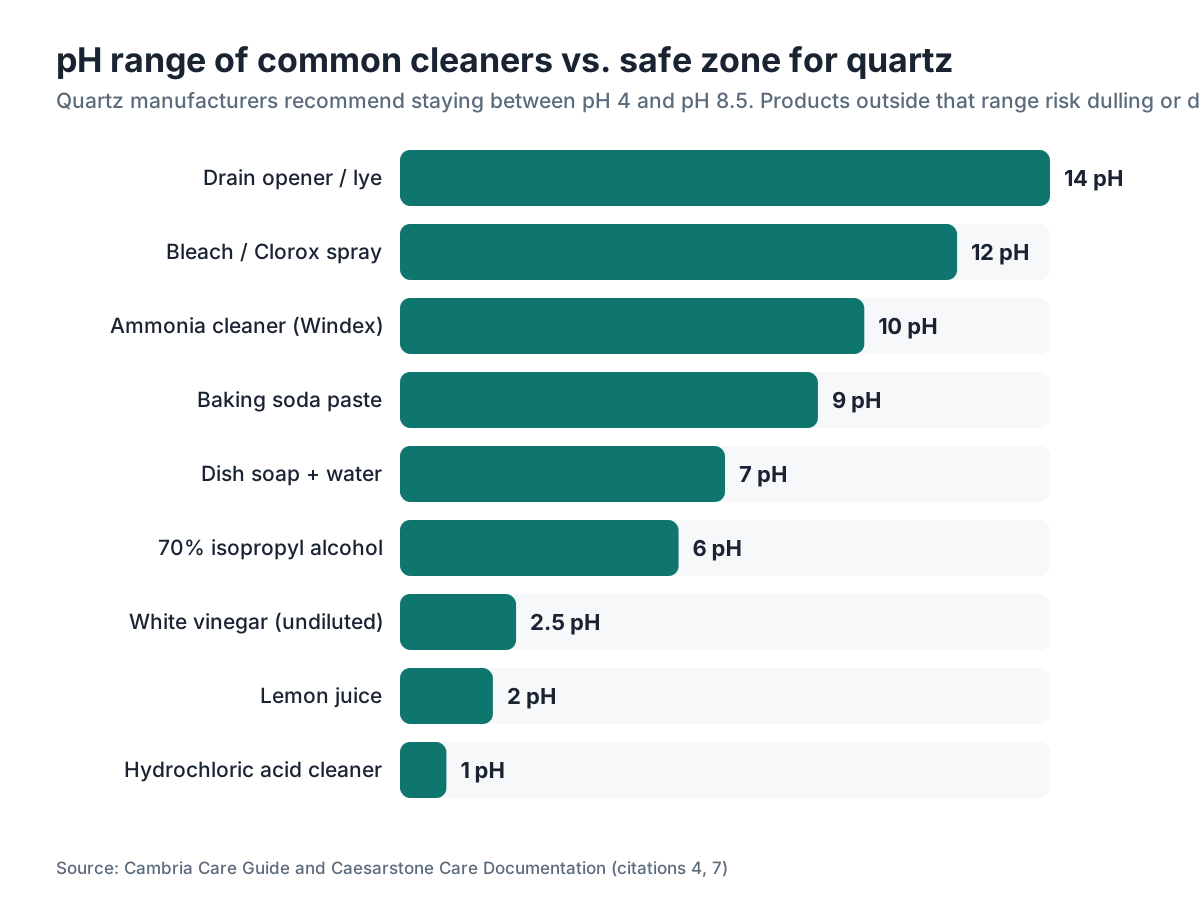
pH-neutral cleaners are safe. Anything strongly acidic or strongly alkaline is a problem. That's the whole rule.
Quartz makers including Caesarstone and Cambria warn against cleaners above pH 8 or below 4. Bleach (sodium hypochlorite) runs pH 11 to 13 and will discolor the resin pigments over repeated use [9]. Oven cleaners and drain openers are more alkaline still and can etch the surface for good. On the acid side, undiluted vinegar (pH around 2.5) and lemon juice dull the finish with regular exposure, though one splash wiped up fast won't leave a mark.
Here's the rundown on common products:
| Product | pH approx. | Safe for quartz? |
|---|---|---|
| Dish soap + water | 7-8 | Yes |
| 70% isopropyl alcohol | ~6 | Yes |
| Windex (glass cleaner) | 10-11 | Use sparingly, rinse well |
| White vinegar undiluted | 2.5 | No, repeated use dulls finish |
| Bleach / Clorox spray | 11-13 | No |
| Magic Eraser (melamine foam) | 10+ | No, micro-abrasive, strips finish |
| Goo Gone | 5-6 | Yes for occasional use, rinse thoroughly |
| Bar Keepers Friend powder | 3-4 | No, acidic + abrasive |
| Quartz-specific cleaner | 6-8 | Yes |
When you need to lift something stubborn, a dab of acetone (nail polish remover) is fine for occasional use on quartz. Rinse it off quickly. This is one spot where quartz beats marble or quartzite, where acetone would threaten the stone itself.
Can heat damage quartz countertops, and how bad is the risk?
Heat can damage quartz, and the damage is permanent. This is the single most important thing to know about the material.
The resin binders start to soften around 150°F (65°C) and can crack, discolor, or delaminate under sudden thermal shock above that [1][10]. A pan pulled off a gas burner at 400°F, set straight on the slab, is a real hazard. The damage usually shows as a white or yellow patch, sometimes a crack running out from the hot spot. Neither is fixable in place. You're looking at replacing a section of countertop.
Granite is different. It handles heat without complaint because it's a natural mineral that formed under extreme geological temperatures. Quartz, being part plastic, has no such tolerance [5].
Use a trivet or hot pad, every time. This isn't nervous overcaution. It's how the makers tell you to use the product. Cambria's care guide states: "Always use trivets or hot pads when placing hot items on your Cambria surface" [4]. That's a direct quote from their published documentation.
Crockpots and electric skillets carry their own risk because they put down sustained moderate heat instead of a quick blast. Set them on a trivet too. And don't aim a hairdryer or heat gun at quartz for some DIY repair. You'll make it worse.
How do you remove common stains from quartz?
Because quartz is non-porous, most stains sit on the surface instead of soaking in. That makes removal easier than on natural stone. You still want to act before a stain dries and hardens.
Coffee, tea, and wine: wipe right away with soapy water. If it dried, let warm soapy water sit five minutes, then wipe. It almost always lifts clean.
Cooking oil and grease: dish soap is a degreaser and handles this well. For dried or sticky grease, a little isopropyl alcohol on a cloth cuts through it.
Permanent marker and ink: 70 percent isopropyl alcohol on a cloth, rubbed gently, clears most inks. If that fails, a tiny bit of acetone on a cotton ball, then rinse immediately.
Hard water deposits and mineral scale: this is the tricky one. Vinegar and acidic descalers that work on tile will harm the quartz finish over time. Use a hard water remover with a neutral pH, or a paste of baking soda and water worked in gently with a soft cloth. Baking soda is mildly abrasive and mildly alkaline, so don't let it sit and don't scrub hard. It's a lesser-harm fix for buildup, nothing more.
Paint: let it dry fully, then flex it off with a plastic scraper. Wet paint smears worse. A bit of acetone clears the residue.
For a stain that's truly set after days, some homeowners and fabricators report luck with a paste of powdered Bar Keepers Friend and a quick, light buff. This goes against manufacturer guidance because BKF is acidic and abrasive. If you try it, do it once, rinse immediately, and accept that you've shaved a little life off the finish. Exhaust every other option first.
What routine maintenance schedule should you actually follow?
Quartz has no complicated annual task the way butcher block (oiling) or natural stone (sealing) does. The maintenance lives almost entirely in your daily habits.
Daily: wipe down with warm soapy water after cooking, dry with a soft cloth.
Weekly: a slightly deeper clean with a stone-safe or quartz-specific spray. Hit the edges and seams where grease and crumbs collect.
Monthly: nothing required. Some people rub a little mineral oil or quartz polish into matte surfaces to bring back the sheen. That's cosmetic, not protective, and it fades.
Annually: check the caulk lines where the countertop meets the backsplash or sink. Caulk cracks and molds over time. Redoing it is a $10 job with a tube of 100 percent silicone and about an hour. This is the one real scheduled task. Cracked caulk lets water into the cabinet below and eventually rots the structure.
Compare that to butcher block countertops, which need oiling every month or two and sanding when scratched, or marble countertops, which need sealing plus constant vigilance against acid etching. Quartz earns its low-maintenance reputation. The flip side: when it does get hurt by heat or impact, the damage is harder to undo than a scratch in wood or a stain in unsealed marble.
Can you repair scratches or chips in quartz countertops?
Minor surface scratches sometimes buff out with a polishing compound made for engineered stone. The result depends on how deep the scratch runs and whether the finish is polished or matte. Polished surfaces are harder to match after buffing because the surrounding shine is so even. Matte surfaces forgive more.
Chips and cracks are a different animal. Fabricators fill chips with color-matched epoxy or a pigmented cyanoacrylate adhesive. The repair can vanish on a busy pattern and stick out on a solid color. It's skilled work, not a good DIY unless you've handled stone repair kits before. Plenty of kits sell online, but the results ride entirely on the applicator's skill.
For big cracks or heat damage covering several square inches, a patch usually isn't practical. The panel needs replacement. That's expensive, and it means matching the existing slab, which may be gone if the product line changed. Good argument for stashing a small offcut from the original install in dry storage.
Some fabricators offer repair services. If you're hunting down a local shop for an estimate, the quoting tools at SlabWise help you nail down baseline costs for replacement sections before you talk to a contractor.
How do you protect quartz countertops from long-term damage?
Heat, impact, and chemicals are the three enemies of quartz. Daily habits handle all three.
Heat: trivets. Every time. No exceptions, because the damage is irreversible and pricey. A silicone trivet costs $8. A replacement countertop section costs hundreds.
Impact: quartz is hard but brittle. Drop a cast iron pan on an edge and it can chip or crack. Unsupported overhangs are a particular weak point. Standard guidance is to add support for any overhang past 8 to 10 inches [6]. Don't cut on the surface either. Quartz will dull a knife, but the blade can also micro-scratch the stone over time, and a bad angle risks a chip.
Chemicals: the harmful list is above. The habit that saves you is keeping cleaning supplies short and not experimenting with whatever's under the sink.
Sink area: the junction between quartz and the sink sees the most water. Check it every few months. Standing water around the sink edge, or a silicone bead that's pulled away, needs fixing now. Water behind a quartz slab can wreck the substrate and shift the slab.
For fabricators: the best long-term outcome starts at install. Correct overhangs, support brackets where they're needed, and clean silicone at seams and sink cutouts kill most callbacks. To get a handle on job specs and material costs, SlabWise's quoting software lets you detail every cutout and edge profile before the slab gets templated.
How does quartz maintenance compare to other countertop surfaces?
Putting quartz next to the alternatives tells you fast whether the tradeoffs fit your kitchen or bath.
Granite countertops need sealing every one to three years but take heat far better than quartz. If you cook hard and hate trivets, granite forgives more.
Marble countertops and quartzite need sealing and etch from acidic foods like lemon juice, wine, and tomato. Quartz doesn't etch from those in normal use. For a busy cooking kitchen, quartz has a clear edge over marble on day-to-day toughness.
Laminate countertops and Formica countertops wipe clean easily and cost far less, but they scratch and burn more readily and can't be repaired as cleanly as stone.
Corian countertops (solid surface) can be sanded and buffed to erase scratches, which quartz can't. Corian is softer and scratches sooner, but it's more repairable.
Butcher block demands the most active work of any common material: oiling, occasional sanding, careful water control.
For most people who want a set-it-and-mostly-forget-it surface, quartz lands in a good spot. The heat sensitivity is a real compromise, but it's manageable. The zero-sealing requirement saves real time and money across a decade of ownership.
What do quartz manufacturers say you should never do?
Major quartz makers all publish detailed care documentation, and the prohibitions line up almost word for word. Reading across Caesarstone, Cambria, Silestone, and MSI, the same rules repeat.
Never set hot pots or pans directly on the surface. This shows up in every manufacturer's guide without exception [4][7].
Never use cleaners above pH 8.5 or below 4. Strong bleach, ammonia-heavy cleaners, and oven degreasers get named specifically [8].
Never use abrasive pads (Scotch-Brite, steel wool) or powdered abrasive cleansers.
Never stand or sit on the countertop. The slab and its substrate aren't built for the point load of an adult's weight, especially near overhangs.
Never cut directly on the surface. Cutting boards aren't optional.
Never use paint removers, furniture strippers, drain cleaners, or any solvent-based product that isn't cleared for engineered stone.
The lists match across brands because the material science underneath is the same. The resin binder chemistry is roughly alike no matter the label, so the weak spots are alike too. Cambria markets its product as 100 percent natural quartz with no added dyes and covers "manufacturing defects" under normal use in its warranty [4], but even Cambria's stone reacts to heat exactly the way the rest do.
Frequently asked questions
How often should you seal quartz countertops?
Never. Quartz is non-porous because of its polymer resin binder, so sealer has nothing to bond to and nothing to protect against. Applying sealer wastes money and can leave a hazy film. This is a firm difference from natural stone like granite, marble, or quartzite, which do need periodic sealing every one to three years.
Can I use Clorox wipes or bleach on quartz countertops?
One occasional diluted Clorox wipe probably won't cause visible damage, but bleach (sodium hypochlorite at pH 11 to 13) discolors quartz resin pigments with repeated use. Most manufacturers prohibit bleach-based cleaners. Stick to pH-neutral cleaners for routine cleaning, reserve any bleach contact for true sanitation needs, and rinse thoroughly right after.
What happens if you put a hot pan on quartz?
The polymer resin softens around 150°F, and a pan off a hot burner can top 400°F. The result is usually a white or yellow discolored patch, sometimes a crack. This damage is permanent and not repairable in place. A replacement countertop section is the only real fix. Always use a trivet; the risk is real and the cost is high.
Is vinegar safe to clean quartz countertops?
Undiluted white vinegar (pH around 2.5) is not recommended for regular quartz cleaning. Repeated acid exposure dulls the resin finish over time. A one-time splash wiped up fast won't leave visible harm, but using vinegar as your everyday countertop cleaner is a mistake. Use mild dish soap and warm water instead.
How do you get hard water stains off quartz?
Skip acidic descalers like vinegar or CLR, which dull the finish. Use a pH-neutral hard water remover labeled safe for engineered stone, or make a paste of baking soda and water, apply gently with a soft cloth, and rinse thoroughly. For heavy buildup, a plastic scraper removes the bulk first, then follow with the paste.
Can you use Magic Eraser on quartz countertops?
No. Magic Erasers are melamine foam, which is both slightly abrasive and highly alkaline (around pH 10 or above). Regular use strips the polished finish from quartz and leaves a dull, uneven look. That's permanent. For stubborn marks, try 70 percent isopropyl alcohol on a soft cloth instead.
What is the best daily cleaner for quartz countertops?
Warm water with a few drops of mild dish soap on a soft cloth or non-scratch sponge is the best everyday cleaner for quartz. Rinse with clean water and dry with a soft cloth to head off mineral deposits. Quartz-specific spray cleaners from brands like Method or dedicated stone care companies also work well for daily use.
Does quartz stain easily?
Quartz resists staining better than most natural stones because the resin binder makes it non-porous. Coffee, wine, and cooking oil wipe off easily when cleaned promptly. Permanent marker, strong food dyes, and anything left to dry for hours can leave residue that takes more effort to remove. Immediate cleanup is the real stain prevention.
Can quartz countertops crack?
Yes, though it takes real force or thermal shock. Dropping a heavy object on an edge, point-loading an unsupported overhang, or setting a very hot item directly on the surface can all crack it. Quartz is hard (around 7 on the Mohs scale) but brittle. Proper installation with adequate substrate support and no unsupported overhang beyond 10 inches cuts the crack risk sharply.
How do you remove permanent marker from quartz?
Isopropyl alcohol at 70 percent on a soft cloth removes most permanent marker from quartz without harming the surface. Rub gently over the mark, then wipe clean with water. If that doesn't fully work, a small amount of acetone (nail polish remover) on a cotton ball, rubbed lightly and rinsed off immediately, handles most stubborn ink.
Does quartz need polishing or waxing?
No waxing, and polishing is optional. Quartz holds its sheen without any product. Some homeowners rub in a quartz-specific polish now and then for looks on matte or heavily used surfaces, but it gives no protective benefit. Skip car wax and furniture wax, which build up a hazy layer. Plain cleaning keeps quartz looking its best.
How long do quartz countertops last with proper care?
With routine cleaning and protection from heat and heavy impact, quartz countertops last decades. Most manufacturers offer 10 to 15 year warranties covering manufacturing defects, but the material outlasts that under normal residential use. Lifespan is limited in practice by chip or heat damage, style changes, or remodels rather than material breakdown.
Is quartz maintenance the same in bathrooms as in kitchens?
Mostly yes. The cleaning products and heat rules carry over. Bathroom quartz sees more hard water and soap scum than kitchen surfaces, so wipe dry after each use to prevent mineral film. Hairdryers and hot styling tools left running on the surface pose a heat risk in the bathroom the same way hot pans do in the kitchen.
Can you use dish soap every day on quartz without damaging it?
Yes. Mild dish soap in warm water is the recommended daily cleaner for quartz from nearly every manufacturer. It's pH-neutral to mildly alkaline (around pH 7 to 8), which is safe for the resin surface. Daily use over years causes no measurable damage. This is the one thing every major quartz brand agrees on.
Sources
- American Ceramic Society, engineered stone composition overview: Engineered quartz slabs are typically 90 to 94 percent quartz crystals bound with 6 to 10 percent polymer resins and pigments
- U.S. Geological Survey, Mohs Hardness Scale reference: Quartz mineral rates approximately 7 on the Mohs hardness scale
- Natural Stone Institute, natural stone care and maintenance: Natural stone surfaces including granite and marble should be sealed every one to three years depending on use and porosity
- Cambria Surfaces, care and maintenance guide: Cambria states: 'Always use trivets or hot pads when placing hot items on your Cambria surface' and warns against bleach-based cleaners
- NSF International, countertop material safety and performance standards: Polymer resin binders in engineered stone differ from natural mineral structures in thermal tolerance
- Tile Council of North America, countertop installation standards: Standard guidance recommends supporting countertop overhangs that extend beyond 8 to 10 inches to prevent stress cracking
- Caesarstone, care and maintenance documentation: Caesarstone's published care guide prohibits placing hot cookware directly on the quartz surface and lists pH thresholds for safe cleaners
- Silestone by Cosentino, product care guide: Silestone recommends pH-neutral cleaners and prohibits abrasive scrubbing pads and bleach-based products on engineered quartz surfaces
- U.S. Environmental Protection Agency, Safer Choice program: Common household bleach products have a pH of approximately 11 to 13, making them strongly alkaline
- National Institute of Standards and Technology: Polymer composite materials including resin-bonded engineered stone show thermal degradation beginning at temperatures in the 150 to 200°F range
Last updated 2026-07-09