TL;DR
- Prefab quartz countertops are factory-cut quartz slabs in standard sizes.
- They sell for $20 to $50 per square foot installed, versus $70 to $150 for custom quartz.
- They work well in small, straightforward kitchens.
- The trade-off is fixed sizes, more visible seams in larger kitchens, and fewer colors.
- For bathrooms and simple galley kitchens, they're often the smart buy.
What are prefab quartz countertops, exactly?
Prefab quartz countertops are quartz slabs a manufacturer cuts to fixed dimensions before they ever reach a store or an installer. The most common size runs 26 inches deep by 98 inches long, though 144-inch pieces exist. Edges come already finished, usually a simple eased or beveled profile. You pick a piece off a rack, cut it to length if you have to, and set it.
Custom quartz works the other way around. A fabricator templates your kitchen, orders a full slab (typically 55 to 65 square feet of raw material), and cuts every piece to your exact space. That adds labor, waste, and lead time. Prefab skips most of it.
The material itself is the same category of engineered stone: roughly 90 to 94% ground quartz crystals bound with polymer resins, pigments, and sometimes recycled glass or mirror chips [1]. The difference is manufacturing scale and finishing, not chemistry. Both are non-porous, heat-tolerant to a point, and harder than natural marble.
How much do prefab quartz countertops cost?
Installed prefab quartz runs $20 to $50 per square foot. Material alone starts around $12 to $25 per square foot at home improvement stores. Custom fabricated quartz runs $70 to $150 per square foot installed, sometimes higher for premium brands like Cambria. That gap is real, and it matters on a tight budget.
Here is what pushes the prefab price down:
- No template labor (an hour or more of a fabricator's time, often $150 to $300)
- No CNC cutting waste on a full slab
- Standardized edges that skip hand-finishing
- Volume manufacturing at overseas plants, mostly in China, India, and Spain [2]
The catch is that "installed" still costs money. Unless you're a confident DIYer, you need someone to set the pieces, cut around a sink, and reconnect plumbing. Basic installation labor runs $25 to $50 per square foot depending on your region and how complex the job is. Add cutouts at $75 to $150 each for sinks and cooktops, and the all-in number creeps up fast.
Run the math on a 30-square-foot kitchen. Prefab lands around $600 to $1,500 in material plus $750 to $1,500 in labor. A fully custom job on the same kitchen runs $2,100 to $4,500. The savings are real. They're just smaller than the per-square-foot headline makes them look.
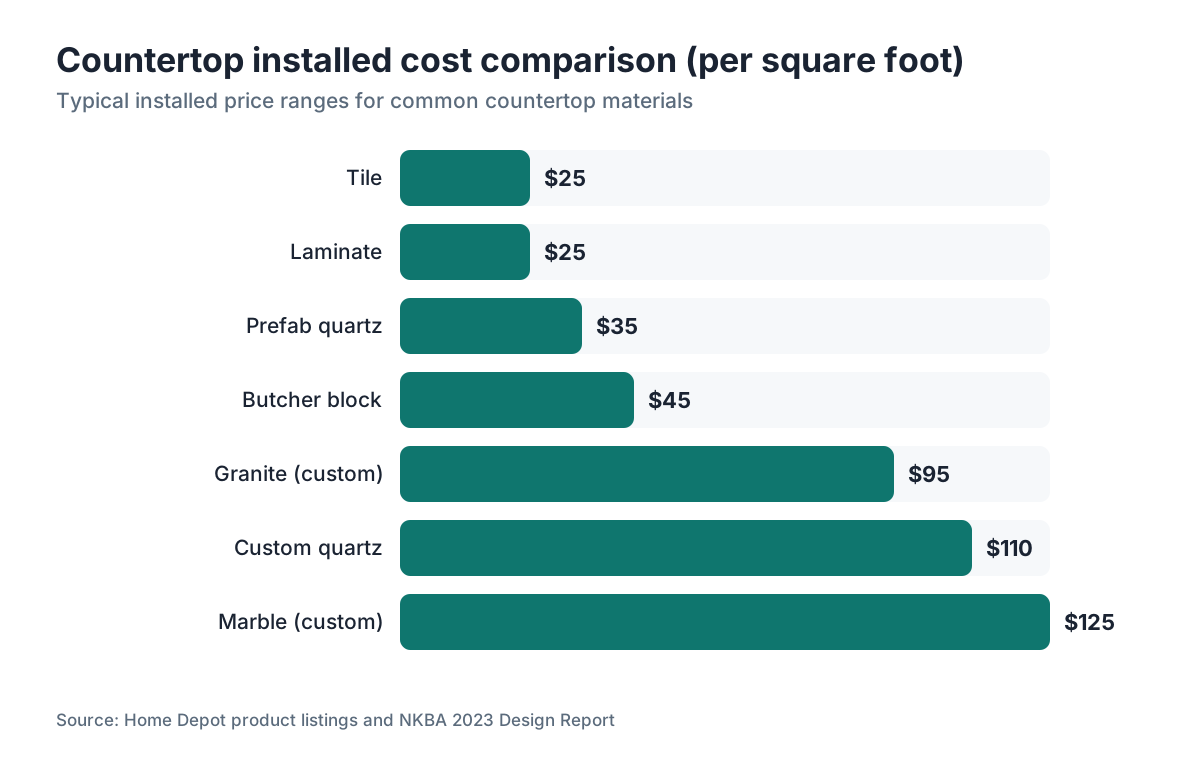
The chart below compares installed cost across the common countertop materials.
What sizes and thicknesses are standard for prefab quartz?
Prefab quartz comes in a handful of fixed sizes, and that constraint drives most of the decision. Depths are usually 25.5 inches (for standard 24-inch base cabinets with a 1.5-inch overhang) or 36 inches for islands. Lengths run 72, 96, or 144 inches. Thickness is almost always 3 cm (about 1.18 inches), though some budget lines use 2 cm with a built-up laminated edge to look thicker.
The fixed dimensions create real headaches in two situations. First, kitchens with peninsula returns, angled walls, or L-shaped runs usually need a seam wherever a standard piece ends, and that seam can land somewhere visible with no better option. Second, if your base cabinets are 25 inches deep instead of 24, or your walls run out of square (most do), you have to scribe-fit the back edge. Doable, but it adds time.
A 3 cm slab is structurally fine for a countertop. Quartz at 3 cm has flexural strength around 30 to 40 MPa, well past what kitchen loading demands [3]. Thinner 2 cm pieces with laminated edges look fine but can chip at the lamination joint if something hits them hard right at that seam.
Is prefab quartz quality as good as custom quartz?
The quartz material is usually close, sometimes identical. Prefab from brands like MSI, Silestone's entry lines, and various store-brand offerings uses the same engineered stone process as custom slabs. Resin binders, quartz content, and scratch resistance are comparable.
Where quality actually splits is finishing and consistency. High-volume prefab lines sometimes show:
- Edge profiles that are slightly less crisp, especially on the underside of an eased edge
- Color variation between pieces from different production batches (a real problem when two pieces sit side by side)
- Polished surfaces that aren't quite as mirror-bright as premium custom slabs
None of that matters much on a bathroom vanity. But in a big kitchen where two prefab pieces meet in the middle of a peninsula, batch color variation is a visible problem you can't fix after installation.
The bigger quality question is the person installing it. Prefab quartz set by someone who doesn't level the substrate, uses the wrong adhesive, or skips backer support at the sink cutout will fail in ways that have nothing to do with the material. Installation quality matters as much as material quality. Probably more.
What are the biggest downsides of prefab quartz?
Seams. That's the big one. A custom fabricator can usually tuck a seam behind a sink or in a quiet spot and polish it close to invisible. With prefab, the seam lands where the standard piece ends, which might be dead center in your cooking zone. Quartz seams show more than granite or marble seams because the uniform pattern makes any break obvious.
Color is the second problem. Prefab lines stock maybe 20 to 40 colors. Custom quartz runs into the hundreds from Caesarstone, Cambria, Silestone, MSI, and others [4]. Want a specific white with a particular vein pattern? Prefab probably doesn't have it.
Size limits bite in odd kitchens. A 96-inch maximum length can't cover a single 10-foot run in one piece. A 144-inch piece cuts down fine, but a 120-inch stretch between walls forces a seam in prefab where a full custom slab might bridge it clean.
Then there's resale perception, which is softer and harder to pin down. Most buyers can't tell prefab from custom once it's installed and looks right. But in a high-end home, an agent might describe the kitchen as having "prefab countertops" in a way that reads as budget build-out. Whether that dents your price depends entirely on your market.
Where do prefab quartz countertops make the most sense?
Bathroom vanities are the best use case, full stop. Vanities run 21 or 22 inches deep, so a single prefab piece covers them. They're short enough to skip seams, and buyers almost never notice or care where the material came from in a bathroom. A prefab vanity top in a clean white or gray looks sharp for $150 to $300 in material.
Small galley kitchens work well too, especially rentals and flips where the goal is durable and good-looking at low cost. If the whole run fits inside one prefab piece, you get all the toughness of engineered quartz with almost none of the custom premium.
Laundry rooms, mudrooms, and craft rooms are underrated. These spaces need a tough, wipe-clean surface, and nobody's spending $100 a square foot on a laundry room. A prefab piece cut to length is exactly right.
Big, complex kitchens are where prefab struggles. Anything with more than one run, an island, or non-standard dimensions piles up seams and fit problems that eat the cost advantage. At some point the labor spend makes custom the smarter route. Most experienced fabricators put that threshold around 60 to 70 square feet of total countertop, though it swings hard on kitchen geometry.
For a wider look at your material options, see our guide to kitchen countertops.
Can you install prefab quartz countertops yourself?
Technically yes, with big caveats. Quartz is heavy. A 3 cm piece at 96 by 26 inches weighs roughly 130 to 150 pounds. You need two people minimum, three for longer pieces. You also need a diamond-tipped blade to cut sink openings, which most homeowners don't own.
The steps for a basic DIY install:
- Pull the old countertop and check the cabinet tops for level (shim as needed, because quartz doesn't flex to hide an unlevel base).
- Cut sink and faucet openings with a circular saw and a diamond blade, working from the bottom face up so you don't chip the polished top.
- Run silicone adhesive along the cabinet rails and set the piece.
- Caulk the backsplash joint and reconnect plumbing.
The cutting step is where most DIYers go wrong. Quartz sits around 7 on the Mohs scale, harder than granite [5], and it chips easily at cut edges without the right blade and technique. Rental diamond blades work, but they take practice. A chipped sink cutout on a prefab piece won't repair back to invisible.
For a straightforward vanity top with the faucet hole already drilled, DIY is realistic. Kitchen sink cutouts are harder. A full-run kitchen install is labor-heavy enough that most homeowners come out ahead hiring a pro, even if they buy the prefab material themselves.
See our full guide to countertop installation for the step-by-step.
How does prefab quartz compare to other budget countertop options?
The real alternatives at this price live in three camps: laminate (Formica and similar), butcher block, and tile. Here's how they stack up.
| Material | Installed cost ($/sq ft) | Heat resistance | Water resistance | Repairability |
|---|---|---|---|---|
| Prefab quartz | $20, $50 | Moderate (thermal shock risk) | Excellent | Low |
| Laminate | $10, $40 | Poor | Good (seams are vulnerable) | Low |
| Butcher block | $30, $60 | Good with care | Low (needs sealing) | High |
| Tile | $15, $35 | Excellent | Good (grout varies) | Medium |
| Custom quartz | $70, $150 | Moderate | Excellent | Low |
| Granite (custom) | $60, $130 | Excellent | Good (needs sealing) | Low |
Laminate is cheaper and easier to DIY, but it scratches, chips at seams, and bubbles around sinks over the years. Quartz holds up longer with less fuss, which is why most people trading up from laminate land on it.
Butcher block is genuinely appealing where a warm, natural look matters. It's repairable in a way quartz isn't: scratches sand out, you re-oil, done. But it needs steady maintenance and doesn't belong anywhere with standing water.
Tile fell out of fashion about 15 years ago and is creeping back in some design circles. It's the only material here you can honestly DIY from scratch with modest skill. Grout upkeep is the standing objection.
For a closer comparison with laminate, see Formica countertops and laminate countertops. If granite is on your list, granite countertops covers cost and durability in full.
What brands make prefab quartz countertops?
The market splits into three tiers, and knowing which one you're buying from tells you most of what you need to know.
Retail house brands. Home Depot and Lowe's both carry prefab quartz under names like Home Decorators Collection (Home Depot) and allen + roth (Lowe's). These come out of China or Vietnam and are priced to move. Quality is adequate for vanities and simple kitchen runs. Warranty is usually 1 year on the product from the retailer, with little recourse once it's installed.
Mid-tier brand-name prefab. MSI (M S International) sells prefab quartz alongside its full-slab business, and plenty of fabricators stock prefab Silestone and Caesarstone pieces in popular colors. These carry the brand's standard warranty. Silestone offers a 25-year limited warranty on its products [6], which matters because the brand will actually honor a defect claim.
Fabrication-house prefab. Some regional shops cut their own prefab pieces from excess slab material and sell them at a discount. These can be excellent deals, since you're getting off-cuts from a real slab in a real brand's color. The downside is no standardization, thin inventory, and no warranty beyond what the shop offers.
For the top of the market, Cambria countertops shows what a premium quartz brand looks like by comparison.
How do you clean and maintain prefab quartz countertops?
Quartz is about as low-maintenance as countertops get. Daily cleaning is a damp microfiber cloth and mild dish soap, and that handles almost everything. No sealing, no oiling, no annual treatments.
A few things to keep away from it:
- Bleach and highly alkaline cleaners (pH above 8.5 or so) can dull the resin binder over time [7]. Skip oven cleaner, drain cleaner, and industrial degreasers.
- Long stretches of direct sunlight can yellow or fade some quartz colors. This matters under skylights.
- Hot pots straight on the surface. Quartz resin can scorch or crack from thermal shock above roughly 300 degrees F. Use trivets.
- Cutting on the surface. Quartz is hard, not invincible, and ceramic or metal knives can leave marks.
For stains, a paste of baking soda and water clears most organic marks. For stubborn stuff like dried grout or adhesive, a plastic scraper plus a non-abrasive cleaner does it. Keep bleach out of the mix.
Because the surface is non-porous, bacteria don't soak into quartz the way they can into porous stone. NSF (the National Sanitation Foundation) has tested and certified several quartz surfaces for food contact safety [8].
For care tips that apply across stone countertops, how to clean stone countertops is worth a read.
How do fabricators think about prefab quartz jobs?
Most custom fabricators have mixed feelings about prefab work. It's a lower-margin sale: less material markup, less fabrication labor to bill. But it's also a faster job with less setup and none of the template complications.
The real tension is liability. When a homeowner buys prefab from a big-box store and hires a fabricator just to set it, the fabricator never controlled the material. If a piece has a hidden crack from shipping, the fabricator still gets the complaint call. Plenty of experienced shops decline to install homeowner-supplied material for exactly this reason, or charge a premium to cover the risk.
For shops running their own prefab sales, the math flips. Buying prefab stock at wholesale and setting it efficiently can generate decent margins on simple vanity jobs, and it frees up CNC time for the complex custom work. Shops that keep prefab as its own product line, with standardized pricing, often find it profitable.
If you run a shop and want to price prefab against custom accurately, SlabWise's quoting tools let you build separate price books for prefab and slab work, so your margin targets stay clean without recalculating by hand every time.
What should you ask before buying prefab quartz?
Get clear answers to these five questions before you buy. Each one has burned somebody who skipped it.
Does the piece come with a warranty, and what does it cover? Big-box warranties are often 1 year and cover manufacturing defects only. Mid-tier brand warranties run 10 to 25 years but usually exclude the labor to replace a defective piece.
Can you see the actual piece before it leaves the store? Batch color variation is real. If you need two pieces from the same line, verify they match before you haul them home.
What's the return policy on cut pieces? Once you cut a prefab piece for a sink, it's yours no matter what happens next. Clarify the return window before the blade touches it.
Who's doing the install, and do they warranty their labor? Material and labor warranties are separate. A one-year labor warranty from an installer is reasonable. No warranty at all is a red flag.
Is the edge profile compatible with your backsplash and cabinets? Prefab almost always ships with an eased or beveled edge. If your design calls for an ogee or a waterfall edge, prefab isn't your product.
For how installation works once you've answered these, see countertop installation.
Frequently asked questions
Are prefab quartz countertops worth it?
For bathrooms and simple galley kitchens, yes. You get the durability and low maintenance of engineered quartz at roughly half the cost of custom fabrication. For large kitchens with multiple runs, islands, or odd layouts, the seam and size limits usually make custom the better investment. The savings erode quickly once you count extra seams and labor complications.
What is the difference between prefab and custom quartz countertops?
Prefab pieces are cut to fixed standard sizes at the factory, finished with a preset edge, and sold ready to install. Custom quartz starts with a full slab that a fabricator templates and cuts to your kitchen's exact measurements. Custom gives you unlimited sizes, hundreds of colors, and a choice of edge profiles. Prefab is cheaper but boxed in by whatever dimensions and colors the manufacturer stocks.
How much does prefab quartz cost at Home Depot or Lowe's?
Material prices at Home Depot and Lowe's run about $12 to $25 per square foot for prefab quartz. A 26-by-96-inch piece (roughly 17.3 square feet) often retails for $200 to $400. Installation is separate, usually $25 to $50 per square foot in labor, plus $75 to $150 per cutout for sinks or cooktops. Budget $400 to $900 total installed for a single bathroom vanity run.
Can you cut prefab quartz to fit your countertop?
Yes, with a circular saw or angle grinder fitted with a continuous-rim diamond blade. Cut from the underside when you can to keep chipping off the polished face. Score slowly, keep the blade wet or cool, and use a guide for straight cuts. Straight cuts along the length of a piece are manageable for experienced DIYers. Sink cutouts with curved corners are harder and riskier.
Do prefab quartz countertops need to be sealed?
No. Quartz is non-porous because the resin binders fill every space between the quartz particles. Unlike granite or marble, there's no path for water, oil, or bacteria to soak in. Sealing does nothing for quartz. The same goes for custom quartz. If a salesperson or installer pushes sealing on your quartz countertop, that's either a mistake or an upsell you don't need.
How do you handle seams in prefab quartz installations?
Seams in prefab quartz get glued with a color-matched epoxy and smoothed flush with the surface. The goal is a gap under 1/16 inch and a tight color match. In practice, prefab seams show more than custom seams because the fixed piece lengths put seams wherever the math lands, not where a fabricator would place them on purpose. Setting a seam inside a sink cutout area helps hide it.
What edge profiles are available on prefab quartz countertops?
Most prefab lines offer one or two profiles, almost always eased (a flat edge with slightly rounded corners) or a small bevel. Ogee, bullnose, waterfall, and mitered edges need custom fabrication and aren't available in standard prefab. If edge profile drives your design, custom is the only path. If a clean, simple edge works, prefab delivers it just fine.
Is prefab quartz from China lower quality than brand-name quartz?
Not automatically. The engineered quartz process is well understood worldwide, and large Chinese manufacturers make stone that meets the same specs as European or U.S. quartz. What varies is quality-control consistency and warranty backing. A piece from a reputable Chinese maker sold through an established brand carries more accountability than an unbranded piece from an importer with no customer service. The brand behind it matters more than the country of origin.
Can prefab quartz countertops be used outdoors?
Generally no. Quartz resin binders break down under prolonged UV, causing discoloration and surface damage. Most quartz manufacturers explicitly exclude outdoor use from their warranties. For a quartz-look surface outdoors, porcelain slab is the better call because it has no resin component and holds up to UV. For an outdoor kitchen, granite is another durable, proven choice.
How long do prefab quartz countertops last?
With basic care, quartz countertops typically last 15 to 25 years or more. The material itself doesn't degrade or stain the way natural stone can. The limiting factors are the resin surface dulling from harsh chemicals, chips at edges from impact, or a bad install causing stress cracks. A level, well-supported cabinet base is the biggest factor in how long any quartz countertop lasts, prefab or custom.
What is the best prefab quartz color for a small kitchen?
Light colors, mainly whites and light grays with minimal veining, make small kitchens feel bigger and are the easiest to match across multiple prefab pieces. Pure white and light greige tones are the steady bestsellers in prefab lines and have the widest availability at retailers, which gives you the best odds of finding matching pieces from the same production run if you need more than one.
Does prefab quartz add value to a home?
Quartz countertops generally appeal to buyers, though isolating prefab versus custom is hard because it hinges on the rest of the kitchen and local market expectations. In a mid-range home, durable, clean-looking quartz is a plus. In a luxury home where buyers expect premium finishes, prefab may read as a shortcut. Remodeling Magazine's annual Cost vs. Value report tracks kitchen remodel returns but doesn't break out countertop material separately.
Sources
- Natural Stone Institute, Quartz Surface Products Consumer Guide: Engineered quartz surfaces contain roughly 90-94% ground quartz crystals bound with polymer resins and pigments
- U.S. International Trade Commission, HTS Chapter 68 Stone Articles: Major sources of imported engineered stone products include China, India, and Spain
- ASTM International, ASTM C1505 Standard Test Method for Flexural Strength of Dimension Stone: Flexural strength of engineered quartz at 3 cm thickness is typically around 30-40 MPa, adequate for countertop applications
- Caesarstone US, Product Color Catalog: Major quartz brands offer hundreds of color options across their full slab lines
- U.S. Geological Survey, Mohs Hardness Scale Mineral Fact Sheet: Quartz has a Mohs hardness of approximately 7, making it harder than most other common countertop materials
- Silestone by Cosentino, Warranty Documentation: Silestone offers a 25-year limited warranty on their quartz surface products
- Cosentino Technical Care & Maintenance Guide: Highly alkaline cleaners can dull quartz resin binders over time; pH above approximately 8.5 should be avoided
- NSF International, Certified Countertop Surface Products: NSF has tested and certified several quartz surfaces for food contact safety
- Remodeling Magazine, Cost vs. Value Report 2024: Kitchen remodel return on investment data by region; minor kitchen remodels average 96.1% cost recoup nationally in 2024
- Home Depot, Prefab Quartz Countertop Product Listings: Prefab quartz pieces at Home Depot retail for approximately $12-$25 per square foot in material cost
- National Kitchen and Bath Association, 2023 Design Report: Quartz is consistently among the top two countertop materials specified in kitchen remodels
Last updated 2026-07-09