TL;DR
- Marble countertops run $40 to $200 per square foot installed, set by grade, origin, and edge profile.
- The stone stays cool, takes heat, and looks gorgeous.
- It also etches from acids in seconds and wants sealing every 6 to 12 months.
- Good pick for bakers and light-use kitchens.
- A gamble for families who cook heavy with citrus and wine.
What exactly is marble and how is it formed?
Marble is metamorphic rock. It started as limestone or dolomite and got cooked under heat and pressure deep in the earth until the calcite crystals recrystallized into a denser mineral matrix. That process gives marble its veining. Mineral impurities (usually clay, silt, sand, iron oxides, or chert) got swept into flowing bands as the rock transformed. [1]
The calcite base is what makes marble beautiful and also what makes it reactive. Calcite dissolves in weak acids, which is why a lemon wedge left on a marble slab for ten minutes leaves a dull ring. That's etching, not a stain. The two are different problems with different fixes, and confusing them is the single most common mistake homeowners make before they buy.
Most marble sold in the U.S. comes from quarries in Italy (Carrara, Calacatta, Statuario), Turkey, Greece, and Brazil, with a smaller share from domestic quarries in Vermont, Georgia, and Tennessee. [2] Source matters. It affects color consistency, veining density, and sometimes porosity. Calacatta marble from Italy has dramatically bolder veining than standard Carrara and costs two to three times the price per slab.
How much do marble countertops cost in 2026?
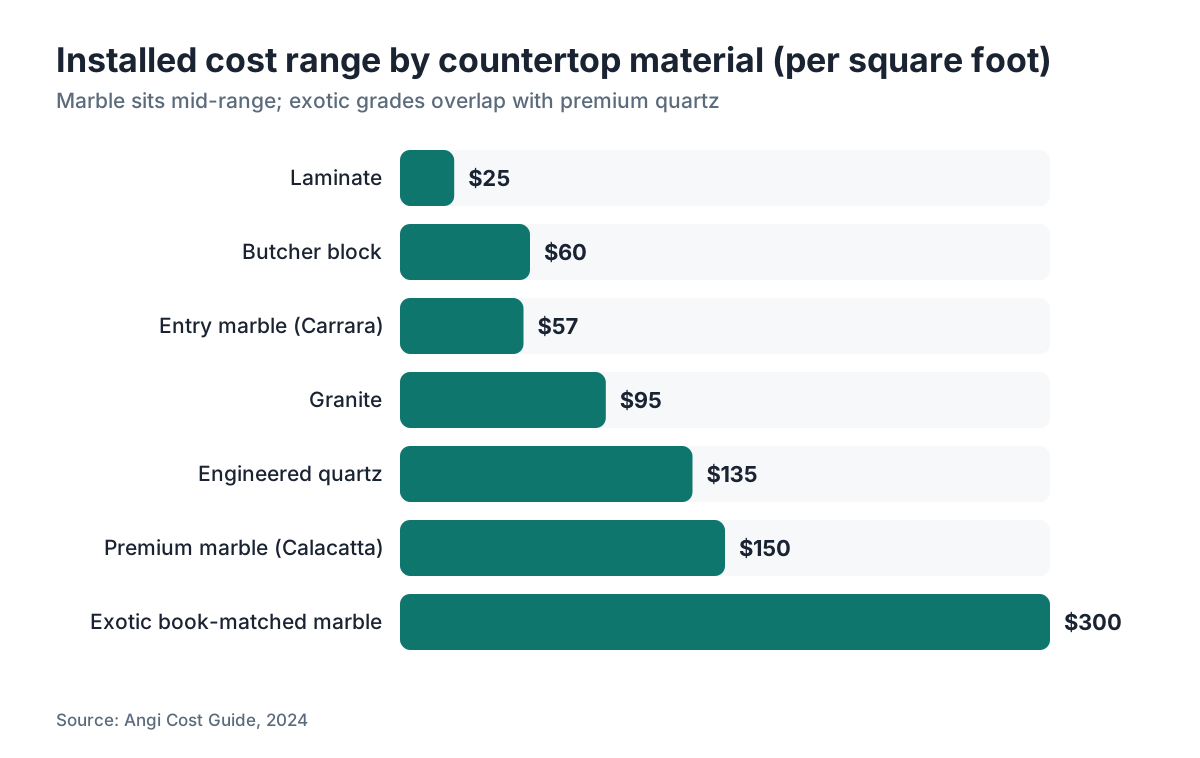
Installed marble countertops run $40 to $200 per square foot. Three things drive that wide range: slab grade and origin, edge profile complexity, and your local labor market. [3]
Here's a realistic breakdown by tier:
| Marble type | Material cost/sq ft | Installed cost/sq ft |
|---|---|---|
| Standard Carrara (entry grade) | $10 to $25 | $40 to $75 |
| Mid-grade Carrara or Turkish white | $25 to $45 | $70 to $110 |
| Calacatta or Statuario | $50 to $120 | $100 to $200 |
| Book-matched exotic slabs | $100 to $200+ | $200 to $400+ |
Those installed figures include fabrication (cutting, polishing, edge work) and a basic drop-in install. They don't include demolition of old counters, plumbing disconnect and reconnect, or backsplash tile. In high-cost markets like San Francisco or New York City, add 20 to 40 percent. In lower-cost markets in the Southeast or Midwest, you may land at the bottom of the range.
Edge profiles add cost. A simple eased edge is usually included. An ogee or waterfall edge on thick material can add $15 to $25 per linear foot. Cutouts for undermount sinks and cooktops carry separate charges, usually $75 to $200 each depending on the fabricator.
The average kitchen has 30 to 40 square feet of countertop surface. A mid-grade marble job runs $2,100 to $4,400 for materials and basic install, before any of the extras above. A full Calacatta kitchen is easily $6,000 to $8,000 and up.
Want a real number without calling three fabricators? The quoting tool at SlabWise takes your dimensions and material choice and returns an instant estimate based on current market rates.
For a broader comparison across all countertop materials, see our guide to kitchen countertops.
What are the different types of marble used for countertops?
Not all marble performs the same on a kitchen counter, and showroom naming is loose enough to cause real confusion.
Carrara is the most common and least expensive Italian marble. It's white to blue-grey with fine, feathery grey veining. Porosity is moderate. It's the default for budget-conscious buyers who want the marble look.
Calacatta comes from a single quarry area near Carrara but has bolder veining, usually gold or warm grey against a brighter white background. Slabs vary wildly within this category. Some are subtle, some are striking. The price gap from Carrara is real and consistent.
Statuario is the premium Italian white, with a bright white background and bold grey veining. Supply is limited and prices reflect that.
Danby is quarried in Vermont and is notably denser and less porous than most Italian marbles. [4] It's one of the few marbles genuinely suited to heavier kitchen use. Vermont is the top domestic marble producer by value.
Nero Marquina is a black marble from Spain with white veining. It shows water spots and toothpaste residue far more than white marble. Worth knowing before you spec it in a bathroom.
Turkish white and Greek Thassos fill the mid-market. Both are relatively consistent and available in large slab quantities, which matters for big kitchens.
A note on labeling. Some suppliers sell quartzite under marble names, especially materials from Brazil. Quartzite is much harder and acid-resistant. If someone sells you a "marble" that's supposedly impervious to etching, ask for a certified mineralogy report or do the acid test yourself. One drop of vinegar. Marble etches within minutes, quartzite does not. For more on quartzite care, see our guide on how to clean quartzite countertops.
Does marble etch and stain, and what's the real difference?
This is where most marble disappointment starts, so it gets more than a paragraph.
Etching is a chemical reaction. Acids (lemon juice, vinegar, wine, tomato sauce, even some soaps) dissolve the calcite in the marble surface and leave a dull, matte mark. Etching happens fast, often in under a minute. Sealing does not prevent etching. Sealers block liquid from soaking into pores, but they don't create an acid-resistant barrier thick enough to stop the surface reaction. [5] This is the single most misunderstood fact in the marble business.
Staining is different. It happens when a pigmented liquid (coffee, red wine, oil) soaks into the stone's pores and deposits color. Sealing does reduce staining because it slows absorption. An etch mark looks dull or hazy but usually keeps the stone's color. A stain changes the color.
On a honed finish, etching is less visible because the surface is already matte. On a polished finish, an etch shows up clearly as a dull patch against the shine. That's the real reason fabricators push honed marble for kitchens. Not because it etches less, but because the etches blend in.
Can you fix etching? Yes, but not by wiping. Light etches buff out with a marble polishing powder (tin oxide or cerium oxide) and a soft cloth. Deep etches need professional re-honing or re-polishing of the affected area. [6] Budget $100 to $300 for a professional polish visit if you need it.
For a full maintenance protocol that covers stone surfaces beyond marble, our how to clean stone countertops guide walks through the specifics.
How often does marble need to be sealed and what product should you use?
Seal marble countertops every 6 to 12 months as a working rule. The honest answer depends on the marble's porosity and how much liquid the surface sees. [7] Some Danby slabs are dense enough that the fabricator seals them once and they hold for two years. Some softer Carrara slabs in a heavy-use kitchen need it every six months.
The water test is the standard field check. Pour a quarter-size pool of water on the counter and wait 10 minutes. If it darkens the stone, the sealer is failing and it's time to reseal. Run this test every few months for the first year while you learn how your specific slab behaves.
Use a penetrating (impregnating) sealer, not a topical coating. Penetrating sealers soak into the pores and don't change the surface look or texture. Topical coatings sit on top and can yellow, peel, or make the surface look plasticky. Brands like StoneTech, Miracle Sealants, and Aqua Mix sell reputable penetrating sealers at hardware stores for $20 to $50 per bottle. One bottle usually covers a full kitchen. [8]
Application is simple. Clean the counter thoroughly, apply the sealer with a cloth or brush, let it sit per the label (usually 5 to 15 minutes), wipe off the excess before it hazes, and let it cure for a few hours before use. You don't need a pro. Any homeowner can seal a kitchen in under an hour.
How does marble compare to granite, quartz, and quartzite?
Shoppers almost always end up comparing these four. Here's what matters in practice.
Marble vs. granite: Granite is harder (Mohs 6 to 7 vs. marble's 3 to 4) and much more acid-resistant. [9] Granite etches too, but slowly and less noticeably. If you cook often with acidic ingredients and want natural stone, granite is the more forgiving choice. See our granite countertops guide for the full breakdown.
Marble vs. quartz: Engineered quartz (Caesarstone, Silestone, Cambria) is non-porous, needs no sealing, and resists most kitchen acids. It can look marble-like but never quite matches the real thing. Quartz costs more than entry marble and sits below premium marble. It also can't take sustained direct heat the way marble can. For zero-maintenance stone looks, quartz is the practical answer. See our Cambria countertops guide for one example.
Marble vs. quartzite: Real quartzite (not the Brazilian stones mislabeled as marble) is quartz sandstone metamorphosed under even more heat and pressure than marble. It's Mohs 7 and acid-resistant, with its own beautiful veining. The catch: it's harder to fabricate (more saw blade wear) and good slabs are less consistently available. If a fabricator calls quartzite maintenance-free, they're oversimplifying. It still benefits from sealing.
| Material | Hardness (Mohs) | Acid resistant | Needs sealing | Typical installed cost |
|---|---|---|---|---|
| Marble | 3 to 4 | No | Yes | $40 to $200/sq ft |
| Granite | 6 to 7 | Mostly | Yes | $40 to $150/sq ft |
| Engineered quartz | 7 | Yes | No | $70 to $200/sq ft |
| Quartzite | 7 | Yes | Recommended | $60 to $200/sq ft |
| Laminate | N/A | Yes | No | $10 to $40/sq ft |
For a very different direction, see our comparisons to laminate countertops or butcher block countertops.
Is marble a good choice for kitchen countertops?
It depends on who you are in the kitchen.
Marble has been in kitchens for centuries. Pastry chefs seek it out because the stone stays naturally cool, which keeps butter-based doughs from warming during rolling. It takes heat. You can set a hot pan on it without damage (granite cracks occasionally under thermal shock; marble generally doesn't, though thick slab helps). [10] It's also one of the few natural surfaces that looks better with age in the right context. The gentle patina that develops over years in a well-loved kitchen is part of what people are paying for.
Now the other side. If your household makes pasta with tomato sauce, squeezes citrus daily, leaves wine glasses out overnight, or has kids who treat counters as craft tables, marble will look worn within a year. Not damaged in a structural sense. Visibly etched and dulled in ways that bother a lot of owners.
Here's the honest opinion. Marble makes sense in a kitchen where it's the centerpiece, the owner understands what they're buying, and daily habits don't include heavy acid exposure. It makes less sense as a casual, worry-free surface. Buy it with clear eyes or don't buy it.
Bathrooms flip the math. Marble in a bathroom gets water, soap, and toothpaste rather than lemon juice and red wine. That's an easier environment, and marble vanity tops have a long track record.
If you're weighing marble against the full field, our kitchen countertops guide covers every major option side by side.
What edge profiles and finishes are available for marble countertops?
Finish and edge choices affect maintenance as much as looks.
Finishes:
Polished is the mirror-bright surface most people picture. It makes veining and color pop. Etches are very visible against it.
Honed is a flat matte or satin surface with no shine. It softens the veining slightly and makes etches nearly invisible. It shows smudges and fingerprints more than polished. Most fabricators push honed for kitchen use.
Leathered or brushed has a slight texture, like running your hand over gently pebbly leather. It hides both etches and fingerprints. It's less common and some fabricators charge extra.
Waterfall edges (where the slab drops vertically to the floor as a side panel) are popular in contemporary kitchens. They require a full extra slab or a precise book-match, which adds real cost.
Edge profiles on a standard 3 cm (about 1.2-inch) slab:
- Eased: slightly softened square edge. Usually no upcharge.
- Beveled: 45-degree angle on the top face. Minimal upcharge.
- Bullnose: fully rounded over the top edge. Minimal upcharge.
- Ogee: an S-curve with one concave and one convex section. More traditional look. Adds $10 to $20/linear ft.
- Waterfall: See above. Adds slab cost.
For thicker slabs (4 or 5 cm, often used for islands), profiles can be mitered to fake even more thickness, which is mostly a visual choice.
One last tip. If you're ordering polished marble and you're worried about etching, ask the fabricator about a topical enhancer or polishing compound after sealing. It doesn't prevent etching, but it makes touch-up easier and reduces how noticeable minor marks are.
How do you install marble countertops?
Marble countertop installation follows the same process as any stone slab job: template, fabricate, deliver, set. [11]
Templating comes first. A fabricator measures your cabinets (by hand or with a digital templating tool) to produce an exact pattern for cutting the slab. This happens after your cabinets are fully installed and level. Don't rush it. A bad template means seams in the wrong places or gaps at the wall.
Fabrication takes the template back to the shop. The slab gets cut on a CNC waterjet or bridge saw, edges get profiled on a router, and surfaces get their final polish or hone. Lead time from template to install runs 3 to 10 business days for most shops, longer for complicated jobs or busy seasons.
Installation day: the stone comes in and gets set on the cabinets with silicone adhesive at the cabinet tops and epoxy at any seams. The crew shims and levels the slabs, then caulks the backsplash line. A standard kitchen takes 2 to 4 hours for a two-person crew. Stay off the counters for 24 hours while the adhesive cures.
Marble is heavier than people expect. A 3 cm slab weighs roughly 18 to 20 pounds per square foot. [12] A 30-square-foot kitchen counter weighs 540 to 600 pounds. Standard base cabinets handle this fine. Very old or custom furniture-style bases sometimes need reinforcement. Ask your fabricator to check during templating.
Our full countertop installation guide covers the process in detail, including what to do if you're replacing existing counters versus working in new construction.
Fabricators who need efficient quoting and slab nesting for marble jobs can see how SlabWise handles it.
How do you clean and maintain marble countertops day to day?
Daily cleaning is simpler than people fear. Warm water and a small drop of pH-neutral dish soap on a soft cloth, then a dry wipe to prevent water spots. That's the whole routine for 90 percent of messes.
What not to use: bleach, vinegar, ammonia-based cleaners (Windex), scrubbing powders, or acidic bathroom cleaners. All of them etch. This includes many "natural" cleaners marketed as safe for stone that happen to contain citric or acetic acid. Read the label.
For oils and greasy residue, a little mild dish soap and warm water is fine. For dried food, soften it first with a wet cloth, then wipe. Don't scrape with metal tools.
For etches and dull spots that develop over time, a marble polishing powder (online or at stone supply houses for $10 to $25) buffed in with a damp cloth will re-brighten a honed or polished surface for minor marks. Deep etches need a pro.
For mold or mildew in seams (more a bathroom concern than kitchen), a diluted hydrogen peroxide solution (12 percent, from beauty supply stores) is safer than bleach and works on organic stains in stone. Apply with a cotton ball, let it sit briefly, rinse.
The one task most homeowners skip: drying the counter after wet activities. Standing water doesn't etch marble, but it can slowly work into insufficiently sealed surfaces and leave mineral deposits, especially in hard water areas. A quick dry after washing dishes is a good habit.
What are the real long-term durability considerations for marble?
Marble has been on floors and counters in European kitchens for hundreds of years. Structural failure is not a realistic concern on a well-installed slab. What actually happens over time is surface change.
Over years of normal use, a polished marble counter develops a patina: subtle dulling, some light etching, maybe a few stains that never quite came out. Some owners love this. It's the aged look of old Parisian kitchen counters. Some owners find it distressing. Know which camp you're in before you buy.
Cracking is a real but overblown risk. Marble doesn't crack randomly under normal use. It can crack during installation if improperly supported, at thin points (near sink cutouts, say), or from a very heavy impact. A 3 cm slab over well-supported cabinets is stable. Where fabricators get calls is around thin bridge pieces over dishwashers or narrow strips near windows with no support.
Edge chipping is the most common physical damage. Bullnose and eased edges chip less than sharp profiles. If a corner sits near a high-traffic walkway, spec a slightly softer edge profile there.
Resale value: real estate circles keep repeating that marble adds more value than other countertop materials. The honest data is thin. The National Association of Realtors' remodeling reports track midrange kitchen renovations but don't isolate countertop material. What's clear is that buyers in certain markets expect stone counters and react badly to laminate. Whether marble commands a premium over granite is much less certain. [13]
For a different approach to durable surfaces, see our Corian countertops guide, which covers solid-surface options that are more repair-friendly but less natural-looking.
Where can you buy marble slabs and what should you watch out for?
Marble slabs come through a few channels, each with tradeoffs.
Stone yards and slab distributors are where fabricators source material. Many let homeowners walk the yard and pick a specific slab (called hand-selecting or lot-selecting). This matters enormously for marble because no two slabs are alike. A Calacatta slab photographed online may look nothing like what arrives. If you care about the exact look, select in person.
Big box stores (Home Depot, Lowe's) sell marble tile and sometimes slabs through their countertop programs. Prices are competitive at the entry level, but slab options are limited and you're working with subcontracted installers rather than a dedicated stone shop.
Fabricators who are also material dealers sell the slab and do the work in one transaction. Convenient, but you have limited ability to shop slab prices separately.
Online tile and slab retailers have grown a lot. They're fine for tile. Buying a full countertop slab online without seeing it is a real gamble on color and veining match.
What to watch out for:
- Misidentified material. Quartzite and some dolomitic marbles get sold as marble or vice versa. Ask for the mineralogy or do the acid test.
- Thin slabs at low prices. 2 cm slabs are cheaper but need a plywood substrate and are more fragile near cutouts. 3 cm is the standard for countertops for good reason.
- Vague seam placement. Ask where seams will fall before you sign. On a veiny marble, a seam through a dramatic vein can look great (book-matched) or jarring (mismatched). Get it in writing.
- Sealer upsells. Some shops charge $100 to $200 for a sealer application at installation. It's a legitimate service, but it's also something you can do yourself for $25 in product. Decide if the convenience is worth it.
Frequently asked questions
How long do marble countertops last?
Structurally, a properly installed marble slab on supported cabinets can last the lifetime of the house. Marble has been used on building surfaces for thousands of years. The real question is how the surface looks over time. Polished marble develops etching and patina with normal kitchen use, which some owners embrace and others find frustrating. With routine sealing and careful habits, marble holds up well for 20 to 30 years before any refinishing is needed.
Can you put hot pans on marble countertops?
Marble handles heat better than engineered quartz or laminate. Setting a moderately hot pan directly on marble is generally fine and won't crack or discolor the stone under normal cooking conditions. That said, extreme and sudden thermal changes on thin slabs near cutouts carry some crack risk. Most fabricators suggest using trivets as a habit, not because marble is fragile, but because it removes any risk entirely.
Does sealing marble prevent etching?
No. This is the most common marble misconception. Sealing fills pores and reduces liquid penetration, which helps prevent staining. But sealer does not form an acid-resistant barrier on the surface. Citrus juice, vinegar, wine, and other acids still react with the calcite in the stone and leave dull etch marks even on freshly sealed marble. Honed finishes hide etching better than polished ones, but no finish is immune.
What's the difference between Carrara and Calacatta marble?
Both are Italian white marbles from the same region of Tuscany, but they come from different quarries and look noticeably different. Carrara is white to blue-grey with fine, feathery grey veining and is the most widely available and affordable Italian marble. Calacatta has a brighter white background and bolder veining, often with gold or warm grey tones. Calacatta is significantly rarer and typically costs two to three times more per slab.
Is marble good for bathroom vanity tops?
Marble fits bathrooms better than kitchens in most households. Bathrooms see water, soap, and toothpaste rather than the acidic food and drink that causes kitchen etching. Toothpaste is mildly abrasive but not acidic enough to etch quickly. Water spots are the main issue, especially in hard water areas. A good sealer plus the habit of wiping the surface dry after use handles most concerns. Marble vanity tops are a well-established choice with a long track record.
How do you remove etch marks from marble?
Light etch marks buff out with marble polishing powder (tin oxide or cerium oxide) applied with a damp cloth and gentle circular pressure. This works on both honed and polished surfaces, though you may need to re-polish the area to match sheen on a polished counter. Deep or widespread etching needs professional re-honing, which costs roughly $100 to $300 for a typical area. You can't remove etches by wiping or sealing. The surface material itself needs to be buffed off.
What is the Mohs hardness of marble and why does it matter?
Marble sits at Mohs 3 to 4 on the hardness scale, which is soft for a countertop stone. Granite is Mohs 6 to 7 and quartzite is Mohs 7. Hardness affects scratch resistance: keys, ceramic dishes, and some cookware can scratch marble. It also tracks with acid sensitivity, because the same calcite softness that makes marble easy to polish makes it reactive to acids. Understanding hardness sets realistic expectations before purchase.
How heavy is marble and do cabinets need reinforcement?
A 3 cm (roughly 1.2-inch) marble slab weighs about 18 to 20 pounds per square foot. A typical 30-square-foot kitchen counter weighs around 540 to 600 pounds. Standard factory-built base cabinets are designed to handle this load without modification. Very old cabinets, furniture-style pieces not designed for stone, or cabinets with unusual spans may need reinforcement. Have your fabricator check cabinet condition during templating before the slab is ordered.
Can marble countertops be repaired if they chip or crack?
Yes, though the repair is visible on close inspection. Chips on edges get filled with color-matched epoxy and re-polished. Surface cracks fill the same way. For a clean repair, use a fabricator or stone restoration professional rather than a general handyman. The epoxy fill costs roughly $50 to $150 for a small repair. On dramatic-veined marble, matching the fill color is the hardest part. Prevention is easier: protect edges near traffic areas with a softer profile.
What cleaner is safe to use on marble every day?
Warm water and a few drops of pH-neutral dish soap on a soft cloth, then a dry wipe, handles almost everything. Do not use vinegar, bleach, ammonia-based glass cleaners, or powdered scrubs. Many commercial bathroom and kitchen cleaners contain acids or bleaching agents that etch or discolor marble. If you want a dedicated stone cleaner, brands like StoneTech and Miracle Sealants make pH-neutral spray cleaners formulated for natural stone that are safe for daily use.
How much does it cost to have marble countertops professionally polished or refinished?
Professional honing or re-polishing of an entire kitchen's marble counters runs roughly $300 to $800 for a standard kitchen, depending on surface area and how bad the etching is. Spot polishing for a single etch area is typically $100 to $300. Refinishing makes sense when etching is widespread and the surface has lost its uniform sheen. For minor isolated marks, DIY buffing with polishing powder is often enough and costs under $25 in materials.
What is book-matched marble and when does it make sense?
Book-matching means cutting two consecutive slabs from the same block and opening them like a book, so the veining mirrors across the seam. The result is a symmetrical, dramatic pattern. It makes the most visual sense on islands with a centered seam or on waterfall edges where the pattern wraps continuously. It requires buying two slabs (or two matching pieces from one large slab), which raises material cost. For heavily veined material like Calacatta, book-matching at an island centerpiece is genuinely spectacular.
Is marble environmentally friendly compared to other countertop options?
Marble is a natural quarried stone with no synthetic resins or polymer binders. Its main environmental footprints are quarrying energy and transport from source (often Italy or Turkey) to market. Engineered quartz uses up to 90 percent natural quartz but also adds polymer resins. Solid surface and laminate are almost entirely petrochemical products. On a lifecycle basis, natural stone sourced regionally and kept for decades without replacement is generally among the lower-impact countertop options, though no rigorous peer-reviewed comparative lifecycle analysis specific to countertop materials is widely available.
Sources
- USGS National Minerals Information Center: Marble is a metamorphic rock formed from limestone or dolomite recrystallized under heat and pressure; veining comes from mineral impurities swept into the rock during transformation.
- USGS National Minerals Information Center, Dimension Stone data: The U.S. imports significant marble from Italy, Turkey, Greece, and Brazil; domestic production includes Vermont, Georgia, and Tennessee quarries.
- Angi, Marble Countertop Cost Guide: Installed marble countertops typically cost $40 to $200 per square foot depending on grade and local labor.
- University of Vermont: Vermont Danby marble is notably dense and lower in porosity compared to many Italian marble varieties.
- Natural Stone Institute, Care and Maintenance: Penetrating sealers reduce staining by filling pores but do not create an acid-resistant barrier and do not prevent etching on calcite-based stone.
- Natural Stone Institute, Restoration and Maintenance: Light etch marks can be removed with marble polishing powder; deep etches require professional re-honing or re-polishing.
- Natural Stone Institute, Sealing Natural Stone: Most marble countertops should be resealed every 6 to 12 months depending on porosity and use; the water absorption test is the standard field check.
- Laticrete, StoneTech Professional product information: Penetrating impregnating sealers are preferred over topical coatings for marble; they do not alter surface appearance and cost $20 to $50 per bottle at retail.
- National Park Service, Mohs Hardness Scale reference: Marble is Mohs 3 to 4 while granite is Mohs 6 to 7 and quartzite is Mohs 7, making marble softer and more acid-sensitive.
- Natural Stone Institute, Technical resources on stone in the kitchen: Marble is naturally heat-resistant and generally does not crack from a hot pan under normal cooking conditions, though trivets are recommended as a precaution.
- Natural Stone Institute, Installation Guidelines: Standard stone countertop installation sequence is: template after cabinets are set, fabricate in shop, deliver and set with silicone adhesive and epoxy at seams.
- Natural Stone Institute, Stone weight reference: A 3 cm marble slab weighs approximately 18 to 20 pounds per square foot.
- National Association of Realtors, Remodeling Impact Report: NAR's remodeling reports track kitchen renovation returns broadly but do not isolate the incremental value of marble versus other countertop materials.
Last updated 2026-07-09