TL;DR
- Marble slab countertops run $40 to $200 per square foot installed, most jobs landing between $60 and $120.
- Marble stays cool for pastry and shrugs off hot pots, but it etches from lemon juice and wine, scratches easier than granite, and wants sealing every 6 to 12 months.
- Great for a bathroom or baking station.
- A gamble in a busy family kitchen.
What does a marble slab countertop actually cost?
Marble slab countertops cost $40 to $200 per square foot installed, and most homeowners land between $60 and $120 depending on region and grade [1]. The spread is wide because marble isn't one material. It runs from workhorse Carrara (mined in Tuscany, everywhere, cheap enough) up to book-matched Calacatta Oro that a fabricator has to hunt down and handle like glass.
Break it apart and it makes more sense. The slab itself, at the yard, runs $20 to $100 per square foot for 3/4-inch stone. Fabrication (cutting, edging, polishing) adds $15 to $40. Installation adds $10 to $30. Then the line items people forget: tearing out and hauling away the old counter ($5 to $15 per square foot), reconnecting plumbing for an undermount sink ($150 to $300 flat), and edge profiles that run from a free eased edge to $20 or more per linear foot for a waterfall or ogee [1].
Run the math on a typical U.S. kitchen with 45 square feet of counter and most projects land between $2,700 and $5,400 installed. High-end stone and a tricky layout push past $9,000. A bathroom vanity at 10 to 15 square feet is a far gentler place to start.
Geography moves the number hard. Labor in New York City or San Francisco runs 30 to 50 percent above the national midpoint. A Midwest or Southeast shop might quote the same Carrara job for a lot less. Get three quotes. Every time.
What are the different grades of marble and how do they affect price?
Marble grades aren't set by any single authority, so suppliers each run their own system. Most U.S. fabricators use a loose A through D scale (sometimes labeled Commercial through Premium) built around color variation, veining consistency, and how much surface flaw the stone carries [2].
Grade A marble is tight and consistent: minimal pitting, no repair, predictable veining. Calacatta, some Statuario, and select Thassos whites sit here. This is the stone in the magazine kitchen. Grade B carries more natural variation, occasional filler, and veining that drifts across a slab. Most Carrara and Bianco Venatino live here. Grade C and D stone has heavier repairs, more fissures, and inconsistent background color, so it usually ends up as tile rather than slab.
Origin drives price too. Italian marbles (Carrara, Calacatta, Statuario) carry name recognition that inflates cost, part real consistency and part branding. Greek Thassos white and Turkish Afyon can run just as clean for 20 to 30 percent less at the yard. Turkish Emperador Dark is a tight-grain brown that holds up better than most whites.
| Marble Type | Origin | Typical Slab Price ($/sq ft) | Etch Resistance | Best Use |
|---|---|---|---|---|
| Carrara | Italy | $20, $50 | Low | Bathrooms, light-use kitchens |
| Calacatta | Italy | $50, $120 | Low | Feature islands, bathrooms |
| Statuario | Italy | $60, $150 | Low | Low-traffic areas, design statements |
| Thassos White | Greece | $30, $70 | Low | Bathrooms, backsplashes |
| Afyon White | Turkey | $20, $45 | Low | Budget alternative to Carrara |
| Emperador Dark | Turkey/Morocco | $25, $55 | Moderate (dark hides etches) | Kitchens, high-traffic areas |
One thing the table can't show: book-matching, where two adjacent slabs mirror each other into a butterfly pattern, can double the installed cost because the fabricator has to buy matched slabs and cut them precisely. It's a legitimate look. Just know what the premium buys.
Why does marble etch and is there any way to prevent it?
Marble etches because it's calcium carbonate, and acid dissolves calcium carbonate. Etching is the number-one complaint about marble counters, and people constantly confuse it with staining. Two different problems, two different causes.
When an acid touches the surface, even a mild one like lemon juice, vinegar, wine, or coffee, it reacts with the calcium carbonate and eats a thin layer of the polished finish [3]. What's left is a dull ring or spot that looks like a water mark but won't wipe off. That's an etch. It's a physical change to the stone, not something sitting on top of it.
Stains are the opposite. A stain is a colorant soaking into the pore structure: olive oil, red wine, beet juice. Sealer slows stains. Sealer does nothing for etching. Full stop. This is the single most repeated myth in the countertop business, and it leaves homeowners thinking they botched their maintenance when their sealed marble goes dull.
Real protection against etching comes down to two choices. Accept it as the material's character (many designers argue honed, aged marble earns a beautiful patina), or pick a different stone. Honed marble hides etch marks better than polished because the whole surface is already matte, so a new dull spot doesn't jump out. The etching still happens. You just stop noticing it.
Some shops push a penetrating resin treatment (sold under names like SHIELD or Marble Armor) that claims to cut etch sensitivity. Results vary and independent long-term data is thin. I wouldn't bet against it helping somewhat, but I wouldn't promise a client it fixes the problem on a hard-working kitchen counter.
Want a white stone with the same drama and better acid resistance? Quartzite is the most honest swap. Our how to clean quartzite countertops guide walks through how that stone behaves day to day.
How often does marble need to be sealed and what does sealing actually do?
Most countertop marble wants sealing every 6 to 12 months, and where you land in that range depends on porosity, traffic, and the sealer [4]. Dense marbles like Thassos drink sealer slowly and might go 18 months. A thirsty Carrara in a working kitchen needs it twice a year.
Sealing drops a resin or silicone compound into the pore structure of the stone, which slows how fast liquids soak in. The Natural Stone Institute (formerly the Marble Institute of America) says to test absorption before you reach for a bottle: pour a tablespoon of water on the surface and time it. Their care guidance puts the threshold plainly: stone that absorbs water quickly should be sealed [4]. If it's gone in 4 minutes or less, seal now. If it sits for 30 minutes, you can wait.
Application is simple. Clean with a pH-neutral cleaner, let it dry completely, wipe on the sealer with a cloth or foam applicator per the label, let it soak in (usually 10 to 30 minutes), then buff off every bit of excess. Let sealer pool or dry on top and you'll get a hazy film. Skip acidic and ammonia cleaners afterward; they break the sealer down faster.
Good impregnating sealers (Tenax, Akemi, StoneTech BulletProof) cost $25 to $50 for a quart that covers 100 to 150 square feet. Rather pay someone? A professional re-seal runs about $100 to $250 for a kitchen by square footage. Our how to clean stone countertops guide covers the full routine.
Is marble a good choice for kitchen countertops or is it too high-maintenance?
Marble works in a kitchen only if you cook a certain way and shrug off imperfection. That's the honest answer. It depends on you, not the stone.
Pastry chefs have rolled dough on marble for centuries because it stays cool, which keeps butter from melting into the dough. Real functional advantage. Marble also takes a hot pot better than most engineered surfaces (quartz can crack from thermal shock; marble tolerates the heat). For a baker or anyone who wants those specific properties, a marble island or a dedicated pastry slab earns its keep.
Now the family kitchen. Teenagers building sandwiches, pasta nights with tomato sauce, coffee every morning. Marble is going to etch. Fast. The veining that looked stunning at the yard will go dull in spots within months. Some people genuinely don't mind and lean into the aged look. Others hate it. Figure out which one you are before you spend $5,000.
Granite takes acid better, scratches less, and costs about the same or a little less. Quartzite (the natural metamorphic rock, not the engineered quartz) reads like marble but runs on silica instead of calcium carbonate, so it resists etching. Our granite countertops guide and marble countertops overview put them side by side.
In a bathroom, marble is close to perfect. No cooking acids, little splatter, low traffic. That's where the stone lives its best life. Same for a careful bar area. If you're pricing marble for a primary kitchen on a tight budget, spend an afternoon with a sample and a cut lemon before you sign anything.
How is a marble slab countertop fabricated and installed?
Marble fabrication runs through five stages, and knowing each one lets you read a quote and spot a shortcut.
First, templating. A fabricator comes to your home and templates the space, either with cardboard templates or a digital laser tool. Figure 30 to 90 minutes. The template captures cabinet dimensions, the sink cutout, appliance gaps, and any notches for walls or columns. Digital templates (Proliner is the market standard) feed straight into CNC software and cut human error way down [5]. Ask which your shop uses.
Second, slab selection. You go to the yard and pick your slab. This matters more for marble than any other material, because two slabs both labeled "Carrara" can look nothing alike. Bring a cabinet door sample or a clear photo of your cabinetry. Look at the whole slab, never a sample tile. The slab has to yield your square footage with room for error, and the fabricator will show you a layout.
Third, fabrication. The shop cuts the slab on a bridge saw or CNC waterjet, shapes the edge on a CNC edger or by hand, and polishes the cut edges. Undermount sink cutouts happen here. Good shops dry-lay the pieces on the slab before they move anything, just to confirm fit. Budget 2 to 5 days for a typical kitchen.
Fourth, installation. Cabinets have to be level before stone arrives, so the crew checks with a level and shims as needed. Pieces set into silicone adhesive on the cabinet tops. Seams get filled with color-matched epoxy and polished flat. A standard kitchen takes 3 to 6 hours for two installers.
Fifth, finishing. The fabricator caulks the joint between counter and wall (never grout, which cracks). An undermount sink gets mounted and sealed on this visit. Our countertop installation article covers the full timeline and what to check after the crew leaves.
Any shop quoting marble should tell you its CNC setup and its seam plan. Seams show more in marble than granite because of the stone's translucency and pale background. The right seam goes in a corner, behind a sink, or wherever your eye lands least. A fabricator who never brings up seam placement before you sign isn't thinking hard about your job.
Shops running quoting and nesting software (SlabWise is one option) can show you digitally how your slabs get cut before anyone fires up a saw, which catches waste and makes seam placement deliberate instead of accidental.
What edge profiles work best for marble countertops?
For marble, rounded edges beat sharp ones, because the stone is soft and sharp corners chip. Marble runs 3 to 4 on the Mohs scale against granite's 6 to 7 [6], so a crisp 90-degree eased edge looks clean but starts showing corner chips over time in a busy kitchen. Beveled, bullnose, and full-bullnose profiles round that corner off and forgive marble's softness.
Ogee and waterfall profiles are popular on marble because the stone's translucency makes carved edges glow. They cost more, typically $20 to $35 per linear foot extra, because they eat more CNC or hand time. Dupont, demi-bullnose, and pencil edges sit in the middle.
On a 25-linear-foot kitchen perimeter, edge choice alone swings the invoice from $0 (eased) to about $875 (complex ogee). That's a real budget line. Talk it through before fabrication.
Thicker slabs (1.25-inch/3cm rather than 3/4-inch/2cm) give an edge profile more mass to shape and read more substantial. Most U.S. fabricators now default to 3cm for exactly this reason. Go with 2cm and you can laminate the edge (doubling material at the front face) to fake the 3cm look without buying full-thickness stone.
How does marble compare to other countertop materials?
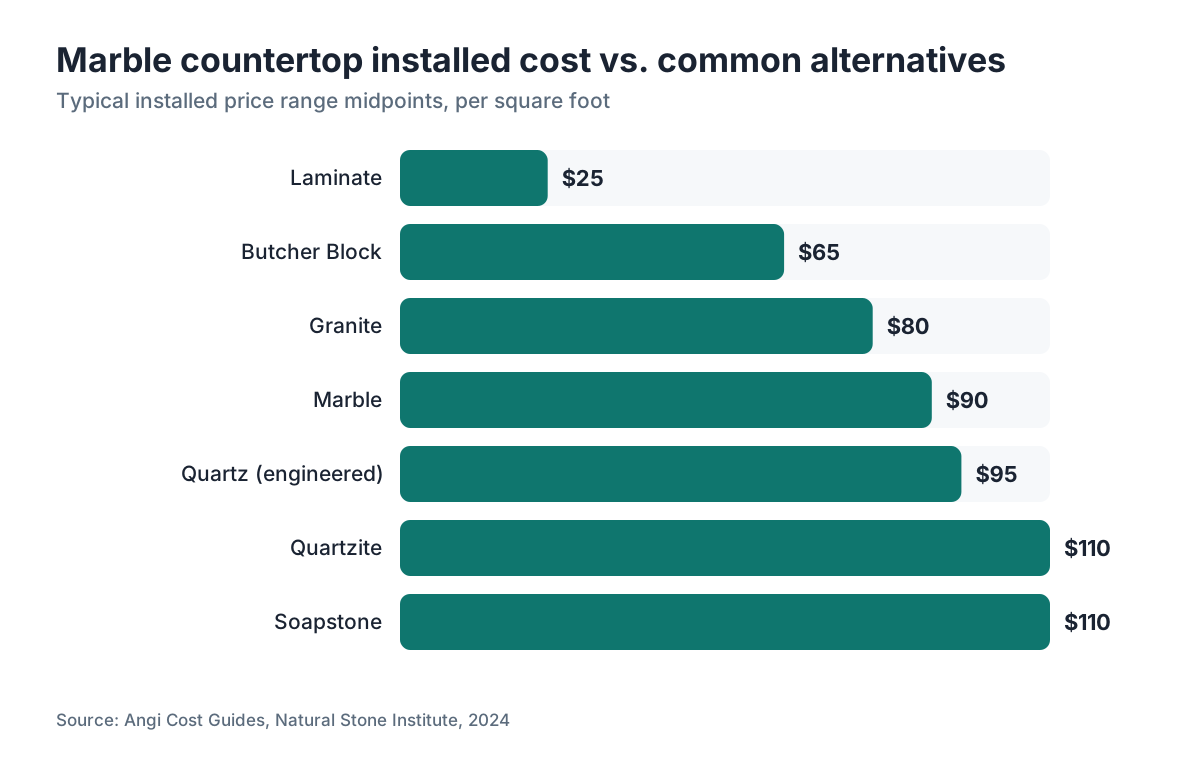
Marble beats its alternatives on drama and repairability and loses on acid resistance and upkeep. Here's the full lineup.
| Material | Installed Cost ($/sq ft) | Etch Risk | Scratch Risk | Heat Resistance | Maintenance |
|---|---|---|---|---|---|
| Marble | $40, $200 | High | Moderate | Good | High (seal 1 to 2x/yr) |
| Granite | $40, $150 | Low | Low | Excellent | Low (seal 1x/yr) [7] |
| Quartzite | $60, $200 | Low, Moderate | Low | Good | Moderate |
| Quartz (engineered) | $50, $150 | None | Low | Poor (thermal shock) | Very Low |
| Soapstone | $70, $150 | None | Moderate | Excellent | Low (oil 1 to 2x/yr) |
| Butcher Block | $30, $100 | None | High | Poor | High (oil monthly) |
| Laminate | $10, $40 | None | Moderate | Poor | Very Low |
Marble wins on one thing almost nobody mentions: repairability. Scratches and light etches on a polished marble surface can be professionally re-polished and honed back to life. A quartz surface with a deep scratch is much harder to fix invisibly. The softness that makes marble vulnerable is the same softness that makes restoration possible.
Comparing marble to engineered quartz (Cambria, Silestone, Caesarstone)? In a kitchen the practical gap is big. Our Cambria countertops guide covers that side of the decision.
On a tight budget but stuck on the white-and-gray veined look? High-quality laminate has come a long way. See laminate countertops and Formica countertops for straight talk on those.
Can marble countertops be repaired if they chip or crack?
Yes, and repairability is one of the underrated arguments for natural stone. Small edge chips get filled with color-matched epoxy or polyester resin, then sanded and polished to blend. A good restoration tech can make a chip nearly invisible when the stone didn't break clean away. Saved the chip? The repair gets easier.
Cracks are tougher. A hairline crack from settling or impact can be filled and reinforced from below with epoxy and fiberglass mesh, but it usually stays faintly visible under the right light. A full break, where the slab splits, means replacing that section.
Light etching comes out with polishing powders (tin oxide, marble polishing powder). Apply with a damp cloth and buff in small circles. For heavy etching across a wide area, a stone restoration contractor with a diamond polishing machine re-hones or re-polishes the surface. That runs $300 to $800 for a kitchen depending on severity and where you live.
Honing the whole surface (moving from polished to matte) is sometimes the smart call for a kitchen that's etched all over. Honed marble hides new etches better, and plenty of designers think it fits a working kitchen anyway.
What should you ask a fabricator before buying marble slab countertops?
The questions you ask before signing tell you almost everything about a shop. Here's what I'd ask and why each one matters.
Do you have real marble experience? Marble cuts differently than granite. It's brittle at cuts and sink openings. A shop that mostly runs granite may not have its blade speeds and feed rates dialed in for marble. Ask to see photos of recent marble jobs.
Where will the seams go? Get it in writing on the drawing. Seam visibility is a bigger deal in marble than in dark stone. If the fabricator hasn't thought about it, that's a flag.
What slab thickness do you recommend? 3cm is the standard for structural strength, especially around sink cutouts. Some budget quotes spec 2cm to shave material cost. Know what you're getting.
How does your template-to-cut workflow run? Digital templating into CNC production cuts error way down. A shop still on cardboard templates and hand scribes isn't automatically bad, but it's carrying more human error.
How do you finish a seam? Seam joints should be filled with color-matched epoxy, sanded flush, and polished. Ask to see a seam on a past job.
What does the warranty cover? Most fabricator warranties cover workmanship (cuts, seams, installation) but not natural stone variation or damage you caused. That's normal. Get it in writing.
What sealer goes on, and when? Many fabricators seal after installation, which is fine. Some leave it to you. Know which applies to your quote.
First stone project and drowning in quotes? The SlabWise instant quote tool gives you a market-rate baseline before you walk into a showroom.
What are the most popular marble types for countertops right now?
Tastes move, but a handful of marbles have held the top of the residential market for years on the strength of availability, price, and looks. Italy and Turkey are among the top exporters of dimension marble to the U.S., while domestic production concentrates in Georgia and Tennessee [8].
Carrara is still the U.S. volume leader. Widely stocked, relatively cheap, with a soft white-to-gray background and light gray veining. The variation inside "Carrara" is enormous, from nearly pure white to heavily veined gray, which is exactly why slab selection matters so much.
Calacatta is the aspirational standard in kitchen design now. Whiter background than Carrara, bold gold or gray veining. The prized sub-varieties (Calacatta Oro, Calacatta Borghini) run $100 to $200 per square foot at the yard before fabrication. Plenty of stone gets marketed as Calacatta that's really high-end Carrara, so buy from a supplier with country-of-origin documentation if that line matters to your budget.
Statuario has a bright white background with sparse, graphic veining. Rarer than Calacatta and priced accordingly. It shows up most in bathrooms and powder rooms, where the drama lands without a kitchen's daily acid exposure.
Emperador (Light and Dark) comes from Spain and Turkey, a brown marble with tight white veining. It's badly underused in U.S. homes given how good it looks, and its dark background hides etching far better than any white.
Saw a marble in a magazine or a social post? The caption name is often a trade name, not the geological one. Ask your supplier for the geological classification and the quarry. That's the information that lets you shop the same stone across suppliers.
Frequently asked questions
How much does a marble countertop cost per square foot installed?
Most homeowners pay $60 to $120 per square foot installed for marble countertops, though the full range runs $40 (basic Carrara, simple layout) to $200 (rare Calacatta, complex edges, urban market). A standard U.S. kitchen with 45 square feet typically costs $2,700 to $5,400. Get at least three quotes and confirm each includes fabrication, installation, edge profiles, and sink cutout.
Does marble stain and etch the same way?
No, they're different problems. Stains happen when a pigmented liquid soaks into the stone's pores; sealer helps prevent them. Etches happen when acid reacts chemically with the calcium carbonate in marble and dulls the polished surface. Sealer does not prevent etching. Lemon juice, vinegar, wine, and even some soaps can etch marble within seconds of contact.
Is Carrara or Calacatta marble better for a kitchen?
Neither is objectively better; they're in the same vulnerability class for acid etching. Carrara is more affordable ($20 to $50 per square foot at the slab yard) and widely available. Calacatta has a whiter background and bolder veining and costs $50 to $120 per square foot. For a busy kitchen, the real question is whether you'll live with etch marks on either, not which one looks prettier.
How long do marble countertops last?
With reasonable care, marble countertops last decades and sometimes generations. The material doesn't degrade structurally; what changes is the surface finish. Polished marble develops etches and scratches over time in a kitchen. Those can be professionally restored. Many historic homes have original marble surfaces still in use after 80 or 100 years, though they look very different from new stone.
Can you put hot pans directly on marble?
Marble handles heat better than engineered quartz, which can crack from thermal shock. But repeated extreme heat stresses any stone over time, and a very hot pan dropped on cold marble creates a temperature differential that could theoretically crack it. The practical move is a trivet. It costs you nothing and removes all the risk.
What is the best sealer for marble countertops?
Look for a penetrating (impregnating) sealer, not a topical coating. Reputable brands include Tenax Hydrex, Akemi Color Intensifier, and StoneTech BulletProof. Apply every 6 to 12 months in a kitchen. Test whether it's time by dropping water on the surface: if it absorbs in under 4 minutes, reseal. Budget $25 to $50 for a quart, which covers 100 to 150 square feet.
Is marble good for bathroom countertops?
Marble is excellent for bathroom vanities. The main kitchen threats, cooking acids and daily food prep, are absent in a bathroom. Soap and toothpaste are mildly alkaline and far gentler than kitchen acids. The aesthetic reward is high, upkeep is lower than in a kitchen, and bathrooms see far less mechanical wear. If you want marble but hesitate about a kitchen, start with a bathroom.
What is honed marble and is it better than polished for countertops?
Honed marble has a matte, flat finish instead of a glossy polish. It hides etch marks much better because the surface is already uniformly dull, so a new etch doesn't stand out. It shows scratches more readily than polished. Many designers prefer honed for kitchens specifically because it ages more gracefully. It costs the same as polished; it's a finish choice, not a material upgrade.
How do you remove etch marks from marble countertops?
Light etch marks on polished marble buff out with marble polishing powder (tin oxide). Dampen the surface, sprinkle a small amount, and buff with a felt pad or cloth in circles. For heavy or widespread etching, a stone restoration contractor with diamond polishing pads can re-polish or re-hone the surface for $300 to $800 depending on severity. No home remedy fully replaces professional restoration for deep etches.
How does marble compare to quartz countertops for a kitchen?
Engineered quartz doesn't etch from acids, resists staining better, and needs almost no sealing. Marble is natural stone with veining that quartz imitates but can't fully replicate. Marble handles heat better; quartz can crack from thermal shock. Marble can be restored and re-polished; quartz surface damage is harder to fix invisibly. For a low-maintenance kitchen, quartz wins. For looks and restoration potential, marble has a real argument.
What's the difference between marble and quartzite?
Marble is metamorphic limestone, made of calcium carbonate, which reacts with acids and etches easily. Quartzite is metamorphic sandstone, made of silica, which resists acid etching much better. Both can look similar (white with gray veining) and both are natural stone. Quartzite is harder, typically Mohs 6 to 7 versus marble's 3 to 4. Want the marble look without the etch sensitivity? Quartzite is the most direct substitute.
Does marble increase home resale value?
No clean study isolates marble countertops from general kitchen quality in home sales data. Appraisers generally treat marble as a premium finish that lifts the overall kitchen quality assessment, but the specific ROI of marble versus granite or quartzite isn't well documented. What's consistent is that natural stone counters overall read as an upgrade against laminate or tile in buyer perception.
How thick should marble countertops be?
Most residential marble countertops use 3cm (roughly 1.25 inches) slabs. That's the U.S. industry standard and gives structural strength around sink cutouts and overhangs. 2cm slabs are thinner, lighter, and cheaper, but they need a plywood substrate and crack more readily at stress points. Some designers prefer 2cm for a cleaner line, but 3cm is the safer default for kitchens.
Can marble countertops be refinished or restored?
Yes. This is one of marble's genuine advantages over engineered materials. A professional stone restoration contractor can diamond-grind and re-polish a heavily etched or scratched surface back to its original finish. They can also switch the finish from polished to honed. Cost runs roughly $300 to $800 for a kitchen. The stone itself doesn't wear out; only the surface finish degrades, and that's fixable.
Sources
- HomeAdvisor (Angi), Marble Countertops Cost Guide: Marble countertop installation costs range from $40 to $200 per square foot depending on material grade, fabrication complexity, and regional labor rates
- Natural Stone Institute, Dimensional Stone Design Manual: Marble is graded A through D based on surface consistency, vein uniformity, filler repair, and natural variation; grading is not universally standardized
- U.S. Geological Survey, Marble (Industrial Minerals): Marble is composed primarily of calcium carbonate and reacts chemically with acidic substances, causing surface dissolution (etching) on polished finishes
- Natural Stone Institute, Care and Maintenance of Natural Stone: The Natural Stone Institute recommends testing stone absorption by timing how fast water soaks in; stone that absorbs water in under 4 minutes should be sealed immediately; sealing frequency recommended at 6 to 12 months for kitchen applications
- Natural Stone Institute, Fabrication and Installation Guidelines: Digital templating feeding CNC production reduces measurement and fabrication error compared to manual cardboard templating; seam placement should favor inconspicuous locations
- U.S. Geological Survey, Mohs Hardness Scale (Mineralogy): Marble registers 3 to 4 on the Mohs hardness scale versus granite at 6 to 7, making marble more susceptible to scratching and corner chipping
- Natural Stone Institute, Granite Care Guide: Granite countertops have low etch risk due to silica-based composition and typically require sealing once per year under normal residential use
- U.S. Geological Survey, National Minerals Information Center (Dimension Stone): Italy and Turkey are among the top global exporters of dimension marble to the United States; U.S. domestic marble production is concentrated in Georgia and Tennessee
- Marble Institute of America (now Natural Stone Institute), Fabrication Guidelines: Seam placement in marble fabrication should prioritize inconspicuous locations such as corners, behind sinks, or away from primary sightlines due to marble's light background and translucency
- University of Florida IFAS Extension, Selecting Kitchen Countertop Materials: Natural stone countertops including marble require periodic sealing and are susceptible to staining from oils and pigmented liquids; acid damage (etching) is distinct from staining and not prevented by sealers
Last updated 2026-07-09