TL;DR
- Marble countertop installation runs $40 to $200 per square foot installed, set by marble grade, edge profile, and your region.
- The job moves through slab selection, cabinet prep, digital or physical templating, shop fabrication, and a one-day in-home set.
- Seal before first use, then reseal every 6 to 12 months.
- Skip that step and the surface stains fast.
What does marble countertop installation actually cost?
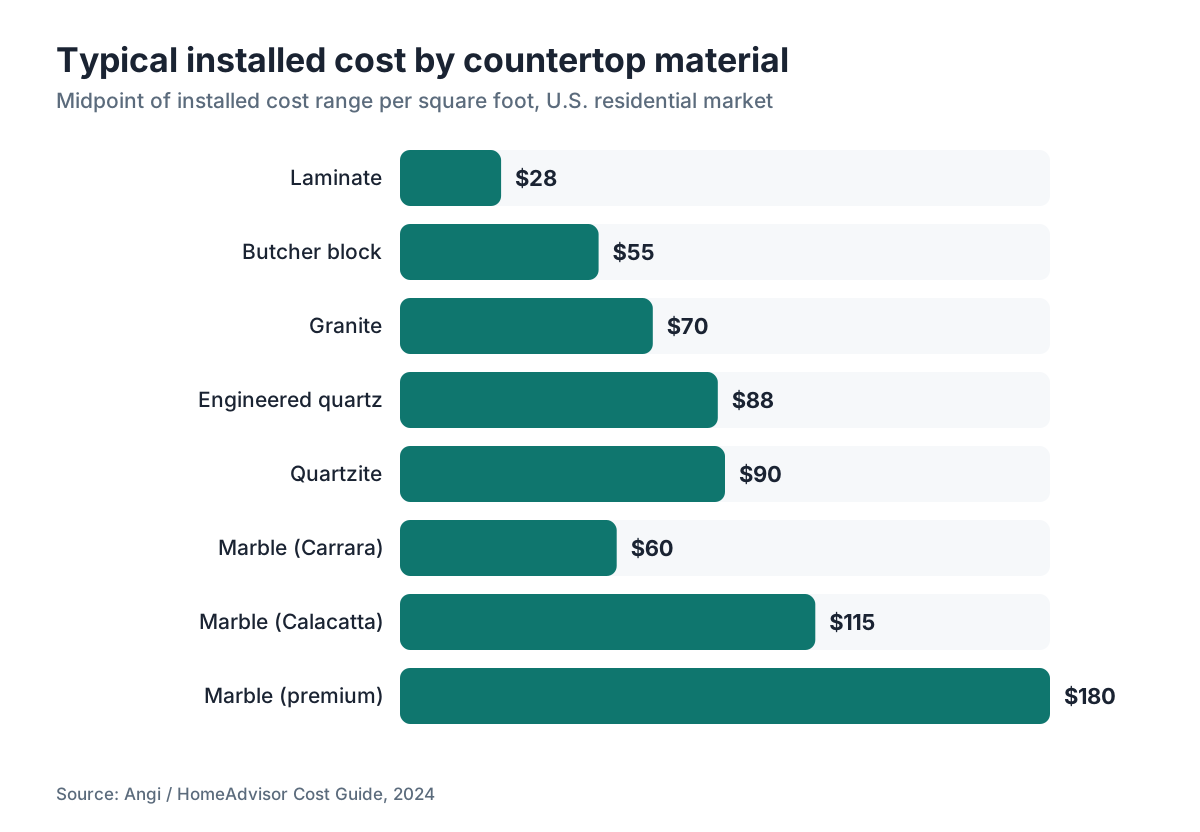
The honest range is wide. Marble countertop installation costs $40 to $200 per square foot installed, and most residential kitchens land between $60 and $150 per square foot once you fold in material, fabrication, and labor [1]. So a typical 40-square-foot kitchen counter runs $2,400 to $6,000 on the low-to-mid end. Pick a premium book-matched slab with a mitered waterfall edge and you can push past $8,000.
That spread exists because "marble" covers an enormous price range. Carrara, the workhorse of the category, runs $40 to $60 per square foot installed in most U.S. markets. Calacatta has bolder, less frequent veining and jumps to $80 to $150. Statuario and Paonazzo, rarer Italian varieties, can top $200 per square foot for the slab alone, before a single hour of fabrication labor [1].
Fabrication labor itself usually runs $35 to $60 per linear foot for a standard straight eased edge. Fancy profiles (ogee, dupont, mitered) add $15 to $40 per linear foot on top. Cutouts for sinks and cooktops get billed separately, typically $150 to $300 each, depending on whether the cut is straight or radius [2].
Demolition of existing countertops adds $200 to $600 for an average kitchen. Plumbing reconnect after the set is usually not in the fabricator's scope and falls to a plumber, which in most metros means another $100 to $200 for a simple hookup. Do not assume your fabricator handles the faucet.
How does marble compare to other countertop materials on cost and durability?
Marble is softer than granite and much softer than quartzite. That gap matters more for scratch and etch resistance than for price. Here is how it stacks up on typical installed cost and Mohs hardness, the standard mineralogy scale for scratch resistance [3].
| Material | Installed cost ($/sq ft) | Mohs hardness | Etch risk from acids |
|---|---|---|---|
| Marble (Carrara) | $40 to $80 | 3 to 4 | High |
| Marble (Calacatta) | $80 to $150 | 3 to 4 | High |
| Quartzite | $60 to $120 | 6 to 7 | Low to moderate |
| Granite | $40 to $100 | 6 to 7 | Very low |
| Engineered quartz | $55 to $120 | 7 | None (resin surface) |
| Butcher block | $30 to $80 | N/A | Moderate (stains) |
| Laminate | $15 to $40 | N/A | Low |
The Mohs numbers are not marketing. Calcite, the mineral marble is made of, sits at 3 on the scale. A steel knife at Mohs 5.5 can scratch it, and lemon juice at a pH near 2 will etch the surface almost on contact [3]. Etching is different from staining. An etch is a chemical reaction that dulls the polish, not a pigment absorbed into pores. You cannot seal away etch risk. That is the single most important thing to understand before you commit to marble in a kitchen you actually cook in.
For context on those alternatives, see our guides to granite countertops, butcher block countertops, and laminate countertops.
What happens during the templating step, and why does it matter so much?
Templating is where installation mistakes get caught or baked in permanently. A fabricator visits your home, measures the exact footprint of your cabinets, records wall angles (almost never a true 90 degrees), documents sink and faucet hole placement, and either pulls a physical template from cardboard strips and hot glue or runs a digital scan with a laser templating system like an LT-55 or a Proliner.
Digital templating is faster and produces a file that feeds straight into the CNC machine at the shop, cutting out human transcription error. Physical templating is still reliable when done carefully and stays common in smaller shops. Either way, the template visit takes 30 to 90 minutes in the home, and you should plan on being there. You need to confirm sink centerlines, overhang dimensions (standard is 1.5 inches on base cabinets, though 1 to 2 inches is the range most people pick), and seam placement.
Seam placement deserves real attention. Marble slabs are typically 55 to 65 inches wide and 100 to 130 inches long [4]. Any run longer than the slab width needs a seam. Your fabricator will propose a location, but you have input. Avoid seams directly under a cooktop or in front of the sink, where water and debris collect. A good seam in marble is nearly invisible when the stones are color-matched and the joint is filled with color-matched epoxy. The vein pattern will not align across a seam, though, unless the fabricator books the slabs (cuts two adjacent pieces from the same slab in mirror orientation), which adds cost.
One thing fabricators sometimes skip explaining: after templating, there is usually a 1 to 3 week fabrication lead time before install day. Budget for that gap, especially if a plumber needs to move supply lines first.
How do you pick the right marble slab before fabrication starts?
Go to the stone yard in person. Period. Website images, even good ones, do not show you the real movement of the veining, the background tone variation across the slab, or how the stone reads under your own lighting. Most fabricators work with a distributor who will let you walk the yard and tag your slabs with chalk or tape.
For a kitchen over 30 square feet, ask to see at least two slabs from the same lot. Marble from the same quarry block shares a general character, but individual slabs vary, sometimes a lot. If your layout needs more than one slab, stand them side by side in the yard and check that the background color and vein intensity read as the same stone.
Thickness matters too. Residential countertops are almost always 2 cm (about 3/4 inch) or 3 cm (about 1.2 inches). Three-centimeter slabs are heavier, stronger, and need no plywood substrate for support. Two-centimeter slabs save on material but need a 3/4-inch plywood underlayment laminated underneath, which adds labor and thins the perceived edge unless you laminate a strip to the front. Most fabricators recommend 3 cm for kitchen counters. Either thickness is fine for bathroom vanities, where spans are short.
If you want to see how marble compares to similar-looking but harder stones, our marble countertops overview covers the full material breakdown.
What cabinet and structural prep does the home need before install day?
Cabinets must be level and plumb before the template visit, not before install day. If base cabinets slope even 1/4 inch across a 10-foot run, the slab will not sit flat and can crack at seams or cutouts under its own weight. Use a 4 or 6 foot level and shim low spots with composite shims before the fabricator arrives.
Cabinets also need to be fully installed, anchored to the wall, and secured to each other. Freestanding or unanchored cabinets can shift between the template visit and install day, and even a 1/16-inch shift can open a gap at the wall. Your fabricator will handle some variance with scribing, but there is a limit.
Structural load is worth a mention. Marble is heavy. Three-centimeter Calacatta runs roughly 18 to 20 pounds per square foot [4]. A 40-square-foot kitchen counter weighs 720 to 800 pounds. Standard residential base cabinets handle that fine, but island cabinets with a large overhang (more than 10 to 12 inches unsupported) may need corbels or steel supports built into the cabinet carcass. Ask your fabricator where they draw the line on unsupported overhangs. Most cap it at 10 to 12 inches without support, though slab thickness, span direction, and stone variety all move the real number.
Got radiant in-floor heat and worried about heat traveling up through the cabinets to the stone? Do not be. Radiant floor heat never gets the slab hot enough to cause thermal shock. Under-counter heating is a different question and almost never shows up in residential kitchens.
What happens on marble countertop installation day?
A typical residential crew is two or three people. They show up with the slabs already cut, polished, and drilled at the shop. The in-home work goes like this: pull the old countertops if demo was not done earlier, check cabinets one more time with a level, set the pieces in dry position before any adhesive, then permanently set.
Setting marble uses silicone adhesive at the cabinet edges (a continuous bead on the perimeter, dabs in the field to allow flex) and two-part epoxy at seams. Color-matched seaming epoxy is mixed on site and often has a pot life of 10 to 20 minutes, so the crew moves fast. Seam edges get clamped with seaming clamps while the epoxy cures, usually 30 to 60 minutes. Cleanup of squeeze-out happens before full cure.
Wall gaps get filled with color-matched caulk, not grout. Caulk allows the slight seasonal movement that rigid stone against a rigid wall would otherwise fight. The backsplash line should be caulked even if you plan to tile later, because the tile installer should tile down to the countertop and caulk that joint too, not grout it. Grout in a joint that moves cracks within a year. Tile Council of North America guidelines address this directly [5].
Total in-home time for a standard kitchen runs 2 to 5 hours. Add an hour or more for complicated islands, waterfall legs, or lots of seams. Do not use the countertops until the silicone has cured, which takes 24 to 48 hours at normal room temperature [6]. Most fabricators say 24 hours. 48 is safer if your kitchen runs cold or humid.
For context on the full installation process across stone types, our countertop installation guide is worth reading before you commit to a fabricator.
Do marble countertops need to be sealed, and how often?
Yes. Every time, no exceptions, before first use. Marble is porous enough that red wine, olive oil, and even coffee will soak in and stain an unsealed surface. The sealer does not prevent etching (that is a chemistry problem, not a porosity problem), but it buys you time to wipe up spills before they penetrate.
Impregnating sealers (also called penetrating sealers) are the right product for marble. They soak into the pores and repel water and oil without sitting on the surface where they can peel. Topical sealers leave a coating that looks plastic and wears unevenly. Skip them on polished marble.
Application is straightforward. Clean and completely dry the stone, apply sealer per the manufacturer's directions (usually wipe on, wait, wipe off excess before it hazes), then let it cure. For a product like Tenax Proseal or StoneTech BulletProof, a single application on a standard polished Carrara surface lasts 6 to 12 months in a kitchen that gets daily use [7]. Honed marble is more porous than polished and may need sealing every 6 months. The water-bead test tells you when: pour a tablespoon of water on the surface and wait five minutes. If it beads, you are fine. If it darkens the stone, reseal.
For advice on cleaning stone without damaging the sealer, see our guides on how to clean stone countertops and how to clean quartzite countertops, which share many of the same principles.
How do fabricators price marble jobs, and what should homeowners know before getting quotes?
Most fabricators price marble on a square-footage basis for material plus a linear-footage basis for edge work, then add flat fees for cutouts, delivery, and install. Some shops quote a single all-in price per square foot. That is simpler, but it makes comparing shops harder when edge profiles differ.
When you collect quotes, ask each shop to break out: slab material cost per square foot, fabrication labor per square foot, edge profile cost per linear foot, cutout fees, template fee (sometimes included, sometimes $100 to $200 separately), delivery, and install labor. A quote that bundles everything can hide a cheap slab behind expensive labor, or the reverse.
Shops running modern quoting software can generate an accurate estimate straight from a floor plan, which speeds things up and cuts down on scope miscommunication. SlabWise is one such tool, used by fabricators to quote and nest stone jobs. If your fabricator uses it, you will usually get a detailed line-item quote faster than from shops still working off spreadsheets and phone calls.
Red flags in a marble quote: no site visit before a final price, no mention of seam placement, a number that comes in 30 percent under everyone else (marble shops have real material costs, so a lowball almost always means a lower-grade slab than you discussed or hidden charges at install), and a fabricator who never asks you to come tag your slab.
Also compare how a shop handles warranty. Stone does not crack under normal use, but if a piece arrives with a hidden fissure and fails at installation, a reputable shop replaces it. Get that in writing.
What are the most common marble installation mistakes, and how do you avoid them?
Unlevel cabinets crack more stone than any other single factor. The fix is simple and free: level your base cabinets before the template visit, not after. Once the template is pulled from unlevel cabinets, the slab gets cut to that template, and a later correction leaves a gap.
Poor seam placement is the second most common regret. A seam set right at the cooktop lip shows every time someone looks across the surface at a low angle. A seam at the corner of an L-shaped kitchen is usually the better call, even if it means more waste from the slab. Talk through seam options out loud during templating.
Missing appliance cutouts in the planning is a surprisingly frequent problem. If you are getting a new range, dishwasher, or undermount sink, the fabricator needs the actual unit on site or its precise specs (model number and installation spec sheet) before templating. Sink cutouts are model-specific. The paper template that ships with a sink can be 1/8 inch off from the fabricator's preferred cut, which matters for clip clearance.
The last one is skipping the sealer, or reaching for the wrong product. Marble left unsealed in a kitchen is a matter of weeks before the first oil stain. Some homeowners knowingly leave marble raw and accept patina as part of the look. That is a real choice. It should be a deliberate one, not an oversight.
If you are weighing marble against a lower-maintenance engineered surface, the Cambria countertops guide and the Corian countertops page give an honest picture of what you give up and what you gain.
How long does marble countertop installation take from quote to finished kitchen?
The full timeline from first call to installed stone usually runs 3 to 6 weeks. It can compress to 2 weeks in a slow shop or stretch to 8 weeks when supply chains are stressed or the stone you want is not in the local yard.
Here is a rough breakdown of where the time goes:
Quote and slab selection: 3 to 10 days, depending on how quickly you can get to the yard and how many shops you are comparing.
Cabinet installation (if new cabinetry): 3 to 7 days for the installer, then a day or two to confirm everything is settled and level.
Template visit: scheduled once cabinets are confirmed ready, takes an hour or less in the home.
Shop fabrication: 5 to 15 business days after template, depending on backlog. This is the most variable step. A busy shop in spring renovation season can run 3 weeks out.
Install day: 2 to 5 hours in the home.
Cure time before use: 24 to 48 hours.
If a contractor is managing the whole renovation, make sure the countertop template is not scheduled until cabinets are truly done, the electrician has roughed in any under-counter outlets that affect layout, and the plumber has confirmed rough-in locations. Templating too early and then redoing it after a late change is a real cost, not a hypothetical one.
Can you install marble countertops yourself, or should you always hire a fabricator?
DIY marble installation is technically possible but genuinely risky with natural stone over about 30 pounds per piece. The tools you need (a wet saw with a diamond blade, an angle grinder for edge work, suction cups rated for stone weight) cost several hundred dollars to rent or buy. The bigger issue is skill: cutting marble without practice produces chipped edges, uneven seams, and sometimes cracked slabs. A cracked slab is a several-hundred-dollar mistake before you have paid a dime of labor.
What a skilled DIYer can reasonably do: set pre-fabricated marble tile or smaller modular pieces, cut simple straight pieces with a rented tile saw (not CNC-shop quality, but workable for basic shapes), and apply sealer before and after install. What goes wrong without pro equipment: cutting undermount sink openings, polishing cut edges to match the factory finish, and tight-fitting seams at non-square walls.
For bathrooms with small vanity tops (24 to 36 inches, simple rectangle, no cutout), pre-fabricated marble vanity tops sell at home improvement stores for $150 to $400 and need no cutting at all. Drop-in or vessel sinks kill the undermount cutout entirely. That is the realistic DIY scenario where the risk stays manageable.
For a kitchen with an undermount sink, a full perimeter of edge work, and a total stone weight above 300 pounds, hire a fabricator. The liability of a cracked slab or an injury from dropping stone without a proper lifting crew makes the math clear.
How do you maintain marble countertops after installation?
Daily care is simpler than marble's reputation suggests. Wipe spills right away, especially anything acidic (citrus, vinegar, wine, tomato) and anything oily. Use a pH-neutral dish soap and water for routine cleaning. Skip general-purpose kitchen cleaners, anything with bleach or ammonia, and "daily granite cleaners" that claim they are safe for all stone. Many are not pH-neutral and will degrade the sealer over time.
No abrasive pads or powders. Even soft scrubbing pads can micro-scratch a polished marble surface over repeated use. A soft cloth or microfiber is the right tool.
For light surface etches (the dull spots left by acid contact), a marble polishing powder like Etch Remover by MB Stone can restore the polish on a small area with hand buffing. Deep etches or scratches need professional polishing with diamond abrasive pads, which a stone restoration contractor handles. Expect to pay $200 to $500 for professional polishing of an average kitchen surface, and do not expect a like-new result if the damage is deep [7].
Honed marble is more forgiving to the eye because it has no high polish to lose, and light etching blends into the matte surface. Plenty of professional chefs and food-world designers prefer honed Carrara in a working kitchen for exactly that reason: wear and patina read as surface character rather than damage. Whether that suits you is a personal call, not a technical one.
For more on cleaning natural stone without wrecking it, see our how to clean soapstone countertops guide, which covers many of the same pH-neutral principles.
Shops that quote and track jobs with software like SlabWise often include maintenance spec sheets in the job packet, so homeowners get a written care reference instead of relying on memory of what the installer said.
Frequently asked questions
How much does marble countertop installation cost per square foot?
Installed marble countertops cost $40 to $200 per square foot depending on marble variety, edge profile, and your region. Carrara is the most affordable at $40 to $80 installed. Calacatta runs $80 to $150. Statuario and other premium Italian marbles can exceed $200 per square foot for material alone, before fabrication and labor get added.
How long does marble countertop installation take?
From first contact to finished install, expect 3 to 6 weeks. The template visit takes an hour. Shop fabrication after templating runs 5 to 15 business days depending on backlog. Install day itself is 2 to 5 hours in the home, followed by a 24 to 48 hour cure period before you use the surface.
Do marble countertops need to be sealed before use?
Yes, always, before first use. An impregnating (penetrating) sealer applied at install cuts stain risk by slowing liquid absorption. It does not prevent etching from acids. In a working kitchen, plan to reseal every 6 to 12 months. Honed marble is more porous than polished and typically needs sealing closer to every 6 months.
Will marble countertops scratch or etch easily?
Marble sits at Mohs 3 to 4, meaning steel knives can scratch it and acidic foods (lemon, wine, vinegar) will etch the polished surface almost on contact. Etching is a chemical dullness, not a stain, and cannot be sealed away. If that worries you in a kitchen you cook in daily, consider quartzite or engineered quartz, both harder and acid-resistant.
What is the difference between honed and polished marble for countertops?
Polished marble has a reflective mirror surface that shows etching and fingerprints clearly. Honed marble has a matte or satin surface; it is more porous, but etching barely shows because there is no polish to lose. Honed is often the smarter choice for kitchen counters that see daily cooking, though both need the same sealing routine.
Can I install marble countertops myself?
Pre-fabricated vanity tops in simple rectangles are a realistic DIY project since no cutting is required. Full kitchen countertops with undermount sink cutouts, multiple seams, and hundreds of pounds of stone are not. The tools, skill, and crew size needed to cut and set full slabs without cracking them are genuinely beyond most DIYers. Hire a certified fabricator for kitchen work.
How do seams in marble countertops look, and can they be avoided?
Seams in marble are visible if you look for them, though a skilled fabricator using color-matched epoxy and aligned vein direction can make them nearly disappear at arm's length. They cannot always be avoided: slabs are typically 55 to 65 inches wide, and most kitchens have at least one run longer than that. Seam placement matters more than seam existence, so discuss location during templating.
How much overhang can marble countertops have without support?
Most fabricators cap unsupported overhang at 10 to 12 inches for 3 cm marble. Beyond that, corbels or steel supports built into the cabinet carcass are needed to prevent stress cracking over time. The safe number depends on slab thickness, the direction of the overhang relative to reinforcing rods in the stone, and the specific marble variety.
What thickness of marble slab should I choose for countertops?
Three-centimeter (roughly 1.2-inch) slabs are the standard for kitchen countertops. They are self-supporting, need no plywood substrate, and the edge thickness looks substantial without lamination. Two-centimeter slabs cost less per square foot but need a 3/4-inch plywood underlayment for support, which adds labor cost and partially offsets the material savings.
How do I get an accurate marble countertop quote?
Ask fabricators to break out material cost per square foot, fabrication per square foot, edge profile per linear foot, cutout fees, template fee, delivery, and install labor separately. A bundled all-in number makes shop comparison hard. Visit the stone yard to tag your slab before the quote is finalized, since slab quality and lot variation move the real cost a lot.
Can marble countertops handle heat from pots and pans?
Marble handles heat better than engineered quartz (which can crack above about 150 degrees Celsius from thermal shock to the resin), but that does not mean you should set hot pots directly on it. Sudden localized heat can stress polished marble and leave thermal marks. Use trivets. The risk of cracking is low; the risk of discoloration or surface stress over time is real.
What happens if marble countertops crack after installation?
Hairline cracks that arrive with a hidden fissure in the stone are the fabricator's responsibility if you catch them immediately; document anything you notice within 24 to 48 hours of install. Cracks that develop later from impact or improper support are usually not covered. Repair means filling with color-matched epoxy and professional polishing, which can minimize but rarely fully hide a crack.
Is marble a good choice for bathroom vanity countertops?
Marble is an excellent choice for bathrooms. Traffic is lower, acid exposure is minimal compared to a kitchen, and the look in a vanity is hard to match. Honed or polished both work. Sealing is still required, but resealing frequency can drop to about once a year, because soap scum and water do far less damage than kitchen acids.
How do I clean marble countertops without damaging them?
Use a pH-neutral dish soap and warm water with a soft cloth or microfiber. Wipe spills right away, especially anything acidic. Avoid vinegar, bleach, ammonia, and abrasive pads. Do not use generic tile or bathroom cleaners unless the label confirms they are pH-neutral and safe for natural stone. Reapply penetrating sealer when the water-bead test shows absorption.
Sources
- HomeAdvisor (Angi), Marble Countertop Installation Cost Guide: Marble countertop installation costs $40 to $200 per square foot installed, with most kitchens between $60 and $150 per square foot.
- HomeAdvisor (Angi), Countertop Installation Cost Guide: Sink and cooktop cutouts in stone countertops are typically billed at $150 to $300 each.
- U.S. Geological Survey, Mohs Hardness Scale: Calcite (the primary mineral in marble) rates Mohs 3, meaning common steel at Mohs 5.5 can scratch it.
- Natural Stone Institute, Dimension Stone Design Manual: Standard residential marble slabs are typically 55 to 65 inches wide and 100 to 130 inches long; 3 cm marble weighs approximately 18 to 20 pounds per square foot.
- Tile Council of North America, TCNA Handbook for Ceramic, Glass, and Stone Tile Installation: TCNA guidelines specify that the joint between a countertop and backsplash tile should be caulked, not grouted, to allow for movement and prevent cracking.
- Dow, Silicone Sealant Technical Data (General Purpose Silicone): General-purpose silicone adhesive sealants used in countertop installation require 24 to 48 hours to fully cure at standard room temperature and humidity.
- Natural Stone Institute, Care and Maintenance of Natural Stone: Impregnating sealers on polished marble in kitchen use typically last 6 to 12 months before reapplication; professional polishing of an average kitchen surface costs $200 to $500.
- U.S. Bureau of Labor Statistics, Producer Price Index for Cut Stone and Stone Products: BLS tracks producer price indexes for cut stone products, providing baseline data for stone fabrication cost trends in the U.S.
- National Kitchen and Bath Association, NKBA Kitchen and Bath Market Index: Natural stone remains among the most specified countertop materials in residential kitchen and bath remodels tracked by NKBA member designers.
- U.S. Geological Survey, National Minerals Information Center: Dimension Stone: USGS Mineral Commodity Summaries document U.S. dimension stone (including marble) import volumes and pricing trends annually.
Last updated 2026-07-09