TL;DR
- Clean marble countertops with a pH-neutral stone soap or plain dish soap diluted in warm water.
- Skip vinegar, lemon juice, bleach, and any acidic or alkaline cleaner.
- Marble etches on contact with acid and can be permanently discolored by alkalis.
- For daily upkeep, a damp microfiber cloth and one stone cleaner costing $10 to $25 does the whole job.
Why marble needs its own cleaner
Marble is calcium carbonate. That one chemical fact governs every cleaning decision you'll ever make for it. Calcium carbonate reacts with acids, even mild ones, and the reaction is instant: the surface dissolves a little, leaving a dull, rough patch called an etch mark. That mark is not a stain. It's physical damage to the stone.
So the advice that works for ceramic tile or granite falls apart on marble. Granite is silica-based and mostly shrugs off acid. Marble does not. A splash of lemon juice that wipes clean off a granite slab leaves a permanent ghost ring on a Carrara counter. The stone dissolves right where the acid landed.
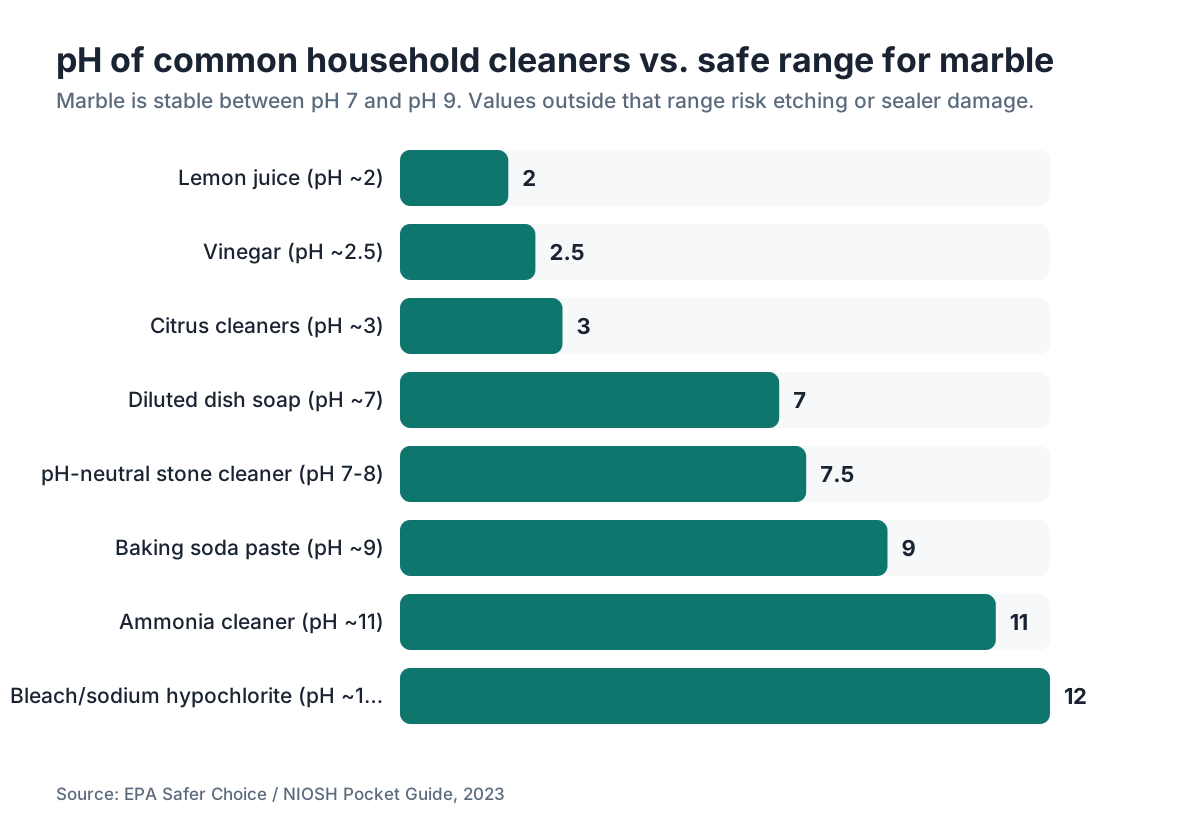
The pH scale runs from 0 (most acidic) to 14 (most alkaline), with 7 at neutral. Marble stays stable roughly between pH 7 and pH 9. Below 7, you risk etching. Above 10 or 11, you risk weakening the sealer and, over time, the surface itself. The target for any marble cleaner is pH 7 to pH 8, often printed as "stone neutral" or "pH balanced" on the label [1].
Get this straight before you buy anything and you save yourself a ruined countertop. Most general kitchen sprays, including the ones marketed as "natural" or "green," run on citric acid. They're fine on plenty of surfaces. On marble they etch.
What makes a cleaner safe for marble countertops?
Three things decide it: pH, surfactant type, and what the cleaner leaves behind when it dries. A safe marble cleaner sits at pH 7 to 8, rinses clean, and leaves no film.
pH is the non-negotiable. Anything you put on marble should be pH neutral, meaning formulated for natural stone. Products labeled for natural stone, limestone, or marble have to hit that mark to work as sold. If the bottle says nothing about pH or stone, put it down.
Surfactant type matters because some surfactants leave residue that builds up and hazes a polished surface. Look for "residue-free" or "rinseable" on the label. Dish soaps like Dawn are gentle enough in tiny amounts (a drop in a quart of warm water), but pour in too much or skip the rinse and you'll see a film.
What's left after drying includes any minerals from your tap water. Hard water leaves calcium and magnesium spots that read as white hazing. A good stone cleaner either carries a mild chelating agent to handle that or is meant to be used with distilled water. In a hard-water area, a last wipe with distilled water makes a real difference on polished marble.
A few categories to shop:
- pH-neutral stone soaps: Miracle Sealants, StoneTech, Black Diamond, and the Weiman stone line all make these. Figure $10 to $25 for a 24 to 32 oz bottle.
- Diluted dish soap: One drop of unscented, non-citrus dish soap in a quart of warm water. Fine for everyday. Weak on heavy grease.
- Plain warm water: Enough for most daily wipe-downs. Marble rarely needs more.
That's the list. Short on purpose.
What cleaners and products will damage marble?
This is the list that matters more. Marble gets ruined by the wrong cleaner far more often than by neglect.
Vinegar and vinegar-based cleaners: Vinegar is acetic acid, around pH 2 to 3. It etches marble on contact. "Natural" says nothing about whether it's safe on stone. This is probably the top cause of marble damage in home kitchens, because people grab the bottle they already spray on glass and faucets.
Lemon juice and citrus cleaners: Same mechanism as vinegar. Citric acid, pH 2 to 3. Plenty of "green" sprays and concentrates run on citric acid. Read the label.
Bleach and bleach-based cleaners: Sodium hypochlorite is strongly alkaline, pH 11 to 13 per the NIOSH Pocket Guide [9]. It won't etch marble the way acid does, but it strips sealers, discolors certain minerals in the stone, and degrades the finish over time. Bleach also doesn't pull stains out of marble; it may lighten the stain in place, leaving a different discoloration behind.
Ammonia-based cleaners: Many glass cleaners carry ammonia, which is alkaline at pH 11 to 12. Same trouble as bleach: sealer damage now, surface damage later.
Abrasive scrubbers and powders: Polished marble is soft, about 3 to 4 on the Mohs hardness scale [2]. Baking soda is pH 8 to 9 and physically abrasive. Scouring powders scratch the polish. So do steel wool, rough sponges, and green scrubbing pads.
Grout cleaners and bathroom tile sprays: Almost always acidic. Even a product tagged "stone safe" in one category may not mean pH neutral for marble. Read the label every time.
The Marble Institute of America's care guidance is blunt about it: "Never use vinegar, lemon juice, or other cleaners containing acids on marble" [3]. Hard to misread that.
How do you clean marble countertops daily?
The daily routine is simpler than the horror stories suggest. Dampen a soft microfiber cloth with warm water, wipe the surface, dry it with a second cloth. Done. The maintenance is about what you don't do, not some ritual.
Got residue from cooking? Add one drop of unscented dish soap to the water, wipe, then go over it again with a clean damp cloth to rinse. Buff dry with a dry microfiber cloth right away.
Drying is the part people skip. Water left sitting on marble, especially hard water, drops mineral deposits that dull the finish. Thirty seconds of buffing after every clean keeps polished marble looking polished.
Weekly, reach for a dedicated stone cleaner spray. A light mist, a soft cloth in circles, buff dry. That lifts the film that plain water wiping misses.
A handful of habits protect marble more than any cleaner:
- Coasters under every glass. The ring from a sweating drink is an etch, not a stain.
- Wipe spills fast, especially wine, juice, tomato sauce, and coffee.
- Cutting board, always.
- Trivets under hot pots. Marble can crack from thermal shock, though that's rarer than etch damage.
None of it is a burden. It's just a different mindset than a surface you can beat on.
What's the best cleaner for marble countertops if you want one product?
Want one bottle for daily and weekly cleaning under $20? Buy a pH-neutral stone cleaner spray. The market is crowded and independent lab testing on these barely exists, so nobody has clean head-to-head data. What we do know comes from the chemistry: any cleaner the pros keep recommending is pH neutral, surfactant-based, and residue-free.
Fabricators who set marble every week name the same short list. StoneTech Professional Stone & Tile Cleaner, Miracle Sealants Stone & Tile Cleaner, and Black Diamond Stoneworks Marble & Tile Floor Cleaner come up most in stone-care circles. None of them are magic. They're pH-neutral surfactant solutions, which is all marble asks for.
Weiman makes a marble spray that's on the shelf at most grocery and hardware stores, which counts for something if you don't want to wait on a shipment. A fine pick for anyone who'd rather grab it in person.
Here's the honest part: between a $10 pH-neutral stone soap and a $25 one, the gap is mostly fragrance and marketing. The cheap one cleans just as well as long as it's truly pH neutral.
If you run a shop, the same chemistry drives the care instructions you hand customers. It doesn't change whether you're managing jobs through countertop fabrication software or writing a care sheet by hand at install. Small job or big job, marble is still calcium carbonate.
Comparing marble to lower-maintenance surfaces? The care profile is a different animal from laminate countertops or Corian countertops, both of which put up with a much wider range of cleaners.
How do you remove stains from marble countertops?
Stains and etch marks are two different problems, and telling them apart decides your whole approach. A stain is discoloration from something that soaked into the stone. An etch is physical damage to the surface. Run your finger over it: dull and rough means etch, smooth with a color change means stain.
If it's an etch, cleaners won't touch it. You need a marble polishing compound or, for deep damage, professional re-honing. More on that next.
If it's a stain, most respond to a poultice: a paste that pulls the offending substance back out of the stone. The method uses an absorbent material (kaolin clay, diatomaceous earth, or even plain flour) mixed with a cleaning agent matched to the stain.
Oil-based stains (cooking oil, butter, grease): Mix the absorbent powder with acetone or a few drops of dish soap. Spread a quarter-inch layer over the stain, cover with plastic wrap, tape the edges, and wait 24 to 48 hours. The paste dries and drags the oil out as it goes.
Organic stains (coffee, tea, wine, juice): Mix the powder with 12% hydrogen peroxide. Same application, same wait. The 12% strength is sold at some pharmacies; standard 3% drugstore peroxide works but takes longer.
Ink and dye stains: Acetone for oil-based inks, hydrogen peroxide for water-based.
The Marble Institute of America publishes a detailed stain guide with poultice formulas by stain type, and it's the most reliable reference out there [3]. Don't reach for bleach on marble stains. It doesn't do what people think and it risks more damage.
For quartzite countertops the stain method is similar, but the acid vulnerability is not, so don't treat the two stones as interchangeable.
Can you fix etch marks on marble without professional help?
Sometimes. It comes down to how deep the etch goes. Shallow ones you can often buff out at home. Deep ones need a pro.
Light etches show up as dull, slightly rough spots on otherwise polished marble. A marble polishing powder (also sold as marble etch remover) can bring them back. Tenax and ETCH-MD both make these. You wet the surface, apply the powder, and buff with a white cloth under moderate pressure. The abrasive is fine enough to repolish without scratching. That works when the damage sits only in the top layer of the finish.
Deeper etches reach into the stone and need a stone professional. A fabricator or restoration contractor re-hones the spot (taking off a thin layer of stone to get below the damage), then re-polishes it with diamond abrasive pads. Cost swings by region and severity, but a localized etch repair usually runs $150 to $400 or more in labor, going by common stone-restoration pricing. A full hone and re-polish of a kitchen counter can run $500 to $1,500 and up depending on slab size and condition.
Prevention beats repair here, because DIY polishing powders fix maybe 30 to 40% of etch situations, judging by professional stone forums. When they work, great. When they don't, you're calling a pro anyway, minus the time and product you burned.
One more thing: honed or matte marble hides etch marks far better than polished. Honed marble still etches chemically, but the flat surface masks the shift in reflectivity. That's a real reason to spec honed marble for a hard-working kitchen.
Does sealing marble help and does it change how you clean it?
Yes to both, with real limits. Sealing cuts staining. It does nothing for etching. And you clean sealed marble exactly like you clean unsealed marble.
Sealing fills the pores with a penetrating impregnator, so the stone absorbs less. That knocks down staining from oil and water-based spills. It offers zero protection against etching. Acid eats the calcium carbonate at the surface no matter what's in the pores. This is the stubbornest myth in marble care: "I sealed it, so it's protected." Sealed marble still etches from acid.
Most home marble counters want sealing about once a year, or whenever a water drop stops beading and soaks in within roughly 5 minutes. The test is easy: put a quarter-teaspoon of water on the stone and check at 5 minutes. If the stone darkens where the water sat, the sealer needs a refresh [4].
To seal: clean the surface, let it dry fully (at least 2 hours), apply the impregnator with a clean cloth per the directions, let it dwell for the stated time (often 20 to 45 minutes), then buff off the excess. Never let sealer dry on top of the surface. It hazes.
After sealing, nothing about cleaning changes. pH-neutral cleaner, soft cloth, dry after. The sealer doesn't toughen the surface in any way you'll feel. It just buys you a few extra seconds when a spill hits, enough to wipe it before it sinks in.
Many impregnators are water-based and pH neutral themselves, so they don't fight the cleaning chemistry. Solvent-based sealers should cure fully (usually 24 to 48 hours after application) before any cleaner touches the surface.
For the wider picture on natural stone, the guide to cleaning stone countertops covers sealing across stone types.
Are there differences between cleaning polished, honed, and leathered marble?
The chemistry is identical across all three finishes: pH neutral, soft cloth, dry right away. The lived experience differs.
Polished marble has a mirror finish that shows every fingerprint, water spot, and etch. It needs the most attentive cleaning to look sharp, but it's also the most forgiving in one sense, because you spot trouble the instant it happens.
Honed marble is flat and matte. It's easier on the eyes because it doesn't throw light back the same way, so minor water spots and light etches hide well. The catch: honed marble is more absorbent than polished, so it needs sealing more often (some fabricators say every 6 months for honed counters versus annually for polished) and it soaks up oil stains faster [11].
Leathered and brushed finishes land between polished and honed on both reflectivity and absorbency. The texture means cleaning takes a slightly softer touch to reach into the surface without scratching, and a genuinely soft brush (think clean paintbrush) helps work cleaner into the texture without abrasion.
None of these finishes change the acid problem. All three etch. Honed just hides it better.
How is cleaning marble different from cleaning granite or quartzite?
Short version: granite is much more forgiving, quartzite depends on what it actually is, and marble is the most sensitive of the group.
Granite is silica-based and highly acid-resistant. Still keep bleach and harsh abrasives off it, but a splash of vinegar or orange juice won't etch it the way it wrecks marble. The same pH-neutral stone cleaner works on both. Granite just forgives more mistakes [5]. For granite specifics, the granite countertops guide digs in.
Quartzite is the tricky one. True quartzite (metamorphosed sandstone) is silica-based and acid-resistant. But a lot of what sells as "quartzite" in slab yards is actually a soft marble or dolomitic marble that looks the part and etches as badly as Carrara [6]. Not sure what you've got? The acid test settles it fast: a drop of white wine vinegar on a hidden spot for 30 seconds. If it etches, treat it like marble. The quartzite cleaning guide covers this further.
Engineered quartz (Cambria, Silestone, Caesarstone) is its own thing. It's polymer-bound, non-porous, never needs sealing, and tolerates a wider pH range. Harsh chemicals and abrasives still damage it, though. The Cambria countertops guide has those details.
| Surface | Acid resistance | Needs sealing | Etch risk |
|---|---|---|---|
| Marble | Very low | Yes, annually | High |
| Honed marble | Very low | Yes, every 6 months | High (less visible) |
| Granite | High | Yes, every 1-3 years | Very low |
| True quartzite | High | Yes, annually | Very low |
| Soft quartzite/dolomite | Low | Yes | High |
| Engineered quartz | High | No | Very low |
| Soapstone | Moderate | No (oil instead) | Low |
Knowing where your surface sits on this chart is the real first move for any cleaning decision. Kitchen countertops walks the full range if you're still choosing.
What about homemade marble cleaners and DIY recipes?
Most homemade recipes are dangerous for marble. The popular ones online are vinegar-water, lemon juice, baking soda pastes, and hydrogen peroxide dilutions. The only DIY option worth using is diluted dish soap or plain water. Here's the breakdown.
Vinegar-water: acid, etches marble. Not safe. Full stop.
Lemon juice: same story. pH around 2.
Baking soda paste: pH 8 to 9, into the danger zone for some stones, and physically abrasive. It shows up in poultices for stain removal, but only mixed correctly with a real pulling agent and only left on for a set time. Never as a general cleaner.
Hydrogen peroxide (3% diluted): legitimate inside a poultice for organic stains. As a general cleaner it's mildly oxidizing and probably harmless used now and then, but it's no substitute for a proper stone cleaner and shouldn't be routine.
Dish soap in water: fine in small amounts. A drop in a quart of warm water is safe and effective for everyday cleaning. The word that matters is "drop," not squirt. Too much soap leaves a film.
So the whole DIY story: diluted dish soap or plain water, and nothing else. Everything else either risks the stone or isn't meaningfully better than a $15 bottle of real stone cleaner.
I get why buying a dedicated cleaner feels annoying when your cabinet is already stuffed. But marble is expensive, repair is expensive, and the right cleaner costs under $25 a year for an average kitchen. The math isn't close. Buy the right product.
How often should you clean and reseal marble countertops?
Here's the schedule. Daily: wipe spills the moment they happen, and a quick damp cloth after cooking covers most days.
Weekly: a proper clean with a pH-neutral stone cleaner, then buff dry. Five minutes.
Monthly: check for haze or film. If polished marble looks dull despite regular cleaning, buff it with a dry microfiber cloth and a little stone polish (a separate product from cleaner) to bring back the shine without abrasion.
Annually, or as needed: run the water-bead test. If water stops beading and soaks in within 5 minutes, re-apply penetrating impregnator sealer. Polished marble in heavy use usually wants sealing once a year. Honed marble in a busy kitchen may want it twice [11].
Every few years: consider a professional inspection. A stone restoration pro catches sealer failure, early etching, or hairline cracks before they turn expensive. Not strictly necessary for every install, but for high-end marble (Calacatta, Statuario) it's money well spent.
Run a shop and want to hand customers a care sheet that's actually right? The Marble Institute of America publishes downloadable care and maintenance guides that are the industry standard [3]. Handing one over at install, or pointing to your own company's version, beats a verbal rundown they'll forget by dinner.
Fabricators tracking past jobs and customer materials can log stone types per job on a platform like SlabWise, which makes follow-up care advice and service calls easier to run at scale. The care chemistry stays the same no matter how you track it.
Frequently asked questions
Can I use Method or Mrs. Meyer's spray on marble countertops?
Most Method and Mrs. Meyer's kitchen sprays contain citric acid or other plant-derived acids, which etch marble on contact. Check the ingredient list; if citric acid, lactic acid, or vinegar appears anywhere, keep it off marble. A few Method products are pH neutral, but verify with the brand before using. When unsure, stick to a dedicated stone cleaner or plain diluted dish soap.
Will Windex or glass cleaner hurt marble?
Yes. Most glass cleaners contain ammonia, which is strongly alkaline (pH 11 to 12). Regular use strips the sealer and dulls the finish over time. Ammonia-free glass cleaners are less harsh but still aren't formulated for stone. Use a pH-neutral stone cleaner instead. Glass cleaner is great on windows. Keep it off the marble.
What should I do if I accidentally used vinegar or lemon juice on marble?
Rinse the area immediately with plenty of clean water to dilute and remove the acid. The etch likely already happened in the seconds of contact, but rinsing fast limits how deep it goes. Once dry, assess the damage. A dull spot may respond to marble polishing powder. If the etch is deep or large, call a stone restoration pro. Don't pile on more chemicals trying to fix it yourself.
Is Bar Keepers Friend safe for marble?
No. Bar Keepers Friend is oxalic-acid-based (pH around 2) and mildly abrasive. Both properties make it dangerous for marble. It etches the surface and scratches the polish. It's an excellent cleaner for stainless steel, porcelain, and some other surfaces, but it has no place on marble countertops.
How do I get water spots off marble?
Water spots on marble are mineral deposits (calcium and magnesium from tap water), not chemical damage. Buff them with a dry microfiber cloth first; sometimes that's enough. For stubborn spots, a little pH-neutral stone cleaner on a damp cloth, buffed dry, usually clears them. Never use acidic lime-scale removers, which etch the marble while they dissolve the deposit.
Can you use rubbing alcohol to disinfect marble countertops?
Isopropyl alcohol diluted to 70% is one of the safer disinfection options for marble because it's roughly pH neutral and contains no acid. Use it sparingly and don't let it pool; apply with a cloth, wipe, and dry. Avoid ethanol products with citrus additives. Repeated alcohol use may gradually dull the sealer, so follow up with a stone cleaner and reseal annually as usual.
Does vinegar remove marble stains?
No. Vinegar does not remove stains from marble; it causes etching, which is physical damage to the surface. If you see a dull or discolored area and wonder if vinegar might help, it will make things worse. Use a poultice matched to the stain type: hydrogen peroxide paste for organic stains, acetone paste for oil-based stains, left on for 24 to 48 hours to draw the stain out.
How long does it take to clean marble countertops?
A daily wipe-down takes under two minutes. A weekly clean with stone cleaner, wipe, and dry buff takes five minutes for an average kitchen. Sealing once a year takes about 30 to 60 minutes including prep, application, dwell time, and buffing off excess. A poultice stain treatment needs about 10 minutes of hands-on work plus 24 to 48 hours of wait time while the paste dries and pulls.
What's the difference between a marble cleaner and a marble polish?
A cleaner removes dirt, grease, and film from the surface. A polish (sometimes called a stone polish or marble cream) is a separate product that restores shine to polished marble; it may contain very fine abrasives or waxes that fill micro-scratches. You clean marble regularly and polish it occasionally when it starts looking dull. The two serve different jobs. Some 2-in-1 products exist but tend to do both jobs worse.
Should I use a spray cleaner or a concentrate for marble?
Either works if the formulation is pH neutral and made for stone. Ready-to-use sprays are more convenient for daily and weekly cleaning. Concentrates are more economical for high-use situations or for fabricators cleaning slabs in a shop. Dilute concentrates exactly per the label; mixing them too strong raises the chance of residue buildup or, with poorly formulated products, surface damage.
Can I use a steam cleaner on marble countertops?
Steam cleaning isn't recommended for marble. The heat and pressure can force moisture into the pores and potentially crack or spall the surface, especially around veins. Steam also strips sealers quickly. Some professional restorers use specialized low-pressure steam, but consumer steam cleaners run at pressures and temperatures that pose real risk. Stick to damp cloth cleaning and you avoid the problem.
How do I know if my marble is sealed and ready for daily use?
Run the water bead test: put a few drops of water on the surface and watch for 5 minutes. If the water beads and sits on top, the sealer is working. If it soaks in and darkens the stone, the sealer has worn down or was never applied. Newly installed marble from a reputable fabricator should arrive sealed, but ask and verify with the test before putting the counter into full use.
Sources
- Marble Institute of America, Care & Cleaning for Natural Stone Surfaces: pH-neutral cleaners are recommended for all natural stone surfaces including marble; acidic and alkaline products damage the stone
- USGS Mineral Resources Program, Mohs Hardness Scale: Marble ranks approximately 3-4 on the Mohs hardness scale, making it susceptible to surface scratching by abrasive materials
- Marble Institute of America, Stain Removal Guide for Natural Stone: "Never use vinegar, lemon juice, or other cleaners containing acids on marble" and detailed poultice formulations by stain type are published by MIA
- Natural Stone Institute, Sealer Selection and Application: The water absorption test (quarter-teaspoon of water, check in 5 minutes) is the standard field test for whether marble needs resealing
- Natural Stone Institute, Granite vs. Marble: Chemical Resistance: Granite is silica-based and substantially more resistant to acid etching than marble, which is calcium carbonate-based
- USGS Publications Warehouse, Geology and Natural Stone Resources: Much material marketed as quartzite in the stone trade is dolomitic marble or soft carbonate rock that etches similarly to marble under acid exposure
- EPA Safer Choice program: Surfactant safety and pH data for common cleaning product ingredients used in commercial stone cleaners
- National Park Service, Preservation Briefs (dangers of improper stone cleaning): Acid-based cleaners cause irreversible chemical deterioration of calcium carbonate stone surfaces; preservation guidance recommends pH-neutral cleaners
- NIOSH Pocket Guide to Chemical Hazards, Sodium Hypochlorite: Sodium hypochlorite (bleach) has a pH of 11-13, placing it in the strongly alkaline range that can damage stone sealers and surfaces
- USGS Mineral Commodity Summaries, Dimension Stone: Marble is composed primarily of calcium carbonate (calcite or dolomite), the mineralogy that determines its acid sensitivity
- Natural Stone Institute, technical bulletin on stone surface finishes: Honed marble is more porous than polished marble and requires more frequent sealing, typically every 6 months in heavy-use applications
Last updated 2026-07-09