TL;DR
- For daily cleaning, warm water and a few drops of dish soap on a soft cloth is all most granite needs.
- Purpose-made pH-neutral granite cleaners add a light conditioning layer.
- Avoid bleach, vinegar, ammonia, and most multi-surface sprays: they strip sealer and can etch polished stone over time.
- Reseal once a year for most colors, every six months for lighter stones.
Why granite needs a specific cleaner instead of whatever's under the sink
Granite is a crystalline igneous rock made mostly of quartz, feldspar, and mica [6]. The quartz fraction shrugs off acid, but the feldspars and calcite inclusions that give many granites their warm tones do not. And nearly every fabricated granite slab gets a penetrating sealer applied after polishing. That sealer sits in the pores of the stone and keeps liquids from soaking in before you can wipe them up.
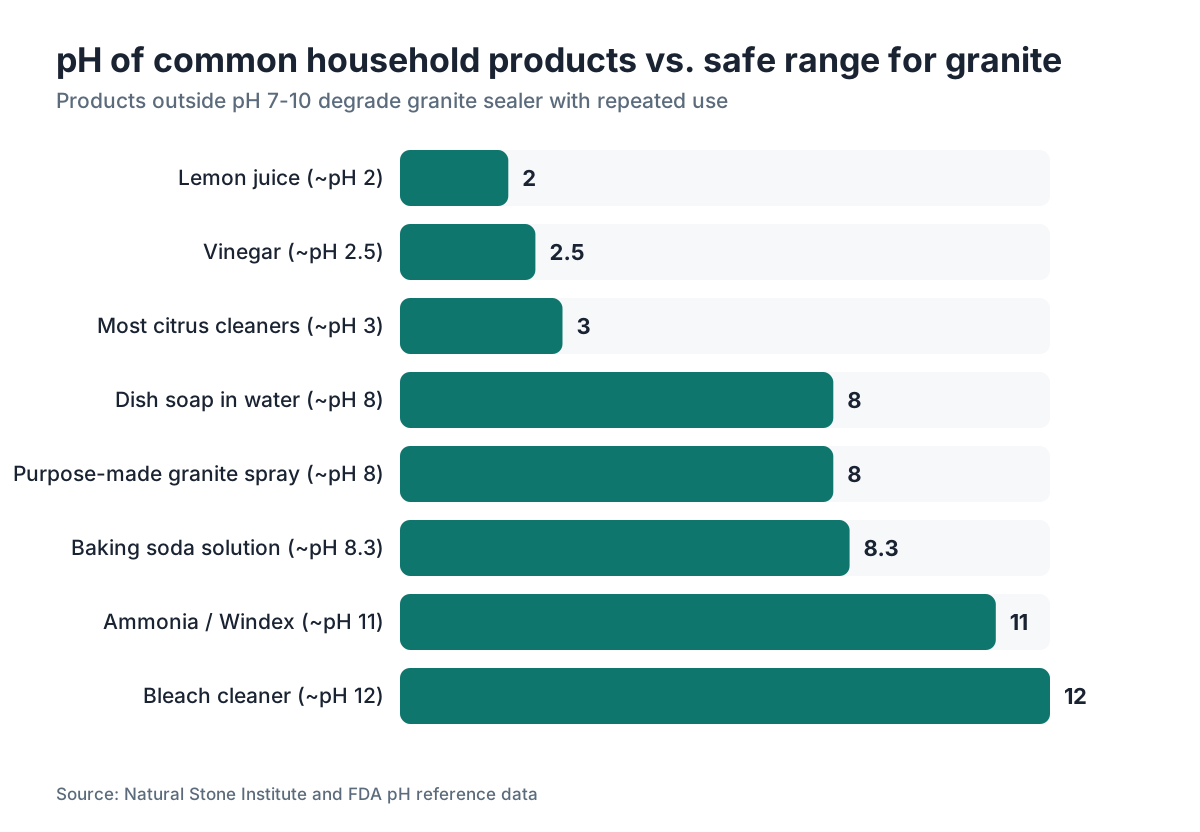
The problem with common household cleaners is pH. Vinegar runs around pH 2.5. Bleach-based bathroom sprays run pH 11 to 13. The Marble Institute of America (MIA), now part of the Natural Stone Institute, recommends cleaners in the pH 7 to 10 range for polished natural stone [1]. Outside that window, repeated use strips sealer faster than normal wear, and strongly acidic products physically etch the polished surface of calcite-bearing granites.
That's not a hypothetical. Most fabricators have seen countertops come back for re-polishing after a homeowner used a citrus degreaser daily for a year. The surface looks dull. Sometimes it's pitted. Fixing it means honing or re-polishing the stone, which costs real money and removes material you can never put back.
So the short answer: granite needs a cleaner that won't attack the sealer or the stone matrix. That's a low bar. Most products under the average kitchen sink don't clear it.
What pH range is safe for granite countertops?
The safe cleaning range for polished natural stone is pH 7 (neutral) to pH 10 (mildly alkaline), per the Natural Stone Institute's care guidance [1]. Some fabricator-grade degreasers run to pH 11 and get marketed as stone-safe, but those are formulated with surfactants that rinse completely so they don't linger and eat at the sealer.
For daily home use, aim for pH 7 to 9. Dish soap like Dawn sits around pH 7 to 8.5 depending on dilution, which is exactly why it works. A few drops in a bucket of warm water, wipe with a microfiber cloth, rinse, dry. That is genuinely all you need for everyday cleaning.
Purpose-made granite sprays (Granite Gold, Black Diamond, Weiman, Method Stone) hit that neutral-to-mild-alkaline window and usually carry a little mineral oil, beeswax, or silicone to condition the surface between sealings. They're not magic. But they earn their $8 to $15 per bottle if you want a one-step wipe-down that leaves the surface looking good.
What you want to avoid at all costs is anything with:
- Acids (vinegar, lemon juice, any citrus cleaner, bathroom cleaners labeled "calcium remover" or "lime scale")
- Bleach or chlorine compounds at high concentration
- Ammonia, which is in Windex and many glass cleaners
- Abrasive powders or pads, which scratch the polish
What are the best cleaners for granite countertops right now?
No independent lab ranks granite cleaners the way Consumer Reports tests dishwashers, so any "best" list carries an honest caveat about who tested it and how. What the stone industry broadly agrees on, from fabricator experience and Natural Stone Institute guidance, breaks into three tiers.
Tier 1: Daily cleaning (any of these work) Warm water alone handles most food residue. A few drops of mild dish soap in water handles grease. A clean microfiber cloth and quick drying prevent water spots. This costs essentially nothing, and virtually every stone fabricator endorses it.
Tier 2: Purpose-made granite spray cleaners Convenient, safe, and they leave a slight sheen. Options with a good reputation as of 2025 include Granite Gold Daily Cleaner, Black Diamond Stoneworks Granite Cleaner, and Weiman Granite & Stone Cleaner. All three are pH-neutral and formulated to be sealer-compatible. Expect $8 to $15 per bottle, and a 24 oz bottle lasts most kitchens two to three months with daily use.
Tier 3: Heavy-duty stone cleaners for deep cleaning For built-up grease around the cooktop or stains that didn't get wiped up quickly, a diluted alkaline stone cleaner (pH 9 to 10) applied with a soft brush, then rinsed hard, is the professional move. Lithofin MN Easy-Care and StoneTech KlenzAll are examples fabricators commonly stock. These are not daily cleaners.
For most homeowners, Tier 1 is the honest best answer. Tier 2 products earn their place if you hate the two-cloth rinse step or want the light conditioning they add. Tier 3 is for quarterly deep cleans or specific stain jobs.
If you want to see how granite stacks up against other surfaces with their own rules, read our guides on how to clean quartzite countertops and how to clean soapstone countertops for side-by-side context.
Which common household products damage granite?
This is where most countertop damage actually happens. Not from malice, from grabbing the nearest spray bottle.
Vinegar and lemon juice. Acetic acid (vinegar, pH ~2.5) and citric acid (lemon juice, pH ~2) are the top offenders [10]. A single wipe won't wreck your countertop, but daily use over months etches the polish on calcite-bearing granites and degrades sealer. The Natural Stone Institute lists acidic cleaners among the leading causes of premature sealer failure [2].
Bleach-based sprays. Products like Clorox Cleanup or bleach diluted in water (pH 11 to 13 depending on concentration) strip penetrating sealers much faster than neutral cleaners [8]. A one-time disinfecting wipe followed by a thorough rinse is unlikely to show damage. Routine use is the problem.
Ammonia-based glass cleaners. Windex's main active ingredient is ammonia (pH around 11). Granite looks clean right after, but repeated use degrades the sealer.
Abrasive scrubbers. Green scrubbing pads, powdered cleansers like Comet or Bar Keepers Friend, and rough sponges all micro-scratch the polished surface. Over time that dulls the finish for good.
Multi-surface kitchen sprays. Many carry fragrance oils, citrus extracts, or undisclosed solvents. "Natural" does not mean stone-safe. If the label doesn't explicitly say pH-neutral or stone-safe, treat it as suspect.
One honest caveat: a single accidental use of most of these is unlikely to cause visible, permanent damage. The problem is habit. If you've used one of these for years with no obvious issue, it's possible your granite has low calcite content, the sealer is thick enough to absorb the abuse, or the damage is slow and you just haven't clocked it yet.
How do you clean granite countertops step by step?
Daily cleaning takes about two minutes and needs nothing special.
- Clear crumbs and loose debris with a dry cloth or soft brush.
- Dampen a microfiber cloth with warm water. Add one small drop of dish soap for greasy areas. Wring the cloth so it's damp, not dripping.
- Wipe in overlapping passes. Don't scrub hard. Let the water and soap do the work.
- Rinse with a second clean damp cloth to lift any soap film. Soap residue left on granite attracts grease and can dull the surface over time.
- Dry with a third dry cloth or clean towel. This kills water spots, which show up badly on darker granites.
For a purpose-made granite spray, the process is nearly the same: spray lightly, wipe with a microfiber cloth, buff dry. Most sprays skip the separate rinse step because they're formulated to leave no residue.
For sticky or dried-on food, let warm water sit on the spot for a few minutes to soften it before wiping. A plastic scraper (the kind sold for stovetop cleaning) handles hardened residue without scratching the polish. Never use a metal scraper.
For stains that have soaked in, the fix depends on the stain type. Oil-based stains (cooking grease, cosmetics) respond to a poultice made from baking soda and water, applied as a thick paste, covered with plastic wrap, left 12 to 24 hours. Water-based stains (coffee, wine) respond to a hydrogen peroxide (3 to 5%) poultice on lighter stones. Always test any poultice in a hidden spot first.
Cleaning granite is straightforward. The rules for how to clean stone countertops run similar across natural stones, though quartzite and marble carry extra sensitivities worth knowing.
How often should you seal granite and does the cleaner you use affect that?
Yes, the cleaner absolutely affects how often you reseal. This is the most underappreciated practical consequence of cleaner choice.
A penetrating sealer (also called an impregnating sealer) is the industry standard for granite [9]. It doesn't sit on top like a topcoat. It fills the microscopic pores so liquids bead instead of soaking in. The TCNA (Tile Council of North America) Handbook for Ceramic, Glass, and Stone Tile Installation recommends resealing natural stone once the water no longer beads on the surface [3].
The water test is the honest home indicator. Sprinkle a few tablespoons of water on the granite. If it beads after 5 minutes, the sealer is fine. If it soaks in and darkens the stone, reseal. Run this test once a year, minimum.
General resealing intervals, based on fabricator experience and slab porosity:
| Granite color/type | Typical resealing interval |
|---|---|
| Dark black or very dense granites | Every 3 to 5 years |
| Mid-tone granites (most common) | Every 1 to 2 years |
| Light/white granites (more porous) | Every 6 to 12 months |
| Leathered or honed finish | Every 6 to 12 months (finish is more porous) |
Use an acidic or high-pH cleaner daily and those intervals compress. You might reseal a mid-tone granite every 6 months instead of every year. Switch to a neutral cleaner and the sealer lasts longer, which means less time and money on maintenance.
Sealer runs $15 to $50 per bottle depending on brand and quality. Application takes 20 to 30 minutes for an average kitchen. It's not hard. It's just a task you'd rather do less often.
If you're pricing out the full cost of granite ownership, SlabWise's instant quote tool shows what granite runs in your area before you commit, which helps calibrate how much maintenance makes sense for your budget.
Can you disinfect granite without damaging it?
This comes up constantly, especially since 2020. The honest answer is that true disinfection and granite preservation pull against each other a little, but there's a practical path that works.
The EPA defines disinfection as killing 99.9% of listed pathogens [7]. Most disinfectants registered for kitchen surfaces rely on quaternary ammonium compounds (quats), bleach, or alcohol at 70%+ concentration. Here's how each sits with granite.
Isopropyl alcohol (70 to 91%). The least bad option for granite. A 1-to-1 mix of 91% IPA and water gives you roughly 45% IPA, which is below effective disinfection strength. For genuine disinfection you need at least 70% IPA on the surface. That concentration is generally fine for granite when used occasionally and rinsed after a dwell time, though it will degrade sealer over months of daily use.
Quaternary ammonium sprays. Most quat-based disinfectants (many Lysol products, hospital-grade sprays) run pH 9 to 11. A short dwell time (1 to 2 minutes) followed by a thorough rinse is the approach stone care pros suggest for occasional disinfection without major sealer damage.
Bleach. Effective disinfectant, aggressive sealer stripper. The CDC recommends 1/3 cup bleach per gallon of water for disinfecting hard surfaces [4]. If you use this on granite in a real health situation (raw meat cross-contamination), do it, rinse very well, then reseal sooner than you otherwise would. Don't use it routinely.
For daily food safety in a normal kitchen, the FDA Food Code treats properly cleaned surfaces (soap and water that removes organic matter) followed by sanitizing as adequate [5]. Soap and warm water on granite, dried promptly, is enough for normal cooking. Reserve actual disinfectants for when there's a genuine reason: raw poultry contact, illness in the house.
What's the difference between granite cleaner and granite polish or sealer?
These three products do completely different jobs, and the terminology trips people up constantly.
Granite cleaner removes dirt, grease, and surface residue. It adds no protective layer. Some daily sprays carry a trace of oil or wax that leaves a light sheen, but that's not a sealer.
Granite polish is an abrasive or chemical treatment that restores or enhances the shine of the polished face. True polishing compounds (tin oxide, alumina powder, diamond-infused liquids) get used by fabricators with polishing equipment. Consumer products labeled "granite polish" are usually topical shine-enhancers with silicone or wax, not true abrasive polishes. They add a temporary shine, but they can leave a hazy buildup over time if you overapply.
Granite sealer is an impregnating compound that soaks into the pores of the stone to cut water and oil absorption. It's the layer that does the actual work of keeping stains out. It goes on a clean, dry surface, penetrates (typically 15 to 30 minutes), then gets buffed off.
The mistake homeowners make is thinking a cleaner or polish replaces sealing. It doesn't. And using a silicone-heavy polish before sealing can actually block sealer penetration. Clean first. Seal second. Polish (if you want it) third, on a sealed surface.
For anyone newer to natural stone, this breakdown holds across stone types. The same logic applies to marble countertops and granite countertops, though marble is more acid-sensitive and needs even stricter cleaner pH control.
Are DIY or homemade granite cleaners actually safe?
Some are fine. Most popular ones are not, despite what the cleaning blogs claim.
Warm water only: fine. Works for most daily cleaning.
Dish soap and water: fine. The go-to recommendation from stone fabricators for decades.
Rubbing alcohol diluted to 50% or less: generally acceptable for occasional use, though not ideal daily.
Vinegar and water: not safe. Probably the most common bad recommendation on the internet. Vinegar is acidic enough to etch calcite inclusions in granite and degrade sealer [10]. "Natural" does not mean stone-safe.
Baking soda paste for stains: acceptable for stain removal only, not as a regular cleaner. Baking soda is mildly alkaline (pH ~8.3) and slightly abrasive. Scrub with it and it can dull a high-gloss finish.
Essential oil mixes: unknown and risky. Citrus essential oils are concentrated citric acid. Tea tree oil is antimicrobial, but its pH and surfactant behavior on granite aren't well-characterized. Skip these.
Hydrogen peroxide (3%) for stain poultice: fine on light-colored granite. H2O2 at 3% (drugstore strength) is a mild bleach that can draw out organic stains. Avoid it on dark granite, where it can lighten the surface. Rinse well after use.
How does granite compare to quartz, quartzite, and other countertop materials for cleaning needs?
One of the most useful comparisons for anyone choosing a surface is how different materials handle cleaning mistakes.
| Material | Safe pH range | Needs sealing? | Biggest cleaning mistake | Hardness (Mohs) |
|---|---|---|---|---|
| Granite | 7 to 10 | Yes, 1 to 2 yr | Vinegar or acidic cleaners | 6 to 7 |
| Quartzite (natural) | 7 to 10 | Yes, 1 to 2 yr | Same as granite; misidentified as quartz | 7 |
| Marble | 7 to 9 | Yes, 6 to 12 mo | Any acid, even citrus | 3 to 4 |
| Quartz (engineered) | 7 to 10 | No | Abrasives; some harsh chemicals on resin | 7 |
| Soapstone | 7 to 10 | No (oil instead) | Abrasives; over-oiling | 1 to 2 |
| Laminate / Formica | 5 to 10 | No | Standing water, abrasive scrubbers | N/A |
| Butcher block | 5 to 9 | No (oil/wax) | Bleach, standing water | N/A |
Granite sits in the middle on care demands. More forgiving than marble, but it needs sealing in a way engineered quartz doesn't. If a salesperson told you quartzite is basically quartz, read the how to clean quartzite countertops guide, because the differences are real.
For surfaces that take a completely different maintenance approach, butcher block countertops and laminate countertops run on their own logic.
Still shopping and comparing surfaces on budget and upkeep? The kitchen countertops overview covers all of them in one place. Fabricators pricing granite jobs can pull accurate square footage and material costs with SlabWise's quoting tools before any conversation about long-term care starts.
What about cleaners for honed, leathered, or brushed granite finishes?
Finish matters more than most homeowners realize. Polished granite has a reflective face that shows water spots and fingerprints, but it's actually easier to clean because the surface is compressed and relatively non-porous at the top. Honed, leathered, and brushed finishes look more casual and hide fingerprints better, but their texture gives grease and soil more to grip.
Honed granite (a matte or satin finish from a mid-grit pad stop) is more porous at the surface than polished. It needs sealing more often (typically every 6 to 12 months instead of every 1 to 2 years) and leans harder on a pH-neutral cleaner because the sealer is doing more work. The cleaning method is identical, but you need to be more consistent.
Leathered granite (a leather-like texture created by a diamond-tipped brushing tool) has a deeply textured face. Grease works into the texture. A soft-bristle brush (a nail brush works) with your soapy water gets into the grooves during cleaning. Follow with a thorough rinse and dry.
Brushed finishes fall between polished and leathered. Treat them like leathered, just with a lighter hand since they're less textured.
For all three, skip polish products marketed for high-gloss granite. They fill the texture temporarily, then flake out looking worse. Stick to cleaner and sealer. Drop the polish step entirely.
How do you remove tough stains from granite countertops?
Granite is porous enough that some stains genuinely soak in, especially once the sealer has worn thin. The fix depends entirely on what the stain is.
Oil-based stains (cooking oil, butter, lotion, cosmetics). These darken the stone and look like a wet shadow. Make a thick paste of baking soda and water (or baking soda and acetone for deep stains). Apply a quarter-inch layer over the stain. Cover with plastic wrap and tape the edges. Leave 12 to 24 hours. The poultice pulls the oil out as it dries. Repeat if needed. Rinse thoroughly.
Organic stains (coffee, wine, fruit, food). On light granite, apply 3% hydrogen peroxide and let it sit 30 minutes, then rinse. For deeper stains, the same baking soda poultice using hydrogen peroxide instead of water. On dark granite, test H2O2 in a hidden spot first, because it can lighten the surface.
Rust stains. These come from iron in the stone oxidizing, or from a wet metal object left on the surface. Commercial rust removers formulated for stone (Lithofin Rust-Ex, for example) work, but use them carefully. Regular rust removers contain phosphoric or oxalic acid and will etch the stone.
Water spots and hard water deposits. These sit on top of the sealer, not in the stone. A paste of baking soda applied gently with a soft cloth usually lifts them. For stubborn cases, a stone-safe hard water remover (specifically labeled non-acidic) helps. Avoid vinegar-based limescale removers even though they'd dissolve the calcium fast. They damage sealer and stone at the same time.
Etching (dull spots where acid hit the surface). This is physical damage to the polish, not a stain. A countertop polishing kit with tin oxide powder can soften the look, but real etching needs professional re-polishing. Which is exactly why acid prevention beats any stain removal technique.
Frequently asked questions
Can I use dish soap on granite countertops every day?
Yes. A few drops of mild dish soap in warm water is one of the safest daily cleaners for granite. Dish soap runs pH 7 to 8.5, well inside the recommended safe range for natural stone. Rinse with a damp cloth after washing to avoid soap buildup, and dry with a clean cloth to prevent water spots. No fabricator or stone body recommends against mild dish soap for daily use.
Is vinegar safe to clean granite countertops?
No. Vinegar sits around pH 2.5, acidic enough to degrade granite sealer with repeated use and etch calcite-bearing stones over time. The damage is gradual, so it may not be obvious for months. Cleaning blogs push vinegar for its "natural" reputation, but stone industry guidance consistently lists acidic cleaners as a primary cause of premature sealer failure. Use soap and water instead.
How often should granite countertops be resealed?
Most mid-tone granites need resealing every 1 to 2 years. Light or white granites, which tend to be more porous, need it every 6 to 12 months. Very dense dark granites can go 3 to 5 years. The reliable test: leave a few tablespoons of water on the surface for 5 minutes. If it beads, the sealer is fine. If the stone darkens and absorbs it, reseal. Your cleaner choice moves this interval a lot.
What is the best cleaner for granite countertops with a honed finish?
The same pH-neutral cleaners that work on polished granite work on honed: dish soap and water, or a purpose-made granite spray. The difference is that honed finishes need sealing more often (every 6 to 12 months) because the surface is more porous. For textured honed or leathered finishes, a soft-bristle brush helps work cleaner into the grooves. Skip silicone polishes, which look bad in matte textures.
Can you use Windex or glass cleaner on granite?
Not regularly. Most glass cleaners including Windex contain ammonia, which runs around pH 11 and degrades penetrating sealer with repeated use. A one-time use is unlikely to cause visible damage, but as a daily or weekly cleaner it shortens sealer life and forces you to reseal more often. A purpose-made granite spray or plain soap and water gives you the same one-step convenience without the harm.
What removes hard water stains from granite without damaging it?
A paste of baking soda and water applied gently with a soft cloth removes most surface hard water deposits. For stubborn buildup, look for a stone-safe hard water remover explicitly labeled non-acidic. Do not use vinegar-based limescale removers or products labeled for tile and grout: they dissolve calcium with acid, which damages sealer and can etch the stone surface at the same time.
Can bleach be used on granite countertops?
Occasionally, yes, but not routinely. A diluted bleach solution (the CDC recommends 1/3 cup per gallon of water for surface disinfection) works when there's a genuine sanitation need, like raw poultry contact. Rinse very thoroughly afterward and plan to reseal sooner than usual. Regular bleach use strips penetrating sealer quickly and can lighten some granite colors. It shouldn't be a standard cleaning product for granite.
Do granite countertops need a special cleaner or can I use multi-surface sprays?
Most multi-surface kitchen sprays aren't formulated with stone in mind. Many carry citrus extracts, acidic compounds, or undisclosed solvents that degrade granite sealer. Unless the label specifically says pH-neutral and stone-safe, treat multi-surface sprays as potentially damaging with daily use. Dish soap and warm water is cheaper and safer than most of them, and purpose-made granite sprays are worth the modest cost for one convenient product.
How do I get oil stains out of granite?
Oil stains darken the stone and look like a persistent wet shadow. Make a thick paste of baking soda and water (or baking soda and acetone for deep stains), apply it over the stain at least a quarter-inch thick, cover with plastic wrap taped at the edges, and leave it 12 to 24 hours. As the poultice dries, it pulls oil out of the pores. Rinse thoroughly and repeat if needed. Reseal after stain removal to close the pores back up.
Is granite or quartz easier to clean and maintain?
Engineered quartz is easier to maintain for most homeowners. It doesn't need sealing (the resin binder fills the pores), and it tolerates a slightly wider range of cleaning products. Granite isn't difficult to maintain, but it needs annual sealing and stricter pH control. The tradeoff is that granite has genuine natural variation and can look different from any engineered surface. If low maintenance is the priority, quartz edges out granite.
What happens if you never seal granite?
Unsealed granite absorbs liquids much faster. Cooking oil, wine, and coffee can stain it permanently within minutes rather than wiping away. The stone itself isn't structurally harmed by skipping sealer, but staining becomes a real problem, especially on lighter colors. Most fabricators apply sealer at installation; the question is whether homeowners maintain it. The water absorption test tells you quickly whether your sealer still works.
Can you use hydrogen peroxide to clean granite?
3% hydrogen peroxide (drugstore strength) is safe for targeted stain removal on light-colored granite, particularly for organic stains like coffee and wine. It's a mild oxidizer that draws out stains without aggressive acidity. Test in a hidden spot first on dark granite, since it can lighten some colors with prolonged contact. It's not ideal as a daily cleaner, but as an occasional stain treatment on appropriate stone colors, it works well.
What cleaner do granite fabricators actually use in the shop?
In fabrication shops, stone gets cleaned after cutting and polishing with a neutral stone soap or a diluted surfactant-based cleaner, then dried before sealer goes on. Some shops use isopropyl alcohol to prep the surface before sealing because it evaporates completely and leaves no residue to block penetration. For finished, installed stone, fabricators recommend the same thing they tell homeowners: soap, water, microfiber cloth, dry well.
Sources
- Natural Stone Institute (formerly Marble Institute of America), Care and Maintenance guidance: Recommends cleaners in the pH 7 to 10 range for polished natural stone surfaces
- Natural Stone Institute, Stone Restoration and Maintenance resources: Acidic cleaners are among the leading causes of premature sealer failure on natural stone
- Tile Council of North America (TCNA), Handbook for Ceramic, Glass, and Stone Tile Installation: TCNA recommends resealing natural stone when the water absorption test shows liquid no longer beads on the surface
- Centers for Disease Control and Prevention (CDC), household cleaning and disinfection guidance: CDC recommends 1/3 cup bleach per gallon of water for disinfecting hard surfaces
- U.S. Food and Drug Administration (FDA), Food Code: Retail Food Protection: FDA guidance states that properly cleaned surfaces followed by sanitizing is adequate for normal food preparation safety
- U.S. Geological Survey (USGS), minerals and rock information: Granite is a crystalline igneous rock composed primarily of quartz, feldspar, and mica
- U.S. Environmental Protection Agency (EPA), Pesticide Registration and antimicrobial products: EPA defines disinfection as killing 99.9% of listed pathogens; most registered kitchen disinfectants rely on quats, bleach, or 70%+ alcohol
- U.S. Environmental Protection Agency (EPA), sodium hypochlorite (bleach) product information: Bleach-based cleaning products run pH 11 to 13 depending on concentration
- Natural Stone Institute, sealer and impregnator technical guidance: Penetrating impregnating sealers are the industry standard for granite; they fill micropores without altering surface appearance
- U.S. Food and Drug Administration (FDA), acidified and low-acid foods pH data: Vinegar has a pH of approximately 2.5 and lemon juice approximately 2.0 under standard conditions
Last updated 2026-07-09