TL;DR
- Wipe quartzite daily with a soft cloth, warm water, and a pH-neutral stone cleaner.
- Skip acids (vinegar, citrus), alkaline degreasers, and abrasive pads.
- Reseal with a penetrating impregnator every 1 to 2 years depending on porosity.
- Quartzite is real stone, not engineered quartz, so it needs the same care as marble or granite.
What is quartzite, and why does it matter for cleaning?
Quartzite is a natural metamorphic rock. It forms when sandstone gets buried under heat and pressure, fusing quartz grains into a dense, interlocking mass. It is not the same thing as quartz countertops, which are engineered slabs made from ground quartz mixed with resins. That difference drives everything about cleaning. Engineered quartz shrugs off liquids because the resin seals it. Quartzite is porous natural stone that stains and etches if you treat it wrong. [1]
Quartzite usually rates 7 to 8 on the Mohs hardness scale. That makes it harder than marble (around 3 to 4) and close to granite (6 to 7). [2] Reassuring, and it should be, because quartzite resists scratches well. But hardness and chemical resistance are two different animals. Acids react with the calcium carbonate present in some quartzite varieties and leave a dull spot called an etch. Here is the catch: not everything sold as quartzite actually is. Some slabs are quartzitic sandstone. Some are marble wearing a quartzite-sounding name. Those etch fast.
Want to know what you really have? Drip a little white vinegar on a hidden spot for 60 seconds, then wipe it off. A dull ring means carbonate minerals are present and your stone etches. No change means you likely have true quartzite. That one test decides your whole cleaner strategy.
For how quartzite care differs from its neighbors, compare it with quartz countertops and granite countertops. Both have their own quirks.
What do quartzite countertops cost?
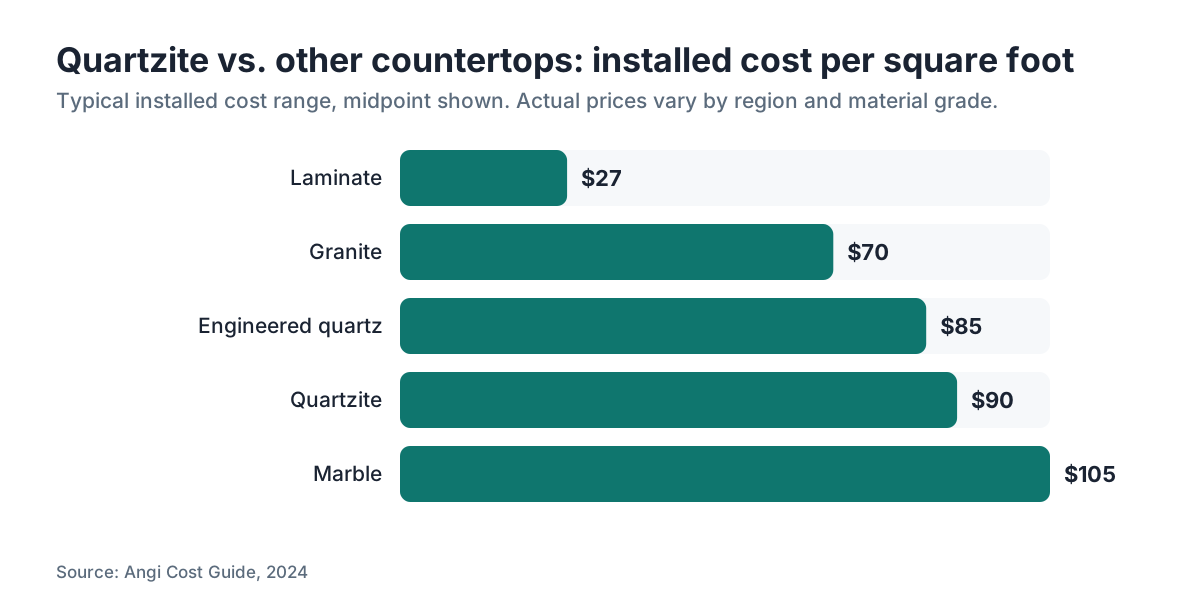
Quartzite runs $60 to $120 per square foot installed for most colors. Rarer names like Super White or Taj Mahal push into the $100 to $200 per square foot range. The spread comes from slab origin, veining complexity, and local labor rates. Material alone (slab only, no fabrication) usually lands between $40 and $100 per square foot depending on the quarry and supplier. [3]
A standard kitchen with 30 square feet of surface runs roughly $1,800 to $3,600 for material and fabrication combined, before edge profiles and cutouts. Each sink cutout adds $100 to $200. Waterfall edges or mitered joints add more. Get at least three quotes. Fabricator labor rates swing 30 to 50 percent across metro areas.
Quartzite sits above granite and below most exotic marbles on price, though premium quartzite rivals Calacatta. You pay that premium for scratch resistance and the look of white or gray veined stone without marble's etch sensitivity (assuming true quartzite). Whether it beats granite kitchen countertops for your money depends on your budget and your patience for sealing and careful cleaning.
| Stone type | Installed cost range (per sq ft) | Sealing needed | Etch risk |
|---|---|---|---|
| Quartzite | $60 to $120 | Yes, every 1 to 2 years | Low to moderate (depends on variety) |
| Granite | $40 to $100 | Yes, every 1 to 3 years | Very low |
| Marble | $60 to $150 | Yes, every 6 to 12 months | High |
| Engineered quartz | $50 to $120 | No | Very low |
| Laminate | $15 to $40 | No | Very low |
What supplies do you actually need to clean quartzite?
Fewer than the stone-care aisle wants you to buy. A pH-neutral stone cleaner, a microfiber cloth, warm water, and a soft-bristle brush for grout lines cover 95 percent of the job. That is the whole kit.
pH-neutral means a pH close to 7, neither acidic nor alkaline. Stone cleaners from Miracle Sealants, Stonetech, or Aqua Mix land in that range. [4] Do not lean on dish soap for daily use. Most dish soaps run slightly alkaline (pH 8 to 10), and months of daily wiping strips your sealer faster than it should. One drop for an emergency grease spill is fine. A squirt every morning is not.
Disinfecting takes a closer read of the label. Most bleach sprays are far too alkaline (pH 12 to 13) and degrade sealer, and they can etch softer quartzite over time. Hydrogen peroxide at 3 percent (the standard drugstore bottle) is safer for stone and works against most household germs. [12] If you want an EPA-registered disinfectant that stays stone-safe, look for hydrogen-peroxide-based products on the EPA's List N, or diluted quaternary ammonium confirmed safe for natural stone. [5]
Here is the short approved list, and the banned list.
Safe: pH-neutral stone cleaner, warm water, 3% hydrogen peroxide, diluted rubbing alcohol (50/50 with water for stubborn spots).
Avoid: vinegar, lemon juice, wine, any citrus cleaner, Windex (ammonia), abrasive scrubbers (steel wool, green Scotch-Brite pads), bleach sprays, oven cleaner.
How do you clean quartzite countertops every day?
Wipe up spills the moment they happen. That single habit does more than any product. Quartzite stays porous even sealed, and a sealed surface buys you time (minutes to an hour, depending on the liquid and the sealer), not immunity.
For daily cleaning, dampen a microfiber cloth with warm water and add a little pH-neutral stone cleaner. Wipe in one direction, then dry with a second cloth. Standing water for a few hours will not wreck the stone, but hard water deposits build up over time and take more work to remove later.
Coffee, tea, and red wine are the worst offenders. Their tannins and pigments sink into open pores quickly. Spill red wine? Blot it with a dry cloth first (do not wipe, wiping spreads it), then clean with your pH-neutral cleaner. If a faint stain hangs on, jump to the stain removal steps in the next section.
Acids are the other category to respect. Orange juice, vinegar-based dressings, tomato sauce. All of them can etch softer quartzite or softer inclusions inside otherwise hard stone. Wipe them fast, and never use them as cleaners. Plenty of homeowners spray their counters with a half-water, half-vinegar mix because a blog called it natural. On quartzite, that is a slow way to ruin the finish.
How do you do a weekly deep clean on quartzite?
Once a week, give the counter a real pass. Spray your pH-neutral cleaner across the surface, let it sit 30 to 60 seconds, then wipe with a damp microfiber cloth and dry. Work the area around the sink hardest, because that is where water and soap residue pile up.
For grout lines behind a tile backsplash, or any seam, use a soft-bristle toothbrush with the same cleaner. Minerals and soap scum love textured spots.
Hard water deposits (those white crusty rings from dried tap water) come off without a blade. Apply a few drops of a stone-safe hard water remover, which uses a mild chelating agent instead of acid. Let it sit, then wipe. No stone-specific product on hand? Diluted rubbing alcohol on a cloth lifts some buildup, though it takes patience.
Inspect the surface every few months under a raking light. Hold a flashlight low and angled across the stone in a dark room. That shows etch marks and scratches you never catch in normal kitchen lighting. Spotting them early means you can re-polish before the damage spreads.
How do you remove stains from quartzite countertops?
Stains in quartzite almost always come out with a poultice, a paste that pulls the stain out of the pores as it dries. Buy a premade stone poultice or mix one at home. For organic stains (coffee, wine, food), mix 3 percent hydrogen peroxide with flour or diatomaceous earth to a peanut-butter consistency. Spread a quarter-inch layer over the stain, cover with plastic wrap, tape the edges, and leave it 24 to 48 hours. Peel the plastic, let the paste dry fully, scrape gently with a plastic spatula, and rinse. [6]
For oil-based stains (butter, cooking oil, grease), swap acetone for the hydrogen peroxide. Acetone evaporates as the poultice dries and drags the oil out with it.
Rust stains show up when a cast iron pan sits wet on the counter. Use a rust remover formulated for stone. Never reach for CLR or hardware-store rust removers on natural stone. Most carry hydrochloric or phosphoric acid.
Etch marks are a different problem. An etch is physical damage where acid reacted with the stone's minerals and dulled the polish. No cleaner touches it, because it is not a deposit sitting on top. Mild etches on a polished surface sometimes buff out with marble polishing powder and a buffing pad. Deep etches need a pro re-polish, which runs $150 to $400 for a typical kitchen depending on region.
For the wider view on natural stone, see our guide to how to clean stone countertops.
How do you seal quartzite countertops, and how often?
Quartzite wants a penetrating impregnator sealer, not a topical coating. Impregnators soak into the pores and slow liquid absorption without changing how the surface looks or leaving a film that can peel. Topical sealers sit on top, and they are wrong for kitchen counters because they scratch and wear in patches.
The best-known impregnators for natural stone include Miracle Sealants 511 Impregnator, Stonetech BulletProof, and Aqua Mix Sealer's Choice Gold. [7] Tile stores, stone distributors, and online sellers all carry them. Figure $15 to $40 for enough to seal one kitchen.
To seal: clean the surface, then let it dry completely (at least 2 hours after cleaning, ideally overnight). Wipe on an even coat with a clean cloth and let it absorb 3 to 5 minutes per the label. Buff off the excess before it dries into a hazy film. Apply a second coat 2 hours later. [7] Open the windows. Some sealer solvents smell strong.
How often you reseal comes down to porosity. True quartzite is dense and may go 2 to 3 years. More porous varieties or quartzitic sandstone might need it yearly. The water test settles it: drip a tablespoon of water on the surface and time it. Soaks in within 4 minutes, seal now. Beads for 10 minutes or more, you are fine. [8]
Your fabricator should seal the counter at install. That is a head start, not a permanent seal. The maintenance is yours from there.
Fabricators who want to bake stone-care instructions into client handoffs can track sealing notes and job details with countertop quoting software like SlabWise.
What should you never do to quartzite countertops?
A short list of real mistakes that cause real damage, not theoretical worries.
Never use vinegar or any acid as a cleaner. It gets recommended everywhere for natural cleaning. On quartzite it etches over time, and on quartzite with calcareous inclusions it can mark the stone on the first use. This is the most common DIY cleaning error on natural stone counters, full stop.
Never use abrasive scrubbers. Steel wool, the scratchy green side of a Scotch-Brite pad, powdered cleansers like Comet. All of them scratch the polished finish. Scratches trap dirt, go dull under light, and cost money to re-polish.
Never make a habit of setting hot pans straight on the stone. Quartzite handles heat better than engineered quartz (whose resins can discolor above 300 degrees Fahrenheit) [9], but thermal shock from repeated fast temperature swings stresses the stone and the factory edge treatments over years. Use a trivet. It costs nothing and kills the risk.
Never let standing water sit where the stone meets the cabinet, especially if that edge is unsealed. Water wicks under the slab, swells the substrate, and pops the seam caulk loose.
Never drag a single-edge razor blade across quartzite the way you might on a glass cooktop. It scratches the polish. Use a plastic scraper.
How is cleaning quartzite different from cleaning other stone countertops?
Quartzite and granite share the same care protocol: pH-neutral cleaners, no acids, periodic resealing with an impregnator. The difference is that granite rarely carries carbonate minerals, so it is genuinely etch-resistant. Quartzite is the wildcard. If a fabricator told you your quartzite is "harder than granite," that describes scratch resistance, not chemical resistance. Two different properties.
Marble demands the strictest acid avoidance of any common countertop stone. Even diluted coffee left a few minutes can etch polished marble. Quartzite lands somewhere between granite and marble on etch risk, depending on the variety.
Soapstone plays by other rules. It is naturally non-porous and needs no sealing, but it scratches more easily. See our guide to how to clean soapstone countertops if you have both in the house.
Engineered surfaces like quartz countertops, laminate countertops, and Corian countertops all forgive more than quartzite. No sealing, better tolerance for mild acids, cheaper to maintain. The trade is they lack the depth and movement of natural stone.
Honest advice for heavy-cooking kitchens: quartzite is beautiful and higher-maintenance than engineered quartz. If you are set on natural stone, the routine here is manageable with good habits. If you want a surface you can hose with any cleaner and forget, quartzite is not your material.
What does a good quartzite cleaning routine look like week to week?
Here is the actual schedule that keeps quartzite looking good for years without taking over your life.
Daily: wipe after cooking and after meal prep. Damp microfiber cloth, a few drops of pH-neutral stone cleaner if needed, dry completely. Blot spills the second they land, especially acidic or pigmented ones.
Weekly: spray the full surface with pH-neutral cleaner, let it dwell 30 to 60 seconds, wipe and dry. Hit the sink and faucet base where residue collects. Scan for new stains under good light.
Monthly: run the water bead test to check the sealer. Sweep your palm across the surface in a dark room with a raking flashlight to catch new scratches or etches. Treat any lingering stains with a poultice if regular cleaning missed them.
Every 1 to 3 years: reseal. Pick a weekend morning, clean the counter the night before, let it dry overnight, apply sealer in the morning. Two coats, 2-hour gap. Done by lunch.
Every 5 to 10 years: consider a professional re-polish if the finish goes dull overall. Stone restoration crews hone and re-polish in place for $5 to $15 per square foot in most markets, far cheaper than replacement. [10]
Fabricators building customer education materials can attach care sheets to each completed job in SlabWise, so clients have this from day one.
How do you handle quartzite countertops in a kitchen versus a bathroom?
Bathroom quartzite faces a different set of threats than kitchen quartzite. In the bath, the enemies are soap scum, toothpaste (mildly alkaline and abrasive), and hard water deposits. In the kitchen, it is food acids, cooking oils, and pigmented drinks.
On bathroom vanities, the daily wipe matters less (fewer spills) but soap scum sticks around longer. A weekly spray with pH-neutral cleaner and a microfiber cloth handles it. For hard water deposits around the faucet base, use a stone-safe hard water remover, or a paste of baking soda and water (pH roughly 8.3, borderline but generally fine for occasional use) worked in with a soft brush. Test a hidden spot first.
Toothpaste is easy to ignore. Rinse the vanity after brushing instead of letting residue dry. Dried toothpaste on polished quartzite can leave micro-scratches when you wipe it off dry.
Outdoors, quartzite holds up better than most stones because its hardness shrugs off weather. UV does not touch the mineral composition. But outdoor quartzite needs more frequent sealing (yearly at minimum), because rain cycles and temperature swings break sealer down faster. Cleaning follows the same protocol, but skip the pressure washer. It forces water into seams and tears up grout or caulk.
Frequently asked questions
Can I use dish soap to clean quartzite countertops?
Occasionally, yes. A drop of dish soap in warm water is fine for a tough grease spill. Daily dish soap is the problem, because most formulas run pH 8 to 10 and repeated use strips your sealer faster. Stick to a pH-neutral stone cleaner for routine work and save the dish soap for emergencies.
Is quartzite the same as quartz countertops?
No. Quartzite is a natural metamorphic rock quarried from the earth. Quartz countertops are engineered slabs made from ground quartz mixed with resins and pigments. The care splits accordingly: quartzite needs sealing and cannot take strong acids; engineered quartz needs no sealing and tolerates chemicals better, but high heat can damage its resin.
How much do quartzite countertops cost?
Expect $60 to $120 per square foot installed for most quartzite, with premium varieties like Taj Mahal or Super White reaching $100 to $200 per square foot. A typical 30-square-foot kitchen lands at $1,800 to $3,600 all in, before edge upgrades or sink cutouts. Get three fabricator quotes; labor rates vary 30 to 50 percent by region.
How often do quartzite countertops need to be sealed?
For true quartzite, every 1 to 3 years. More porous varieties may need annual sealing. Run the water bead test: drip a tablespoon of water on the surface. Soaks in within 4 minutes, reseal now. Beads for 10 minutes or more, you have time. Always use a penetrating impregnator sealer, never a topical coating.
Can vinegar damage quartzite?
Yes. Vinegar is acidic (pH around 2.4) and etches quartzite that contains any carbonate minerals, which many varieties do. The damage shows up as a dull spot no cleaner can fix. Never use vinegar as a countertop cleaner on quartzite, no matter how many DIY guides push it for kitchen surfaces.
What is the best cleaner for quartzite countertops?
A pH-neutral stone cleaner is the right everyday pick. Miracle Sealants, Stonetech, and Aqua Mix all make products formulated for natural stone in that pH range. Warm water alone handles most daily wipe-downs. For disinfecting, 3 percent hydrogen peroxide is stone-safe. Avoid ammonia sprays, bleach sprays, and acidic cleaners.
How do I remove hard water stains from quartzite?
Use a stone-safe hard water remover with a chelating agent, not an acid-based descaler. Apply it to the deposit, let it sit per the label, then wipe with a soft cloth. Never use CLR or similar products on natural stone. For light buildup, a cloth dampened with diluted rubbing alcohol (50/50 with water) sometimes works with patience.
Can you put hot pans on quartzite?
Quartzite handles heat better than engineered quartz, whose resins can discolor above roughly 300 degrees Fahrenheit. Still, dropping a screaming-hot pan straight from a high burner onto quartzite over and over is a bad habit. Thermal shock stresses the stone over time and risks damaging edge caulk and substrate. Just use a trivet.
How do I remove etch marks from quartzite countertops?
Mild etch marks on polished quartzite sometimes respond to marble polishing powder worked in with a buffing pad in a circular motion. Deep etches, or etches on honed finishes, usually need a professional re-polish. That runs $150 to $400 for a kitchen surface. Etches are physical surface damage, not stains, so no cleaner or poultice will lift them.
What is the difference between quartzite and marble for kitchen use?
Quartzite is harder (Mohs 7 to 8) and less acid-sensitive than marble (Mohs 3 to 4). True quartzite resists scratching better and etches less readily. Marble etches from nearly any food acid, including coffee. Both need regular sealing. Quartzite is the more practical pick for heavy kitchen use, though some slabs sold as quartzite sit closer to marble and etch easily.
Is quartzite a good countertop material?
It is excellent if you accept the care commitment. You get the natural stone look and scratch resistance that is hard to match among natural materials. The downsides: porosity (needs sealing), variable acid sensitivity depending on the slab, and a higher price than granite or engineered quartz. If you want low maintenance, engineered quartz or laminate forgives more.
How do I clean quartzite countertops naturally without chemicals?
Warm water and a microfiber cloth handle daily cleaning with zero products. For a light boost, a very small amount of castile soap (pH neutral to mildly alkaline) diluted in water is gentler than most dish soaps. Skip the usual natural-cleaning trio of vinegar, lemon juice, and baking soda paste. All three can damage the quartzite surface or sealer over time.
How do I know if my countertop is really quartzite?
Ask your supplier for documentation. In the field, drip white vinegar on a hidden spot for 60 seconds. If the spot turns dull or fizzes, carbonate minerals are present and the stone is not true quartzite. A scratch test with a steel nail (harder than 5.5 on Mohs) should not scratch genuine quartzite. A geology lab can confirm with thin-section analysis, though that is rarely practical.
Can I clean quartzite countertops with rubbing alcohol?
Yes, diluted. A 50/50 mix of isopropyl alcohol and water is safe for occasional use as a spot cleaner or disinfectant. Straight (99 percent) rubbing alcohol applied over and over can dry out the sealer. Do not make it your daily cleaner; keep it for quick disinfecting or cutting through a stubborn residue.
Sources
- USGS, Geological Survey Professional Paper: Metamorphic Rocks: Quartzite is a metamorphic rock formed from sandstone under heat and pressure, producing an interlocking quartz grain matrix distinct from engineered quartz products.
- Angi, Quartzite Countertop Cost Guide: Quartzite countertop installed cost ranges from approximately $60 to $200 per square foot depending on variety and region.
- Natural Stone Institute, Care and Cleaning for Natural Stone Surfaces: pH-neutral stone cleaners are recommended for routine maintenance of natural stone countertops; acids and alkaline products degrade sealer and can damage stone surfaces.
- EPA, About List N: Disinfectants for Coronavirus (COVID-19): The EPA maintains a list of registered disinfectants; hydrogen peroxide-based products appear on this list and are considered lower-risk for surface materials compared to bleach-based cleaners.
- Natural Stone Institute, Stain Removal Guide for Natural Stone: Poultice treatment using hydrogen peroxide or acetone mixed with an absorbent powder is the recommended method for removing organic and oil-based stains from porous natural stone.
- Miracle Sealants Company, 511 Impregnator Sealer Application Instructions: Penetrating impregnator sealers should be applied in two coats with a 2-hour interval and excess buffed off before drying to avoid hazy film residue on natural stone.
- Natural Stone Institute, Sealing Natural Stone: When and How: The water absorption test (water bead test) is the standard field method for determining whether natural stone requires resealing: absorption within 4 minutes indicates sealing is needed.
- NSF International, countertop material standards context: Engineered quartz countertops use polymer resins that can discolor or crack under sustained heat above approximately 300 degrees Fahrenheit, unlike natural stone.
- Angi, Countertop Refinishing and Restoration Cost Guide: In-place stone honing and re-polishing by restoration contractors typically costs a few dollars per square foot, far less than full countertop replacement.
- USGS Mineral Resources Program, Natural Stone Statistics: Granite and quartzite are among the most commonly fabricated dimension stone types for countertop use in the United States.
- Colorado State University Extension, Cleaning and Disinfecting Kitchen Surfaces: Diluted hydrogen peroxide (3 percent concentration) is effective against common household pathogens and considered safe for food-contact surfaces when properly rinsed.
Last updated 2026-07-09