
TL;DR
- Showing homeowners every slab you own is the fastest way to kill a sale.
- Use a 3-tier presentation instead: one entry option, one mid-range pick, one premium.
- Anchor prices early, lead with lifestyle questions, and hold the material details until they pick a direction.
- Most decisions close in two showroom visits when you run the steps in that order.
Why do homeowners freeze up when choosing countertop materials?
Decision fatigue is real and well-documented. A 2000 study by Iyengar and Lepper in the Journal of Personality and Social Psychology found shoppers shown 24 jam varieties were one-tenth as likely to buy as those shown just 6 [1]. Countertops are worse than jam. The price gaps are huge, the choice is permanent, and most homeowners walk in knowing almost nothing about stone, quartz, or laminate.
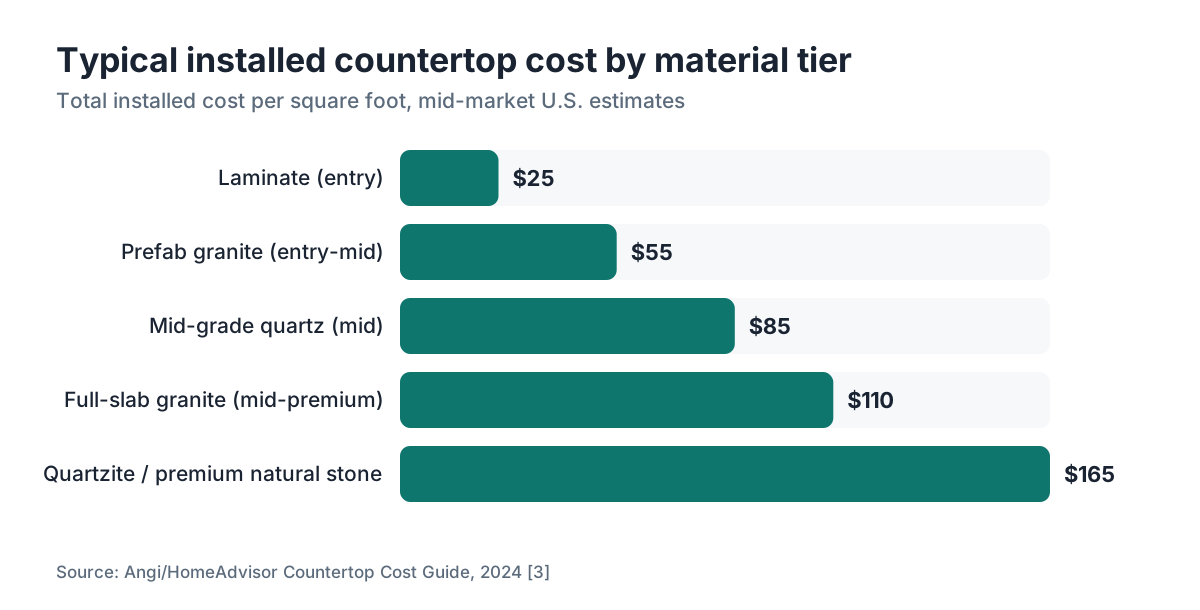
A typical kitchen countertop project runs $1,500 to $7,500 installed, and natural stone like quartzite or marble climbs well past that [3]. So picture the moment someone who can't tell quartz from quartzite gets handed a catalog of 200 slabs priced from $30 to $220 per square foot. They shut down. They say they'll "think about it." Then they don't call back.
Fabricators love to blame the homeowner for being indecisive. The real problem is the presentation. Showing everything you have is not service. It's a fire hose.
What is the 3-tier presentation method and how does it work?
The 3-tier method is simple: show three options, not twenty. One entry-level, one mid-range, one premium. That's the whole framework.
Tier 1 (entry) might be a solid-color laminate or a basic white engineered quartz, installed around $40 to $60 per square foot total. Tier 2 (mid) could be a prefab granite or a mid-grade quartz in a popular color, landing around $65 to $100 per square foot installed. Tier 3 (premium) is a full-slab natural stone, a book-matched quartzite, or a brand-name product like a Cambria design with tight movement, starting near $120 [2][3].
You don't hide the other options. You just don't lead with them. Tell the homeowner upfront: "I'm going to show you three directions. Once you know which price range fits, I can show you every specific color in that zone." That sets expectations and hands them control instead of burying them.
Here's a small thing that matters: physically position the samples so Tier 1 is on the left and Tier 3 is on the right. People read left to right and anchor to the first number they see. Put the cheap option first, and mid-range suddenly feels reasonable. That isn't manipulation. It's how perception works, and you're either using it on purpose or fighting it by accident.
What questions should you ask before showing any samples?
Ask before you show. This one habit separates good countertop salespeople from great ones.
Start with lifestyle questions, not material questions. "Do you cook a lot?" tells you whether a porous marble is realistic or whether they need something tougher. "Do you have kids under ten?" matters because darker quartz hides mess and some natural stones need regular sealing that busy families skip. "Is this a forever kitchen or are you selling in five years?" shapes the whole budget conversation. A flipper needs something that photographs well for $50 per square foot. A 30-year homeowner can think hard about the $200 quartzite slab they'll see every morning.
Ask about the existing kitchen too. What color are the cabinets? What's on the floor? Warm wood cabinets and terracotta tile plus a cool blue-gray quartz equals regret, even if they love the sample under showroom lights. Bring a notepad and write their answers down in front of them. It signals you're listening, which builds trust faster than any closing line.
Then ask budget. Ask it straight. "What's your rough budget for the countertop project, installed?" Some salespeople dodge this because it feels awkward. Skipping it wastes everyone's time. If their number is $2,800 and your shop minimum is $3,500, you both want to know that in the first five minutes.
How should fabricators structure a countertop quote to avoid sticker shock?
Quote the total installed cost, not the per-square-foot cost. Homeowners aren't fabricators. They don't know their square footage, and they'll do the mental math wrong every time. "$85 per square foot" means nothing to someone with a 47-square-foot kitchen. "Your project in mid-grade quartz comes to $4,350 installed" means everything.
Break the quote into three line items at most: material, fabrication and labor, and any real extras (sink cutout, edge upgrade, demo of the old top). Itemize more than that and the homeowner starts negotiating line by line, which slows the whole thing down. The extras line is where you mention that a waterfall edge runs $400 more or a farmhouse sink cutout adds $150.
If you're running several quotes in a day, software that auto-calculates material cost from a measured layout saves real time and cuts math errors. SlabWise generates itemized quotes straight from job dimensions, so the numbers a salesperson hands over stay consistent and fast [4]. That consistency matters. If your Tier 2 quote from Tuesday is $200 off your Tier 2 quote on Thursday for the same layout, the homeowner notices and quietly loses confidence.
Anchor with the mid-tier price first, then show the premium option. Anchoring research is consistent: the first number shapes how every later number feels [1]. Quote $4,350 first, then $6,800, and the premium reads as a big jump. Lead with $6,800, and $4,350 reads as a deal. Neither is wrong. It's a choice about what you want the customer to feel.
How many material options should you show in a showroom visit?
Three to five physical samples per tier, nine to fifteen total at the outside. If you have a big slab yard, walk the homeowner past two or three slabs in their chosen tier, not the whole yard.
This feels backward. You've got 400 slabs and you're proud of them, so showing everything feels like generosity. It isn't. Choice-overload research shows that past a certain point, satisfaction with the final pick actually drops even when people do buy something [9]. They spend the drive home wondering if they got it wrong.
Build the habit of pre-selecting your three to five best-value, best-looking slabs per tier before the appointment. Pull them to the front of the yard or set them on the showroom table. If the homeowner picks a direction and wants more, great, walk the yard. But you control the starting set.
For kitchen countertops specifically, color continuity with the existing finishes matters more than the material category. A 12-inch square sample lying flat on a table won't tell you what 47 square feet looks like under kitchen lighting. Offer to let homeowners take a large sample home overnight. The ones who do almost always come back to buy.
What's the best way to explain material differences without confusing people?
Give each material one sentence tied to a real lifestyle scenario. Not a spec sheet.
Granite countertops: "Hard as anything, heat-proof, needs a seal about once a year, and every slab looks a little different."
Marble countertops: "The most beautiful stone there is, but it etches from lemon juice and wine, so it's for people who love the aged patina it earns over time."
Engineered quartz: "Consistent color, never needs sealing, shrugs off abuse, but keep hot pans off it."
Laminate countertops: "Looks far better than it did 20 years ago, easy to replace, the right call for a tight budget or a rental."
Butcher block countertops: "Warm and beautiful, but it wants occasional oiling and you can't let water pool near the seams."
Quartzite (not quartz, a different thing entirely): "Natural stone, harder than granite, looks like high-end marble, and gets confused with quartz constantly, so clear that up every single time."
Five sentences per material, tops. If someone wants more on maintenance for a specific stone, go deeper then. Don't dump every fact at once. Explain sealing, etching, UV sensitivity, scratch hardness, and radon in the first ten minutes and you'll lose them before they choose anything.
How do you handle a homeowner who has done a lot of online research?
Treat their research as an asset, not a threat. Someone who walks in quoting prices they found online is a serious buyer. Start by confirming what they got right, then correct what online research usually gets wrong.
The most common gap: online prices are almost always material-only, not installed. The National Kitchen and Bath Association notes that installation, edge work, cutouts, and tear-out typically add 40 to 60 percent to the raw material cost [5]. So the homeowner who saw "$55 per square foot quartz" and expects a $2,500 project for a 45-square-foot kitchen is in for a shock when the real number lands past $4,000. Walk them through that math early and calmly.
The second gap: online photos are shot with pro lighting on perfect slabs. The movement, veining, and color variation in the slab they actually get can look pretty different. That's exactly why the right sequence is getting to "yes" on a direction, then confirming it on a real slab in person.
If they've read up on a specific brand, like Cambria countertops, respect the homework. Pull that product. Show it. If it fits their budget and kitchen, sell it. If it doesn't, you now have a concrete comparison point to work from instead of arguing in the abstract.
How should you present edge profiles and upgrades without upselling awkwardly?
Bundle the most popular edge into the base quote. A standard eased or beveled edge belongs in your Tier 1 and Tier 2 prices by default. Upgrades like ogee, waterfall, or mitered edges then show up as clear additions with a dollar amount next to them.
Show edges physically. Keep a sample board with four or five profiles on it. Let the homeowner touch them. Label each with the upcharge: "Eased: included. Pencil: +$80. Ogee: +$200." When they can hold the sample and see the cost at the same time, the decision is easy and low-pressure.
The worst way to present upgrades is to rattle them off verbally at the end of a long appointment, when the homeowner is tired and just wants to be done. They'll say no to everything. Present upgrades as a separate five-minute section with physical samples, after they've committed to a material direction but before you write the final quote.
Same logic covers sink cutouts, backsplash extensions, and sealing packages. Group them as "add-ons" on the quote, never buried in fine print. Clear, itemized quotes with explicit line items reduce post-sale disputes in home improvement work [10]. A homeowner who understands exactly what they're paying for rarely has buyer's remorse, and buyer's remorse is what writes the bad reviews.
What does the timeline and installation process look like, and when do you explain it?
Cover the timeline after they've committed to a direction, not before. If someone is still torn between quartz and granite, the 10-to-14-day fabrication window is just more weight on the scale.
Once they've picked a material and edge, walk the sequence: template visit, fabrication lead time, install day, and any curing or sealing time before they can use the counters. A stock-material quartz job usually goes: template within a week of deposit, fabrication 7 to 14 business days after template, installation one to two days [6]. Natural stone with special slabs can add a week if the stone ships from a distributor.
For a clear breakdown of install day, countertop installation is worth reading before the homeowner even asks. Hand them that resource, printed or as a link, and it answers "what do I need to do to prepare?" without eating your appointment time.
Here's the thing homeowners never expect: they have to clear the counters completely and disconnect the plumbing under the sink before the crew arrives. Tell them at quote time. Spring it on them day-of and you get chaos and a delayed job.
How do you close the decision without making homeowners feel pressured?
Give them a specific next step, not an open-ended "let me know." End the appointment with something concrete: "Here's what I'd do. Take the large quartz sample home, set it next to your cabinets tonight, and let's talk Thursday. I can hold this slab 48 hours without a deposit."
A time-limited hold on a specific slab is honest, not a squeeze play, because slabs really do sell. Popular veined quartz and 2-centimeter white natural stone move fast in busy markets. Telling someone a slab is available and giving them a real window to decide helps them decide.
Follow up with a written quote the same day. Fast response after customer contact sharply increases conversion compared to a delayed reply, a pattern documented in lead-response research, and it applies straight to post-appointment quotes [7]. Put a photo of the slab they liked in the quote, the exact dimensions, the total price, and one clear line for approval.
If they go quiet on the quote for 48 hours, one check-in call or text is fair. More than one is pressure. If they're comparing you to another shop, ask straight: "Is there anything about the quote I can clarify?" Buyers who compare on price alone often aren't your best customers anyway. The ones who want clarity and confidence are.
How can shops build a repeatable presentation system that every salesperson uses?
Write a one-page appointment sequence. Not a word-for-word script, a sequence: lifestyle questions first, budget second, 3-tier overview third, narrow to one tier, show samples in that tier, then edge upgrades, then quote. Every salesperson runs the same order even if the words are their own. The Small Business Administration lists consistent sales processes and written quote follow-up among the practices that lift close rates for small home improvement businesses [8].
Pre-build a sample kit per tier. Tier 1 holds your three best-value quartz colors and a laminate sample. Tier 2 has five quartz and two granite options. Tier 3 carries your best-looking natural stone plus one or two premium engineered picks. These kits live in labeled trays in the showroom. No hunting for samples mid-appointment.
Use the same quote format every time. When one salesperson itemizes eight lines and another shows two, customers get confused and your shop looks disorganized. Software like SlabWise generates consistent line items tied to measured dimensions and material costs [4], which takes one variable off the table completely.
Train on objections. The four you'll hear most: "it's too expensive," "I need to think about it," "my spouse isn't here," and "I saw it cheaper online." Role-play each. A salesperson who's practiced an objection twice handles it calmly. One hearing it live for the first time tends to stumble.
What are common presentation mistakes fabricators make that lose sales?
Leading with material specs instead of lifestyle questions. This is the big one. Homeowners don't care about the Mohs hardness scale. They care whether the counter survives their family.
Showing too many samples at once. Twenty quartz colors on a table feels generous. It triggers paralysis. Pull five.
Quoting per-square-foot without converting to a project total. "$85 per square foot" is meaningless to most homeowners. "$5,200 installed for your kitchen" is real.
Skipping the same-day follow-up. Appointments where the homeowner leaves with no written quote almost always end with the shop losing the job. Even a ballpark quote by email buys goodwill.
Ignoring the partner who didn't come. When one person picks a direction and then has to re-sell it at home, you've lost control of the conversation. Offer a video call, a take-home kit, or a second appointment so everyone with a vote is in the room.
For materials with real care requirements, like quartzite or soapstone, burying the maintenance details in a brochure nobody reads is how you earn a frustrated call six months later. Cover care verbally, briefly, at the point of sale.
Frequently asked questions
How many countertop samples should I show a homeowner in one visit?
Nine to fifteen total across three price tiers is the workable ceiling. More than that triggers choice overload. Research on consumer choice shows too many options cut both purchase likelihood and satisfaction with the final pick. Pre-select your strongest three to five per tier before the appointment and start there. Walk the slab yard only after they've picked a direction.
Should I quote countertops per square foot or as a total project price?
Always quote a total installed project price. Per-square-foot numbers work for internal pricing, but homeowners can't convert them into a real cost because they don't know their square footage. A quote that reads "$4,850 installed, including one sink cutout, eased edge, and haul-away of your existing top" is clear and builds trust. Per-square-foot figures in a final quote invite math errors and sticker shock.
How do you handle a homeowner who says countertops are too expensive?
Validate first, then redirect. "That's fair, let's look at what fits your budget." Show the Tier 1 option with specific numbers. If the budget is genuinely below what your shop can do profitably, say so and point them toward laminate or prefab. Fabricators who stretch a too-low budget into a natural stone job usually end up with an unhappy customer and a thin margin.
What lifestyle questions should a fabricator ask before showing samples?
Ask whether they cook often, have young children, plan to sell within five years, and what their existing cabinet and floor colors are. These four narrow the material choices faster than any spec sheet. A family that cooks daily with kids under ten usually needs engineered quartz or a sealed granite, not marble or any surface that demands careful upkeep.
How long does the average homeowner take to decide on countertop material?
Most decisions close within two showroom visits when the salesperson runs a structured presentation. Without structure, they can drag for weeks. The deciding factor is giving homeowners a clear next step at the end of each visit and following up the same day with a written quote. Appointments where no quote goes out that day have a much lower close rate.
How do I explain the difference between quartz and quartzite without confusing people?
One sentence each. Quartz is engineered stone, factory-made with resin binders, very consistent, never needs sealing. Quartzite is a natural metamorphic rock, mined from the ground, looks like marble but harder, and does need sealing. The names sound nearly identical, which trips up almost everyone. Put physical samples side by side and point to the visual difference. Homeowners remember what they can see and touch.
When should you introduce edge profile upgrades during a countertop presentation?
After the homeowner commits to a material direction but before you write the final quote. Too early and it adds weight while they're still choosing material. Too late and they're fatigued and decline everything. A five-minute segment with a physical edge sample board, each option labeled with its upcharge, works well. Keep the selection to four or five edges.
How do you handle a homeowner whose spouse wasn't at the showroom visit?
Address it directly at the end of the appointment. Offer a take-home sample, a short second visit that includes the other partner, or a video walkthrough. Send the written quote to both email addresses if you have them. The homeowner who came will re-sell it internally, and a physical sample plus a clear written quote makes that conversation much easier.
Is it worth offering countertop samples for homeowners to take home?
Yes, consistently. Homeowners who take a large sample home overnight and set it beside their actual cabinets and flooring almost always come back ready to decide. The showroom, with its neutral walls and artificial lighting, doesn't replicate their kitchen. A returnable 6-by-6-inch sample costs almost nothing and sharply reduces second-guessing after purchase.
How should I present a premium countertop option without making mid-range feel cheap?
Frame each tier around what the homeowner gets, not what they give up. "The mid-range quartz is nearly indestructible and looks great for 20 years. The premium quartzite is a one-of-a-kind slab that won't match any other kitchen on your street." Neither line implies the other is inferior. Let the homeowner pick the value that matches their priorities.
What's the best follow-up practice after a countertop showroom appointment?
Send a written quote with a photo of the specific slab they liked within four hours of the appointment. Include three line items: material, fabrication, and extras. Note any slab hold expiration. Follow up with one call or text 48 hours later if you haven't heard back. More than one follow-up tips from helpful into pressure. A clean, fast, visual quote does most of the selling on its own.
Should laminate countertops be presented as a serious option or just a budget fallback?
Present laminate as a legitimate choice for the right homeowner, not an apology. Modern laminate from brands like Formica looks far better than it did 20 years ago, installs fast, and costs a fraction of stone. For rentals, flips, or homeowners on a fixed budget who still want a clean result, it's the right answer. Treating it as a consolation prize makes people feel judged instead of served.
How do I build a consistent presentation system across multiple salespeople in my shop?
Write a one-page appointment sequence: lifestyle questions, budget, 3-tier overview, material samples in the chosen tier, edge upgrades, quote. Pre-build labeled sample kits per tier. Use standardized quote software so every quote shares the same format and line items no matter who writes it. Role-play the four most common objections at least twice before a new salesperson goes live with customers.
Sources
- Iyengar & Lepper, Journal of Personality and Social Psychology, 2000 - 'When Choice is Demotivating': Consumers presented with 24 jam varieties were one-tenth as likely to purchase as those presented with 6 varieties; larger choice sets reduce both purchase likelihood and post-choice satisfaction
- U.S. Bureau of Labor Statistics, Consumer Expenditure Survey: Kitchen countertop projects range broadly; natural stone installed costs routinely exceed $100 per square foot in labor and material combined
- HomeAdvisor (Angi) - Countertop Installation Cost Guide: Average countertop installation costs range from roughly $1,500 to $7,500 depending on material, with laminate at the low end and premium natural stone at the high end
- SlabWise - Countertop Quoting and Nesting Software: Quoting software that generates itemized quotes from job dimensions keeps per-job pricing consistent across multiple salespeople
- National Kitchen and Bath Association (NKBA) - Kitchen Planning Guidelines: Installation, edge work, cutouts, and tear-out typically add 40 to 60 percent to the raw material cost of countertops
- Natural Stone Institute (formerly Marble Institute of America) - Fabrication Standards: Typical fabrication lead time for engineered quartz from template to installation is 7 to 14 business days for stock materials
- Harvard Business Review - 'The Short Life of Online Sales Leads' (lead response time research): Response time within hours of customer contact dramatically increases conversion rates compared to delayed follow-up; the principle applies directly to post-appointment quote delivery
- U.S. Small Business Administration - Sales and Customer Service Resources: Consistent sales processes and written quote follow-up are cited as key practices for small home improvement businesses to improve close rates
- Schwartz, Barry - 'The Paradox of Choice' (Harper Perennial, 2004), author page via Swarthmore College: Expanding consumer choice past a certain threshold reduces decision satisfaction and increases post-purchase regret, a finding relevant to countertop material presentations
- Consumer Financial Protection Bureau - Disclosure and Transparency in Home Improvement Contracts: Clear, itemized written quotes with explicit line items reduce post-sale disputes and improve consumer satisfaction in home improvement transactions
Last updated 2026-07-11