TL;DR
- To polish granite, clean the surface, work any dull spots with a 3,000-grit diamond hand pad, then apply a granite finishing cream in small circles and buff dry.
- Seal every 6 to 12 months with a penetrating impregnator.
- The job takes 30 to 60 minutes and costs $20 to $60 in supplies.
- Deep scratches need a pro.
What does polishing granite actually do?
Polishing granite is not the same as sealing it. Mixing up the two is the most common mistake homeowners make. Polishing smooths and brightens the surface, filling micro-scratches and bringing back the reflectivity the slab had the day it was installed. Sealing is a separate step that pushes a penetrating impregnator into the pores so liquids cannot soak in and stain. You need both, but at different times and for different reasons.
Granite is an igneous rock made mostly of quartz, feldspar, and mica [1]. Quartz sits at 7 on the Mohs hardness scale, so everyday items like ceramic dishes and metal utensils can leave fine scratches over years of use. Those scratches scatter light instead of reflecting it. That scatter is what makes the counter look dull. A polish realigns the surface and sends the light back in one direction again.
So here is the quick diagnosis. If your granite looks hazy, flat, or shows swirl marks, polishing is the fix. If water no longer beads and instead soaks in within a few minutes, sealing is what you need. Both problems can happen at once, and the process below covers both.
What tools and products do you need before you start?
You do not need a shop full of equipment for a DIY polish. Here is what actually works for a homeowner:
| Item | Purpose | Approx. cost |
|---|---|---|
| 3,000-grit diamond hand pad (wet) | Removes light scratches and dull spots | $10, $18 |
| Granite polish or finishing cream (e.g., Tenax Ager, MB-11) | Restores shine after hand-pad work | $12, $25 |
| Penetrating impregnator sealer (e.g., StoneTech BulletProof, Aqua Mix Sealer's Choice Gold) | Fills pores, prevents staining | $15, $40 per quart |
| Microfiber cloths (at least 4) | Buff and wipe without scratching | $8, $12 for a pack |
| pH-neutral stone cleaner or dish soap | Pre-clean before any product | $5, $10 |
| Painter's tape | Protects sinks, cabinets, and backsplashes | $3, $5 |
| Spray bottle of water | Keeps the diamond pad wet | Free |
Deeper scratches, a grinding mark, or a chip are a different animal. A hand pad will not fix those. That level of work needs a variable-speed angle grinder with diamond polishing pads, starting around 50 or 100 grit and stepping up through 200, 400, 800, 1,500, and 3,000. That is fabricator territory, and hiring a stone restoration company is the honest call. Expect $3 to $8 per square foot for professional polishing, so roughly $150 to $400 for an average kitchen [2].
Skip the generic car polish, vinegar, bleach, and anything labeled for ceramic tile. Acids etch granite (the feldspar is the weak point), and silicone-based polishes leave a film that blocks sealers from soaking in later.
How do you prepare the countertop before polishing?
Skipping prep is how you grind grit into the surface and make things worse. Take 10 minutes here.
Clear everything off the counter. Tape off the sink edge, any stainless appliances butting up against the stone, and the bottom of the backsplash if it is tile. Polish and sealer leave a haze on grout lines and stainless that is a pain to clean up.
Mix a few drops of pH-neutral dish soap (plain Dawn is fine) into a spray bottle of warm water and wipe down the whole surface. You are hunting for cooking grease, dried spills, and waxy residue from old polish. A second pass with plain water clears the soap. Let it dry completely, at least 20 minutes at room temperature. Polish or sealer on a wet or greasy surface is one of the main reasons people get blotchy results.
Check for sticky residue from labels, tape, or old sealer buildup. A little acetone (nail polish remover) on a microfiber cloth lifts those spots without hurting the stone. Wipe right away and let it flash off before you move to polish.
How do you polish granite countertops step by step?
Here is the full run from dull surface to mirror finish.
Step 1: Spot-treat scratches with a diamond hand pad. For specific dull areas or visible swirl marks, wet the diamond hand pad from your spray bottle and work in small 6-inch circles over the spot. Moderate pressure, keep the pad wet, and wipe the slurry away with a damp microfiber cloth every 30 seconds or so to check progress. A 3,000-grit pad is fine enough that you are unlikely to change the surface if you keep moving. Work the area 2 to 4 minutes, wipe clean, and look. Scratch still there? Keep going. Gone? Move on.
Step 2: Apply granite polish to the whole surface. Put a dime-sized amount of finishing cream on a clean, dry microfiber cloth. Work a 2-by-2-foot section at a time in overlapping circles, moderate pressure, steady motion. The product should spread easily and go slightly hazy as it dries. Let it sit 1 to 2 minutes (check your product label, times vary), then buff to a shine with a second dry microfiber cloth using fast, light circles.
Step 3: Check for streaks or haze. Look across the surface at a low angle with a strong light behind you. Streaks or cloudy patches mean you left too much product or did not buff hard enough. A fresh dry cloth and a firm buffing pass fixes it almost every time.
Step 4: Let it rest. Give the polished surface at least 30 minutes before sealer. The polish needs to cure and the stone needs to be bone dry for the sealer to soak in.
The polishing part takes about 20 to 40 minutes for an average kitchen, depending on how many dull spots you are chasing.
How do you seal granite countertops after polishing?
Sealing protects the polish you just laid down. Without it, oils and liquids soak into the pores and darken the stone for good.
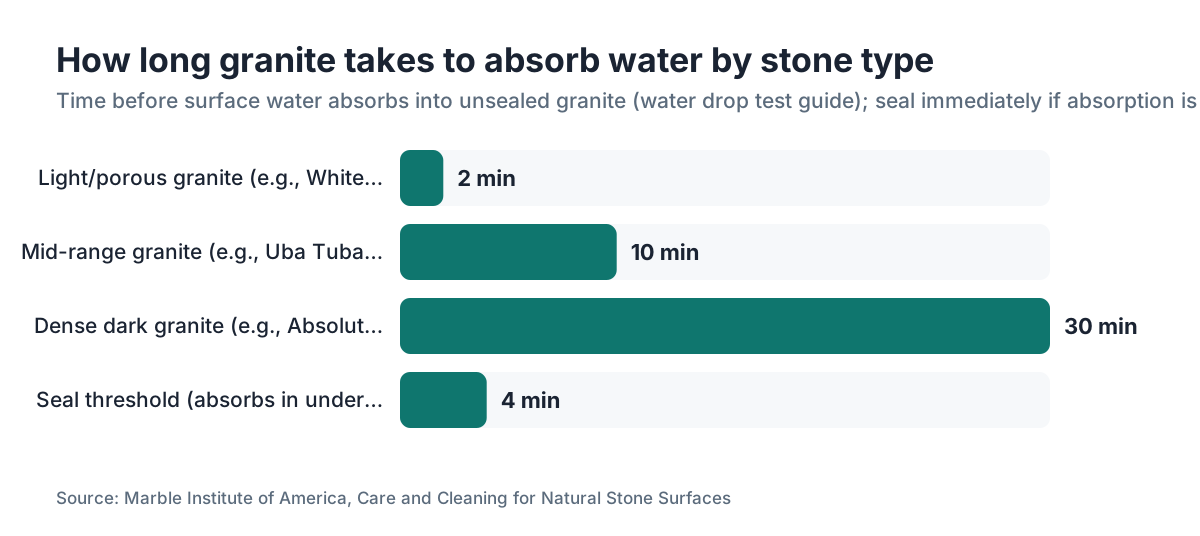
Granite is porous by nature, and the porosity swings hard by stone. Some dense black granites barely need sealing at all. Lighter stones like Giallo Ornamental or White Ice are thirstier and want sealing every 6 months [3]. The test is simple: drop a little water on the surface and time how long it takes to absorb. Under 4 minutes means seal now. Thirty minutes or never means you are fine for a while.
How to apply penetrating sealer:
- Make sure the surface is clean and fully dry. Any moisture blocks penetration.
- Pour a small amount onto the stone, or apply straight from the bottle, in a thin even coat across a 2-to-3-foot section.
- Let it dwell for the time on the label, usually 5 to 15 minutes. The stone absorbs what it can.
- Wipe off all excess with a clean dry microfiber cloth before it dries. This is the step people skip. Sealer that dries on the surface leaves a white haze that is a chore to remove.
- Apply a second coat only if the stone drank the first one fast (you can watch it vanish in under a minute). Most stones need one coat.
- Keep the surface dry for 24 hours.
The Marble Institute of America, in its Care and Cleaning guidance, calls for testing sealers annually and reapplying "whenever water absorbs into the stone." For most kitchens, once a year is a practical schedule. The zone near the sink may want it twice a year.
A quart of quality impregnator covers 150 to 300 square feet, plenty for the average kitchen and bathroom combined. You do not need to hire anyone. This is genuinely a 30-minute job.
For keeping all kinds of natural stone in shape, see our guide to how to clean stone countertops.
What is the difference between a polish and a sealer, and do you need both?
You need both, and they do different jobs. Do not confuse them.
A polish (also called a finishing cream or color enhancer) works on the surface. It fills micro-abrasions, lays down a thin film that boosts reflectivity, and with products like Tenax Ager, slightly darkens the stone to bring out its color. The effect is cosmetic. Polish wears off over time, fastest on high-use surfaces.
A penetrating impregnator sealer soaks into the pore structure and bonds there, building a water-repelling and oil-repelling barrier below the surface. You cannot see it. It does not change the look. It stops stains. The two chemical families are solvent-based (faster penetration, stronger for very porous stone) and water-based (lower VOCs, better for homes with kids or pets, still fine for most granite) [5]. The EPA notes that water-based products emit fewer volatile organic compounds than solvent-based ones, which matters for indoor air during application [9].
Apply polish first, let it cure, then seal. Seal first and the sealer can block the polish from bonding evenly.
Products sold as "polish and sealer in one" exist, but they are a compromise. The polish component fills pores before the sealer can fully penetrate, and the sealer component thins out the finish. Fine for maintenance touch-ups. For a full restoration, separate products win.
How often should you polish and seal granite countertops?
Polishing and sealing run on different clocks.
Sealing: the water bead test is your real guide, not the calendar. Most kitchen granite likes a fresh coat once a year. Bathroom granite (less cooking oil) can often stretch to 18 months or 2 years [3]. Stones with high quartz content or dense mineral packing absorb less and go longer. Stones with visible graining, lighter colors, or origins in Brazil and India (source of many popular white and cream granites) run more porous and want sealing more often [10].
Polishing: once a year covers most homes, timed with the sealing. Cook heavily and notice the sheen fading by month six? A quick buff with finishing cream (no hand pad needed) brings it back in 15 minutes.
Daily habits matter more than anything else in this article. Wipe spills fast, skip abrasive scrub pads, and use a pH-neutral cleaner for routine work. That keeps granite looking sharp for years between full treatments. Acidic sprays like vinegar-based or lemon-scented cleaners slowly etch the feldspar, and that dulling is the kind of damage even polishing cannot fully undo [6].
Can you polish out scratches in granite at home?
Light surface scratches and dull spots, yes. Deep scratches, gouges, and chips, no.
The distinction matters because the wrong tool on a deep scratch makes it look worse. A 3,000-grit diamond hand pad handles very fine surface abrasions. Run your fingernail across the scratch. If your nail does not catch, it is a surface scratch and a hand pad can take it out. If your nail catches in the groove, the scratch runs into the stone, and fixing it means stepping through multiple diamond grits (50, 100, 200, 400, 800, 1,500, 3,000) with a variable-speed wet polisher.
Deep repairs are a job for a stone restoration contractor. The Marble Institute of America keeps a directory of certified stone restoration professionals if you need one [4].
For a single small chip (a knocked corner or a divot from a dropped cast iron pan), two-part epoxy repair kits with stone pigments can fill and color-match. Results ride on the color complexity of your granite. Solid black or solid white is easy. Multi-color granite with movement is close to impossible to match perfectly at home.
Comparing materials? Engineered surfaces like Cambria countertops never need sealing, which is a real reason some homeowners pick quartz over natural granite.
What common mistakes ruin a granite polish job?
A handful of errors show up over and over.
Using the wrong product. Vinegar, bleach, ammonia cleaners, and generic bathroom sprays are acidic or alkaline enough to damage granite over time. Same for car wax and furniture polish, which leave silicone residue that clogs pores and blocks sealers.
Leaving old sealer buildup in place. Some counters have had coat after coat applied over the years with no stripping in between. That buildup reads white or hazy and shrugs off polishing because it sits on top of the stone, not in it. An alkaline stone stripper (not acid) clears it before you start.
Letting sealer dry on the surface. Come back to a dried haze and it is still fixable. A little more sealer, applied wet and wiped immediately, re-wets the dried film so you can lift it. Acetone also works for stubborn dried-sealer haze.
Polishing in the sun or on a warm surface. The product dries too fast. Work in a shaded kitchen with good airflow, not with afternoon sun hitting the counter.
Buffing too hard. You are not grinding material off with the cloth. Light, fast strokes with a dry microfiber cloth make the shine. Heavy pressure just smears product around.
If the surface is badly damaged, or you are fighting stains that have sat for months, polishing alone will not solve it. Stubborn stains in porous granite usually need a poultice: a stone-safe cleaner mixed with powdered chalk or talc, spread on overnight to draw the stain out before you polish. Stain removal by stain type is covered in our how to clean stone countertops guide.
How does polishing granite compare to caring for other stone countertops?
Granite is not the highest-maintenance natural stone in the kitchen, and not the lowest.
Marble countertops are more porous than granite and etch easily from acids, so they need sealing more often (sometimes every 3 to 6 months) and scratch more readily. Quartzite is harder than marble and shrugs off etching better, but gets confused with marble constantly and still needs sealing. The how to clean quartzite countertops guide walks through the differences.
Engineered quartz (Cambria, Silestone) never needs sealing because resin binders fill the pores during manufacturing. The trade-off: heat damages the resin at high temperatures, and scratches in quartz are harder to polish out than scratches in granite.
Soapstone countertops get mineral oil instead of sealer. They are nearly non-porous but scratch easily, and the oil darkens and evens the color over time.
Still picking a material? The granite countertops guide covers cost, durability, and edge profiles in more depth. For a side-by-side of every kitchen surface, the kitchen countertops hub is the place to start.
If your fabricator runs quoting software like SlabWise, they can hand you an itemized quote that breaks out material cost by slab, so you can weigh granite against quartz on the same terms before you commit.
When should you call a professional instead of doing it yourself?
DIY polishing covers routine maintenance, light dullness, and annual sealing. A few situations call for a pro.
Call a stone restoration professional when you have deep scratches you can feel with a fingernail, mechanical damage (grinding marks from an appliance, heavy etching from a chemical spill), a counter that has never been polished and carries 10-plus years of built-up dullness, or a crack that needs structural stabilization before any surface work.
A restorer starts at 50 or 100 grit, works up through 7 or more diamond grits, and runs a variable-speed wet polisher. That process throws off slurry that has to be managed carefully, especially near drains. Done right, a pro can take a 20-year-old dull granite counter back to looking new. Expect $3 to $8 per square foot in most U.S. markets based on 2024 pricing, though rates swing hard by region [2]. If you are working with solvent-based products at that scale, OSHA hazard communication guidance calls for adequate ventilation during application because of the VOC content [7].
Doing a full kitchen renovation and replacing the counters instead of restoring them? The countertop installation guide covers what to expect from templating through final install.
Frequently asked questions
How do I polish granite countertops that have gone completely dull?
Start with a 3,000-grit wet diamond hand pad on the dull areas, working small circles with steady water lubrication. Follow with a granite finishing cream buffed to a shine using a dry microfiber cloth. If the whole surface is dull rather than a few spots, you likely need a professional with a variable-speed wet polisher and a full grit progression from 200 up to 3,000.
How do I seal granite countertops myself?
Clean and dry the surface completely. Apply a thin even coat of penetrating impregnator sealer to a 2-to-3-foot section, let it dwell 5 to 15 minutes per the label, then wipe off all excess before it dries. A dried sealer haze is the most common mistake. One quart covers 150 to 300 square feet. Keep the surface dry for 24 hours after sealing.
How often should I seal granite countertops?
Test annually by dripping water on the surface. If it absorbs within 4 minutes, seal it. Most kitchen granite benefits from sealing once a year. Light-colored or more porous stones may need it every 6 months. Dense, dark granites can sometimes go 2 or more years. The stone's behavior tells you more than any calendar rule.
Can I use olive oil or coconut oil to polish granite?
No. Cooking oils soak into the pores of unsealed or partially sealed granite and cause permanent dark staining. They do not polish the surface, and they actively block sealers from working afterward. Use only products formulated for natural stone. This is one of the more common and unfortunately permanent mistakes homeowners make.
What is the best product to polish granite countertops?
MB Stone Care MB-11, Tenax Ager, and StoneTech Revitalizer are widely used products with good track records. Matching product type to your need matters more than the brand: a finishing cream for shine, an impregnator sealer for stain protection, or a color enhancer to deepen the natural look. Avoid anything not labeled specifically for natural stone.
Why does my granite countertop look hazy after sealing?
Sealer haze happens when excess sealer dries on the surface instead of getting wiped off while wet. To fix it, apply a fresh thin coat of the same sealer to the hazy area, let it soften the dried residue for 60 seconds, then wipe firmly with a dry microfiber cloth. Acetone on a cloth also removes dried sealer haze in most cases. Work quickly and in small sections.
Can I polish granite countertops with a regular orbital buffer?
A random orbital polisher with a soft foam pad and granite finishing cream can speed up the buffing step and produce a good result. Keep the machine moving and use low speed so you do not overheat the product. Do not use a buffer with diamond pads unless you know the full grit sequence and have experience managing slurry. The wrong pad at the wrong speed removes stone instead of polishing it.
Does polishing granite remove stains?
Polishing addresses surface appearance, not embedded stains. If oil or liquid has soaked into unsealed or under-sealed granite, polishing the surface will not draw it out. Stains in the stone's pores need a poultice treatment first, which pulls the staining material out through absorbent contact over 24 hours. Once the stain is out and the stone is clean and dry, polish and reseal as normal.
Is there a difference between polishing honed granite and polished granite?
Yes, and it matters a lot. Polished granite has a mirror finish by design. Honed granite has a matte, flat finish by design. Applying standard granite polish cream to honed granite adds unwanted sheen and changes the look. Honed granite still needs sealing, but use a sealer only, not a finishing polish. To restore the flat look of honed granite, a specialty honed stone refresher exists for that purpose [8].
Can you polish granite around the sink where it is dull from water and soap?
Yes, this area responds well to polishing because the dulling usually comes from mineral deposit buildup and micro-abrasion from cleaning, not deep scratching. Remove hard water deposits first with a stone-safe calcium remover (not vinegar, which etches). Once the deposits are gone, a hand pad and finishing cream restore the shine. Then seal that section more often than the rest, since it sees more water.
How long does it take to polish granite countertops?
For a typical kitchen with 30 to 40 square feet of counter, plan on 20 to 40 minutes for polishing and another 30 minutes for sealing, including dwell and wipe times. Add 10 minutes for prep. The sealer then needs 24 hours to cure before normal use. Total hands-on time is under two hours for most homeowners.
Do all granite countertops need to be sealed?
Most do, not all. Very dense, dark granites like Absolute Black or Zimbabwe Black have low porosity and may not absorb sealer at all, which makes sealing pointless. The water drop test tells you: if water does not absorb within 30 minutes on an unsealed area, skip the sealer. If it absorbs in under 4 minutes, seal immediately. Lighter-colored and visibly grained granites almost always benefit from sealing.
Sources
- U.S. Geological Survey, Mineral Resources Program: Granite: Granite is composed mainly of quartz, feldspar, and mica; quartz sits at 7 on the Mohs hardness scale
- Angi, Stone Countertop Cost Guide, 2024: Professional stone polishing costs roughly $3 to $8 per square foot in most U.S. markets
- Marble Institute of America, Care and Cleaning for Natural Stone Surfaces: Sealing frequency varies by granite porosity; lighter, more porous stones may need sealing every 6 months while denser stones can go longer
- Marble Institute of America, Stone Restoration and Maintenance: The Marble Institute of America recommends testing sealers annually and reapplying whenever the water bead test shows absorption; maintains a directory of certified stone restoration professionals
- Natural Stone Institute, Technical Manual: Sealing Natural Stone: Penetrating impregnator sealers come in solvent-based and water-based formulations; water-based sealers have lower VOCs and are effective for most granite applications
- National Park Service, Preservation Briefs (stone chemical damage discussion): Acidic cleaners gradually etch feldspar-bearing stone surfaces, causing cumulative surface degradation that polishing cannot fully reverse
- Occupational Safety and Health Administration, Hazard Communication Standard: Solvent-based stone sealers contain VOCs requiring adequate ventilation during application, as covered under OSHA hazard communication guidelines
- Natural Stone Institute, Glossary of Stone Industry Terms: Honed granite has a matte, flat finish distinct from polished granite's mirror finish; care and polishing methods differ between the two surface types
- U.S. Environmental Protection Agency, Volatile Organic Compounds' Impact on Indoor Air Quality: Water-based sealers produce lower VOC emissions than solvent-based alternatives, relevant for indoor air quality during countertop sealing
- Marble Institute of America, Dimension Stone Design Manual: Granite porosity and absorption rates vary significantly by origin and mineral composition, affecting sealing frequency recommendations
Last updated 2026-07-09