TL;DR
- Granite countertops need daily wiping with mild soap and water, quick spill cleanup, and resealing every one to three years depending on stone porosity.
- Skip acidic cleaners, bleach, and abrasive pads.
- Test your sealer once a year with a water droplet: if it soaks in under four minutes, reseal.
- That routine covers about 90% of granite care.
What does granite countertop maintenance actually involve?
Granite is igneous rock, formed under heat and pressure, and it's genuinely hard stuff. It's also porous, and that one detail drives almost every care decision you'll make. Water, cooking oil, wine, and citrus juice can seep into unsealed or under-sealed granite and stain or etch it. The fix is boring and effective: a penetrating sealer closes those pores and makes daily care simple.
The full picture has three layers. Daily cleaning means wiping spills fast and cleaning with a pH-neutral cleaner or plain dish soap. Periodic resealing means applying a penetrating sealer every one to three years to restore the barrier. Occasional repair means fixing chips, deep stains, and worn finish, which is different work from routine cleaning.
Most homeowners overthink all of this. You don't need a cabinet of specialty products. Mild soap, a microfiber cloth, and a quality penetrating sealer every couple of years get you almost all the way there.
The habits that ruin granite are usually acidic cleaners or a spill left overnight, not some exotic hazard.
For how granite stacks up against other natural stones on care, the how to clean stone countertops guide covers the broader family.
How do you clean granite countertops every day?
Daily granite cleaning is fast. Wipe the surface with a soft cloth or microfiber dampened with warm water. For grease or food residue, add a little dish soap rated pH-neutral (most standard dish soaps like Dawn qualify). Rinse with a clean damp cloth, then dry with a separate one, because standing water leaves mineral deposits over time.
That's it. Really.
A few things to keep away from granite permanently:
- Vinegar, lemon juice, and anything citrus-based. These are acidic enough to etch polished granite over repeated contact [1].
- Bleach and ammonia-based cleaners (many glass cleaners contain ammonia). They don't destroy granite instantly, but repeated use degrades the sealer and dulls the finish.
- Abrasive scrub pads. They scratch the polish.
- Generic bathroom or tile cleaners. Many are alkaline or carry surfactants tuned for ceramic, not stone.
Spills are the real daily test. Oils are the worst because they absorb slowly and leave dark shadow stains. Wipe any spill within a few minutes. Red wine, coffee, and tomato sauce are the other usual suspects. No need to panic, but don't leave a coffee puddle sitting while you watch a show.
Always use cutting boards. Granite won't dull your knives the way some surfaces do, but dragging a knife edge across sealed stone scratches the sealer first and the surface underneath eventually.
How often should you seal granite countertops?
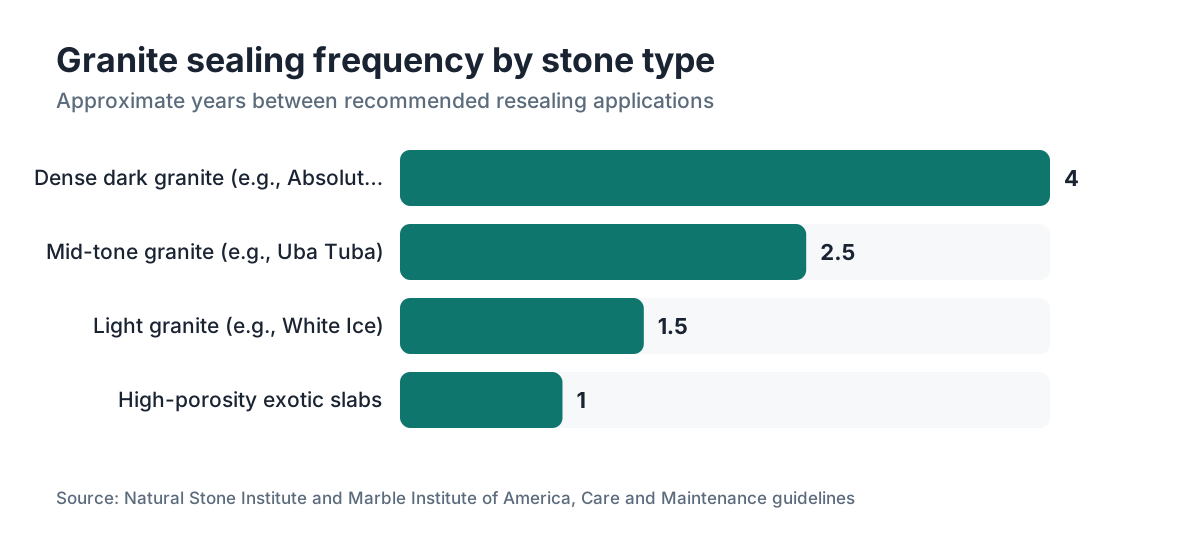
The standard advice is every one to three years, and that range exists because granite varies a lot in density and porosity [2]. A dense absolute black granite might need sealing only every three to five years. A lighter, porous white fantasy granite might need it annually.
The water droplet test gives you a direct answer for your slab. Pour about a tablespoon of water on the counter and watch. If it beads and sits for more than four to five minutes before any darkening, your sealer is intact. If it absorbs in under four minutes and leaves a dark wet spot, reseal soon. If it soaks in within one to two minutes, reseal now [3].
Run this test once a year, in the same spot near the sink or stove where the sealer wears fastest. It takes 30 seconds. It saves you from over-sealing (a waste of money) and under-sealing (a road to stains).
Kitchens near sinks and ranges need more attention than bathroom vanities, because they see more heat, moisture cycling, and acidic food. A granite bathroom vanity used gently might go four years between sealings without trouble.
| Granite Type | Approximate Porosity | Resealing Frequency |
|---|---|---|
| Dark/dense (e.g., Absolute Black, Impala Black) | Very low | Every 3-5 years |
| Mid-tone (e.g., Uba Tuba, Baltic Brown) | Low-medium | Every 2-3 years |
| Light/porous (e.g., White Ice, Kashmir White) | Medium-high | Every 1-2 years |
| Highly porous exotic slabs | High | Annually or more |
These are honest estimates, not manufacturer specs. Your real number depends on your specific stone and how hard you use the surface [9].
How do you seal granite countertops yourself?
Sealing granite is a reasonable DIY job. The products that work are penetrating sealers (also called impregnating sealers), which sink into the pores instead of forming a film on top. Topical film sealers exist, but they peel and show wear, so they're the wrong choice for kitchen granite.
Step by step:
- Clean the surface thoroughly and let it dry completely. Any moisture in the stone blocks absorption. Give it at least two hours of dry time, or overnight after a wet cleaning.
- Apply the sealer in small sections with a clean cloth or foam applicator, working it into the surface. Don't flood it. A thin even coat is the goal.
- Let it sit for the dwell time on the label, usually three to five minutes. Don't let it dry fully on the surface or you'll get a hazy residue.
- Wipe off the excess with a clean dry cloth, buffing as you go.
- Add a second coat if the stone is porous or if this is your first sealing after a long gap.
- Keep the surface dry for the cure time on the product, usually 24 to 72 hours [3].
Popular sealers include Tenax Hydrex, StoneTech BulletProof, and Miracle Sealants 511 Impregnator. A quart runs roughly $25 to $50, enough for two to three full kitchens. The Marble Institute of America recommends impregnating sealers made for natural stone rather than multipurpose grout-and-stone products [4].
One honest caveat. Some very dense granites don't absorb sealer at all. If you apply it and it just sits on top without soaking in, your stone may not need sealing. The water test tells you the same thing.
How do you remove stains from granite countertops?
The fix depends on what caused the stain. Granite stains fall into a few groups, and each one wants a different approach.
Oil-based stains (cooking oil, butter, grease, body lotion): These show up as dark spots, sometimes with a slightly greasy feel. Make a poultice from baking soda and acetone (nail polish remover), mixed to a peanut-butter consistency. Spread it over the stain, cover with plastic wrap, tape the edges, and leave it 24 to 48 hours. The poultice pulls the oil out as it dries. Remove, rinse, repeat if needed [5].
Water spots and mineral deposits: These read as white or grayish rings from hard water. Buff gently with #0000 steel wool (the finest grade) using light circular pressure, then clean the area. For heavy buildup, a stone cleaner with a mild chelating agent beats scrubbing.
Organic stains (coffee, wine, tea, food): Mix baking soda with water (for light stains) or with 12% hydrogen peroxide (for tougher ones) into a poultice. Same method as above. The 12% peroxide is sold at beauty supply stores. Standard 3% drugstore peroxide handles light stains.
Ink or dye stains: Dab acetone or denatured alcohol on a cotton ball directly onto the stain, then clean the area right away.
What doesn't work is scrubbing harder. Abrasion drives the stain into more pores and can damage the finish. Patient poultice work, followed by resealing the spot, beats aggressive scrubbing almost every time.
If a stain hangs on after two or three poultice attempts, it may be an etch (surface damage to the stone) rather than a stain (material absorbed into the pores). Etches need polishing, not cleaning, and now you're looking at a pro.
What common mistakes damage granite countertops?
A handful of specific habits cause most of the damage that walks into stone shops.
Leaving acidic spills on the surface. Citrus juice, vinegar, wine, tomato sauce, and some carbonated drinks are acidic enough to etch granite polish over time. One spill won't ruin a sealed counter. Years of skipped cleanup pile up into a dull, pitted zone around the sink and stove.
Using the wrong cleaners. Vinegar and water is popular DIY advice that has no business near granite. Same for lemon-scented multi-surface sprays. Both are acidic. Bleach-based cleaners strip sealers. Safest bet: a cleaner labeled safe for natural stone, or plain dish soap and water [1].
Skipping the sealing schedule. This is the most common mistake by a wide margin. Granite that goes five or six years without resealing in a busy kitchen will absorb stains a poultice can't fully lift. Once oil or dye gets deep into unsealed stone, professional grinding and repolishing may be the only fix.
Setting hot pans directly on the surface. Granite tolerates real heat (it formed near magma, after all), but the sealer and polish don't. Repeated thermal shock degrades the sealer in spots and, in rare cases, can crack cold stone hit with sudden extreme heat. Use trivets. Small habit, big payoff.
Using granite as a cutting surface. The stone won't mind. Your knives will. And knife marks in the sealer open paths for stains.
For fabricators tracking which homeowner questions come up most in estimates and post-install callbacks, tools like SlabWise let you build maintenance guidance right into your job documentation so clients have it from day one.
Can you use disinfectants on granite countertops?
Yes, but pick the right one. This question got a lot more common after 2020, when people started hitting every kitchen surface with heavy disinfectants. The stone-safe answer takes a minute to explain.
Isopropyl alcohol at 70% concentration, diluted to about 50% with water, is generally safe for sealed granite and effective against most pathogens including influenza viruses and coronaviruses [6]. It evaporates fast and leaves no residue that degrades stone.
Quaternary ammonium compounds (the active ingredient in many commercial kitchen sanitizers) are also generally safe for stone when used as directed.
What to avoid is bleach-based disinfectants like Clorox wipes and many Lysol sprays. Both carry bleach or harsh surfactants that damage the sealer and can discolor some granites over time. CDC guidance on surface disinfection doesn't specifically exempt stone from bleach use, but the Marble Institute of America explicitly cautions against bleach on natural stone [4].
Here's the practical version: a diluted isopropyl solution applied with a cloth and wiped dry disinfects food-prep surfaces well enough without the stone-damage risk. If someone in your household is immunocompromised and you feel you need bleach, use it only when necessary, rinse thoroughly, and plan to reseal sooner than usual.
How do you fix chips and cracks in granite countertops?
Small chips at edges and corners are the most common physical damage, and they're fixable without replacing the slab.
For minor chips, color-matched epoxy or acrylic repair kits exist specifically for stone. You tint the adhesive to match, fill the chip, let it cure, shave it flush with a razor blade, then polish the spot. Results are decent on solid-color granite and imperfect but acceptable on patterned stone. Kits run $20 to $50 at hardware stores or from stone suppliers.
For larger chips (over half an inch) or visible cracks, call a stone restoration pro. Cracks that run through the slab near the sink or cooktop cutout are structurally concerning and need epoxy injection by someone who knows the work. A bad DIY repair that leaves a void under stress can turn into a bigger break.
Hairline cracks in the finish that don't run deep can sometimes be handled with a stone polishing compound, but this is where a professional assessment earns its fee.
One distinction matters. A crack that appeared during installation is the fabricator's problem, not yours. Photograph it immediately and contact the shop. Most reputable fabricators stand behind their install work. The countertop installation guide covers what a proper install involves and where the liability lines sit.
How do granite countertops compare to other surfaces for maintenance burden?
Granite sits in the middle of the maintenance range for countertop materials. It asks more than engineered quartz (which needs no sealing) and less than marble (which etches far more easily and demands more frequent attention).
Against marble countertops: marble is softer (around 3-4 on the Mohs scale versus granite's 6-7) [7] and reacts visibly to acids granite shrugs off. A lemon squeezed on marble etches it on contact. The same lemon on properly sealed granite does nothing if you wipe it up within a few minutes.
Against butcher block countertops: wood needs oiling every one to three months and hates standing water. Granite's annual-ish sealing is less frequent, though the process itself is more involved than wiping on mineral oil.
Against laminate countertops: laminate needs almost no maintenance but can't be repaired when it chips or burns. Granite's care is ongoing, but the surface lasts far longer.
Against engineered quartz like Cambria countertops: quartz needs no sealing at all [10]. If you want the least ongoing work in a premium surface, quartz wins. If you want natural stone, granite is the more forgiving pick compared to marble, some forms of quartzite, or soapstone.
For two other natural stones with different care profiles, see how to clean quartzite countertops and how to clean soapstone countertops.
What products do you actually need for granite maintenance?
Here's the honest short list. You do not need a specialty stone-cleaning collection.
Essential:
- Microfiber cloths (two or three, rotated)
- Mild pH-neutral dish soap
- A penetrating stone sealer made for granite (one bottle lasts several applications)
For stain removal:
- Baking soda
- Acetone (nail polish remover works)
- 12% hydrogen peroxide (from a beauty supply store, for organic stains)
- Plastic wrap and painter's tape (for poultice application)
Optional but useful:
- A dedicated stone cleaner spray for daily use if you like it better than dish soap (StoneTech Daily Cleaner or Method Daily Granite Cleaner are reasonable)
- #0000 steel wool for buffing mineral deposits
Things you should not buy:
- Wax-based surface treatments sold for granite. They build up and cloud the finish.
- Acidic "streak-free" sprays.
- Anything that doesn't state it's safe for natural stone.
Total cost to maintain granite properly for a year: roughly $30 to $60, mostly the sealer. The daily cleaning stuff is probably already under your sink.
For anyone building a shop's post-install client materials, a one-page maintenance sheet based on this list cuts callback calls sharply. Shops using SlabWise for quoting and job management can attach care instructions straight to completed job records.
How long do granite countertops last with proper maintenance?
Well-maintained granite lasts indefinitely in any practical sense. Granite is geologically ancient material. The stone itself does not degrade on a human timescale. What degrades is the sealer (fixed with periodic resealing), the finish (restored by professional honing or polishing if needed), and the caulk at joints and backsplash seams (replaced every five to ten years).
The National Association of Realtors has noted granite countertops among features with strong perceived value retention in residential real estate, though ROI figures vary widely by market [8]. That's not a reason to choose granite, but it reflects how well maintained granite holds up over decades.
Caulk replacement is the most overlooked part of long-term care. The caulk line at the backsplash, at the sink rim, and at any seam is not stone, and it will fail. Failed caulk lets water get behind and under the countertop, which damages cabinets and, over time, can undermine the stone support. Inspect caulk lines once a year. If you see cracking, discoloration, or gaps, re-caulk. It's a two-hour job with a $6 tube of kitchen-rated silicone.
The long view is simple. The slab you install today, cared for reasonably, will outlast the rest of your kitchen. Cabinets, appliances, and flooring all cycle before the stone needs anything dramatic.
Frequently asked questions
How do you maintain granite countertops day to day?
Wipe spills immediately, especially oils and acids. Clean daily with a damp microfiber cloth and a little pH-neutral dish soap, then rinse and dry. Don't use vinegar, lemon juice, bleach, or ammonia-based sprays. Use cutting boards instead of cutting on the stone. That daily routine handles nearly all granite maintenance without any specialty products.
How often do granite countertops need to be sealed?
Typically every one to three years, depending on the stone's density. Dense dark granites may go three to five years. Light or porous granites may need annual sealing. Run the water droplet test: pour a tablespoon of water on the surface and watch how fast it absorbs. If it soaks in within four minutes, it's time to reseal.
Can you use Clorox wipes on granite countertops?
No, not regularly. Clorox wipes contain bleach and surfactants that degrade granite sealers over time and can discolor some stones. For disinfection, diluted isopropyl alcohol (70% alcohol mixed 50/50 with water) is a safer choice that's effective against most pathogens without damaging the sealer or stone.
What is the best cleaner for granite countertops?
Warm water and a little pH-neutral dish soap on a microfiber cloth handles daily cleaning and is honestly the best general-purpose option. For a spray, choose one labeled safe for natural stone, such as Method Daily Granite Cleaner or StoneTech Daily Cleaner. Avoid anything acidic, bleach-based, or abrasive.
How do you remove oil stains from granite?
Make a poultice from baking soda and acetone mixed to a peanut-butter consistency. Spread it over the stain, cover with plastic wrap, tape the edges, and leave it 24 to 48 hours. The poultice draws oil out of the stone as it dries. Remove, rinse, and repeat if needed. Reseal the area once the stain is gone.
Does granite need to be sealed every year?
Not all granite. Dense, dark granite may only need sealing every three to five years. Lighter, porous slabs may need it annually. The water droplet test tells you where your stone stands: if a tablespoon of water absorbs in under four minutes, it's time to reseal, regardless of when you last did it.
Can vinegar damage granite countertops?
Yes. Vinegar is acidic (typically around pH 2.5 to 3), and repeated contact degrades the sealer and can eventually etch the polished surface. Even diluted vinegar-water solutions aren't safe for regular granite cleaning. Use pH-neutral dish soap and water instead. If you've been using vinegar, test your sealer with the water droplet method soon.
How do you get water spots off granite countertops?
Light water spots (mineral deposits from hard water) buff out with #0000 steel wool using gentle circular pressure, then clean normally. For heavier buildup, a stone cleaner with a chelating agent works better than scrubbing. Dry your countertop after cleaning near the sink to keep new spots from forming.
Is it safe to put hot pans on granite?
The stone itself tolerates high heat, but the sealer and polish don't. Repeated direct contact with hot pans degrades the sealer in spots and can cause thermal shock cracking on some slabs. Use trivets or hot pads. It's an easy habit that preserves your sealer and finish and costs nothing.
How do you fix a chip in a granite countertop?
Small chips, especially at edges, fill with a color-matched epoxy or acrylic stone repair kit (about $20 to $50 at hardware stores). You tint the filler to match, fill, cure, shave flush, and polish. Larger chips or structural cracks need a professional stone restoration contractor. Chips that appeared during installation should be reported to your fabricator immediately.
Do granite countertops need special maintenance compared to quartz?
Yes. Engineered quartz (like Cambria or Silestone) is non-porous and needs no sealing, so its maintenance is simpler. Granite needs periodic resealing every one to three years to keep its stain resistance. Day-to-day cleaning is equally simple for both, but granite has that extra sealing step quartz doesn't.
How do you know if your granite needs to be resealed?
Use the water droplet test. Pour about a tablespoon of water on the surface and watch. If it beads and stays beaded for more than four to five minutes, your sealer is fine. If it absorbs in under four minutes and a dark wet spot forms, reseal. Run this test annually or anytime you're unsure.
Can you use hydrogen peroxide on granite countertops?
In low concentrations, yes. Drugstore 3% hydrogen peroxide works on light organic stains like coffee and wine when made into a baking-soda poultice. Stronger 12% peroxide (from beauty supply stores) handles tougher organic stains. Don't use it as a daily cleaner. Rinse the area thoroughly afterward and reseal if you've treated the same spot repeatedly.
How long do granite countertops last?
The stone itself lasts indefinitely. Granite is geologically ancient material that doesn't degrade on human timescales. What needs attention over time is the sealer (renewed every one to three years), the finish (restorable by professional polishing if it dulls), and the caulk at joints (replaced every five to ten years). With reasonable maintenance, granite countertops outlast every other component of a typical kitchen.
Sources
- Penn State Extension, Cleaning Natural Stone Surfaces: Acidic substances including vinegar and citrus juice can etch polished natural stone surfaces including granite over repeated contact
- Marble Institute of America (MIA), Care and Maintenance of Natural Stone: Sealing frequency for granite varies from annually to every five years depending on stone porosity and use conditions
- Marble Institute of America (MIA), Stone Sealers: What You Need to Know: Water absorption test: if water absorbs into the stone surface within four minutes, the stone requires sealing; penetrating sealers should cure 24 to 72 hours before surface wetting
- Marble Institute of America (MIA), Recommended Cleaning Products for Natural Stone: The Marble Institute of America recommends impregnating (penetrating) sealers for natural stone and explicitly cautions against bleach-based cleaners on stone surfaces
- Natural Stone Institute, Stain Removal Guide for Natural Stone: Oil-based stains in granite are treated with a poultice of acetone or mineral spirits and an absorbent material applied for 24 to 48 hours
- CDC, Cleaning and Disinfecting Your Facility: Isopropyl alcohol at 70% concentration is effective against most pathogens on hard surfaces including influenza viruses and coronaviruses
- USGS, Hardness of Minerals and Rocks: Granite rates 6-7 on the Mohs hardness scale; marble rates approximately 3-4, making granite significantly more scratch-resistant
- National Association of Realtors, Remodeling Impact Report: Granite countertops are listed among kitchen features with strong perceived value retention in residential real estate
- Natural Stone Institute, Understanding Stone Porosity and Sealer Selection: Dense dark granites exhibit very low porosity and may require sealing every 3-5 years; lighter granites with higher porosity may require annual sealing
- University of Minnesota Extension, Kitchen Countertop Materials Comparison: Granite countertops require periodic resealing unlike engineered quartz surfaces, which are non-porous and require no sealing
Last updated 2026-07-09