TL;DR
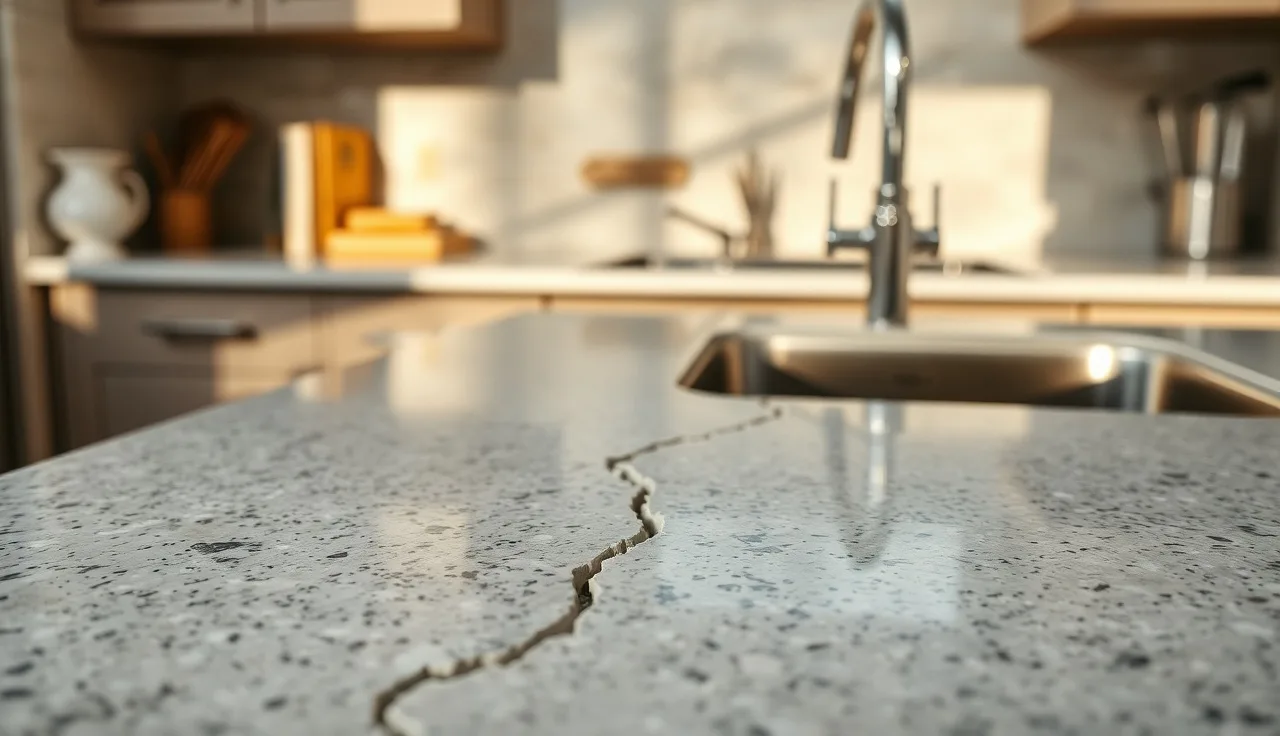
- A broken countertop slab may be covered by homeowners insurance if a sudden accidental event caused it, like a dropped object or a burst pipe.
- Normal wear is never covered.
- File within days, photograph everything, get two independent repair estimates, and expect a payout after your deductible (usually $500 to $2,500) comes out of the replacement cost.
Does homeowners insurance actually cover a broken countertop?
Sometimes. The cause of the break matters far more than the break itself.
Standard homeowners policies cover your property against what the industry calls "named perils" or, on broader forms, "open perils." A countertop counts as a built-in fixture, so it sits under Coverage A (dwelling coverage) in most HO-3 policies. HO-3 is the most common homeowners form in the United States [1].
Coverage A pays for sudden and accidental physical damage from covered perils. Things that usually get paid: a heavy pot falls and cracks a granite slab, a pipe bursts behind the wall and the water reaches the counter, a fire scorches the kitchen. Things that usually get denied: a scratch that deepened over years of use, a chip from the wrong cleaner, a crack that opened up as the cabinets settled. Insurers file that second group under "gradual damage" or "wear and tear," and nearly every standard policy excludes it in plain language [1].
The Insurance Information Institute puts it bluntly: an HO-3 covers the structure of your home against all risks except those the policy names as exclusions, while HO-1 and HO-2 policies cover only a named list of perils [2]. An HO-3 gives you broader protection and a better shot at a countertop claim clearing. Got a condo policy (HO-6)? Coverage hinges on whether your unit's interior fixtures fall under your policy or the building's master policy, so read your declarations page before you assume anything.
What kinds of countertop damage are typically covered vs. excluded?
Adjusters are trained to separate sudden-and-accidental damage from everything else. Here's the practical breakdown.
| Damage scenario | Likely covered? | Reason |
|---|---|---|
| Heavy appliance dropped, cracks slab | Yes | Sudden, accidental impact |
| Pipe burst soaks and warps laminate | Yes | Water damage from a covered peril |
| Fire or smoke damages countertop surface | Yes | Fire is a named peril on all standard forms |
| Slow chip deepening over months of use | No | Gradual damage / wear and tear |
| Fabrication crack noticed after install | No | Pre-existing defect, not a covered peril |
| Thermal crack from hot pan over time | Disputed | Insurer may deny as gradual; fight it if it was one incident |
| Vandalism cracks the slab | Yes (usually) | Vandalism is a named peril on HO-3 |
| Earthquake shatters countertop | No (standard) | Earthquake is excluded; needs a separate rider [3] |
| Flood damages cabinetry and countertop | No (standard) | Flood excluded; needs a separate NFIP or private policy [4] |
The earthquake and flood exclusions catch people off guard constantly. Live in a seismic zone? A standard HO-3 covers none of it, countertops included, without a separate endorsement [3]. Flood damage, storm surge and all, is excluded from every standard homeowners policy. That coverage comes only from a National Flood Insurance Program (NFIP) policy or a private flood policy [4].
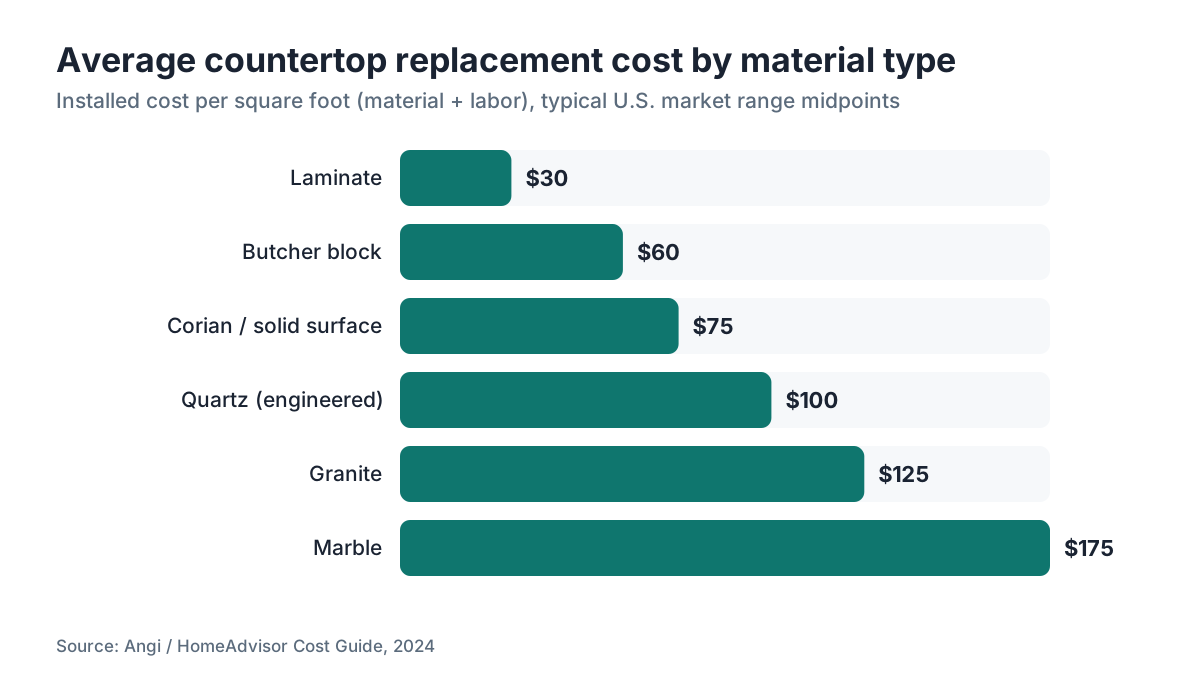
Laminate and solid-surface counters like Formica or Corian cost little to replace, so insurers rarely fight those claims hard. Natural stone is a different animal. Granite, marble, and quartzite run $50 to $250 per square foot installed as of 2024, so a full kitchen can hit $3,000 to $10,000 or more [5]. That's the range where adjusters start reading the fine print.
How soon do you need to file after a countertop breaks?
File as fast as you reasonably can. Most policies require you to report a loss "promptly" or "as soon as practicable." Those words are vague, but wait more than a week without a good reason and you hand the insurer an argument.
State rules also set deadlines on how quickly the insurer has to act once you report. In California, insurers must acknowledge a claim within 10 days and accept or deny it within 40 days of getting proof of loss [6]. Texas requires acknowledgment within 15 days and a decision within 15 business days after receiving everything they asked for [7]. Those clocks protect you, but they only start ticking once you file.
Here's the drill. Document the damage the day it happens. Call or file online that same day or the next. Ask for an adjuster within the week. Do not do any permanent repair before the adjuster sees it. You can move broken pieces somewhere safe and photograph them, but swapping in a new slab before inspection is the surest way to torpedo your claim.
What documentation do you need before you call the insurer?
Documentation is the line between a clean claim and a three-month fight. Pull it all together before you dial.
Shoot photos first. Wide shots showing the counter in context, close-ups of the crack or break, and anything that shows the cause (the dropped appliance, the water source). Turn on your phone's timestamp if it isn't already. Got video of the incident or the aftermath? Save it.
Find your purchase records. The original receipt or invoice from the fabricator, showing material, square footage, and price. No copy on hand? Call the fabricator. Good shops keep records for years. If the previous homeowner installed the counter and no paperwork exists, a written estimate from a stone fabricator or a certified kitchen appraisal can set the replacement value.
Get at least two independent estimates before you settle anything. Call a local fabricator and ask for a written quote naming the stone type, thickness, edge profile, and square footage. SlabWise's instant quote tool can hand you a ballpark replacement cost in minutes if you want a reference before you start calling shops. Then get a second quote from a different shop. Two independent estimates protect you when the insurer's preferred vendor lowballs the job.
With natural stone, countertop installation is a real cost on top of the slab. Template, fabrication, and install usually run $30 to $80 per square foot beyond material. Make sure your estimates include tearing out the old slab, which installers often bill separately.
What are the exact steps to file the claim?
Follow these in order. Skipping a step or doing them out of sequence is the most common reason claims stall or shrink.
Step 1: Document and contain the damage. Photos, video, written notes with date and time. No permanent repairs yet.
Step 2: Read your policy before you call. Find your declarations page and your policy booklet. Check your Coverage A limit, your deductible, and the covered and excluded perils. Write down your policy number.
Step 3: Call the claims line or file online. Major insurers (State Farm, Allstate, USAA, Travelers) take claims 24/7 by phone or online. Give a factual account of what happened and when. Don't guess at the cause if you aren't sure.
Step 4: Get a claim number and adjuster contact. Write both down right away. Every follow-up should reference the claim number.
Step 5: Schedule the adjuster inspection. The adjuster comes to assess the damage. Be there if you possibly can. Walk them through what happened and point out any evidence of cause. Don't leave them to interpret the scene alone.
Step 6: Submit your proof of loss. This is a sworn statement of what was damaged and what it's worth. The insurer supplies the form. Attach your photos, receipts, and contractor estimates.
Step 7: Read the settlement offer closely. The insurer sends a payout offer. Line it up against your independent estimates. If the offer runs on actual cash value (ACV) instead of replacement cost value (RCV), you need to know the difference. Next section covers it.
Step 8: Negotiate or invoke appraisal if needed. Disagree with the number? You're not stuck. More below.
What is the difference between actual cash value and replacement cost coverage?
This one distinction decides whether your payout covers the whole job or leaves you writing a check for the rest.
Actual cash value (ACV) pays what your countertop was worth the day it broke, after depreciation. A granite counter installed 12 years ago isn't worth what it cost then. The insurer applies a depreciation formula, often straight-line over an assumed useful life of 20 to 30 years, and pays the depreciated figure. On a $6,000 counter that's 12 years old, an ACV settlement might land at $3,600 or less.
Replacement cost value (RCV) pays what it costs to replace the counter today with similar material of like kind and quality, no depreciation subtracted. On that same $6,000 counter, an RCV policy pays close to $6,000 minus your deductible. RCV coverage usually adds 10 to 15 percent to your premium, and for anyone with natural or engineered stone, that's money well spent [2].
Check your declarations page right now. The abbreviations ACV and RCV, or the phrase "replacement cost," show up in your Coverage A section. If you've got ACV-only coverage on an older kitchen, ask your insurer to move you to RCV at renewal. RCV coverage adds only 10 to 15 percent to premium but can double your payout on a major stone loss.
How much will the insurance payout actually be?
The math is simple: replacement cost (or ACV) of the damaged countertop, minus your deductible.
Deductibles on standard homeowners policies run $500 to $2,500 for most households, though high-deductible plans hit $5,000 or more [2]. If your repair costs $1,800 and your deductible is $1,500, filing gets you $300 before you even factor in a premium bump. That math is exactly why you skip small claims.
Here's the rule most insurance people follow: if the repair or replacement runs less than twice your deductible, pay out of pocket. A claim you didn't need to file can raise your premium at renewal, and some insurers won't renew a policy carrying more than two claims in three years. Neither is worth a $400 check.
Big events change the picture. A fire, a burst pipe that ruined the whole surface, a heavy appliance that cracked several sections. Full granite or quartz replacement in a medium kitchen runs $2,500 to $8,000 or more depending on material and region [5]. After a $1,000 deductible, a $6,000 job pays out $5,000 on an RCV policy. That one's worth filing.
What if the insurance company denies the claim or offers too little?
A denial or a lowball offer is not the end of the road. You've got several moves.
First, get the denial in writing and ask for the exact policy language the adjuster leaned on. Most states require insurers to give you the specific reason for a denial [6][7]. Read that language hard. If the adjuster tagged a sudden event as "gradual damage," you have grounds to appeal.
Second, file a formal internal appeal. Every major insurer has one. Submit a written appeal with your documentation, your independent estimates, and a clear explanation of why the damage was sudden and accidental. Ask for a second adjuster or a supervisor review.
Third, invoke the appraisal clause if the fight is over value, not coverage. Most HO-3 policies include one: you hire your appraiser, the insurer hires theirs, and the two pick an umpire. The umpire's decision binds both sides. It costs money (appraiser fees typically run $200 to $600), but it's faster and cheaper than a lawsuit.
Fourth, file a complaint with your state's Department of Insurance. Every state has a DOI that regulates insurer conduct. If you believe the insurer acted in bad faith, dragged out your claim, or wrongly denied it, a DOI complaint often shakes loose a faster resolution. Find your state regulator through the NAIC consumer portal [8].
Fifth, bring in a public adjuster or an insurance-dispute attorney. Public adjusters work on contingency (usually 5 to 15 percent of the settlement) and know how to build and present a claim. On large claims, they often raise the settlement enough to cover their own fee and then some.
Does filing a claim raise your homeowners insurance premium?
Usually, yes. That has to weigh on your decision to file.
The size of the increase depends on your insurer, your state, your claims history, and the claim type. ValuePenguin, using Quadrant Information Services data, reports that homeowners who filed a single property damage claim saw their annual premium climb by an average of about 9 percent, with some states topping 20 percent [9]. A second claim within three to five years can trigger a steeper hike or a non-renewal notice.
Some states cap how much insurers can raise premiums after one claim. California limits certain surcharges after a first claim. New York has its own rules. Check your state DOI website for the specifics [6][8].
The takeaway: tally every claim you've filed in the last five years before you file another. Two claims already on your record is a reason to think twice. Zero claims over a long run with your insurer is a reason to feel fine about filing for a real loss.
What if the countertop broke during installation or due to fabricator error?
That's a different problem entirely, and you handle it differently.
If the slab cracked during delivery or install, the fabricator or installer is on the hook. Reputable shops carry general liability insurance for exactly this. Ask for their certificate of insurance, document the damage on the spot, and put your complaint to the fabricator in writing the same day.
If the slab had a hidden natural flaw (a vein running nearly through the stone) and the fabricator cut it without catching it, liability gets murkier. Most fabricator contracts cap their exposure at the cost of the slab itself, not labor and reinstallation. Read whatever contract you signed, closely.
Don't file a homeowners claim for fabricator damage before you've exhausted the fabricator's liability. Filing when a third party is at fault hands your insurer a subrogation right to chase the fabricator, which tangles everyone up and still marks your claims history.
One practical protection for anyone picking a fabricator: choose shops that give itemized written quotes separating material from labor, and that run software producing detailed job records. Fabricators using production tracking tools like SlabWise keep documented records of your order, which helps prove what you agreed to if a dispute breaks out.
For reference on how material affects claim value, natural stone like granite and marble carries higher replacement values than laminate or butcher block, so the settlement math shifts with what you actually have.
What should you do right now to be better prepared for a future claim?
The time to prep for a claim is before anything breaks.
Build a home inventory that includes your counters. Photograph every surface in the kitchen and bathrooms. Note the material, rough square footage, fabricator name, and install date. Store receipts and invoices in a cloud folder, more than a local drive that could get wrecked in the same event that ruins your kitchen. The Insurance Information Institute suggests a video walkthrough of your home as an easy way to record possessions and fixtures [2].
Review your Coverage A limit every year. Add $15,000 in stone counters during a remodel, and your dwelling limit should reflect your home's higher replacement cost. Undercoverage is common, and it means you eat more of any loss.
Confirm whether you carry ACV or RCV, and think about upgrading if you have high-value natural stone. The premium difference is usually small next to the payout difference on a big loss.
Keep your deductible at a number you can actually pay out of pocket. A $2,500 deductible saves premium dollars but means you self-insure every small hit. A $500 deductible costs more each year but gives you real coverage on mid-sized incidents.
Want to know what replacement really costs where you live? A current fabrication quote is the most reliable answer. Set it against what your coverage would pay after your deductible, and decide if you're actually covered. Guides on kitchen countertops and specific materials can ground you in current pricing before you talk to your agent.
Frequently asked questions
Will homeowners insurance pay for a cracked granite countertop?
Yes, if a sudden covered event caused the crack, like a dropped appliance, fire, or burst pipe. No, if it developed gradually or came from normal use, settling, or an excluded peril like flood or earthquake. Document the cause clearly. Granite runs $50 to $200 per square foot installed, so the payout after your deductible can be substantial on a full kitchen.
What is the average insurance deductible for a countertop claim?
Standard homeowners deductibles run $500 to $2,500 for most policies, though high-deductible plans reach $5,000 or more. The deductible applies to the total claim, not per item. If replacement costs $3,000 and your deductible is $1,000, the insurer pays $2,000. Check your declarations page for your exact number.
How long does a countertop insurance claim take to settle?
Most straightforward property claims settle in 30 to 60 days from filing. California requires a decision within 40 days of receiving proof of loss; Texas within 15 business days of receiving all items. Complex claims that dispute cause or value can stretch to 60 to 90 days or longer. Submitting complete documentation upfront is the single best way to speed things up.
Can I file a claim for a countertop that cracked on its own?
Only if you can tie the crack to a covered peril. A slab that cracked from a sudden impact or a water event can be claimed. A slab that cracked from thermal stress, settling, or a material defect is harder to claim and often denied as wear and tear. If you think a covered event caused it, document your case thoroughly and let the adjuster rule before you assume it won't be covered.
Does insurance cover countertop damage caused by a burst pipe?
Yes, in most cases. Sudden water damage from a burst pipe is a covered peril under standard HO-3 policies. Document the countertop damage as part of the overall water damage claim. This usually covers laminate, butcher block, or stone surfaces that were directly hit. Slow leaks that caused gradual damage over time are typically excluded.
Should I file a homeowners claim for a $1,500 countertop repair?
Probably not, unless your deductible is $500 or less and your claims history is clean. Filing nets $1,000 after a $500 deductible, but a single claim raises premiums by around 9 percent a year for several years, which can cost more than you collect. Pay out of pocket for repairs close to your deductible and save your claims history for large losses.
What if my countertop broke during installation? Is that covered?
Not by your homeowners policy. A slab broken during installation is the fabricator's or installer's liability, not yours. Their general liability insurance should cover it. Document the damage immediately, notify the fabricator in writing the same day, and ask for their certificate of insurance before you file anything. Filing a homeowners claim for a contractor's error just creates complications and still dings your claims history.
Does homeowners insurance cover countertop damage from a house fire?
Yes. Fire is a named peril on every standard homeowners policy, including HO-1, HO-2, and HO-3 forms. Smoke and water damage from firefighting are also covered under most policies. The countertop is part of your dwelling (Coverage A), so it's covered at either replacement cost value or actual cash value depending on your policy type. Document all damaged surfaces.
What documentation do I need to prove the value of a broken countertop?
The original purchase receipt or fabrication invoice showing material type, square footage, and cost. If you don't have that, get two current replacement estimates from local fabricators naming material, thickness, and edge profile. For high-value stone, a written appraisal from a certified appraiser strengthens your case. Photos of the undamaged surface before the incident are ideal but rare; adjuster notes or fabricator records can fill the gap.
Can I choose my own contractor to replace the countertop after a claim?
Yes. Insurers often push preferred vendor networks, but in nearly every state you have the right to choose your own licensed contractor for repairs. The insurer can base the payout on their preferred vendor's quote, which is why getting independent estimates beforehand matters. If the insurer's number is below market rates, present your estimates and negotiate. You are not required to use their contractor.
What does 'like kind and quality' mean in a countertop insurance claim?
It means the insurer has to restore your countertop to the same material quality and function it had before the loss. If you had 3 cm polished granite, you're entitled to 3 cm polished granite, not cheaper laminate. In practice, adjusters may price a current equivalent product rather than your exact brand or source slab. If their substitute is inferior, document the specs and push back.
What happens if only part of the countertop slab breaks but the rest is fine?
The insurer should pay to replace the damaged section. The complication is that natural stone rarely matches perfectly in color or veining after a break, so the whole run can look mismatched. Some policies cover the entire connected run to restore a uniform look; many do not. Check your policy for cosmetic mismatch language or ask your adjuster directly. Get the answer in writing before any repair starts.
Does flood insurance cover broken or damaged countertops?
NFIP flood policies do cover built-in kitchen fixtures, including countertops, under the building coverage portion. Coverage limits vary by policy tier, and the damage must result directly from flooding as the NFIP defines it. Standard homeowners policies never cover flood damage. If you carry both a homeowners and an NFIP policy, the flood policy handles flood-caused countertop damage.
Can I claim a countertop on a renters insurance policy?
No. A countertop is a built-in fixture the landlord owns, not personal property the tenant owns. Renters insurance covers your belongings, not the apartment's structure or fixtures. If you damaged the landlord's countertop, your renters policy's liability coverage might protect you from the landlord's claim against you, but the countertop itself is the landlord's insurance concern.
Sources
- Insurance Information Institute, What is covered by a standard homeowners policy: HO-3 policies cover the dwelling structure on an open-perils basis; Coverage A covers sudden and accidental damage; gradual damage and wear and tear are standard exclusions.
- Insurance Information Institute, How much homeowners insurance do you need: Replacement cost coverage costs roughly 10-15% more in premium than ACV; deductibles typically range $500 to $2,500; home inventory documentation recommended.
- Insurance Information Institute, Earthquake insurance: Earthquake damage is excluded from standard homeowners policies and requires a separate earthquake endorsement or policy.
- FEMA National Flood Insurance Program, FloodSmart: Flood damage is excluded from standard homeowners policies; NFIP flood policies cover built-in fixtures including countertops under building coverage.
- Angi / HomeAdvisor, Countertop Installation Cost Guide: Natural stone countertop installation ranges from $50 to $250 per square foot; full kitchen replacement typically $2,500 to $8,000+ depending on material and region.
- California Department of Insurance, Fair Claims Settlement Practices Regulations: California insurers must acknowledge a claim within 10 days and accept or deny within 40 days of receiving proof of loss; denials must cite specific policy language.
- Texas Department of Insurance, Homeowners claim guidance: Texas insurers must acknowledge claims within 15 days and issue a decision within 15 business days of receiving all required documentation.
- National Association of Insurance Commissioners, Consumer information: Consumers can file complaints about insurers with their state Department of Insurance; NAIC maintains a portal to locate state regulators.
- ValuePenguin / Quadrant Information Services, How claims affect home insurance rates: A single property damage claim raises average homeowners premiums by approximately 9 percent; some states see increases over 20 percent.
- FEMA National Flood Insurance Program, FloodSmart: NFIP building coverage pays for damage to built-in kitchen fixtures including countertops when the damage results from a covered flood event.
Last updated 2026-07-11