TL;DR
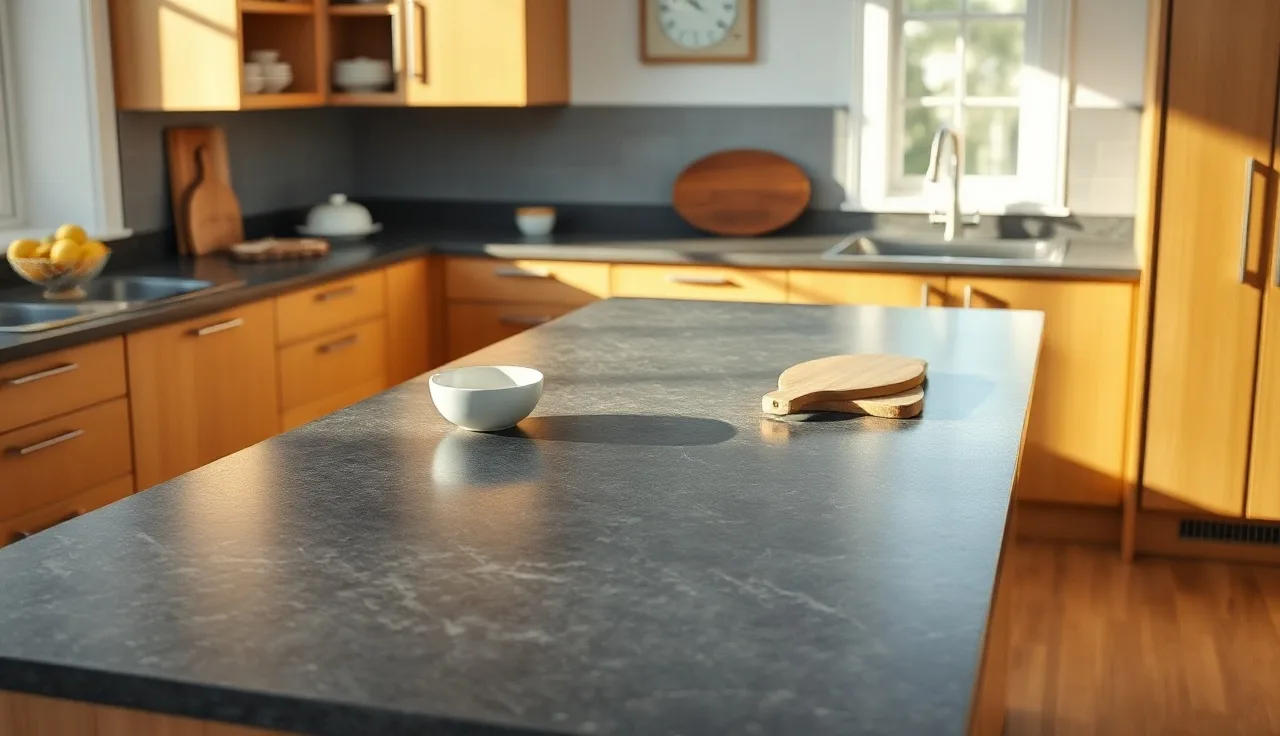
- Gray granite countertops run $40 to $200 per square foot installed, depending on slab rarity and your region.
- They're hard, heat-resistant, and need sealing once every one to three years.
- Dozens of named varieties exist, from pale Silver Cloud to near-black Absolute Black.
- This guide walks through every gray type, real pricing, care, and how to avoid overpaying.
What makes granite gray, and why does shade vary so much between slabs?
Granite forms when magma cools slowly deep underground, and its final color comes from whatever minerals were present during that cooling. Gray in granite almost always traces back to feldspar, specifically potassium feldspar or plagioclase feldspar, which range from white to silvery to blue-gray depending on their iron content and trace element chemistry [1]. Quartz adds translucent patches. Biotite and muscovite mica throw in darker speckles and metallic flashes.
That's why two slabs from the same quarry can look meaningfully different. Mineral ratios shift across even a single rock formation, so one slab pulled from a deeper cut might show more dark biotite while another from the same block reads lighter and more uniform. Nobody has perfectly consistent gray granite. The variation is the nature of the material.
Light gray varieties like Colonial White or Bianco Antico are quarried mostly in Brazil and India. Medium grays like Steel Gray, Alaska White, and Viscount White come from India, Norway, and Brazil respectively. Darker grays shading toward charcoal, like Black Pearl or Blue Bahia, typically originate in India, Brazil, or South Africa [9]. The quarry of origin matters because logistics affect wholesale cost, and wholesale cost is what your fabricator's markup sits on top of.
One practical note: always look at the actual slab, not a sample tile. The tile might show one representative patch; the full slab shows the full movement, the veining, the variation. Most fabricators and stone yards will let you view full slabs in person before committing.
What are the most popular gray granite varieties and how do they compare?
There are more named gray granites than most homeowners realize. The naming is partly quarry-specific, partly distributor marketing, and partly regional convention, so the same stone sometimes sells under two different names depending on the supplier. Here are the varieties you'll actually encounter at most stone yards.
| Variety | Base tone | Typical movement | Relative cost tier |
|---|---|---|---|
| Colonial White | Light gray/cream | Heavy veining, burgundy accents | Budget, mid |
| Bianco Antico | Warm pale gray | Medium, some rose tones | Budget, mid |
| Alaska White | Cool light gray | Subtle speckle | Budget |
| Silver Cloud | Near-white silver | Low, uniform | Mid |
| Steel Gray | Medium blue-gray | Very low, almost solid | Mid |
| Viscount White | Light gray, white | Low speckle | Budget, mid |
| Baltic Brown | Gray-brown | Medium, round spots | Budget |
| Black Pearl | Dark charcoal | Low, mica shimmer | Mid |
| Blue Pearl | Dark gray-blue | Metallic shimmer | Mid, premium |
| Absolute Black (Zimbabwe) | True black-gray | Near-zero | Mid, premium |
| Lennon | Light gray | Strong linear veining | Premium |
| Azul Aran | Gray-blue | Medium speckle | Premium |
Want something that reads almost like a solid surface? Steel Gray and Black Pearl are the closest you'll get in natural stone. If you want movement that looks like marble without the maintenance of actual marble, Colonial White or Lennon give you that at a lower price point. Lennon in particular has a vein structure that fools plenty of visitors into thinking it's Carrara marble.
One honest caveat: stone nomenclature is not standardized. A supplier in Texas might label something "Silver Cloud" that a New England supplier would call "Bethel White." Always confirm the quarry of origin when you're comparing quotes [9].
How much do gray granite countertops cost installed?
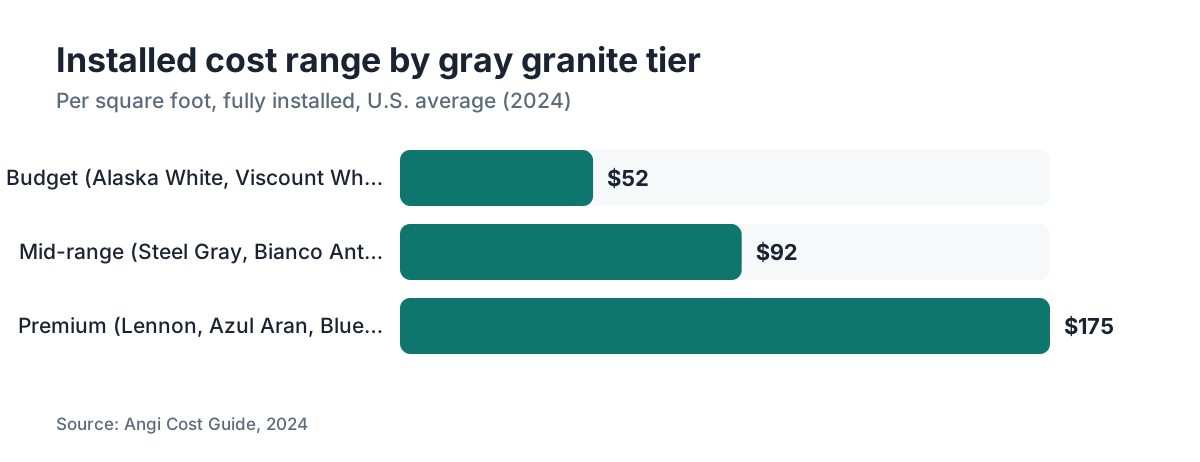
Installed cost is the number that actually matters, and it's a wide range. Budget-tier gray granites like Alaska White or Viscount White run $40 to $65 per square foot installed in most U.S. markets. Mid-range varieties like Steel Gray, Black Pearl, or Bianco Antico typically land at $65 to $120 per square foot installed. Premium or exotic grays like Lennon, Azul Aran, or rarer South American varieties can reach $150 to $200 per square foot installed [10].
That installed price bundles the slab material, fabrication (cutting, edging, polishing), and installation labor. What it usually does not include: demo of existing countertops ($200 to $500 depending on material and linear footage), plumbing disconnect and reconnect if needed ($100 to $300), or backsplash tile work.
A typical U.S. kitchen has 30 to 45 square feet of countertop surface. At mid-range pricing of $80 per square foot installed, that's $2,400 to $3,600 for the counters themselves. Add an island and you might hit 60 to 70 square feet total, pushing the project toward $5,000 to $7,000 before any extras.
Fabricators price slabs by the slab, then charge separately for fabrication. Slab prices at the wholesale or retail stone yard level run roughly $200 to $900 for a standard 55-to-65 square foot slab, depending on variety and origin [10]. Fabrication alone, meaning the cutting and finishing, typically adds $25 to $60 per square foot on top of material cost. Labor for installation adds another $10 to $30 per square foot. These numbers shift a lot by region. Costs in the Northeast and California run higher than in the South or Midwest.
Getting multiple quotes? Read up on countertop installation costs and what they include before you sit down with a fabricator.
How does gray granite compare to other gray countertop materials?
Gray granite competes directly with engineered quartz, quartzite, concrete, and soapstone at various price points. Here's the honest comparison.
Engineered quartz (brands like Cambria, Silestone, Caesarstone) gives you a consistent gray color with no sealing required, because the polymer binders make it essentially non-porous. But it can't handle heat the way granite can, it chips at edges under impact more readily than granite, and it's manufactured, so you don't get any of the character variation that makes natural stone appealing to many buyers. Cambria countertops cover that option in detail if you want to compare.
Quartzite in gray tones, like Silver Falls or Taj Mahal (which reads gray-cream), is harder than granite by the Mohs scale and extremely durable. The catch is that many stones sold as quartzite are actually marble or a marble-quartzite hybrid, which is far softer. The care and cleaning approach differs too; see how to clean quartzite countertops for specifics. Quartzite slabs also tend to cost more than comparable granite.
Concrete countertops in gray are custom-cast and can hit any shade you want, but they need periodic sealing, can crack with structural movement, and typically cost more to fabricate than commodity granite. Soapstone is naturally gray-black, wants regular oiling, and is softer (more prone to scratching, though scratches buff out). The how to clean soapstone countertops article addresses care for that material.
Laminate in gray patterns costs $15 to $40 per square foot installed, which is dramatically less. It works fine in rental units or budget kitchens and has improved a lot in recent years. See laminate countertops if budget is the primary driver.
For most buyers doing a mid-range kitchen remodel, gray granite is genuinely hard to beat on durability, heat resistance, and cost per square foot together.
Is gray granite hard enough to use as a daily kitchen surface?
Granite as a class ranks 6 to 7 on the Mohs hardness scale [1]. Your kitchen knives are typically 5.5 to 6.5. In practice a granite countertop will dull your knives before your knives scratch the granite. Household keys, pots, and utensils won't scratch it under normal use.
Heat resistance is genuinely excellent. Granite formed at temperatures far above anything a kitchen generates. Setting a hot pan directly on granite won't damage the stone itself. The sealer on top of it may discolor or degrade with repeated direct heat contact, which is why fabricators often suggest trivets as a habit even when the stone can technically handle it.
Impact is the vulnerability most people don't think about. A heavy cast-iron pan dropped at the right (wrong) angle on a corner or near a sink cutout can chip the stone. Corners and cutout edges are the highest-risk areas because the stone has less material there. Polished finishes show chips more clearly than honed finishes do.
Granite is also porous at a microscopic level. Without sealing, liquids like red wine, coffee, or acidic cooking oils can penetrate the surface and stain. A properly applied sealer blocks this. The key word is properly: a sealer that sits on top without bonding into the pores will flake off within months, while a penetrating impregnating sealer bonds into the stone structure and lasts one to three years depending on use [3].
For daily use in a busy kitchen, gray granite holds up. It's harder and more heat-resistant than marble countertops, cheaper than most quartzite, and more durable than laminate or solid surface options.
How do you seal gray granite and how often does it need redoing?
Sealing gray granite is a straightforward DIY job that most homeowners can knock out in under an hour. You need a penetrating (impregnating) stone sealer, a clean cloth, and a dry surface [3].
The process: clean the countertop thoroughly and let it dry completely (24 hours if possible after any wet cleaning). Apply the sealer in a thin, even coat per the product instructions. Let it sit for the dwell time specified, usually 5 to 15 minutes. Wipe off any excess before it dries. Buff the surface dry. A second coat applied 2 to 4 hours later increases protection.
How often to reseal depends on two things: the stone's porosity and how hard you use it. The standard check is the water drop test. Put a few drops of water on the surface. If they bead up after several minutes, the sealer is holding. If they soak in and darken the stone within a few minutes, it's time to reseal [3]. Most mid-range gray granites need sealing once a year to once every two years. Very dense granites like Steel Gray or Absolute Black (which have extremely low porosity) might go three or more years between applications.
For regular cleaning, mild dish soap and warm water is fine. Avoid acidic cleaners (vinegar, citrus-based sprays), abrasive scrubbers, and anything with bleach used repeatedly, since these degrade the sealer faster. For a full cleaning protocol, how to clean stone countertops covers both routine care and stain removal.
One thing fabricators won't always tell you upfront: most apply a sealer after installation, but that first coat is often a standard-grade product. Ask them what they applied, then decide whether to apply a higher-grade sealer yourself after 30 days.
What edge profiles are available for gray granite, and do they cost extra?
Edge profiles are cut and polished by the fabricator, and yes, most charge extra beyond a standard eased or beveled edge. The pricing structure varies by shop, but the general pattern is consistent [7].
A standard eased edge (square with a slightly softened top corner) is usually included in the fabrication price. Beveled, bullnose, and half-bullnose edges typically add $10 to $20 per linear foot over the base price. More complex profiles like ogee, dupont, or waterfall edges can add $20 to $40 per linear foot. On a kitchen with 25 linear feet of edge, the difference between a standard eased and a premium ogee profile is a real $500 to $1,000.
For gray granite specifically, edge choice interacts with the stone's appearance. A polished bullnose shows the full depth of a dark gray like Black Pearl, and the rounded edge catches light in a way that plays up the mica shimmer. A flat eased edge on a light gray like Bianco Antico looks clean and modern. A honed finish (matte rather than polished) on any gray granite hides fingerprints better than a high polish, though it needs slightly more attention to sealing because the surface texture is more open.
Mitered edges, where two pieces of granite are glued at 45 degrees to create a thick-looking edge without the weight of full-thickness material, add real labor cost but create a dramatic look on kitchen islands. Expect to add $50 to $100 per linear foot for a true mitered waterfall edge including the side panels.
How do gray granite countertops work with different cabinet and flooring colors?
Gray granite is genuinely versatile, which is part of why it's one of the most popular countertop categories. Versatile doesn't mean it works with everything automatically, though.
With white or off-white cabinets, gray granite is the default safe choice. Cool light grays like Alaska White or Silver Cloud read crisp and contemporary. Warmer grays with cream or beige undertones like Bianco Antico or Colonial White pair well with antique-white or linen cabinet finishes without creating too much contrast.
With dark cabinets (navy, dark green, charcoal), lighter gray granite creates a strong contrast that reads well in larger kitchens. Darker grays like Black Pearl or Steel Gray against very dark cabinets can lose definition. You'd want light lower cabinets or good task lighting to keep the space from feeling heavy.
With wood-tone cabinets, the warm or neutral grays work better than cool blue-grays. Steel Gray, with its blue undertone, can fight with honey-oak or warm walnut. Something like Bianco Antico or Colonial White bridges the stone and wood tones more naturally.
Flooring matters too. If you have gray LVP, light gray tile, or gray hardwood, make sure the undertones in the granite don't clash with the floor. A warm-gray granite over cool-gray flooring can look muddy rather than intentional. Bring actual flooring samples to the stone yard when you're choosing a slab.
For how granite fits into a full kitchen material selection, kitchen countertops covers the whole material comparison.
What questions should you ask a fabricator before ordering gray granite?
Most fabricators are honest, but the countertop trade has enough variation in practice that asking the right questions upfront saves headaches later.
First, ask to see the actual slab you'll get, not a sample. Samples are cut from slabs that have already sold. You should pick your specific slab from the yard and have it tagged. Some fabricators resist this because it limits their flexibility. If they won't commit to your specific slab, ask why.
Second, ask what's included in the quote. Edge profile, sink cutout, cooktop cutout, seam placement, and installation should all be itemized. A low per-square-foot price sometimes hides extra charges for things that other fabricators bundle.
Third, ask how seams will be handled. Kitchens wider than about 9 feet often need a seam because standard slabs run 55 to 65 square feet. Seam placement matters both structurally (it should never sit directly over a base cabinet opening) and aesthetically. Ask to see where the seam will fall before fabrication starts.
Fourth, ask about lead time. Fabrication takes one to two weeks in most shops after the template date. If a fabricator promises faster than that without explanation, ask what they're skipping.
For fabricators running multiple projects and tracking slab yield across jobs, tools like SlabWise automate the nesting and quoting process so quotes come out more accurate from the start, which cuts down the surprise change orders that frustrate homeowners.
Fifth, get the warranty in writing. Most fabricators warrant their work for one year on installation defects (seams, chips from their cutting, improper support). Natural stone itself doesn't carry a manufacturer warranty the way engineered products do.
What are the most common problems with gray granite countertops?
Staining is the most frequent complaint, and it's almost always preventable. Oil-based stains from cooking are the biggest culprit. Olive oil or butter that sits on an unsealed or under-sealed surface will darken into a shadow that's hard to remove. Caught within a few hours, most oil stains lift with dish soap. If they've penetrated deeply, you need a poultice: an absorbent powder mixed with a degreasing solvent, applied over the stain and left covered for 24 to 48 hours [3].
Etching almost never happens with granite the way it does with marble, because granite's silicate mineral structure doesn't react with household acids [6]. This is one real advantage gray granite has over gray marble. You can set a lemon wedge on Steel Gray without any damage. Do the same on Carrara marble and you'll leave a dull mark.
Chipping at edges and corners happens in almost every granite installation eventually. Small chips can be repaired with color-matched epoxy. The repair is nearly invisible on a speckled gray granite and more visible on a solid or low-movement variety. Larger chips or cracks usually need professional repair.
Seam visibility is a persistent frustration. Granite seams are never truly invisible, but they're manageable if the fabricator matches the slabs carefully and uses good color-matched epoxy. Seams on lower-movement gray granites like Steel Gray stand out more than on busier-patterned stones where the eye gets distracted.
Fading is not a real concern with granite. Unlike some engineered materials, the mineral color in natural granite is permanent. Polished finishes can dull slightly over years of use, but a professional polish brings them back.
How do fabricators price and quote gray granite jobs?
From the fabricator's side, gray granite pricing starts with slab cost from the distributor, typically priced per slab (a bundle price for larger orders) or per square foot of finished stone. Commodity gray granites like Alaska White might wholesale at $3 to $6 per square foot of slab. Premium imports might run $12 to $20 per square foot at wholesale [10].
Fabrication adds cutting, CNC routing of sink and cooktop cutouts, edge profiling, and polishing. A typical shop charges $25 to $55 per square foot for this work depending on complexity and local labor rates. Installation adds another $10 to $25 per square foot including adhesive, shims, sink clips, and caulking.
The quoting challenge for fabricators is yield: how much usable stone comes from a slab after cutouts, seam waste, and remnant pieces that may or may not sell. A kitchen with a large farmhouse sink and a cooktop cutout loses a lot more material than a simple straight run of counter, though some of those cutout pieces become usable remnants. Accurate nesting, placing the cut pieces efficiently on the slab to cut waste, directly affects job profitability [4].
Shops that quote flat per-square-foot prices for the whole job are often building the yield risk into the price, which means you pay more on simple jobs to offset complex ones. Shops that break out material versus fabrication give you more transparency but more line items to compare.
Comparing quotes as a homeowner? Make sure you're comparing the same scope. Two quotes at $80 and $95 per square foot might both be fair if one includes demo and plumbing and the other doesn't. Ask both shops to itemize.
Is gray granite a good resale value choice for kitchens?
Resale value is the question real estate agents raise constantly, and the data on it is genuinely murky. The National Association of Realtors tracks renovation cost against value but doesn't break out countertop material by color. What the data does show is that a full kitchen renovation (which typically includes countertops) recoups roughly 67 to 72 cents on the dollar at resale on average, though this varies widely by market [5].
What's clearer is that dated countertop materials and colors actively hurt perceived value. Buyers notice worn laminate or ceramic tile, and they notice it negatively. Granite in a neutral gray reads as updated to most buyers, which removes a potential objection without you having to guess the specific buyer's taste.
The risk with very on-trend choices, say a heavily veined exotic gray granite with dramatic burgundy inclusions, is that it grabs some buyers and actively turns others off. If you're remodeling mainly for your own use and plan to stay 10-plus years, go with what you like. If you're remodeling specifically to sell within two to three years, a more classic, neutral gray like Steel Gray or Bianco Antico is the safer bet.
Gray granite also holds up visually over time better than some trendy alternatives. The color palette ages well in a design sense in a way that a specific engineered quartz pattern tied to one design era might not.
For broader countertop selection context, granite countertops covers the full material and color spectrum.
Frequently asked questions
What is the most popular gray granite for kitchens?
Steel Gray and Bianco Antico consistently rank as the most-requested gray granites in U.S. fabrication shops. Steel Gray's low movement and blue-gray tone work in both contemporary and transitional kitchens. Bianco Antico has a warmer gray-cream palette with enough movement to look like natural stone without being busy. Colonial White and Alaska White are strong runners-up at the budget end.
Does gray granite show stains more than other colors?
Mid-tone gray granite actually hides many stains better than very light or very dark granites. Light surfaces show dark stains; dark surfaces show mineral deposits and water marks. A medium gray with moderate movement masks day-to-day marks well. That said, oil stains on any granite become visible if the surface is unsealed. Proper sealing is the real answer, regardless of color.
How long does gray granite last?
Granite countertops last as long as the building does if properly maintained. The stone itself doesn't degrade, fade, or wear out. Seams may need regrout after 10 to 20 years. Chips can happen but are repairable. Polished finishes can dull over decades but are restorable. For practical purposes, a well-installed granite countertop is a permanent fixture. The 20 to 50 year lifespan estimate used in cost analyses is conservative.
Can you cut directly on gray granite countertops?
You technically can, because granite is harder than most knife steel and won't scratch. But cutting directly on granite dulls your knives noticeably faster than cutting on wood or plastic. Fabricators almost universally recommend using a cutting board. The countertop survives the encounter fine; your knife edge doesn't.
What's the difference between gray granite and gray quartzite?
Granite is an igneous rock formed from cooled magma, composed mainly of feldspar, quartz, and mica. Quartzite is a metamorphic rock formed when sandstone undergoes intense heat and pressure. Quartzite is typically harder (Mohs 7) and can have a more translucent, veined appearance. The problem is that many stones sold as quartzite are actually marble or soft hybrids. Always request a scratch test or independent identification if hardness matters to you.
How do you remove hard water stains from gray granite?
Hard water deposits are alkaline mineral buildup, not true stains. A product formulated with a mild acid like diluted phosphoric acid removes them without damaging granite (unlike marble, which reacts with acid). Apply it carefully, let it dwell briefly per the product instructions, and wipe clean. Don't use straight vinegar or harsh acids repeatedly; they degrade the sealer over time even if they don't etch the stone itself.
Is gray granite heat-proof?
The stone itself handles temperatures well above anything a residential kitchen produces. A hot pan set on granite won't crack or scorch the stone. But repeated direct high heat can degrade the sealer on the surface, leaving those areas more porous. Most fabricators suggest using trivets as a precaution for that reason alone, not because the granite will fail.
What finish looks best on gray granite: polished, honed, or leathered?
Polished finish gives the deepest color saturation and maximum sheen, making dark grays like Black Pearl or Blue Pearl look dramatic. Honed (matte) finish softens the look, hides fingerprints and water marks, and works well for busy kitchens, but it's slightly more porous and needs more frequent sealing. Leathered finish adds texture and depth, hides marks very well, and is worth considering on medium and dark grays. It costs more to fabricate.
Can gray granite be used for bathroom vanities?
Yes, and it's a strong choice there. Bathroom vanities see far less thermal stress than kitchen counters, and the stone's durability is overqualified for the application. A 25-to-35 square foot vanity top in a premium gray granite like Blue Pearl or Lennon costs $1,000 to $3,500 installed depending on edge profile and cutout type, which is often more cost-effective than it sounds given the visual impact.
How do I know if a gray stone is actually granite and not marble or limestone?
The simplest test is the acid test: put a drop of white vinegar on an inconspicuous spot. Marble and limestone etch (the surface dulls slightly within a minute). Granite shows no reaction. A scratch test also helps: try scratching with a steel nail. Granite at Mohs 6-7 won't scratch. Marble at Mohs 3-4 will scratch visibly. Ask your fabricator for the quarry certificate or material identification if you want written confirmation.
Does gray granite need to be sealed before installation?
No. Sealing happens after installation once the countertop is fully set and any adhesive or caulk has cured, typically 24 to 48 hours after install. The fabricator usually applies a first sealer coat then. You don't seal before installation because the underside, edges, and seam areas all need to be accessible during fabrication. Pre-sealing would also interfere with the adhesive bond at seams.
What's the typical lead time from order to installation for gray granite?
The sequence: you pick a slab and sign a contract, then the fabricator schedules a template measurement (usually 3 to 10 days out), then fabrication takes 5 to 14 days after the template, then installation is scheduled. Total time from deposit to finished install is typically two to four weeks in a well-run shop. Busy seasons (spring and fall remodels) can push this to six or eight weeks. Rush jobs sometimes happen but cost more.
Are there gray granite options under $50 per square foot installed?
In some markets, yes. Alaska White, Viscount White, and some locally stocked colonial grays occasionally hit the $40 to $50 per square foot installed range for straightforward jobs in competitive markets. This is more common in states close to major port distribution centers (Houston, Los Angeles, New Jersey) where import stone moves in volume. The Northeast and Mountain West tend to have higher floors. Getting three quotes is the only reliable way to know your local floor price.
How does gray granite compare to Corian or other solid surfaces in gray?
Corian and similar solid surfaces in gray cost $45 to $85 per square foot installed and offer joints you can sand invisible, repairability by sanding, and consistent color. Granite is harder, more heat-resistant, and looks unmistakably natural. Solid surface scratches more easily than granite, but those scratches sand out. If a smooth, joint-free look around a sink matters more than heat resistance, solid surface has merit. For most kitchen applications, granite's durability edge is meaningful.
Sources
- USGS Minerals Information: Granite and Other Dimension Stone: Granite's hardness (Mohs 6-7) and mineral composition including feldspar and quartz
- USGS Minerals Yearbook: Dimension Stone: Granite slab pricing tiers and import origin data for countertop stone
- Marble Institute of America (MIA+BSI): Care and Maintenance of Natural Stone Surfaces: Penetrating impregnating sealer application, dwell time, and resealing intervals of one to three years based on use
- USGS: How Products Are Made, Stone Fabrication: Yield considerations and cutting waste in natural stone fabrication
- National Association of Realtors: Remodeling Impact Report 2023: Kitchen renovation recoups approximately 67 to 72 cents on the dollar at resale on average
- Marble Institute of America (MIA+BSI): Granite Hardness and Acid Resistance: Granite's silicate mineral structure does not react with household acids, unlike marble
- International Masonry Institute: Stone Selection and Application Guide: Edge profile types and fabrication complexity contributing to cost variation
- ASTM International: Standard Specification for Granite Dimension Stone (ASTM C615): Physical property standards for granite used in construction applications
- Natural Stone Institute: Quarry Location and Stone Identification: Quarry origins for major gray granite varieties including Brazil, India, Norway, and South Africa
- HomeAdvisor / Angi: Granite Countertop Cost Guide 2024: Installed granite countertop cost range of $40, $200 per square foot by material tier and region
Last updated 2026-07-09