TL;DR
- Granite bathroom countertops run $40 to $100 per square foot installed, or roughly $400 to $1,800 total for a vanity.
- Small jobs cost more per square foot than kitchens because setup costs get spread over less stone, and many shops charge a $300 to $500 minimum.
- Granite handles bathroom moisture well when sealed, but it needs resealing every one to three years and can crack if the cabinet isn't level.
What does a granite bathroom countertop actually cost?
Most homeowners pay $40 to $100 per square foot for granite in a bathroom, installed. That range comes from the National Kitchen and Bath Association's cost data and covers material, fabrication, and basic installation for standard residential granite. A premium slab, a complex edge, or a high-labor market can push you past $120 per square foot. At the bottom, builder-grade granite with a simple eased edge comes in under $50 installed.
Here's the part that catches people off guard. Bathrooms cost more per square foot than kitchens, even with the exact same stone. A master bath vanity is 10 to 20 square feet. A kitchen might be 50 to 80. Fabricators have fixed costs on every job: templating, programming the CNC, running the saw, polishing edges, driving to your house. Spread those costs over fewer square feet and your unit price climbs. Most shops set a minimum charge, often $300 to $500, so a tiny vanity hits that floor no matter how small it is.
For budgeting, figure a single-sink vanity at $400 to $900 installed and a double-sink master bath vanity at $700 to $1,800. Those are midpoints, not promises. Get three quotes. Coastal metros run 20 to 40 percent higher than the midwest or south.
Belgian granite (sold as Blue Belge or Bleu de Belge, a dense limestone-like stone quarried in Belgium) lands at the top of the range or above it, around $80 to $150 per square foot installed. It's an imported specialty stone with thin domestic distribution. The name gets thrown around loosely here, so ask your supplier for the actual quarry and country of origin before you pay a premium. [1][2]
Is granite a good choice for bathroom countertops?
Yes, for most bathrooms. Granite is one of the harder natural stones, scoring 6 to 7 on the Mohs hardness scale. It shrugs off toiletries, curling irons, and the occasional dropped bottle without scratching or chipping. It resists heat too, which matters less in a bathroom than a kitchen but still buys you margin.
Moisture is the real concern. Granite is porous, and unsealed granite drinks up water, soap residue, and anything else left sitting in a puddle. That means staining and, eventually, damage. A penetrating sealer solves most of it, but you have to keep it up. More on how often below.
Granite also handles harsh bathroom chemicals better than you'd guess. Most tile cleaners, bleach sprays, and disinfectants won't etch it the way they attack marble or limestone. That's a genuine advantage in a room where people spray surfaces without a second thought. Marble etches from toothpaste foam left sitting on it. If you love the marble look but want forgiveness, granite deserves a serious look. Compare the two at marble countertops.
One thing granite won't do is flex. If your vanity cabinet isn't dead level and shimmed right, a granite top can crack across a seam or at a cutout over time. Flagging that is the fabricator's job during templating, and a good installer shims the cabinet before setting stone. If your cabinet is out of level by more than a quarter inch, fix the cabinet before any natural stone touches it.
How does bathroom granite countertop cost compare to other materials?
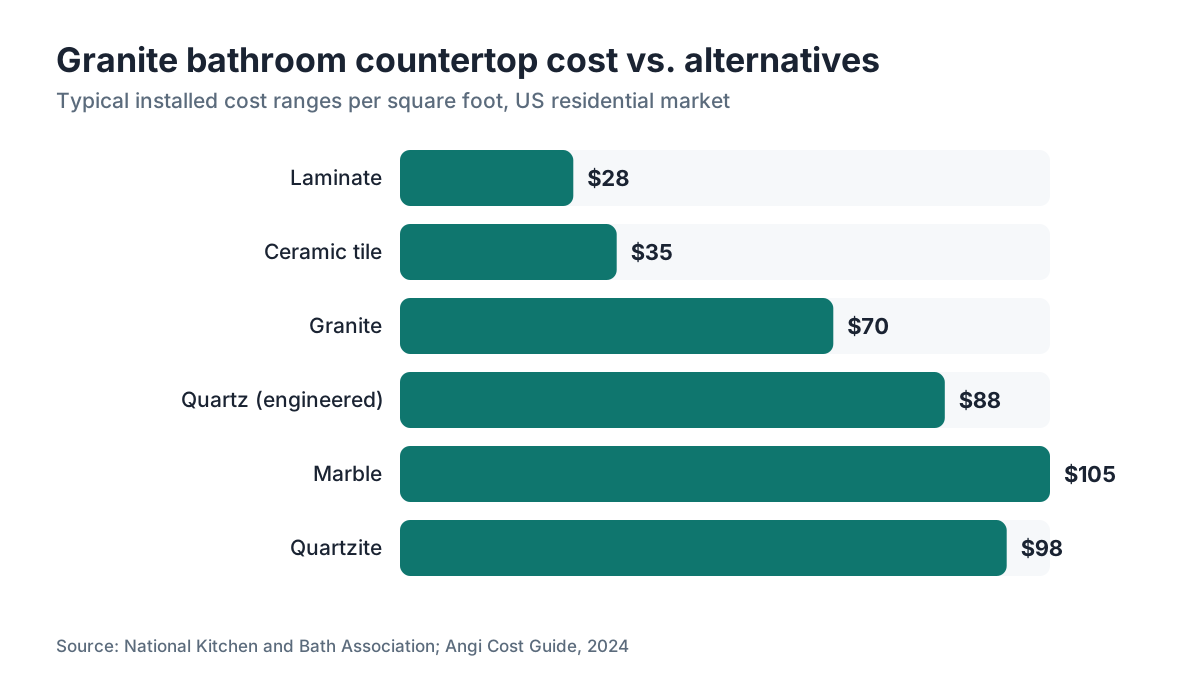
Granite sits in the middle of the countertop market, above laminate and tile, below premium quartz and high-end marble. The table below uses installed cost ranges that reflect what homeowners actually pay, not material-only prices from stone yards.
| Material | Installed cost (per sq ft) | Notes |
|---|---|---|
| Laminate | $15, $40 | Cheap upfront, shorter life |
| Ceramic tile | $20, $50 | Grout is the maintenance headache |
| Granite | $40, $100 | Durable, needs sealing |
| Quartz (engineered) | $55, $120 | No sealing, very consistent look |
| Marble | $60, $150 | Beautiful, etches easily |
| Quartzite | $65, $130 | Harder than marble, still needs sealing |
Quartz is granite's most direct competitor for bathrooms. It's nonporous, so it never needs sealing and ignores moisture entirely. The tradeoff: it's a manufactured product with a more uniform, sometimes flatter look than natural stone, and it costs a little more on average. Brands like Cambria sit at the top of the quartz range. See how that stacks up at cambria countertops.
Laminate is the honest budget pick. Modern laminate looks far better than the stuff from 20 years ago and costs a fraction of stone. For a light-use guest bath, there's nothing wrong with it. Read laminate countertops for a straight take on when it makes sense and when it doesn't.
Fabricators pricing these jobs run into the same problem every time: small jobs carry outsized overhead. Quoting software that accounts for minimum charges and per-job setup, instead of just multiplying square footage by a rate, protects your margin. SlabWise's quoting tool is built around that job-level cost logic, not simple material math.
[2][3]
What factors drive granite countertop cost up or down in a bathroom?
Stone grade is the biggest lever. Granite usually sells in three grades (Level 1 builder grade, Level 2 mid-grade, Level 3 and up premium), but grading is not a standardized system. Every supplier grades their own inventory, so a Level 2 at one yard is a Level 3 at another. What you're really paying for is pattern rarity, country of origin, slab thickness, and supplier markup.
Thickness matters more than people think. Countertop granite comes in 2 cm (about 3/4 inch) and 3 cm (about 1 and 1/4 inch). Three-centimeter slabs are stronger, skip the plywood substrate, and take edge profiles better. For a vanity, 3 cm is worth the small upcharge if your budget allows.
Edge profiles add cost, but not much. A simple eased or bevel edge usually rides in the base price. An ogee, bullnose, or mitered waterfall edge adds $10 to $25 per linear foot. On a 48-inch vanity with two exposed edges, that's maybe $40 to $100 extra. Not a budget-breaker, but good to know before you pick.
Sink cutouts cost money. A standard undermount cutout runs $50 to $150 depending on the shop. Two sinks, double it. Faucet holes (usually three per sink) add $15 to $30 each. These line items vanish easily when you're comparing first-draft quotes.
Where you live sets the baseline. Labor in New York or San Francisco can double the install cost of the same stone versus Kansas City or Louisville. Material runs higher too the farther you are from major ports and distribution yards.
Then there's backsplash. A 4-inch granite backsplash is common in bathrooms, quoted per linear foot ($15 to $30). A full-height backsplash up to the mirror prices more like a tile job and can add several hundred dollars. [1][4]
How do you choose the right granite for a bathroom?
Start with the cabinet finish and floor tile, not the stone. Granite carries a lot of visual movement, and the rest of the room decides which colors and patterns read well. Warm vanities (honey oak, warm walnut) pair with warm granites: beiges, golds, browns. Cool cabinets (white, gray, charcoal) open up blacks, blue-grays, and crisp whites like White Ice or Alaska White.
Bathrooms are small, so you're working with a 10 to 20 square foot piece instead of a 50 to 80 square foot kitchen layout. That means a single remnant is often enough. Remnants are leftover cuts from bigger kitchen jobs, and fabricators sell them at 30 to 50 percent below full slab pricing because the alternative is scrapping them. Ask every shop you talk to whether they have a remnant that fits. This is one of the best ways to get premium stone on a tight budget.
Scale matters with movement. A heavily veined slab that looks dramatic on a kitchen island can feel chaotic on a 24-inch vanity. Look at samples in the actual bathroom under the actual lighting, not the showroom's. Bathroom light is often warmer and more directional than a stone yard's fluorescents, and it changes how a slab reads.
Finish is a real choice. Polished granite has a high gloss that shows water spots and fingerprints. Honed granite is matte and more forgiving, though it shows etching and scratches a touch more. Leathered finish (a textured, low-sheen surface) hides water spots well and has a nice feel under your hand. All three work in a bathroom. It's a preference call.
For a wider comparison of granite against other natural stones, the full breakdown is at granite countertops. [5]
How often does granite need to be sealed in a bathroom?
Plan on resealing every one to three years. The exact interval depends on how porous your stone is, how much water it sees, and which sealer you use. Darker granites tend to be denser and need it less often. Light and white granites are often more porous and may want annual attention.
The water test tells you when. Pour a few tablespoons of water on the surface and wait 15 minutes. If the stone darkens where the water sat, it's absorbing moisture and needs sealing. If the water beads, you're still protected.
Use a penetrating sealer, also called an impregnating sealer. It soaks in and doesn't change the look. Topical sealers sit on top and peel or cloud over time. Tenax, Aqua Mix, and StoneTech are widely used in the trade. Most penetrating sealers cost $15 to $40 for a bottle that covers 100 to 200 square feet, so this is a cheap piece of maintenance.
Application is simple. Clean the surface, apply the sealer per the label (usually wipe on, let it soak, wipe off the excess), and let it cure 24 to 48 hours before it gets wet. The Marble Institute of America (now the Natural Stone Institute) publishes care guidelines that line up with this approach. [6][7]
How do you clean granite bathroom countertops day to day?
Warm water and a few drops of dish soap does it. Wipe with a soft or microfiber cloth, rinse, dry. That's routine maintenance, done.
Skip the stuff that eats sealer: acidic cleaners (vinegar sprays, citrus cleaners), anything abrasive, and full-strength bleach used often. One application won't wreck a sealed surface, but repeated use breaks down the sealer faster and can eventually etch or dull the polish. Read the label on any cleaner before it touches stone. If it says "not for natural stone" or lists acid as an ingredient, grab something else.
Hair products are a real hazard here. Many hairsprays and dyes carry alcohol and pigments that stain unsealed granite. Wipe up anything that lands on the counter fast. For a fuller cleaning routine, how to clean stone countertops walks through the whole approach.
For spills that sit overnight (the top cause of bathroom granite stains), a poultice often pulls the stain out. Mix baking soda and water to a peanut butter consistency, spread it over the stain, cover with plastic wrap taped at the edges, let it sit 24 to 48 hours, then wipe it away. It doesn't always fully work, but it works often enough to be the standard first move.
Makeup and nail polish surprise people. They carry dyes that bond to stone, which makes them some of the harder stains to shift. If nail polish spills, dab a non-acetone remover on with a cotton ball, then clean and dry the surface right away. Acetone is generally fine on granite in small amounts, but test a hidden spot first. [7][8]
What are the pros and cons of granite in a bathroom vs. a kitchen?
Bathrooms are gentler on granite in some ways. Less cooking heat, fewer acidic foods, lighter use overall. A sealed granite top in a half bath might go five years between sealings without a hiccup.
Bathrooms bring their own trouble though. Standing water around the sink is more persistent than in a kitchen, where you dry things and move on. A sink area that stays wet, where toothbrushes drip and soap bars dissolve, tests your sealer harder than a dry stretch of kitchen counter does.
Humidity swings wider too. Shower and bath steam drives moisture into every surface. Granite handles it far better than wood or laminate, but the grout around any nearby tile can break down faster than the stone.
Kitchens change the calculus. The guide on kitchen countertops covers what shifts once you add cooking heat, cutting, and heavier traffic.
One honest comparison. If you have an open master bath where the vanity connects visually to the bedroom, the depth of natural granite reads as real and noticeable. Engineered quartz and corian countertops are solid materials, but they don't have the same visual depth as stone. If the budget allows and you'll do basic maintenance, granite makes sense in a primary bath you want to look good for 20 or 30 years. [3][6]
What should you ask a fabricator before ordering granite for a bathroom?
First question: do they have any remnants that fit your vanity? Remnants can save 30 to 50 percent on material. Bring your vanity dimensions and they can check the pile fast.
Ask about their minimum job charge. Some shops won't quote bathroom jobs under a set dollar threshold because small jobs lose money after overhead. Knowing that upfront saves everyone time.
Confirm whether templating is included, or ask what it costs. Templating a vanity takes under an hour, but some shops charge separately ($50 to $150). It's a legitimate charge. You just want to compare quotes on equal terms.
Ask what the install actually covers. Sink cutout? Faucet holes? Backsplash? Removing the old top? Each of these is sometimes in the quote and sometimes not, and the gaps between quotes get confusing. A quote that looks $200 cheaper might just be missing four line items.
Fabricators trying to write tight bathroom quotes without leaving money on the table hit the same wall: getting setup costs and minimum charges right. A tool like SlabWise handles per-job costs and remnant inventory in a way spreadsheets don't.
Last, ask about their sealing policy. Some shops seal before delivery and recommend a fresh coat after install. Others seal after install. Either works. You just want to know when the first sealing happens and who owns it. [4][9]
How is a granite bathroom countertop installed?
It starts with templating. A tech comes to your home and measures the cabinet precisely, usually with a digital templating tool or physical template material. Don't let anyone rush this. A mistake in the template becomes a permanent mistake in the stone.
After templating, the slab heads to the shop. The CNC (or hand tools for custom work) cuts the stone to the template, cuts the sink and faucet holes, and finishes the edges. For a simple vanity, shop time is usually two to five business days. Jobs with unusual edges or multiple cutouts take longer.
Install day is usually under two hours for a single vanity. The installer pulls the old top if there is one, checks that the cabinet is level and shimmed, applies silicone adhesive or epoxy, and sets the stone. Undermount sinks get attached before or during install with clips and silicone. Supply lines and the drain reconnect once the top is set.
Curing matters. Silicone takes 24 to 48 hours to cure fully. Most fabricators tell you to skip heavy use (no filling the sink to soak laundry) for 24 hours. Light use, rinsing hands and brushing teeth, is usually fine after a few hours.
For a full rundown across material types and what separates good installs from bad ones, countertop installation goes deeper on how to protect yourself as a homeowner. [9][10]
Can you DIY a granite bathroom countertop installation?
Technically yes. In practice, it's one of the riskier DIY countertop projects.
Granite is heavy. A 3 cm vanity top at 24 by 48 inches weighs around 90 to 100 pounds. Two people can manage it, but one slip or a bump against a wall chips a corner or cracks the stone at a cutout. Prefabricated tops (sold at home improvement stores, pre-cut to standard sizes with basic edges) are the realistic DIY route. They run $80 to $200 for the material and drop in without custom fabrication.
Custom-fabricated granite is a different animal. The stone arrives cut to your exact template. One bad lift, one uneven shim, and you've got a crack or a piece that no longer fits. Most fabricators won't even hand off a custom slab for a homeowner to set, because the liability gets murky when something goes wrong.
If you're handy and want to save, the clean DIY path is: buy a prefab top, set it yourself, and pocket $100 to $300 in labor. Leave custom stone to the shop's installer.
If you do install it yourself, the key steps are simple. Level the cabinet first (4-foot level, shim as needed). Run a continuous bead of silicone around the cabinet top. Set the stone carefully. Recheck level once it's down. Let the silicone cure before you reconnect plumbing. Don't overtighten the sink clips. Granite doesn't flex, and too much torque cracks the stone right at the rim. [10][11]
How long does granite last in a bathroom?
A well-installed, well-maintained granite bathroom top easily lasts 30 to 50 years, and there's no physical reason it couldn't outlive the house. Granite doesn't wear out the way laminate peels, wood warps, or tile grout crumbles. The stone is stable.
What actually cuts its life short is neglect. Letting it go unsealed until it stains deep. Ignoring a small chip that then catches moisture and grows. Leaving a crack from a bad install unaddressed. Those are maintenance and installation failures, not material failures.
The alternatives make the durability count. Laminate might need replacing in 10 to 15 years under heavy use. Engineered quartz matches granite for longevity. Marble, gorgeous as it is, etches from bathroom acids and asks for more upkeep over the same span.
On resale, the National Association of Realtors and the National Association of the Remodeling Industry jointly publish cost vs. value data. A bathroom remodel with stone countertops generally reads as higher quality to buyers, though the direct return swings with market and how the rest of the bathroom was updated. Their ROI numbers move year to year. [12]
Renovating a bathroom you'll keep 10 to 15 years before selling? Granite is a reasonable investment. Flipping a property and out in 18 months? The per-dollar return of granite over a good laminate or prefab top gets harder to justify. [3][12]
Frequently asked questions
How much does a granite bathroom vanity countertop cost installed?
Most homeowners pay $400 to $1,800 total for a granite bathroom vanity top installed, depending on size and stone grade. Per-square-foot pricing runs $40 to $100 for standard granite. Small bathrooms often hit fabricator minimums of $300 to $500 regardless of size, which is why small vanity tops feel expensive on a per-square-foot basis.
Is granite good for bathroom countertops?
Yes. Granite is hard (Mohs 6 to 7), heat-resistant, and more forgiving of harsh cleaners than marble. The main upkeep is sealing every one to three years to block moisture absorption and staining. A properly sealed granite vanity top handles typical bathroom use well and lasts several decades without deteriorating.
What is Belgian granite and how much does it cost?
Belgian granite (sold as Bleu de Belge or Blue Belge) is a dense, dark stone quarried in Belgium. It's technically a limestone-like material, not granite in the strict mineralogical sense, but it's marketed in the US under the granite umbrella. Installed cost runs $80 to $150 per square foot, putting it at the premium end. Confirm the actual quarry origin before paying up for it.
Does granite need to be sealed in a bathroom?
Yes. Granite is porous and will absorb water, soap, and other liquids without a sealer. Use a penetrating (impregnating) sealer and reapply every one to three years. Test by putting a few tablespoons of water on the surface for 15 minutes: if the stone darkens, it needs sealing. Most fabricators apply a first coat before or at installation.
What is the best granite for a bathroom?
There's no single best granite, but denser, darker stones like Black Galaxy, Absolute Black, and Baltic Brown absorb moisture more slowly and need less frequent sealing. For light bathrooms, White Ice and Alaska White are popular but want more vigilant sealing. Buy from a remnant pile if you can; bathroom vanity tops rarely need a full slab.
How do you clean granite bathroom countertops?
Daily: warm water and a few drops of dish soap, wiped with a microfiber cloth, then dried. Avoid vinegar sprays, citrus cleaners, and abrasives, which degrade sealer over time. Wipe up hair products, dyes, and makeup promptly. For set stains, apply a baking soda and water poultice, cover with plastic wrap for 24 to 48 hours, then wipe clean.
Can granite crack in a bathroom?
Yes, if the vanity cabinet isn't leveled and shimmed before installation. Granite doesn't flex, so an uneven substrate creates stress at weak points like sink cutouts and seams. A good fabricator checks cabinet level during templating and flags problems. Overtightening undermount sink clips is another common cause of hairline cracks at the cutout rim.
Is granite or quartz better for a bathroom countertop?
Quartz needs no sealing and is nonporous, so it's genuinely lower maintenance. Granite offers unique natural patterning and costs slightly less on average. If the bathroom sees heavy moisture or you want truly zero maintenance, quartz is the practical choice. If you want the look of natural stone and will seal every year or two, granite is a reasonable pick.
How thick should granite be for a bathroom countertop?
Three centimeters (about 1.25 inches) is the better choice. It's stronger, supports itself without a full plywood substrate, and takes edge profiles more cleanly. Two-centimeter granite works and costs a little less, but needs a built-up edge or substrate. For a small vanity, the price gap between 2 cm and 3 cm is usually $50 to $100 total.
Can you buy prefabricated granite bathroom countertops?
Yes. Home improvement stores sell prefabricated granite vanity tops in standard sizes (usually 25, 31, 37, 43, and 49 inches wide) for $80 to $200, sometimes with the sink included. These use thinner stone and simpler edges, but they're a legitimate way to get real granite on a tight budget. Installation is DIY-friendly compared to custom-fabricated stone.
How much does it cost to replace just a bathroom vanity countertop?
For a single-sink vanity in standard granite, expect $400 to $900 installed, including old top removal if needed. A double-sink master bath vanity runs $700 to $1,800 depending on stone grade and market. Small jobs often hit fabricator minimums of $300 to $500. Getting quotes from two or three local fabricators is the reliable way to know your specific number.
Do granite bathroom countertops add home value?
They read as higher quality to buyers, particularly in a master bath. The National Association of Realtors and NARI publish annual cost vs. value data for remodeling projects; a midrange bathroom remodel typically recoups 60 to 70 percent of its cost at resale, with stone countertops as a positive component. Exact ROI depends heavily on the home's price range and local market.
What edge profile works best for granite bathroom countertops?
For most bathrooms, an eased edge (slightly rounded) or a small bevel is practical and clean. It's usually in a fabricator's base price. Bullnose edges are popular for a softer look and easy to wipe down. Ogee or dupont edges add cost ($10 to $25 per linear foot) and visual interest, but they collect dust and product residue more than simple profiles.
How do you get a remnant granite piece for a small bathroom vanity?
Call fabricators directly and ask whether they have remnants that match your vanity dimensions. Bring exact measurements (length, depth, and whether you need one or two sinks). Remnants sell at 30 to 50 percent off full slab pricing because the alternative is disposal. Stone yards that supply multiple fabricators sometimes sell remnants directly to homeowners too.
Sources
- National Kitchen and Bath Association, NKBA Design Trends & Statistics: Installed granite countertop cost range of $40, $100 per square foot for standard residential projects
- Marble Institute of America (Natural Stone Institute), Natural Stone Glossary: Belgian granite (Bleu de Belge) classification and pricing as an imported specialty stone
- U.S. Bureau of Labor Statistics, Consumer Price Index for Home Improvement Materials: Regional variation of 20 to 40 percent in installed countertop labor costs between coastal metro and midwest markets
- HomeAdvisor / Angi, Countertop Installation Cost Guide: Fabricator minimum job charges of $300, $500 and per-job line items including sink cutouts ($50, $150)
- Natural Stone Institute, Granite Hardness and Physical Properties: Granite scores 6 to 7 on the Mohs hardness scale
- Natural Stone Institute, Care and Maintenance of Natural Stone: Penetrating sealers recommended for granite; resealing interval of one to three years based on porosity and use
- Tile Council of North America, Handbook for Ceramic, Glass, and Stone Tile Installation: Recommendation to avoid acidic cleaners on sealed natural stone surfaces to preserve sealer integrity
- National Institute of Standards and Technology, Stone Testing Standards: Water absorption test methodology for determining sealing needs in natural stone countertops
- Marble Institute of America (Natural Stone Institute), Installation Guidelines for Natural Stone Countertops: Cabinet leveling requirement prior to granite installation; silicone cure time of 24 to 48 hours
- U.S. Consumer Product Safety Commission, Home Improvement Safety Guidelines: Weight handling guidelines for stone slabs; 3 cm granite slab at 24x48 inches weighs approximately 90 to 100 pounds
- National Association of Home Builders, Countertop Installation Standards: Prefabricated granite top availability in standard sizes and DIY installation guidelines
- National Association of Realtors / National Association of the Remodeling Industry, Cost vs. Value Report: Midrange bathroom remodel recoups approximately 60 to 70 percent of cost at resale; stone countertops as a positive component
Last updated 2026-07-09