TL;DR
- Bathroom countertops cost $40 to $200 per square foot installed, depending on material.
- Quartz and porcelain slab are the practical picks for most bathrooms.
- Marble looks stunning but etches and needs regular sealing.
- Laminate is the budget floor.
- Engineered stone is the sweet spot.
- Most vanity tops run 5 to 15 square feet, so even premium materials stay cheap.
What are the most common bathroom countertop materials?
Six materials dominate bathroom vanity tops in the U.S.: quartz (engineered stone), natural granite, marble, cultured marble, laminate, and solid surface. Porcelain slab is a newer entry growing fast. Concrete, soapstone, and butcher block show up occasionally, but they're niche choices in a wet room.
Quartz is the most popular pick right now, and it earns the spot. It's non-porous by manufacture, so it won't absorb hairspray, toothpaste, or water the way unsealed granite will. No sealing, ever. It comes in hundreds of looks, including very convincing marble mimics. Expect $50 to $120 per square foot installed for a mid-range quartz [1].
Natural marble is the aspirational choice. It photographs beautifully, it feels cold and smooth, and it ages in a way some people love and others hate. The trouble is etching. Acids from soap scum, toothpaste, and skincare products dull the surface over time. A honed (matte) finish hides etching better than polished. Budget $80 to $200 per square foot installed for marble [1].
Cultured marble is a fiberglass-reinforced polyester composite molded to shape, often with the sink built right in. It's been the default builder-grade bathroom top for decades. It's cheap ($15 to $40 per square foot), easy to replace, and sold at every home center. It scratches and yellows over time, but it's a legitimate choice for a budget bathroom.
Laminate has come a long way. Modern high-definition laminate prints look like real stone at a distance and cost $10 to $25 per square foot installed [2]. The weak spot is the exposed edge and any seam near water. Once moisture gets under the substrate, the particleboard swells and the laminate lifts. For a bathroom that doesn't see a lot of splashing near the backsplash, it's a reasonable budget pick. Read more about the full range in our guide to laminate countertops.
Solid surface (brands like Corian) is non-porous and repairable, and it joins to undermount sinks with no visible seam. Scratches sand right out. It costs $45 to $95 per square foot installed [1]. See the full rundown in our Corian countertops guide.
For how these materials perform in kitchens too, the kitchen countertops guide puts the data side by side.
How much do bathroom countertops cost?
A bathroom vanity top is one of the smaller countertop projects in the house. Most single-sink vanities run 3 to 8 square feet of surface. A double-sink master bath might hit 15 to 20 square feet. That keeps total project cost well below a kitchen even when you pick an expensive material.
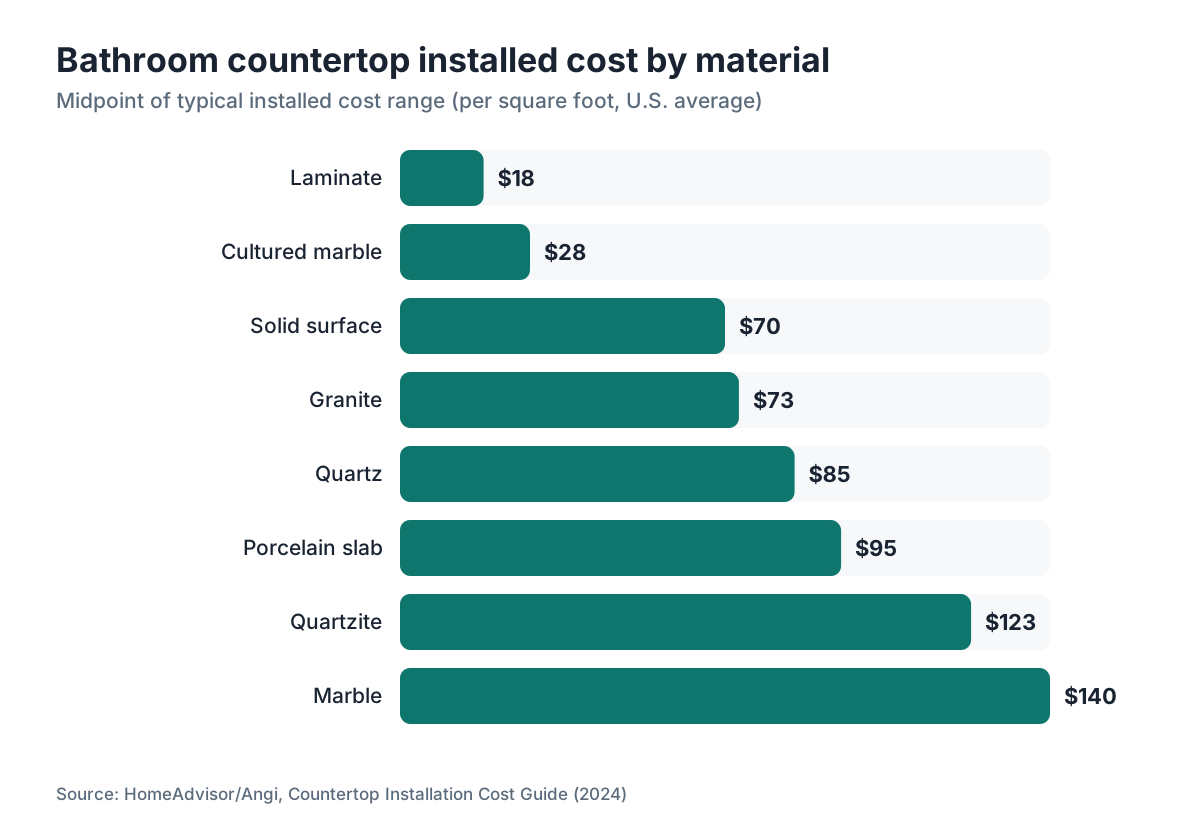
Here's an honest installed-cost range by material, using fabricator pricing from the National Kitchen and Bath Association and HomeAdvisor aggregate data [1][3]:
| Material | Installed cost per sq ft | Notes |
|---|---|---|
| Cultured marble | $15, $40 | Usually includes integrated sink |
| Laminate | $10, $25 | DIY-friendly but seam risk |
| Solid surface (Corian, etc.) | $45, $95 | No visible seam, repairable |
| Quartz | $50, $120 | Non-porous, no sealing |
| Granite | $45, $100 | Needs sealing; huge color range |
| Marble | $80, $200 | Etches; honed finish recommended |
| Quartzite | $70, $175 | Harder than marble, still needs sealing |
| Porcelain slab | $60, $130 | Newer option; very durable |
Fabrication and installation charges typically cover the template, the sink cut-out, the edge profile, and setting. Plumbing reconnection is almost always a separate line item. If your vanity top is a straightforward rectangle with one sink cut-out and a standard eased edge, labor is rarely the majority of the cost. Ask for a vessel sink, a mitered waterfall edge, or book-matched stone, and fabrication time jumps. So does the quote.
For a typical 6-square-foot single-sink vanity in quartz with an undermount sink, $400 to $700 all-in is realistic in most U.S. markets. Marble in the same size runs $600 to $1,000. Cultured marble as a prefab drop-in unit sells at big-box stores for $80 to $200 before installation [3].
Nobody has clean national data on bathroom countertop costs specifically; most surveys lump them in with kitchen remodel costs. The ranges above come from the NKBA's 2024 cost study and aggregator data, which skew toward renovation-active markets. Your local fabricator's quote is always the ground truth [3].
Which countertop material is best for a bathroom?
Quartz is the practical answer for most people. It handles moisture, cleaning products, and daily abuse without sealing or much thought. Want the look of marble without the maintenance anxiety? A quartz surface mimicking Calacatta or Statuario is genuinely hard to tell apart at normal viewing distance.
That said, "best" depends on your priorities.
If you want natural stone with the lowest maintenance: granite. It's harder than marble, it resists etching from acids, and it needs sealing once a year at most. Our granite countertops guide covers sealing schedules in detail.
If budget is the main constraint: cultured marble or laminate. A prefab cultured marble top from a home center works fine, and you can swap it out later when you remodel.
If you want true stone and accept the care: marble. Choose a honed finish, seal it at installation, and reseal once or twice a year. Don't leave toothpaste or citrus products sitting on it. See our marble countertops guide for a realistic picture of ownership.
If durability rules and you like a modern look: porcelain slab. At 12mm thick it's nearly indestructible, it shrugs off heat, and it's non-porous. The catch is that it's hard to cut, and fabricators charge accordingly.
Solid surface is the pick I'd make for a kids' bathroom or a rental. It's forgiving, fixable, and looks clean. For a master bath where aesthetics matter more, quartz or natural stone wins.
Does bathroom countertop thickness matter?
Yes, but less than in kitchens. Standard countertop thickness for natural stone and quartz is 3/4 inch (2 cm) or 1.25 inches (3 cm). In kitchens, 3 cm is the norm because it looks substantial on long runs. In bathrooms, 2 cm is common because vanity tops are smaller and lighter, and the thinner slab is easier to support on a standard vanity cabinet.
That said, 3 cm stone in a bathroom looks premium and adds no practical problem. Some fabricators charge a modest upcharge for 3 cm over 2 cm. Others price them identically because the stone waste difference is small on a tiny slab.
For cultured marble and solid surface, thickness is set by the manufacturer's mold and isn't really a buyer decision.
Edge profile choice interacts with thickness. A mitered edge on a 3 cm slab looks sleek and substantial. On a 2 cm slab, a mitered edge usually uses a laminated build-up underneath to reach the same visual mass. Either works. Know what you're paying for.
What edge profiles work best on bathroom countertops?
Edge profiles are partly aesthetic, partly practical. In a bathroom, the edge you touch when leaning over the sink matters more than in a kitchen, where you mostly touch the surface.
Eased and straight edges are the current default in modern and transitional bathrooms. Flat on top, barely broken on the corner, clean, and the cheapest profile to fabricate. Most quartz and granite fabricators include an eased edge in their base price.
Bullnose (fully rounded) is forgiving if children or elderly users lean against the counter a lot. It shows the full thickness of the stone, which can look a bit dated depending on the rest of the room.
Bevel and demi-bullnose are middle-ground profiles that soften the corner without the full roundover. Both are common, neutral choices.
Ogee and dupont profiles are more ornate. They fit traditional or transitional bathrooms and are largely out of fashion in contemporary designs. They typically add $5 to $15 per linear foot to fabrication cost [4].
Waterfall edges (where the stone continues vertically down the vanity side) started as a kitchen trend and moved into master bathrooms. On a small vanity it can look proportionally heavy. On a floating double-sink vanity with good proportions, it looks great. Expect a real upcharge, because it roughly doubles the stone used on that edge.
How do you keep a bathroom countertop organized and clean?
The countertop itself is only part of the equation. Most bathroom countertop frustration comes from clutter, not the material. A bathroom countertop organizer (a simple tray, a tiered stand, a wall-mounted shelf, or a vanity with a built-in insert) keeps the surface clearer and makes the material easier to wipe down.
For daily cleaning, almost every countertop material does fine with warm water and a mild dish soap. Avoid abrasive scrubbers on polished surfaces (marble, quartz, polished granite), because over time they dull the finish. Avoid bleach on marble and natural limestone, because it can damage the surface; a diluted pH-neutral cleaner is safer [5].
For natural stone, the Marble Institute of America recommends pH-neutral cleaners and warns explicitly against vinegar, lemon juice, and other acids, which etch calcite-based stones [5]. The EPA also flags that certain disinfectant sprays containing alcohol or bleach can, with repeated use, degrade sealers on porous stone [6].
Sealing schedules by material:
- Marble and limestone: seal at installation, reseal every 6 to 12 months
- Granite: seal at installation, reseal every 1 to 3 years depending on porosity
- Quartzite: similar to granite; test porosity with a water droplet first
- Quartz, solid surface, porcelain, laminate, cultured marble: no sealing needed
For stone-specific cleaning depth, our guides on how to clean stone countertops and how to clean quartzite countertops have step-by-step instructions.
Can you use the same countertop material in bathrooms and kitchens?
Yes, and running the same material through a home is a common design move that reads as intentional and simplifies fabricator ordering. Quartz, granite, marble, and quartzite all work in both rooms. The surface areas differ enough that the kitchen job dominates the material cost and the bathroom becomes a small add-on.
The practical difference is moisture exposure. A kitchen countertop sees cooking heat, cutting, and heavy objects. A bathroom countertop sees water, soap, and cosmetics. Some materials that would be risky in a kitchen (unsealed marble near a sink) are marginally more acceptable in a bathroom, because you're not dealing with raw meat juices or high heat. Marble etching from cosmetics is still a real risk, though.
One thing to consider. Fabricators often let you use remnant pieces from a kitchen job for the bathroom top, which can mean big savings on an expensive stone. Ask about remnants explicitly. A 3 cm remnant slab from a kitchen project is often exactly what a bathroom vanity needs, and it might be priced at scrap rates. Some fabricators list remnants publicly. Others don't unless you ask.
SlabWise, countertop fabrication software used by shops across the U.S., helps fabricators track remnant inventory and match it to incoming bathroom projects automatically. That's one reason small jobs like bathroom tops get quoted faster at shops using digital tools.
What should you know about sink integration in bathroom countertops?
Sink type has a big effect on material choice and fabrication cost. There are four main options.
Drop-in (self-rimming) sinks sit in a hole cut in the counter, with their rim resting on the surface. They work with any material, install cheaply, and forgive imprecise cuts. The downside is the rim that collects gunk.
Undermount sinks attach below the counter surface. They look cleaner, they make it easy to wipe water and crumbs into the bowl, and they need a material that can take a polished exposed edge at the cut-out. Quartz, granite, marble, and solid surface all work well for undermount. Laminate and cultured marble typically don't, because the exposed edge would absorb moisture.
Vessel sinks sit on top of the counter like a bowl. They need only a small drain hole (or none, if the drain is integrated), which keeps countertop fabrication simple. The vanity has to sit lower than standard (around 30 to 32 inches rather than 34 to 36 inches) to compensate for the basin height.
Integrated sinks are molded as one piece with the counter. Cultured marble and solid surface both do this well. The result has no visible joint, wipes clean easily, and is often the most hygienic option for a busy bathroom. Cost is typically lower than a separately fabricated stone top plus a separate sink.
Fabrication cost for undermount sink cut-outs typically adds $100 to $200 to a stone job, depending on the shape (rectangular is cheapest; oval costs more). If you're pricing a bathroom project, confirm whether the quote includes the cut-out and the edge finish around the sink.
Does bathroom countertop material affect home resale value?
This is genuinely hard to quantify. The National Association of Realtors does not break out bathroom countertop ROI separately from overall bathroom remodel ROI, so any specific claim about countertop material and resale value is partly speculation.
What NAR's 2023 Remodeling Impact Report does say is that a complete bathroom renovation recoups about 71% of cost at sale, which is a reasonable benchmark [7]. Buyers notice bathrooms, and a dated or worn vanity top is a common negotiating point after inspection.
Practically, upgrading from cultured marble or laminate to quartz or natural stone in a master bath makes the home show better and shrinks a buyer's mental deduction for needed updates. Whether that turns into a dollar-for-dollar return is market-dependent.
For a bathroom you plan to sell in two to five years, quartz is the safe bet: buyers recognize it, it photographs well in listings, and it carries no caveat about sealing or etching. For a forever home, pick what you actually love.
In a lower-price-point home, a $2,000 bathroom countertop upgrade in a market where kitchens and baths top out at modest values may not return its cost. A clean, intact cultured marble top in a clean bathroom can do nearly as well.
What are the most common mistakes people make choosing bathroom countertops?
Buying on looks alone. A polished white Carrara marble top looks perfect in a showroom and in Instagram photos. In a daily-use bathroom with hard water, acidic soap, and kids, it will etch and mark within months. Know what the material requires before you commit.
Ignoring the vanity height. Standard vanity height is 32 to 36 inches. Adding a thick 3 cm slab to a cabinet designed for a thinner top can push the vanity slightly high. This matters less than in a kitchen, but check it.
Choosing a material that doesn't work with undermount sinks. Want an undermount sink and budget laminate? You'll have to revise one of those choices. Ask the fabricator early.
Not asking about remnants. A large remnant of a beautiful quartzite from a recent kitchen job might sit in a fabricator's yard at a fraction of the slab price. For a 6-square-foot bathroom top, remnants are a real option.
Skipping the template visit. Even for a simple rectangular vanity, a template catches an out-of-square wall, a backsplash height conflict, or a plumbing rough-in that's slightly off. A template visit typically costs $50 to $150 and cuts the odds of an expensive remake.
Over-buying for a half bath. A powder room that only guests use sees almost no moisture and very little daily wear. Spending $150 per square foot on marble for a 3-square-foot powder room vanity is a legitimate aesthetic splurge, but you don't need it to protect the investment. A powder room actually carries an expensive material better than a master bath, precisely because it doesn't get daily wet use.
How do fabricators quote and produce bathroom countertops?
Most fabricators treat bathroom tops as small jobs that get batched with other work or bolted onto a larger kitchen project. A standalone bathroom top for a single residential customer is often not the most profitable job for a shop, which is why some fabricators set minimums (commonly $300 to $500) or add a small-job surcharge.
The quoting process mirrors kitchen countertops in miniature. Measure the top dimensions, note sink type and cut-out specs, choose material and thickness, select an edge profile, and calculate square footage. Bathroom tops are almost always simple enough to quote accurately from photos and dimensions, though a template visit is still good practice.
For shops juggling multiple small jobs, software that handles quoting and nesting efficiently matters even more on bathroom tops, because the margin is tighter. SlabWise's nesting tools help shops fit bathroom remnant pieces alongside larger kitchen pieces to cut waste, which makes small jobs more profitable.
Delivery and installation for bathroom tops runs 1 to 3 weeks from template, depending on material availability and shop backlog. Prefab cultured marble tops from big-box stores are available same-day. Custom stone is always cut to order.
For fabricators, the bathroom top market is worth taking seriously as an add-on. Customers who trust you with a $500 bathroom job often come back for a $5,000 kitchen remodel. It's relationship-building work.
Frequently asked questions
What is the most durable bathroom countertop material?
Porcelain slab is the hardest and most scratch-resistant option available, followed by quartz. Both are non-porous and resist staining without sealing. Granite is highly durable once sealed but can chip at thin edges. Marble is beautiful but softer than the others and etches from acids. For a bathroom taking daily punishment, quartz or porcelain is the practical answer.
How thick should a bathroom countertop be?
Most bathroom vanity tops use 2 cm (3/4 inch) or 3 cm (1.25 inch) stone or quartz. Two centimeters is standard for smaller vanities and keeps weight manageable. Three centimeters looks more substantial and is increasingly common in master baths. Cultured marble and solid surface thickness is set by the manufacturer. Edge profiles can visually fake extra thickness using a laminated build-up strip.
Can I use marble in a bathroom without it getting ruined?
Yes, with realistic expectations. Marble etches from acid contact, which in a bathroom means toothpaste, many soaps, and some skincare products. A honed (matte) finish rather than polished makes etching much less visible. Seal at installation and reseal every 6 to 12 months. Keep the surface dry between uses and wipe up spills immediately. Plenty of people live happily with marble bathroom counters; they just don't treat the surface as indestructible.
What is the cheapest bathroom countertop option?
Prefab cultured marble tops, sold at home improvement stores, start around $80 to $200 for a complete unit including the integrated sink bowl. Laminate material itself can go as low as $10 to $15 per square foot installed, but fabricating a custom laminate top adds cost. For the absolute lowest price on a vanity top, a prefab cultured marble unit from a big-box store is the standard answer.
Do bathroom countertops need to be sealed?
It depends on the material. Natural stone (marble, granite, quartzite, limestone) needs sealing at installation and periodic resealing, typically once a year for marble and every one to three years for granite. Quartz, solid surface, laminate, cultured marble, and porcelain are non-porous and need no sealing. A simple water-drop test on stone tells you if sealer has worn: if water soaks in within a minute, it's time to reseal.
What is cultured marble and is it a good choice?
Cultured marble is a manufactured composite of ground limestone and polyester resin, typically molded with an integrated sink bowl and a gel-coat surface. It's been the standard builder-grade bathroom vanity top for decades. It costs $15 to $40 per square foot and is widely available prefabricated. The downsides are that the gel coat scratches and can yellow with age. It's a fine choice for a budget bathroom or rental property.
How do I clean a bathroom countertop without damaging it?
For most materials, warm water and a little dish soap on a soft cloth handles daily cleaning. For natural stone, use a pH-neutral cleaner and avoid vinegar, bleach, or citrus-based products, which can etch marble and degrade sealers. For quartz and solid surface, avoid abrasive pads that dull a polished finish over time. The Marble Institute of America specifically recommends against acidic cleaners on calcite-based stones.
How much does it cost to replace a bathroom countertop?
Replacing a bathroom vanity top typically costs $200 to $1,500 installed, depending on material and size. A prefab cultured marble top runs $100 to $300 including installation. A custom quartz top on a 6-square-foot single-sink vanity runs $400 to $700 in most U.S. markets. Natural marble on the same vanity runs $600 to $1,000. Plumbing disconnection and reconnection is usually a separate charge, typically $75 to $150.
What countertop materials work with undermount sinks?
Quartz, natural stone (granite, marble, quartzite), solid surface, and porcelain slab all work well with undermount sinks. The material needs to take a finished, polished edge at the sink cut-out. Laminate and standard cultured marble don't work for undermount, because the exposed edge would absorb moisture and swell. Solid surface can be fabricated with an integrated undermount-style basin, which is a clean alternative.
Is quartz or granite better for a bathroom countertop?
For most bathrooms, quartz has a practical edge: it's non-porous by manufacture so it never needs sealing, and it's consistent in color and pattern. Granite needs sealing and has natural variation that can include pores or fissures. That said, granite is natural stone with a character quartz can't fully replicate, and for buyers who care about authenticity it's a legitimate choice. On maintenance, quartz wins; on natural beauty, granite competes.
What edge profile is most popular for bathroom countertops right now?
Eased and straight edges dominate contemporary and transitional bathroom designs right now. They're clean, proportional on smaller vanity tops, and included in most fabricators' base pricing. Mitered edges are popular in higher-end master bath renovations. Ogee and other ornate profiles have faded from most new construction but still fit traditional styles. Bullnose remains common in builder-grade work and cultured marble prefabs.
Can I install a bathroom countertop myself?
A prefab cultured marble or solid surface drop-in top is genuinely DIY-friendly: cut to standard vanity widths, set in place, caulk, and reconnect plumbing. A custom stone or quartz top is not a DIY job in most cases. The slab is heavy, the sink cut-out requires a wet saw and diamond blade, and a bad cut is an expensive mistake. Most fabricators include installation in their quote because it protects the warranty on their work.
How long does a bathroom countertop last?
Properly cared-for natural stone and quartz tops last the lifetime of the home, 30 to 50 years or more. Cultured marble typically lasts 15 to 25 years before the gel coat visibly degrades. Laminate in a low-moisture environment can last 10 to 20 years; in a wet environment with any seam near water, lifespan drops sharply. Solid surface is repairable and can last 25 years or more with occasional refinishing.
What countertop color is best for a small bathroom?
Light, consistent surfaces read as larger in small spaces. White, cream, or light gray quartz or stone makes a small bathroom feel more open than a dark or busy-veined stone. That said, dark countertops on white cabinets create strong contrast that can also make a small space feel intentional rather than cramped. There's no universal answer; light materials are simply more forgiving of the compressed scale.
Sources
- HomeAdvisor (Angi), Countertop Installation Cost Guide: Installed cost ranges by material: quartz $50-$120/sq ft, marble $80-$200/sq ft, solid surface $45-$95/sq ft, granite $45-$100/sq ft
- HomeAdvisor (Angi), Laminate Countertop Cost Guide: Laminate countertop installed cost range of $10-$25 per square foot
- National Kitchen and Bath Association, NKBA 2024 Kitchen and Bath Market Outlook: Cost data for bathroom renovation materials and labor, including prefab cultured marble tops at $80-$200 at retail
- HomeAdvisor (Angi), Countertop Edge Profiles Cost Guide: Ornate edge profiles such as ogee add $5-$15 per linear foot to fabrication cost
- Marble Institute of America, Care and Cleaning for Natural Stone Surfaces: MIA recommends pH-neutral cleaners and warns against vinegar, lemon juice, and other acids which etch calcite-based stones
- U.S. Environmental Protection Agency, Safer Choice Program: Certain disinfectant sprays containing alcohol or bleach can, with repeated use, degrade sealers on porous stone surfaces
- National Association of Realtors, 2023 Remodeling Impact Report: Complete bathroom renovation recoups approximately 71% of cost at resale
- U.S. Geological Survey, Mineral Commodity Summaries: Stone (Dimension): Natural stone including granite and marble production and use statistics in the United States
- U.S. Consumer Product Safety Commission, Product Safety Information: Safety considerations for solid surface and composite countertop materials used in residential applications
- National Association of Home Builders, What Home Buyers Really Want 2023: Buyer preferences for bathroom materials, quartz and stone countertops among top desired features
Last updated 2026-07-09