TL;DR
- Quartz countertops resist most household stains because the resin binder fills the pores that soak up liquid in natural stone.
- They're still not stainless.
- Permanent marker, turmeric, red wine left overnight, and certain harsh chemicals can leave marks that survive normal cleaning.
- Most everyday stains come out with the right cleaner and a little patience.
- Heat and solvent damage usually don't.
What makes quartz resistant to stains in the first place?
Quartz is an engineered product, not a slab cut from a quarry. A typical slab is roughly 90 to 95 percent crushed quartz crystals held together with 5 to 10 percent polymer resin, plus pigments and sometimes recycled glass or mirror chips [1]. The resin does the heavy lifting. It fills the microscopic pores between quartz particles, so liquids have nowhere to soak in the way they do with granite, marble, or quartzite.
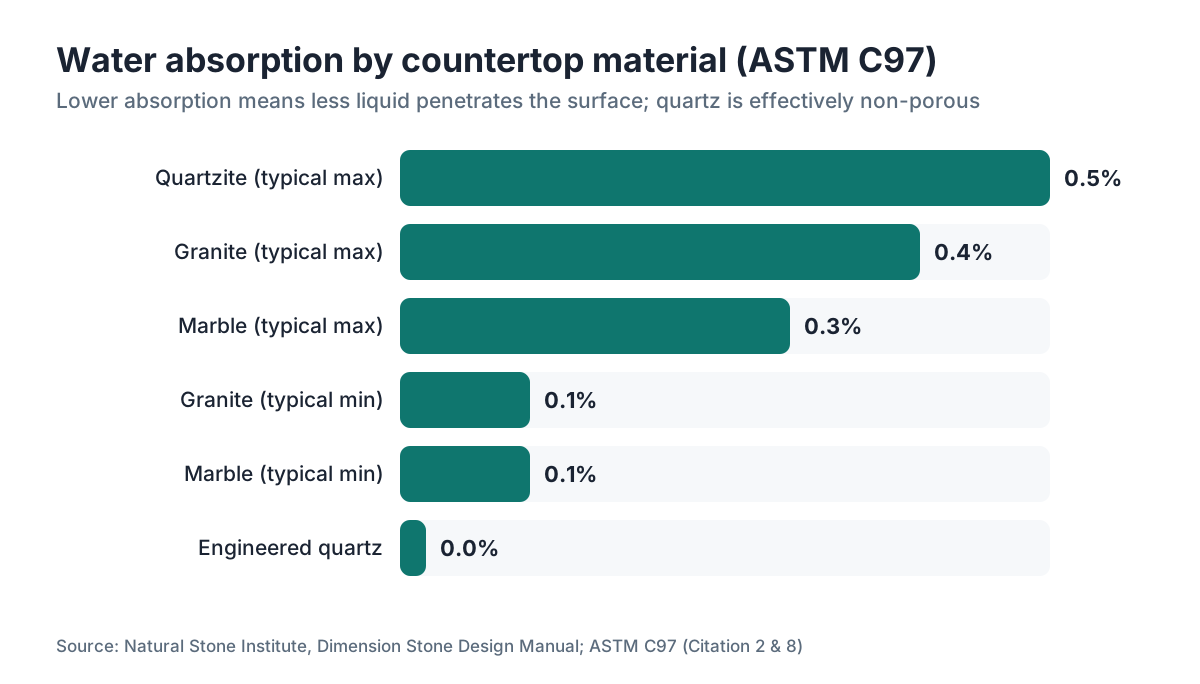
Compare that to granite. Some granite varieties absorb up to 0.40 percent of their weight in water, which is why fabricators seal it at install and tell you to reseal every one to three years [2]. Quartz is non-porous by design, so it doesn't need sealing at all. That's a real maintenance win, not a sales pitch.
The catch is the resin. Polymers react badly to heat and to certain solvents in ways that natural stone shrugs off. So quartz gets its stain resistance from one thing (no pores) and its stain vulnerability from a completely different thing (a chemically sensitive binder). Hold those two ideas at once and you can predict almost every stain outcome.
Does quartz stain, or is it truly stain-proof?
Quartz stains. It beats marble and unsealed granite by a wide margin, but calling it stain-proof oversells it badly.
The Natural Stone Institute (formerly the Marble Institute of America) and the major manufacturers, including Caesarstone, Cambria, and Silestone, all say certain substances can permanently discolor quartz if left in contact long enough [3]. Read that phrase again: left in contact. Most food and drink spills wipe off clean if you catch them within a few minutes. The risk climbs fast when a spill sits overnight, when the substance is deeply pigmented, or when it contains something that reacts with the resin instead of just resting on top of it.
Permanent marker shows the chemistry problem well. The solvent in a Sharpie is built to drive pigment into surfaces. It won't soak into the quartz, but it can bond to the resin at the surface, and dish soap won't touch that bond.
Sunlight is the factor nobody warns you about. Long UV exposure can yellow or fade the polymer resin, which reads as a stain but is really the binder breaking down [1]. That's the reason most warranties exclude quartz installed outdoors or in a sunny bay window.
Which substances are most likely to stain quartz countertops?
Some substances cause trouble every time. Others are harmless. Here's an honest breakdown based on what manufacturers document and what fabricators actually see come back as warranty calls.
High risk (can cause permanent staining or damage):
- Permanent markers and India ink
- Turmeric and strongly pigmented spices left to dry
- Red wine or grape juice left overnight
- Strong acids: muriatic acid, drain cleaners with sulfuric acid, rust removers
- Alkaline cleaners above roughly pH 10 (oven cleaners, some grout cleaners) [9]
- Nail polish remover (acetone) and paint thinner
- Bleach at full strength
- Adhesives: super glue (cyanoacrylate) and epoxy
Moderate risk (usually removable if you act within an hour or two):
- Coffee, tea, and red wine
- Tomato sauce and ketchup
- Mustard
- Cooking oils, especially heated
- Fruit juices
Low risk (wipe up normally, no lasting mark expected):
- Water, including hard water if you wipe it dry before it evaporates
- Most dish soaps
- Beer and white wine
- Citrus juice on short contact
The high-risk list isn't random. Acids and strong alkalis attack the resin binder rather than just staining it [7]. Acetone is a solvent for many polymers. Cyanoacrylate bonds to the resin on contact and cures in seconds. Those aren't stains in the normal sense. They're chemical damage, and no amount of scrubbing brings the surface back.
How to remove stains from quartz countertops: what actually works
The fix depends entirely on what caused the mark. Grab the wrong cleaner and you waste time or make it worse.
Everyday food and drink stains (coffee, wine, tomato, juice): Start with warm water and a few drops of dish soap on a soft cloth. Rub in small circles. If that doesn't move it, spread a paste of baking soda and water, wait five minutes, then wipe. Most fresh food stains quit right here. Skip abrasive pads. Quartz crystal is hard (Mohs 7), but the resin at the surface scratches at much lower force, and scratches grab pigment.
Dried-on or set food stains: A plastic scraper or the edge of a credit card lifts dried gunk without scratching. Follow with the dish soap step. For stubborn organic stains, 70 percent isopropyl alcohol on a cloth works well because it breaks down pigment without attacking the resin the way acetone does [3].
Ink or permanent marker: This is where people reach for acetone and regret it. Try isopropyl alcohol first: soak a cotton ball, hold it on the mark for 30 seconds, then rub gently. A lot of ink surrenders that way. If it's still there, a petroleum-based product like Goo Gone (not the acetone kind) may help. Test a hidden spot first.
Turmeric and curry stains: Turmeric carries curcumin, a reactive yellow pigment that binds hard to organic polymers [4]. It's one of the toughest stains quartz sees. Most fabricators reach for a diluted bleach solution (one tablespoon of bleach per quart of water), applied with a soft cloth, left a few minutes, then rinsed well. Check your care guide first. Some brands void the warranty over any bleach use. Cambria, for one, permits diluted bleach for tough stains while banning undiluted bleach [5].
Hard water deposits and mineral buildup: Not stains in the pigment sense, but they look like it. Limescale responds to a 50/50 white vinegar and water solution left two or three minutes, then rinsed. Don't make vinegar a daily habit. The acidity is fine at low concentration and short contact, but repeated daily use can eventually dull the finish.
Chemical damage (acid etching, burn marks from hot pans): Honest answer: these usually don't come out. Resin degradation and heat discoloration aren't stains you can clean off. A fabricator can sometimes buff out very light surface damage on certain finishes, but deep etching or thermal cracking usually means replacing the section. This is different from etching on marble, where acid reacts with calcium carbonate. Quartz etching is the resin breaking down.
If you run a shop and keep fielding stain callbacks, SlabWise tracks job notes and material histories so you know exactly which slab and finish went in when a call comes months later.
Does quartz stain more than granite or marble?
For typical kitchen stains, quartz beats both unsealed granite and marble. Sealed granite holds up about as well as quartz on most food and drink spills, but the seal needs upkeep and quartz doesn't. Marble is a different animal. Its calcium carbonate means any acidic food (lemon juice, wine, tomato) etches on contact, leaving a dull spot that isn't technically a stain but looks like one and won't clean off.
The table below lays it out. Water absorption figures come from ASTM C97, the standard test method for absorption and bulk specific gravity of dimension stone, which the Natural Stone Institute cites in its care guidance [2][8].
| Material | Needs sealing | Water absorption (ASTM C97 typical range) | Acid sensitivity | Permanent marker risk |
|---|---|---|---|---|
| Quartz (engineered) | No | < 0.02% [1] | Moderate (resin) | High |
| Granite (sealed) | Yes, annually | 0.10 to 0.40% [2] | Low | Low |
| Marble | Yes, frequently | 0.10 to 0.30% [2] | Very high | Low |
| Quartzite | Yes | 0.10 to 0.50% [2] | Low to moderate | Low |
| Laminate | No | Varies by substrate | Low | Moderate |
Natural stone rates low for marker risk not because ink refuses to bond, but because you can sand or hone off the top layer with the pigment in it. You can't do that on quartz without wrecking the finish.
Want a fuller look at stone stain behavior? The marble countertops and granite countertops guides go deeper on both.
What happens when you use the wrong cleaner on quartz?
Short section, big consequences. The wrong cleaner does more irreversible damage on quartz than on almost any other countertop material.
Acetone (in nail polish remover and some adhesive removers) dissolves many polymer resins. On quartz it softens the binder, dulls the finish, and leaves a hazy patch that feels different from the surface around it [7]. That damage stays.
Full-strength bleach (typically 3 to 8 percent sodium hypochlorite) can discolor and weaken the resin over time, especially with repeat exposure [10]. A single drip wiped up fast is usually fine. A bleach-soaked rag parked on a white quartz counter is a problem.
Steel wool and abrasive cleansers like Comet or Bar Keepers Friend cut micro-scratches into the resin. Those scratches aren't only cosmetic. They create rough spots that trap pigment from later spills, so future staining gets easier.
High-pH degreasers (pH above 10) chew at the resin over months of use [9]. That's why manufacturers push simple dish soap and warm water for daily cleaning instead of the heavy kitchen degreasers people use on tile or sealed stone.
Can a stained quartz countertop be repaired or polished?
Sometimes. Rarely all the way. It hinges on whether you're dealing with a true stain (pigment on or near the surface) or chemical and heat damage (the resin itself changed).
For surface pigment stains that survived the cleaning steps above, a professional stone refinisher can sometimes buff the area with a low-grit compound made for engineered quartz. That takes off a thin layer of resin along with the trapped pigment. It works best on polished finishes. Honed, leathered, and rough-textured finishes are harder to fix because matching the texture after polishing is tough.
Chemical damage, heat damage, and deep etching are different. Polishing there makes the spot look wrong compared to the rest of the surface, not better. The resin has changed at a molecular level. The only real fix is cutting out the damaged piece and either replacing the whole slab or doing an insert repair. Inserts show on polished quartz because the veining and pigment pattern never match exactly.
If you're a homeowner staring at a stain that won't move, call the fabricator who installed the countertop before you pay a refinisher. Some manufacturers send field reps to assess warranty claims, and they may replace material that failed because of a resin defect rather than something you did.
Does quartz countertop color or finish affect stain visibility?
Yes, a lot. Showrooms don't always mention this.
White and very light quartz shows every stain, water spot, and fingerprint. It's the worst color for hiding mess in a busy kitchen, even though its resistance to actual permanent staining matches the darker colors exactly. Cook with turmeric weekly on bright white quartz and it'll look rough inside a year no matter how careful you are.
Dark quartz (charcoal, black, deep navy) hides food stains but shows hard water and soap residue far more than light surfaces do. In hard water areas, dark quartz can look permanently hazy no matter how often you wipe.
Mid-tone grays, warm creams, and anything with visible veining or pattern hit the practical sweet spot. They hide daily mess and still look clean when you keep up with them.
Finish matters too. Polished is easiest to clean because the smooth surface won't trap pigment. Honed feels rich and reads like matte marble, but its slightly more open texture holds oils and pigment. Leathered and brushed textures are hardest to clean, not because they're more porous, but because the texture physically catches particles.
Comparing finishes across materials? The how to clean stone countertops guide covers polished, honed, and textured surfaces side by side.
Does quartz need to be sealed to prevent stains?
No. And a standard stone sealer on quartz won't help. It can hurt.
Stone sealers work by soaking into pores and leaving a water-repelling barrier inside the stone. Quartz has no pores for a sealer to enter. So the sealer sits on top, dries into a film, and that film traps pigment, streaks unevenly, and peels over time. Fabricators regularly field confused warranty calls from homeowners who put granite sealer on quartz and then complained about a hazy film.
The manufacturers agree across the board: quartz does not need sealing and sealing is not recommended [3][5][6]. This is one of the genuine advantages of engineered quartz over natural stone. If a salesperson or installer tells you to seal your quartz, they're wrong or they're selling you something you don't need.
The only surface products worth using on quartz are cleaners formulated for engineered stone, and even those are optional. Good dish soap and a microfiber cloth handle 95 percent of what a kitchen counter throws at you.
What do manufacturers actually warranty for quartz staining?
Most major quartz brands give the original purchaser a limited lifetime warranty that covers manufacturing defects. Staining from normal use is usually covered only if you can show it came from a defect, not from abuse or a prohibited substance.
Caesarstone's warranty spells out exclusions for chemical exposure and heat damage, and names prohibited substances including paint removers, oven cleaners, and concentrated bleach [3]. Cambria's warranty similarly excludes damage from abuse or use that goes against its care guidelines [5].
Here's the practical line. If turmeric stained your counter after a dinner spill you cleaned within the hour, that's a warranty conversation worth having. If permanent marker won't come off because someone wrote on the surface, that's user damage and nobody's covering it.
Keep your receipt, the slab specs (brand, series, color name), and the installer's contact info. Warranty claims on installed countertops almost always route through the fabricator first, not the manufacturer. Shops on job management software pull that data in seconds. Shops still on spreadsheets sometimes can't find the original material specs when a callback lands 18 months later. SlabWise keeps that data attached to the job from quote through install.
Comparing Cambria countertops specifically? Their warranty terms and care instructions run among the most detailed in the business and are worth reading before you buy.
How does quartz compare to other low-maintenance countertop options for staining?
If stain resistance sits at the top of your list, here's the honest rundown across the common materials.
Quartz vs. Corian and other solid surface: Solid surface (acrylic-based materials like Corian) stains a little easier than quartz because the material is softer. But you can sand scratches and minor stains right out of solid surface, which you can't do on quartz. In a rental or a high-abuse kitchen, that repairability is a real edge.
Quartz vs. Laminate and Formica: High-pressure laminate has a non-porous surface that resists everyday spills about as well as quartz. It's weaker against cuts (a knife groove traps bacteria and pigment) and against moisture at the seams. The cost is far lower. For a budget kitchen where stain resistance is the main goal, laminate is a rational call.
Quartz vs. Butcher block: No contest on staining. Wood absorbs everything, needs oiling and refinishing, and shows wear. It's a lovely material and plenty of people love it anyway.
Quartz vs. stainless steel: Stainless doesn't stain from food, but it shows scratches and water spots constantly. It's the restaurant pick, not usually the home pick, for looks.
Bottom line for homeowners: quartz is one of the better low-maintenance choices for stain resistance without the upkeep of sealed stone. It isn't perfect. The specific weak points (heat, solvents, strong acids and alkalis) are real enough to shape how you cook and clean.
Frequently asked questions
Can red wine permanently stain quartz countertops?
Red wine can permanently stain quartz if it sits for hours or overnight. The anthocyanin pigments bond to the resin surface given enough time and concentration. Wipe a fresh spill within minutes and it cleans up easily with dish soap and warm water. A stain that dried overnight may need 70 percent isopropyl alcohol or a diluted bleach solution to lift.
How do you get turmeric stains out of quartz countertops?
Turmeric is one of the hardest stains on quartz because curcumin bonds aggressively to polymer resin. Start with a baking soda paste left for five to ten minutes. If that fails, a diluted bleach solution (one tablespoon of bleach per quart of water) applied for a few minutes then rinsed well works on most light and mid-tone quartz. Check your warranty first, since some brands void coverage for any bleach use.
Does coffee stain quartz countertops?
Coffee stains quartz only if it dries and sets. A fresh spill wipes off completely with warm water. If it dries on the surface, a dish soap solution or baking soda paste removes it in most cases. Coffee that sits repeatedly in the same spot over months can leave faint discoloration on light-colored quartz, but basic cleanup habits prevent that.
Will bleach damage quartz countertops?
Diluted bleach (one tablespoon per quart of water) used briefly and rinsed thoroughly is generally safe and is actually recommended by some manufacturers like Cambria for tough stains. Undiluted bleach, or any bleach left sitting, can discolor and weaken the resin binder over time. Never let bleach pool on quartz, and always rinse completely after using it.
Can you use Magic Eraser on quartz countertops?
Magic Erasers work through micro-abrasion, so they're essentially very fine sandpaper. They can lift some surface stains on quartz but also dull the finish if you use them repeatedly. Occasional spot use on a polished surface for a stubborn stain is unlikely to cause visible damage. Using one as a routine cleaning tool will gradually scratch and dull the resin surface.
Why does my quartz countertop look cloudy or hazy?
Cloudiness on quartz is usually one of three things: soap residue from cleaners that weren't fully rinsed, hard water mineral deposits (especially on dark quartz), or surface dulling from abrasive cleaners or scrubbers. Soap residue wipes off with a clean damp cloth. Mineral deposits respond to a diluted white vinegar solution. If hazing survives both, the resin may have been dulled by abrasion and may need professional polishing.
Do quartz countertops stain from olive oil or cooking oils?
Cold cooking oil wipes off quartz without a trace. The risk is heated oil. Hot oil can bond to the resin surface and polymerize slightly, especially near the stove. If cooked-on residue is dry and stuck, a plastic scraper takes off the bulk, followed by a dish soap solution. Repeated cooking near a quartz surface without cleaning between sessions builds a film that gets progressively harder to remove.
What should you never put on quartz countertops to avoid staining or damage?
Never put undiluted bleach, acetone, paint thinner, drain cleaners (strong acids or lye), or oven cleaners directly on quartz. Permanent markers are very hard to remove. Hot pans straight from the stove or oven can damage the resin even without staining. Avoid abrasive scrubbers, steel wool, and high-pH cleaners. All of these either stain the resin or degrade it in ways that can't be cleaned or polished out.
Can you remove permanent marker from quartz countertops?
Sometimes. Isopropyl alcohol (70 percent or higher) on a cotton ball, held against the mark for 30 seconds, removes permanent marker in many cases. A petroleum-based product like Goo Gone is a second option. Avoid acetone nail polish remover, which can damage the resin. If alcohol doesn't work in two or three tries, the mark has likely bonded deep into the resin and won't come out without professional refinishing.
How long does a stain have to sit on quartz before it's permanent?
There's no universal threshold, but here's the rule fabricators use: most food and drink stains clean up easily if caught within 30 minutes, get harder after a few hours, and carry real risk of being permanent after sitting overnight. Strongly pigmented substances like turmeric, red wine, and ink move through those stages faster. Chemical spills like nail polish remover can cause irreversible damage in minutes.
Is quartz countertop stain resistance affected by the brand?
Not all quartz is identical. Resin type, resin percentage, and surface treatment vary between manufacturers. Premium brands like Cambria, Caesarstone, and Silestone use formulations refined over decades, and their care guidelines reflect real product testing. Budget slabs, especially some imports with lower resin quality, may show more surface sensitivity to chemicals and pigments. The stone-to-resin ratio published in technical datasheets is the clearest indicator of expected durability.
Does a quartz countertop warranty cover stains?
Major quartz manufacturers offer limited lifetime warranties to original purchasers but generally exclude staining from abuse, improper cleaning, or prohibited substances. Staining that results from a manufacturing defect in the resin may be covered. Keep your purchase documentation, the specific slab brand and color, and your fabricator's contact information. Warranty claims go through the fabricator first in almost every case.
How do you get stains out of quartz countertops that have already dried?
Start by scraping off dried material with a plastic scraper or credit card. Then apply a paste of baking soda and water, let it sit five to ten minutes, and wipe off. For stubborn organic stains, 70 percent isopropyl alcohol on a cloth works well. For grease-based dried stains, a small amount of dish degreaser left two to three minutes before wiping is effective. Skip abrasive scrubbers no matter how stuck the stain seems.
Sources
- NSF International, NSF/ANSI 51 Food Equipment Materials Standard overview: Engineered quartz slabs are approximately 90-95% crushed quartz bound with 5-10% polymer resin; the non-porous resin fill gives quartz a water absorption rate below 0.02%
- Natural Stone Institute, Dimension Stone Design Manual: ASTM C97 water absorption values for granite range 0.10-0.40% and for marble 0.10-0.30% by weight, contrasting with engineered quartz performance
- Caesarstone, Care and Maintenance Guide (official manufacturer documentation): Caesarstone warranty explicitly excludes chemical exposure damage; manufacturer confirms quartz does not require sealing and sealing is not recommended
- Journal of Agricultural and Food Chemistry, 'Curcumin: A Review of Its Effects on Human Health' (Hewlings & Kalman, 2017): Curcumin (the pigment in turmeric) is highly reactive and binds strongly to organic polymers, explaining why turmeric is especially difficult to remove from quartz resin surfaces
- Cambria, Care and Cleaning Guide (official manufacturer documentation): Cambria explicitly permits diluted bleach for tough stains while prohibiting undiluted bleach; warranty excludes damage from abuse or use inconsistent with care guidelines
- Silestone by Cosentino, Product Care Instructions: Silestone confirms engineered quartz requires no sealing and recommends neutral pH cleaners for daily maintenance
- U.S. Consumer Product Safety Commission, Household Chemical Hazards: Acetone and strong acids (muriatic, sulfuric) used in common household products can react with polymer resin surfaces
- ASTM International, ASTM C97 Standard Test Methods for Absorption and Bulk Specific Gravity of Dimension Stone: ASTM C97 is the standard test method for water absorption in dimension stone, referenced by the Natural Stone Institute for granite, marble, and quartzite absorption data
- Environmental Protection Agency, Safer Choice Program: High-pH cleaners (pH above 10) including many oven and grout cleaners can degrade polymer-based materials; EPA Safer Choice labeling indicates product pH safety
- HHS National Toxicology Program, Sodium Hypochlorite (Bleach) Summary: Sodium hypochlorite at standard household concentration (3-8%) can discolor and degrade organic polymer materials with repeated or prolonged exposure
Last updated 2026-07-10