TL;DR
- Cultured marble is cast polyester resin mixed with marble dust, finished with a gel coat.
- It costs roughly $10 to $40 per square foot installed, far less than natural stone.
- It works well in low-traffic bathrooms but scratches easily, can't be resealed once the gel coat is damaged, and is a poor fit for kitchens.
- You get a marble look at a budget price, with real trade-offs in durability.
What exactly is cultured marble, and how is it made?
Cultured marble is not marble at all. It's a composite made by mixing crushed marble dust (or other calcium carbonate fillers) with polyester resin, pouring that slurry into a mold, and applying a clear or tinted gel coat on top. The gel coat is the outer layer you actually see and touch. It's what gives the product its glossy, stone-like finish.
The process is the same one used for cultured onyx, cultured granite, and some bathtub surrounds. A mold sets the shape, so vanity tops, integral sinks, shower walls, and countertops can all come out of one pour as a single piece. That one-piece construction is one of the real advantages: no grout lines for mold to grow in, no separate undermount sink to seal.
The marble dust content varies by manufacturer, but it typically makes up 75 to 80% of the total weight. The rest is the resin binder. A catalyst added at pour time starts the curing. Once cured and demolded, workers sand and buff the gel coat to the sheen level they want, from matte to high gloss.
How much do cultured marble countertops cost?
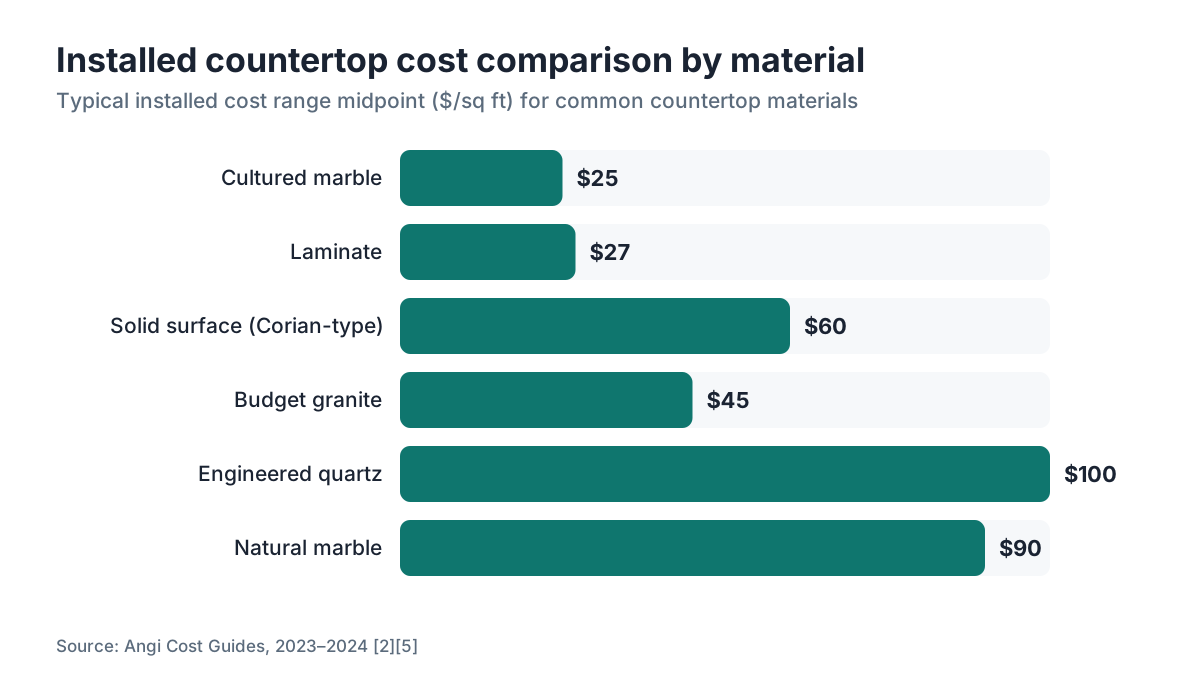
Installed cost runs roughly $10 to $40 per square foot for standard vanity tops, though custom shapes and larger slabs push higher [2]. A typical bathroom vanity top (about 22 inches deep by 49 inches wide, or roughly 8 to 9 sq ft) usually lands between $150 and $350 fully installed. Compare that to natural marble, which starts around $40/sq ft for budget grades and runs well past $150/sq ft for premium material, or to solid surface (Corian-style), which is typically $45 to $75/sq ft installed.
Pricing varies by:
- Thickness. Standard cultured marble vanity tops are 3/4 inch. Some suppliers offer 1/2-inch material that costs a bit less but feels less substantial.
- Integral sink vs. drop-in. A cultured marble top with a molded-in sink (integral bowl) saves the cost of buying a separate sink but adds fabrication cost over a flat slab. In practice, it's still usually cheaper than buying stone plus an undermount sink separately.
- Custom color and veining. Stock colors ship faster and cost less. Custom colorways can add $50 to $100 or more to the piece cost.
- Geographic market. Labor rates vary a lot by region. The material cost itself is fairly stable nationally.
One honest caveat: the wide price range online reflects both regional variation and the fact that some quotes lump in cabinet tear-out and plumbing reconnection while others don't. Ask what the number includes before comparing bids.
How does cultured marble compare to real marble, solid surface, and laminate?
Here's a straight comparison across the materials homeowners weigh at this price point:
| Material | Installed cost ($/sq ft) | Sealing required | Heat resistance | Scratch resistance | Repairs |
|---|---|---|---|---|---|
| Cultured marble | $10, $40 | No | Poor (gel coat yellows/cracks) | Low | Difficult (gel coat refinishing) |
| Natural marble | $40, $150+ | Yes, annually | Moderate | Low | Possible (honing, polishing) |
| Solid surface (Corian-type) | $45, $75 | No | Poor | Moderate | Easy (sand out) |
| Laminate | $15, $40 | No | Poor (edges) | Moderate | Replace section |
| Quartz (engineered) | $55, $150 | No | Moderate | High | Hard to patch |
The big difference between cultured marble and real marble countertops is what you're working with when something goes wrong. A natural marble slab can be honed, repolished, and resealed many times over its life. Cultured marble has a gel coat that, once scratched through or etched past, can't be brought back the same way without professional refinishing. You can buff out light surface scratches with a polishing compound. Deep damage or widespread clouding usually means replacing the piece.
Compared to solid surface (Corian-style) countertops, cultured marble is usually cheaper upfront but harder to repair. A scratch in solid surface can literally be sanded away, because the color runs all the way through the material. The gel coat on cultured marble is only the top 20 to 30 thousandths of an inch, so sanding through it is easy to do by accident.
Versus laminate countertops, cultured marble hides seams better and handles water at the sink more gracefully. But laminate has gotten genuinely good in recent years. In kitchens, where heat and cutting happen, it's often the more forgiving pick.
If your real goal is the look of stone at low cost, granite countertops have dropped a lot as Brazilian imports increased supply. Budget granite now shows up in the $35 to $50/sq ft installed range in many markets. Check that before defaulting to cultured marble.
Where do cultured marble countertops actually make sense?
Bathrooms. Specifically, vanity tops in low-to-moderate use settings. That's the honest answer.
Cultured marble has been the go-to material for builder-grade bathroom vanity tops for decades because it's cheap, comes pre-molded with an integral sink, needs no sealing, and looks clean out of the box. For a rental bathroom, a kids' bathroom, or a guest bath that sees light daily use, it performs fine for 10 to 20 years with basic care [3].
Where it doesn't make sense:
Kitchens. Cultured marble is almost never recommended for kitchen counters. The gel coat can't take hot pots, cuts easily under a knife (even by accident), and the polyester resin can yellow and break down with sustained UV near windows. For a marble look in a kitchen, engineered quartz or a porcelain slab is a much better fit.
High-traffic or commercial bathrooms. Heavy daily use grinds the gel coat down faster. The surface starts looking dull in a few years instead of a decade.
Outdoor installations. Polyester resin is not UV stable. It yellows outdoors. Don't use it.
Master baths where looks really matter. Cultured marble looks fine when new. After 8 to 10 years of daily use, the gel coat and the genuine veining in natural marble diverge noticeably. If the bathroom is a selling point of the home, natural stone or quartz holds value better.
What are the real downsides of cultured marble?
The gel coat is the whole show, and it has real weaknesses.
First, abrasives. Gritty bathroom cleaners, scouring pads, and even some "soft" cleansers scratch the gel coat. The NAHB (National Association of Home Builders) study on component life expectancy notes cultured marble can last 20 years or more with proper care, but rough cleaning is the most common cause of early surface wear [3]. Once the gloss is gone, the surface feels duller and shows water spots much more.
Second, chemicals. Bleach, acetone (nail polish remover), and harsh drain cleaners left on the gel coat can cause permanent dullness or discoloration. Toothpaste is mildly abrasive too. Left to dry and wiped off day after day, it dulls the surface over months.
Third, heat. Set a curling iron or flat iron directly on cultured marble and you're asking for a white scorch mark. The gel coat degrades at low temperatures. This isn't usually a kitchen problem (you shouldn't be using cultured marble there anyway), but in bathrooms, heat styling tools are the number-one source of thermal damage.
Fourth, yellowing. Older white cultured marble tops yellow over time, partly from UV near windows and partly from the polyester resin breaking down. Bright white pieces show it more than patterned ones. Newer formulations have improved, but any piece more than 15 years old may show some yellowing.
Fifth, limited repair options. Unlike solid surface, you can't sand away damage without cutting through the gel coat. Professional gel coat repair and refinishing can restore the surface meaningfully, but it adds cost and only buys limited extra years on an old top.
How do you clean and care for cultured marble bathroom countertops?
The rules are simple, but people break them all the time because the surface looks tough.
Use only non-abrasive, non-acidic cleaners. Mild dish soap and warm water is genuinely the best daily option. Diluted all-purpose sprays are fine as long as they don't contain bleach or grit. The Marble Institute (now part of the Natural Stone Institute) recommends that on any marble-look surface, you test a new cleaner on a hidden spot before using it everywhere [4].
For soap scum (the most common cultured marble problem), a 50/50 mix of white vinegar and water works, but use it sparingly and rinse well. Long vinegar contact can eventually etch the gel coat. Commercial cultured marble cleaners work well without that risk.
For light surface scratches, a car polish or marine gel coat polish (3M Finesse-It or similar) applied with a soft cloth and buffed in circles can bring back some gloss. It genuinely works on fine scratches. It does nothing for deep gouges or chips.
Never use: bleach-based cleaners, steel wool, Scotch-Brite pads (even the "non-scratch" ones can mar soft gel coats), Ajax, Comet, or any powdered cleanser.
For stone-adjacent surface care in general, the practices in how to clean stone countertops translate reasonably well to a gel coat, even though the chemistry is different.
One thing cultured marble doesn't need: sealer. The gel coat is non-porous. A granite sealer does nothing to it. Skip that step entirely.
Can cultured marble countertops be refinished or repaired?
Yes, with realistic expectations.
Professional gel coat refinishing exists for exactly this material. A technician sands the existing gel coat, sprays a new gel coat layer, and buffs it to a shine. This can make a dull, scratched, yellowed top look close to new. Costs vary, but refinishing typically runs $200 to $500 for a standard vanity top depending on size and condition [5]. That's cheaper than replacement in many cases.
The catch is durability. A refinished gel coat is generally thinner than the original and may not last as long before wearing again. Some refinishers spray an acrylic topcoat instead of real polyester gel coat, which is cheaper and faster but less durable. Ask exactly what product they're using before agreeing to the job.
Small chips and cracks can sometimes be filled with a color-matched gel coat repair kit. These sell online and at marine supply stores (the same gel coat is used on fiberglass boat hulls). Results depend on how close the color matches and the skill of the person doing it. A clean match on a white top is doable. On a complex veined pattern, blending the repair is harder.
If refinishing has already been done once and the surface is degrading again, replacement is usually the better call. Most cultured marble tops are cheap to replace, and a fresh install with an integral sink looks a lot better than repeated refinishing cycles.
For fabricators quoting cultured marble alongside stone and solid surface work, the pricing structure is different enough from slab work that it's worth tracking separately. Shops that use SlabWise for quoting can add material cost profiles for non-stone products to keep all their bathroom jobs in one workflow.
How long does cultured marble last?
With proper care, a cultured marble vanity top can reasonably last 20 years or more [3]. That's the honest ceiling under good conditions: no heat tool damage, no abrasive cleaners, no chemical exposure, regular gentle cleaning.
Realistic lifespan in an average household is probably 10 to 15 years before the surface starts looking dull, stained, or yellowed. By then, many homeowners replace rather than refinish, partly because styles change and partly because replacement is affordable.
Comparison: the NAHB study on residential material life expectancy puts bathroom countertops in general at 20 years, with variation by material [3]. Ceramic tile is listed at 20-plus years. Natural stone with proper sealing is also 20-plus years. Cultured marble sits at the lower end of that range in practice, because the gel coat doesn't respond to refinishing the way stone does.
The single biggest lifespan killer is heat tool damage. One bad moment with a flat iron creates a permanent scorch that no polish removes. If someone styles hair daily on a cultured marble counter, either put down a heat-resistant mat or expect to replace the top in 5 to 8 years.
Is cultured marble good for kitchen countertops?
No. Be direct: cultured marble is a poor fit for kitchens.
The reasons stack up fast. The gel coat scratches under normal food prep. It can't handle hot cookware. It yellows near a sunny window. And the integral sink molds that make cultured marble practical in bathrooms don't translate to kitchen sink layouts, which need larger cutouts and more variety.
For the marble look in a kitchen at a manageable cost, look at porcelain slabs with marble printing (Dekton, Neolith, and similar), which are extremely heat and scratch resistant. Engineered quartz with marble-style veining is another option, and some quartz products like Cambria mimic marble patterns with real fidelity.
For budget kitchen surfaces, laminate countertops and Formica countertops have gotten quite good at faking stone visuals and are genuinely more practical than cultured marble in a kitchen. They're not glamorous answers. They're honest ones.
When someone asks about cultured marble for a kitchen, they're usually really asking how to get a marble look cheap. The answer is that cultured marble is the wrong route for that goal in a kitchen, and there are better options in the same price range.
How is cultured marble installed, and is it a DIY project?
For standard vanity tops with integral sinks, installation is straightforward. It mirrors replacing any vanity top: disconnect the plumbing, remove the old top, set the new cultured marble top on the cabinet, connect the faucet and drain, and caulk the perimeter.
For a homeowner comfortable with basic plumbing disconnection and reconnection, this is a manageable DIY project. The main challenges:
- Getting the top level. Vanity cabinets in older homes are often out of level, and you may need to shim before setting the top.
- Caulking the wall joint cleanly. The top usually meets a tiled or painted wall, and a clean bead there matters both for looks and for keeping water from getting behind the top.
- Handling the weight. Cultured marble tops are heavier than they look, often 20 to 40 lbs for a standard size, because of the dense resin and mineral filler.
For the installation process in general, countertop installation covers the sequence in more detail.
Custom cultured marble applications, like shower walls or bench seating, are a different story. Those need precise measurements, and molds are made to spec. Errors are expensive. That work is almost always done by the supplier or a dedicated installer, and the measurement process is similar to templating for stone: someone typically comes out with a template before ordering.
For fabricators quoting cultured marble alongside stone work, the pricing and workflow are different enough from slab fabrication that a separate cost model helps. Shops running stone quotes through software like SlabWise can build material-specific profiles so cultured marble jobs don't get priced like granite.
What colors and styles are available in cultured marble?
The color range is wide, and that's one of the material's underrated advantages. Because cultured marble starts as a liquid pour, colorants can create almost any background tone, and veining comes from adding contrasting pigment streams that swirl through the resin before it cures.
Common offerings:
- White and off-white with gray veining (the classic Carrara look)
- Beige and cream with tan or brown veining
- Black with white or gold veining
- Solid colors without veining (popular for contemporary vanities)
- Custom colorways some manufacturers offer against minimum order quantities
The veining reads like marble from across the room but looks different up close. The patterns tend to repeat, because they come from the same pour technique each time, and a trained eye recognizes them as manufactured. Whether that matters depends on your expectations. At $200 for a vanity top, most people aren't expecting the randomness of a natural quartzite slab.
Finish levels vary. Standard is high gloss, but some manufacturers offer satin or matte. Matte and satin hide surface scratches better over time, which is worth asking about if longevity is a priority.
Does cultured marble add value to a home?
Modest value, honestly. It's not a selling point the way natural stone can be.
Real estate data on specific material value is sparse and heavily market-dependent, but the general principle from remodeling industry surveys is that kitchen and bathroom projects recoup varying shares of their cost. Kitchen renovations have historically returned roughly 60 to 80% of cost at resale, and bathroom renovations somewhat less [6]. Material choice within those projects matters less than the overall quality of the work.
For a lower-to-mid-market home, a clean, modern cultured marble vanity top presents well and won't hurt a sale. A buyer expecting granite in an $800,000 home will be let down by cultured marble. Context matters enormously.
Renovating specifically to sell? The ROI math usually points toward keeping bathroom counters modest (cultured marble or solid surface) and spending money on what buyers notice first: tile, lighting, and plumbing fixtures. Spending $1,500 on natural marble in a bathroom supporting a $350,000 sale rarely pencils out the way $300 on a new cultured marble top plus $400 on better light fixtures does.
Frequently asked questions
Is cultured marble the same as marble?
No. Cultured marble is a manufactured composite of marble dust, polyester resin, and a gel coat surface layer. Natural marble is quarried stone. They look similar at a distance, especially in white-with-gray-veining colorways, but behave differently. Natural marble can be honed and resealed repeatedly. Cultured marble depends on a thin gel coat that can't be restored the same way once damaged.
How do I get rid of scratches on a cultured marble countertop?
Fine surface scratches can be buffed out with a car polish or marine gel coat polish applied with a soft cloth. Work in small circles with light pressure. Deeper scratches that penetrate the gel coat can be partially improved but not fully removed this way. A professional gel coat refinishing service can sand and recoat the surface for a more complete restoration, typically running $200 to $500 for a standard vanity top.
Can I use bleach to clean cultured marble?
No. Bleach and bleach-containing cleaners can chemically degrade and discolor the gel coat on cultured marble, causing permanent dullness or yellowish staining. Use mild dish soap and warm water for daily cleaning. For soap scum buildup, a diluted white vinegar solution works, but rinse it off promptly. Commercial cultured marble cleaners are also available and avoid these risks.
Why is my cultured marble countertop turning yellow?
Yellowing comes from two sources: UV exposure (sunlight breaking down the polyester resin over time) and chemical degradation from harsh cleaners or hair products. White and very light-colored tops show it more than darker or veined patterns. There's no DIY fix for deep yellowing. A professional can refinish the gel coat to restore the original color, or replacement is the other option if the top is old.
How heavy is a cultured marble vanity top?
A standard single-sink cultured marble vanity top in the common 49-inch size typically weighs 25 to 45 pounds, depending on thickness and configuration. The dense polyester resin and mineral filler make it heavier than it looks. Most people can install it with one helper, but working alone is awkward. The weight is a factor in shipping costs when ordering online.
Does cultured marble need to be sealed?
No. The gel coat on cultured marble is non-porous, so it doesn't absorb liquids and doesn't require sealing. This is one of the material's practical advantages over natural stone. Applying a stone sealer to cultured marble does nothing and wastes the product. Skip the sealing step entirely and just clean the surface regularly with a gentle, non-abrasive cleaner.
Can cultured marble be used in a shower?
Yes, and it's actually a common application. Cultured marble shower walls, pans, and surrounds are manufactured to order and installed as large panels. The one-piece construction eliminates grout lines where mildew grows, which is a real advantage in a wet area. The same care rules apply: no abrasive cleaners, no bleach, and keep heat exposure minimal. Shower use doesn't degrade the gel coat faster than countertop use.
How long does cultured marble countertop installation take?
For a standard vanity top replacement, plan on two to four hours from start to finish if the plumbing is straightforward. Disconnecting the old plumbing, removing the old top, setting and leveling the new top, reconnecting plumbing, and caulking the wall joint are the main steps. Caulk cure time adds a few hours before you should let water sit on the surface. Custom cultured marble orders (shower walls, etc.) typically have 2 to 6 week lead times before the installation day.
What's the difference between cultured marble and solid surface (Corian)?
Both are manufactured composites with no sealing required, but they differ in repairability. Solid surface like Corian is color-consistent all the way through, so surface scratches can literally be sanded away without changing the appearance. Cultured marble's color and pattern sit entirely in a thin gel coat layer; sand through it and you reach the dull resin base below. Solid surface typically costs more ($45, $75/sq ft installed vs. $10, $40 for cultured marble).
Is cultured marble heat resistant?
No, not meaningfully. The polyester gel coat degrades at relatively low temperatures. A hot curling iron, flat iron, or even a mug of very hot coffee left on the surface repeatedly can cause permanent white scorch marks or crazing in the gel coat. Always set down a heat-resistant mat before placing hot styling tools on a cultured marble bathroom counter. This is the most common source of irreversible damage on bathroom vanity tops.
How does cultured marble compare to laminate countertops in cost and durability?
Both fall in the $15, $40 per square foot installed range, making them direct budget competitors. Laminate handles heat and cutting slightly better than cultured marble's gel coat and is easier to source in large kitchen formats. Cultured marble handles water and wet areas more naturally and is typically seen in bathroom vanity configurations with integral sinks. For kitchens, laminate is generally the more practical choice. For bathroom vanities, cultured marble is often the more common default.
Can I cut on a cultured marble countertop?
No. Always use a cutting board. A knife will cut through the gel coat surface easily, leaving permanent scratches. Even a light pass with a sharp knife can score through the thin gel coat layer and expose the dull resin underneath. This is one of the main reasons cultured marble is categorically not recommended for kitchen use, where cutting happens regularly regardless of how careful someone intends to be.
Are there cultured marble countertops for kitchens?
They exist but are not recommended. The gel coat scratches too easily for food prep, can't handle hot pots or pans, and will yellow near sunny windows over time. For a marble-look kitchen surface in a budget range, engineered quartz or even high-quality laminate are far better fits. The integral sink molds that make cultured marble practical in bathrooms also don't translate well to typical kitchen sink configurations.
Sources
- U.S. Environmental Protection Agency, Indoor airPLUS and building material guidance: Polyester resin composite materials such as cultured marble are cast products combining mineral filler with a resin binder; marble dust typically makes up the majority of the mix by weight.
- HomeAdvisor (Angi), Cultured Marble Installation Cost Guide: Cultured marble countertops cost approximately $10, $40 per square foot installed for standard vanity tops.
- National Association of Home Builders (NAHB), Study of Life Expectancy of Home Components: Cultured marble can last 20 years or more with proper care; the NAHB study on residential material life expectancy places bathroom countertops generally at 20 years.
- Natural Stone Institute (formerly Marble Institute of America), Care and Cleaning guidance for natural stone surfaces: The Natural Stone Institute recommends testing any new cleaner on an inconspicuous spot first before using it broadly on marble-look surfaces.
- Angi (formerly HomeAdvisor), Bathtub and Countertop Refinishing Cost Data: Professional gel coat refinishing for a cultured marble vanity top typically costs $200, $500 depending on size and surface condition.
- National Association of Realtors, 2023 Remodeling Impact Report: Kitchen renovations recoup approximately 60 to 80% of cost at resale; bathroom renovations return somewhat less, with specific material choices mattering less than overall renovation quality.
- U.S. Consumer Product Safety Commission (CPSC), consumer product safety overview: Polyester resin-based composite products including cultured marble are covered under general consumer product safety standards; no specific CPSC restriction applies to residential cultured marble use.
- U.S. Geological Survey, Mineral Commodity Summaries (Crushed Stone / Marble): Crushed marble and calcium carbonate fillers used in composite products are produced domestically in large volumes and are a low-cost mineral input.
- NAHB, Study of Life Expectancy of Home Components: Ceramic tile is listed at 20+ year lifespan; natural stone with proper sealing also 20+ years; cultured marble fits at the lower end of that range due to gel coat limitations.
- Remodeling Magazine, 2023 Cost vs. Value Report: Bathroom remodel cost-vs-value data supporting the analysis of material choices relative to resale return.
Last updated 2026-07-09