TL;DR
- Clean marble countertops daily with warm water and a few drops of pH-neutral dish soap, then dry immediately.
- Never use vinegar, lemon juice, bleach, or abrasive scrubbers.
- For stains, apply a poultice made from baking soda and water.
- Etch marks (dull cloudy spots) need a marble polishing powder or professional re-polishing, not more cleaning.
Why marble is so easy to damage when cleaning
Marble is calcium carbonate. That chemistry is the whole story. Acids, even weak ones like lemon juice, vinegar, or wine, dissolve the calcium carbonate at the surface almost immediately. What you get is an etch mark: a dull, slightly rough patch that looks like a water stain but is actually a chemical burn in the stone itself. Cleaning products that work perfectly on ceramic tile, quartz, or laminate can ruin marble in under 30 seconds.
The U.S. Geological Survey classifies marble as rock made primarily of calcium carbonate, the same compound that reacts with acids [5]. That reaction is fast and it is permanent. It rules out vinegar, most bathroom cleaners, citrus-based degreasers, baking soda used as a scrub (high pH), steel wool, and anything labeled "disinfecting spray" that carries quaternary ammonium or citric acid.
Marble is also porous. Unsealed marble drinks up oils, wine, coffee, and juice, and those pigments stain from below the surface more than on top. You can wipe the liquid off and still find a brown ring two hours later if the stone wasn't sealed. The cleaning rules exist because marble demands them, not because stone dealers are being precious.
What products are actually safe to use on marble?
The short list: warm water, a pH-neutral dish soap, and a soft microfiber cloth. That covers 95 percent of daily cleaning.
PH-neutral means a product with a pH close to 7. Standard dish soaps like Dawn or Seventh Generation sit between 7 and 8.5, which is safe. The Natural Stone Institute recommends stone-specific cleaners labeled "pH neutral" or "safe for natural stone" for more thorough cleaning [1]. Products from brands like Method (stone formula), Black Diamond Stone Works, and Granite Gold have been formulated to hit the neutral pH target, though check the current label because formulas change.
For disinfection you have one clean option: isopropyl alcohol diluted to 70 percent. The CDC's disinfection guidance lists 70% isopropyl alcohol as effective against most common pathogens [2]. At that concentration it does not etch marble, though you should still rinse and dry afterward. Skip hydrogen peroxide, bleach, and any "antibacterial" spray until you check the ingredients for citric acid, which the EPA notes appears as an active ingredient in many disinfecting products [7]. It shows up in more sprays than most people expect.
Here's a quick reference:
| Product | Safe for marble? | Notes |
|---|---|---|
| Warm water + pH-neutral soap | Yes | Best daily cleaner |
| 70% isopropyl alcohol | Yes, with rinse | For disinfection |
| Stone-specific cleaner (pH neutral) | Yes | Weekly use |
| Vinegar or citrus cleaners | No | Etches immediately |
| Bleach | No | Etches and discolors |
| Baking soda (as scrub) | No | Alkaline abrasive |
| Magic Eraser / melamine foam | No | Abrasive, dulls finish |
| Hydrogen peroxide | No for polished | Can bleach and etch |
| Windex / ammonia glass cleaners | Occasionally debated | Ammonia is alkaline; skip it |
If you want to see how these rules shift for other natural stones, the guides on how to clean quartzite countertops and how to clean soapstone countertops get specific for each material.
What is the correct daily cleaning routine for marble?
Daily cleaning takes about two minutes. Wet a microfiber cloth with warm water, add one small drop of pH-neutral dish soap, wipe the whole surface, go over it again with a clean damp cloth to lift any soap residue, then dry completely with a third dry towel. That's the full routine.
The drying step is not optional. Hard water carries calcium and magnesium minerals, and the CDC notes that these elevated mineral concentrations leave deposits when the water evaporates [8]. On marble that shows up as white haze or water spots, and they're stubborn to remove. Drying immediately prevents them entirely.
Sweep off crumbs and dry debris before you wipe. Dragging grit across marble under a wet cloth is one of the fastest ways to introduce micro-scratches on a polished surface. Use a soft brush or dry cloth first, then the wet wipe-down.
Spills need immediate attention. Oil-based spills (butter, olive oil, salad dressing) are more dangerous than water-based ones because oils sink into the stone faster than people expect. Blot them, don't wipe. Wiping spreads the oil across a bigger area and pushes it deeper into the pores. Blot from the outside of the spill inward, then clean with the soap-and-water method.
How do you remove stains from marble countertops?
Stain removal from marble almost always means making a poultice. A poultice is a thick paste that sits on the stain, pulls the pigment or oil back out of the stone through capillary action as it dries, then gets scraped away. The Natural Stone Institute's care guide describes poultice use as the standard approach for deep stains in porous stone [1].
For oil-based stains (grease, cooking oil, butter), mix baking soda with water to a peanut-butter consistency. Spread it about a quarter inch thick over the stain, cover it with plastic wrap taped down at the edges, and let it sit for 24 to 48 hours. Then lift it with a plastic scraper, rinse, and dry. Old stains may take two applications.
For organic stains (coffee, tea, wine, juice, food), use a poultice of baking soda and a small amount of 12% hydrogen peroxide instead of water. The peroxide acts as a mild bleach on the organic pigment. This is one of the few times hydrogen peroxide earns its place on marble: sitting as a paste on a polished surface, not wiped on straight. Rinse thoroughly when done.
For ink or marker, acetone (nail polish remover without added moisturizers) on a cotton ball, held to the stain for a few minutes, works on many inks without hurting the marble. Test a hidden spot first.
Rust stains are the orange-brown rings left by metal cans or iron in the water supply. Commercial rust removers contain oxalic acid, which will etch marble. This is a case where DIY backfires. A professional stone restoration company using an oxalic acid treatment, with concentration and dwell time controlled, is the safer call.
What are etch marks and how do you fix them?
Etch marks are the dull, hazy, or white spots that appear after acid touches marble. They are not stains. They are physical damage: the acid has dissolved the top layer of calcium carbonate, leaving a microscopically rough surface that scatters light instead of reflecting it. No amount of cleaning removes an etch. Cleaning only addresses surface contamination.
On polished marble, light etch marks can be reduced with a marble polishing powder (a tin oxide or aluminum oxide compound). These are very fine abrasives sold under names like Miracle Sealants Etch Remover or Tenax. You work them in with a felt pad or soft cloth in a circular motion, which re-smooths the surface. It's DIY-accessible for light etches, but it takes patience.
Deep etches, widespread dulling, or etches on honed or brushed marble are a different job. Honed marble has no glass finish to begin with, so the polishing approach doesn't map onto it the same way. A stone restoration pro with a floor machine fitted with diamond polishing pads can re-hone or re-polish the surface. Expect $300 to $600 for a full kitchen countertop restoration, varying by region and square footage.
The hard truth: put polished marble in a kitchen where people cook and use citrus, and you will get etch marks. Honed marble hides them better because the surface is already matte. Plenty of kitchen designers now steer clients toward honed finishes for exactly that reason.
How often should you seal marble countertops?
Sealing is a separate task from cleaning, but it directly changes how hard stains are to remove afterward. A penetrating sealer (also called an impregnating sealer) soaks into the pores and slows liquid absorption without changing the look of the surface. It does not prevent etching from acids, a point many homeowners misread. Natural Stone Institute sealer testing is blunt about this: penetrating sealers slow liquid absorption into stone pores but do not prevent etching from acid contact [9]. Sealers protect against staining from oil and water, not against chemical etching.
Most fabricators recommend sealing marble every 6 to 12 months in a kitchen, and every 1 to 2 years in a lower-use bathroom [3]. The real interval depends on the sealer product, the porosity of your specific marble, and how hard the surface gets used.
The water test tells you when to reseal. Drip a tablespoon of water on the surface and wait 5 minutes. If the marble darkens where the water sits, the sealer is spent and the stone is absorbing water. If the water beads or sits without darkening, the sealer is still doing its job. This is the only test that matters.
Applying sealer is straightforward. Clean the surface, let it dry fully, apply the sealer per the maker's directions (usually a wipe-on, wait, wipe-off process), and let it cure. Common trade sealers include Miracle Sealants 511 Impregnator and Tenax Proseal. Both need the surface fully dry and free of residue.
What is the difference between cleaning polished and honed marble?
The cleaning chemistry is identical for polished and honed marble. Same safe products, same avoid list, same dry-it-now rule. The difference is what you see: etch marks and scratches show up far more on polished marble than honed.
Polished marble has a mirror finish created by grinding through finer and finer diamond grits. Any disruption to that surface, from acid etching or abrasion, is instantly visible because everything around it is so reflective. Honed marble stops the grinding earlier, leaving a flat, matte, almost chalky look depending on the stone. A light etch on honed marble blends in because the surface was already matte.
Honed marble does drink up stains more readily than polished. The polishing process closes the surface pores slightly. So on honed marble, sealing matters more than on polished, and oil spills need faster blotting.
Before you make a marble countertops buying decision, knowing your finish type saves a lot of regret. Polished is stunning and demanding in a working kitchen. Honed is more practical and needs more attentive sealing.
Can you use steam cleaners on marble?
Steam cleaners are a gray area, and I'd skip them on a polished countertop. The heat can open the pores of the stone, which helps loosen grease. But commercial steam cleaners run at 200 to 220 degrees Fahrenheit. Repeated thermal cycling, heating and cooling the stone aggressively, can contribute to micro-cracking over time. It can also strip sealers faster.
Nobody has good data on steam cleaning and marble countertops specifically. There's no clear study either way. The Natural Stone Institute's guidance doesn't recommend steam, and most stone restoration pros advise against it for polished surfaces [1]. For heavily soiled marble or grout lines in a marble tile floor, some pros do use steam at lower settings. On a polished countertop, the risk-benefit math doesn't favor it when pH-neutral soap and water already work for routine cleaning.
How do you handle hard water spots and soap scum on marble?
Hard water spots are mineral deposits, calcium and magnesium left behind when water evaporates. They look white and hazy. Most bathroom marble gets them constantly.
The problem is that the obvious fix, vinegar or lemon juice, is exactly what etches marble. You cannot use acids to dissolve mineral deposits on marble the way you would on a chrome faucet or a glass shower door.
Here's what works. A paste of baking soda and water, worked gently with a soft cloth, lifts light mineral deposits through mild mechanical action without the abrasive damage of powder cleansers. Work in small circles and rinse well. For stubborn buildup, a product like Bar Keepers Friend (liquid, not powder) contains oxalic acid and will etch marble if left on. Some stone care brands sell a "calcium remover" made for natural stone that uses a chelating agent (like EDTA) instead of acid. Those are worth a try on persistent spots.
Soap scum is a film from soap reacting with hard water minerals. On bathroom marble vanity tops, it builds up fast. The same pH-neutral cleaner with light scrubbing from a soft cloth handles mild soap scum. A squeegee after every use in a marble shower beats any product for prevention. Nothing else comes close.
When should you call a professional stone restoration company?
DIY cleaning and maintenance covers most situations. Four cases justify calling a professional.
First: widespread deep etching across a large portion of the surface. Polishing powder handles small isolated spots, but if half your countertop is dull from years of lemon juice and vinegar, the only real fix is diamond polishing by a machine operator who knows marble.
Second: deep chip or crack repair. Chips along an edge or a crack through the surface need color-matched epoxy fill and sometimes stone grinding to level. That's fabricator or restoration work.
Third: rust stains that haven't responded to poulticing. Controlled professional application of oxalic acid can pull rust staining that DIY methods can't reach.
Fourth: a sealer application after major restoration. If a pro has reground and repolished the stone, they'll seal it as part of the job, which puts the sealer on a surface that's in the right condition for it.
For fabricators managing customer relationships after installation, the quoting and project management tools at SlabWise help you document care specifications and follow-up service work alongside the original job.
Stone restoration contractors typically charge $5 to $15 per square foot for resurfacing work, with minimums often around $300 to $400 [4]. Get quotes from at least two contractors who specifically mention natural stone, not tile or general flooring.
How does marble compare to other countertop materials for cleaning difficulty?
Marble is among the most demanding countertop materials to clean and maintain. That's not a reason to avoid it, but be honest about where it sits.
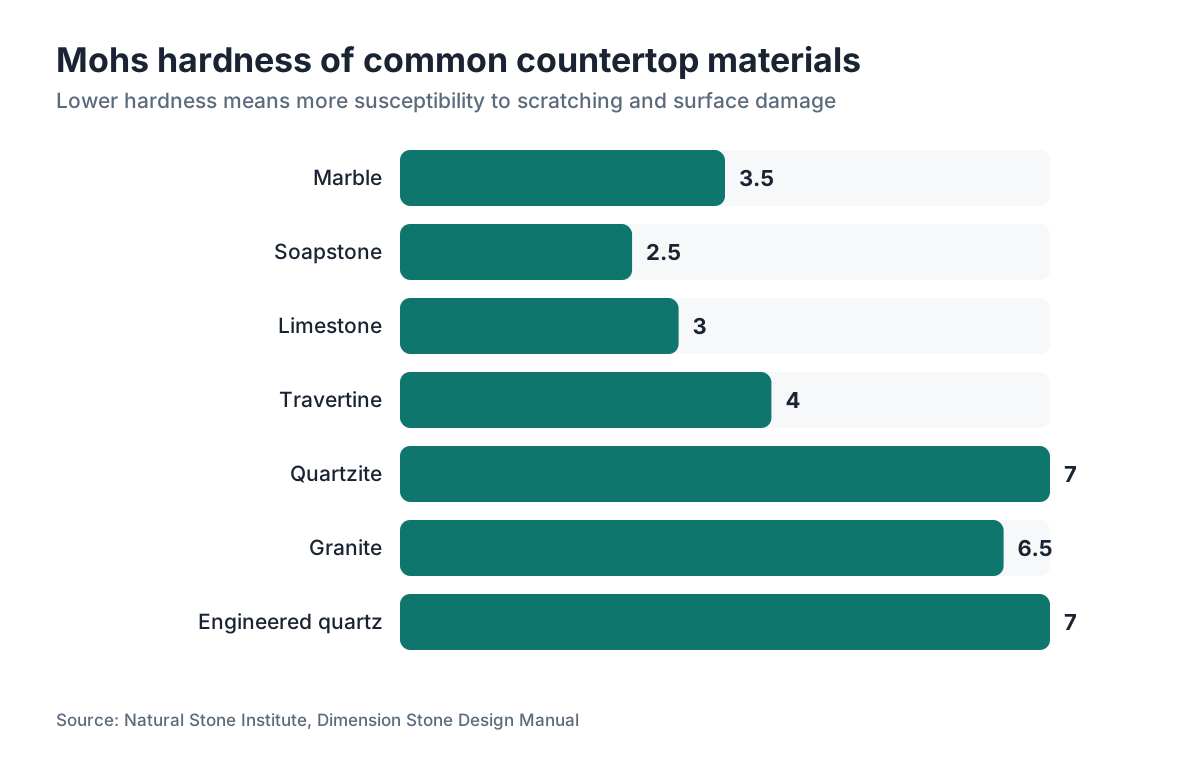
Granite is also a natural stone and also porous, but it's much harder (Mohs 6 to 7 versus marble's 3 to 4) and far less reactive to acids. A lemon left on granite for a few minutes won't etch it. The granite countertops guide breaks down how its care routine differs.
Engineered quartz (like Cambria) is non-porous and doesn't etch. It's the low-maintenance choice. The trade-off is it doesn't look like natural stone. The Cambria countertops guide shows what engineered quartz gives you.
Laminate is forgiving and cheap to replace. The laminate countertops guide covers its limits.
Butcher block countertops come with their own maintenance demands (oiling, avoiding standing water) but aren't damaged by acidic foods.
For the full picture on kitchen countertops and how the materials stack up, read that overview before committing to marble.
| Material | Etches from acid? | Stains easily? | Requires sealing? | Scratch resistant? |
|---|---|---|---|---|
| Marble | Yes (quickly) | Yes | Yes, 1-2x/year | No (Mohs ~3) |
| Granite | Rarely | Moderately | Yes, 1-2x/year | Yes (Mohs 6-7) |
| Quartzite | Some types | Moderately | Yes | Yes |
| Engineered quartz | No | Rarely | No | Yes |
| Soapstone | No (acid resistant) | Low | Oil, not seal | Moderate |
| Laminate | No | Moderate | No | Moderate |
What do fabricators tell customers that they actually need to know?
Fabricators who install marble and then get the callback six months later about etch marks usually trace the whole problem to one moment: the homeowner got a sealed surface and no specific warning about acids.
The practical things worth saying at installation:
Keep lemon juice, vinegar, wine, tomato sauce, and citrus fruits off the stone, or wipe them immediately if contact happens. "Immediately" means within a minute or two, not after you finish cooking.
Buy pH-neutral cleaner before the countertop goes in. Don't reach for whatever's under the sink until you've confirmed it's safe.
Reseal when the water test says to, not on a calendar. Some kitchens need it every six months, some every 18.
Honed finishes hide maintenance problems better. If the client cooks hard, say so out loud.
For homeowners who want to estimate what their marble installation costs and compare materials side by side, the SlabWise instant quote tool generates ballpark numbers from square footage and material type.
The broader guide on how to clean stone countertops covers principles that apply across marble, granite, quartzite, and soapstone if you want one reference that handles them all.
Frequently asked questions
Can I use vinegar to clean marble countertops?
No. Vinegar is acetic acid, usually around 5% concentration, and it etches marble on contact. The acid dissolves the calcium carbonate at the surface, leaving a dull, hazy mark that looks like a water stain but is actually physical damage. No amount of cleaning fixes an etch. Use warm water with pH-neutral dish soap instead.
What is an etch mark on marble and is it the same as a stain?
Etches and stains are different problems. A stain is pigment absorbed into the pores of the stone, usually from coffee, wine, or oil. An etch is chemical damage to the surface itself, caused by acid dissolving the calcium carbonate. Stains can sometimes be drawn out with a poultice. Etches require polishing with a marble polish compound or professional resurfacing.
How do I get rid of water spots on marble?
Hard water spots are mineral deposits left when water evaporates. Gently work a paste of baking soda and water over them with a soft cloth, then rinse thoroughly. Do not use vinegar or citrus, which etch marble. Prevention beats removal: dry the surface immediately after any water contact, and squeegee marble shower walls after each use.
Is Dawn dish soap safe to clean marble countertops?
Yes, in small amounts. Dawn's pH is roughly 7 to 8.5, which sits in the safe range for marble. Use a drop or two in warm water, wipe, then rinse with clean water and dry immediately. Don't let soapy water sit, and don't use concentrated soap repeatedly without rinsing, since it can leave a filmy buildup over time.
How often should marble countertops be sealed?
Most fabricators recommend sealing kitchen marble every 6 to 12 months and bathroom marble every 1 to 2 years. But the right answer comes from the water test: drip water on the surface, wait 5 minutes, and see if it darkens the stone. If it does, reseal. If water beads or sits without absorbing, the sealer is still working.
Can I use Clorox or bleach on marble?
No. Bleach (sodium hypochlorite) is both alkaline and chemically reactive with marble. It can etch the surface and cause permanent discoloration, especially with repeated use. For disinfection, use 70% isopropyl alcohol, which is effective against most common pathogens without damaging marble. Rinse with clean water after applying alcohol and dry promptly.
Why does my marble look dull even after cleaning?
Dullness after cleaning almost always means etch marks from past acid contact, not dirty stone. Cleaning removes surface contamination but can't restore the reflective surface that acid has eaten away. Light etches on polished marble can be improved with a marble polishing compound (tin oxide or aluminum oxide). Widespread dullness usually needs professional diamond polishing.
What is a poultice and how do I make one for marble?
A poultice is a thick absorbent paste applied to a stain that draws the pigment out of the stone as it dries. For oil-based stains, mix baking soda with water to a peanut-butter thickness. For organic stains like coffee or wine, mix baking soda with a small amount of 12% hydrogen peroxide. Apply a quarter inch thick, cover with plastic wrap, wait 24 to 48 hours, then scrape off, rinse, and dry.
Does honed marble need different cleaning than polished marble?
The safe product list and routine are the same. The practical difference is that etch marks are less obvious on honed marble because it's already matte, so daily damage is easier to live with. But honed marble is slightly more porous than polished and absorbs stains faster, so sealing matters more and oil spills need to be blotted immediately.
Can baking soda be used to clean marble countertops?
As a poultice paste for drawing out stains, yes. As a general scrubbing cleanser, no. Dry baking soda or a thick paste used with scrubbing pressure is abrasive enough to scratch polished marble and can leave a dull haze. It's also slightly alkaline (pH around 8.3), which is generally safe, but repeated use without thorough rinsing dulls the finish over time.
How do I clean marble countertops in a bathroom versus a kitchen?
The cleaning method is identical. The challenges differ. Kitchen marble faces food acids constantly, making etching the main worry. Bathroom marble faces hard water buildup, soap scum, and toiletries that often contain acids (citric acid in face washes, for example). Check the ingredient lists on any toiletries that touch the marble, and squeegee water off bathroom marble after every use.
What happens if I accidentally used the wrong cleaner on my marble?
If you used an acidic cleaner and now have etch marks, rinse the surface with water immediately to stop the ongoing reaction, then dry it. Assess the damage once it's dry. Light haze or small spots respond to marble polishing powder. If the damage is widespread or deep, a professional stone restoration company using diamond polishing pads is the right next step.
Are marble countertops hard to maintain compared to other materials?
Yes, compared to engineered quartz, laminate, or even granite. Marble is soft (Mohs hardness around 3) and etches readily from common kitchen acids. The daily routine is simple, but the consequences of shortcuts are visible and sometimes permanent. Homeowners who love marble usually accept the trade-off because nothing else looks exactly like it.
Sources
- Natural Stone Institute, Care and Cleaning for Natural Stone: Acids, alkalis, and abrasives should be avoided on marble; poultice use is the standard approach for deep stains in porous stone
- CDC, Guideline for Disinfection and Sterilization in Healthcare Facilities: 70% isopropyl alcohol is effective against most common pathogens
- Penn State Extension, Caring for Natural Stone Surfaces: Fabricators recommend sealing marble every 6 to 12 months in a kitchen and every 1 to 2 years in a lower-use bathroom
- Angi, Stone Countertop Polishing and Restoration Cost Guide: Stone restoration contractors typically charge $5 to $15 per square foot for resurfacing, with minimums around $300 to $400
- U.S. Geological Survey, National Minerals Information Center: Marble is composed primarily of calcium carbonate, which is reactive to acidic substances
- Natural Stone Institute, Dimension Stone Design Manual: Marble has a Mohs hardness of approximately 3 to 4, making it susceptible to scratching and abrasion
- EPA, Safer Choice: Many common disinfecting sprays contain citric acid as an active ingredient
- CDC, Healthy Water: Hard water contains elevated calcium and magnesium mineral concentrations that leave deposits when water evaporates
- Natural Stone Institute, Sealer Performance Testing: Penetrating sealers slow liquid absorption into stone pores but do not prevent etching from acid contact
- ASTM International, C503 Standard Specification for Marble Dimension Stone: ASTM C503 classifies marble by absorption and flexural strength; calcium carbonate-based marbles are categorized as Category I
Last updated 2026-07-09