TL;DR
- Clean granite daily with warm water and a few drops of dish soap, then dry it.
- Skip vinegar, bleach, and anything acidic.
- Reseal every one to two years with an impregnating sealer.
- For stains, use a poultice of baking soda and water.
- Those four habits cover about 95% of granite maintenance.
What cleaners are actually safe for granite?
Warm water, a pH-neutral dish soap (Dawn or its store-brand twin works fine), and a microfiber cloth. That's the whole answer. The combination handles daily cooking grease, dust, and light spills without touching the sealer or the stone underneath.
Granite is a silica-based igneous rock with a surface pH around 6 to 7, so it tolerates neutral cleaners but degrades slowly under repeated acid or strong alkali [1]. The sealer sitting inside the pores is the weak point. Strip the sealer and oil, wine, and bacteria get a straight path into the stone.
Dedicated stone cleaners at the home improvement store (StoneTech, Miracle 511, Black Diamond) are mixed to a neutral pH and cause no harm. They're not magic, just convenient. A $2 bottle of dish soap does the same job diluted right: a few drops in a quart of warm water.
Spray cleaners sold as "daily granite spray" run pH-neutral too, often with a light wax or polymer that adds a mild shine. They're fine. Just not required.
Fabricators writing care cards, here's the cleanest instruction you can give a homeowner: dish soap, then dry it. Most damage that traces back to owners starts with a vinegar DIY spray or an all-purpose bathroom cleaner left to sit. Kill that habit and your post-install calls drop hard.
What should you never use on granite?
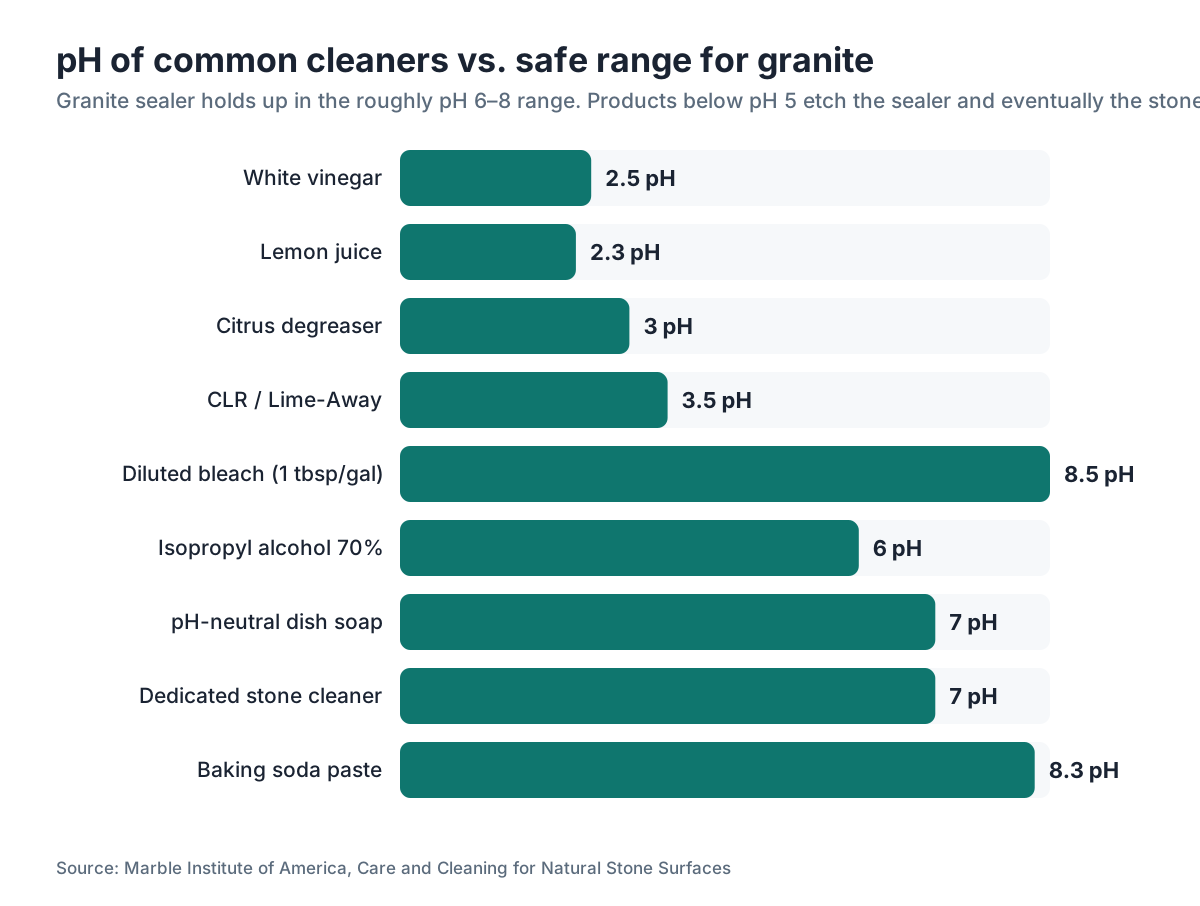
Vinegar. That's the big one. White vinegar sits around pH 2.5, acidic enough to etch the sealer and, over months of daily use, pit the stone surface itself [2]. Piles of DIY cleaning blogs push a vinegar-water spray for granite because it's cheap and non-toxic. Non-toxic, sure. Safe for stone, no.
Here's the full list of what to keep off granite:
| Product | Why it causes damage |
|---|---|
| White vinegar / apple cider vinegar | Acidic (pH ~2.5), etches sealer and eventually the stone |
| Bleach (undiluted) | Alkaline, degrades sealer, can discolor some minerals |
| Ammonia-based cleaners (many glass cleaners) | Breaks down sealer polymer over time |
| Citrus-based degreasers | Citric acid etches stone the same as vinegar |
| Abrasive scrubbing pads (steel wool, Scotch-Brite green side) | Scratches the polished finish, leaves micro-grooves |
| Hydrogen peroxide (concentrated) | Can bleach darker minerals in granite |
| Magic Eraser / melamine foam | Micro-abrasive, dulls polish with repeated use |
A diluted bleach solution (1 tablespoon per gallon) gets cited as fine for disinfection if you rinse right away. The word doing the work there is rinse. Letting it dwell is where the damage lives. If disinfection is a real worry, a diluted isopropyl alcohol spray (70% or less, rinsed off) treats the sealer gentler.
The Marble Institute of America's care guidance warns against acidic cleaners and recommends "only cleaners that are specifically formulated for stone" [3]. That applies to granite too, arguably more than to marble.
How do you remove stains from granite?
Stains in granite usually sit down in the pores, not on the surface. That's why scrubbing the top does nothing. You need a poultice: a paste that pulls the stain back out as it dries.
The standard DIY poultice for oil-based stains (cooking oil, grease, butter) is baking soda mixed with dish soap and just enough water to hit a peanut butter consistency. For organic stains (coffee, tea, wine, fruit juice), swap the dish soap for 12% hydrogen peroxide. For ink or dye, acetone-based nail polish remover works as the liquid.
Application process:
- Clean the area and dry it completely.
- Spread the poultice about 1/4 inch thick over the stain, extending 1/2 inch past the edges.
- Cover with plastic wrap and tape the edges to slow drying.
- Leave 24 to 48 hours.
- Remove the dried poultice and rinse. Repeat if the stain is lighter but still there.
Commercial poultice powders (StoneTech BulletProof Poultice, for one) work on the same principle and print clear ratios on the label. Worth buying for a tough or deep stain.
Etching is a different animal from staining. A dull, lighter spot where a lemon or an acidic cleaner sat is surface damage to the polish, not a stain in the pores. A poultice won't touch it. Light etching on polished granite sometimes buffs out with a granite polishing compound. Deep etching usually needs professional refinishing.
One honest caveat. Granite varies enormously in porosity. A dense black absolute absorbs almost nothing. A coarser white or gray can stain within minutes of a spill. If yours stains fast, that's a sealing problem, not a cleaning problem. Jump to the resealing section.
How often should you seal granite and how do you do it?
Most residential granite needs resealing every one to two years [4]. The range is wide because porosity swings so much. Dense granites like Absolute Black or Black Galaxy may hold a seal for three or four years. Open-grained stones like Santa Cecilia or White Ice may need it every year.
The water test tells you where your stone sits. Pour two tablespoons of water on the granite and watch. Beads for several minutes, the seal is fine. Darkens the stone and soaks in within one to four minutes, reseal now. The Marble Institute of America describes this as the standard field check [3].
How to reseal:
- Clean the whole surface and let it dry at least an hour. Moisture in the pores blocks the sealer.
- Apply an impregnating (penetrating) sealer with a clean cloth or foam applicator. Work in sections, 3 to 4 square feet at a time.
- Let it soak in 5 to 10 minutes per the label. Don't let it dry on the surface.
- Wipe off the excess before it hazes. Residue left on top turns sticky and milky.
- Apply a second coat two hours later if the stone is unusually porous.
- Keep the counter dry for 24 to 48 hours.
Use an impregnating silicone or fluoropolymer sealer, not a topical coating. Impregnating sealers soak into the pores and leave the look alone. Topical coatings sit on top, peel, and yellow. The products used professionally most often are Miracle 511 Impregnator, StoneTech BulletProof Sealer, and Tenax Proseal [5].
Fabricators often lay down one coat at the shop before install. That coat doesn't replace the homeowner's cycle. It just gives them a head start. Put a resealing reminder on the care card with the water test as the cue, and the "my granite stained" calls at 18 months drop way off.
What is the right daily cleaning routine for granite?
Wipe, rinse, dry. Every day. That's the routine.
The wipe is a damp microfiber cloth with a few drops of dish soap, or a spray of pH-neutral stone cleaner. Cover the whole surface. The rinse is a second pass with a clean damp cloth, no soap, to pull off residue that otherwise builds into a dull film. The dry is a third pass with a dry cloth. Wet granite left to air-dry collects hard water mineral deposits (calcium carbonate) that later demand more aggressive treatment.
In a kitchen that cooks hard every day, this takes about two minutes. It's genuinely all most granite needs.
For heavier cleanup after a dinner party with oil splatter or raw meat prep:
- Let a slightly soapy damp cloth sit on the area 30 seconds to loosen grease before wiping.
- Follow with an isopropyl alcohol spray (50 to 70% dilution) for a disinfecting pass. Rinse after 30 seconds.
- Dry thoroughly.
Use trivets under hot pans even though granite can technically take the heat. The sealer is the issue. High direct heat off a cast iron skillet can thermally degrade the sealer in one spot, leaving a dull ring that absorbs spills differently than the rest. The stone won't crack from a hot pan in normal use. The sealer will suffer.
If you have granite countertops in a bathroom instead of a kitchen, same routine, but watch for soap scum from hard water. A monthly spray of a non-acidic soap scum remover made for stone handles it without etching.
Does granite actually need to be sealed, or is that a myth?
Depends on the stone. Some granites honestly don't need sealing because they're dense enough to shrug off absorption on their own. The confusion comes from the word "granite" getting used loosely at the slab yard.
True geological granite is an igneous rock with interlocking crystals and fairly low porosity. Plenty of stones sold as granite are actually gabbro, granodiorite, quartzite, or some metamorphic rock. Porosity ranges from near-zero (some black absolute slabs) to high (some fantasy brown or white types). The USGS notes that commercial names for stone differ a lot from geological classification [6].
The practical move: do the water test above. Water soaks in within four minutes, the stone needs sealing, period. Beads indefinitely, you can maybe skip sealing or stretch years between coats.
The bigger myth to kill is that sealing makes granite maintenance-free. It doesn't. Sealing slows absorption. It doesn't make the surface bulletproof. A sealed granite still stains if red wine pools on it for an hour. You still wipe spills promptly. Sealing buys time, not immunity.
Other natural stones follow similar logic but different porosity. Quartzite is often more porous than granite. Marble is both more porous and far more acid-sensitive. Soapstone doesn't get sealed at all. It gets oiled.
How do you disinfect granite without damaging it?
The safest disinfecting option for sealed granite is isopropyl alcohol at 50 to 70%, applied, left 30 seconds, then rinsed and dried [7]. That range kills a broad set of bacteria and many viruses per CDC surface guidance, and it's mild enough that it won't wreck an impregnating sealer with normal use.
The CDC's guidance on disinfecting hard surfaces has historically listed diluted bleach (1/3 cup per gallon of water) and EPA-registered disinfectants as acceptable hard-surface options [7]. For granite, if you go with diluted bleach, keep the dwell to 30 seconds or less and rinse right away. Concentration is everything. Undiluted bleach is a different thing entirely.
A handful of marketed "granite disinfectant sprays" pair a quaternary ammonium compound (a common disinfectant) with a stone-safe carrier. They work and they're convenient. They also cost more than diluted isopropyl alcohol.
During the COVID-19 pandemic, the EPA registered hundreds of disinfectants under List N as effective against SARS-CoV-2 [8]. Most hard-surface products on that list are safe on granite for a brief contact time if rinsed. The trouble is concentrated products and long dwell. Check the label for "safe for natural stone" before you leave anything on.
Raw meat prep is probably the biggest real disinfection concern in a home kitchen. Wipe it up immediately, hit it with the alcohol spray, rinse, dry. A cutting board beats granite for raw meat anyway, since the board takes the knife and keeps the counter's finish out of the line of fire.
How do you get rid of hard water stains on granite?
Hard water stains are calcium carbonate deposits from tap water, so they're alkaline mineral buildup, not acid stains. Sounds like good news. It complicates removal, though, because the obvious fix (an acid like vinegar) etches the stone.
For light spots, a paste of baking soda and water (mildly alkaline, no acid) scrubbed gently with a soft cloth sometimes lifts them. So does a dedicated stone-safe hard water remover. Black Diamond's hard water remover and StoneTech's Restore both dissolve mineral deposits at a pH that leaves the sealer alone.
For heavy buildup around faucets, a plastic scraper (never metal) can lift the physical crust before you clean. Skip CLR, Lime-Away, and any citric acid product. They descale well and they're labeled explicitly as unsafe for natural stone, for good reason [2].
Prevention beats treatment here, and it isn't close. Dry the area around the faucet every day. Put a small mat or dish under the soap dispenser. Those two habits stop most hard water staining before it starts.
If your water runs very hard (above 180 mg/L, which the EPA classifies as "very hard") [9] and your counters see standing water often, resealing a bit more frequently slows the staining by keeping the pores closed against mineral intrusion.
Can you use common household products like baking soda or dish soap on granite?
Dish soap: yes. pH-neutral kinds (most standard dish soaps sit close to neutral) are safe for regular use. Rinse it off, though. Residue builds into a film over weeks.
Baking soda: yes, but sparingly and as a poultice for stains, not as a daily scrubbing powder. It's mildly abrasive and mildly alkaline (pH around 8.3). Occasional poultice use won't hurt. Daily scrubbing might dull the polish very gradually.
Windex (original blue): no. It has ammonia, which breaks down impregnating sealers over time [3].
Rubbing alcohol (isopropyl): yes, diluted to 50 to 70%. Safe for disinfecting.
Mr. Clean and similar general-purpose cleaners: read the label. Many run alkaline enough to be a problem over time, and some pack surfactants that film up on polished stone. Label says "safe for natural stone," fine. Doesn't say it, skip it.
Toothpaste: sometimes floated as a polish. It's mildly abrasive and can lift light surface scratches or dull spots on some stones, but results vary and it's not a standard recommendation. Use a real granite polishing compound instead.
The governing rule: if a product isn't explicitly formulated for or tested on natural stone, the burden is on the product to earn a spot in your routine. Granite is expensive and hard to restore once it's etched or scratched.
What's the difference between cleaning granite and cleaning other stone countertops?
The pH-neutral rule covers all natural stone. The sensitivity levels differ a lot.
Marble is calcite-based (calcium carbonate) rather than silica-based. Even brief contact with vinegar or lemon juice etches marble visibly, because acid dissolves calcium carbonate on contact. Granite forgives brief acid contact better but still takes sealer damage over time. If you're weighing marble countertops, plan for stricter daily discipline.
Quartzite is silica-based like granite but often more porous, so it seals more often and wants the same pH-neutral cleaners. The routine looks nearly identical. See how to clean quartzite countertops for stone-specific notes.
Soapstone is non-porous and needs no sealing, but it's soft and scratches easily. You maintain it with periodic mineral oil, not chemical sealers. See how to clean soapstone countertops.
For the full natural stone picture, how to clean stone countertops covers the shared principles across granite, marble, quartzite, and limestone.
Engineered surfaces are a separate world. Cambria countertops are quartz-based and non-porous. No sealing at all, and they take a wider range of cleaners. Laminate surfaces like Formica countertops and Corian countertops carry their own care needs and scratch risks. Butcher block countertops need oiling and are water-sensitive in a completely different way.
The clean summary: granite sits in the middle of the stone-sensitivity spectrum. More forgiving than marble, more sensitive than engineered quartz, about even with quartzite.
How much does professional granite cleaning or restoration cost?
Routine professional cleaning of granite runs roughly $2 to $5 per square foot, based on pricing reported by home service aggregators [10]. An average kitchen of 40 to 60 square feet lands at $80 to $300. Most homeowners don't need professional cleaning more than once every few years if they keep up with the surface.
Professional resealing usually bundles with cleaning and adds about $1 to $3 per square foot. Doing it yourself with a $20 to $30 bottle of impregnating sealer and 30 minutes is a legitimate call for most homeowners.
Polishing (restoring a dulled finish) costs more: $5 to $10 per square foot or higher for diamond-pad refinishing by a stone restoration contractor. That's for surfaces wrecked by acidic cleaners, abrasive scrubbing, or years of neglect. It's not routine.
Chip and crack repair by a pro runs $100 to $300 per repair depending on size and complexity [10]. DIY epoxy kits for chips go for $15 to $40 and work reasonably well on small chips if you color-match carefully.
If you're getting a new install and want to know what you're starting with, SlabWise shows material costs by slab grade, so you can tell whether you're buying a porous economy granite or a dense premium one. That single distinction drives how much ongoing maintenance you're signing up for.
Stacking granite care costs against other materials is instructive. Laminate countertops and Corian carry near-zero sealing costs. Butcher block needs periodic oiling. Engineered quartz needs no sealing. Granite's annual maintenance cost is real but small: the sealer runs $20 to $30 and you use it once or twice a year.
What should fabricators include in granite care cards?
This section is for shop owners and fabricators. Homeowners, read it too, it's useful context.
A good care card cuts post-install support calls, protects your name when a customer etches their granite with vinegar six months later, and is a genuinely useful thing to hand someone at the end of an install.
At minimum the card covers:
- What to use (pH-neutral dish soap or stone cleaner, microfiber cloth, isopropyl alcohol for disinfecting)
- What to never use (vinegar, ammonia cleaners, bleach left to dwell, abrasive pads)
- How to test whether resealing is needed (the water test)
- How to reseal at home, step by step
- What to do the instant something acidic spills (blot, don't wipe, rinse with water right away)
- A contact number or email for questions
The water test line is the highest-value thing on that card. Customers who know the test check their stone now and then, reseal before trouble starts, and rarely call about staining.
Fabricators running shop software can attach digital care card templates to job records and fire off follow-up reminders at 12 months. If you're tracking jobs in a spreadsheet, that's where fabrication tools like SlabWise earn their keep, because automated post-install touchpoints are hard to hold together by hand at any real volume.
One more line to add: a note that separates granite from engineered quartz. A real share of homeowners can't tell them apart. A customer who thinks their granite is quartz skips the sealer and then wonders why it stains.
Frequently asked questions
Can I use vinegar to clean granite countertops?
No. Vinegar is acidic (pH around 2.5) and will etch the sealer and, over time, the stone itself. It's the most common granite mistake homeowners make. Use pH-neutral dish soap and warm water instead. The damage is cumulative, so a single use won't destroy your counters, but weekly use over months noticeably degrades the finish.
How often should granite countertops be sealed?
Most granite needs resealing every one to two years. Dense granites may stretch three to four years; porous ones may need it annually. Do the water test: pour two tablespoons of water on the surface and watch. Absorbs within four minutes and darkens the stone, reseal now. Beads for several minutes, the seal still holds. The test beats any fixed schedule.
What happens if you don't seal granite?
An unsealed or under-sealed granite absorbs liquids into its pores, which leads to staining from oils, wine, coffee, and juice. It also gets harder to disinfect well. The stone won't crumble or fail structurally, but it stains faster and deeper, and stains inside pores need a poultice to remove rather than a simple wipe.
Is it safe to use bleach on granite?
A very diluted bleach solution (1 tablespoon per gallon of water) rinsed off immediately can be used occasionally for disinfection without major harm. Undiluted bleach, or any bleach solution left to sit, degrades the sealer and can discolor some minerals in the stone. For regular disinfecting, isopropyl alcohol diluted to 50 to 70% is safer and easier to control.
How do you remove oil stains from granite?
Use a poultice: mix baking soda with a few drops of dish soap and enough water for a thick paste. Spread it about 1/4 inch thick over the stain, cover with plastic wrap, tape the edges, and leave it 24 to 48 hours. As the paste dries it draws the oil out of the pores. Remove, rinse, repeat if needed. Commercial poultice powders work the same way and print clear ratios on the label.
Can granite countertops be damaged by hot pans?
The stone itself generally handles brief pan heat without cracking. The sealer is more vulnerable: direct high heat from a cast iron skillet can locally degrade it, leaving a spot that stains differently than the area around it. Use a trivet. It's a simple habit that protects a finish that cost real money, and reversing localized sealer damage takes a professional re-polish in extreme cases.
How do you remove hard water stains from granite without using acid?
Use a stone-safe hard water remover or a baking soda paste (slightly alkaline, not acidic). A plastic scraper lifts heavy mineral buildup around faucets without scratching. Never use CLR, Lime-Away, or vinegar; they're acidic descalers that etch granite. Preventing buildup by drying the counter around the faucet every day is honestly easier than removing established calcium deposits.
Does cleaning granite with dish soap ruin the sealer over time?
Dish soap in normal dilution and rinsed off does not meaningfully degrade a standard impregnating sealer. The real concern is soap residue left to build up, which leaves a dull film. Rinse the surface after cleaning and dry it. Some fabricators claim frequent dish soap strips sealers faster, but no published stone institute guidance backs avoiding it; the real enemies are acids and abrasives.
What's the best everyday granite cleaner?
A damp microfiber cloth with two or three drops of pH-neutral dish soap in warm water. That's it. Dedicated stone sprays are convenient and fine, but no more effective than soap and water for daily upkeep. The microfiber matters: paper towels are mildly abrasive and leave lint; a good microfiber cloth does neither.
How do you make granite countertops shine again?
If the surface is dull from residue buildup, a thorough cleaning with a stone cleaner and a dry buff with a clean microfiber restores most of the shine. If the dullness is etching (acid damage or abrasion), you need a granite polishing compound with a soft cloth and elbow grease for light damage, or professional diamond-pad refinishing for deeper dullness. Seal after polishing to lock in the restored finish.
Is granite more or less maintenance than quartz countertops?
More. Engineered quartz is non-porous and needs no sealing. Granite needs resealing every one to two years and demands stricter cleaner selection. Quartz tolerates a wider range of household cleaners. The tradeoff is that granite is a natural stone with visual character engineered quartz replicates but doesn't fully duplicate. The maintenance gap is modest in practice but real.
Can I use a Magic Eraser on granite?
No. Magic Erasers are melamine foam, which acts as a micro-abrasive. On a painted wall, that's fine. On polished granite, it gradually scuffs the polish. The effect is subtle at first and cumulative with repeated use. Stick to soft microfiber. For a stuck-on spot, let warm soapy water soak it a minute before wiping; that loosens most residue without abrasion.
How do you clean granite countertops in a bathroom?
Same pH-neutral soap and water method. Bathrooms add two specific problems: soap scum from hard water and body products, plus toothpaste splatter. A monthly treatment with a non-acidic soap scum remover labeled safe for stone handles mineral buildup. Toothpaste wipes off easily while fresh; once dry, a brief soak with a warm damp cloth before wiping avoids scrubbing that could scratch the surface.
What should I do immediately if acid spills on granite?
Blot the spill immediately with a clean cloth. Don't wipe or spread it. Then rinse the area generously with water and blot dry. The faster you move, the less sealer degradation happens. If a dull spot shows up after the area dries, the sealer there may be compromised. Do the water test on that spot; if it absorbs quickly, apply a fresh coat of impregnating sealer to that area specifically.
Sources
- USGS, Minerals Information: Stone, Dimension: Granite is a silica-based igneous rock; commercial stone nomenclature differs from geological classification
- Marble Institute of America, Care and Cleaning for Natural Stone Surfaces: Acidic cleaners including vinegar and citric-acid products etch stone surfaces and should not be used on granite or marble
- Marble Institute of America, Care and Cleaning for Natural Stone Surfaces: Only cleaners specifically formulated for stone should be used; ammonia-based and acidic cleaners degrade sealers
- Natural Stone Institute, Technical Bulletin on Stone Sealing: Most residential granite countertops require resealing every one to two years depending on porosity
- Natural Stone Institute, Technical Bulletin on Stone Sealing: Impregnating (penetrating) sealers are preferred over topical coatings for granite because they do not alter surface appearance and do not peel
- USGS, Geologic Glossary and Rock Classification: Commercial stone sold as granite includes gabbro, granodiorite, quartzite, and other rocks not geologically classified as granite
- CDC, Cleaning and Disinfecting Your Facility: Isopropyl alcohol at 70% and diluted bleach (1/3 cup per gallon) are listed as acceptable hard-surface disinfectants; brief contact time and rinsing are recommended
- EPA, List N: Disinfectants for Coronavirus (COVID-19): EPA List N identifies registered disinfectants effective against SARS-CoV-2 for hard surfaces
- EPA, Secondary Drinking Water Standards: Guidance for Nuisance Chemicals: Water hardness above 180 mg/L is classified as very hard by the EPA and contributes to mineral deposit buildup on surfaces
- HomeAdvisor (Angi), Cost to Clean and Seal Granite Countertops: Professional granite countertop cleaning costs roughly $2 to $5 per square foot; chip and crack repair runs $100 to $300 per repair
Last updated 2026-07-09