TL;DR
- Granite countertops can be painted with two-part epoxy kits or chalk-mineral paint plus a topcoat, but the finish rarely lasts.
- Most painted granite shows peeling, chipping, or scratching within one to two years of normal kitchen use.
- Painting buys time, not a permanent fix.
- For a result that lasts, professional refinishing or replacement wins almost every time.
So can granite countertops actually be painted?
Yes, technically. Paint sticks to granite if the surface is clean, deglossed, and primed right. People do it all the time. The real question is whether it holds up, and the honest answer is no, not for long, and not without a lot of prep.
Granite is a dense stone, close to non-porous, with a polished surface finished to shed liquids and resist stains. The same quality that makes it wipe clean makes it fight paint. Standard latex or oil-based wall paint peels off polished granite in weeks. Specialty products, mainly two-part epoxy countertop kits and chalk-mineral paints with a sealing topcoat, grip better. They still lose to knives, heat, cleaning chemicals, and daily scrubbing over time.
Fabricators and refinishing pros put painted granite in the same bucket as painted tile: possible, better than nothing if you rent and can't replace it, and not something you'd suggest to someone who cares about their kitchen five years out.
What kinds of paint or coatings actually bond to granite?
Three options are worth considering, and they differ a lot on durability, cost, and how hard they are to apply. Everything else peels.
Two-part epoxy countertop kits are the strongest DIY choice. Brands like Rust-Oleum Countertop Transformations and Giani Granite use a base coat plus a topcoat that cures into a harder surface than regular paint. Rust-Oleum's product literature claims the countertop coating resists scratches and water [1]. Reports from home improvement forums and consumer review sites tell a different story, with chipping showing up around the sink edge and cutting zones inside 12 to 18 months.
Chalk paint with a sealing topcoat (usually polyurethane or polycrylic) is popular because chalk paint grabs almost any surface without primer. Annie Sloan and similar brands get used on furniture and tile constantly. On granite it can look good at first. Chalk paint is soft, though, so it leans entirely on the topcoat for protection. Heat from a pan or a hard wipe with bleach cleaner can dull or lift it fast.
Mineral and enamel spray paints show up for decorative effects like faux stone texturing. These are not a countertop-grade answer. They have essentially no abrasion resistance.
None of these are made for granite specifically. They're made for countertops generally, meaning laminate and tile, which are easier to bond to. Granite's density and polished finish make adhesion harder, not easier [2].
What does the prep process look like, and why does it matter so much?
Prep is where most DIY paint jobs die. Skip a step or rush it and the paint never bonds, so you're picking flakes off the counter within months. The coating is only as good as the surface under it.
Here's the sequence that actually works:
-
Clean it hard. Degrease and rinse completely. Grease, wax, or cleaning residue kills adhesion. Granite that's been sealed regularly carries a film of sealer on top, so strip that with a sealer remover.
-
Sand or degloss. People hesitate here, because sanding granite sounds crazy. You don't remove the polish entirely, but you do scuff it with 220-grit sandpaper or a liquid deglosser so the paint has something to bite. Skip this and the topcoat peels in sheets.
-
Prime with a bonding primer. Not drywall primer. Use a shellac-based or specialty bonding primer rated for slick surfaces. Zinsser BIN shellac primer is the one refinishers name for hard, slick substrates [9].
-
Apply thin coats. Thick coats trap air and cure unevenly. Two to three thin coats with full drying time between them beat one heavy coat every single time.
-
Topcoat with a water-resistant sealer. Epoxy kits include the sealer. Chalk paint systems need a food-safe polyurethane or polycrylic you add yourself. That topcoat is the only thing between the paint and every knife, glass, and cleaner that touches your counter.
The whole job takes two to four days because of drying time, and the counter stays out of use the entire window [3].
How long does painted granite actually last?
This is where the marketing and the kitchen diverge. Manufacturers of epoxy kits say their coatings last "years," but they rarely put a warranty number on the product when it's used on granite specifically. Rust-Oleum's countertop paint page lists general durability claims with no time-specific guarantee on natural stone [1].
Here's the realistic picture, drawn from DIY forums, renovation groups, and professional refinishing reports:
- In a low-use kitchen or a bathroom vanity, painted granite might look fine for 3 to 5 years with careful maintenance.
- In an active kitchen with daily cooking, hard scrubbing, and sharp objects, wear shows up in 12 to 24 months.
- The sink area almost always fails first, because water and soap cycle through it constantly.
No controlled study has tracked painted granite longevity. Those timelines come from aggregated user reports, not clinical data. Call them honest estimates, not science.
For comparison, a professional reglazing or refinishing job by a skilled countertop refinisher (real surface restoration, not paint) usually carries a 3 to 5 year contractor warranty depending on region and product [4].
What does it cost to paint granite countertops vs. replace them?
Cost is almost always why someone weighs painting against replacing. Here are the real numbers on both sides.
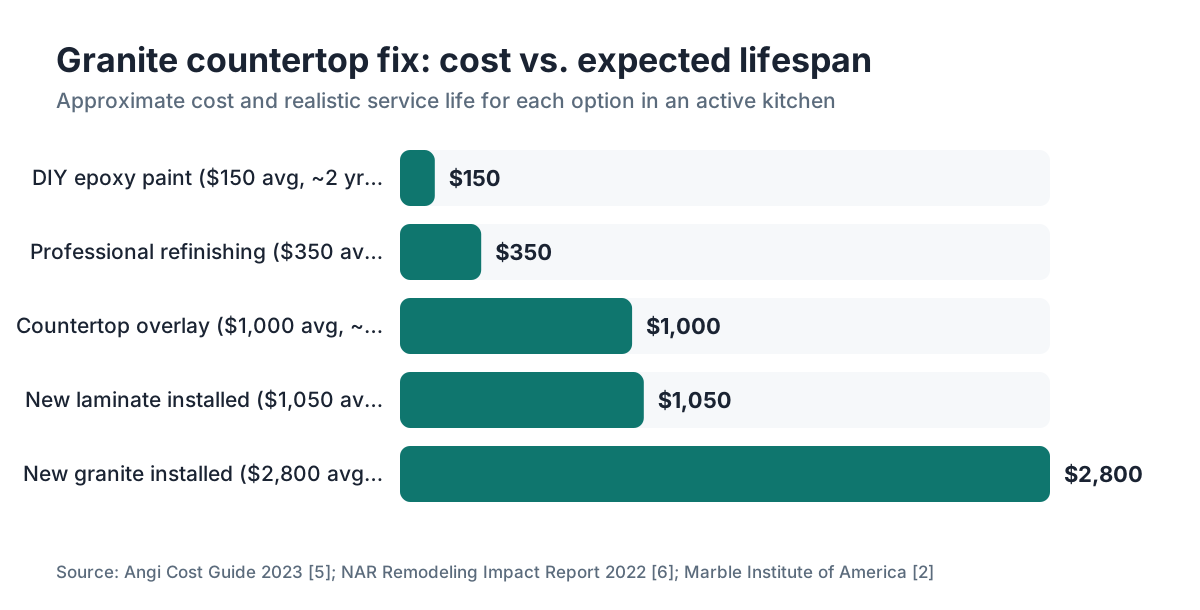
DIY painting. A quality epoxy countertop kit covers roughly 50 square feet and runs $50 to $100 [1]. A typical kitchen counter is 30 to 50 square feet, so most kitchens need one kit plus bonding primer and a topcoat. Basic materials land at $80 to $150. Add sandpaper, tape, brushes, and a deglosser and you're realistically at $120 to $200. Your time cost is two to four days of prep, application, and waiting.
Professional refinishing. A refinisher (surface treatment, not replacement) charges roughly $200 to $500 for an average kitchen depending on condition and region. They use commercial-grade products and can feather out chips and stains before coating.
Replacement. New granite installed runs roughly $40 to $100 per square foot depending on grade, edge profile, and market [5]. For a 40-square-foot kitchen that's $1,600 to $4,000 installed. Quartz or a budget laminate countertop can come in much lower.
Selling in six months and the granite looks tired? Painting it yourself can make economic sense. Staying five-plus years? The math tips toward replacement.
| Option | Approximate cost | Expected life | DIY-friendly? |
|---|---|---|---|
| DIY epoxy paint kit | $120 to $200 materials | 1 to 3 years (kitchen) | Yes |
| Professional refinishing | $200 to $500 | 3 to 5 years | No |
| New granite, installed | $1,600 to $4,000+ | 25+ years | No |
| New laminate, installed | $600 to $1,500 | 10 to 15 years | Partial |
Does painting granite hurt the resale value of your home?
It can. Buyers and their agents recognize painted granite on sight, and a visibly painted counter tends to read as "owner tried to hide something" rather than "owner upgraded."
The National Association of Realtors' 2022 Remodeling Impact Report found that minor kitchen remodels, which cover things like cabinet repaints and updated hardware, recover about 67 cents on the dollar at resale [6]. Countertop-specific numbers are harder to isolate, but the principle holds: buyers discount cosmetic patches instead of paying face value.
Fresh, well-done paint in an otherwise clean, updated kitchen might not cost you. Peeling or discolored paint is worse than leaving the original granite alone, scratches and dull spots included. Old granite that shows wear reads as "needs updating." Peeling painted granite reads as "seller panicked."
Before you paint a house that's going on the market, call your agent. What your specific buyer pool responds to matters more than any general rule.
Are there alternatives to painting that work better on granite?
Yes, and for most situations the alternatives beat painting on both durability and looks. Here's what I'd reach for first.
Professional honing or polishing. If your granite looks dull, scratched, or stained, a stone restoration pro can hone the surface (remove the top layer of polish for a matte finish) or re-polish it back to a shine. That fixes the actual surface instead of covering it. Cost runs $200 to $600 for a typical kitchen, similar to professional painting but far more durable because you're working with the stone, not over it.
Re-sealing. Plenty of homeowners mistake dullness for damage. Granite that's simply lost its sealer looks flat and drinks water. A fresh coat of a quality penetrating sealer, $20 to $50 for a bottle that covers an average kitchen, often brings the look right back. The Marble Institute of America recommends testing granite with a water drop: if it absorbs in under 4 minutes, re-seal [7].
Countertop overlays. A thin pour of concrete or epoxy overlay, applied professionally, builds a new surface layer over the existing granite with no demolition. Thickness stays at 1/4 inch or less. These cost more than painting ($500 to $1,500 for a kitchen) but hold up better and look intentional.
Full replacement. If the granite is chipped, cracked, or structurally compromised, no surface treatment fixes the underlying problem. Replacement with granite countertops, quartz, or a solid surface is the right call. Fabricators can usually quote in minutes, and tools like SlabWise's instant quote calculator give you a ballpark before you call anyone.
If you're open to changing the material entirely, marble countertops, Corian countertops, and Cambria countertops each have their own refinishing options worth comparing.
What are the risks of painting granite you should know before you start?
Most people obsess over whether the paint will look good. Fewer think about what happens when it fails. That's the part worth planning for.
Trapped stains and damage. Paint can seal existing stains or etching under it. If you later want professional refinishing or replacement, the stone pro has to work through or strip the paint layer first, which adds cost and hassle.
Heat damage to the coating. Granite itself handles pot-and-pan heat fine. The paint coating does not. A hot pan on painted granite can discolor or blister the topcoat instantly. You'd need trivets every time, no exceptions.
Chemical sensitivity. Common kitchen cleaners, anything with bleach, acidic stone cleaners, or abrasive scrubs, strip painted coatings faster than they touch bare granite. You're committing to mild, pH-neutral cleaners for as long as the paint stays. The guide on how to clean stone countertops spells out what that looks like day to day.
Fumes during application. Two-part epoxy systems release significant vapors during mixing and curing. You need ventilation, meaning open windows and ideally an exhaust fan running through the full 24 to 72 hour cure. That's a real problem in winter or in kitchens with no exterior window [3][8].
Hard to reverse. Paint on granite doesn't come off easily. Getting it off cleanly, without scratching the stone, takes chemical strippers and patience. You're making a commitment the moment you start.
Can you paint over sealed or previously painted granite?
Painting over a sealer is possible but takes extra prep to get adhesion. The sealer sits as a barrier on top of the stone, so your bonding primer and topcoat grip the sealer layer, not the granite itself. Strip the sealer first if you can. If you can't, degloss aggressively and use a shellac-based primer.
Painting over previously painted granite is harder. The old paint has to be in good shape, no peeling, bubbling, or flaking, or you strip it before repainting. A new system over failing old paint just gives you two layers of problems. Strip it, start clean, or skip it.
If the old painted surface is in decent shape and you only want a color or topcoat refresh, a light scuff-sand and a fresh topcoat can stretch its life. That's cheaper and faster than a full repaint.
What do fabricators think about painted granite?
Ask a stone fabricator whether they'd recommend painting granite and most say no. They'll also tell you it's your house and your call.
The practical worry from their side is what comes next. If a customer paints their granite and then wants to replace it two years later, the paint doesn't change demolition or replacement much. But thick, poorly adhered paint can complicate measuring and templating if any overlay products got layered on top.
Where fabricators and shop owners like a tool like SlabWise's quoting software is exactly this moment: a homeowner wants the real cost of replacement versus a patch fix. An accurate quote, fast, changes the conversation. A homeowner who learns replacement is only $300 more than expected often just replaces.
Fabricators prefer customers who show up knowing their options. Painting is one. So is re-sealing, professional polishing, or replacement with a material like butcher block countertops or laminate countertops that costs less than natural stone and still looks clean.
The kitchen countertops replacement market has more price range than most homeowners expect. Get a real quote before you buy paint.
Step-by-step: how to paint granite countertops if you decide to do it
Weighed the risks and moving ahead anyway? Here's how to give yourself the best shot at a finish that lasts.
What you need:
- Two-part epoxy countertop kit (Rust-Oleum Countertop Transformations or equivalent)
- Shellac-based bonding primer (Zinsser BIN is the standard pick)
- 220-grit sandpaper and a sanding block
- Liquid deglosser (optional but helpful)
- Painter's tape and plastic sheeting
- Small foam rollers (4-inch) and good brushes
- Water-resistant topcoat if your kit doesn't include one
- A vapor respirator (an actual respirator, not a dust mask)
Steps:
-
Clear the countertop completely. Protect cabinets, walls, and floors with plastic sheeting.
-
Degrease the whole surface with a TSP substitute or commercial degreaser. Rinse twice.
-
Scuff the surface with 220-grit sandpaper. You're scratching the gloss, not grinding the stone. Wipe away dust with a tack cloth.
-
Roll on a thin, even coat of shellac-based primer. Let it dry fully per the label (usually 30 to 45 minutes).
-
Apply the first epoxy base coat with a foam roller for flat areas and a brush for edges. Thin coats. Don't try to cover everything in one pass.
-
Let it dry fully per the kit instructions. Add a second coat if needed.
-
Add decorative chips or veining if your kit includes them, following the kit's sequence.
-
Apply the topcoat sealer in two thin coats, with full dry time between them.
-
Wait the full cure before you put anything on the counter. Most epoxy products allow light use at 24 hours and full cure at 7 days [1].
Don't cut on the surface. Don't set hot pans on it. Use pH-neutral cleaners only.
Frequently asked questions
Can you paint granite countertops to look like a different stone?
Yes. Several epoxy kit brands include decorative chip or marbling systems that mimic quartzite, marble, or concrete. The look can be convincing right after application. Durability is a separate question: the faux-stone finish is no tougher than the base epoxy under it, and heavy use shows wear on the same schedule, typically 12 to 24 months in an active kitchen.
Does paint on granite hold up near the sink?
The sink perimeter fails first in almost every painted counter. Constant water, soap, and scrubbing break down the topcoat faster there than anywhere else. Expect visible wear or peeling near the sink within 6 to 12 months in most kitchens. An extra topcoat layer in that zone helps but doesn't solve it. Good caulking where the counter meets the sink is essential to slow moisture getting under the paint.
What is the best paint or product to use on granite countertops?
For DIY, two-part epoxy countertop kits like Rust-Oleum Countertop Transformations give the best mix of adhesion and hardness you can get without professional gear. For professional jobs, commercial-grade urethane or epoxy coatings applied by a refinisher beat any retail kit. Chalk paint is the easiest to apply and the least durable, so it fits bathroom vanities or low-use counters better than a working kitchen.
Can painted granite countertops be sealed?
Don't apply a standard penetrating stone sealer over painted granite. Those sealers are made to soak into porous stone, not bond to paint. The topcoat that comes with your epoxy kit, or a water-based polyurethane over chalk paint, is your sealer here. It sits on top of the paint as a protective layer. Skip the stone impregnator on top of that.
How do you clean painted granite countertops?
Use mild dish soap and warm water with a soft cloth. Skip bleach, acidic cleaners like vinegar or citrus, and abrasive scrubbers. Those strip or dull the topcoat faster than normal wear. Dry the surface after cleaning instead of letting water sit. The same rules apply as for natural stone. The guide on how to clean stone countertops covers safe cleaners in more detail.
Can you paint granite countertops white or another light color?
Yes. White and light gray are among the most popular painted granite colors because they hide the original pattern more completely than a translucent coating. Coverage depends on your base coat and the pigment load. Dark granite may need three base coats to fully obscure the original pattern, which raises material cost and drying time. Prime first to improve both coverage and adhesion.
Will painting granite countertops void any warranty?
If your granite came with an installer or fabricator workmanship warranty, painting the surface likely voids it, since you're altering the material. The stone itself carries no manufacturer warranty in the usual sense. If you rent, painting countertops without landlord permission could violate your lease. Check both before you start.
How long does it take to paint granite countertops?
Plan on two to four days. Day one: cleaning, deglossing, priming. Day two: base coat and drying. Day three: second coat and topcoat. Day four: cure before light use. Full cure for most epoxy kits is seven days. You can't use the counter at all during this window, so plan meals around it.
Is it better to paint or replace granite countertops?
For most homeowners staying more than two or three years, replacement is the better investment. Painted granite looks good at first but degrades under kitchen use and adds complexity if you later want professional refinishing. If you're renting, selling soon, or on a very tight budget, painting is a reasonable short-term fix. The cost gap is real, and so is the quality gap.
Can you paint granite countertops yourself, or do you need a professional?
DIY works with the right kit and careful prep. The process isn't fast or simple, but it doesn't require professional tools or skills. Pros add value in prep quality, product selection, and application consistency, and a refinisher is more likely to honor a warranty. For a bathroom vanity or low-stakes surface, DIY is fine. For a kitchen used daily, professional application gives a better result.
Does painting granite countertops affect food safety?
Once fully cured, usually seven days for epoxy products, most countertop coatings are considered food-safe for incidental contact. You shouldn't cut directly on the surface regardless. Check the specific product label for food-contact language. During application and the early cure, keep the space well ventilated and keep food far from the work area. The fumes from two-part epoxy systems are significant.
How do you remove paint from granite countertops?
Removing paint from granite takes a chemical stripper safe for stone, applied and left to dwell, then scraped with a plastic scraper (not metal, which scratches). It's slow and tedious. Residue may need a second pass. After stripping, the granite may look dull or scratched and could benefit from professional polishing or re-honing. Removal is harder than application, which is part of why the decision to paint deserves careful thought.
Can granite countertops be painted to increase home value?
Not reliably. Buyers generally discount painted countertops because they signal a cosmetic patch, not a real upgrade. Fresh, flawless paint in a good kitchen may not hurt your sale. Peeling or worn paint actively hurts you. The NAR's 2022 Remodeling Impact Report found minor kitchen updates recover about 67 cents on the dollar, and painted granite tends to land at the low end of that range next to actual material upgrades.
What's the difference between painting and reglazing granite countertops?
Painting uses standard or specialty paint applied in layers over the existing surface. Reglazing, also called refinishing, uses professional-grade coatings such as urethane or catalyzed acrylic sprayed with commercial equipment. Reglazing produces a harder, more uniform surface than brush-and-roller paint, carries a longer warranty, and looks more like the original stone. It costs more than DIY painting and far less than replacement.
Sources
- Rust-Oleum, Countertop Transformations Product Page: Rust-Oleum Countertop Transformations covers approximately 50 square feet per kit and claims scratch and water resistance; full cure recommended at 7 days
- Marble Institute of America, Care and Cleaning for Natural Stone: Granite's dense, polished surface is designed to resist liquid penetration, which also reduces the adhesion of surface coatings
- U.S. Consumer Product Safety Commission, Indoor Air Quality and Chemical Safety: Two-part epoxy and solvent-based coatings release volatile organic compounds during application and cure; adequate ventilation is required
- National Kitchen and Bath Association, Countertop Refinishing Standards: Professional countertop refinishing contractors typically offer 3 to 5 year warranties depending on product and application method
- HomeAdvisor / Angi, Granite Countertop Installation Cost Guide: Granite countertop installation costs approximately $40 to $100 per square foot installed depending on grade and region
- National Association of Realtors, 2022 Remodeling Impact Report: Minor kitchen remodels recover approximately 67 cents on the dollar at resale according to the 2022 Remodeling Impact Report
- Marble Institute of America, Granite Care Recommendations: MIA recommends testing granite sealer annually: if water absorbs in under 4 minutes, the stone should be re-sealed
- U.S. Environmental Protection Agency, Volatile Organic Compounds in Indoor Air: Paints and coatings are a significant source of indoor VOC emissions; EPA recommends ventilation during and after application
- Zinsser / Rust-Oleum, Bulls Eye Shellac Primer Product Data: Shellac-based primers like Zinsser BIN are rated for bonding to slick, non-porous surfaces and are commonly used as a base for countertop refinishing
- U.S. Department of Housing and Urban Development, Healthy Homes Principles: HUD guidelines on healthy homes reference VOC exposure risks from paints and finishes applied in enclosed residential spaces
Last updated 2026-07-09