TL;DR
- Butcher block countertops get sealed with food-safe oils (mineral oil, tung oil), hardening oils (linseed), varnishes, or polyurethane film finishes.
- Cutting surfaces need food-safe options only.
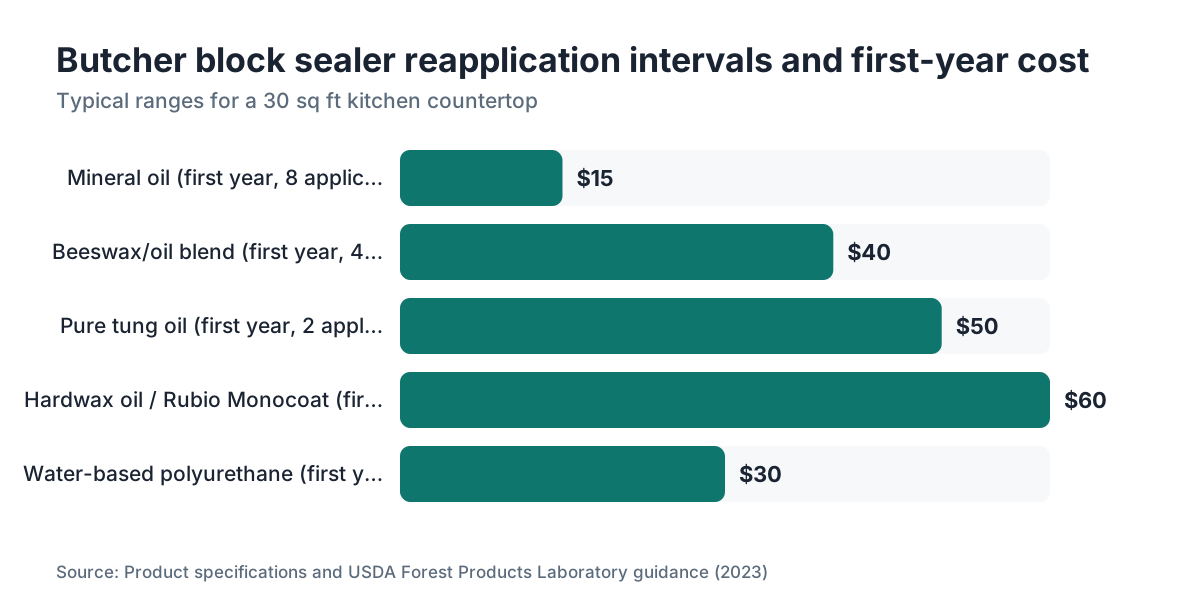
- Mineral oil costs under $15 and needs redoing every 1 to 3 months.
- A penetrating hardwax oil costs $30 to $60 and lasts 1 to 2 years.
- Match the sealer to how the surface actually gets used.
What does a butcher block sealer actually do?
Wood drinks water. Leave an unsealed butcher block countertop in a kitchen and moisture from spills, steam, and cleaning works its way into the grain within weeks. That moisture swells the wood, opens the joints in edge-grain and face-grain slabs, and eventually leads to warping, cracking, and mold growing inside the wood itself.
A sealer stops that process. Depending on the type you pick, it either soaks into the wood fibers and hardens them from within (penetrating finishes) or sits on top and forms a hard barrier (film finishes). Both protect butcher block from moisture damage. But they behave very differently in daily use, they wear differently, and they have completely different repair stories when something goes wrong.
There is also a food safety question that never comes up with granite or quartz. The FDA regulates substances that touch food, and coatings on wood food-contact surfaces fall under 21 CFR Part 175 [9]. A finish on a cutting surface has to be either explicitly food-safe or listed under those rules. Most penetrating oils sold for butcher block already comply. Most polyurethane varnishes are not considered food-safe for cutting once cured, even though they are technically non-toxic when fully dry.
What types of butcher block sealer are available?
Four real categories exist, and the differences matter a lot more than most product marketing admits.
Mineral oil is a purified petroleum derivative sold at pharmacies and kitchen stores for $5 to $15 per quart. It never hardens, so it never forms a film. Instead it keeps feeding the wood and stops it from drying out. It is the most widely recommended choice for active cutting surfaces because it is inert, has no flavor or odor, and is listed as generally recognized as safe (GRAS) by the FDA [1]. The catch: it evaporates and the wood absorbs it, so you reapply every 1 to 3 months, forever.
Beeswax and mineral oil blends get sold as butcher block conditioners (Howard's Butcher Block Conditioner and the like). They cost $10 to $20 for 12 to 16 oz and add a thin wax layer that slows moisture loss a bit better than plain oil. Still needs frequent reapplication. Still food-safe. Still not a real long-term moisture barrier.
Hardening or polymerizing oils include pure tung oil and food-grade linseed oil (raw linseed, not boiled). These oxidize on contact with air and cure into a semi-solid film inside the wood pores. Pure tung oil is food-safe once fully cured. Boiled linseed oil contains metallic driers and is not food-safe [2]. Applied in 3 to 5 thin coats over several days, a tung oil finish lasts 6 to 18 months before it needs a refresh. Cost runs $20 to $50 per pint.
Hardwax oils (Rubio Monocoat, Osmo Polyx, and similar European products) get the most attention from fabricators and high-end kitchen designers right now. They soak into the wood and cure to a hard finish that resists water far better than plain mineral oil, and they stay repairable without stripping. Rubio Monocoat is certified food-safe after curing [3]. Cost: $30 to $70 per 100ml to 350ml, but a little goes a very long way. One coat does it.
Film finishes (polyurethane, lacquer, conversion varnish) sit on top of the wood and form a hard, plastic-like shell. They give the best water resistance of any option, they wipe clean easily, and they look glossy or satin depending on sheen. Here is the problem. Film finishes are not considered food-safe for cutting surfaces, they chip and peel at the edges over time, and when they fail you strip everything back to bare wood before recoating. These are right for a butcher block island that never sees a knife, or a bar top. They are wrong for an active prep surface.
| Sealer type | Food-safe for cutting | Reapplication interval | Approx. cost | Repairability |
|---|---|---|---|---|
| Mineral oil | Yes | Every 1-3 months | $5-$15/qt | Sand and re-oil |
| Beeswax/oil blend | Yes | Every 2-4 months | $10-$20/12 oz | Sand and re-condition |
| Pure tung oil | Yes (fully cured) | Every 6-18 months | $20-$50/pt | Spot sand and re-coat |
| Hardwax oil (1-coat) | Yes (product-specific) | Every 1-2 years | $30-$70/350ml | Spot re-coat, no strip |
| Polyurethane/varnish | No (for cutting) | Every 3-7 years | $15-$40/qt | Full strip required |
How do you apply butcher block sealer step by step?
The process differs a little between oil finishes and film finishes, but the prep is the same for both.
Step 1: Start with bare, dry wood. New butcher block from a lumber yard or big-box store often carries a light factory coat of oil. Used countertops may have an existing finish that has to come off first. Sand with 80-grit to strip any old finish, then work through 120, 150, and 180 grit. Sand with the grain. Vacuum all dust, wipe with a tack cloth, and let the wood dry all the way. For an oiled finish, 24 hours at room temperature is usually plenty. For a film finish, some manufacturers want 48 to 72 hours.
Step 2: Apply the first coat generously. For mineral oil or tung oil, flood the surface with a lint-free cloth, moving with the grain. The wood will look wet. Good. Let it soak 20 to 30 minutes, then wipe off every bit of excess. Oil left puddled on the surface turns gummy and sticky.
Step 3: Wait between coats. Mineral oil needs 4 to 6 hours between coats. Tung oil needs 24 hours minimum, often more in humid weather. Hardwax oils are usually one-coat products, but wait 24 hours before light use and 72 hours before full use.
Step 4: Repeat until the wood stops drinking. A freshly sanded butcher block will take 3 to 5 coats of mineral oil in the first week. Apply a coat a day until the surface stops looking thirsty. Then switch to the 1 to 3 month maintenance schedule.
Step 5: Let the final coat cure fully. Tung oil and hardwax oils take 5 to 7 days for full cure. During that window, keep the surface dry and do not set anything directly on it.
For polyurethane film finishes, apply thin coats with a foam brush or good bristle brush, sand lightly with 220-grit between coats, and plan on 3 to 4 coats total. USDA Forest Products Laboratory finishing guidance confirms that multiple thin coats beat single heavy coats for wood durability [4].
How often do you need to reseal butcher block countertops?
It depends entirely on the finish and how hard the surface gets used. Mineral oil on an active prep surface in a busy household needs a refresh every 4 to 6 weeks, not the "every few months" you sometimes see on product labels. You will know it is time when the wood looks lighter, drier, or starts to feel rough.
A hardwax oil on a lightly used island might go 18 to 24 months before it needs anything more than a quick buff with a maintenance oil. Polyurethane on a bar counter can run 5 to 7 years if the owner cleans with pH-neutral products and never drags metal across it.
Here is the test I actually use. Put a few drops of water on the surface. If the water beads up, the finish is working. If it soaks in within 30 seconds and the wood darkens around the drop, reapply soon.
Which sealer is best for a butcher block used for food prep?
For any surface where someone actually cuts food, the answer is a food-safe penetrating finish. The two best options in most kitchens are mineral oil for simplicity and low cost, or a food-safe hardwax oil like Rubio Monocoat for better protection and less frequent reapplication.
Mineral oil is right if budget matters, if you have kids who will scratch the surface no matter what, or if you want the most forgiving repair story possible. Scratched or stained? Sand and re-oil. No chemistry decisions, no compatibility issues.
A hardwax oil earns its higher price ($30 to $70 for a small container) if you want a surface that sheds water harder, shrugs off common kitchen stains, and skips the monthly attention. Rubio Monocoat has third-party food-safe certification [3], which is worth confirming for whichever hardwax oil you consider.
Avoid anything labeled "danish oil" without clear ingredients. Most danish oil is a blend of boiled linseed oil and mineral spirits, and boiled linseed carries metallic driers that are not food-safe [2].
Can you use polyurethane on butcher block countertops?
Yes, with one clear limit: only on surfaces that will never be used for cutting or direct food contact. A polyurethane-finished butcher block makes a beautiful bar top, a decorative island overhang, or a desk. The film is hard, water-resistant, and wipes clean.
The problem for food prep is not toxicity after curing. Fully cured polyurethane is chemically inert. The problem is that once you cut through the film, you open a gap where bacteria get trapped under a surface that is very hard to repair without full stripping. Penetrating oil finishes never have this issue because there is no film layer to breach.
If you are set on polyurethane for an active prep surface, food safety professionals advise against it for the cutting zone specifically. NSF (National Sanitation Foundation) sets standards for food zone surfaces in commercial settings under NSF/ANSI 51 [5], and film finishes that chip fail those requirements. Home kitchens are not subject to NSF enforcement, but the logic still holds in your own kitchen.
How do you fix a butcher block countertop that was sealed wrong?
The most common mistake is putting a film finish over an oil-saturated surface. Oil and film finishes do not get along. The film cannot bond to oily wood, so it peels, bubbles, or never fully cures. The fix is to strip everything back to bare wood.
To strip a butcher block, start with a belt sander or random-orbit sander and 60 to 80 grit. Work with the grain. Expect to burn through a lot of sandpaper. On heavily oiled wood you may need to let it dry out in a warm, dry space for several days between passes because the oil keeps wicking to the surface.
The second common mistake is coating before the previous coat is dry. Tung oil left too wet between coats can wrinkle or stay tacky for weeks. Denatured alcohol sometimes dissolves the gummy layer, but in bad cases sanding is the only real fix.
Scratches and minor stains in an oil-finished surface are easy. Sand the area with 150 to 180 grit until the damage is gone, feather the edges, then re-oil the whole countertop. The repair disappears once the oil soaks in.
For fabricators quoting a butcher block install with a specific finish, being precise about the spec matters for both pricing and liability. A countertop delivered with a film finish when the homeowner expected a food-safe oil is a common callback. If you run quotes through software like SlabWise, build finish type into the line items so the spec is explicit in the customer-facing quote.
Does sealing butcher block prevent mold and bacteria?
A well-maintained oil finish does cut bacterial retention compared to unsealed wood, but the relationship is more complicated than product marketing suggests. A study published in the Journal of Food Protection found that wood cutting boards hold fewer recoverable bacteria after washing than plastic boards, because bacteria migrate deep into the wood grain where they die rather than surviving in surface scratches [6]. Sealing the surface reduces moisture, which takes away one of the conditions bacteria need to live.
That said, no finish replaces cleaning. For a food-prep butcher block, scrub with hot water and mild dish soap after use. To disinfect, a diluted white vinegar solution (1:1 with water) or 1 tablespoon of bleach per gallon of water works. Rinse well and let it dry. Do not soak the surface in standing water no matter the finish, because long exposure eventually works past anything.
Mold on butcher block usually means a surface that stayed wet for a long stretch, often at the wall junction or around a sink cutout. A film finish protects those seams better than oil, which is one argument for polyurethane around sink areas even when the main prep zone runs on oil.
What does butcher block sealer cost, and how much do you need?
Coverage swings hard by product. Mineral oil soaks in fast, and a gallon runs $12 to $20 at a pharmacy or restaurant supply store, covering 50 to 100 sq ft per coat before the wood saturates. A standard kitchen run of 25 to 30 sq ft goes through a quart or more in the first conditioning sequence.
Hardwax oils are the opposite. Rubio Monocoat markets its product on the claim that 100ml covers 20 to 25 sq ft, and 100ml runs about $20 to $25. A 30 sq ft counter needs roughly 150ml, which costs $30 to $40 and lasts 1 to 2 years before a refresh coat.
Pure tung oil runs $20 to $50 per pint, and a pint covers roughly 50 to 75 sq ft on the first coat. Expect to use more on the initial application.
Water-based polyurethane runs $15 to $35 per quart at big-box stores. A quart covers 125 sq ft per coat, and you need 3 to 4 coats, so a typical counter run costs $15 to $25 in finish material.
For a typical 25 to 35 sq ft kitchen butcher block install, total sealer material cost runs from about $15 (mineral oil, first year) to $70 (hardwax oil, first application). Neither number is big next to the wood itself, which runs $40 to $100 per linear foot installed depending on species and configuration [7].
How does butcher block sealer compare to other countertop materials?
Butcher block is the odd one out because it needs active, ongoing maintenance. Every other common countertop material, including granite countertops, marble countertops, and quartz, either needs no sealer at all or a simple once-a-year topical sealer that takes 15 minutes. Laminate countertops and Corian countertops need no sealing, ever.
Compare the maintenance burden honestly. Granite needs an impregnating sealer every 1 to 3 years depending on porosity, applied in 20 to 30 minutes. Butcher block with a mineral oil finish needs attention every 4 to 6 weeks. That is a real commitment, and worth knowing before you buy.
The payoff is repairability. A scratched granite countertop may need a pro to re-polish it. A scratched butcher block gets fixed with sandpaper and a $10 bottle of mineral oil in an afternoon. That self-service repair story is a genuine advantage, and it is part of why butcher block stays popular in busy family kitchens despite the upkeep.
For more on how butcher block fits the broader picture, the butcher block countertops guide covers species, construction types, and cost in detail. If you are comparing kitchen countertops across the board, the maintenance differences between materials often matter more than the price.
What are the best butcher block sealers on the market right now?
Naming specific products helps here because the category is genuinely messy and some widely sold products are not what their labels imply.
For food-safe penetrating oils, plain USP-grade mineral oil from a pharmacy is as good as anything sold with "butcher block" branding at 10x the price. For a wax-blend conditioner, Howard Products Butcher Block Conditioner has a consistent formula and clear food-safe labeling.
For hardwax oils, Rubio Monocoat Pure and Rubio Monocoat Oil Plus 2C are the most referenced options in the fabrication trade. They carry third-party food-safe certification [3], they cover in one coat, and the color choices (clear, smoke, or natural) let you shift the wood's character a little without hiding it. Osmo Polyx-Oil is a German alternative with similar chemistry and a strong record in European kitchen joinery. It is food-safe after full cure but takes two coats.
For pure tung oil, Real Milk Paint Co. and Hope's 100% Pure Tung Oil come up most often. Avoid anything labeled "tung oil finish" instead of "100% tung oil," because those blends often carry petroleum distillates that change the food-safety picture.
For non-food-contact surfaces (bar tops, islands used only for serving), Minwax Wipe-On Poly and General Finishes Arm-R-Seal are two options with good durability and easy application. Water-based polyurethanes give off lower VOC emissions than oil-based equivalents, which matters during and after application in an enclosed kitchen [8].
Fabricators buying finish in bulk can usually beat big-box pricing through a local finishing supplier. Product quality from a finishing house also runs more consistent batch to batch than what sits on a hardware store shelf.
Protecting butcher block countertops long-term: habits that matter as much as the sealer
The sealer is less than half the equation. The habits you build around the surface decide whether a butcher block countertop looks great at year 10 or turns into a warped, stained mess at year 3.
The single highest-impact habit is drying the surface after every wet encounter. Standing water is the enemy. Wipe down after washing dishes, after cleaning spills, after steaming vegetables nearby. This beats any decision about which sealer you chose.
Do not set hot pans directly on butcher block. Heat opens the grain, drives moisture out fast, and can scorch the surface. A $3 silicone trivet kills the problem outright.
Oil the surface seasonally even if it does not look dry yet. Wood moves with humidity cycles, and keeping it saturated eases the stress from seasonal expansion and contraction. In dry winter kitchens, the schedule might be monthly. In humid coastal climates, every 6 to 8 weeks.
Do not use silicone caulk to seal the joint at the wall. Silicone traps moisture. Use a wood-compatible sealant, or leave a very small gap that can breathe and work oil down into it regularly. Many fabricators seal butcher block countertop-to-wall seams with clear tung oil or hardwax oil, not caulk.
At install, seal the underside of the butcher block with at least two coats of oil before it goes on the cabinet. The underside faces a more closed, humid environment than the top. Unfinished undersides warp. The countertop installation process for butcher block should explicitly include underside sealing, and it often gets skipped when a homeowner buys the top pre-finished from a retailer.
For a shop that installs butcher block regularly, tracking which finish went on which job is worth the effort. Callbacks for "the finish is peeling" usually trace back to an incompatible finish stack or an unsealed underside, and the job record is what separates a fast warranty fix from an argument. Software like SlabWise lets shops attach spec notes to each job, which is exactly where finish type and application notes belong.
Frequently asked questions
Is mineral oil really food-safe for butcher block countertops?
Yes. USP-grade mineral oil is listed as generally recognized as safe (GRAS) by the FDA and is approved for food-contact surface use under 21 CFR 172.878. Buy it at a pharmacy rather than a hardware store so you get the food-grade version, not a cutting oil or machine lubricant. Do not substitute baby oil, which contains fragrance additives you do not want near food.
How long after sealing butcher block can I use it?
For mineral oil, the surface is safe to use as soon as you wipe off the excess, usually within an hour. For tung oil or hardwax oil, light use is safe after 24 hours but full cure takes 5 to 7 days. Keep it dry during the cure. For polyurethane, most manufacturers say 72 hours before light use and 7 days before full hardness.
Can I use olive oil or coconut oil to seal butcher block?
No. Olive oil and coconut oil are food oils with fatty acids that go rancid inside the wood. The result is a surface that smells bad and can harbor the byproducts of oxidized fats. Stick to mineral oil, a refined petroleum product with no fatty acids and no rancidity risk. The food-safe penetrating oils sold for butcher block are always either mineral oil or polymerizing plant oils like tung.
What is the difference between food-safe and food-grade for butcher block sealers?
"Food-grade" usually means the material complies with FDA or NSF standards for direct food contact. "Food-safe" is a broader marketing term with less regulatory weight. For butcher block, look for products that cite specific FDA CFR sections or NSF/ANSI 51 compliance. Rubio Monocoat Pure, for example, holds third-party food-safe certification. A product just calling itself food-safe without a cited standard is less reliable.
Does butcher block need to be sealed on the underside?
Yes, and this step gets skipped more than it should. The underside faces a closed, humid cabinet environment that can pull the wood into a cup warp if it stays wetter than the top. Apply at least two coats of mineral oil or your chosen penetrating finish to the underside before installation. If the top is already installed and the underside is bare, you can often reach it from inside the cabinet and apply oil with a sponge.
How do I know when my butcher block needs to be resealed?
The water-bead test is the most reliable method. Drop a few teaspoons of water on the surface. If the water beads and sits, the finish is working. If the wood absorbs the water within 30 seconds and darkens around the drop, it is time to reapply. You can also watch for the wood looking dry or grayish, or feeling rough after cleaning.
Can you switch from polyurethane to oil on an existing butcher block?
You can, but the polyurethane has to come off completely first. Oil cannot penetrate a film finish, so applying oil over intact polyurethane does nothing. Use a belt sander with 80-grit to strip the finish, then work through finer grits to 180. Let the wood dry 24 to 48 hours after sanding, then start the oil conditioning process. Expect 4 to 6 initial coats of mineral oil over the first week.
Is Rubio Monocoat good for butcher block countertops?
Rubio Monocoat Pure is one of the better options for butcher block that sees real kitchen use. It penetrates the wood in a single coat, cures to a hard finish that repels water far better than plain mineral oil, and carries third-party food-safe certification. The downsides are cost ($20 to $25 per 100ml) and a narrower margin for application error than simple oil. Worth it for a premium install where the homeowner does not want monthly maintenance.
Does boiled linseed oil work as a butcher block sealer?
Boiled linseed oil (BLO) is not food-safe and should not go on food-prep surfaces. The "boiled" label refers to added metallic drying agents, typically cobalt, lead, or manganese compounds, that speed curing. Those driers are not approved for food contact. Raw linseed oil without driers is technically food-safe but takes weeks to cure and can stay tacky in cold or humid conditions. Tung oil beats either one.
What sealer works best around a sink cutout in butcher block?
The sink cutout is the highest-risk area for moisture damage because it sees near-constant water and the end grain is exposed at the cut edges. Apply 5 to 6 coats of tung oil or hardwax oil to those cut edges before installation. Some fabricators also run a bead of 100% silicone on the underside where the countertop meets the sink rim, while keeping the top surface on a food-safe penetrating finish. Inspect and re-oil the sink edges every 3 to 4 months.
How do I remove black stains from butcher block before sealing?
Black stains on butcher block are usually either mold (dark spots with a fuzzy texture early on) or a tannin-iron reaction where water carrying iron from a faucet hits the wood. For mold, sand the area aggressively with 80 to 100 grit until you reach clean wood, then treat with a diluted bleach solution before re-sealing. For iron stains, oxalic acid (wood bleach) neutralizes the tannin reaction. Apply, wait 30 minutes, rinse thoroughly, dry fully, then sand and seal.
Can butcher block countertops be sealed with the same product as hardwood floors?
Floor finishes are built for abrasion underfoot, not food contact. Most hardwood floor finishes are polyurethane or water-based acrylic products that are not food-safe for a cutting surface. Some also contain aluminum oxide particles for scratch resistance that you do not want on a prep surface. If the butcher block is only a decorative island or bar, a floor finish works technically, but a purpose-made countertop oil or hardwax oil is the better choice.
How much does it cost to have butcher block countertops professionally sealed?
Most installers who work with butcher block fold an initial sealing into the install price. If you hire someone to seal an existing countertop separately, expect $50 to $150 for labor on a typical kitchen run, plus material. The job takes 1 to 3 hours including sanding, depending on the surface condition. Some floor finishing companies also take butcher block work and may charge by the square foot, typically $2 to $4 per sq ft for an oil finish.
Sources
- U.S. FDA, Code of Federal Regulations Title 21 Part 172.878 (White mineral oil): USP mineral oil is approved by the FDA for food-contact surface use and is listed as generally recognized as safe (GRAS) under 21 CFR 172.878
- U.S. EPA, Safer Choice program: Boiled linseed oil contains metallic drying agents (cobalt, manganese compounds) that are not approved for food-contact surfaces
- Rubio Monocoat, Food Safety Certification Documentation: Rubio Monocoat Pure holds third-party food-safe certification after full curing
- USDA Forest Products Laboratory, Wood Handbook Chapter 16: Finishing of Wood: Multiple thin coats of finish outperform single heavy coats for wood surface durability and adhesion
- NSF International, NSF/ANSI 51: Food Equipment Materials Standard: NSF/ANSI 51 governs food-zone surface materials in commercial settings; film finishes that chip are not compliant in food-contact zones
- Journal of Food Protection, Vol. 56 (1993): Bacterial contamination of wood and plastic cutting boards: Wood cutting boards harbor fewer recoverable bacteria after washing than plastic boards because bacteria migrate deep into wood grain where they die off
- USDA Economic Research Service: Installed butcher block countertops run approximately $40-$100 per linear foot depending on species and construction type
- U.S. EPA, Volatile Organic Compounds' Impact on Indoor Air Quality: Water-based polyurethane finishes have significantly lower VOC emissions than oil-based equivalents, which matters in enclosed spaces like kitchens
- U.S. FDA, Code of Federal Regulations Title 21 Part 175 (Indirect Food Additives: Adhesives and Components of Coatings): FDA regulates substances in coatings on food-contact surfaces under 21 CFR Part 175; finishes must comply with these provisions for food-prep use
- USDA Forest Products Laboratory, Wood Handbook Chapter 4: Moisture Relations and Physical Properties of Wood: Wood is porous and absorbs moisture that causes swelling, warping, and joint failure if the surface is not properly finished and maintained
Last updated 2026-07-09