TL;DR
- World Stone Fabricators Inc.
- is a Charlotte, NC stone shop that supplies and installs countertops in granite, marble, quartz, quartzite, and soapstone for homes and commercial spaces.
- Before you hire any local fabricator, verify their business registration, get three itemized bids, and confirm the shop does its own templating and installation instead of subcontracting those steps.
What is World Stone Fabricators and where are they located in Charlotte?
World Stone Fabricators Inc. is a stone fabrication business working in the Charlotte, NC metro area. Like most shops in the region, they supply and install natural and engineered stone countertops for kitchens, bathrooms, and commercial spaces. Charlotte's growth has turned it into one of the more competitive countertop markets in the Southeast, with dozens of fabricators ranging from one-person operations to production shops cutting thousands of square feet a week.
Verify the current address before you drive out. Fabrication shops move warehouses more often than people expect, especially as Charlotte's industrial corridors have shifted over the past decade. A call ahead saves a wasted trip.
The city's stone fabrication scene is dense, and that density works in your favor. Mecklenburg County has thousands of active construction-related contractor and business registrations, and specialty trade shops like stone fabricators sit inside that broader category [1]. Real price competition exists here if you're willing to get three quotes.
What materials does World Stone Fabricators work with?
Most full-service Charlotte fabricators, World Stone Fabricators included, offer a core lineup: granite, marble, quartzite, engineered quartz (brands like Silestone, Cambria, MSI), soapstone, and sometimes travertine or limestone. Granite is still the volume leader for residential kitchens in the Carolinas because the price per square foot beats most alternatives and local distributors keep large slab inventories.
Marble shows up in bathrooms and laundry rooms. It etches from acids and asks for more maintenance discipline than homeowners expect. Quartzite gets mislabeled all the time in this trade, so ask specifically whether a slab has been tested as true quartzite versus a soft marble sold under the same name. The Natural Stone Institute (formerly the Marble Institute of America) points out that some stones sold as quartzite are actually marbles that will etch just as readily [2].
Engineered quartz has climbed steadily. It needs no sealing, resists most stains, and comes in consistent colorways that natural stone can't match. The catch is heat. Sustained direct heat can scorch the resin binders in a quartz slab, so trivets matter. For a full material comparison, the kitchen countertops guide breaks down durability, maintenance, and cost side by side.
On the low end of the budget, some fabricators will edge and install prefabricated granite or laminate tops. Those aren't the focus of a custom shop, but ask anyway if cost is the thing driving the project.
How much do countertops from a Charlotte fabricator typically cost?
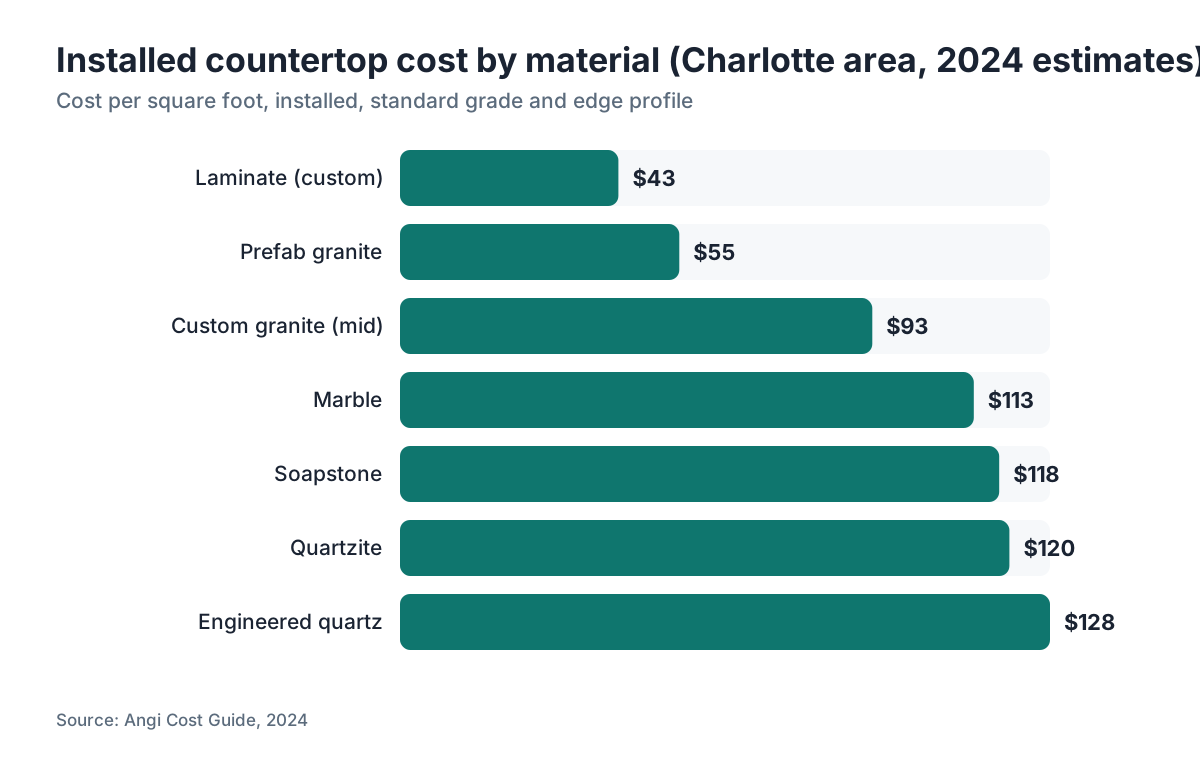
Installed countertop prices in Charlotte swing hard by material and edge complexity. The ranges below come from regional contractor pricing data and industry benchmarks. Your actual quote will move with slab selection, square footage, cutout count, and backsplash work [3].
| Material | Installed cost per sq ft (Charlotte area, 2024 est.) |
|---|---|
| Prefabricated granite | $45 to $65 |
| Custom granite (mid-range slab) | $65 to $120 |
| Marble | $75 to $150 |
| Quartzite | $80 to $160 |
| Engineered quartz (e.g., Cambria) | $80 to $175 |
| Soapstone | $85 to $150 |
| Laminate (custom) | $25 to $60 |
Those are installed figures with basic edge profiles. Exotic slabs, book-matching, waterfall edges, or tight layouts push you toward the top of the range or past it. A typical Charlotte kitchen with 40 square feet of countertop runs somewhere between $2,600 and $6,000 for granite or quartz, depending on slab tier and edge detail.
Here's the cost homeowners forget. Tearout and haul-away of the old countertop. Some shops fold it in; many charge $150 to $400 extra depending on material and access. Ask before you accept a quote.
Slab markup varies by how a shop is structured. Shops that buy direct from importers usually have more pricing room than shops working through a distributor. Asking where a shop sources its slabs is fair and tells you something about their volume and relationships.
How does the templating and installation process work?
The countertop process runs in four stages: measurement and template, fabrication, delivery, and installation. Most Charlotte shops, World Stone Fabricators included, handle all four in-house. Confirm that before you sign. Subcontracted installation crews vary in quality, and accountability gets murky when something goes wrong.
Templating used to mean cardboard or lauan templates cut to the exact shape of your cabinets. Most shops now use digital templating, laser systems that produce a CAD file the CNC saw reads directly. Digital templates cut down on seam errors and speed up fabrication. Ask which method the shop uses.
From signed template to installation, expect seven to fourteen business days for materials in stock. Exotic slabs that have to be ordered add lead time. If a shop quotes you less than a week on a full kitchen, ask how they're clearing the CNC queue.
Install day itself takes two to four hours for a standard kitchen. The crew carries the slabs in, sets them on the cabinets, makes final field cuts if needed, joins seams with color-matched epoxy, and silicones the perimeter. Countertops go in before backsplash tile in the normal sequence, so coordinate with your tile contractor.
For a step-by-step of what happens on install day, the countertop installation guide covers what to prep before the crew shows up.
Is World Stone Fabricators licensed and insured in North Carolina?
North Carolina requires a general contractor license through the NC Licensing Board for General Contractors when a project's total cost hits $40,000 or more [4]. Countertop-only fabricators often work below that line and may not hold a GC license, which is common and not a red flag by itself. What they should carry is general liability insurance and workers' compensation coverage.
Verify any Charlotte fabricator's business registration through the NC Secretary of State business search, which is public and free [5]. That search confirms the entity is active and in good standing. Then ask the shop for a certificate of insurance and check the coverage limits. For residential countertop work, $1 million in general liability is a reasonable floor.
The Better Business Bureau serving the Charlotte area shows complaint histories for registered businesses [6]. Checking there takes three minutes and sometimes surfaces patterns, like recurring deposit disputes or install-timing problems, that a single Yelp review would never show.
None of this is unique to World Stone Fabricators. Run the same checks on any stone shop before you hand over a deposit.
What should you ask World Stone Fabricators before signing a contract?
Here's the checklist I'd use, in order of what matters most:
-
Do you fabricate in-house or outsource the cutting? In-house means more control over tolerances and scheduling.
-
Who installs, and are they your employees or subs? Employee crews tend to have steadier training, and the shop owns the accountability.
-
Can I visit the slab yard and pick my specific slab? For natural stone, two slabs from the same lot can look nothing alike. Select in person, every time.
-
What edge profiles come with the base price, and which cost extra? Eased and beveled are usually included. Ogee and waterfall cost more.
-
How do you handle seams, and where will they fall? Ask to see this marked on a layout drawing before fabrication starts.
-
What's your workmanship warranty? A confident shop offers at least one year on installation defects.
-
What's the deposit structure and what does it cover? Typical is 50% down, balance on delivery or install completion. Walk away from shops demanding full payment upfront.
-
What happens if the slab cracks during fabrication? Rare, but it happens. Get the policy clear before it turns into a dispute.
Get the answers in writing, ideally in the contract. A shop that dodges written specifics is telling you something.
How does Charlotte's stone market compare to other Southeast cities?
Charlotte sits in a regional market alongside Raleigh, Greenville SC, and Atlanta, all of which have real stone distribution behind them. Major importers and distributors along the I-85 corridor give Charlotte fabricators access to competitive slab pricing. Charlotte housing prices have jumped since 2020, and that pushed the countertop segment upmarket. There's more demand for marble, quartzite, and premium quartz than there was five years ago.
The Charlotte metro added roughly 100,000 residents between 2020 and 2023, per US Census Bureau estimates, and that fed a building and renovation boom that kept stone shops busy and sometimes stretched lead times [7]. In a growth market, shops occasionally cut corners on crew training to keep pace with volume. Asking about current lead times before you commit tells you whether a shop is overextended.
One practical difference from Atlanta: Charlotte has fewer of the giant open-slab warehouses where you can walk past thousands of slabs on a Saturday. A shop may have a showroom but lean on a regional distributor for most inventory. That's fine. It just means slab selection can mean a trip to the distribution yard instead of the fabricator's floor.
What are the most common complaints about stone fabricators, and how do you avoid them?
Across consumer complaint databases and trade forums, the same problems repeat. Seams in bad spots or finished badly. Slab damage found after install. Timeline promises that fell apart. Backsplash cutouts that don't line up with the outlets. None of this is unique to any one shop.
Seam placement is the fight that comes up most. Fabricators put seams where the stone dictates (to save material) or where strength demands them, and those spots don't always match what looks right in the room. Ask to see the layout diagram with seam positions marked before cutting. If you hate a seam location, say so then, not after the slabs are cut.
Slab damage during fabrication happens. Stone cracks. What matters is how the shop handles it. Do they call you right away and work out a fix, or install anyway and hope you don't notice? The second one is a real pattern. Inspecting the slab on install day, before the crew leaves, is your last practical chance to flag it.
Timeline overruns happen when a shop takes on more than its CNC capacity can carry. A shop that quotes eight to ten business days and delivers in fourteen is annoying but survivable. A shop at three weeks and not returning calls is a shop operations breakdown. Fabrication software that tracks job status, like the kind SlabWise builds for shops, closes some of those communication gaps, but not every shop runs it. Ask how they'll update you between template and install.
For natural stone care after installation, the how to clean stone countertops guide covers sealing schedules and which cleaners are safe on each material.
What stone materials require the most maintenance after installation?
Maintenance load swings a lot by material, and it's worth knowing before you pick.
Marble and limestone etch from acids: lemon juice, vinegar, tomato sauce. An etch is a chemical reaction, not a stain, so no cleaner will lift it. It takes honing or polishing to fix. If you cook a lot and won't police the acids, marble in a kitchen is a fight you lose eventually.
Granite is more forgiving but still porous. Unsealed granite drinks up oils and stains. Most fabricators seal granite at install with a penetrating sealer, and you reseal every one to three years depending on use and the specific stone [10]. The water bead test tells you when: if water soaks in instead of beading up, reseal.
Quartzite is harder than marble but inconsistent. Some quartzite is genuinely hard and acid-resistant. Some isn't. The how to clean quartzite countertops guide walks through the testing and care specifics.
Engineered quartz needs no sealing and shrugs off most kitchen chemicals. Heat is the enemy. Set a hot pan directly on quartz and you can get thermal shock cracks or surface discoloration. Not every manufacturer warrants heat damage, so read the warranty before you assume you're covered.
Soapstone is the lowest-maintenance natural stone for kitchens. It's nonporous, acid-resistant, and scratches sand right out. It develops a patina over time. Some people love that look; others oil it regularly to even out the darkening. The how to clean soapstone countertops guide has the oil schedule.
Are there alternatives to World Stone Fabricators worth comparing in the Charlotte area?
Charlotte has a deep bench of stone fabricators, which works in your favor. Beyond World Stone Fabricators Inc., homeowners and contractors in the market have worked with everything from large-format production shops serving home builders to small custom shops focused on remodels.
When you compare shops, price is only one variable. Look at slab selection access (does the shop work with several distributors or just one?), fabrication method (CNC versus hand-cut for complex shapes), whether they run their own installs, how they handle disputes, and current lead time. A shop that's $200 cheaper but three weeks out can cost you more in contractor scheduling delays.
Big box stores (Home Depot, Lowe's) run countertop programs that route through fabricators, sometimes including regional shops. The markup through that channel usually runs higher than going direct, and the selection is narrower. What you get is a single point of contact and brand backing if something breaks.
Fabricators who want to see how their quoting and nesting workflow measures up against software-assisted shops can request a SlabWise demo, which shows the gap in material yield and quote turnaround.
For homeowners weighing materials before picking any shop, the granite countertops and marble countertops guides give honest reads on what each material delivers and where it falls short.
What does the countertop fabrication process look like from the shop's side?
Knowing what the shop is actually doing helps you set realistic expectations and ask sharper questions.
After a signed contract and deposit, the shop books a template date, usually five to seven business days out for busy shops. The templater measures, marks penetrations and sink cutouts, and either builds a physical template or captures a digital scan. That data heads to the shop floor.
At the shop, a bridge saw or CNC waterjet cuts the slab to rough dimensions, then the CNC router profiles the edges and makes precision cutouts. The finished pieces get polished, inspected, and staged for delivery. A good shop does a dry layout on the floor before loading the truck if the geometry is complicated.
Installation needs at least two people because stone is heavy. A 3-centimeter granite slab weighs roughly 18 to 20 pounds per square foot [8]. A 40-square-foot kitchen means moving 700 to 800 pounds of stone in pieces. Stairs, narrow hallways, and tight cabinet runs all add install time and complexity.
The seam between slabs gets filled with color-matched epoxy and clamped while it cures. Once it sets, the seam is ground flush and polished. A good seam is visible up close but disappears from six feet away. A bad seam is uneven in height or shows an obvious color mismatch. Lighting on install day matters. Check seams under both overhead light and natural light before you sign off.
Frequently asked questions
Is World Stone Fabricators Inc. in Charlotte still open?
Business status changes, so verify directly: call their listed number or check the NC Secretary of State business search at sosnc.gov. That search shows whether the entity is currently active and in good standing. Registration records update within days of any status change, which makes them more reliable than third-party listing sites that can lag by months.
Does World Stone Fabricators do commercial projects as well as residential?
Most full-service Charlotte stone fabricators handle both residential remodels and commercial work like office lobbies, restaurant countertops, and multi-unit housing. Commercial jobs usually mean larger volumes, tighter scheduling, and sometimes different material specs. Ask the shop directly about their commercial experience and request references for projects close to your scope before you commit.
How long does it take to get countertops installed after templating in Charlotte?
For in-stock materials, most Charlotte fabricators deliver and install seven to fourteen business days after templating. Special-order slabs from a regional distributor or importer add five to fifteen business days. Shops running hot during busy seasons (spring and fall remodel peaks) push toward the longer end. Get a written estimated completion date in your contract.
What is the minimum square footage most Charlotte stone shops will take on?
Many fabricators keep an informal minimum of 20 to 30 square feet because smaller jobs don't cover setup, template, and install labor. Some shops set an explicit dollar minimum, often $800 to $1,200. If you have a small project like a single bathroom vanity, ask upfront. Some shops fit small jobs into slow periods; others point you toward prefabricated tops instead.
Can I bring my own slab to World Stone Fabricators for cutting and installation?
Some fabricators accept customer-supplied slabs, but many won't, for a good reason: if a slab cracks during cutting, liability is unclear. Shops that do accept outside slabs usually charge a higher fabrication-only rate and won't warrant the material. If you found a slab at a distributor you love, ask whether the shop will buy it from that distributor directly. That clears the liability problem cleanly.
What edge profiles are standard versus extra-cost at Charlotte stone shops?
Eased (a slightly softened square) and beveled edges are usually included in base pricing. Bullnose adds a small upcharge. Complex profiles like ogee, dupont, or waterfall (a mitered vertical face) add real cost, sometimes $15 to $40 per linear foot depending on the profile. Laminated edges (stacking two pieces of stone for a thick look) also cost more. Ask for a written edge price sheet before you finalize.
Does granite still need to be sealed after installation by a Charlotte fabricator?
Yes. Most fabricators apply an initial penetrating sealer at install, but it doesn't last forever. Reseal every one to three years as general guidance, though a high-traffic kitchen may need it annually. The test is simple: drop a little water on the surface. If it beads, the sealer works. If it soaks in and darkens the stone, reseal. A consumer-grade sealer runs about $20 to $40.
What questions should I ask about seams before the countertop is fabricated?
Ask to see a dimensioned layout drawing with seam positions marked before cutting starts. Find out where each seam falls relative to the sink, cooktop, and heavy prep zones. Ask how the shop matches color and pattern across the seam. For book-matched or veined slabs, ask to see the match done on the shop floor before install day. You can negotiate seam position before fabrication and cannot fix it after.
How do I compare quotes from multiple Charlotte fabricators fairly?
Make every quote cover the same scope: same square footage, same edge profile, same cutout count (sink, cooktop, faucet holes), tearout and haul-away, and any backsplash work. A low quote that leaves out tearout or uses a cheaper slab tier isn't a fair comparison. Ask each shop to itemize. If one refuses, that tells you how they handle transparency in general.
Can World Stone Fabricators do a bathroom vanity top in addition to kitchen countertops?
Bathroom vanity tops are standard work for most stone fabricators, including small custom shops. They run through the same template, cut, and install process as kitchen work. Integrated sink cutouts, vessel cutouts, and undermount sink prep are all common. Vanities are smaller in area than kitchens, so if a shop has a minimum job size, a bathroom-only project may fall under it. Confirm before you schedule.
What is a fair deposit percentage for a Charlotte countertop fabrication job?
The industry standard is 50% at contract signing and the balance on install day or delivery, before the crew leaves. Shops asking for more than 60% upfront are outside normal practice. Full payment before installation is a red flag. Some shops take the second payment on delivery of slabs to the home, before install is complete, so be clear on what triggers the final payment and get it in writing.
What permits are required for countertop replacement in Charlotte, NC?
Countertop replacement alone (same footprint, no plumbing or electrical relocation) does not require a building permit in most Charlotte jurisdictions. If you're moving a sink drain, adding an outlet, or changing cabinet structure, those trades need permits. The City of Charlotte's Development Services handles residential permit questions and has an online lookup for what triggers a permit [9]. When in doubt, call the permit office instead of guessing.
Is engineered quartz or natural granite a better choice for a Charlotte kitchen?
It depends on how you use the kitchen. Quartz is lower maintenance, needs no sealing, and comes in consistent colorways. Granite brings natural variation, handles heat better, and can cost less in mid-tier slabs. Both are widely available in Charlotte and similarly priced in the $65 to $120 per square foot installed range for standard grades. Cook heavily and want to set pans down without worry? Granite. Want a cleaner maintenance routine? Quartz.
Can a stone fabricator in Charlotte also install an outdoor kitchen countertop?
Some can, not all. Outdoor use requires specific materials: granite, quartzite, concrete, and some porcelain slabs handle freeze-thaw cycles and UV; marble and engineered quartz generally don't. Ask whether the shop has outdoor install experience and what they recommend for the Charlotte climate, which sees occasional freezing temperatures. Porcelain slabs have grown as an outdoor option, and several Charlotte fabricators now carry them.
Sources
- Mecklenburg County, NC - Business and Development Services: Mecklenburg County contractor and business registration activity in the construction trades sector
- Natural Stone Institute (formerly Marble Institute of America) - Stone Identification Resources: Some stones sold commercially as quartzite are actually marble and will etch from acids
- Angi - Countertop Installation Cost Guide: Regional installed countertop cost ranges by material type for Southeast US markets
- NC Licensing Board for General Contractors - Licensing Requirements: North Carolina requires a general contractor license for construction projects with a total cost of $40,000 or more
- NC Secretary of State - Business Registration Search: North Carolina business entity search confirms active registration and good standing for any registered business
- Better Business Bureau serving Southern Piedmont and Western North Carolina: The BBB serving the Charlotte area maintains complaint and review records for registered businesses
- US Census Bureau - Population Estimates Program, Charlotte-Concord-Gastonia MSA: Charlotte metro area added roughly 100,000 residents between 2020 and 2023 per Census Bureau population estimates
- Natural Stone Institute - Technical Manuals: A 3-centimeter granite slab weighs approximately 18 to 20 pounds per square foot
- City of Charlotte - Development Services, Permit Requirements: Countertop replacement without plumbing or electrical relocation generally does not require a building permit in Charlotte
- Natural Stone Institute - Care and Maintenance Guidelines: Granite should be resealed every one to three years depending on use; the water bead test indicates when resealing is needed
Last updated 2026-07-09