
TL;DR
- Triton Stone Group's Charlotte supply center is a wholesale slab yard for countertop fabricators, designers, and contractors.
- It stocks granite, marble, quartzite, travertine, onyx, porcelain, and engineered quartz.
- Homeowners can hand-select slabs by visiting with their fabricator, not by walking in solo.
- Wholesale slab prices run roughly $10 to $100+ per square foot depending on material and origin.
What is Triton Stone Group and where is the Charlotte location?
Triton Stone Group is a national wholesale slab distributor with regional supply centers around the country. The Charlotte operation is one of its Southeast hubs. It stocks natural stone and engineered stone slabs for countertop fabricators, kitchen and bath dealers, interior designers, and general contractors. This is not a retail showroom. Think of a wholesale warehouse where slabs stand upright in bundles called "lots," sorted by material and origin.
The Charlotte center sits in the broader metro area and serves fabricators across the Carolinas and into the mid-Atlantic. Triton has run in the distribution business for well over a decade. The model is simple: buy slabs from quarries and processing plants overseas, warehouse them stateside, and sell them to the shops that cut, edge, and install finished countertops [8].
If you are a homeowner planning a visit, understand the model first. Most distributors like Triton run on a trade-account basis. You can often walk the yard with your fabricator and hand-pick specific slabs for your job. Walking in solo and expecting retail service is a different story. Call ahead. That one habit saves most of the friction people run into.
What stone materials does the Charlotte supply center carry?
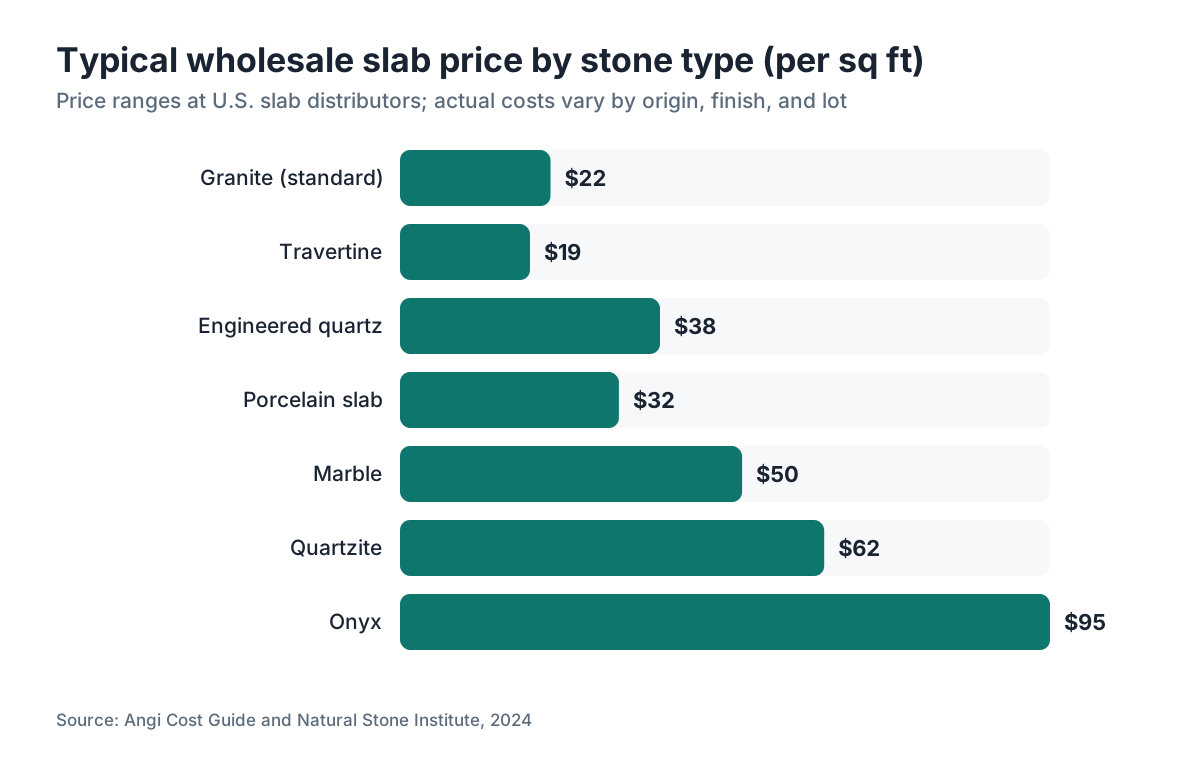
A full-service Triton location carries natural stone across several categories plus engineered quartz under various brand names. Here is a realistic breakdown of what you would expect to find, with wholesale slab prices [2][3]:
| Material | Origin examples | Typical wholesale slab price per sq ft |
|---|---|---|
| Granite | Brazil, India, China | $10 to $40 |
| Marble | Italy, Turkey, Brazil | $20 to $80 |
| Quartzite | Brazil, Norway | $25 to $100+ |
| Travertine | Turkey, Iran | $8 to $30 |
| Onyx | Iran, Mexico | $40 to $150+ |
| Engineered quartz | Various manufacturers | $20 to $60 |
| Porcelain slabs | Spain, Italy | $15 to $50 |
Those are wholesale slab costs, not installed prices. Fabrication, edging, templating, and installation stack on top. A finished granite countertop runs $40 to $100 per square foot or more depending on the stone and your local labor rates [3].
Quartzite deserves a warning because it gets mislabeled constantly. True quartzite is a metamorphic rock, harder than marble, and it commands a price premium. Some distributors and even fabricators slap the "quartzite" label on soft quartzitic sandstones. Ask for a scratch test or MOHS documentation before you buy. A genuine quartzite sits at 7 or above on the MOHS scale.
Engineered quartz brands shift with distributor agreements. Triton locations have historically stocked major brands alongside their own exclusive collections. Confirm current brand availability with the Charlotte location before you drive out.
How does slab distribution work, and how do fabricators buy from Triton?
Wholesale slab distribution follows a clean supply chain. A quarry in Brazil or Italy cuts raw blocks. Those blocks go to a processing plant, usually in the same country, where they get gang-sawed into slabs, polished, bundled into lots of two to six matching pieces, crated, and shipped in containers. Triton imports the containers, offloads the slabs, photographs them, assigns inventory numbers, and puts them in front of trade buyers [8].
Fabricators open a trade account by providing a business license and, usually, a tax-exempt certificate for resale purchases. In North Carolina, fabricators buying slabs for resale (the slab becomes part of a finished product sold to a homeowner) generally qualify for a sales tax exemption under the state's resale rules [4]. Confirm the current rules with a tax professional and file the correct exemption certificate at account setup.
Once the account is live, buying looks like this: browse inventory online or in person, pick specific slabs or lots by their unique IDs, get a quote, and arrange pickup or delivery. Most fabricators pick up with their own trucks and A-frame carts. Triton Charlotte may deliver to local shops, but range and fees vary, so ask directly.
High-volume shops feel the pain of tracking all this in spreadsheets. Slab software that ties inventory costs to quoting and nesting layouts cuts errors fast. SlabWise is built for exactly that: countertop fabricators who need slab costs, job quotes, and layouts to talk to each other. That matters most when you buy 20 to 30 slabs a week from multiple distributors and can't afford to lose track of what each one cost.
Can homeowners visit Triton Stone Group Charlotte to pick slabs?
Yes, with one qualifier. It works best when you bring your fabricator or a designer who holds a trade account. Triton, like most wholesale distributors, is set up for trade clients. The warehouse layout, forklift traffic, and slab-handling gear make it a working facility, not a consumer showroom.
Plenty of homeowners still visit slab yards to hand-select a specific piece. Hand-selection (sometimes called "lot selection") is genuinely worth it for book-matched marble, rare quartzite, or any slab where the veining drives the finished look. No two slabs are identical. A sample chip in a showroom tells you almost nothing about how a full slab reads across an 8-foot island.
The process usually goes like this. Your fabricator contacts their Triton account rep, schedules a yard visit, and walks the warehouse with you. You tag the slabs you want. The fabricator buys them on account. Some shops include the visit in their process at no charge. Others bill for the time. Ask upfront.
Still choosing a material entirely? Reading about the range of kitchen countertops before the yard visit helps you narrow the field so you are not staring down 500 slabs with no plan.
What are typical slab sizes and how much stone does a kitchen project need?
Standard natural stone slabs from Brazilian quarries run roughly 110 to 130 inches long by 65 to 75 inches wide, though the numbers move a lot by material and origin [10]. Italian marble often comes smaller, around 100 by 60 inches or less. Spanish porcelain can hit 126 by 63 inches or larger in jumbo formats.
A typical kitchen with 50 to 65 square feet of counter surface usually needs one to two full slabs, depending on layout, overhangs, and how the fabricator nests the cuts. Big islands or galley kitchens with continuous runs on multiple walls can push into two or three slabs. The nesting layout decides how much material you actually use.
Waste and remnants move the price. A fabricator who nests efficiently can sometimes finish a job on one slab that a sloppier shop would stretch into two. That is a real difference of $200 to $600 or more depending on material. You pay the distributor for the full slab, more square footage than your countertops cover. Whatever is left becomes a remnant, which the fabricator may sell or return to inventory.
For a bathroom vanity, a powder room, or a laundry counter, fabricators often sell remnants from past jobs at a discount. Triton Charlotte and similar distributors sometimes carry remnant sections too. Worth asking if your project is small.
How do prices at Triton Stone Charlotte compare to big-box store options?
It is not a clean apples-to-apples comparison. Triton sells wholesale slabs to the trade. Big-box stores sell installed countertops to consumers. The stone cost buried inside both is the number worth understanding.
At a wholesale distributor, a fabricator might pay $15 to $35 per square foot for a mid-grade granite slab. That shop then charges the homeowner $45 to $70 per square foot installed, covering fabrication labor, overhead, edging, templating, and profit. A big-box store selling granite installation in the same range often sources from similar distributors, then adds its own margin on top of the fabricator's margin [3].
The real advantage of an independent fabricator sourcing from a yard like Triton is control. You can see and select your slabs. Big-box programs usually assign slabs with no homeowner input. You get a counter that matches the sample, more or less, but you have no say in the specific slab. For high-variation materials like exotic marbles or book-matched quartzite, that gap matters.
Cost comparison by sourcing approach:
| Approach | Typical installed cost range | Slab selection control |
|---|---|---|
| Independent fab + wholesale distributor | $45 to $120/sq ft | Full (can hand-select) |
| Big-box store program | $40 to $80/sq ft | None or limited |
| Direct import (very high volume) | $30 to $70/sq ft | Full but requires expertise |
| Remnant purchase | $20 to $50/sq ft | Full but limited inventory |
For marble countertops, the slab-to-slab variation is high enough that skipping hand-selection is a genuine risk on premium material.
What should fabricators know about Triton Stone Group's account setup and ordering process?
Opening a trade account with a distributor like Triton usually takes a few documents: your business license, your federal EIN, and a completed tax exemption certificate if you buy for resale. North Carolina uses form E-595E, the Streamlined Sales and Use Tax Agreement Certificate of Exemption [4]. Your accountant can confirm the current version. North Carolina business registration rules for fabrication shops sit with the Secretary of State [9].
After the account opens, Triton Charlotte typically assigns you a sales rep who becomes your main contact. Good reps flag materials that match what you buy often, or warn you when a lot is moving fast. That relationship pays off most on hard-to-source stone like specific Brazilian quartzites or Italian marbles, where the supply chain is genuinely unpredictable.
Inventory turns faster than most fabricators expect. A lot of six matched Calacatta slabs that landed Tuesday can be gone by Thursday. If your project needs matched slabs from one lot, buy the lot when you find it or get a written hold through your rep. Verbal holds are how you lose the second slab.
Triton's online portal shows current inventory with photos and dimensions, which helps a lot for initial screening. But photos flatten color and veining. For anything over about $40 per square foot wholesale, inspect it in person before you commit.
Fabricators who want to stop guessing at their margins, from what they paid Triton to what they quoted the customer, should run purpose-built software like SlabWise instead of wrestling with a general spreadsheet.
What natural stone materials from Triton work best for which countertop applications?
Not every stone fits every application, and a full-service yard carries enough range to freeze a first-time buyer. A few rules cut through it.
For kitchens under heavy daily use, granite is still the workhorse. It ranks 6 to 7 on the MOHS scale, shrugs off most scratching from kitchen tools, and needs only periodic sealing (roughly annually, less often for dense polished granites). ASTM C615 sets the physical performance standard for granite dimension stone, covering absorption, flexural strength, and compressive strength [7]. A full-service distributor carries commodity granite at $10 to $15 per square foot wholesale up through rare exotics past $50 [3].
Quartzite is the premium natural pick when you want a marble look with real durability. True quartzite is harder than granite. The catch is the mislabeling problem, plus the fact that some quartzites still etch from acids even while resisting scratches. If you buy quartzite, learn how to clean quartzite countertops before you seal the deal.
Marble is beautiful and legitimately fine for kitchen use if the homeowner knows what they are signing up for: a softer stone (3.5 to 4 on MOHS) that etches from lemon juice and wine, develops a patina, and wants consistent sealing. Some people love that aging. Others hate it by month six. Set expectations plainly.
Bathrooms lower the stakes. Marble, travertine, and onyx all work well for vanity tops where acidic food is not in play. Travertine needs its natural voids filled and sealed. Onyx is striking and genuinely delicate. Porcelain is a newer, low-maintenance option Triton carries at most locations.
General stone countertop cleaning guidance applies once the install is done, but care varies enough by material that you should read up on yours specifically.
How does Triton Stone Group Charlotte fit into the broader Charlotte countertop fabrication market?
Charlotte is one of the faster-growing metros in the Southeast, and its residential building activity feeds demand for fabricators and their supply chain. The Charlotte-Concord-Gastonia MSA consistently ranks among the top U.S. metro areas for new residential building permits, with thousands of units permitted every year, per the U.S. Census Bureau Building Permits Survey [5]. Every one of those units needs countertops.
That demand supports several slab distributors in the region, and Triton is one of the larger ones. Local fabricators often keep accounts at two or three distributors at once, both to reach different inventory and to cover supply gaps when one yard runs out of a material.
Competition among distributors helps fabricators and, downstream, homeowners. When several yards chase the same accounts, pricing stays tighter and service has to hold up. A rep who takes three days to return calls loses the account. Distributors in competitive markets know this.
For homeowners in the Charlotte area, the payoff is real selection. Material that had to be special-ordered five years ago often sits in stock now. The market is mature enough to keep Norwegian quartzite, Italian Statuario marble, and large-format Spanish porcelain in regular inventory.
What should homeowners ask their fabricator about slab sourcing before signing a contract?
A handful of direct questions expose how a fabricator operates and what you are actually buying.
First, ask whether you can visit the distributor to hand-select your slab. If the shop says no or charges a premium for it, that tells you something. Most reputable shops treat selection visits as a normal part of the process.
Second, ask which lot the slab comes from and whether matched slabs are reserved for your job. If your kitchen needs two slabs from the same lot, confirm both are held. Some fabricators buy one, start cutting, then find the second is gone. Buy the matched pair at the start.
Third, ask to see the actual slab photos from the distributor's inventory system, not the sample chip in the showroom. A polished marble chip two inches wide looks nothing like a 120-inch slab with dramatic veining or a blotchy lot.
Fourth, ask about remnants. If your project uses 60 percent of a slab, what happens to the other 40 percent? Some shops sell it, some keep it, and sometimes you can negotiate a credit or have it held for future use.
Fifth, ask about the shop's experience with countertop installation for your specific material. Setting a 3cm quartzite island top is a different animal than a laminate overlay, and experience shows in the seams.
Are there any concerns or limitations to know about Triton Stone Group Charlotte?
No wholesale distributor is perfect. Go in with realistic expectations rather than cynicism or blind trust.
Inventory accuracy is the most common friction point. A portal showing a slab as available does not always match reality. Slabs go on hold, get damaged, or sell between the moment you see them online and the moment your rep pulls them. Call to confirm before driving across town.
Labeling accuracy on stone type is an industry-wide problem, not a Triton-specific one. The U.S. natural stone trade has no universal mandatory third-party certification for material identification at the distributor level [6]. Labels like "quartzite" and "quartz" get swapped in marketing. A stone sold as Super White or Fantasy Brown has been called marble, quartzite, and dolomite by different parties. If accurate identification matters for your project, ask for data sheets and verify independently.
Special-order lead times can stretch 8 to 14 weeks or longer, driven by origin country, port congestion, and container availability. Most U.S. countertop stone imports come from Brazil, Italy, India, Turkey, and China, per USGS mineral data [8]. If you are on a tight renovation schedule, work with what is in stock instead of waiting on a container.
Pricing is negotiable for large-volume fabricators with established relationships. Homeowners should not expect to negotiate slab pricing directly. A fabricator with a strong account can sometimes pass better pricing through to your project.
Frequently asked questions
Can I buy directly from Triton Stone Group Charlotte as a homeowner?
Triton is a wholesale trade distributor, so most transactions run through fabricators or designers with trade accounts. Some locations let homeowners visit the slab yard with their fabricator to hand-select slabs. Call the Charlotte location directly to ask about their current policy. Do not expect walk-in retail pricing or service.
What brands of engineered quartz does Triton Stone Group carry?
Brand agreements change, and availability varies by location and time. Triton locations have historically carried a mix of established quartz manufacturers alongside exclusive or proprietary collections. Contact the Charlotte supply center directly for their current list. Confirming before your visit avoids driving out for a brand they no longer stock.
How do I open a trade account with Triton Stone Group Charlotte?
You typically need a business license, a federal EIN, and a completed sales tax exemption certificate if you buy for resale. In North Carolina that means filing form E-595E. Contact the Charlotte location for their specific application process. Most distributors activate a new account within a few business days once the paperwork is in order.
What is the difference between quartzite and engineered quartz at a slab distributor?
Quartzite is a natural metamorphic rock quarried from the earth, harder than marble, sold in the natural stone sections. Engineered quartz is a manufactured product, typically 90 to 94 percent ground quartz bound with polymer resins, sold under brand names. They are entirely different products with different durability, pricing, and care needs.
How much do slab countertops typically cost when bought through a fabricator using a distributor like Triton?
Installed prices depend on material, fabrication complexity, edge profiles, and your local market. Rough ranges: budget granite at $40 to $65 per square foot, mid-grade quartz and granite at $60 to $90, and premium marble or quartzite at $85 to $150 or more. The slab is one cost component; fabrication and installation are the other big parts.
Is Triton Stone Group Charlotte open on weekends?
Hours vary and change seasonally. Many wholesale distributors run Monday through Friday with limited Saturday hours for trade clients. Confirm current hours by calling the Charlotte location or checking their current website listing. Trade warehouses rarely keep Sunday hours.
How far does Triton Stone Group Charlotte deliver slabs?
Delivery range depends on their current logistics setup and is not standardized across locations. Charlotte serves a large surrounding region including the Carolinas, but whether Triton Charlotte delivers directly to shops or requires pickup is something to confirm with your account rep. Most local fabricators pick up with their own trucks anyway.
What is lot selection and why does it matter for stone countertops?
A lot is a group of two to six slabs cut from the same block of stone. Because natural stone varies continuously, slabs from one lot match in color and veining far better than slabs from different blocks. For kitchens or bathrooms needing two or more slabs, specifying that all slabs come from the same lot is essential for a consistent finished look.
Does Triton Stone Group Charlotte sell remnants?
Some Triton locations keep remnant sections from oversized or partial lots. Remnants are smaller leftover pieces, priced below full-slab rates, and useful for small vanity tops, islands, or bar areas. Availability changes constantly. Call ahead to ask about current remnant inventory before visiting.
Are prices at Triton Stone Group Charlotte negotiable?
For high-volume fabricators with established accounts, pricing is often negotiable, especially on large orders or full containers. Homeowners buying through a fabricator typically see fixed pricing, though a shop with a strong relationship may pass through some savings. One-off purchases at list price are the norm for new or occasional buyers.
What stone types from Triton are best for outdoor kitchen countertops?
Granite is the most common recommendation for outdoor use because it handles temperature swings, UV exposure, and moisture better than most materials. Engineered quartz is generally not recommended outdoors because the polymer resins can degrade under prolonged sun. Porcelain is an increasingly popular outdoor option. Marble and travertine work outdoors in mild climates but are vulnerable to freeze-thaw cycles.
How long does it take to get slabs from Triton Stone Charlotte into a finished countertop?
If slabs are in stock at the Charlotte warehouse, a fabricator can typically template, order, fabricate, and install within two to four weeks depending on their workload. If slabs need a special order from overseas, add eight to fourteen weeks or more. Working from in-stock inventory is always faster.
Sources
- Natural Stone Institute, Stone Types Reference: Classification of natural stone types including granite, marble, quartzite, travertine, and onyx used in countertop fabrication.
- Angi, Granite Countertop Cost Guide: Installed granite countertop prices range approximately $40 to $100+ per square foot depending on material grade and regional labor rates.
- North Carolina Department of Revenue, Form E-595E Streamlined Sales Tax Exemption Certificate: North Carolina resale exemption certificate E-595E governs sales tax exemption for fabricators purchasing stone slabs for resale in finished countertop products.
- U.S. Census Bureau, Building Permits Survey: The Charlotte-Concord-Gastonia MSA consistently ranks among the top U.S. metro areas for new residential building permits.
- Natural Stone Institute, Accreditation and Standards Program: The U.S. natural stone trade lacks a universal mandatory third-party certification system for material species identification at the distributor level.
- ASTM International, Standard C615/C615M for Granite Dimension Stone: ASTM C615 sets physical performance requirements for granite dimension stone including absorption, flexural strength, and compressive strength.
- U.S. Geological Survey, National Minerals Information Center, Dimension Stone: The U.S. imports the majority of natural stone slabs used in countertop applications from Brazil, Italy, India, Turkey, and China.
- North Carolina Secretary of State, Business Registration Requirements: North Carolina business license and registration requirements applicable to fabrication shops opening trade accounts with distributors.
- Natural Stone Institute, Dimension Stone Design Manual: Standard slab dimensions for natural stone typically range 110 to 130 inches long by 65 to 75 inches wide depending on quarry origin and material type.
Last updated 2026-07-09