TL;DR
- Engineered quartz is non-porous by design, with water absorption below 0.05% by weight, so it doesn't need sealing.
- Products sold as 'quartz sealers' are mostly a waste of money.
- What quartz actually needs is a pH-neutral cleaner, no strong acids or alkalis, and trivets between hot pans and the surface.
- That's the whole list.
What is a quartz countertop sealer, and what does it claim to do?
A countertop sealer is a liquid, usually silicone- or fluoropolymer-based, that soaks into the pores of a stone surface and forms a barrier against liquids and stains. That barrier does real work on porous stones like granite, marble, and quartzite, where water absorption runs from 0.2% up to several percent by weight. The sealer fills microscopic channels so wine, oil, and bacteria can't sink in.
Products marketed as quartz sealers claim the same job. The problem is that engineered quartz, the material sold as Silestone, Caesarstone, and Cambria, doesn't have those channels in any meaningful way. It's manufactured from roughly 90 to 93% ground quartz bound with polymer resins under heat and pressure. The resin fills the gaps. The slab comes out of the factory essentially non-porous.
So a 'quartz countertop sealer' is a product with nowhere useful to go. It sits on the surface and wipes off, or it dries into a hazy film. A few of these products include surfactants that mildly clean as you apply them, which is probably the only effect you'll ever notice.
Is quartz actually non-porous? What does the data say?
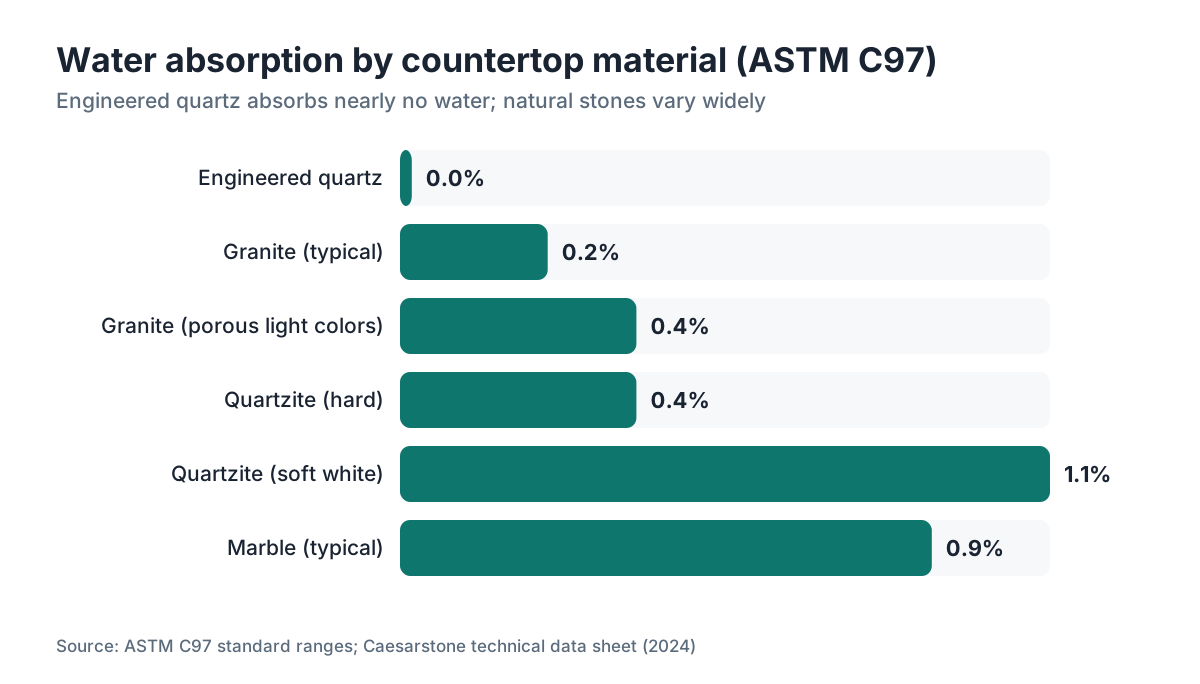
Yes. Tested by ASTM C97, engineered quartz consistently measures below 0.05% water absorption by weight, and often below 0.02%. Compare that to granite at 0.1% to 0.4%, marble at 0.5% to 1.5%, and some soft white quartzites above 1%. Quartz has no connected pore network for a sealer to fill. [1]
Manufacturers publish these figures in their technical data sheets. Caesarstone's spec puts water absorption at 0.02%. Silestone, owned by Cosentino, reports numbers in the same range in its product documentation. [2][6] These aren't marketing claims. They're test results, and low absorption is what lets these surfaces pass NSF/ANSI 51 certification for food equipment materials, a sanitary standard that depends on the surface not soaking anything up. [7]
Here's the practical version: a penetrating sealer has no void space to enter. Even if the product lands on the surface, it can't do what it does on granite, because there's no pore network to fill. Breton, the Italian company that invented the Bretonstone process behind most engineered quartz, built the whole vibrocompression vacuum method around eliminating porosity. That's the point of the process.
Nobody has run a large multi-year controlled study comparing stain resistance between sealed and unsealed quartz, to be honest. The physics are settled anyway, and no credible fabricator or stone body recommends sealing it. The Natural Stone Institute calls engineered quartz non-porous and leaves it out of its sealing guidance entirely. [4]
What do quartz manufacturers actually say about sealing?
Every major quartz maker's care guide lands in the same place: don't seal it. Cambria's care instructions tell you to clean with soap and water or a stone-safe cleaner and never mention sealing at all. [5] Caesarstone's guide lists what to avoid, including abrasive pads and harsh chemicals, and sealing appears nowhere as a recommended step. [2]
This matters for your money, because a third-party sealer can put your warranty at risk. Manufacturers warranty their surfaces against defects in materials and finish. Apply an unapproved chemical treatment, then have a surface problem, and you're arguing from a weak position. Read your warranty documentation before you put anything on the stone beyond what the maker recommends.
Silicone-based sealers can leave a residue that resists cleaning and shows fingerprints worse than the bare surface. People apply one of these, then spend weeks trying to get the counter to look right again. That complaint shows up constantly in fabricator forums, and it's a problem no manufacturer will fix for you, because you made it yourself.
Does sealing quartz hurt anything?
Usually it won't do permanent harm, but it can cause temporary headaches. Silicone-based sealers leave a milky or greasy film that jumps out in raking light. Getting it off takes a degreasing cleaner and sometimes acetone or isopropyl alcohol, used carefully. Fluoropolymer-based sealers come off easier, but they still bring zero benefit on the way in.
The real risk is a sealer with strong solvents or acid components. Some granite-focused sealers include mineral spirits or mild acids meant to open pores before sealing. On quartz, solvents can attack the polymer binder. The resin isn't infinitely solvent-resistant. Long contact with acetone, paint thinner, or drain-cleaner-type products can dull or discolor the surface. A one-time pass with a typical consumer sealer probably won't do this. That's still a reason not to experiment.
Already applied a sealer and stuck with haze? Start with a few drops of dish soap in warm water. If that doesn't clear it, isopropyl alcohol on a soft cloth handles most silicone residue. Work slowly and never let a solvent puddle on the surface.
What does quartz actually need to stay in good condition?
The things that wreck quartz are chemical and thermal, not absorption. The same polymer binder that makes quartz non-porous also makes it touchy about a narrower pH range than natural stone. Strong alkalis like oven cleaners and heavy-duty degreasers with sodium hydroxide can etch the resin over time. Strong acids like muriatic acid or repeated concentrated vinegar do the same. [5]
Heat is the other big one. The resin binder starts to soften around 150 degrees Celsius (300 degrees Fahrenheit). A hot pan set straight on quartz for even a few seconds can leave a permanent thermal shock mark or crack, because quartz has low thermal shock resistance next to some natural stones. Trivets aren't optional here. Use them.
Daily cleaning is genuinely just warm water and a little dish soap. Stuck-on food comes off with a plastic scraper and a damp cloth. Grease or dried coffee gives way to isopropyl alcohol or a stone-safe cleaner. Skip high-concentration bleach as a routine cleaner. Quartz shrugs off brief contact, but daily bleach over years stresses the resin.
UV exposure trips people up. Quartz in a sunroom or under an uncovered skylight can yellow or shift color over the years because the resin binder isn't UV-stable the way natural stone is. Most manufacturers say as much in their warranty terms. [2] No sealer fixes UV degradation, so don't try to buy your way out of it.
Why are quartz sealers still sold and marketed?
Money, mostly. The stone care market is big and sealers carry fat margins. A shop that sells granite, marble, and quartzite also sells quartz, and the same care products get stocked and pushed across all of them. Salespeople aren't always sure what they're recommending, and a homeowner trusts the person who just sold them a $4,000 slab.
Some products hedge by calling themselves 'stone enhancers' or 'surface protectants' instead of sealers. They're technically right that the stuff can go on quartz. It just doesn't do anything once it's there.
The same pattern hits other non-porous materials. Laminate countertops and Corian countertops don't benefit from sealers either, yet products get marketed for them too. This whole product category runs on homeowner uncertainty, which is fair enough, because almost nobody thinks about what happens at a microscopic level when they seal something.
Fabricators who want to give straight answers can build a care card into the install. If you run a shop and want to tighten the quoting and documentation side, SlabWise's quoting software has room for custom care notes right alongside the project documents, so you hand customers accurate information at install instead of letting them go hunting online.
What's the difference between quartz and quartzite for sealing?
This is the single biggest source of confusion in the whole topic. The names sound almost identical, but the materials are opposite in what they need. Engineered quartz never needs sealing. Quartzite does.
Engineered quartz, the subject of this article, is manufactured from ground quartz crystals plus resin. Factory-made, non-porous, no sealing.
Quartzite is a natural metamorphic rock, sandstone recrystallized under heat and pressure deep underground. It's quarried like granite or marble. Quartzite is often very hard, but it is porous, and many quartzites soak up water readily, especially the soft white varieties that look like marble. Quartzite needs sealing, usually once a year or more depending on how porous the slab is. Treat the schedule like you would for marble.
Not sure which you have? Pour a tablespoon of water on an out-of-the-way spot and wait five minutes. If the surface darkens even slightly where the water sat, it's porous and may benefit from sealing. If nothing changes, you almost certainly have engineered quartz or another non-porous surface. Our guide on how to clean quartzite countertops covers the porous side in detail.
Selling a sealer for quartzite is honest work. Selling that same product for engineered quartz is selling something the customer doesn't need.
How do quartz's maintenance needs compare to other countertop materials?
Countertops vary a lot in how much upkeep they truly demand. Here's the straight comparison across common materials:
| Material | Sealing needed? | Frequency | Notes |
|---|---|---|---|
| Engineered quartz | No | Never | Non-porous resin binder |
| Granite | Yes | Every 1-3 years | Varies by color and porosity |
| Marble | Yes | Every 6-12 months | Higher porosity, acid-sensitive |
| Quartzite | Yes | Every 6-18 months | Wide variation by slab |
| Soapstone | No (oil instead) | Monthly oiling optional | Non-porous but takes mineral oil |
| Butcher block | No sealer, food-safe oil | Monthly | See our butcher block countertops guide |
| Laminate | No | Never | Synthetic surface |
| Corian/solid surface | No | Never | Acrylic-based, non-porous |
| Concrete | Yes, essential | Every 1-2 years | Highly porous without sealer |
Granite is where sealing advice most often gets misapplied to quartz. People hear granite called 'stone, like quartz' and carry the habit over. Granite countertops and marble countertops do need regular sealing. Quartz doesn't. Different categories of material, even when they look alike on the showroom floor.
For the full picture by material, the kitchen countertops overview lines up maintenance expectations side by side.
Are there any legitimate stone care products worth using on quartz?
A few, yes. A pH-neutral stone cleaner is worth keeping around for sticky or greasy messes, since it cuts through grime without stressing the resin. Look for something labeled pH-neutral and tested safe for engineered quartz. The Marble Institute of America, now folded into the Natural Stone Institute, has long recommended pH-neutral cleaners for engineered surfaces. [4][8]
A non-scratch microfiber cloth is the other thing worth buying. Abrasive scrubbing pads leave fine scratches over time, and those scratches trap grime. Microfiber cleans well without scuffing the finish.
If your quartz looks dull after years of use, some fabricators rub in a small amount of mineral oil and buff it off, similar to the trick used on soapstone countertops. This seals nothing, but it can lift the look of a surface that's lost some polish. The effect is cosmetic and short-lived. A surface with real scratching or dullness needs professional polishing from a stone restoration company.
Anything labeled a 'quartz restorer' or 'quartz polish' deserves a careful read. If it contains abrasive compounds, it can damage the surface. If it's just a cleaner with shine agents, it's probably harmless. The ingredient list tells you more than the marketing copy ever will.
What should fabricators tell customers about sealing their quartz?
Be blunt: your quartz doesn't need sealing, and don't let anyone sell you a sealer for it. That one sentence is the most useful thing a fabricator can say, and saying it builds trust that outlasts the job.
Hand over a written care card at install. Cover what to clean with (pH-neutral cleaner or dish soap), what to avoid (strong acids, strong alkalis, long solvent contact, direct heat), and the flat statement that sealing is not needed or recommended. If you run a quoting and job management platform, attach that care doc to the job record so it's always on file.
Some customers push back because they read online that quartz needs sealing. The water-drop test is a live demo you can run on any remnant in the shop. Pour water on a scrap of quartz, wait five minutes, show them nothing absorbed. Then pour the same water on a piece of granite or marble from the remnant pile. The difference usually settles it.
For shops juggling multiple jobs and documentation, SlabWise's countertop fabrication software lets you pin care notes and product specs to individual job records, so every customer gets material-specific guidance without the front office remembering to send it. Countertop installation documentation is one of those small things that separates the shops customers recommend from the shops they forget.
The bottom line on quartz sealing is short. The material is engineered so it doesn't need it. A sealer is wasted money. Five minutes learning what quartz actually wants, the right cleaner and trivets near the stove, keeps the surface looking right for decades.
Frequently asked questions
Do I need to seal quartz countertops when they're new?
No. Engineered quartz leaves the factory with water absorption below 0.05%, so it has almost no pore space for a sealer to enter. Sealing a new quartz counter protects nothing and may leave a residue harder to clean than the bare surface. Wipe it down with dish soap and water on installation day and you're finished.
Can sealing quartz void my warranty?
Potentially yes. Major quartz makers, including Caesarstone and Cambria, specify approved cleaning products and methods in their warranty terms. An unapproved sealer or surface treatment puts you in a gray area. If a surface problem develops afterward, the manufacturer may decline the claim. Read your warranty documentation before applying any product that isn't on the approved list.
What happens if I accidentally used a sealer on my quartz?
Probably nothing serious. Most consumer sealers sit on the surface without penetrating. You may see a slight haze or greasiness. Start with dish soap and warm water on a microfiber cloth. If that doesn't clear it, isopropyl alcohol on a soft cloth usually handles silicone-based residue. Avoid acetone or aggressive solvents unless the manufacturer's care guide approves them.
How often does quartz need to be sealed?
Never. This question usually comes from people who had granite or marble before and are applying old habits to a different material. If you're a fabricator hearing it, the water-drop demonstration on a remnant is the fastest way to show why quartz behaves nothing like porous natural stone.
What's the best cleaner for quartz countertops?
Warm water and a little dish soap handles most daily cleaning. For dried food or grease, let a damp cloth sit on the spot for a few minutes before wiping. For stubborn residue, a pH-neutral stone cleaner or isopropyl alcohol works well. Skip bleach as a routine cleaner, and stay away from oven cleaners, drain cleaners, or anything highly alkaline.
Why does my quartz look dull even though I haven't used any harsh chemicals?
Dullness on quartz usually traces to one of three things: soap film from using too much cleaner, fine scratches from abrasive pads, or residue from a product applied earlier. Try a pH-neutral cleaner and a microfiber cloth first. If it's from fine scratches, a stone restoration professional can re-polish the surface, which is a different service than sealing.
Does the brand of quartz (Silestone, Cambria, Caesarstone) change whether it needs sealing?
No. All major engineered quartz brands use similar manufacturing, the Bretonstone vibrocompression method or licensed equivalents, which produce non-porous slabs. Caesarstone publishes water absorption at 0.02%, and Silestone and Cambria report comparable figures. Brand doesn't move the needle on this question. None of them need sealing.
Is there any product that genuinely protects quartz beyond basic cleaning?
Not really. The resin binder already protects the surface. pH-neutral cleaners and a non-scratch cloth are the maintenance tools with real value. Trivets and cutting boards guard against heat and scratching, which are genuine risks. Any product sold as a 'quartz protector' or 'quartz sealer' is solving a problem that doesn't exist on this material.
Can I use the same sealer on quartz that I use on my granite?
You can apply it, but it won't do anything useful. Granite sealers are built to penetrate porous stone. Quartz has no pore network for the product to enter, so it sits on top and either wipes off or dries into a residue. Using a granite sealer on quartz isn't usually dangerous, but it wastes product and can leave temporary haze.
Does quartz need to be resealed after a kitchen renovation or deep clean?
No, because it was never sealed to begin with. After a renovation, wipe the quartz down with warm soapy water to clear dust, grout haze, or construction residue. Dried grout or adhesive usually comes off with a plastic scraper and a damp cloth. For stubborn construction residue, check the manufacturer's care guide for approved cleaning products.
What damages quartz countertops most commonly?
Direct heat leads the list. A hot pan set straight on quartz can cause a permanent thermal shock mark because the resin binder softens around 300 degrees Fahrenheit. Strong alkalis like oven cleaners and strong acids like undiluted vinegar or muriatic acid can etch the resin over time. Chipping at the edges from impact is common too, especially near the sink cutout.
Does white quartz stain more easily than darker quartz?
The color doesn't change porosity, which sits near zero at any shade. But stains show more on light surfaces, which creates the impression that white quartz stains faster. Turmeric, red wine, and similar colorants can temporarily tint a light resin surface. Quick cleanup, within minutes rather than hours, prevents nearly all staining on any quartz color.
Is outdoor quartz sealed differently than indoor quartz?
Outdoor-rated quartz has UV stabilizers added to the resin to slow color shift from sun. Indoor quartz moved outside or set near an uncovered skylight can yellow over time, and no sealer fixes that, since it's a resin chemistry issue. If you're planning an outdoor countertop, confirm the product is rated for outdoor use. Sealing won't extend the life of an indoor product used outside.
Sources
- ASTM International, Standard Test Methods for Absorption and Bulk Specific Gravity of Dimension Stone (C97/C97M): ASTM C97 is the standard test method used to measure water absorption in stone and stone-like products, including engineered quartz, expressed as a percentage by weight.
- Caesarstone, Care and Maintenance Guide: Caesarstone's technical documentation reports water absorption of 0.02% and its care guide does not recommend or mention sealing as a maintenance step.
- Natural Stone Institute, Technical Bulletins and Care Recommendations: The Natural Stone Institute describes engineered quartz as non-porous and does not include it in sealing guidance intended for natural stone.
- Cambria, Quartz Surface Care and Cleaning Guide: Cambria's published care instructions recommend soap and water or a stone-safe cleaner and list acids, alkalis, and heat as hazards; sealing is not recommended.
- Cosentino / Silestone, Product Technical Data Sheet: Silestone (Cosentino) publishes water absorption data in its technical data sheets showing non-porous performance comparable to other engineered quartz products.
- NSF International, NSF/ANSI 51 Food Equipment Materials Standard: Non-porous engineered quartz surfaces can meet NSF/ANSI 51 certification for food equipment materials, a standard that relies on low water absorption for sanitary performance.
- Marble Institute of America (now Natural Stone Institute), Engineered Stone Fact Sheet: The Marble Institute of America historically classified engineered quartz separately from natural stone in care and maintenance guidance, noting its manufactured non-porous properties.
- U.S. Geological Survey, Mineral Resources Program: Quartz and Other Silica Minerals: The USGS documents the industrial processing of quartz crystals, providing context for the raw material used in engineered quartz slab manufacturing.
- Occupational Safety and Health Administration (OSHA), Crystalline Silica Information Page: OSHA's crystalline silica pages confirm that engineered stone products contain high percentages (typically above 90%) of crystalline silica bound in resin matrix.
Last updated 2026-07-09