TL;DR
- Marble bathroom countertops run $40 to $200 per square foot installed, depending on grade and edge profile.
- They look beautiful and add resale value, but acids etch them, they scratch more easily than granite or quartz, and they need resealing every 6 to 12 months.
- For a low-traffic guest bath, marble is a reasonable splurge.
- For a busy primary bath, know what you're signing up for.
What does marble actually cost for a bathroom countertop?
The honest installed range is $40 to $200 per square foot, and that spread is real, not padding [1]. A 35-square-foot primary bath vanity with a standard edge and one sink cutout can land anywhere from $1,400 to $7,000 depending on the slab you pick and where you live.
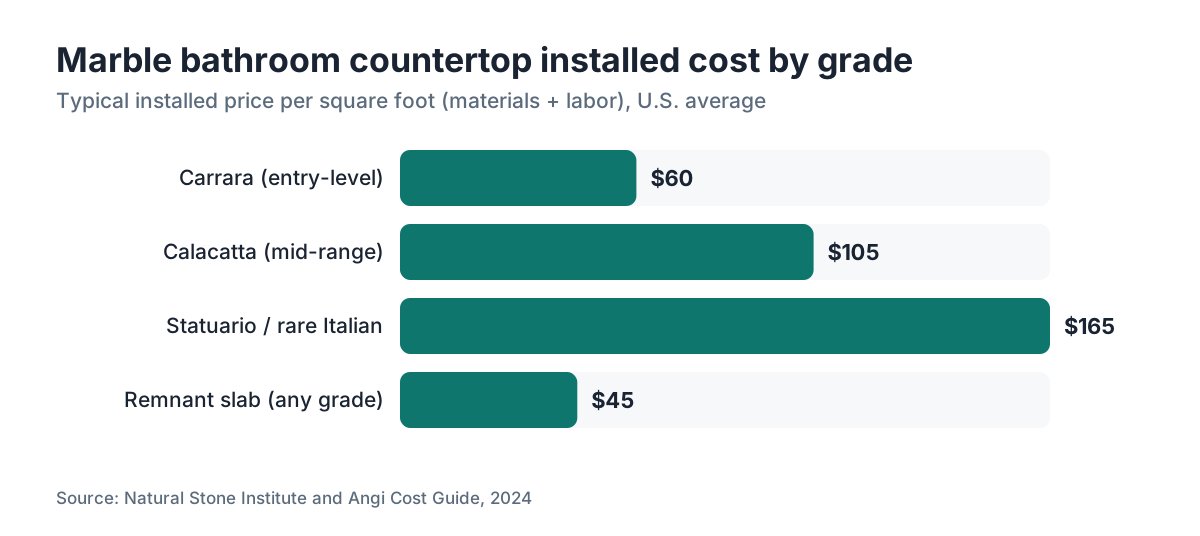
The stone itself moves the number most. Entry-level Carrara, the white-and-grey veining you see everywhere, runs $40 to $80 per square foot installed. Mid-grade Calacatta, with bolder veining and a brighter white background, runs $80 to $130 installed. Rare stones like Statuario or book-matched slabs from a premium Italian quarry push past $200 [1][2].
Labor adds $35 to $50 per linear foot for a standard edge, and that's before extras. Bullnose and beveled edges sit at the low end. Ogee and waterfall edges cost more, sometimes a lot more, because they take longer on the CNC or need hand-finishing. An undermount sink cutout adds $100 to $200 per hole. Removing and hauling away your old countertop runs another $50 to $150 depending on the shop and the market.
Geography matters too. Fabricators in high-cost metros charge more for the same stone than shops in cheaper regions, partly on overhead and partly because the local market tolerates it. Get three quotes.
| Marble grade | Typical installed cost (per sq ft) |
|---|---|
| Carrara (entry-level) | $40, $80 |
| Calacatta (mid-range) | $80, $130 |
| Statuario / rare Italian | $130, $200+ |
| Remnant slab (any grade) | $30, $60 |
One tip that saves real money: bathroom vanity tops are small. A 35-square-foot vanity is tiny next to a kitchen island. You can often use a remnant slab from a fabricator's yard and get a gorgeous stone at a steep discount. Ask about remnants before you price anything else [2].
How does marble hold up in a bathroom over time?
This is where marble gets honest with you. It's a calcium carbonate mineral, so acids eat it. Literally eat it. Toothpaste, mouthwash, certain hand soaps, cologne, and hairspray all carry acids or alcohols that etch the surface and leave dull spots [3]. Etching isn't a stain. It's a chemical reaction that changes the surface texture. Small etch marks polish out, but it takes time, the right products, or a pro.
For a guest bath that sees light use, that tradeoff is easy to live with. In a primary bath shared by two adults, kids, and a shelf of beauty products, you have to be disciplined: wipe spills fast, keep acidic products off the stone.
Marble is softer than granite or quartzite on the Mohs scale. Granite sits around 6 to 7, quartzite at 7. Marble runs 3 to 4 [4]. Rings from product bottles and a dragged razor can scratch it. The scratches are usually minor and polish out, but they add up over years in a heavily used bathroom.
Staining is a separate problem from etching. Marble is porous, and unsealed or badly sealed stone soaks up water, makeup, and oil. A good penetrating sealer cuts absorption sharply and is the single most useful maintenance step you can take [3].
The upside is real: marble in a bathroom is beautiful, and unlike in a kitchen it never meets hot pots, knives, or cutting boards. Marble surfaces in bathrooms hold up for decades when they're maintained, and some people love the patina it picks up along the way.
How often does marble need to be sealed, and what product should you use?
Seal a new marble countertop before first use, then reseal every 6 to 12 months depending on use and the sealer you buy [3]. Some premium sealers claim 3 to 5 year coverage. Trust the water bead test over the label: drip a little water on the surface, and if it beads up, the sealer still works. If it soaks in within a few minutes, reseal.
Use a penetrating (impregnating) sealer, not a topical coating. Penetrating sealers soak into the pores and leave the look of the stone alone. Topical coatings sit on top, peel over time, and don't belong on natural stone countertops. Look for a sealer rated for marble or natural stone from brands like Miracle Sealants, Aqua Mix, or Stone Tech. Tile and stone supply shops stock them, and so do the usual online sellers.
Application takes about 20 minutes. Wipe it on with a clean cloth, let it penetrate for the time on the label (usually 10 to 15 minutes), then wipe off the excess before it hazes. Never let sealer dry on the surface.
To clean stone countertops without wrecking the sealer, the short answer: warm water, a few drops of pH-neutral dish soap, a soft cloth. Skip vinegar, citrus cleaners, abrasive powders, and anything sold as a bathroom disinfectant unless the label says it's safe for natural stone.
What are the best marble types for a bathroom vanity?
Carrara is the default pick, and for good reason. It's widely available, relatively cheap, and the grey veining forgives minor etching and water spots better than bright white stones. If cost matters but you want real marble, start with Carrara [2].
Calacatta is the upgrade most designers reach for when the budget allows. The veining is more dramatic, the background whiter. The catch: bright white shows etching more clearly. Buy Calacatta for a bathroom where products sit right on the stone, and you're committing to coasters and fast cleanup.
Statuario sits at the premium end and is rarer than both. Its veining tends to spread out and run linear, which photographs beautifully. Whether that beats Calacatta is a matter of taste.
Crema Marfil is an underrated option. It's technically a limestone with marble-like behavior, a warm cream background with soft veining, and it often costs less than Carrara. Maintenance is about the same.
If you love the marble look but want something harder, quartzite is worth a look. True quartzite (not the marketed "quartzite" that's really marble or dolomite) scores 7 on the Mohs scale and shrugs off etching far better. The trouble is a market full of mislabeled stone, so ask your fabricator to confirm with an acid test before you buy.
Honed vs. polished finish matters more in a bathroom than in a kitchen. A honed (matte) finish hides etching much better, because an etch mark on polished marble reads as a dull spot against the sheen. On honed stone, that same mark is hard to spot. The tradeoff: honed marble is slightly more porous and shows oily fingerprints faster.
How does marble compare to other bathroom countertop materials?
Here's a direct comparison against the materials people most often weigh against marble.
| Material | Installed cost (sq ft) | Hardness (Mohs) | Etches? | Requires sealing? |
|---|---|---|---|---|
| Carrara marble | $40, $80 | 3 to 4 | Yes | Yes, 6 to 12 mo |
| Granite | $50, $100 | 6 to 7 | No | Yes, 1 to 3 yrs |
| Quartz (engineered) | $55, $120 | ~7 | No | No |
| Quartzite | $60, $130 | 6 to 7 | Rarely | Yes |
| Porcelain tile/slab | $25, $75 | 7+ | No | No |
| Solid surface (Corian) | $45, $85 | 2 to 3 | No | No |
Granite is the closest practical comparison. It gives you a natural stone look, costs about the same for similar grades, and it doesn't etch. The look reads differently, and some people feel granite lacks marble's elegance, but for a busy bathroom granite forgives more.
Engineered quartz is the zero-maintenance argument. Brands like Cambria sell marble-look patterns that photograph almost identically to the real thing. Quartz doesn't etch, doesn't need sealing, and runs harder on the Mohs scale. The honest knock against it: in person, the pattern repeats across the slab in ways natural stone never does, and a trained eye catches it.
Corian is a different animal. Solid surface repairs easily (scratches sand out), costs less than stone, and asks for nothing. It looks like solid surface, not stone, which some people want and others reject.
For fabricators, marble needs more careful handling than granite because it chips more easily and shows damage from abrasive tools. Polishing out fabrication scratches before delivery isn't optional with marble.
Does marble in a bathroom increase home resale value?
Yes, but the return varies and it's rarely dollar-for-dollar. The National Association of Realtors surveys homeowners every year on remodeling projects and the resale value they see. Stone countertop upgrades in bathrooms typically recover 50 to 70 percent of their cost at resale, depending on the market and the rest of the home's finishes [5].
Marble specifically signals luxury to buyers in a way engineered stone does not in most markets. In higher-end homes where buyers expect premium finishes, marble sets a house apart. In a mid-market home, the premium you paid for marble over a nice quartz may never show up in the sale price.
Condition is the bigger factor. Well-maintained marble looks spectacular and commands a premium. Etched, stained, or chipped marble tells buyers there's work to do and turns into a negotiating point.
If resale optimization is the whole reason you're buying, the case for marble weakens. If you plan to live in the home five years or more and love how marble looks, the math changes.
What thickness of marble slab should you use for a bathroom countertop?
The residential standard is 2 cm (3/4 inch) or 3 cm (1.25 inch). Both are common. The 3 cm slab is heavier, has a more substantial edge, and doesn't need plywood underlayment because it can span cabinet openings on its own. Most fabricators default to 3 cm for countertops for exactly that reason [6].
The 2 cm slab is lighter and a little cheaper, but it usually needs a laminated or built-up edge to look full-thickness, and it needs continuous support underneath. On a small vanity, either works fine structurally.
For a floating vanity or wall-mount install where weight matters, 2 cm can be the better structural choice. Talk to your fabricator about the specific cabinet and wall construction before you decide.
Edge profiles deserve a note. The more complex the profile (ogee, double waterfall), the more hand-finishing it needs, because marble chips more easily than granite under aggressive tooling. A simple eased or beveled edge shows less chip damage over time and costs less to fabricate.
How do you install marble bathroom countertops?
Marble installation follows the same basic path as any stone slab, but a few things specific to marble are worth knowing before you start or hire out.
The process: measure the vanity, make a template (paper, cardboard, or a digital template shot with a laser device), cut the slab to the template at the shop, polish the edges, then transport and set the slab. Silicone adhesive holds the stone to the cabinet. Undermount sinks get epoxied and mechanically clipped from below [6].
Marble travels worse than granite. Long spans of thin stone, especially 2 cm, can crack on a bumpy ride if they aren't supported right. A good fabricator uses A-frame racks and soft blankets and knows never to lay marble flat in transport.
DIY marble install is possible but carries real risk. A cracked slab is a total loss, and marble isn't something you practice on cheaply. If you're a capable DIYer who has set other stone countertops, marble is doable. If this is your first slab, hire a pro. See countertop installation for the full walkthrough and what to watch for.
Discuss seams before templating. Most vanities are small enough that no seam is needed. But a double vanity over 72 inches may need one. Ask where it'll fall, and ask to see the book-match option if the slab allows it.
For shops quoting marble bathroom jobs, the per-piece complexity runs higher than the square footage suggests. Small jobs carry setup time, marble needs careful handling, and edge work takes longer. Software like SlabWise helps build those variables into quotes so small marble bathroom jobs don't get underpriced.
What are common mistakes homeowners make with marble bathroom countertops?
Skipping the sealer before first use is the big one. The slab sits in the yard, gets installed, and the homeowner starts using the bathroom that day. The stone never gets sealed. Within weeks, water rings and product stains show up, and the homeowner blames the marble when the real problem was a missing 20-minute step.
Buying marble off a photo without touching it in person is a close second. Slabs vary enormously. The Carrara in the showroom shot and the Carrara you get from the yard can have very different veining density, background brightness, and character. Pick your specific slab in person at the stone yard, never off a sample chip. Chalk-mark the slab so the fabricator knows exactly which piece you chose [7].
Choosing a polished finish in a high-use bathroom. Polished marble shows etching far more dramatically than honed. If bottles and products will sit right on the stone, honed is the smarter call.
Ignoring chip risk when picking the edge. Marble chips on sharp edges. A crisp ogee looks beautiful in the showroom. After a year of daily use in a family bathroom, those crisp edges collect small chips. A softened eased or bullnose edge holds up better.
Underestimating the upkeep. It isn't heavy, but it's real. If you won't wipe spills fast and reseal once a year, marble will let you down. That's not a character flaw. It just means another material fits your life better.
What should you ask a fabricator before ordering marble bathroom countertops?
The questions that actually matter:
Can I pick my specific slab at the yard? Any reputable fabricator says yes. If they say no, find another shop.
What thickness do you recommend for my cabinet setup, and do I need plywood support? The answer depends on your cabinet construction and whether the vanity is freestanding or floating.
What edge profile do you recommend for marble, given how we'll use this bathroom? A good fabricator weighs chip risk and maintenance honestly.
Will there be seams, and where? For most single-sink vanities the answer is no. Double vanities or odd layouts may need one.
Do you seal the stone before delivery? Some shops include a sealer application. Many don't. Find out which yours is and plan around it.
What's your warranty on fabrication and installation? Industry standard is typically one year on workmanship, and cracks from stone defects or installation damage should be on the fabricator [10].
Can you show me photos of finished marble bathroom jobs? Not to judge their taste, but to see edge work and seam placement on real work.
Is marble worth it for a bathroom, or should you choose something else?
Here's the opinion. Marble is worth it in a guest bathroom, a powder room, or a primary bath used by adults who accept occasional upkeep. It's the wrong call for a kids' bathroom, a rental, or anyone who finds maintenance tasks stressful.
The people who regret marble almost always misunderstood the etching and maintenance before buying. The people who love it have lived with it for 10 or 20 years and either embrace the patina or stay on top of sealing.
Want the marble look without the upkeep? Engineered quartz in a marble pattern is a legitimate choice, and there's nothing wrong with picking it. Quartz printing has gotten very good. A polished Calacatta-look quartz from a reputable maker is genuinely hard to tell from real marble in a finished bathroom.
Want real stone and are fine trading some hardness for a different look? Granite or quartzite deserve a look. Granite costs about the same and lasts longer with less maintenance. True quartzite gives you a white-stone look with better durability, though confirming you're actually getting quartzite and not soft dolomite or marble in disguise takes an acid test at the yard.
The bottom line: marble is a beautiful, moderately demanding material that rewards informed buyers and punishes careless ones. Go in knowing what it needs, choose your finish and grade on purpose, seal it before first use, and it'll look good for decades.
If you're pricing a marble bathroom project and want a fast sense of the cost in your area, the SlabWise instant quote tool takes your dimensions and stone type and gives a ballpark number without a phone call.
Frequently asked questions
How much does a marble bathroom countertop cost per square foot installed?
Installed cost runs $40 to $200 per square foot depending on marble grade, edge profile, and location. Carrara, the most common white marble, typically lands at $40 to $80 installed. Calacatta runs $80 to $130. Rare Italian stones like Statuario can top $200. A typical 35-square-foot bathroom vanity costs $1,400 to $7,000 all in, including cutouts and edges.
Does marble etch in bathrooms, and how do you fix it?
Yes. Marble etches when acids touch the surface, and bathrooms are full of acids: toothpaste, mouthwash, certain soaps, perfume, and hairspray all qualify. Etching creates a dull spot where the surface texture changes. Small etch marks polish out with a marble polishing powder or paste. Persistent or widespread etching needs professional re-honing or re-polishing. Choosing a honed finish up front makes etching much less visible.
How often do you need to seal marble bathroom countertops?
Every 6 to 12 months for most bathrooms with a quality penetrating sealer. Test sooner by dripping water on the surface: if it soaks in within a few minutes instead of beading up, reseal now. Some premium sealers claim 3 to 5 year protection, but the water bead test beats the label. Always seal before first use; that's the step most homeowners skip.
What is better for a bathroom vanity, marble or quartz?
Quartz is more durable and maintenance-free. Marble is natural stone with more visual depth and variation. Quartz doesn't etch, doesn't need sealing, and runs harder on the Mohs scale. For a busy primary bath with kids or heavy product use, quartz wins on practicality. For a guest bath or powder room where you want the real-stone look and will maintain it, marble is a reasonable choice.
Is Carrara marble good for a bathroom?
Carrara is the most practical marble for bathrooms. It's widely available, cheaper than Calacatta or Statuario, and its grey veining on a white background hides minor etching and water spots better than brighter white stones. It still needs sealing and care around acidic products, but the forgiving look makes the maintenance less stressful. Remnant slabs of Carrara are also easier to find than rarer marbles.
What finish is best for marble bathroom countertops, honed or polished?
Honed is the better practical choice for most bathrooms. Polished marble shows every etch mark as a visible dull spot against the reflective surface. On a honed (matte) surface, etching is much harder to see. The tradeoff: honed shows oily fingerprints faster and may need sealing slightly more often. Polished looks more formal and wipes clean easily. For high-traffic primary baths, honed wins on practicality.
Can you use marble countertops in a shower or will they deteriorate?
Marble goes in showers regularly, but it needs more frequent sealing than a vanity top because it faces constant water. Unsealed or poorly sealed shower marble absorbs water, stains, and eventually shows efflorescence or surface degradation. Seal every 3 to 6 months in a shower. Honed marble is slightly more forgiving there. Many designers prefer large-format marble tile over a full slab for shower walls because grout lines give expansion room.
What thickness marble slab should a bathroom vanity top use?
3 cm (1.25 inch) is the preferred standard for bathroom countertops. It's strong enough to span cabinet openings without continuous support or plywood underlayment, it has a more substantial edge, and it cracks less in transport. The 2 cm slab is lighter and a bit cheaper, but it needs full support underneath and a built-up edge to look substantial. For floating vanities where weight matters, 2 cm may be worth considering.
How long do marble bathroom countertops last?
Well-maintained marble bathroom countertops last decades. Historic buildings hold marble surfaces that are hundreds of years old. In a residential bathroom the practical lifespan is effectively indefinite if the stone gets sealed regularly, etch damage gets addressed when it appears, and the top isn't cracked or chipped beyond repair. Most failures are surface-level maintenance issues, not structural problems with the stone.
Does marble in a bathroom add resale value to a home?
Generally yes, but you typically recover 50 to 70 percent of your investment at resale rather than dollar-for-dollar. Marble signals luxury to buyers and can set a higher-end home apart. In mid-market homes, buyers may not pay a premium over quality quartz. Condition matters enormously: well-maintained marble photographs beautifully and impresses buyers; etched or stained marble becomes a negotiating point.
What products should you avoid using on marble bathroom countertops?
Avoid anything acidic or abrasive: vinegar, lemon juice, citrus-based cleaners, mouthwash if it hits the stone directly, toothpaste left sitting, and most common bathroom disinfectant sprays. Skip abrasive scrubbing pads and powders too. For daily cleaning, use warm water and pH-neutral dish soap with a soft cloth. Check that any cleaner is labeled safe for natural stone before it touches marble.
Can a homeowner DIY install a marble bathroom countertop?
Possible, but riskier than granite or quartz. Marble is more brittle and chips more easily in transport and installation. A cracked slab is a total loss. If you've set other stone countertops and are comfortable with the process, a small vanity is manageable. If it's your first stone install, hire a professional fabricator and installer. The cost of getting it wrong far exceeds the labor savings.
Is honed marble harder to maintain than polished marble?
Honed marble needs about the same sealing frequency as polished but shows oily fingerprints and smudges faster because there's no reflective surface to hide them. The big advantage: etching is nearly invisible on a honed surface. Most fabricators recommend honed for daily-use bathroom vanities because the maintenance reality is easier to live with: you may wipe more often, but you won't see every etch mark.
What is the difference between marble and quartzite for bathroom countertops?
Quartzite is much harder than marble (7 vs. 3 to 4 on the Mohs scale) and resists etching. True quartzite gives you a white or light stone look similar to marble with far better durability. The problem is a mislabeling issue in the market: many stones sold as quartzite are actually soft dolomite or even marble. Ask your fabricator for a simple acid test before you buy. Quartzite typically costs $60 to $130 per square foot installed.
Sources
- HomeAdvisor (Angi), Marble Countertops Cost Guide: Installed marble countertop costs range from $40 to $200 per square foot depending on grade and complexity
- Natural Stone Institute, Natural Stone Resource Guide: Carrara, Calacatta, and Statuario are the primary Italian marble grades used in residential countertops; remnant slabs offer significant cost savings
- Natural Stone Institute, Care and Cleaning of Natural Stone: Acidic substances etch marble surfaces; penetrating sealers should be applied before first use and every 6 to 12 months thereafter
- U.S. Geological Survey, Mohs Hardness Scale Mineral Reference: Marble has a Mohs hardness of approximately 3 to 4; granite rates 6 to 7; quartzite rates approximately 7
- National Association of Realtors, Remodeling Impact Report: Stone countertop upgrades in bathrooms typically recover 50 to 70 percent of their cost at resale depending on market and home tier
- Natural Stone Institute, Dimension Stone Design Manual: 3 cm slabs are preferred for countertop installations because they do not require continuous plywood support; undermount sinks are secured with epoxy and mechanical clips
- Natural Stone Institute, Buying Natural Stone: Consumer Guide: Consumers should select specific slabs at the stone yard in person rather than from samples; marking chosen slabs prevents substitution errors
- U.S. Geological Survey, National Minerals Information Center: Dimension Stone: Marble is a metamorphic rock composed primarily of calcium carbonate with a Mohs hardness of 3 to 4, making it reactive to acidic substances
- Environmental Protection Agency, Safer Choice Program: Some common household cleaners, including disinfectants containing acids or bleach compounds, can degrade natural stone surfaces; pH-neutral cleaners are recommended
- Natural Stone Institute, Standards and Guidelines for the Stone Industry: Industry standard fabrication warranty on workmanship is typically 1 year; stone defects and installation damage should be addressed by the fabricating shop
Last updated 2026-07-09