TL;DR
- Most marble stains come out with a poultice: mix an absorbent powder (flour, diatomaceous earth, or baking soda) with a chemical that attacks the specific stain, spread it over the spot, cover with plastic wrap, and wait 24 to 48 hours.
- Etching is not a stain and needs polishing, not cleaning.
- Rust needs oxalic acid.
- Oil needs acetone.
- Organic stains respond to hydrogen peroxide.
What kind of stain is actually on your marble?
Before you touch anything, figure out what you're looking at. Marble stains and marble etches look alike from across the kitchen, but they're different problems with different fixes. Treat an etch like a stain and you'll waste an afternoon, and possibly make it worse.
A stain is a discoloration from a substance that soaked into the stone's pores. The surface still feels smooth and the finish is intact. An etch is a chemical burn. Acid attacked the calcium carbonate in the marble and dissolved a thin layer of surface. The spot looks dull, sometimes white or gray, and if you run a finger over it you can feel a slight roughness or dip. Etches get their own section below because they need abrasive polishing, not chemistry.
Marble is a metamorphic rock made almost entirely of calcium carbonate. Its Mohs hardness sits around 3 to 4, so it scratches and etches far more easily than granite (Mohs 6 to 7) or quartzite (Mohs 7 and up). [1] The Natural Stone Institute's care guide sorts marble stains into six categories worth knowing before you start: oil-based, organic, metal/rust, biological (mold and mildew), paint, and water spots or rings. [2] Your category tells you which chemical to reach for.
Here's a quick identification test. Dab a few drops of water on the spot and watch it for two minutes. If the color deepens when wet, it's probably a stain. If it doesn't change but still looks dull, you're almost certainly looking at an etch. A reddish or orange tint means rust. Coffee, wine, or juice usually leaves a tan, pink, or brownish tone.
What is a poultice and how does it remove stains from marble?
A poultice pulls a stain up and out of porous stone, and it's the method professionals reach for first. The idea is simple. Mix an absorbent material with a chemical that attacks the stain, spread it over the spot, seal it with plastic wrap, and let it dry slowly over 24 to 48 hours. As it dries, it draws the staining substance out of the pores and into itself. When you peel it off, the stain comes with it.
The absorbent base can be almost anything fine and porous: baking soda, flour, kaolin clay, diatomaceous earth, talc, or a commercial poultice powder. The chemical you mix in depends on the stain type (more on that below). Aim for the consistency of peanut butter or thick spackle. Too runny and it won't draw anything out. Too dry and it won't touch the stone.
Applying it takes patience more than skill. Clean the area with a pH-neutral cleaner and let it dry. Spread the poultice about a quarter-inch thick over the stain, running it a half-inch past the edges on all sides. Cover with plastic wrap and tape the edges down with painter's tape. Leave it 24 hours minimum. Deep stains often need a second application.
When time's up, pull the plastic, let the poultice dry completely (it turns lighter and powdery), then scrape it off gently with a plastic putty knife. Never metal. Metal scratches. Rinse with distilled water, dry the surface, and check your work. The Natural Stone Institute names the poultice as the primary treatment for most subsurface stains in porous stone. [2]
How do you remove oil stains from marble countertops?
Oil stains darken the marble and creep outward over time if you ignore them. Cooking oil, grease, butter, hand lotion, and salad dressing all land here. Fresh oil pulls out far easier than old oil, so speed helps.
For a fresh spill, blot, don't wipe. Wiping spreads it. Lift as much as you can with a dry paper towel, then pile a little cornstarch or baking soda right on the spot and let it sit 20 to 30 minutes to soak up what's left. Brush it off, repeat if needed, then clean with a few drops of dish soap in warm water, rinse, and dry.
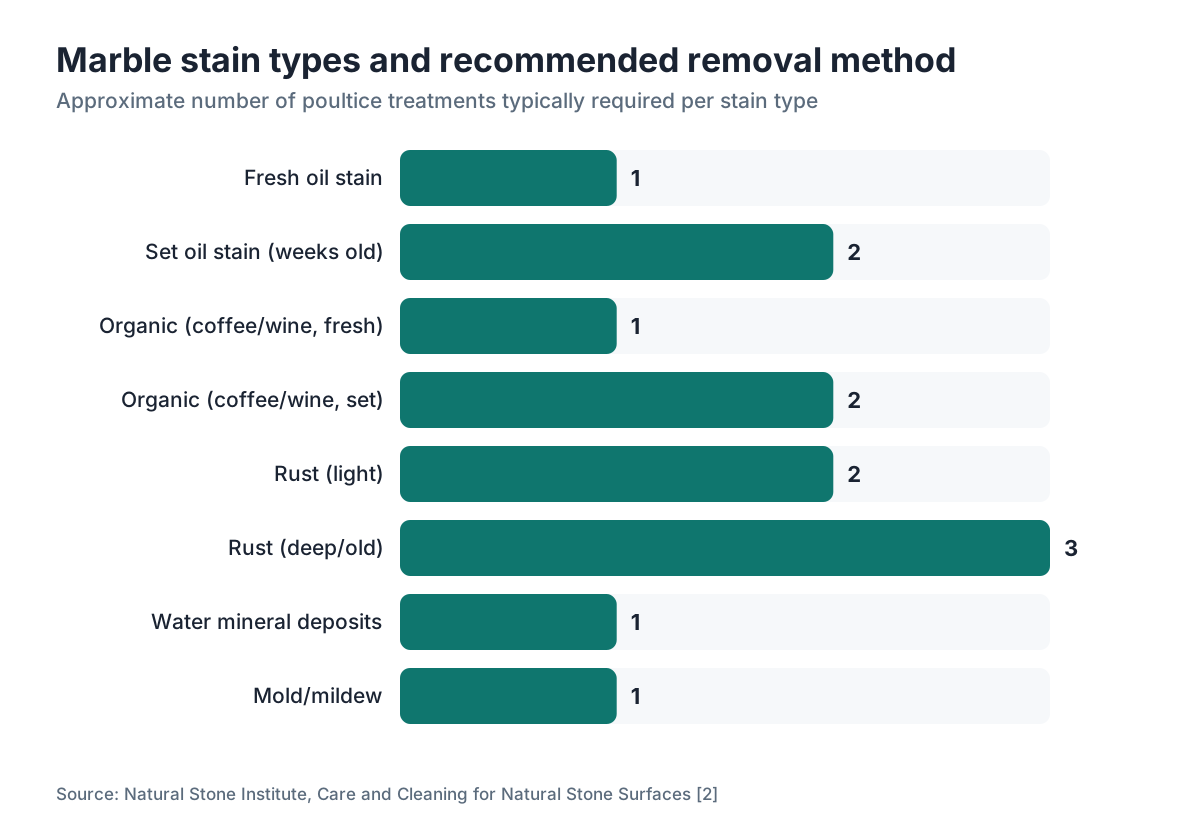
Set oil stains need a poultice. Use baking soda or talc as the base and acetone (plain nail polish remover, or hardware-store acetone) as the chemical. Mix to peanut butter thickness, apply as described above, and cover for 24 to 48 hours. Acetone cuts oil and fat without touching the calcium carbonate underneath. Skip acetone products loaded with fragrance or dye, because those leave their own residue.
A very old, deeply set stain often takes two or three rounds. That's normal, and patience actually pays off. What looks like a hopeless grease shadow frequently pulls clean by the third pass.
How do you get organic stains (coffee, wine, juice, food) out of marble?
Organic stains are the most common thing you'll see in a kitchen: coffee, red wine, tea, mustard, berries, and food dyes. They read tan, pink, brown, or yellowish-brown.
Hydrogen peroxide is the chemical for organic stains on marble. Use the 12% strength (sold at beauty supply stores as developer; drugstore peroxide is only 3%, which works but slower) mixed with flour or talc into a poultice. For a light surface mark, you can dab hydrogen peroxide on with a cotton ball, wait a few minutes, and rinse. Anything that's soaked in wants the full poultice.
One caution. Hydrogen peroxide is a mild bleach. On white or light marble that's fine. On darker marble, repeated use can lighten the stone slightly. Test a hidden spot first if your stone has any color.
Mold and mildew fall in this category too. The same peroxide poultice works, or use diluted bleach (one part bleach to four parts water) applied carefully with a cotton swab or cloth. The Natural Stone Institute warns against full-strength bleach on stone, since it can break down sealers and discolor some stones over time. [2] Rinse thoroughly and dry completely after any bleach.
How do you remove rust stains from marble?
Rust stains run orange to reddish-brown and usually come from metal sitting on the surface: cans, iron cookware, the rim of a pot, or rebar that migrated during quarrying (yes, that really happens). Rust is iron oxide, and it bonds to the stone in a way water and ordinary cleaners can't budge.
The chemical for rust is oxalic acid. You can buy it as a powder at hardware stores, and it's the active ingredient in products like Bar Keepers Friend (about 10% oxalic acid by weight). [3] Make a poultice with oxalic acid powder and water, apply it, cover, and wait 24 hours.
Rust is among the hardest stains to clear from marble. Old, deep rust can be close to impossible to remove completely. If the first treatment lightens it but leaves color, run a second pass. Still orange after three rounds? A stone restoration pro has commercial oxalic acid at concentrations that aren't sold retail.
Never put muriatic acid (hydrochloric acid) on marble. It dissolves the stone itself and creates a far worse problem than the rust.
One honest note. If the rust is bleeding from rebar or a metal inclusion inside the slab, any topical treatment is temporary. The iron keeps oxidizing and pushing to the surface. That's a slab-level problem, and it sometimes needs a professional to assess.
How do you fix etching on marble (the dull white marks from acid)?
Etching is not a stain, and that single fact saves people hours. No poultice, no cleaner, nothing chemical will fix an etch. Plenty of homeowners burn an afternoon scrubbing before they work that out.
An etch happens when something acidic touches the marble: lemon juice, vinegar, wine, tomato sauce, soda, citrus, even some cleaning products. The acid reacts with the calcium carbonate and dissolves a microscopic layer of surface, leaving a dull or whitish mark. The stone is physically changed right there.
Light etches on a polished surface come back with a marble polishing powder (tin oxide or aluminum oxide products sold for stone). Dampen the area, apply the powder, and work it in with a buffing pad or a damp cloth in small circles. That re-polishes the surface by hand and can restore shine to shallow etches. Miracle Sealants' Marble Polish and Tenax products are common choices.
Deep etches, or etches on a honed or leathered finish, are harder. A honed finish has no shine to bring back, so the visual hit is actually smaller (etches are nearly invisible on honed marble). If you want a perfect repair, you need professional wet polishing with progressively finer diamond pads. That's a restoration job, not a Saturday project.
The permanent fix for etch-prone marble in a kitchen is adjusting your expectations. Marble etches because it's calcium carbonate. A sealer doesn't stop it (sealers fill pores against staining, but they don't block acid from reacting). If you love marble but can't live with the patina that comes from real kitchen use, that's a fair reason to look at quartzite countertops or engineered stone instead.
What cleaning products are safe for marble and which ones will cause damage?
The one rule that matters most: marble needs a pH-neutral cleaner. The calcium carbonate reacts with anything acidic (pH below 7) and can be worn down over time by anything strongly alkaline (pH well above 8 or 9).
Safe options are short. pH-neutral dish soap in warm water. Cleaners labeled for natural stone (look for "pH neutral" on the bottle). Plain warm water for daily wipe-downs. The Natural Stone Institute recommends stone-specific cleaners over general household products. [2]
The damage list is longer. White vinegar, apple cider vinegar (marketed as a "natural" cleaner, brutal on marble), lemon juice, orange-based cleaners, most bathroom tile and grout cleaners, bleach above mild dilution, Windex and glass cleaners (many contain ammonia or citric acid), and generic multi-surface sprays. The EPA notes that many standard household cleaners run acidic or alkaline enough to damage sensitive surfaces, which is exactly why the pH-neutral rule exists. [8] Granite cleaners are sometimes fine and sometimes not, depending on pH. Check first.
For daily cleaning, a soft microfiber cloth and warm water is honestly all you need. Dry the surface after instead of letting it air-dry, because standing water leaves mineral deposits (water spots), especially with hard tap water.
Baking soda is mildly alkaline (pH around 8.3) and fine for occasional spot cleaning. Don't make it your daily driver, though. Repeated use can dull a polished finish over time.
If you've got other natural stone in the house, the same logic carries over. How to clean stone countertops covers the broader rules across granite, soapstone, and limestone.
How does sealing marble help prevent future stains?
Sealing marble doesn't make it stainproof. It makes it stain-resistant by filling the surface pores with a penetrating silicone or fluoropolymer resin, which slows how fast liquids soak in. A sealed surface buys you more time to blot a spill before it turns permanent.
Most fabricators seal marble at installation and reseal every one to three years, depending on use and the sealer. [4] Surfaces near the sink, high-traffic zones, and areas that see a lot of oily prep need it more often.
The water bead test tells you when. Drop a tablespoon of water on the surface. If it beads and sits, the sealer's working. If it soaks in and darkens the stone within a few minutes, reseal.
Application is quick. Start with a clean, dry surface. Spray or wipe on an even coat of a penetrating impregnating sealer (skip topical sealers that form a film, because they peel and look bad). Let it absorb 15 to 20 minutes per the directions, then buff off the excess. A second coat before the first fully cures can improve penetration. Give it 24 to 48 hours to cure before heavy use.
One thing to never do: seal over a stain. Pull the stain first, dry the surface, then seal. Sealing over a stain locks it in for good.
When should you call a stone restoration professional instead of DIY?
Most stains give up after one or two poultice treatments at home. But some situations call for a pro, and pushing past them yourself can cause damage you can't undo.
Call a professional when a stain has sat for years and hasn't budged after three or more poultices. When the stone has deep scratches or physical damage around the spot. When you've got widespread etching across a large polished area that needs mechanical re-polishing with diamond pads. When the "stain" turns out to be a natural vein in the stone (this happens more than you'd think). Or when rust appears to be migrating from inside the slab.
Restoration pros use industrial compounds, wet-polishing equipment, and stronger concentrations of the same chemicals you find in retail products. For large etch repair or full refinishing, what they can do by machine is genuinely beyond what you'll manage by hand.
Professional honing and polishing for a standard kitchen runs roughly $300 to $600 for a moderately sized counter, though pricing swings hard by region and square footage. [5] If your marble is high-end material like Calacatta Gold or Statuario, that spend beats risking more damage almost every time.
Thinking about replacing the counter instead, or want a fabrication quote to weigh against restoration? SlabWise's instant quote tool gives you a realistic price range to compare.
Step-by-step: the full poultice process from start to finish
Here's the full poultice routine in one place. Check the stain-specific sections above for which chemical to mix in.
Step 1: Clean the surface. Warm water and a few drops of pH-neutral dish soap on a soft cloth. Clear any residue, rinse, and dry completely. Don't move on until it's fully dry.
Step 2: Choose your chemical. Oil stain: acetone. Organic stain (coffee, wine, food): 12% hydrogen peroxide. Rust: oxalic acid powder. Biological (mold and mildew): hydrogen peroxide or very diluted bleach. Paint: lacquer thinner (test a hidden spot first).
Step 3: Mix the poultice. Combine your absorbent base (baking soda, talc, kaolin clay, or commercial poultice powder) with the chemical to peanut butter consistency. It should hold its shape on a scoop.
Step 4: Apply. Spread a quarter-inch layer over the stain, running it half an inch past the edges on all sides. Thicker isn't better. A quarter-inch is the target.
Step 5: Cover and seal. Lay plastic wrap over the poultice and tape the edges down with painter's tape. That slows the drying, which is what does the drawing.
Step 6: Wait 24 to 48 hours. Longer is better for deep stains. Don't peek.
Step 7: Remove and rinse. Pull the plastic. Let the poultice finish drying (it should look chalky, not wet). Scrape it off with a plastic putty knife. Rinse with distilled water and dry with a clean cloth.
Step 8: Evaluate. Gone? Clean the area normally and reseal if the poultice disturbed the sealer. Lighter but still there? Repeat from Step 1. Most stains clear within two to three rounds.
How do marble stains compare to staining problems on other countertop materials?
Marble is more porous and more reactive than most alternatives, which matters if you're still deciding whether it belongs in your kitchen at all.
Granite is harder (Mohs 6 to 7) and shrugs off acid better, but it's still porous and still wants sealing. How to care for granite countertops covers the overlap. Quartzite, often mistaken for marble because it looks similar, is much harder and resists both staining and etching. How to clean quartzite countertops is worth a read if you're considering a switch. Engineered quartz (like Cambria countertops) is non-porous and won't stain or etch in normal use, at the cost of a less natural look. Soapstone (how to clean soapstone countertops) is chemically inert too, though it scratches easily.
Solid surface materials like Corian countertops and laminate countertops don't absorb stains the way stone does, so maintenance is simpler, though surface damage becomes a different kind of headache.
The table below lines up stain susceptibility and maintenance across common materials.
| Material | Porosity | Acid resistance | Sealing needed | Stain difficulty |
|---|---|---|---|---|
| Marble | High | Very low | Yes, 1-2x/year | Moderate-high |
| Granite | Medium | Medium | Yes, 1-3x/year | Moderate |
| Quartzite | Low-medium | Medium-high | Sometimes | Low-moderate |
| Soapstone | Low | High | No (oil instead) | Low |
| Engineered quartz | Non-porous | High | No | Very low |
| Laminate | Non-porous | High | No | Very low |
| Butcher block | Medium-high | Medium | Yes (oil/wax) | Moderate |
Source: Natural Stone Institute care guides and manufacturer specifications [2][4]
Weighing a full replacement? The kitchen countertops overview compares materials on cost, durability, and maintenance. For new fabrication, countertop installation walks through the process from template to install.
How do you remove water stains and hard water rings from marble?
Water stains on marble are usually mineral deposits left as water evaporates: calcium, magnesium, and other minerals from hard tap water. The University of Minnesota Extension notes that hard water "contains elevated levels of calcium and magnesium" that leave deposits on surfaces as the water dries. [7] They look white or gray, often ring-shaped. These differ from etches, though a stain and an etch can land on the same spot at the same time, since an acidic liquid stains and etches at once.
Pure hard-water deposits sometimes lift with a slightly damp cloth and gentle buffing, or with a pH-neutral calcium and lime remover (read the label, because many lime removers are acidic and will etch marble). Distilled white vinegar gets recommended for hard water everywhere online, but vinegar etches marble, so skip it here entirely.
For stubborn white rings, make a poultice with distilled water and a little hydrogen peroxide as the liquid, talc or flour as the base. That can pull deposits that partly soaked in. Some stone pros then work a light pass of polishing powder over the area afterward, to fix any minor etching that happened alongside the deposit.
Prevention is the easy part. Dry the counter after every use near the sink. Put a tray or coaster under soap dispensers, which are famous for leaving rings. Dry under anything that lives on the counter permanently.
A whole-home water softener cuts the mineral load in your tap water and reduces water-spot buildup on every stone surface, marble most of all.
Frequently asked questions
Can I use baking soda to clean stains off marble countertops?
Yes, within limits. Baking soda is mildly alkaline (pH around 8.3) and safe for occasional use on marble. It works well as the absorbent base in a poultice for oil or organic stains, and a baking soda paste handles light surface marks. Don't use it as a daily cleaner, though. Repeated mild abrasion and alkalinity can slowly dull a polished finish over time.
Will hydrogen peroxide damage marble?
At 3% to 12% concentration, hydrogen peroxide is generally safe for marble and is the standard treatment for organic stains like coffee, wine, and food dye. It's a mild bleach, so on darker or colored marble, repeated use can cause slight lightening. Test a hidden area first. Avoid concentrations above 12%, since stronger solutions can damage the stone. Rinse thoroughly after use.
How long does a poultice take to work on a marble stain?
Plan on 24 to 48 hours per application, covered with plastic wrap. The slow drying is the whole mechanism: as the poultice dries, it draws the staining substance up and out of the pores. Pulling it too early cuts effectiveness hard. Deep or old stains often need two or three applications spaced a day apart. Some very old stains take a week of repeated treatments.
Does sealing marble prevent stains?
Sealing makes marble stain-resistant, not stainproof. A penetrating sealer fills the surface pores with silicone or fluoropolymer resin, slowing how fast liquids absorb. That gives you a longer window to blot a spill before it becomes permanent. Sealers do not prevent etching from acid. Most fabricators recommend resealing every one to three years, depending on traffic and sealer type.
What's the difference between a stain and an etch on marble?
A stain is a substance that soaked into the stone's pores and discolored it from within. The surface still feels smooth. An etch is a chemical burn where acid dissolved a thin layer of calcium carbonate, leaving a dull or whitish mark with a slightly rough feel. Stains respond to poultice treatments. Etches need mechanical polishing. Treating an etch with stain removers gets you nowhere.
How do I remove coffee or tea stains from white marble?
Make a poultice with hydrogen peroxide (12% works faster than the 3% drugstore variety) mixed with flour or talc to peanut butter consistency. Spread a quarter-inch layer over the stain, cover with plastic wrap, tape the edges, and leave 24 to 48 hours. Remove, rinse with distilled water, and dry. Repeat if it lightens but doesn't fully clear. Most coffee and tea stains give up within two treatments.
Can I use vinegar to clean marble countertops?
No. Vinegar is acetic acid and etches marble on contact. Even diluted, it leaves visible damage on polished marble. This is one of the most common DIY mistakes people make. Use pH-neutral dish soap in warm water for everyday cleaning, or a cleaner labeled safe for natural stone. The same warning covers lemon juice, orange-based cleaners, and most general-purpose kitchen sprays.
How do I get rid of rust stains on marble?
Oxalic acid is the right chemical for rust. Make a poultice with oxalic acid powder and water to a paste, apply over the stain, cover with plastic, and leave 24 hours. Bar Keepers Friend contains about 10% oxalic acid and handles lighter rust marks. Never use muriatic acid on marble, because it dissolves the stone. Rust from metal inclusions inside the slab can recur and may need a professional to assess.
What should I do immediately after a spill on marble to prevent a stain?
Blot immediately with a dry cloth or paper towel. Don't wipe, because wiping spreads it. Lift as much liquid as you can in the first few seconds. Then clean the spot with a few drops of pH-neutral dish soap in warm water, rinse, and dry. For oily spills, sprinkle cornstarch or baking soda first to absorb the oil before cleaning. Speed matters: the longer a liquid sits, the deeper it goes.
How do I polish out a dull etch mark on marble without calling a professional?
For light etches on a polished surface, use a tin oxide or aluminum oxide marble polishing powder. Dampen the area, apply the powder, and buff with a soft cloth or pad in small circles. That re-polishes the surface by hand. Deeper etches, or etches over a large area, need professional wet-polishing with diamond pads. Polishing powder won't help etches on honed or matte-finish marble, since there's no shine to restore.
Is it normal to have multiple stain colors in the same spot on marble?
Yes, and it's usually layered damage: a liquid that stained the pores and etched the surface at the same time. Wine, citrus, and tomato-based sauces are common culprits because they leave color and carry acid. Handle them separately. Poultice first to remove the discoloration, then use polishing powder or professional work to bring back the surface finish.
How often should I reseal my marble countertops?
The general recommendation from fabricators and the Natural Stone Institute is every one to three years, depending on use and the specific sealer. A water bead test tells you when: pour a tablespoon of water on the surface and wait a few minutes. If it soaks in and darkens the stone, reseal. If it beads up, you're fine. Areas near the sink usually need it more often than low-traffic spots.
Can old, set-in stains be removed from marble, or are they permanent?
Many old stains still improve dramatically or clear completely with repeated poultice treatments. It takes more applications and more patience, but it often works. Organic and oil stains respond well even after months. Rust that's had years to oxidize is the toughest. A professional with commercial-grade products sometimes succeeds where retail treatments stall. True permanence is uncommon, except for very deep rust.
Sources
- U.S. Geological Survey, Mineral Resources Program, Marble and Travertine: Marble is composed primarily of calcium carbonate with a Mohs hardness of approximately 3 to 4, making it significantly softer and more reactive than granite.
- Natural Stone Institute, Care and Cleaning for Natural Stone Surfaces: The Natural Stone Institute groups stone stains into oil-based, organic, metal/rust, biological, paint, and water spot categories, and recommends pH-neutral cleaners and the poultice method for subsurface stains.
- Bar Keepers Friend, Product Information and Safety Data Sheet: Bar Keepers Friend powder cleanser contains oxalic acid as its active cleaning agent, which is effective against rust stains.
- Natural Stone Institute, Dimension Stone Design Manual: Penetrating sealers are recommended for marble countertops and should be reapplied every one to three years depending on use and sealer type.
- HomeAdvisor (Angi), Stone Countertop Polishing Cost Guide: Professional stone honing and polishing for a standard kitchen countertop surface typically costs $300 to $600 for a moderately sized kitchen, varying by region and surface area.
- Marble Institute of America (now Natural Stone Institute), Understanding Stone Stains and Repairs: Etching is caused by acid reacting with calcium carbonate in the stone surface, and is a physical alteration of the stone rather than a stain, requiring mechanical polishing rather than chemical cleaning.
- University of Minnesota Extension, Water Hardness and Home Water Treatment: Hard water contains elevated levels of calcium and magnesium minerals that leave deposits on surfaces as water evaporates, contributing to white rings and spots on stone countertops.
- U.S. Environmental Protection Agency, Safer Choice Program: pH-neutral cleaners are recommended for sensitive surfaces; many standard household multi-surface cleaners contain acidic or alkaline ingredients that can damage materials like natural stone.
- U.S. Geological Survey, Granite and Dimension Stone Statistics: Granite has a Mohs hardness of approximately 6 to 7, making it significantly harder and more scratch-resistant than marble at Mohs 3 to 4.
- National Institute of Standards and Technology, Standard Reference Materials for Stone Testing: Calcium carbonate, the primary mineral in marble, reacts readily with dilute acids including acetic acid (vinegar) and citric acid, producing carbon dioxide and dissolving the surface.
Last updated 2026-07-09