What Is Honed Finish? Definition & Guide
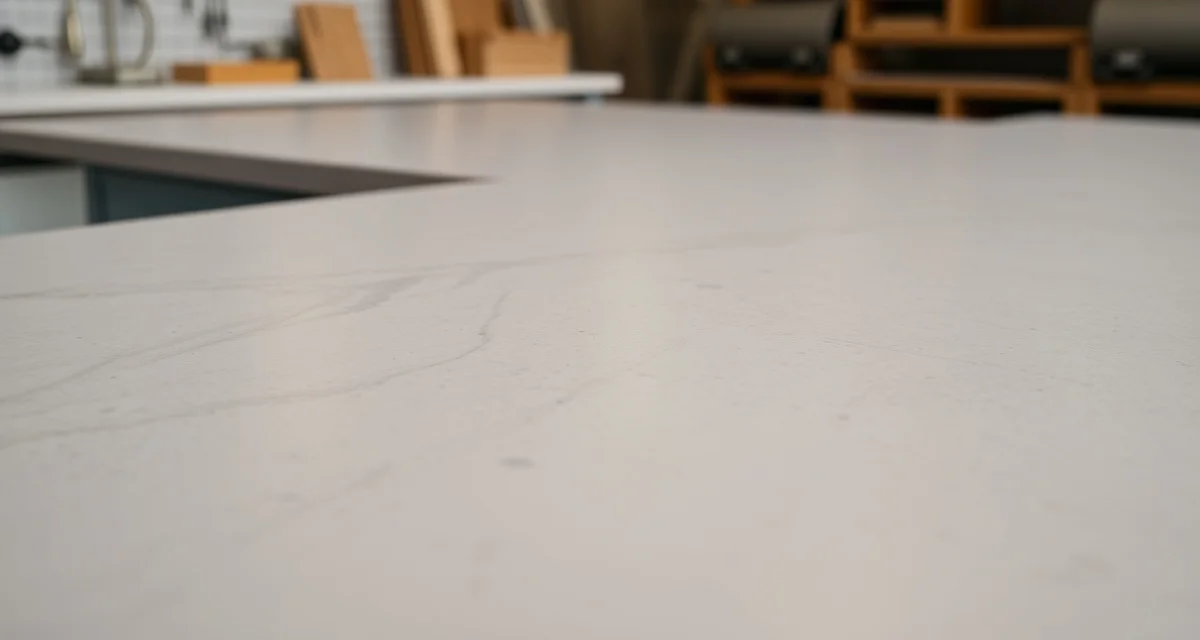
Honed finish is a smooth, matte stone surface created by grinding natural stone with diamond abrasives and stopping before the final polishing stage. The result is a flat, velvety surface with little to no reflective sheen. Honed finishes account for approximately 25-30% of residential countertop installations in the U.S., with that share climbing to over 40% for marble applications.
TL;DR
- Honed finish stops the grinding process at 200-400 grit, before polishing begins
- Creates a smooth, matte surface with no reflective sheen
- Costs $0-$3 per square foot more than polished (sometimes the same price)
- More susceptible to staining than polished due to open pore structure
- Ideal for marble countertops, bathrooms, and transitional/contemporary kitchens
- Requires sealing every 6-12 months compared to 1-3 years for polished
- Hides etching on marble far better than polished finishes
How Honed Finish Is Produced
Stone polishing is a progressive process. Each step uses finer abrasives to remove scratches from the previous step:
Calculate your material waste savings
See exactly how much slab material and money you could save with optimized cutting layouts.
Try the free Waste Calculator| Grit Level | Surface Result | Finish Name |
|---|---|---|
| 50-100 | Rough, visible scratches | Rough ground |
| 200-400 | Smooth, flat matte | Honed |
| 800-1500 | Semi-gloss | Semi-polished |
| 3000+ | Mirror-like reflection | Polished |
A honed finish is essentially a "stopped early" polish. The fabricator grinds through 200-400 grit pads and then stops, leaving the surface smooth to the touch but without the glossy reflective quality that comes from higher-grit finishing.
Production Time Comparison
- Polished: 8-12 minutes per linear foot on a CNC line
- Honed: 5-8 minutes per linear foot (fewer grinding steps)
- Time savings: 25-35% faster than polishing
This is why some fabricators charge the same price for honed as polished - you're actually doing less work, even though the finish is sometimes perceived as more premium.
Where Honed Finish Works Best
Ideal Applications
- Marble countertops - Honed marble hides etching from acidic foods (lemon, wine, tomato) far better than polished marble. Etch marks on polished marble appear as dull spots, but on a honed surface, they're virtually invisible.
- Bathroom vanities - The matte surface complements spa-like bathroom designs and shows fewer water spots
- Transitional kitchens - Honed stone pairs well with both traditional cabinetry and modern fixtures
- Commercial spaces - Honed finishes in restaurants and hotels hide wear patterns better than polished
Less Ideal Applications
- High-traffic kitchen prep areas - Oil stains penetrate honed surfaces faster than polished
- Dark stones in messy kitchens - Water marks and cooking oil show more on dark honed surfaces
- Outdoor applications - Honed finishes lack the slip resistance of leathered or flamed surfaces
Honed vs. Polished: The Complete Comparison
| Factor | Honed | Polished |
|---|---|---|
| Appearance | Matte, contemporary | Glossy, traditional |
| Light reflection | 15-25% | 70-90% |
| Fingerprint visibility | Low | High |
| Stain resistance | Lower (open pores) | Higher (closed pores) |
| Etch visibility (marble) | Very low | Very high |
| Scratch visibility | Low-medium | High |
| Sealing frequency | Every 6-12 months | Every 1-3 years |
| Color intensity | 70-80% of polished | 100% (baseline) |
| Price per sq ft | Same to +$3 | Baseline |
| Production time | 5-8 min/linear ft | 8-12 min/linear ft |
Staining and Sealing Considerations
The biggest trade-off with honed finishes is porosity. When you stop grinding at 400 grit, the stone's surface pores remain more open than they would after polishing to 3000+ grit.
Stain Risk by Stone Type (Honed)
- Marble: High - seal every 6 months; oil and wine are the biggest threats
- Granite: Medium - seal every 9-12 months; most granites are dense enough to resist casual spills
- Quartzite: Low-medium - naturally denser; annual sealing is usually sufficient
- Soapstone: Very low - naturally non-porous; mineral oil enhances the finish
Recommended Sealing Protocol
- Apply a penetrating impregnating sealer (not a topical coating)
- Use 2 coats on initial application, allowing 15-20 minutes between coats
- Wipe away excess after 20-30 minutes
- Allow 24 hours to cure before use
- Test by placing a water droplet on the surface - it should bead for 10+ minutes
Cost Breakdown for Fabricators
Material Costs (Same as Polished)
Most slab distributors sell the same slab at the same price regardless of whether it ships polished or honed. Some specialty honed slabs carry a $1-$3/sq ft premium because they're processed differently at the quarry.
Fabrication Costs
- Polishing pads used: 3-4 grits vs. 6-8 for polished = lower pad cost
- Time savings: 25-35% less time on the CNC or hand polisher
- Sealing (included in fab): Extra 10-15 minutes and $3-$5 in sealer per job
Pricing to Customers
- Most fabricators charge the same rate for honed and polished
- Some add a $2-$5/sq ft "honed upgrade" fee, framing it as a premium finish
- The margin on honed work is often 5-10% higher than polished because of lower production time
Care and Maintenance Guide for Honed Countertops
Daily cleaning: Warm water with a few drops of pH-neutral dish soap. Wipe with a soft cloth or sponge. Avoid any cleaner containing vinegar, lemon, ammonia, or bleach.
Weekly maintenance: Use a stone-specific cleaner (StoneTech, Granite Gold, or similar). Spray and wipe - don't let cleaners pool on the surface.
Stain removal: For oil stains, make a poultice with baking soda and water. Apply a 1/4-inch layer over the stain, cover with plastic wrap, and let sit 24-48 hours. For organic stains (wine, coffee), use a poultice with hydrogen peroxide instead.
Re-sealing: Test every 6 months by placing a tablespoon of water on the surface. If it doesn't bead after 5 minutes, it's time to re-seal.
Does honed finish cost more than polished?
In most cases, honed and polished finishes cost the same at the fabrication level. Some fabricators charge a $2-$5/sq ft premium for honed, positioning it as a specialty finish. However, the actual production time for honed is 25-35% less than polished, since fewer grinding steps are involved.
Is honed marble a good idea for kitchens?
Honed marble is the best way to use marble in a kitchen. While marble will still etch from acidic foods, the etching is nearly invisible on a honed surface - it just blends into the matte finish. On polished marble, every lemon drop and wine splash leaves a visible dull ring.
How often do you seal honed countertops?
Plan to seal honed countertops every 6-12 months, depending on the stone type and usage level. Marble needs sealing every 6 months in an active kitchen. Granite and quartzite can typically go 9-12 months between sealings. Always test with a water droplet before re-sealing.
Can you change polished stone to honed?
Yes. Fabricators can convert polished stone to honed by re-grinding the surface with 200-400 grit diamond pads. This can be done in the shop before installation or in the field for existing countertops. Field honing costs $8-$15/sq ft and takes 4-8 hours for an average kitchen.
Does honed granite show fingerprints?
Honed granite shows significantly fewer fingerprints than polished granite. The matte surface diffuses light rather than reflecting it, so oils from fingers don't create visible marks. This makes honed finishes especially popular for dark granites like Absolute Black and Black Pearl.
Why does honed stone look lighter than polished?
Honed stone appears 10-20% lighter because the matte surface scatters light rather than reflecting it. Polished stone concentrates light, which deepens the apparent color. This color shift is something to show customers before they commit - use a wet paper towel on a honed sample to approximate what the polished version would look like.
Is honed finish slippery when wet?
Honed finishes offer moderate slip resistance - better than polished but not as good as leathered or flamed. For countertop applications, slip resistance isn't a primary concern. For flooring, especially in wet areas, a leathered or flamed finish is a better choice. Honed stone used as flooring should have a coefficient of friction above 0.42 per ADA guidelines.
Can you hone engineered quartz?
Factory-honed engineered quartz is available from most major brands. However, field-honing or shop-honing engineered quartz voids most manufacturer warranties and can create an uneven appearance because the resin and quartz particles don't respond uniformly to grinding.
Does honed finish scratch easily?
Honed surfaces show scratches less than polished surfaces because there's no reflective contrast. A scratch on polished granite is a dull line against a shiny background - very visible. The same scratch on honed granite blends with the already matte surface. The stone itself is equally hard in both finishes.
What's the most popular honed stone for countertops?
Honed White Carrara marble is the single most requested honed countertop, followed by honed White Fantasy quartzite and honed Absolute Black granite. The trend toward white and light-toned kitchens has driven marble's popularity, and honed is the only practical way to use marble in a kitchen setting.
Quote Every Finish Right the First Time
Different finishes mean different costs, timelines, and sealing requirements. SlabWise tracks finish types per job, automatically adjusts production scheduling, and ensures your quotes include the correct pricing - whether honed, polished, or leathered.
Start Your 14-Day Free Trial → No credit card required.
Try These Free Tools
- Cost Calculator -- Get instant countertop cost estimates by material, edge profile, and square footage.
- Compare Materials -- Side-by-side material comparison with pricing, durability, and maintenance ratings.
- Edge Profile Selector -- Browse edge profiles with cost impact and visual previews.
Sources & Further Reading
- National Kitchen & Bath Association - Cabinet Frame Construction Standards
- International Surface Fabricators Association - Support Frame Requirements for Stone Installation
- Natural Stone Institute - Structural Framing Guidelines for Natural Stone Applications
- ASTM International - ASTM C1242 Standard Guide for Selection, Design, and Installation of Dimension Stone Attachment Systems