TL;DR
- Quartz countertops polish back to a glossy finish with a non-abrasive quartz polish, a microfiber cloth, and a little patience.
- Light haze or dullness takes about 15 minutes with a store polish like Weiman or Granite Gold.
- Scratches deeper than the resin surface need a pro and diamond pads, and some heat and chemical damage is permanent.
What does 'polishing' quartz actually mean?
Quartz countertops are engineered stone, roughly 90 to 94 percent ground quartz bound with polymer resins and pigments [1]. That resin binder gives the surface its factory gloss. It's also what dulls, hazes, or scratches. So when people say they want to 'polish' their quartz, they usually mean one of three very different things.
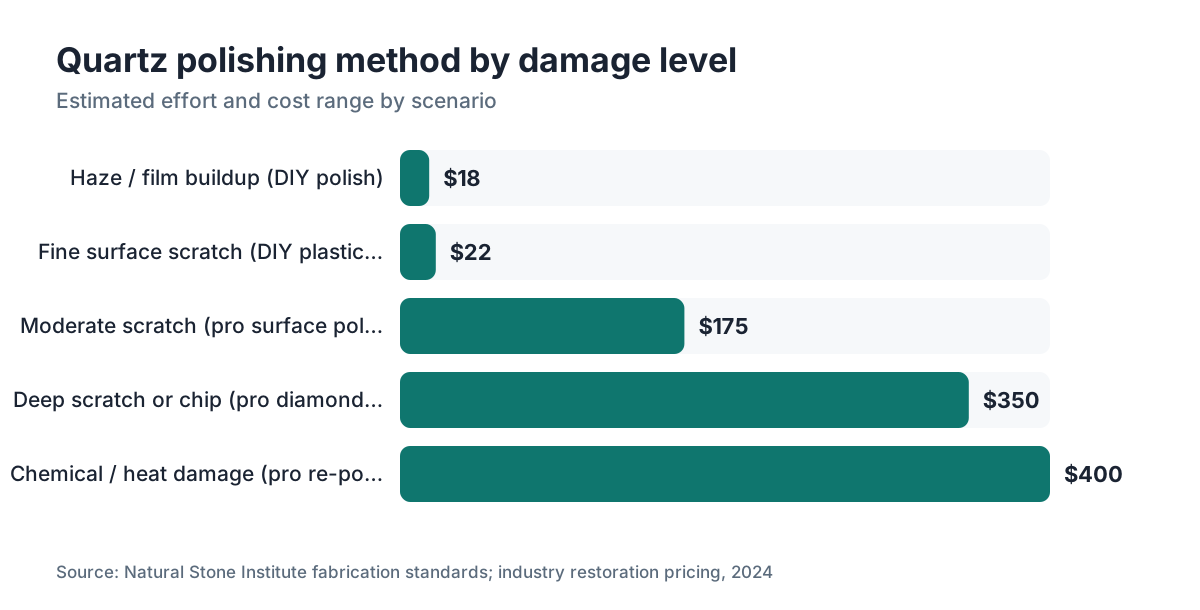
The first is bringing back everyday shine that's gone flat from soap film, hard water, or cleaning product buildup. Easy. Twenty minutes.
The second is buffing out a fine surface scratch that hasn't gone all the way through the resin layer. Doable at home, with patience.
The third is fixing a deep gouge, a chip, or damage that has reached the quartz aggregate underneath. That almost always needs a fabricator or stone restoration pro with diamond polishing pads and, in some cases, epoxy filler. No consumer product changes that.
Figure out which situation you're in before you buy anything. It saves a lot of wasted effort and money.
Why does quartz lose its shine in the first place?
The usual culprit is residue, not damage. Hard water leaves calcium carbonate deposits that scatter light and make the surface look foggy. Soap and cleaner residue, especially anything with a waxy or oily base, coats the resin and does the same thing. Some people make it worse by using olive oil or baby oil as a 'natural polish,' which just piles on more film.
Heat is a real threat. Quartz resins generally handle brief contact up to around 150°F (66°C), and manufacturers like Cambria and Silestone warn against setting hot pots directly on the surface [8]. A scorched spot discolors and can lift the resin in a way that polishing won't fix.
Harsh cleaners are the other big one. Bleach, oven cleaner, drain cleaner, and anything with a pH above 10 can break down the polymer resin over time. Silicone-based sprays, like some furniture polishes, bond to the surface and resist removal. Use the wrong cleaner day after day and the surface can look etched, even though quartz, unlike marble, doesn't actually etch from acids.
True etching, the chemical pitting that hits calcite-based stones like marble and limestone, does not happen on quartz because quartz is not calcareous [3]. If someone tells you your quartz is etched, they may be confusing it with another material or describing a resin breakdown that looks similar. The distinction matters because the fix is different.
What products should you use to polish quartz?
Use a product labeled specifically for quartz or engineered stone. Granite polishes are sometimes fine, but many assume a porous stone and leave residue or a hazy sheen on quartz. Marble polishes are a hard no. They often contain mild acids meant to cut calcite surface irregularities, and those acids can damage quartz resin.
Products that work well in practice: Weiman Quartz Countertop Cleaner and Polish, Granite Gold Quartz Brite, and Method Daily Granite Cleaner (which plenty of quartz owners use for light maintenance). Bar Keepers Friend, the powder version used lightly and rinsed right away, removes hard water deposits a polish won't touch. It's mildly abrasive, so save it for that one problem.
For a deeper buff on fine scratches, some fabricators reach for a plastic polish like Novus No. 2 Fine Scratch Remover. Quartz resin behaves a lot like hard plastic, and plastic polishes are built for that chemistry. Test on an inconspicuous corner first, because results vary by manufacturer and color.
Skip anything with bleach, ammonia, or citrus oils as a primary ingredient. Skip 'stone sealers' entirely. Quartz is non-porous, so sealer has nowhere to go except sit on the surface and add more haze [3].
On cost: consumer quartz polishes run about $8 to $18 per bottle at hardware stores or online. Professional restoration products cost more per unit, and on serious damage the results are in a different league from anything in a spray bottle.
Step-by-step: how to polish quartz countertops at home
This covers the most common case: a surface that's gone dull or hazy but is not deeply scratched.
Step 1: Clean the surface first. Spray the countertop with warm water and wipe it dry with a clean microfiber cloth. If there's hard water scale or soap film, deal with that before polishing. One part white vinegar to three parts water works for mineral deposits if you rinse it off immediately (never let acidic solutions dwell on quartz). For stubborn buildup, a little Bar Keepers Friend worked in gently with a damp cloth, then rinsed thoroughly, beats vinegar.
Step 2: Dry completely. Any leftover moisture dilutes your polish and streaks it. Give the surface two or three minutes with a dry cloth, or let it air dry.
Step 3: Apply the polish. Shake the bottle, spray a light coat over a 2-square-foot section, and don't drench it. Too much product is harder to buff off and leaves its own haze.
Step 4: Buff with a clean microfiber cloth. Small circular motions, moderate pressure. Work the product in for 30 to 60 seconds per section, then flip to a dry part of the cloth and buff off the residue. The finish should look clearer and more reflective as you go.
Step 5: Inspect and repeat if needed. Check the section under a raking light (a flashlight held at a low angle works). Streaks mean buff again with a dry cloth. Then move to the next section. One pass usually does it for maintenance; two passes for surfaces that have gone significantly dull.
Total time for an average kitchen: 20 to 40 minutes. Total cost in materials: under $20.
How do you get scratches out of quartz countertops?
It depends entirely on how deep the scratch is.
A scratch you can feel with your fingernail but that's still inside the resin layer has a real shot with a plastic polish like Novus No. 2. Apply a small amount, rub in a circular motion with a soft cloth, and rinse. Three or four passes may be needed. The goal isn't invisibility. It's reducing how the scratch catches and scatters light. On darker quartz colors, fine scratches often disappear almost completely. On white or very light quartz they're tougher to hide, because the white aggregate under the resin contrasts sharply.
A scratch that reaches the quartz aggregate, or a chip, is a different story. Consumer products won't fix it. A stone restoration tech using diamond abrasive pads, starting around 200 grit and working up through 400, 800, 1500, and 3000, can re-polish a section to a factory-like gloss. It's the same process fabricators use to edge and finish slabs [5]. The result is usually very good but not always invisible, especially if the color or pattern near the damage doesn't blend after refinishing.
Chips may need color-matched epoxy or polyester adhesive before polishing. Good fabricators keep color-match kits on hand. The repair is permanent but can show under close inspection.
Professional quartz polishing or scratch repair typically runs $150 to $400 for a single damaged area, based on what restoration companies generally quote for engineered stone work. Get two or three quotes, because pricing varies widely by region.
If the scratch sits near a seam, an edge, or on a heavily used run, and the slab is older, ask a fabricator about replacement instead of repair. For context, kitchen countertops run about $2,000 to $4,500 installed for a standard kitchen, so a few hundred dollars in repair almost always wins on economics unless the damage is severe.
For fabricators pricing repair jobs, a clear quoting workflow helps. SlabWise's quoting tool lets you attach notes about existing damage and scope of work so nothing gets missed at billing time.
Can you use a polishing compound or orbital buffer on quartz?
Yes, with some real cautions.
An orbital buffer or variable-speed polisher is what the pros use for serious refinishing. If you own one and want it for maintenance polishing, it speeds up the work. Use a foam polishing pad, not a cutting pad. Keep the speed low (600 to 800 RPM). Use a quartz-safe polish, not an automotive compound, which is far too aggressive for resin.
The risk is heat. A buffer moving too fast can generate enough friction heat to soften or discolor the resin, especially with a wool or cutting pad. Go slow and keep the buffer moving. Never hold it in one spot.
For scratches, an orbital run with progressively finer wet/dry sandpaper (1500, then 2000, then 3000) followed by a polish is the professional approach for surface-level damage. This is not a beginner project. Do it wrong and you'll create swirl marks that are harder to fix than the original scratch. If you're not comfortable with power tools and surface finishing, call a pro.
For everyday dullness, hand polishing with a microfiber cloth gets you 90 percent of the result with zero risk. Save the buffer for real problems.
What's the difference between polishing quartz and sealing it?
This one comes up constantly, and the answer is blunt: quartz does not need to be sealed, ever.
Natural stone like granite has microscopic pores that absorb liquids, stains, and bacteria over time. Sealing fills those pores. Quartz, engineered with a polymer resin binder, is essentially non-porous. The Natural Stone Institute and virtually every quartz manufacturer state this plainly in their care guidelines [3]. Silestone's own care page says the surface does not require sealing and warns against bleach and abrasive scrubbers [8]. Water and most liquids bead on the surface instead of soaking in.
Selling a homeowner a quartz sealer is either a mistake or a sales tactic. The sealer has nowhere to go, so it sits on top of the resin, where it hazes, attracts dust, and makes the surface look worse. If you've already applied a sealer to your quartz and it looks cloudy, that's probably why. A thorough cleaning with isopropyl alcohol (wiped clean, not left to dwell) can cut through sealer residue.
Polishing does something useful. It mechanically smooths the resin surface or removes a chemical film, and both restore light reflection. Different actions, different products. If a store associate tries to sell you both a sealer and a polish for quartz, you only need the polish.
For comparison, if you have granite countertops, sealing is appropriate and needed periodically, usually every one to three years depending on the stone and use. Marble countertops need sealing and are also prone to real chemical etching that quartz is not. Different materials, different care.
How often should you polish quartz countertops?
For a kitchen with normal daily use, a full polish once or twice a year is plenty. The spots that dull fastest are usually around the sink (hard water and soap) and near the stove (grease film and the occasional heat exposure).
Between polish sessions, a quick wipe with a damp microfiber cloth after cooking and a weekly clean with pH-neutral dish soap keeps the surface looking good. Most manufacturers, including Cambria, recommend mild soap and water as the daily method, full stop [10].
Polishing more than two or three times a year and still watching it dull? Find the cause before adding more polish. Usually it's a daily cleaning product leaving residue, or a water hardness issue feeding buildup. Fixing the root cause beats polishing more often.
Bathroom quartz vanity tops generally need less polishing than kitchen counters, because they see less heat, grease, and acidic food. An annual polish usually covers it.
When is the damage too bad to fix with polishing?
Some damage is permanent, and it's better to know that upfront than to spend hours and money finding out the hard way.
A burn from a hot pan that has discolored the resin and changed the surface color for good is not fixable with polishing. The resin has chemically changed. A pro can sometimes sand and re-polish the area to soften the visual impact, but the discoloration often lingers.
Cracks that run through the slab are structural failure, not surface scratches. They come from excessive weight, impact, or an improper installation (unsupported spans, weak substrate). Polishing does nothing for a crack. Depending on location and severity, a fabricator can sometimes inject epoxy and re-polish, but severe cracking usually means slab replacement.
Chemical damage from prolonged exposure to high-pH cleaners (oven cleaner is the classic offender) can eat the resin at a depth polishing can't reach. The surface looks flat and slightly rough even after buffing. Professional diamond pad refinishing sometimes helps, but it depends on how deep the damage goes. The EPA notes that cleaning product residues on surfaces can add to indoor chemical exposure, another reason to stick with milder, less volatile products [9].
For any of these, get an assessment from a certified stone restoration professional before spending on DIY products. The Natural Stone Institute and the National Tile Contractors Association both keep contractor directories [6][7].
If replacement is the direction, understand the full cost picture first. Fabricators using software like SlabWise can generate itemized quotes that break out material, fabrication, and installation, so you know exactly what you're comparing against the repair estimate.
Does polishing work differently on matte quartz vs. polished quartz?
Yes, and most guides skip this. Match your method to the finish or you'll change the look.
Most quartz countertops sold in the U.S. ship with a polished (glossy) finish. The factory surface is buffed to a high shine, typically 80 to 100 gloss units on a standard reflectometer. When that dulls, you're restoring gloss, and the methods above apply directly.
Matte or honed quartz, which keeps getting more popular, has a factory finish usually in the 10 to 30 gloss unit range. It's low-reflection on purpose. Apply a standard quartz polish to a matte surface and you raise its gloss, which changes the look. Probably not what you want.
For matte quartz, cleaning (not polishing) is almost always the right move. A thorough clean with pH-neutral soap, then a rinse and dry, removes most of the film and smudges that make matte surfaces look bad. If a matte surface is scratched or dulled beyond that, a stone restoration pro can re-hone it, but it's a specialized service.
Check your countertop's finish before buying any product. Your original receipt, the brand's website, or the fabricator who installed it can confirm the finish spec.
What should fabricators know about quartz polishing and customer expectations?
If you run a fabrication shop, quartz polishing questions hit you from two directions: customers who want to maintain what you just installed, and customers who show up after someone else's install with damage they want fixed.
On maintenance, hand new customers a one-page care sheet at handoff and you'll kill a lot of follow-up calls. The key points: pH-neutral cleaners only, no sealing, no cutting boards directly on the surface, trivets for hot items, and an annual polish with a quartz-specific product. Manufacturers like Cambria publish care guidelines you can reference directly [10].
On repairs, be honest about what polishing can and can't do. Over-promising on scratch repair makes customers unhappy even when your technical work is good. Photograph the damage before you start, document the expected outcome range, and get sign-off.
For quoting repair work, the variables are: size of the damaged area, depth of damage, color and pattern (busy patterns hide repairs better than solid colors), and whether filler is needed first. A basic surface polish on a small area is an hour or less of labor. Full re-polishing of a damaged section with diamond pads can run three to four hours with setup and cleanup.
If you're quoting this alongside full fabrication jobs, a system that builds custom line-item quotes fast saves real time. Quoting tools built for stone shops, including the one at SlabWise, let you add repair and restoration line items next to standard slab work.
For shops working across multiple stone types, know the polishing differences between quartz and natural stones. How to clean quartzite countertops and how to clean stone countertops cover those distinctions in more detail.
Frequently asked questions
Can I use Pledge or furniture polish on quartz countertops?
No. Most furniture polishes contain silicone or wax compounds that bond to the resin surface and leave a stubborn, hazy film. They're not built for stone or engineered surfaces, and they're hard to remove once applied. Stick to products labeled for quartz or engineered stone. If you've already used furniture polish on your quartz, isopropyl alcohol on a clean cloth helps cut through the residue.
Will a Magic Eraser scratch quartz?
It might. Magic Erasers are micro-abrasive foam pads, roughly like very fine sandpaper. On a polished quartz surface, aggressive or repeated use can dull the finish, especially on darker colors where fine marks show more. One light pass on a stubborn stain usually isn't catastrophic, but it's not something to use routinely. A plastic scraper or a damp microfiber cloth is safer for stuck-on debris.
Why does my quartz look cloudy after cleaning?
Almost always residue, not damage. The usual sources are soap film, hard water mineral deposits, or a cleaner that left a waxy or silicone coating. Clean the area with warm water and a clean microfiber cloth, then apply a quartz-specific polish and buff dry. If the cloudiness shows up around your sink, hard water scale is the likely cause, and a diluted vinegar solution (1:3 vinegar to water) rinsed off immediately works well on mineral deposits.
Does quartz need to be sealed after polishing?
No. Quartz is non-porous and does not benefit from sealing at any stage, including after polishing. Applying a sealer to quartz just adds a layer of product on top of the resin that eventually hazes and attracts dust. Every major quartz manufacturer states in their care guidelines that sealing is unnecessary and can hurt the surface appearance. Polish if you want shine. Skip the sealer entirely.
Can you buff out water rings or heat marks on quartz?
Water rings that are just mineral deposits buff out easily with a quartz polish or a mild abrasive cleaner like Bar Keepers Friend. Heat marks are trickier. If the mark is surface discoloration from light heat, polishing may improve it. If the resin has scorched, softened, or changed color from high heat, polishing won't reverse the chemical change and the damage is likely permanent. A stone restoration pro can assess whether diamond re-polishing will help.
How do I remove dried food or grout haze from quartz without scratching it?
For dried food, soak a cloth in warm water, lay it over the spot for a few minutes to soften the debris, then gently scrape with a plastic scraper or the edge of a credit card. Skip metal scrapers. For grout haze, a common post-installation problem, a non-acidic grout haze remover formulated for engineered stone works without harming the resin. Confirm any product is explicitly labeled safe for quartz before applying it.
What grit sandpaper does a pro use to re-polish quartz?
Professional stone restoration on quartz typically starts at 200 to 400 grit wet/dry sandpaper (or equivalent diamond pads) to address scratches and surface irregularities, then progresses through 800, 1500, and 3000 grit finishing pads before a final buff with a resin-specific polish. The sequence is similar to how fabricators finish slab edges. Skipping grits leaves swirl marks that show under light. This is not a DIY process for most people.
Is Cambria quartz easier or harder to polish than other brands?
Cambria uses a similar polymer-resin binding system to other major engineered quartz brands, so the polishing process is essentially the same. Cambria's care guidelines recommend mild soap and water for daily cleaning and caution against abrasive cleaners. For polishing, use a quartz-labeled product and the same steps you'd use for any polished quartz. The finish type (polished vs. matte) matters far more than the brand when choosing your approach.
Can I polish quartz countertops to make them look new again?
If the dullness is film buildup or surface oxidation of the resin, yes, a proper polish brings back a very close-to-new appearance. If the surface has physical scratches, heat damage, or chemical breakdown of the resin, polishing improves but rarely fully erases the evidence. Deeply scratched or discolored quartz benefits from professional diamond pad re-polishing, which can restore a high gloss, though heavily patterned damage may still be visible.
What's the best everyday routine to avoid needing to polish as often?
Wipe spills immediately. Use a damp microfiber cloth after cooking, not a sponge (sponges harbor residue). Clean with a few drops of pH-neutral dish soap in warm water, rinse with clean water, and dry with a microfiber cloth. Don't spray countertop cleaners directly on quartz and let them sit. Use trivets for hot pans. Skip the daily 'granite spray' products, most of which leave a film on quartz over time. These habits cut polish frequency to once or twice a year.
How do I know if my countertop is quartz or quartzite?
Quartz is engineered stone (bound with resin) and almost always has a perfectly consistent, repeating pattern up close. Quartzite is a natural metamorphic rock with genuine veining and variation across the slab. Quartzite is porous and needs sealing; quartz does not. If you're unsure, check your original receipt, the fabricator's invoice, or look for the brand name stamped on the underside of the slab near the sink cutout. Care and polishing differ significantly between the two.
Will polishing quartz void the manufacturer warranty?
Using products not approved by the manufacturer can void the warranty on some brands. Cambria, Caesarstone, and Silestone all publish recommended care guidelines, and using a harsh abrasive or an acidic cleaner that damages the surface may eliminate warranty coverage for that damage. Consumer quartz polishes from reputable brands like Weiman or Granite Gold are generally consistent with manufacturer recommendations, but read the care guide for your specific brand before using any product if warranty coverage matters to you.
Sources
- U.S. Geological Survey, Minerals Information: Quartz is silicon dioxide and makes up roughly 90-94% of engineered quartz countertop slabs by weight, bound with polymer resins
- Natural Stone Institute, Stone Comparison and Care Reference: Quartz engineered surfaces are not calcareous and do not etch from acidic substances the way marble and limestone do; quartz is non-porous and does not require sealing
- Natural Stone Institute, Fabrication Standards for Engineered Stone: Professional re-polishing of engineered quartz uses a sequence of diamond abrasive pads from coarse to fine grits, the same process used in slab edge finishing
- Natural Stone Institute, contractor directory: The Natural Stone Institute maintains a directory of certified stone restoration contractors
- National Tile Contractors Association: The National Tile Contractors Association provides a contractor directory useful for locating qualified stone and tile restoration professionals
- Silestone by Cosentino, Care and Maintenance: Silestone (Cosentino) recommends pH-neutral cleaners, states the surface does not require sealing, and warns against bleach, abrasive scrubbers, and direct heat
- U.S. Environmental Protection Agency, Indoor Air Quality: EPA guidance notes cleaning product residues on surfaces can contribute to indoor chemical exposure, supporting use of milder, less volatile cleaners
- Cambria, care and warranty guidelines: Cambria recommends mild soap and water for daily cleaning, and its warranty coverage can be affected by use of cleaners or treatments not consistent with published care guidelines
Last updated 2026-07-09