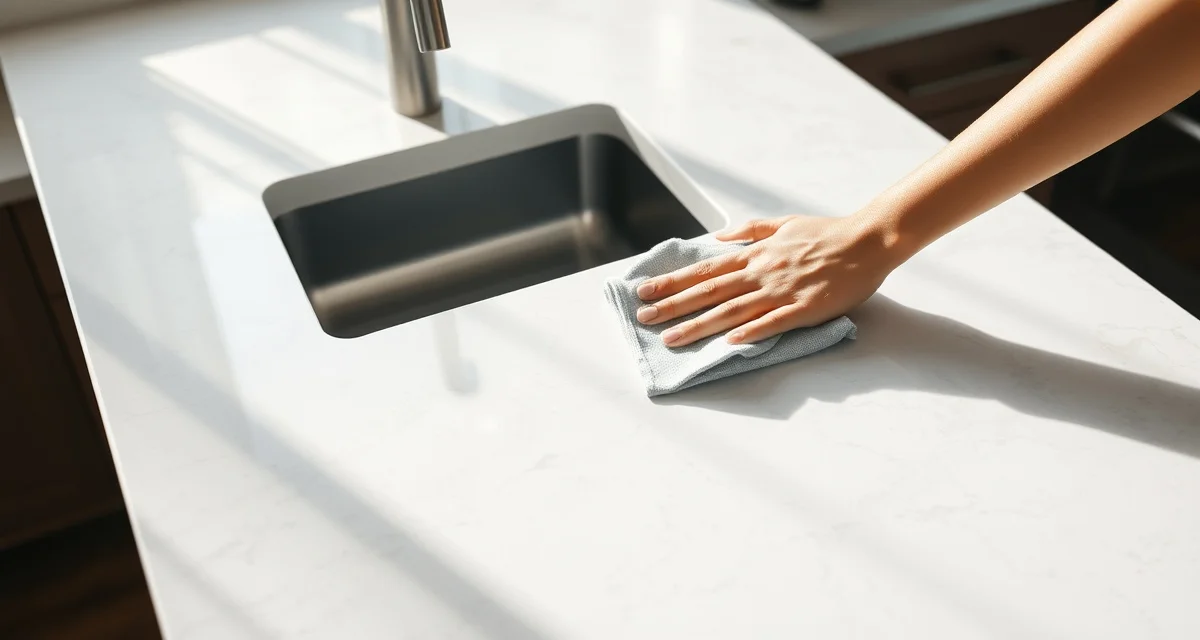
Best Cleaner for Quartz Countertops
The best daily cleaner for quartz countertops is warm water with a few drops of mild dish soap, applied with a soft cloth or sponge. For a dedicated quartz cleaner, products like Weiman Quartz Countertop Cleaner, Method Daily Granite & Stone Cleaner (which is quartz-safe despite the name), and TriNova Granite & Stone Daily Cleaner are all effective and pH-neutral. The key requirement is avoiding anything highly alkaline (pH above 10) or highly acidic (pH below 4), as extreme pH levels can damage the resin binders in engineered quartz.
TL;DR
- Warm water + mild dish soap is the best everyday quartz cleaner
- Dedicated quartz cleaners ($8-$15/bottle) offer convenience and streak-free results
- Never use bleach, oven cleaner, or highly alkaline products on quartz
- Avoid abrasive scrubbers (steel wool, scouring pads) that scratch the surface
- For dried-on food, use a plastic scraper, not a metal blade
- Disinfect with isopropyl alcohol (70%) spray, not harsh chemical disinfectants
- Quartz is non-porous and doesn't need sealing, but it does need regular cleaning
Daily Cleaning: The Simple Routine
For daily maintenance, quartz needs very little:
Calculate your material waste savings
See exactly how much slab material and money you could save with optimized cutting layouts.
Try the free Waste Calculator- Wipe down with warm water and a microfiber cloth after cooking
- Add a drop of dish soap for grease or food residue
- Rinse with clean water to remove any soap film
- Dry with a clean cloth to prevent water spots (especially in hard-water areas)
This 2-minute routine keeps quartz looking new for decades. The non-porous surface means spills can't penetrate, so daily wiping prevents virtually all staining.
Top Quartz-Safe Cleaning Products
| Product | Type | Price | Best For |
|---|---|---|---|
| Weiman Quartz Countertop Cleaner | Daily spray | $8-$10 | Streak-free daily cleaning |
| Method Daily Granite & Stone | Daily spray | $5-$7 | Budget-friendly daily use |
| TriNova Daily Stone Cleaner | Daily spray | $10-$12 | Light grease and food residue |
| Bar Keeper's Friend Soft Cleanser | Deep clean | $6-$8 | Tough stains and dried food |
| Weiman Disinfecting Wipes (Stone) | Disinfecting | $6-$8 | Quick disinfection |
| Dawn dish soap + water | DIY daily | $3-$5 | The simplest and cheapest option |
Why Dish Soap Works So Well
Dish soap (like Dawn or Seventh Generation) is pH-neutral (around 7), cuts grease effectively, rinses cleanly, and costs almost nothing. The reason quartz manufacturers recommend it as the primary cleaning method is that it does everything needed without any risk of surface damage. Most dedicated quartz cleaners are essentially diluted surfactants (soap) with a fragrance and marketing label.
Deep Cleaning for Tough Stains
When daily cleaning isn't enough, here's how to handle common quartz stains:
Dried Food and Grease
- Apply warm water to the area and let it sit for 5 minutes to soften the residue
- Use a plastic putty knife or old credit card to gently scrape off dried material
- Clean the area with dish soap and water
- For stubborn grease, apply a paste of baking soda and water, let sit 10 minutes, then wipe clean
Coffee, Tea, and Wine Stains
Quartz is non-porous, so these liquids shouldn't penetrate. If they leave surface marks:
- Make a paste of baking soda and water (3:1 ratio)
- Apply to the stain and cover with plastic wrap
- Let sit for 2-4 hours (or overnight for old stains)
- Wipe clean and rinse
Permanent Marker and Ink
- Apply a small amount of isopropyl alcohol (rubbing alcohol) to a cloth
- Rub the stain gently in circular motions
- Rinse with water and dish soap
- Repeat if needed; most ink lifts within 2-3 applications
Hard Water Deposits
White calcium buildup around faucets is common:
- Apply a 50/50 mixture of white vinegar and water (brief contact only)
- Let sit for no more than 5 minutes
- Scrub gently with a soft brush
- Rinse thoroughly with water and dry
- Note: Extended vinegar contact can dull quartz, so limit exposure time
Adhesive Residue (Tape, Stickers)
- Apply a small amount of Goo Gone or rubbing alcohol to the adhesive
- Let sit for 2-3 minutes
- Wipe with a soft cloth
- Clean the area with soap and water to remove solvent residue
Products That Damage Quartz
Avoiding the wrong products is just as important as using the right ones:
| Product to Avoid | Why It's Dangerous | Damage Type |
|---|---|---|
| Bleach (undiluted) | pH ~12; attacks resin | Discoloration, dullness |
| Oven cleaner | Extremely alkaline (pH 13+) | Permanent etching, color loss |
| Drain cleaner | Extremely alkaline | Severe surface damage |
| Abrasive powders (Comet, Ajax) | Contain grit | Scratches |
| Steel wool / Brillo pads | Metal fibers | Deep scratches |
| Nail polish remover (acetone) | Solvent attacks resin | Dullness, tackiness |
| Paint thinner / turpentine | Solvent attacks resin | Surface degradation |
| Oven-hot items | 300degF+ | Scorch marks |
The common thread: Quartz's resin component is vulnerable to strong solvents, extreme pH levels, and abrasive materials. The quartz crystals themselves are nearly indestructible, but the resin that binds them is the weak link.
Disinfecting Quartz Countertops
With food safety in mind, here are safe ways to disinfect quartz:
Isopropyl alcohol spray (recommended): Mix 2/3 cup rubbing alcohol (70% concentration) with 1/3 cup water in a spray bottle. Spray, let sit 2-3 minutes, wipe clean. This kills most common bacteria and viruses without damaging quartz.
Diluted bleach (use sparingly): If you must use bleach, dilute to 1 tablespoon per gallon of water. Apply briefly (under 2 minutes), then rinse thoroughly. Frequent use of even diluted bleach can dull the surface over time.
Hydrogen peroxide (3% concentration): Spray on surface, let sit 5 minutes, wipe clean. Safe for quartz and effective against bacteria.
UV sanitizers: Handheld UV-C wands ($25-$50) disinfect without any chemical contact. No risk of surface damage.
Not recommended: Clorox wipes, Lysol spray, and other household disinfectants contain chemicals that can gradually degrade quartz resin with repeated use. Occasional use is unlikely to cause visible damage, but daily use over months may dull the finish.
Frequently Asked Questions
Can I use Windex on quartz? Windex (original formula) is generally safe for occasional use on quartz. It's mildly alkaline (pH ~10) and contains ammonia. For daily cleaning, dish soap and water is a better choice since it's pH-neutral with no ammonia.
Is Bar Keeper's Friend safe for quartz? The Bar Keeper's Friend Soft Cleanser (liquid) is quartz-safe and effective for tough stains. Avoid the original powdered version, which is more abrasive and can scratch polished quartz.
Can I use a Magic Eraser on quartz? Magic Erasers are micro-abrasive and can remove the polished finish on quartz, leaving a dull spot. Use them only on matte or textured quartz finishes, and even then, test in an inconspicuous area first.
Why does my quartz look dull? Dullness is usually caused by cleaning product buildup, hard water deposits, or accidental use of an abrasive cleaner. Clean with dish soap and water, then check if the shine returns. If not, the surface may have been microscopically scratched.
How do I remove a white haze from quartz? White haze is typically cleaning product residue. Clean the entire surface with warm water and dish soap, rinse with clean water only, and dry with a microfiber cloth. For stubborn haze, use a 50/50 isopropyl alcohol and water solution.
Does quartz need to be sealed? No. Unlike granite, quartz is non-porous and never needs sealing. Applying granite sealer to quartz creates a sticky residue. If this has happened, clean with rubbing alcohol and warm water.
Can I use a steam cleaner on quartz? No. Steam cleaners produce temperatures above 212degF with sustained contact that can damage the resin. Steam cleaning can cause the surface to cloud, dull, or even crack in extreme cases.
What about natural cleaners like vinegar and lemon? Vinegar and lemon juice are acidic (pH 2-3). Brief contact (under 5 minutes) for targeted cleaning is generally safe, but don't use acidic cleaners as a daily spray. Prolonged acid exposure can etch and dull quartz.
How do I clean quartz around the sink? The sink area accumulates water spots and soap residue. Clean daily with dish soap and water, dry thoroughly, and address hard water buildup weekly with a vinegar solution (brief application, thorough rinse).
Is it OK to use antibacterial soap on quartz? Yes. Antibacterial hand soap and dish soap are safe for quartz. The antibacterial agents in standard soaps are not strong enough to damage the resin.
Calculate Your Countertop Cost
Considering quartz for your kitchen or bathroom? Use our free cost calculator to compare quartz pricing with other materials. Quartz's low-maintenance cleaning requirements are one reason it holds 51% of the U.S. countertop market.
[Try the SlabWise Cost Calculator →]
Try These Free Tools
- Cost Calculator -- Get instant countertop cost estimates by material, edge profile, and square footage.
- Compare Materials -- Side-by-side material comparison with pricing, durability, and maintenance ratings.
- Edge Profile Selector -- Browse edge profiles with cost impact and visual previews.