TL;DR
- Quartzite is a natural stone that needs sealing every one to three years, pH-neutral cleaners, and protection from acidic liquids.
- It's harder than marble but still porous.
- Homeowners often confuse it with quartz (the engineered product), which needs nothing.
- Clarifying that difference upfront prevents callbacks, unhappy customers, and bad reviews.
What is quartzite, and why do homeowners confuse it with quartz?
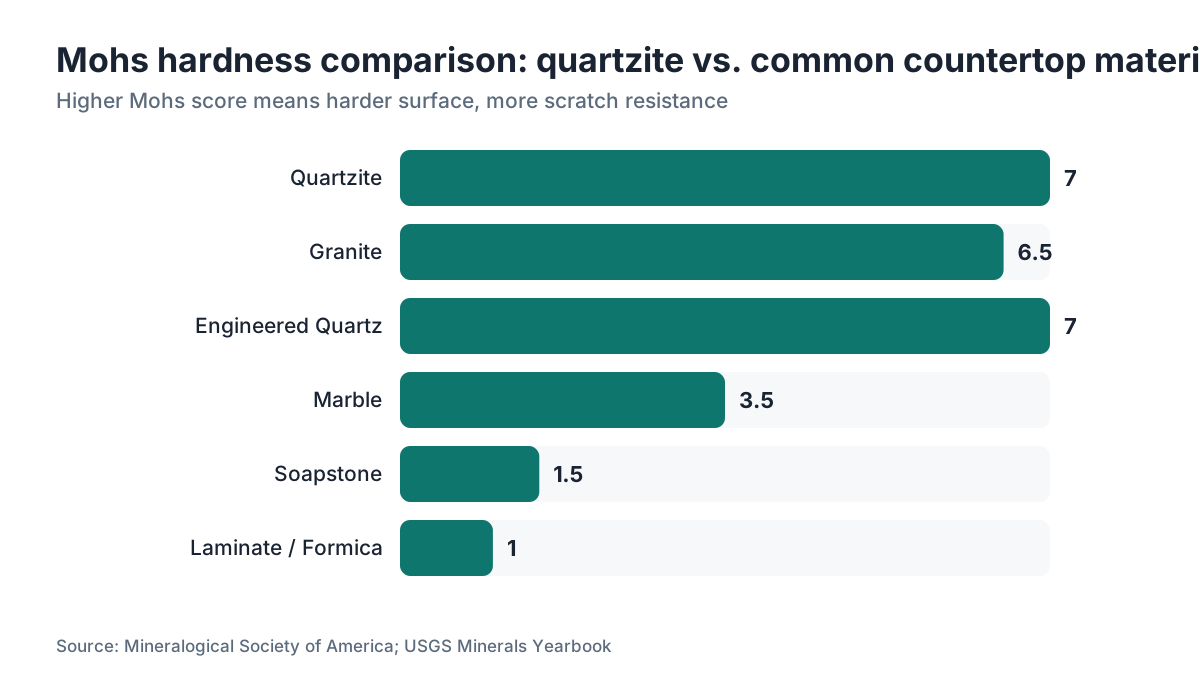
Quartzite is a metamorphic rock. It starts as sandstone, gets buried under pressure and heat, and the sand grains fuse into interlocking quartz crystals that are genuinely hard. On the Mohs scale, quartzite typically rates 7 or above, harder than granite at roughly 6 to 6.5 [1]. That hardness is real, and it's the first thing to tell a homeowner.
The confusion with quartz (sold under brand names like Silestone or Cambria) is enormous and almost universal. Engineered quartz is a manufactured slab: roughly 90 to 94 percent crushed stone bound with polymer resins. It needs zero sealing, handles most household acids without etching, and is close to maintenance-free. Natural quartzite is none of those things.
A homeowner walks in asking for 'quartz that looks like marble.' They may be picturing a white quartzite like Super White or Taj Mahal. Let that ambiguity sit, and here's what happens: they go home, skip the sealing step, pour lemon juice on it, and call you in six months. The fix is two sentences at the point of sale. 'Quartzite is a natural stone mined from the earth. It looks incredible, but it needs the same care as marble.' Done.
Some slabs sold as quartzite in stone yards are actually marble or dolomitic marble. A quick acid test (a drop of muriatic acid on an inconspicuous spot) fizzes on true marble and most dolomite; genuine quartzite barely reacts [2]. If you're a fabricator, knowing what you're actually cutting protects you. If you're a homeowner, ask your fabricator to confirm the stone's composition before you commit.
Does quartzite need to be sealed?
Yes, almost always. Quartzite is porous enough that liquids penetrate the surface if it isn't sealed. The porosity varies by slab, though. Dense quartzites like Taj Mahal absorb water slowly. Softer, more marble-like slabs marketed as quartzite can absorb within minutes.
The water test is the honest way to check. Pour a small amount of water on the surface and watch. If it beads up after several minutes, the existing sealer is still working. If it soaks in and darkens the stone within two to four minutes, the stone needs sealing now [3]. Fabricators can teach homeowners this test in under a minute, and it turns a vague 'seal it every year or two' instruction into something they can act on.
Most penetrating sealers (also called impregnating sealers) for natural stone are silane- or siloxane-based. They fill the pores below the surface without changing the look of the stone. Topical sealers sit on the surface and can add a sheen homeowners didn't ask for. For quartzite countertops, a penetrating sealer is almost always the right call [3].
The Marble Institute of America recommends testing sealed stone annually and resealing whenever the water test fails [3]. That translates to roughly every one to three years for most kitchen installations, faster if the household cooks a lot with acidic ingredients or uses harsh cleaners.
How often should quartzite countertops be sealed?
There's no single answer, because slab porosity varies, sealer quality varies, and kitchen use varies. Here's the rule I'd hand a homeowner: test it once a year with the water test, and reseal when it fails. In most kitchens, that lands somewhere between one and three years per application.
High-traffic kitchens with frequent cooking, citrus, wine, and vinegar will exhaust a sealer faster. A kitchen that mostly warms up takeout might go three years without a problem. Some fabricators sell a premium, longer-lasting sealer at installation and promise a five-year interval, but those claims depend heavily on the specific product and the stone's absorption rate. Be honest with your customer about what 'up to five years' actually means.
A homeowner can apply a penetrating sealer themselves. The process takes about an hour: clean the surface, apply the sealer with a cloth, let it sit per the manufacturer's instructions (usually 10 to 20 minutes), wipe off the excess, and let it cure [3]. They do not need to hire a professional every time, and telling them that builds trust rather than burning it.
What cleaners are safe on quartzite?
pH-neutral cleaners are the only safe daily choice. Warm water and a few drops of dish soap works. Stone-specific cleaners rated for natural stone also work. What ruins quartzite, and marble, and most natural stone, is anything acidic or alkaline enough to attack the mineral structure.
Acids etch the surface. Lemon juice, vinegar, tomato sauce, wine, and most bathroom cleaners with bleach or ammonia can all leave dull, rough spots where the stone surface has been chemically eroded. This is called etching, and it is not a stain. Etching removes material. It cannot be wiped away. Light etching can sometimes be polished out, but heavy etching needs a professional restoration or resurfacing [4].
Abrasive scrub pads scratch the polished surface. Steel wool, scouring powders, and anything with grit will leave fine scratches that accumulate into visible dullness over months.
Three things to tell homeowners in plain language: use pH-neutral soap and water for daily cleaning, blot spills immediately (especially wine, juice, and coffee), and never use vinegar or citrus-based cleaners. For everyday cleaning routines, the guide on how to clean quartzite countertops covers specific products and techniques.
If a homeowner asks about disinfecting, tell them a dilute solution of isopropyl alcohol (about 70 percent) is generally safe on sealed quartzite and won't etch the stone the way bleach-based sprays can. No formal study has established this definitively for quartzite specifically, but it matches guidance from stone industry bodies and the chemistry of silicate minerals [4].
Will quartzite etch or stain like marble?
This is probably the most important thing a fabricator communicates, and most of the time it doesn't get said clearly enough.
True quartzite (the well-metamorphosed kind with a Mohs hardness of 7 or above) etches far less than marble. Marble is calcium carbonate, and acids react with calcium carbonate instantly. True quartzite is silicon dioxide, which is much more acid-resistant. A glass of orange juice left on true quartzite won't etch it the way it would etch marble [2].
But 'quartzite' at many stone yards is not true quartzite. Dolomitic marble and soft metamorphic limestones get sold under the quartzite label because they look similar. These stones etch easily. If the fabricator and homeowner both assume the stone is acid-resistant and it isn't, the homeowner gets a damaged countertop and no idea why.
The acid fizz test mentioned earlier is the fastest field check. A fabricator who can say 'I tested this slab and it's true quartzite, so it has good acid resistance, though you should still wipe up spills' is giving a homeowner real information they can use.
Staining is a separate issue from etching. A stain is a substance that gets absorbed into the pores: oil, red wine, coffee. A good sealer slows absorption and gives the homeowner time to blot the spill. An etch mark is surface damage from acid, and sealer doesn't prevent it the way people hope. These two things get conflated all the time, and separating them in the conversation sets accurate expectations.
For comparison: marble countertops etch from almost any acid. Granite countertops are denser and far more stain-resistant than quartzite. Engineered quartz resists both etching and staining because the resin binder fills its pores completely.
Is quartzite heat and scratch resistant?
Scratch resistance is genuinely good. A Mohs hardness of 7 or above means quartzite is harder than most knives (steel knives typically rate 5.5 to 6.5 on the Mohs scale). Homeowners can cut on it without ruining the surface, though fabricators should still recommend cutting boards, partly for the knives' sake and partly because repeated stress concentrations on any stone can eventually cause micro-fractures.
Heat resistance is solid compared to engineered quartz or solid surface materials. Natural quartzite tolerates brief contact with hot pots, while engineered quartz can suffer resin damage at sustained temperatures above about 150 degrees Celsius (roughly 300 degrees Fahrenheit) [5]. Tell that to homeowners deciding between the two.
Thermal shock is real, though. Setting a 500-degree pan directly on any countertop, including quartzite, repeatedly over years creates small expansion and contraction cycles that can eventually crack the stone, especially near a seam or a cutout. Trivets are still a good idea. Frame it as 'protect your investment' rather than 'don't do anything fun in your kitchen' and you get better compliance.
How should fabricators explain quartzite maintenance at the point of sale?
Keep it short and honest. Homeowners don't need a geology lecture. They need three things: what to do daily, what to avoid, and when to reseal.
A printed care card works well. One side covers daily cleaning (neutral soap and water, blot spills immediately). The other side covers the annual water test and when to call a stone restoration professional if something goes wrong. Some fabricators include a small bottle of stone sealer and a cloth in the job envelope. That turns an abstract promise into a tangible reminder.
The conversation at delivery or installation should take about three minutes and cover:
- The difference between quartzite and engineered quartz, so they don't assume it's maintenance-free.
- The specific products they should buy (pH-neutral stone cleaner, penetrating impregnator sealer rated for natural stone).
- The water test, demonstrated right there on the freshly installed countertop so they understand what 'the sealer is working' looks like.
- What etching looks like versus a stain, and that etching is surface damage, not a warranty issue with the installation.
Shops that handle quoting and job documentation digitally can attach a PDF care guide to the job record so it's easy to reprint or email later. Platforms like SlabWise let fabricators store job notes and customer-facing documents alongside the quote, which means the care guide doesn't get lost in a paper folder.
The goal is a homeowner who knows what they bought and knows how to take care of it. That customer doesn't call you angry in year two. They call you when they're ready for the bathroom remodel.
What happens if quartzite isn't sealed or is cared for incorrectly?
In the short term: staining. Oil and wine soak into the pores and darken the stone. Many stains can be drawn out with a poultice (a paste of absorbent material mixed with a solvent, applied and left to pull the stain back out), but it takes patience and sometimes multiple applications [4].
In the medium term: dullness and surface erosion if acidic cleaners are used habitually. Homeowners who wipe down their countertops with a vinegar-water spray every day (a popular DIY cleaning tip that is genuinely terrible for natural stone) will watch the polished surface lose its sheen over months.
In the long term: if the stone is a softer 'quartzite' that's actually dolomitic marble, and it goes unsealed in a wet area like around the sink, water absorption can cause spalling or surface breakdown over years. This is an edge case, but flag it for homeowners with softer slabs.
None of this is catastrophic compared to, say, a cracked structural element. But it's expensive to fix. A professional stone honing and repolishing job runs anywhere from $200 to $800 or more depending on the square footage and the severity of the damage (prices vary by region and contractor; this range reflects common quotes found on contractor pricing sites, not a formal survey). Prevention, meaning good sealer and the right cleaners, costs a fraction of that.
How does quartzite maintenance compare to other countertop materials?
This comparison comes up constantly in showrooms, and a clean mental model helps both fabricators and homeowners make better decisions.
| Material | Sealing needed | Acid/etch risk | Scratch resistance | Heat tolerance |
|---|---|---|---|---|
| Quartzite (true) | Yes, every 1-3 years | Low to moderate | Very high (Mohs 7+) | Good |
| Marble | Yes, frequently | High | Moderate (Mohs 3-4) | Good |
| Granite | Yes, every 1-5 years | Low | High (Mohs 6-6.5) | Excellent |
| Engineered quartz | No | Very low | High | Moderate (resin limit) |
| Soapstone | Oiling (optional) | Very low | Low (scratches easily) | Excellent |
| Butcher block | Oiling regularly | Moderate | Low (knife marks) | Low |
| Laminate | None | Moderate | Low | Low |
Quartzite sits in a sweet spot for homeowners who want the look of marble with less fragility, but it still demands more care than granite or engineered quartz. That's not a knock on quartzite. It's just accurate. Homeowners who understand this before they buy are happier with the product afterward.
For those researching alternatives: granite countertops are lower maintenance overall. Marble countertops are beautiful and high-maintenance. Butcher block countertops need oiling rather than sealing but are vulnerable to water damage and knife cuts. Laminate countertops need essentially nothing but can't be repaired if they burn or chip.
The guide on how to clean stone countertops covers general principles that apply across quartzite, granite, marble, and soapstone.
What should homeowners do if their quartzite gets stained or etched?
First, figure out which problem they actually have. A stain is a dark or discolored patch where something soaked into the stone. An etch mark is a dull, slightly rough area where an acid removed surface material. They look different: stains often carry color (a dark ring from red wine, a yellowish cast from cooking oil), while etch marks show up as matte white or gray patches on a polished surface.
For stains, the standard approach is a poultice. Mix an absorbent powder (flour, baking soda, kaolin, or diatomaceous earth) with a solvent appropriate to the stain type (hydrogen peroxide for organic stains like wine and coffee, acetone for oil-based stains) into a thick paste. Apply it about a quarter-inch thick over the stain, cover with plastic wrap, tape the edges, and leave it for 24 to 48 hours. The paste dries and draws the stain out as it does. Repeat if necessary [4].
For etch marks on quartzite, the response depends on severity. Light surface hazing on a polished finish can sometimes be buffed out with a marble polishing powder and a felt pad. Deeper etching needs a professional stone restorer who can re-hone or re-polish the surface mechanically. This is not a DIY job for most homeowners.
Fabricated joints or edges that have cracked are a separate issue and usually require professional repair with color-matched epoxy. Homeowners should not try to fill cracks themselves with silicone caulk or household adhesives, which look wrong and can trap moisture.
Tell homeowners upfront that surface damage is not a manufacturing defect and typically not covered under any installation warranty. Setting that expectation before there's a problem is much easier than explaining it after.
Are there quartzite varieties that need more or less maintenance?
Yes, and the differences are meaningful. Quartzite slabs range from extremely dense, well-metamorphosed stone that barely absorbs water to softer 'quartzites' that are essentially marble with a different label. Some popular names and what they actually are:
Taj Mahal quartzite is generally a true quartzite with good density and modest porosity. Many fabricators consider it one of the easier quartzites to maintain [2].
Super White gets sold as quartzite but often tests as dolomitic marble or a mixed mineral slab. It can etch more than a homeowner expects if they were told it was quartzite. An acid test at the yard is the only reliable check.
Fantasy Brown is another one that varies enormously by slab origin. Some are quartzite, some are marble, some are dolomite. The name alone tells you nothing.
Cristallo and similar high-clarity stones tend toward the denser end and generally behave well.
The honest message for homeowners: ask for an acid test on the specific slab you're buying, not on a generic sample. If a yard can't or won't do that, buy from someone who can. The material label on the yard tag is a starting point, not a guarantee.
For fabricators, keeping notes on which specific slabs tested as true quartzite versus softer material pays dividends in customer satisfaction. If you're using shop management software to track job details, adding a field for slab composition notes takes 30 seconds and can prevent a lot of callbacks.
What are the signs that quartzite needs resealing right now?
The water test is the gold standard. Put a tablespoon of water on the countertop surface and watch. If it beads and sits on the surface for four or more minutes without darkening the stone, the sealer is still working. If it darkens the stone within two minutes, reseal now [3].
Visual signs that a sealer has worn out include water soaking in quickly near the sink or cooktop (the highest-traffic areas wear first), a slight darkening of the stone when it gets wet that didn't happen when the stone was new, and increased difficulty wiping up spills cleanly.
Homeowners can also look for small stains appearing that wouldn't have happened before. If a coffee drip that would have wiped right up six months ago now leaves a faint ring, the stone's pores are open.
Tell homeowners to run the water test once a year, preferably on the same date (January 1 works, or after Thanksgiving, depending on what they'll remember). It takes 30 seconds and removes all guesswork.
Frequently asked questions
Is quartzite higher maintenance than granite?
Somewhat, yes. Quartzite generally needs sealing on a similar or slightly more frequent schedule compared to granite, and it has lower acid resistance than dense granite. Both need pH-neutral cleaners and periodic sealing, but granite tends to have lower porosity. If a homeowner wants natural stone with minimal upkeep, granite is the easier choice. If they love the look of quartzite, the maintenance difference is manageable with annual water tests and a good penetrating sealer.
Can you use vinegar to clean quartzite countertops?
No. Vinegar is acidic enough to etch natural stone surfaces over time, dulling the polished finish. This is a common mistake because vinegar-water sprays are popular DIY cleaners for many surfaces. On quartzite, marble, and most natural stone, they cause cumulative surface damage. Use a pH-neutral dish soap and warm water for daily cleaning instead. Stone-specific spray cleaners are also fine. The guide on how to clean quartzite countertops covers safe product options in more detail.
How do I know if my slab is real quartzite or marble?
Ask for an acid test. A few drops of diluted muriatic acid (or even lemon juice) on an inconspicuous spot will fizz vigorously on marble and dolomitic marble because they're calcium-based minerals. True quartzite is silicon dioxide and shows little to no reaction. Many stone yards will do this test if you ask. If yours won't, that's worth knowing before you spend several thousand dollars on a countertop.
What sealer should homeowners use on quartzite?
A penetrating impregnating sealer with a silane or siloxane base, rated specifically for natural stone. These soak into the pores below the surface without changing the stone's appearance. Avoid topical sealers (wax or acrylic-based), which sit on the surface and can peel or add an unwanted sheen. Consumer-grade options from brands like Tenax, Stonetech, or Miracle Sealants are widely available. Always follow the manufacturer's instructions on dwell time and cure time.
Will quartzite stain from oil or grease?
It can, especially if the sealer has worn out. Oil-based stains penetrate porous stone and darken it. A good penetrating sealer slows absorption and gives you time to blot the spill before it soaks in. If an oil stain does set, a poultice made with acetone and an absorbent powder (baking soda or flour) applied over the stain for 24 to 48 hours can draw it back out. Multiple applications are sometimes needed.
Does quartzite chip or crack easily?
Not from normal use. Its hardness (Mohs 7 or higher) makes it resistant to chips from everyday impacts. Edges, especially thin mitered or eased profiles, are more vulnerable than flat surfaces. Sharp impacts on overhanging edges can chip. Thermal shock from extreme heat cycles can stress the stone near cutouts or seams over time. These are low-probability concerns for a typical kitchen but worth mentioning so homeowners aren't completely blindsided if an edge chips years later.
Is quartzite safe for bathroom countertops?
Yes, and it's a popular choice. Bathrooms are lower-risk environments than kitchens because there's less cooking acid exposure. The main concern in bathrooms is water absorption near the sink, so the edges and the area around the faucet cutout need good sealer coverage. Reseal every one to two years in bathrooms that get heavy daily use. The look works especially well in bathrooms, which is why denser quartzites like Taj Mahal are frequently specified there.
Can quartzite be repaired if it cracks?
Minor cracks and chips can be repaired by a professional stone restorer using color-matched epoxy or polyester filler. The repair is usually visible up close but much less so from standing height. Homeowners should not use household silicone caulk or super glue, which don't match and don't hold well. Large structural cracks, especially through seams, are harder to fix invisibly and may require slab replacement in a worst-case scenario. Proper installation with good substrate support prevents most cracking.
How do you get etch marks out of quartzite?
Light etch marks on a polished quartzite surface can sometimes be buffed out with a marble polishing powder and a soft felt pad, using circular motion. This works best on true hard quartzite where the etching is superficial. Deeper etching or etching on a softer quartzite-sold-as-quartzite slab needs professional re-honing and re-polishing. This is a mechanical process where the stone surface is reground to a fresh layer, which removes the damaged area. Expect to pay $200 to $600 or more depending on area.
Should quartzite countertops have a matte or polished finish for easier maintenance?
Polished finishes show etch marks more clearly but are slightly easier to clean because the denser, closed surface slows absorption a bit. Honed (matte) finishes hide etching better but show oil stains and fingerprints more readily. There's no universally correct answer. Homeowners with young kids who cook a lot of Italian food might prefer honed because the wear looks more like patina. Homeowners who want the dramatic mirror look of quartzite should know polished finishes need more attentive care.
Do fabricators have a responsibility to disclose quartzite maintenance requirements?
Ethically yes, and practically yes too. A homeowner who wasn't told their quartzite needs sealing and ends up with staining will often blame the fabricator, regardless of what any written contract says. Disclosure protects both parties. Some fabricators include a care guide as part of every natural stone installation, which documents what was communicated. That paper trail matters if a dispute arises. It also builds the kind of reputation that generates referrals.
What's the difference between cleaning quartzite and cleaning soapstone?
Quartzite needs pH-neutral cleaners and a penetrating sealer reapplied every one to three years. Soapstone is non-porous and doesn't need sealing at all, but it scratches easily and is typically treated with mineral oil periodically to enhance its color. The guide on how to clean soapstone countertops covers that routine in detail. Both materials use the same rule about avoiding acidic cleaners, but their specific maintenance routines are quite different from each other.
Can homeowners seal quartzite themselves or do they need a professional?
They can absolutely do it themselves. A penetrating sealer application takes about an hour: clean the surface thoroughly, apply the sealer with a soft cloth, let it dwell per the product instructions (typically 10 to 20 minutes), wipe away the excess before it dries on the surface, and allow the cure time specified on the bottle (often 24 hours before full use). The key mistake to avoid is letting excess sealer dry on the surface, which leaves a hazy film. Buffing it off while still wet prevents that.
Sources
- Natural Stone Institute, Technical Bulletin on Stone Identification: Acid fizz test distinguishes true quartzite (silica-based, minimal reaction) from dolomitic marble (calcium/magnesium carbonate, fizzes); some commercial quartzites are misidentified soft stone.
- Marble Institute of America (now Natural Stone Institute), Care and Cleaning for Natural Stone Surfaces: Water absorption test recommended annually; penetrating impregnating sealers recommended for porous natural stone countertops; resealing indicated when water soaks in rather than beading.
- Natural Stone Institute, Stain Removal Guide for Natural Stone: Poultice method (absorbent powder plus appropriate solvent, covered 24-48 hours) recommended for drawing stains from porous natural stone; acid exposure causes etching, a separate issue from staining.
- NSF International, NSF/ANSI 51 Food Equipment Materials Standard: Engineered quartz products use polymer resin binders that can degrade at sustained high temperatures; natural stone countertops do not contain resin and tolerate heat better in brief contact.
- U.S. Geological Survey, Mineral Resources Program, Quartz and Quartzite: Quartzite is a metamorphic rock formed from sandstone under heat and pressure; composed primarily of silicon dioxide (SiO2), giving it high hardness and acid resistance compared to carbonate rocks.
- U.S. Geological Survey, Minerals Yearbook, Dimension Stone chapter: Dimension stone industry data including quartzite, granite, and marble production and trade statistics used as industry baseline.
- ASTM International, ASTM C503 Standard Specification for Marble Dimension Stone: ASTM C503 defines marble as crystallized carbonate rock; quartzite is covered under separate specifications, distinguishing the two material categories by mineralogy and performance.
- National Institute of Standards and Technology (NIST), Stone Hardness and Abrasion Standards: Mohs hardness scale referenced for material comparison; NIST maintains hardness reference standards used in mineral and stone testing.
- Occupational Safety and Health Administration (OSHA), Silica in Construction Standard (29 CFR 1926.1153): Quartzite is high in crystalline silica; OSHA's silica standard is relevant for fabricators cutting or grinding quartzite, requiring dust controls, though not directly a homeowner maintenance concern.
- University of Florida IFAS Extension, Cleaning and Caring for Stone Surfaces: pH-neutral cleaners recommended for natural stone; acidic cleaners including vinegar cause surface etching on calcium carbonate and silicate stone surfaces.
- Environmental Protection Agency (EPA), Safer Choice Program, Cleaning Product Ingredients: EPA Safer Choice program evaluates cleaning product ingredients for surface compatibility and safety; pH-neutral formulations listed as appropriate for sensitive surfaces including stone.
Last updated 2026-07-10