TL;DR
- Clean quartz with mild dish soap, warm water, and a soft cloth.
- Skip bleach, abrasive pads, and anything hotter than 150°F set directly on the surface.
- Don't seal it.
- Quartz is non-porous, so a sealer has nothing to do.
- For stubborn spots, a plastic scraper and 70 percent isopropyl alcohol handle almost everything.
What makes quartz different from natural stone, and why care matters
Quartz countertops are engineered, not quarried. A typical slab is roughly 90 to 94 percent ground quartz bound with polymer resins and pigments [1]. That resin binder is what gives quartz its non-porous surface and its consistent color. It's also the reason the care rules are different from granite, marble, or quartzite.
Natural stone is porous. Granite and marble absorb liquids and need periodic sealing to slow staining. Quartz doesn't. The resin fills the pores at the factory, so there is nothing for a sealer to do. If a salesperson or installer pushes a quartz-specific sealer on you, decline. You're paying for something that sits on the surface and does nothing [1].
The trade-off is real. The same resin that blocks liquids gets damaged by heat and by harsh chemicals. Resin softens somewhere around 150°F (66°C), and common household cleaners like bleach, oven cleaner, and drain cleaner attack the binders and dull the finish for good. So quartz care comes down to one principle: be gentle. Room temperature, pH-neutral, soft cloth.
If you're comparing surfaces before you commit, kitchen countertops has a full side-by-side on durability and cost. For natural stone care specifically, how to clean stone countertops covers granite, marble, and quartzite.
What do you actually need to clean quartz countertops daily?
Almost nothing. Warm water, a drop of dish soap, and a non-scratch cloth or paper towel handle 95 percent of everyday messes. That's the whole routine.
Wipe spills as they happen. Quartz won't stain in seconds the way marble does, but anything acidic, coffee, wine, tomato sauce, citrus juice, left sitting for hours can dull the resin finish or leave a residue. The non-porous surface buys you a larger window, not an infinite one.
For daily maintenance:
- Dampen a microfiber cloth or paper towel with warm water.
- Add one small drop of dish soap if there's grease or food residue.
- Wipe the surface in gentle circular motions.
- Rinse with a clean damp cloth to remove soap film.
- Dry with a soft cloth. Water left to pool and evaporate can leave mineral deposits over time, especially in hard-water areas.
That's it. No sprays, no special quartz cleaners required. Products marketed specifically for quartz are fine, they won't hurt, but they're not necessary for routine cleaning. Caesarstone, Silestone, and Cambria all point to mild soap and water for daily use [2][3][4].
How do you remove tough stains from quartz?
Most stubborn stains on quartz fall into three groups: dried food or grease, marker or ink, and residue from the cleaners themselves. Each takes a slightly different approach.
Dried food and grease: Let warm, soapy water sit on the spot for a few minutes to soften it. Then use a plastic scraper, the kind sold for stovetops, to lift the material. Never metal. After scraping, wipe clean with a damp cloth.
Ink, marker, or paint: Isopropyl alcohol (rubbing alcohol) at 70 percent concentration or higher works well. Apply it to a cloth, not directly to the counter. Rub gently, then rinse the area right away with water. Rinse quickly because alcohol can dull the finish if it sits.
Grease or oil that has spread: A drop of dish soap in warm water handles most cases. For commercial kitchens or heavy cooking, the NSF-registered cleaners used in food-service settings are compatible as long as they're pH-neutral and not bleach-based [5].
What makes things worse: Steel wool, abrasive scrubbing pads, full-strength bleach, vinegar, and acetone nail polish remover all damage the resin. Vinegar surprises people because they assume it's gentle. It's acidic enough (roughly pH 2.4 to 3.4) to etch and dull the surface with repeated use [6].
Can you use bleach or vinegar on quartz countertops?
No to both for regular cleaning.
Bleach (sodium hypochlorite) at full strength breaks down the polymer resins in quartz. It can discolor the surface and cause permanent cloudiness. Diluted bleach, the kind used on cutting boards, is less risky, but most quartz manufacturers advise against it. Caesarstone's care guidance tells owners to avoid bleach and highly alkaline cleaners [2]. If a sanitizing step is genuinely needed, a diluted hydrogen peroxide solution (3 percent, the drugstore variety) is safer.
Vinegar is acidic. Repeated use etches the resin and leaves dull patches that look like water stains but won't wipe away. This is one of the more common reasons homeowners bring a cloudy quartz surface to a fabricator a few years in, puzzled about why their "clean" counter looks hazy. The culprit is usually a spray bottle of diluted vinegar they thought was a safe, natural cleaner.
To sanitize a quartz counter after handling raw meat, warm soapy water removes pathogens well in a normal kitchen. CDC guidance supports soap and water as adequate for most food-contact surfaces outside clinical settings [9]. If you want something stronger, 70 percent isopropyl alcohol followed by a water rinse is compatible with quartz.
How does heat affect quartz, and should you use trivets?
Yes, always use trivets. This is the rule that surprises people most.
Quartz feels hard and looks indestructible, but the resin binder starts to soften at a low temperature compared to natural stone. A pan pulled straight from the oven can sit at 400 to 500°F. Even a pot of boiling water off the stovetop runs around 212°F. Both are well above the point where resin damage happens.
The damage shows up as discoloration, cracking, or a permanent cloudy patch right under where the hot item sat. This kind of thermal shock is not covered under manufacturer warranties because it falls outside normal use [2][3]. Once the resin is scorched, there is no repair short of replacement.
A silicone trivet or pot holder costs a dollar and takes half a second. It's the simplest thing you can do to protect a $3,000 countertop.
Coffee makers, electric griddles, slow cookers, and toaster ovens with hot bottoms count too. If the appliance gets warm, put something between it and the quartz. A thin silicone mat works fine.
Will quartz scratch, and how do you protect the surface?
Quartz is harder than most everyday kitchen items. It measures 7 on the Mohs hardness scale, which means steel knives (around 5.5 to 6.5 Mohs) technically can't scratch the quartz crystals under normal cutting pressure [10]. That still doesn't mean you should cut on it.
Two reasons. The resin binder is softer than the quartz crystals it holds together. Repeated knife contact scuffs the binder, and those micro-scratches add up into a dull-looking patch over time. And cutting directly on quartz dulls your knives faster than a board does, so it's bad for the blades regardless.
Use a cutting board. Always.
Heavy pots and appliances dragged across the surface carry the same risk. Ceramic pots have rough bottoms that leave fine scratches. Lift them, don't slide them.
If you get a small scratch on a polished quartz surface, the standard move is to call the fabricator. Minor scuffs can sometimes be buffed out with a non-abrasive polishing compound, the kind sold for automotive clear coat, but that works best on matte or honed finishes. On a high-polish slab, a botched DIY buff creates a visible dead spot in the sheen. When in doubt, ask the fabricator first.
Does quartz need to be sealed?
No. Full stop.
This is the most common misconception in quartz care. Because quartz looks like stone and installs like stone, people assume it needs the same maintenance as granite. It doesn't.
The resin binder makes quartz non-porous. Sealers work by soaking into pores and forming a barrier. There are no pores to soak into, so the sealer has nowhere to go. It sits on the surface, attracts grease and dust, and eventually needs to be cleaned off. Wasted money, plus a maintenance problem you didn't have before.
Every major manufacturer, Caesarstone, Cambria, Silestone, MSI, says in their care documentation that sealing is not required or recommended [2][3][4]. If your installer offers a sealing service for quartz at the end of the job, decline it.
This is one of the clearest differences between quartz and granite countertops, which typically need resealing every one to three years depending on the stone's porosity.
What does it cost to get quartz countertops in the first place?
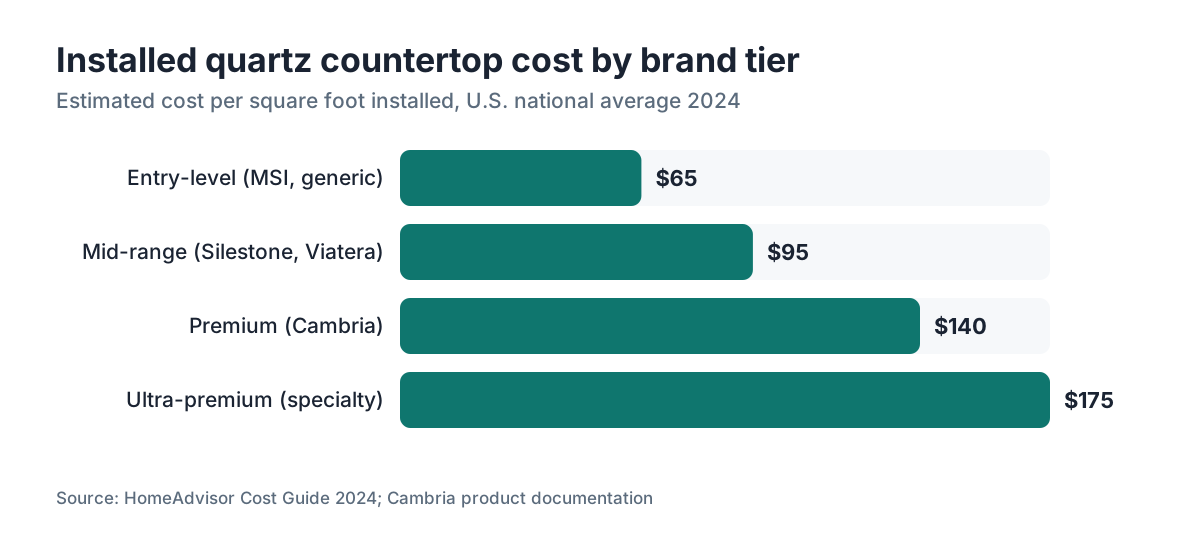
If you're reading this while shopping, here's an honest price picture. Quartz countertops for a kitchen run about $55 to $200 per square foot installed, depending on the brand, slab thickness, edge profile, and your region [7].
For a medium kitchen with roughly 45 square feet of counter space, quartz lands around $2,500 to $6,500 total installed. Small kitchens with 25 to 30 square feet run $1,400 to $4,000. A large kitchen with an island crossing 70 or more square feet can push $8,000 to $14,000 depending on layout complexity.
Cambria sits near the top of the market. It's a U.S.-manufactured brand with a broad warranty, and its slabs typically run $80 to $200 per square foot installed [8]. Entry-level quartz from brands like MSI or builder-grade Silestone starts closer to $55 to $75 per square foot installed.
For comparison, replacing kitchen countertops with quartz costs more than laminate ($20, $50 installed) but usually lands near mid-range granite once fabrication is included.
Fabricators who want to sharpen their quartz quotes and cut material waste during nesting might find SlabWise useful. It's countertop fabrication software built for quoting and slab layout.
| Quartz brand tier | Installed cost per sq ft (est.) | Warranty |
|---|---|---|
| Entry-level (MSI, generic) | $55, $75 | 10 to 15 years limited |
| Mid-range (Silestone, Viatera) | $70, $120 | 15 to 25 years limited |
| Premium (Cambria) | $80, $200 | Lifetime limited |
| Ultra-premium (specialty) | $150, $200+ | Varies |
Sources: HomeAdvisor national cost survey 2024 [7], Cambria product documentation [8].
What products should you never use on quartz countertops?
Some of the most popular household cleaners are exactly the wrong choice for quartz.
Never use:
- Bleach or products with high bleach concentration (damages resin binders)
- Oven cleaner (highly alkaline, discolors the surface)
- Drain cleaner (same problem)
- Acetone-based nail polish remover (dissolves resin)
- Vinegar or other acidic cleaners (etches the finish with repeated use)
- Magic Eraser or melamine foam pads (microscopically abrasive, dulls polish over time)
- Steel wool or scouring pads
- Abrasive powdered cleansers like Comet or Bar Keepers Friend used directly on polished quartz (BKF in paste form on a cloth with very light pressure is occasionally recommended for specific stains, but the powder applied directly can scratch)
Products that are safe:
- pH-neutral dish soap and warm water
- 70% isopropyl alcohol (rinse right after)
- Diluted hydrogen peroxide (3% solution) for sanitizing
- Quartz-specific spray cleaners (Method, Weiman, Granite Gold Quartz) used per label directions
- Non-acetone nail polish remover, if acetone-free is confirmed on the label
If you've already used a damaging product and see a cloudy or etched spot, the honest answer is that it may not be fixable without professional help. Some fabricators offer polishing services. Whether they can restore the original finish depends on how deep the damage goes.
How do you handle long-term quartz maintenance over years?
Quartz is genuinely low-maintenance over the long run. No sealing, no oiling (unlike butcher block countertops), no polishing schedule.
A few things still accumulate over time.
Hard water deposits: In hard-water areas, a white film builds up around the sink and along the backsplash edge. This is mineral scale, not etching. It comes off with diluted dish soap and warm water plus gentle scrubbing with a soft sponge. If it's stubborn, a quartz-safe hard water remover (check that it's pH-neutral) applied briefly and rinsed quickly works. Don't let acidic descalers sit.
Caulk and seam maintenance: The caulk at the sink edge and along the backsplash will eventually crack or discolor. Normal maintenance, whatever your countertop material. Recaulking every five to ten years is typical. This isn't a quartz failure, it's caulk aging. A fabricator or handyperson can do it in under an hour.
Shine fading: Polished quartz can lose some luster in high-traffic areas from repeated wiping, minor scuffs, and years of less-than-ideal cleaners. A quartz polishing product applied occasionally helps restore some sheen, but it won't reverse serious resin damage.
What the warranty actually covers: Most manufacturer warranties cover defects in the slab itself, chips, cracks, color inconsistency, not damage from improper care. Read your warranty before assuming a problem is covered. Cambria, for example, offers a lifetime limited warranty but excludes damage from misuse, accident, or abuse, including heat damage [3].
For a broader look at how different countertop materials age, marble countertops and granite countertops make useful contrast.
How should you clean quartz countertops near the sink or in high-moisture areas?
The zone around the undermount or drop-in sink is where quartz care gets slightly more involved. Standing water, soap residue, and hard water minerals all concentrate here.
The main risk isn't the quartz itself. It's the seam between the quartz and the sink, and the caulk joint. If water gets under the caulk and sits against wood substrate or adhesive, you can end up with swelling or mold in the cabinet below. Check the caulk bead around the sink once a year. Any cracking, separation, or dark discoloration should be addressed promptly.
For the quartz around the sink, daily drying makes a real difference. After washing dishes, take ten seconds to wipe the surrounding counter dry. It prevents mineral buildup and keeps the surface looking good longer.
Faucet splash zones benefit from a quick wipe too. Chrome or stainless hardware around the faucet can leave metallic streaks if left wet and then wiped with a rough cloth. Use a soft microfiber.
If you have a composite or cast-iron sink next to the quartz, watch for rust staining from metal objects left on the sink rim. Rust can transfer to the quartz edge. A mild rust remover made for stone (check quartz compatibility) can address early staining, but it's a niche situation.
Is quartz a good countertop choice for families with kids or heavy kitchen use?
Honestly, yes. Quartz is one of the better choices for high-traffic family kitchens. The non-porous surface doesn't harbor bacteria the way unsealed natural stone can, cleanup is fast, and the color stays consistent because there's no sealer to yellow or streak.
The real-world durability matches the marketing. A quartz countertop installed correctly and cared for reasonably should last the life of the kitchen. The two common failure modes are heat damage (avoidable with trivets) and resin damage from harsh chemicals (avoidable by reading this article).
Schools and commercial kitchens spec quartz often. NSF International (the public health organization that sets standards for commercial foodservice equipment and surfaces) has certified some quartz products for commercial food contact use [5]. If you're running a small food business out of your home kitchen and want a countertop that meets food-safety surface standards, look for NSF 51 certification on specific products.
Families with kids who do art projects should watch permanent markers and craft glue near quartz. Sharpie comes off with isopropyl alcohol quickly. Dried craft glue and nail polish are trickier but usually respond to the plastic scraper method if you catch them before they fully cure.
One honest limitation: dark polished quartz shows fingerprints more readily than lighter or matte finishes. If a busy kitchen and fingerprints bother you, a lighter color or a honed finish hides them better.
When should you call a fabricator instead of trying a DIY fix?
A few situations where you should stop and call the fabricator rather than experimenting:
Chips at the edge. A chipped quartz edge, especially on a bullnose or eased profile, is hard to repair invisibly at home. A fabricator can sometimes color-match with a two-part epoxy filler. The repair won't be invisible under close inspection but can be made unobtrusive. Don't fill it yourself with standard caulk. The color match will be off and it will discolor.
Cracks across the surface. A crack longer than a half inch, or one that runs to a seam, the sink cutout, or a cooktop cutout, is structural. It needs professional evaluation. It may point to improper support during installation. Call the fabricator and, if you're inside the warranty period, the manufacturer.
Discoloration that won't respond to cleaning. If a cloudy or stained area stays after soap, alcohol, and a plastic scraper, a pro might be able to polish it out. They have finer abrasives and buffing equipment than a homeowner typically owns.
Seam separation. Quartz seams are bonded with a color-matched epoxy. If a seam opens up, food and water get into the substrate. Don't fill it yourself. The original fabricator or a countertop repair specialist should re-seam it properly.
Fabricators who built the job have the material records and templates. They're the right first call for anything beyond surface cleaning. If you need a local fabricator or a quote on a repair or replacement, many now quote online. SlabWise's quote tool can connect you to local shops that use it.
Frequently asked questions
How often should you clean quartz countertops?
Wipe down quartz after every meal prep session with warm water and mild dish soap. A quick daily wipe stops buildup of food residue, grease, and mineral deposits. You don't need a weekly deep-clean, the non-porous surface doesn't trap bacteria or odors the way porous materials do. Just wipe spills quickly, especially acidic foods like citrus, coffee, and tomato.
Can you use Windex or glass cleaner on quartz?
Most glass cleaners are pH-neutral or mildly alkaline and are generally safe for quartz in small amounts. Windex original contains ammonia, which at glass-cleaner concentrations is unlikely to damage quartz right away, but repeated use of ammonia-based products isn't recommended by most manufacturers. Mild dish soap and water is the better everyday choice. If you want a spray, pick one labeled explicitly safe for quartz.
Does quartz stain permanently?
Most common stains, coffee, wine, juice, food coloring, don't permanently stain quartz if you clean them within a reasonable window, often hours rather than days. The non-porous surface resists absorption. What causes permanent discoloration is prolonged contact with strong chemicals like bleach, drain cleaner, or acetone, or heat damage from hot pots. Those aren't stains you can clean away, they're surface degradation.
What is the average cost of quartz countertops for a kitchen?
Quartz countertops for a kitchen run $55 to $200 per square foot installed, depending on brand, thickness, and region. A medium kitchen with about 45 square feet of counter space typically costs $2,500 to $6,500 total. Entry-level quartz starts around $55 per square foot installed; premium brands like Cambria reach $200. Get at least three local fabricator quotes for an accurate number for your kitchen.
What is the average cost of Cambria quartz countertops?
Cambria quartz countertops typically cost $80 to $200 per square foot installed, one of the higher-priced options on the market. Cambria is made in the U.S. and backs its slabs with a lifetime limited warranty, which partly explains the premium. For a 45-square-foot kitchen, expect a total installed cost of $3,600 to $9,000 or more with Cambria, before edge upgrades or cutouts.
Can I put a hot pan directly on quartz?
No. The polymer resin in quartz starts to degrade around 150°F. A pan from the oven or stovetop can reach 400 to 500°F and cause permanent discoloration, clouding, or even cracking. This damage is not covered under manufacturer warranties. Use a trivet or silicone mat under any hot cookware. Same goes for slow cookers, air fryers, and electric griddles that get warm on the bottom.
Do quartz countertops need to be sealed?
No. Quartz is non-porous because of its resin binder, so a sealer has no pores to penetrate and nothing useful to do. Every major manufacturer, Caesarstone, Cambria, Silestone, states in their care documentation that sealing is not required. Applying a sealer wastes money and can leave a residue. This is one of the biggest advantages of quartz over natural stone like granite, which does need periodic sealing.
How do you get hard water stains off quartz?
Hard water mineral deposits on quartz respond to warm soapy water and gentle scrubbing with a soft sponge in most cases. For stubborn buildup, a small amount of a quartz-safe hard water remover applied briefly and rinsed thoroughly usually works. Avoid acidic descalers like vinegar or CLR left on the surface, they can etch the resin finish. Daily drying around the sink prevents most hard water buildup.
Can you repair a chip in quartz countertops?
Small chips, especially at edges, can sometimes be repaired with a color-matched two-part epoxy filler by a professional fabricator. The repair is rarely invisible under close inspection but can be made unobtrusive. Don't fill chips with standard caulk, the color won't match and it discolors quickly. Cracks longer than a half inch, or cracks near cutouts, may signal a structural issue and should be evaluated by the original fabricator.
Is quartz countertop good for kitchens with kids?
Quartz is a practical choice for family kitchens. Its non-porous surface doesn't absorb bacteria, cleanup is fast, and it needs no sealing or oiling. The main risks are heat damage from hot pots (use trivets) and marker or paint from craft projects (isopropyl alcohol removes Sharpie quickly). Dark polished finishes show fingerprints more than lighter or matte finishes, worth weighing if that bothers you.
How do you get Sharpie or permanent marker off quartz?
Isopropyl alcohol at 70 percent concentration or higher removes permanent marker from quartz well. Apply it to a cloth rather than the surface, rub gently over the mark, then rinse the area with water right away. Don't let the alcohol sit, rinsing quickly prevents any risk of dulling the finish. This works for most inks. For dried paint, use a plastic scraper first, then alcohol on any residue.
What's the difference between quartz and quartzite countertops for daily care?
Quartz is engineered and non-porous, no sealing needed, very resistant to staining. Quartzite is a natural stone and is porous, so it needs periodic sealing like granite. Quartzite is also harder and more heat-tolerant than quartz because it has no resin binder. The daily cleaning routine is similar (mild soap, warm water), but quartzite needs more attention to sealing and is less forgiving of acidic spills over time. See our guide on how to clean quartzite countertops for detail.
How long do quartz countertops last?
Quartz countertops last 20 to 30 years or longer with normal care, effectively the life of a kitchen. The resin binder and quartz crystals don't degrade under normal use. What shortens lifespan is heat damage, repeated use of harsh chemicals, and physical trauma like heavy impacts at edges. Most manufacturer warranties range from 10 years to lifetime limited, reflecting confidence in the material under proper use.
Sources
- Natural Stone Institute (formerly Marble Institute of America), engineered stone technical information: Engineered quartz slabs are roughly 90 to 94% ground quartz bound with polymer resins; the non-porous resin surface requires no sealing
- Caesarstone, care and maintenance guidance: Caesarstone advises mild soap and water for daily cleaning, avoidance of bleach and highly alkaline cleaners, and no sealant required; heat damage and chemical damage are excluded from warranty
- Cambria, care, maintenance, and warranty information: Cambria states no sealing is required; its lifetime limited warranty excludes damage from misuse, accident, or abuse including heat damage
- Silestone by Cosentino, care and maintenance guidance: Silestone recommends mild soap and water for routine cleaning and confirms no sealing is needed for its quartz products
- NSF International, NSF/ANSI 51 food equipment materials standard: NSF 51 certifies materials for commercial food contact surfaces; some quartz products carry this certification
- USDA Agricultural Research Service: White distilled vinegar has a pH of approximately 2.4 to 3.4, acidic enough to etch polymer resin binders on quartz surfaces with repeated application
- HomeAdvisor, quartz countertop cost guide 2024: National average installed cost for quartz countertops is approximately $55, $200 per square foot; medium kitchen total installed ranges from $2,500, $6,500
- Cambria, product and pricing information: Cambria quartz countertops are priced at the premium end of the market, generally $80, $200 per square foot installed, reflecting U.S. manufacturing and lifetime limited warranty
- CDC, food safety, cleaning and sanitizing surfaces: CDC supports soap and water as adequate for routine sanitation of food-contact surfaces in non-clinical environments
- USGS Mineral Resources Program, Mohs hardness scale: Quartz measures 7 on the Mohs scale; steel knives are approximately 5.5 to 6.5, meaning quartz crystals themselves are harder than steel but the polymer binder is softer
Last updated 2026-07-09