TL;DR
- Granite countertops need mild soap and water for daily cleaning, a penetrating sealer applied every 1 to 3 years depending on porosity, and protection from acidic foods and heavy impacts.
- Skip bleach, vinegar, and abrasive pads.
- Maintained this way, a granite surface lasts the life of the house with no refinishing.
What does granite countertop care actually involve?
Granite is a natural igneous rock, formed from slowly cooled magma deep in the earth's crust. It's hard (7 on the Mohs scale), heat-tolerant, and scratch-resistant under normal kitchen use. But it's also porous, which means liquids can work their way into the stone over time if no sealer is present. That porosity is the whole story of granite care.
Day-to-day maintenance is genuinely simple: wipe up spills, clean with mild soap, and dry the surface. The work that actually protects the stone long-term is sealing, which fills the pores with a penetrating impregnator that slows liquid absorption. Everything else, choosing the right cleaners, avoiding certain habits, handling stains, flows from those two facts.
Homeowners tend to expect granite to be either indestructible or impossibly fragile. It's neither. You can set a hot pan directly on most granite without damage, but a strong acid like lemon juice or vinegar left sitting for an hour will etch the surface of some stones. Knowing where the real risks are lets you stop worrying about the wrong things.
How do you clean granite countertops every day?
Warm water and a few drops of dish soap is all you need. Apply it with a soft microfiber cloth, wipe the surface down, and follow with a damp rinse cloth. Then dry it. Drying matters because standing water, especially hard water, leaves mineral deposits that dull the finish over time.
Don't use the sponge you scrub pots with. Abrasive scrub pads can scratch polished granite, and any grease or food residue left in a sponge gets smeared back onto the counter. A clean microfiber cloth takes seconds to grab and keeps the surface from collecting soap film.
For a quick wipe between meals, plain water is fine. Save the soap for after cooking, when there's actual grease or food contact. Too much soap too often leaves a dulling residue that makes granite look cloudy, even though the stone itself is fine.
Here's what stays out of the cabinet: bleach, ammonia, vinegar, lemon juice, and anything labeled abrasive or scouring. The Marble Institute of America (now part of the Natural Stone Institute) has long advised against acidic cleaners on calcareous and even some siliceous stones, because acids attack both the mineral binders and any residual calcium in the stone [1]. Granite is silica-dominant and more acid-tolerant than marble, but it's still not immune, and many granites carry feldspar and calcite veining that reacts to acid.
How often should you seal granite countertops?
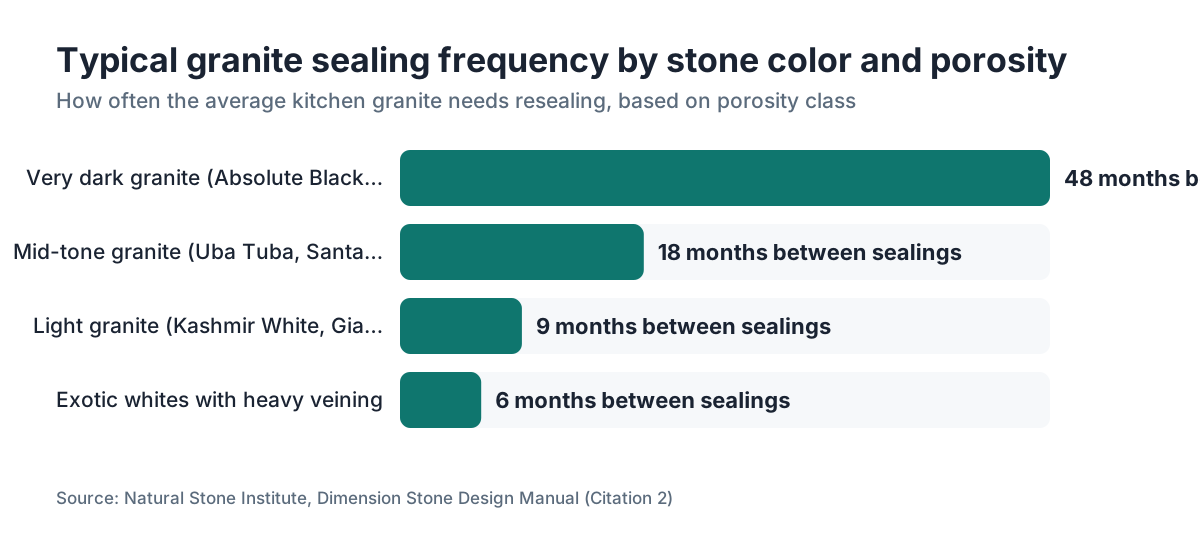
The honest answer: it depends on the stone. Granite porosity varies widely. A dense absolute black granite may barely absorb water at all and need sealing only every 3 to 5 years. A lighter, more porous stone like Giallo Ornamental or Kashmir White might want sealing annually, or even every 6 months under heavy use [2].
The water test tells you where your stone stands. Pour a quarter-cup of water on the surface and wait 10 to 15 minutes. If the water still beads up, the sealer is working. If the stone darkens and drinks the water within a few minutes, it's time to reseal. The Natural Stone Institute treats this as the standard field check for sealer performance [2].
Most fabricators seal new granite at installation and then check annually with the water test. For most kitchen granite, sealing once a year is a safe default that keeps you ahead of the problem. It takes 20 to 30 minutes of actual work.
One thing people get wrong: they think more sealer is better. It isn't. Sealer on a surface that doesn't need it just leaves a hazy residue on top of the stone that's a pain to buff off. Test first. Seal only if the stone asks for it.
| Granite Color Range | Typical Porosity | Reseal Frequency |
|---|---|---|
| Very dark (Absolute Black, Black Galaxy) | Very low | Every 3-5 years |
| Mid-tone (Uba Tuba, Santa Cecilia) | Low to moderate | Every 1-2 years |
| Light (Kashmir White, Giallo Ornamental) | Moderate to high | Every 6-12 months |
| Exotic whites with heavy veining | High | Every 6 months |
How do you seal granite countertops yourself?
You want a penetrating impregnating sealer, not a topical coating. Penetrating sealers soak into the pores and repel liquids from inside the stone. Topical coatings sit on the surface, scratch off, and eventually need stripping and reapplication. Almost every professional fabricator uses penetrating sealers. Common brands include Tenax, StoneTech, and Miracle Sealants, sold at tile and stone suppliers or online for roughly $25 to $60 per quart, which is enough for several applications on a typical kitchen [3].
The steps:
-
Clean the counter thoroughly and let it dry completely. Sealer on a damp surface traps moisture and causes haziness. Give it at least an hour after washing, longer if your kitchen is humid.
-
Apply the sealer in a thin, even coat with a clean lint-free cloth or the applicator the product recommends. Work in sections rather than flooding the whole counter at once.
-
Let it penetrate for the time on the label, usually 5 to 15 minutes. Don't let it dry on the surface or you'll get a hazy film.
-
Buff off the excess with a clean dry cloth before it dries. This is where most DIYers go wrong. They apply too much and don't buff it off in time, leaving a residue that takes real effort to remove.
-
Let it cure for the time specified, usually 24 to 48 hours, before exposing the surface to water.
Some sealers want a second coat applied right after the first. Follow the product instructions on this. For heavily porous stone, two coats are standard.
What should you never do to granite countertops?
A few habits cause most of the damage.
Leaving acidic food sitting on the stone. Citrus juice, tomato sauce, wine, and coffee are mildly acidic. On well-sealed granite they're no emergency, but on a stone with a failing sealer or natural calcite inclusions, they can leave dull spots. Wipe them up within a few minutes.
Using acidic cleaners. Vinegar sits around pH 2.5. It's popular in DIY cleaning recipes, and it does clean some surfaces well, but it's genuinely risky on natural stone [4]. Plenty of cleaning blogs recommend it for granite. Don't take that advice. The Natural Stone Institute and most fabricators are clear on this.
Using wax or oil-based polishes. Some products marketed as "granite polish" are actually wax coatings that build up over time, trap grime, and leave the surface smeary. A real granite polish (used once or twice a year to refresh the shine on a polished finish) is fine, but it's a different thing from wax and different from sealer.
Dropping heavy objects on edges or corners. Granite slabs are very strong under compression but brittle at thin edges, especially at the inside corners around cutouts. A sharp blow from a cast iron pan can chip or crack an edge. This isn't a cleaning issue, but it's the most common physical damage fabricators see.
Assuming composite granite behaves the same way. If you have a composite or agglomerate granite product (granite particles bound with resin), the care instructions differ from natural stone. Check with your fabricator. For other natural stone surfaces with similar care considerations, see our guide to how to clean stone countertops.
How do you remove stains from granite?
Stain type matters more than stain age, though acting fast always helps.
Oil-based stains (cooking oil, grease, butter, cosmetics): Make a poultice with a powder that pulls oil out of porous stone. Mix baking soda or diatomaceous earth with a small amount of acetone or mineral spirits into a thick paste. Spread it over the stain, cover with plastic wrap, tape the edges, and let it sit for 24 to 48 hours. The paste draws the oil out as it dries. Remove it, rinse, repeat if needed [5].
Organic stains (coffee, tea, wine, food): Mix baking soda with hydrogen peroxide (12% concentration, not the drugstore 3%, for deep stains) into a poultice. Apply the same way. Hydrogen peroxide is a mild oxidizer that bleaches organic matter out of the stone. It won't harm properly sealed granite.
Rust stains: These come from metal cans or pans left on wet granite. They need a commercial rust remover formulated for natural stone, not a hardware-store rust remover, which often contains acids that damage the stone. The Natural Stone Institute recommends iron-removing products made specifically for stone [5].
Ink or dye: Acetone on a cotton ball, applied directly. Don't scrub.
Etch marks (dull spots from acid): These aren't stains. They're actual surface damage. On polished granite, mild etching can sometimes be buffed out with a marble polishing powder (tin oxide). Deep etching usually needs a professional to hone and re-polish the affected area. This is genuinely uncommon on granite compared to marble.
For a broader look at stain removal across stone types, how to clean quartzite countertops covers similar poultice techniques that carry over to many natural stones.
Can you put hot pans on granite countertops?
Granite handles heat well. The stone forms at temperatures above 650 degrees Celsius deep underground [6], so a pan off the stove, typically 150 to 200 degrees Fahrenheit, isn't going to touch the mineral structure.
The real risk is to the sealer, not the stone. Repeated high heat can degrade penetrating sealers over time, which means the spot directly under a frequently placed hot pan may lose its protection faster than the rest of the surface. A trivet costs nothing and stretches the time between resealings.
There's also the risk of cracking at stress points. A very cold slab hit with extreme heat (say, a pan pulled straight from a 500-degree oven and set on a cold countertop in winter) can in theory crack from thermal shock, though this is rare with granite. It's more of a concern with marble and limestone.
My actual recommendation: use a trivet. Not because granite can't take the heat, but because the habit protects your sealer and costs you nothing.
How do you keep granite looking its best long-term?
The basics done consistently beat any special product. Daily wiping, prompt spill cleanup, and annual water-test-based resealing cover about 90% of what granite needs.
For polished granite, a pH-neutral stone polish twice a year can bring back some of the depth and shine that daily use slowly wears down. These are different from sealers. They sit on the surface and buff off. StoneTech and Weiman both make stone-specific versions.
Cutting boards. Always. Not because granite dulls your knives (it does, dramatically, but that's the knife's problem), but because knife cuts score the surface and give bacteria and staining liquids a channel into the stone that bypasses the sealer.
Replace caulk at the backsplash and sink joints when it starts to crack or discolor. Failing caulk lets water get behind and under the slab, where it can rot the substrate and grow mold. The National Kitchen and Bath Association guidelines treat caulk as a routine maintenance item, inspected annually and replaced every 3 to 5 years, not something you touch only when it fails visibly [8]. It's one of the most overlooked jobs in the kitchen.
If you run a shop and track granite jobs and customer care schedules, SlabWise builds post-installation care documentation into your quoting workflow, so customers get the right instructions for their specific stone at delivery.
For how granite stacks up against other materials on maintenance burden, our granite countertops overview covers cost, durability, and selection alongside care.
What's the difference between honed and polished granite care?
Polished granite has a high-gloss, mirror-like finish, ground through progressively finer abrasives and finished with a polishing compound. Honed granite is ground to a smooth matte finish, usually stopping around 400 grit. Leathered and brushed finishes are variations on honed with more surface texture.
Polished granite shows water spots, fingerprints, and smears more readily, because any residue on the shiny surface is immediately visible. It's also slightly more stain-resistant, since polishing closes some surface pores. Honed granite hides smears better but runs a touch more porous and stains a little more easily.
Care is similar for both, with two differences. First, honed granite needs resealing more often than the same stone in a polished finish, roughly 20 to 30% more often as a rough rule of thumb (this varies by stone type, and I know of no published study that puts a precise number on it). Second, never use a polishing compound on honed granite. It creates shiny spots that ruin the matte look. Use pH-neutral stone cleaners and honed-specific products if you want to condition the surface.
Leathered granite keeps showing up in high-end kitchens. It hides fingerprints better than polished and has a tactile appeal, but the textured surface traps food debris in the grooves, so it needs a more thorough wipe-down after cooking.
How do you handle chips and cracks in granite?
Small chips at edges and corners are the most common physical damage to granite, and most of them can be fixed without a pro. Epoxy or color-matched polyester adhesive (the same materials fabricators use) fills chips where the piece is gone. If you still have the chip fragment, a fabricator can often re-bond it nearly invisibly.
For DIY chip repair, two-part color-matched epoxy kits made for stone run $15 to $40 at stone supply companies and some tile shops. Clean and dry the area, mix the epoxy per instructions, fill the chip slightly overfull, let it cure, then shave it flush with a razor blade and buff with a fine polishing pad.
Hairline cracks are more serious. A crack that runs through the full thickness of the slab, especially near a sink cutout or inside corner, can spread under stress. Have a fabricator evaluate any through-crack. Repairs involve stabilizing the crack with epoxy injection and, in some cases, stone rodding (metal rods epoxied into routed channels on the underside of the slab) to keep the crack from widening.
If a slab breaks at a seam during heavy use, that's usually a re-installation job, not a repair. The fabricator who installed it is your first call.
For how different countertop materials handle damage and repairs, the kitchen countertops guide covers granite alongside quartz, laminate, and solid surface.
Is granite countertop care different from quartz or other stone?
Yes, meaningfully so. Quartz (engineered stone like Cambria or Silestone) is roughly 90 to 95% ground quartz bound with polymer resin. It's non-porous, needs no sealing, and resists staining better than most natural granite [7]. The tradeoff: it's less heat-tolerant (the resin binders can discolor above about 300 degrees Fahrenheit) and it can't be refinished by honing and repolishing the way natural stone can.
Marble needs sealing like granite but is far more prone to acid etching because it's calcium-based. Lemon juice etches marble noticeably in minutes. Granite is much more forgiving. See our marble countertops guide for that comparison in detail.
Soapstone is non-porous and never needs sealing, but it scratches easily and is traditionally oiled with mineral oil to keep its look. How to clean soapstone countertops covers that routine.
Laminate like Formica countertops needs no sealing and cleans up with soap and water, but it can't be repaired after deep scratches or burns and carries no resale appeal against natural stone.
The core difference in granite care versus most alternatives is that sealing is required and its timing changes by stone. That's the one task unique to natural stone that synthetic and solid-surface materials skip. Whether that maintenance is worth it depends on what you want from your kitchen. If you're comparing options, the kitchen countertops overview lays out the full picture.
For fabricators quoting jobs, SlabWise's quoting tools build sealer cost and application notes into your customer deliverables, which cuts callbacks and sets realistic expectations on day one.
Frequently asked questions
How do you take care of granite countertops day to day?
Wipe spills fast, clean with warm water and a small amount of dish soap on a soft cloth, and dry the surface. That's the entire routine. Skip vinegar, bleach, and abrasive scrubbers. For most kitchens this takes under two minutes and prevents the vast majority of staining and surface damage.
How often do you need to seal granite countertops?
Somewhere between every 6 months and every 5 years, depending on how porous your specific stone is. Do the water test: pour water on the surface and wait 15 minutes. If the stone absorbs it and darkens, reseal. If water still beads, you're fine. Most kitchen granite needs sealing once a year under normal use.
Can you use Windex or glass cleaner on granite?
No. Windex and most glass cleaners contain ammonia, which degrades the sealer over time and can dull the finish. Use a pH-neutral stone cleaner or plain soapy water. It's a small change with a real effect: repeated ammonia exposure shortens the time between resealings and leaves the surface looking dull.
Can you use vinegar to clean granite?
No. Vinegar is acidic (around pH 2.5), breaks down granite's sealer, and can etch stone with calcite content. Despite being popular in DIY cleaning guides, it's consistently advised against by the Natural Stone Institute and virtually every professional fabricator. Use pH-neutral soap and water instead.
What happens if you don't seal granite countertops?
Unsealed or poorly sealed granite absorbs liquids, which leads to staining and, in some stones, surface etching. Cooking oil can penetrate and leave dark spots. Without sealer, stain removal means poulticing rather than a simple wipe. The stone itself won't fall apart, but staining becomes a recurring problem instead of an occasional one.
Does granite need to be polished as well as sealed?
Sealing is mandatory; polishing is optional. A pH-neutral polish applied twice a year restores luster to polished granite that's gone dull from daily use. Polish and sealer are different products with different jobs. Sealer protects the stone from liquid absorption. Polish refreshes the surface appearance. If the stone still looks good, you don't need to polish.
How do you get oil stains out of granite?
Make a poultice from baking soda or diatomaceous earth mixed with acetone or mineral spirits into a thick paste. Spread it over the stain, cover with plastic wrap taped at the edges, and leave it 24 to 48 hours. The paste pulls the oil out of the stone as it dries. Rinse and repeat once if needed. It works best on fresh stains but can improve old ones too.
Can you cut directly on granite countertops?
Technically yes, the stone won't scratch from a kitchen knife. But you'll wreck your knives fast and score the surface with small grooves that compromise the sealer and open channels for bacteria and staining liquids. Always use a cutting board. This advice is 100% about protecting your knives and your seal, not the stone's structural integrity.
How do you remove water spots from granite?
For soft spots (soap film or light mineral deposits), buff with a dry microfiber cloth. For harder mineral deposits from hard water, use a granite-safe cleaner with a chelating agent, or a little isopropyl alcohol on a cloth. Never use a descaler or lime remover on granite. Those are acidic and damage the sealer and potentially the stone.
Does sealing granite make it completely stain-proof?
No. Sealing makes granite stain-resistant, not stain-proof. A penetrating sealer slows liquid absorption and buys you more time to wipe up spills before they penetrate. But leave red wine or oil on a sealed surface for several hours or days and it can still stain. Sealing buys time. It doesn't remove the need to clean up spills.
Is it safe to prepare food directly on granite?
Generally yes. Granite is used as a food-prep surface commercially and residentially. Unsealed granite is porous and can harbor bacteria in micro-cracks and pores, so proper sealing and regular cleaning matter. NSF/ANSI 51 sets food-safety criteria for food-contact surfaces, and properly sealed, maintained stone is generally considered acceptable. A cutting board is still the practical recommendation.
How long does granite countertop sealer last?
Most penetrating sealers last 1 to 3 years under normal kitchen use, with dense stones holding sealer longer than porous ones. Some premium sealers advertise 10-year or 15-year lifespans; performance varies widely and no independent long-term data verifies those claims at the high end. Use the water-bead test annually rather than trusting a labeled duration.
What's the best cleaner for granite countertops?
pH-neutral dish soap in warm water is the best everyday cleaner, full stop. Dedicated stone cleaners from brands like StoneTech or Granite Gold are fine and slightly more convenient (pre-diluted with surfactants formulated for stone), but they're not meaningfully better than diluted dish soap for routine cleaning. Avoid anything with bleach, ammonia, acids, or abrasives.
Can granite countertops crack from heat?
Rarely under normal kitchen conditions. Granite forms at very high temperatures and shrugs off typical cooking heat without structural damage. Thermal shock from an extreme temperature gap (a very hot pan on ice-cold stone) is possible in theory but uncommon. The more practical heat concern is sealer degradation over time in high-heat zones, which shortens the time between resealings there.
Sources
- Natural Stone Institute, Care and Cleaning for Natural Stone: Acidic cleaners including vinegar and citrus-based products are not recommended for natural stone surfaces as they can attack mineral binders and surface sealers.
- Natural Stone Institute, Dimension Stone Design Manual: The water absorption test (observing darkening within 10-15 minutes) is the standard field method for determining when granite requires resealing; resealing frequency varies from 6 months to 5 years depending on stone porosity.
- Tile Council of North America, Handbook for Ceramic, Glass, and Stone Tile Installation: Penetrating impregnating sealers are the recommended sealer type for natural stone in wet and food-preparation areas; topical coatings are not recommended for stone countertop applications.
- EPA, Safer Choice Program ingredient safety data: Acetic acid (vinegar) is classified as a pH 2.4-3.4 substance; the EPA Safer Choice program notes that acidic cleaners can damage porous stone and grout surfaces.
- Natural Stone Institute, Stain Removal Guide for Natural Stone: Poultice mixtures using absorbent powders with appropriate solvents are recommended for removing oil-based and organic stains from natural stone; rust stains require iron-removing products specifically formulated for stone.
- USGS, How Volcanoes Work: Granite and Igneous Rocks: Granite forms from magma that cools slowly at temperatures typically above 650 degrees Celsius at depth in the earth's crust, giving it its crystalline structure and heat resistance.
- Marble Institute of America (now Natural Stone Institute), Comparison of Natural vs. Engineered Stone: Engineered quartz surfaces containing 90-95% ground quartz bound with polymer resin are non-porous and do not require sealing, in contrast to natural granite which is porous and requires periodic sealing.
- National Kitchen and Bath Association, Kitchen Design Guidelines: Caulk at countertop-backsplash and countertop-sink joints should be inspected annually and replaced every 3 to 5 years as part of routine kitchen maintenance to prevent water intrusion.
- ASTM International, Standard C503: Standard Specification for Marble Dimension Stone: ASTM standards for natural stone include water absorption testing methods used to classify stone porosity, which directly informs sealing frequency recommendations for countertop applications.
- EPA, Indoor Air Quality and Cleaning Products: Ammonia-based cleaning products including many glass cleaners can release volatile compounds and degrade polymer sealers when used repeatedly on sealed surfaces.
- NSF International, NSF/ANSI 51 Food Equipment Materials standard: NSF/ANSI 51 establishes food-safety criteria for food-contact surfaces; natural stone countertops in residential kitchens are generally considered acceptable food-contact surfaces when properly sealed and maintained.
Last updated 2026-07-10