TL;DR
- Honed marble countertops have a matte, flat-ground surface instead of a mirror polish.
- They hide etching and rings better than polished marble, but they soak up liquids faster and need sealing every 6 to 12 months.
- Expect $75 to $200 per square foot installed, depending on marble variety and region.
- This is a real maintenance commitment, not a low-care stone.
What does 'honed' actually mean on a marble slab?
Honed is a surface finish, not a type of marble. Any marble can be honed. The fabricator runs the slab through a series of abrasive heads, either at the factory or in the shop, and where they stop determines the finish. A polished finish ends at a very fine grit (sometimes 1800 or higher) and then a buffing compound brings it to a mirror gloss. A honed finish stops earlier, usually between 400 and 800 grit, before the stone turns reflective. You get a smooth, flat, matte surface with almost no sheen.
Carrara, Calacatta, Statuario, Thassos white, Emperador brown: all of them come in honed form. The veining and color match the polished version of the same block exactly. What changes is how light hits the surface.
Here is the thing most people miss before they order. The same slab looks noticeably different in person once it's honed. Polished marble shows saturated color and sharp veins. Honed marble looks lighter and softer because the matte surface scatters light instead of concentrating it. If you're choosing from a polished sample, ask your fabricator for a honed offcut. At minimum, wet the polished sample with water, which fakes the lighter, washed-out look of the honed surface.
Shops can also hone a slab in-house on a bridge saw or CNC machine if they have the right polishing heads. Some charge a small upcharge over the polished price, usually $5 to $15 per square foot. Some charge nothing. It depends on how their tooling is set up.
How does honed marble compare to polished marble?
The tradeoff is simple. Polished marble resists stains better because the compressed, glassy surface is harder for liquids to get through fast. Honed marble hides damage better because the matte finish masks scratches and light etching. Neither finish turns marble into a low-maintenance stone.
Etching is the real problem. Marble is calcium carbonate, and acids (lemon juice, vinegar, wine, tomato) dissolve it on contact, leaving a dull spot where the shine used to be. On polished marble that dull spot jumps out against the gloss. On honed marble the etch blends into the matte surface and often stays invisible unless you catch it at a raking angle. That is the single best reason to pick honed over polished in a kitchen.
Scratches work the same way. A scratch on polished marble catches light and shows. A scratch on honed marble is much harder to spot. Got young kids, a busy kitchen, or a habit of skipping the cutting board? Honed is the smarter call.
The downside is porosity. Honed surfaces have more microscopic texture than polished ones, so they drink liquid faster. A drop of red wine on polished marble might give you 30 to 60 seconds to blot before it stains. The same drop on honed marble can soak in under 10 seconds. Sealing matters more here, not less.
Here is the quick comparison across the dimensions that actually affect daily life:
| Factor | Honed marble | Polished marble |
|---|---|---|
| Etch visibility | Low (blends in) | High (obvious) |
| Scratch visibility | Low | High |
| Stain absorption speed | Faster | Slower |
| Sealing frequency | Every 6-12 months | Every 12-18 months |
| Light reflection | Soft, diffuse | Mirror-like |
| Fingerprints/smudges | Rarely visible | Visible, especially dark stone |
| Typical cost premium over polished | $0-$15/sq ft | Baseline |
How much do honed marble countertops cost?
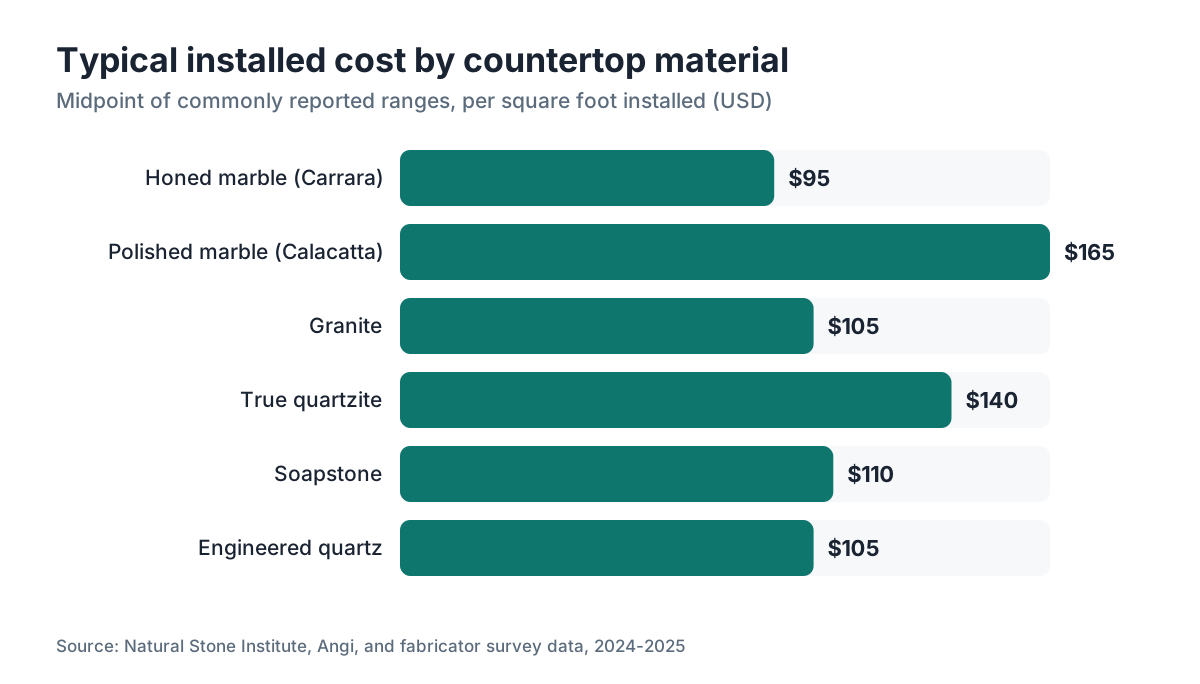
Most homeowners land between $75 and $200 per square foot fully installed [1]. That covers the slab, fabrication (cutting, edge profiling, honing or polishing), and installation. The honed finish itself usually adds $0 to $15 per square foot over a polished price, so it's rarely the number that moves your total.
What actually drives the price up or down:
- Marble variety. Commercial-grade Carrara, the most common type sold in the U.S., runs at the low end, often $75 to $110 installed. Bookmatched Calacatta Gold or Statuario can hit $200 or more per square foot because the raw slab costs two to four times as much at the quarry.
- Slab thickness. Three-centimeter (1.18 inch) slabs are the residential standard and price accordingly. Two-centimeter slabs cost less but usually need a plywood substrate and look thinner at the edge.
- Edge profile. A straight or eased edge adds little or nothing. An ogee or waterfall edge takes more machine time and can raise the per-linear-foot charge by $20 to $40.
- Kitchen complexity. More cutouts (sink, cooktop, outlet strips), tighter template work on angles or curves, and longer seams all add fabrication labor.
- Region. Labor rates swing hard. A shop in rural Alabama charges less than one in the San Francisco Bay Area, sometimes by 40 to 60 percent on labor alone.
The Natural Stone Institute, formerly the Marble Institute of America, notes that natural stone costs vary a lot by geography and stone source, and advises homeowners to collect at least three competitive quotes before signing [2].
Want a fast baseline before you start calling shops? SlabWise's instant quote tool takes your square footage, edge type, and region and returns a realistic fabricator range, no phone calls needed.
Does honed marble stain and etch more than polished?
Staining and etching are two different things, and people mix them up constantly. Sealer stops one and does nothing for the other.
Etching is a chemical reaction. Acid dissolves the calcium carbonate and leaves a physically different surface texture. No sealer stops it. Even freshly sealed marble will etch from lemon juice within seconds, because the sealant sits down in the pores, not on top of the surface. What the sealer does prevent is oil and water-based liquids soaking into those pores and leaving a colored stain.
Staining is penetration of a pigmented or oily substance. Sealed honed marble resists staining better than unsealed honed marble, but it still resists worse than polished marble because the matte surface has more pore openings per square inch. So seal honed marble more aggressively than you would polished, and clean up spills faster.
The USGS describes marble as a metamorphic rock made mainly of calcium carbonate (calcite or dolomite), which is exactly what makes it vulnerable to acid regardless of finish [3]. Honing or polishing doesn't change that chemistry.
In a working kitchen, the usual etch culprits are citrus juice, vinegar (including salad dressing), wine, tomato products, and any cleaner with acidic pH. Even sparkling water is slightly acidic and will etch marble if you let it pool.
Here's the honest kitchen answer. Honed marble beats polished for an active kitchen because the etching stays much less visible. But both demand the same acid-awareness from whoever cooks. If that trade doesn't sit right with you, quartzite or engineered quartz may fit your life better.
How do you seal honed marble countertops?
Sealing honed marble is one of the most important things you'll do, and it's not hard. You want a penetrating impregnating sealer, not a topical coating. It soaks into the pore structure and repels liquid from inside the stone. It won't change the look (there are 'enhancing' versions that deepen color slightly, but most neutral sealers leave the surface exactly as it was).
The water test tells you when to reseal. Pour a tablespoon of water on the surface and wait 10 to 15 minutes. Beads up? The sealer is still working. Soaks in and leaves a dark spot? Time to reseal.
How to seal honed marble:
- Clean the surface thoroughly and let it dry completely. Give it 24 hours after a wet cleaning, or about 4 hours in normal humidity after a quick wipe-down.
- Apply the sealer with a clean, lint-free cloth or applicator pad in a thin, even coat.
- Let it dwell per the product instructions, usually 5 to 20 minutes.
- Buff off the excess before it hazes. Sealer left to dry on the surface leaves streaks, so don't skip this.
- A second coat 30 to 60 minutes after the first is generally recommended for honed stone.
- Let it cure fully before you use the surface. Most products say 24 to 48 hours.
In an active kitchen, plan on resealing honed marble every 6 to 12 months. The water test tells you when, and erring toward more often does no harm. The Natural Stone Institute recommends impregnating sealers formulated for calcareous (calcium-based) stones [10], because some sealers built for siliceous stones like granite and quartzite behave differently against marble's calcite chemistry.
Skip wax-based topical sealers on honed marble. They build up, yellow, and eventually need stripping, which is a genuine headache. Penn State Extension makes the same point, favoring penetrating sealers over topical wax for countertop stone because of buildup and discoloration [6].
For more technique, see our guides on how to clean stone countertops and how to clean soapstone countertops.
How do you clean honed marble countertops day to day?
Daily cleaning is simple, but the rules are firm. Warm water and a few drops of pH-neutral dish soap on a soft cloth handles most messes. Wipe up spills right away, acidic ones especially. Dry the surface after cleaning instead of letting water sit, because even tap water leaves mineral deposits over time.
What to avoid:
- Vinegar, lemon juice, or any acid-based cleaner. This includes plenty of 'natural' kitchen cleaners. Read the label.
- Bleach and ammonia-based cleaners. Both degrade the sealer and eventually the stone. The EPA notes that bleach and ammonia cleaners break down stone sealer coatings and recommends pH-neutral cleaners for sealed natural stone [9].
- Abrasive scrubbing pads. Steel wool or hard plastic scratches the honed surface. Use a soft sponge or microfiber.
- Commercial bathroom tile or grout cleaners. Almost all of them are acidic.
For stuck-on food, use a plastic scraper. Soak it briefly with warm water, then scrape gently. Never a metal spatula.
To disinfect, a little 70 percent isopropyl alcohol diluted in water works on marble without wrecking the sealer or etching the stone. The CDC notes that 70 percent isopropyl alcohol is effective against common household bacteria [4]. Spray, wipe, don't soak.
One hard truth: a fresh etch from something acidic is damage to the stone itself, not the sealer, so cleaning won't fix it. A tin-oxide marble polishing powder can sometimes reduce how visible a light etch is on honed marble by blending the texture back. Severe etching needs professional repolishing or re-honing.
Can honed marble work in a kitchen, or is it only for bathrooms?
Honed marble works in a kitchen. Professional kitchens have used marble work surfaces for baking and pastry for centuries, because marble stays cool and dough doesn't stick to it the way it does to warmer surfaces. The real question is whether you'll manage the maintenance.
Honed is more forgiving than polished for kitchen use. Less visible etching and scratching makes the surface easier to live with. You still need to:
- Blot spills immediately, acidic ones above all.
- Use cutting boards. Always.
- Keep hot pans off the surface. Thermal shock can crack any stone, and cast iron can leave metal marks.
- Reseal on schedule.
- Accept that the surface will develop a patina over the years. Light etches, slight color shifts in high-use zones. Some people love this and call it character. Others hate it.
If you love the marble look but the maintenance worries you, compare it against engineered quartz or some of the better Cambria countertop options, which mimic marble but stay non-porous and never etch. They aren't the same material, but if easy care beats natural stone for you, that's an honest comparison.
Bathrooms are the easier case for honed marble. Less acid, fewer spills, slower pace. Honed marble vanity tops are a great use. Shower walls in honed marble look beautiful but need careful waterproofing at install and steady sealing after.
Honed marble floors are common too, and the foot-traffic patina reads well aesthetically. Honed is safer underfoot than polished when wet, because the matte texture grips better.
What are the most popular marble types used honed?
Almost any marble can be ordered honed, but a handful get specified that way far more than the rest.
Carrara is the most common marble sold in the U.S. market [2]. White to gray-white background, soft gray veining. Honed, it reads as a very quiet white, which is why it shows up constantly in minimalist and Scandinavian-leaning kitchens. It's also the most affordable marble.
Calacatta varieties (Calacatta Gold, Calacatta Borghini, Calacatta Michelangelo) have a whiter background and bolder gold or brown veining than Carrara. They cost significantly more at the slab level. Honed Calacatta has a nearly white base that looks clean and modern.
Statuario has dramatic, high-contrast gray veining on a bright white background. It's rarer and pricier than Calacatta. Honed Statuario is striking and expensive.
Emperador (Dark and Light) is a brown marble from Spain with white veining. Honed Emperador has a warmer character than the white marbles and works in traditional or earthy palettes.
Thassos is a nearly pure white Greek marble, almost crystalline. Rarely veined, extremely bright. Honed Thassos looks close to white porcelain but carries the natural variation of real stone.
Provenance matters. Quarrying practices, thickness standards, and color consistency differ by country. According to USGS mineral data, Italy is the primary source of Carrara and Calacatta sold in the U.S., with meaningful marble import volumes also coming from Brazil and China [8]. Italian Carrara and Calacatta hold to tight quality standards. Some lower-cost Chinese-origin white marbles sold under similar names vary more in quality and veining. Ask your slab supplier for full provenance on anything you're considering.
How do fabricators price and quote honed marble jobs?
From the shop side, honing adds one step to the finishing sequence, but it's not dramatically more labor than polishing. The cost differences come down to a few things:
- Tooling. Honing needs a different set of polishing pads than mirror polishing. High-volume honed shops keep the inventory on hand. Shops that mostly run polished slabs may add a small setup premium.
- Waste and breakage risk. Marble is softer and more brittle than granite (Mohs 3 to 4 versus granite's 6 to 7) [3], so blade changes and careful handling eat time on the shop floor. That's baked into marble pricing across the board, more than into the honed finish specifically.
- Edge profiles. Profiling a bullnose or ogee on honed marble means matching the honed finish on the edge, which takes more steps than polishing an edge to a consistent gloss. Some fabricators charge a bit more for honed edge profiles because of it.
On complex marble jobs with multiple cutouts, irregular layouts, or bookmatched slabs, the nesting and waste math is where the real money lives. A 20 square foot island cut from a 55 square foot slab has a very different material cost than a straight perimeter run. Nesting software like SlabWise helps shops price marble jobs accurately and avoid under-quoting on expensive Calacatta or Statuario, where wasted material hurts.
Homeowners should know fabricators price by finished countertop square footage, not slab square footage. You're not usually paying for the offcuts. Some shops sell slabs by the piece with a minimum, though, so ask exactly how leftover material gets handled, especially if you might want matching stone for repairs down the road.
How does honed marble compare to other natural stone countertops?
Weighing honed marble against other stone? Here's the honest comparison.
Granite countertops are siliceous, made of silica-based minerals, which makes them acid-resistant in a way marble never is. Granite doesn't etch. It's harder (Mohs 6 to 7) and more scratch-resistant. The trade is aesthetic: granite usually reads more granular and speckled, without the fine veining marble gives you. Honed granite exists and looks great in the right spot, it's just less common.
Quartzite is a metamorphic rock that starts as sandstone and recrystallizes under heat and pressure. True quartzite is silica-based and acid-resistant, unlike marble. It's harder than marble, doesn't etch, and in honed form some varieties (White Macaubas, Sea Pearl) look a lot like marble without the acid vulnerability. See the quartzite cleaning guide for maintenance detail.
Soapstone is non-porous and acid-resistant, so it never needs sealing. It scratches easily, but the scratches sand right out. Very different look (dark gray to black) and a genuinely low-maintenance natural stone. The soapstone cleaning guide covers its quirks.
Engineered quartz (like Cambria) is factory-made from quartz aggregate and resin. Non-porous, doesn't etch, doesn't need sealing, and the patterning stays consistent slab to slab. It's not a natural material. Some homeowners don't care. Others strongly prefer natural stone.
| Stone type | Etches? | Needs sealing? | Hardness (Mohs) | Price range installed |
|---|---|---|---|---|
| Honed marble | Yes | Yes, 6-12 mo | 3-4 | $75-$200/sq ft |
| Polished marble | Yes | Yes, 12-18 mo | 3-4 | $70-$195/sq ft |
| Granite | No | Yes, 1-3 yr | 6-7 | $60-$150/sq ft |
| True quartzite | No | Yes, 1-2 yr | 6-7 | $80-$200/sq ft |
| Soapstone | No | No (oil instead) | 1-2 | $70-$150/sq ft |
| Engineered quartz | No | No | 7+ | $60-$150/sq ft |
What finish is best: honed, leathered, or polished marble?
Three finishes come up most for marble countertops: polished, honed, and leathered.
Polished is the classic mirror finish. It saturates color and shows veining at its most dramatic. It also shows every etch, scratch, and fingerprint. Best for low-traffic spots, formal spaces, and bathroom vanities that mostly look beautiful and don't get used hard.
Honed is the matte finish this whole article is about. Softer, quieter, much more forgiving on etch and scratch visibility. Best for kitchens where you want marble's look but have to live with it every day.
Leathered is less common. It's made by running diamond-tipped brushes over the stone after it's ground flat, which creates a slightly textured, almost fabric-like surface. On marble it looks organic and rustic. It hides etching and scratches even better than honed thanks to the extra texture. The catch: it's harder to clean, because the texture traps crumbs and debris. Not a great pick for a heavy-use kitchen surface, but interesting in the right design.
For most kitchen homeowners asking about marble, the honest pick is honed over polished. You keep most of the elegance and cut way down on how visibly beat-up the surface looks after real use. Leathered stays a niche choice.
Worth knowing: the finish is set at the factory for slabs. Re-honing or re-polishing in the field is possible but it's a real professional service. Buy a polished slab, later wish it were honed? A stone restoration company can do it, but it isn't cheap. Decide on the finish before you buy the slab.
How do you repair etches and scratches on honed marble?
Light etches on honed marble often come out with a tin-oxide marble polishing powder. Wet the area slightly, sprinkle on the powder, and buff with a felt pad or soft cloth in a circular motion. The abrasion blends the etch back toward the surrounding texture. Results vary. Shallow, recent etches respond well. Deep etches from harsh acids or long exposure may not improve enough to disappear.
For scratches, the same powder works on very light surface marks. Deeper scratches need progressively finer-grit diamond hand pads (sold by stone care suppliers) to blend the scratch out, then more work to match the repaired area to the surrounding finish. A careful DIYer can handle a small spot. Matching the finish evenly across a full countertop is professional work.
When years of etch marks, ring stains, and scratches pile up past what spot repair can fix, a stone restoration company can re-hone the whole countertop in place. They grind the top layer down to fresh stone, then finish to the hone level you want. Cost swings widely by region and scope, but a full kitchen re-hone might run $300 to $800 or more depending on square footage and condition.
Chips and cracks are a different animal. Small edge chips get filled with color-matched epoxy by a skilled fabricator. Structural cracks may need epoxy injection. Large cracks usually mean replacement.
Bottom line on repairs: honed marble is more DIY-repairable for its common damage (etches, light scratches) than polished, where matching the original high gloss at home is much harder to pull off.
Frequently asked questions
Is honed marble harder to maintain than polished marble?
Honed marble needs sealing more often, every 6 to 12 months versus 12 to 18 for polished, because the matte surface is more porous. Day-to-day cleaning is identical. In practice honed is more forgiving, since etching and scratches show far less. So the sealing schedule is heavier, but the surface looks better longer under real use.
Will honed marble work in a high-traffic kitchen?
Yes, with realistic expectations. Honed marble handles an active kitchen better than polished because etch marks and scratches blend into the matte surface. You still have to wipe acidic spills immediately, use cutting boards, and seal every 6 to 12 months. If you won't do those things, look at engineered quartz or quartzite instead.
Does honed marble look dirty or dull compared to polished?
Honed marble looks softer and more muted than polished, not dirty. It doesn't reflect light, so it reads lighter in color and quieter in veining. Some people prefer this look strongly. Others miss the depth and drama of polished stone. Whether 'dull' is a problem comes down entirely to the aesthetic you're after.
What sealer is best for honed marble countertops?
Use a penetrating impregnating sealer rated for calcareous (calcium-based) stone. Skip topical wax sealers. Common professional-grade options include StoneTech BulletProof, Tenax HydroShield, and Miracle Sealants 511. Confirm the label lists marble or calcareous stone as compatible. Apply two coats on a clean, dry surface and buff off the excess before it hazes.
How do you get water marks off honed marble?
Hard water spots on honed marble are mineral deposits, not etches. Try a paste of baking soda and water on a soft cloth, then rinse. For stubborn spots, a product formulated for calcium and lime deposits on stone (pH-neutral) can help. Never use CLR or other acidic descalers; they etch marble immediately. Drying the surface after each use prevents buildup.
Can you put hot pans on honed marble countertops?
Avoid it. Marble has low thermal shock resistance compared to engineered quartz or granite. A very hot pan moved straight from the stove onto cold marble can crack it, especially near edges, cutouts, or seams where stress concentrates. Use trivets or hot pads. The risk is real enough that most fabricators specifically warn against direct hot pan contact in their care docs.
Is honed marble cheaper than polished marble?
The honed finish itself usually costs $0 to $15 per square foot more than the polished version of the same slab, depending on the shop's tooling. The underlying marble material costs the same. Over the countertop's life you may spend a little more on sealer and slightly more frequent resealing, but it's modest, roughly $20 to $50 in sealer products per year.
Does honed marble yellow over time?
White and light-colored marbles can yellow slightly over very long periods as iron minerals in the stone oxidize. It's a natural process, unrelated to finish. Direct sun accelerates it. UV-filtering window glass slows it down. Honing doesn't protect against yellowing, and neither does polishing. The stone itself sets the yellowing risk, not the finish you choose.
How thick should honed marble countertops be?
Three-centimeter (about 1.18 inches) is the residential standard and what most fabricators default to. It's structurally self-supporting across most spans without a plywood substrate. Two-centimeter slabs cost less but need a substrate and look thinner at edge profiles. For bathroom vanities and lighter uses, 2cm can be fine. For kitchens, go 3cm.
Can honed marble be polished back to a shine later?
Yes. A stone restoration company can re-polish honed marble with progressively finer diamond abrasives and finishing compounds. It's a professional service, not a DIY job for large surfaces. Cost depends on square footage and regional labor rates. The reverse works too: polished marble can be honed if you change your mind. The finish lives in the surface layer and can be changed.
What is the difference between honed marble and matte marble?
They're the same thing. 'Matte' is a design and retail term for what fabricators call 'honed.' Both mean a flat-ground surface with low sheen and no mirror reflection. Some retailers also say 'satin,' which usually means a very light hone just below full polish. When ordering, specify 'honed' and confirm the target sheen level so there's no ambiguity.
How do I know if my marble countertop needs to be resealed?
Run the water test. Pour a few tablespoons of water on the countertop and wait 10 to 15 minutes. If the water beads up and stays on top, the sealer is working. If it soaks in and leaves a darker wet patch, reseal. On honed marble in an active kitchen, this test often flags the need after 6 to 9 months of use.
Is honed marble a good choice for a bathroom vanity?
It's an excellent bathroom vanity choice. Acid exposure runs much lower than in a kitchen (toothpaste is mildly abrasive but not acidic the way lemon juice is), and the surfaces see lighter daily use. Honed marble in a bathroom develops a subtle patina over years. Seal it once at install and reseal annually. One of the best applications for this material.
Sources
- HomeAdvisor (Angi), Marble Countertops Cost Guide: Marble countertops typically cost $75 to $200 per square foot installed, depending on marble variety and region
- Natural Stone Institute, Technical Bulletins and Standards: Natural stone countertop costs vary considerably by geography and stone source; homeowners should get competitive quotes. Recommends impregnating sealers for calcareous stones and notes Carrara as the most commonly sold U.S. marble.
- U.S. Geological Survey, Marble Mineral Resources: Marble is a metamorphic rock composed mainly of calcium carbonate (calcite or dolomite), with Mohs hardness of 3 to 4; granite is siliceous with hardness of 6 to 7
- Centers for Disease Control and Prevention, Hand Hygiene and Surface Disinfection: 70 percent isopropyl alcohol is effective against common household bacteria and can be used as a surface disinfectant
- ASTM International, ASTM C503 Standard Specification for Marble Dimension Stone: ASTM C503 defines marble dimension stone types and finish categories including polished and honed for commercial specification
- Penn State Extension, Stone and Tile Care for Homeowners: Penetrating impregnating sealers are recommended for porous natural stone surfaces; topical wax sealers are discouraged for countertop applications due to buildup and discoloration
- U.S. Geological Survey, National Minerals Information Center: Stone (Dimension): Italy is the primary source of Carrara and Calacatta marble sold in the U.S.; U.S. dimension stone imports include significant marble volumes from Italy, Brazil, and China
- EPA, Safer Choice: Cleaning Product Ingredients and Surface Compatibility: Bleach and ammonia-based cleaners are known to degrade stone sealer coatings; pH-neutral cleaners are recommended for sealed natural stone
- Marble Institute of America (now Natural Stone Institute), Care and Maintenance of Natural Stone: Sealing frequency recommendation: honed calcareous stone surfaces in kitchen applications should be resealed every 6 to 12 months based on use intensity
Last updated 2026-07-09