TL;DR
- Hevea butcher block is made from rubber tree wood (Hevea brasiliensis) and costs roughly $8 to $20 per square foot for material.
- It's harder than most domestic softwoods, takes oil finishes well, and counts as sustainable because the timber comes from rubber plantations after latex production ends.
- Sealing and drying management are the two things that make or break it.
What is hevea butcher block and how is it different from other species?
Hevea butcher block is rubberwood: the timber cut from Hevea brasiliensis trees after their latex-producing years run out, usually at 25 to 30 years of age [1]. The trees grow across Southeast Asia, and Malaysia and Indonesia supply most of it. The wood is a byproduct of latex farming, not the result of forest clearing, which is why rubberwood earns a reputation as one of the more defensible wood countertop options.
The wood itself is a light, creamy tan with faint grain. It won't give you the drama of walnut or the reddish streaking of cherry. What you get is a clean, even surface that reads like maple from across the room and costs less.
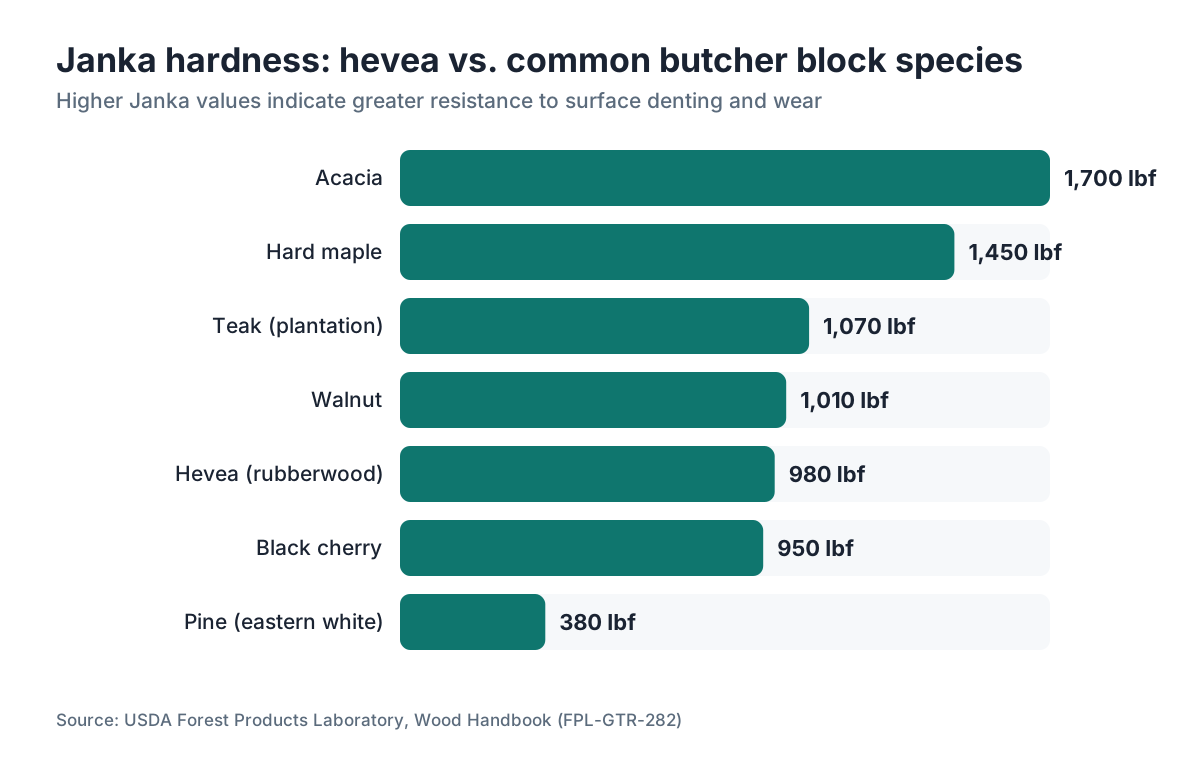
Hardness predicts how a countertop handles knives, dropped pots, and daily scraping. Rubberwood's Janka rating sits at about 980 lbf [2], right next to American black cherry (950 lbf) and clearly harder than the pine or poplar that shows up in budget butcher block. Hard maple, the wood used in professional cutting boards and bowling lanes, runs around 1450 lbf, so hevea is softer than that benchmark. For a kitchen prep surface, 980 lbf holds up fine if you finish it right and you aren't running a daily production kitchen.
Moisture behavior is the one real difference from tight-grained domestic species. Rubberwood has a fairly open grain and moves more with humidity than maple or teak. That matters a lot at installation, which I cover further down. The butcher block countertops guide has a broader look at the species landscape.
How much does a hevea butcher block countertop cost?
Hevea butcher block panels run roughly $8 to $20 per square foot for material, depending on thickness, construction (edge-grain versus end-grain), and supplier [3]. Edge-grain panels are the countertop standard and sit at the low end. End-grain hevea, which shows the cut faces of the wood and is easier on knife edges, costs more to produce and tends to run $15 to $25 per square foot for raw material.
Here's how hevea stacks up against other countertop materials on a straight material-cost basis:
| Material | Approx. material cost ($/sq ft) |
|---|---|
| Hevea butcher block (edge-grain) | $8 to $20 |
| Hard maple butcher block | $12 to $28 |
| Walnut butcher block | $25 to $60 |
| Teak butcher block | $30 to $80 |
| Laminate (Formica-style) | $3 to $12 |
| Granite slab | $40 to $100 |
| Quartz slab | $55 to $120 |
Installation adds $30 to $60 per square foot on top of material when you hire a fabricator, depending on your market and the complexity of the job (sink cutouts, mitered corners, overhangs). The gap between hevea and the cheaper domestic hardwoods is often only $4 to $8 per square foot. That's small next to the labor bill either way.
The kitchen countertops guide covers how to estimate a full job, and the countertop installation article walks through what labor usually includes. Fabricators quoting wood tops learn fast that nesting math matters most on oddly shaped kitchens, where waste quietly eats the margin.
Is hevea butcher block durable enough for a real kitchen?
Yes, with the right finish and honest expectations about a wood surface. That's the short answer.
At 980 lbf Janka, hevea won't dent from normal use the way pine or fir would. Drop a cast-iron skillet and you might leave a small ding, but that same pan would chip granite too, and the granite wouldn't come back. The finish, more than the species, decides how long any butcher block lasts.
Oil finishes (mineral oil, food-grade linseed, or dedicated butcher block oil) soak into the wood and protect from inside out. They need reapplication every few months under heavy daily use. Varnish and polyurethane form a surface film that's more water-resistant day to day, but it peels or cracks at the edges, and once it fails, water gets underneath and you have a real problem. For a countertop that gets wet often, a penetrating oil finish with periodic upkeep beats a thick film for the long run, even if the varnish looks better for the first two years.
Heat is rubberwood's bigger weakness against stone. Set a hot pan on any wood top and you risk a burn mark. Use trivets, always. That's not a hevea problem specifically, but it's worth saying plainly.
With correct care, a hevea butcher block countertop should last 15 to 30 years before the surface wears enough to need resanding. A 1.5-inch panel has a lot of sandable life in it. The USDA Forest Products Laboratory notes that hardwoods above 900 lbf Janka show adequate wear resistance for flooring and work-surface use under normal conditions [2].
How do you finish a hevea butcher block countertop?
Finishing hevea is simple, but the first pass takes patience. Plan for a few days, not an afternoon.
For a food-contact finish, mineral oil is the standard starting point. Apply it generously with a cloth, let it soak 20 to 30 minutes, wipe off the excess, and repeat over a few days until the wood stops drinking it in. The first round on dry rubberwood can take 3 to 5 coats before the wood is truly saturated. After that, monthly or quarterly re-oiling keeps the surface protected.
Mineral oil alone can leave wood feeling slightly dry and can attract water over time. Many installers follow it with a beeswax-and-mineral-oil blend or a dedicated butcher block conditioner, which leaves a harder surface wax. This is not a food safety concern. The FDA classifies mineral oil as Generally Recognized as Safe (GRAS) for food-contact applications [4].
If you want a harder, more water-resistant surface and the counter won't be an active cutting surface, a hardwax oil or Danish oil works well on rubberwood. These dry harder than plain mineral oil and bead water better short term, though they still need periodic renewal.
Skip polyurethane over large countertop surfaces unless you're ready for a full strip-and-refinish when it fails. Edges and corners go first. Water that sneaks under a poly film causes black staining that's hard to remove without aggressive sanding.
One note specific to hevea: fresh-cut rubberwood can carry trace latex proteins, though kiln-drying cuts them way down. Finished, cured rubberwood surfaces aren't considered an allergen risk in normal home use, but anyone with a severe latex allergy should check with an allergist before installing hevea [5].
How do you cut butcher block countertop to fit your kitchen?
Cutting hevea is closer to cutting hardwood than cutting stone, so a homeowner with basic woodworking tools can do it. A clean setup matters more than fancy gear.
For straight crosscuts or rip cuts on panels up to 4 feet wide, a circular saw with a fine-tooth blade (40-tooth or higher, ATB grind) does the job. Support the full panel so it can't sag and bind the blade mid-cut. Set it on sawhorses or a bench with support on both sides of the cut line. Lay painter's tape over the cut line to reduce tearout on the finished face, then cut from the finished face down. Circular saw blades cut on the upstroke, so tearout lands on the top face. Orient the panel accordingly.
A track saw gives a cleaner, straighter cut than a freehand circular saw on long rips, and it's what most fabricators reach for on wood tops. A miter saw handles shorter crosscuts.
Sink cutouts are the tricky part. Drill a starter hole inside the cutout line, then cut with a jigsaw. Run a slower, metal-cutting blade speed to avoid burning the wood. Clamp a guide block if the jigsaw wants to wander. Sand the raw edge inside the opening right after cutting, then flood it with several coats of oil or waterproof finish to seal the end grain before the sink drops in. End grain around a sink cutout is where most butcher block failures start. Water wicks up end grain fast. Sealing it is not optional.
L-shaped and U-shaped kitchens need a joint at the corner, either a miter or a butt. Miter joints at 45 degrees look cleaner but demand precise cuts. Butt joints are easier and can be filled with food-safe epoxy or hidden with a trim strip. Either way, apply waterproof glue and pull the joint tight with countertop bolts or pocket screws from below.
Compared to cutting stone, the work is a different animal. No water, no diamond blades. But wood punishes measurement errors more than stone does: a 1/8-inch gap at a wall shows on wood in a way caulk won't fully hide. Measure twice, cut once is real advice here, not filler.
How do you install a hevea butcher block countertop properly?
Installation is where hevea's moisture movement stops being trivia and starts mattering. Get this wrong and the panel cracks.
Wood expands and contracts across the grain as humidity changes. A 25-inch-deep panel can move 1/8 to 3/16 inch seasonally in a climate with real humidity swings [10]. Glue or screw the panel rigidly to every base cabinet with no room to move and you'll get cracks or warping. Fasten with elongated slots or figure-8 fasteners that let the wood slide slightly while still holding the top down.
The panel also has to acclimate to your kitchen's humidity before installation. Bring it inside, stand it on edge or lay it flat on supports so air circulates, and let it sit at least 72 hours, ideally 5 to 7 days. Install a panel that acclimated in a dry warehouse into a humid kitchen and it will expand after the fact, then bow or crack.
For the countertop-to-cabinet connection, run a thin bead of silicone along the top edges of the cabinets instead of construction adhesive. Silicone stays flexible and allows slight movement. Mechanical fasteners (screws through slotted holes in the cabinet corner braces) do the real holding.
Undermount sinks on wood are possible but demand careful waterproofing. Seal the cutout edge with multiple coats of finish on every exposed face. Some installers seal the inner edge with epoxy specifically, then run a silicone bead between the sink rim and the wood. Undermount sinks fail more often on wood than on stone, almost always because someone skipped the sealing steps.
The countertop installation guide covers the general sequence in more detail.
Is hevea an eco-friendly or sustainable wood choice?
Rubberwood has a genuinely reasonable sustainability case, which is why it turns up in sustainability-conscious kitchens. The core argument is simple: the wood already exists as farm waste.
The trees grow on plantations, not natural forests. Once their latex-producing life ends (usually 25 to 30 years), the trees would historically have been burned to clear the land for replanting. Milling the timber instead of burning it keeps the carbon locked in the wood and skips the burn emissions. The International Tropical Timber Organization and various certification bodies recognize rubberwood as a low-impact tropical hardwood for exactly this reason [1].
FSC (Forest Stewardship Council) certified rubberwood exists but isn't universal [9]. If sustainability drives your decision, look for FSC or PEFC certification on the specific panel you buy. Some suppliers also certify formaldehyde emissions, which matters for indoor air quality on glued-up butcher block. California's CARB Phase 2 standard is the strictest domestic benchmark, and panels certified to it off-gas very little formaldehyde [6].
Set against the alternatives: granite and quartz need quarrying and heavy transport with high energy input, though they last longer. Laminate uses less material per job but is petroleum-based and hard to repair. Hevea isn't perfect, but among wood countertop options it's one of the cleaner picks on a lifecycle basis.
What are the main problems with hevea butcher block countertops?
No material is all upside. Hevea has a handful of real limits worth naming straight.
Moisture sensitivity is the big one. Rubberwood's open grain drinks water faster than tight-grained hardwoods. Around a sink, on a top that gets splashed and doesn't get wiped dry, rubberwood will stain, swell, and eventually crack or delaminate at the glue joints if the finish lapses. That doesn't kill the material, but it does mean hevea is a worse pick for the counter right around a busy sink than for a prep island away from water.
Color uniformity varies panel to panel. Rubberwood often mixes boards of different ages, so the tone can shift from creamy white to a yellower or grayish cast within one panel. Better manufacturers sort and match; cheaper panels look blotchy. Judge the specific panel in front of you, not a catalog photo.
Color change over time is real but mild. Rubberwood darkens slightly with age and light exposure, drifting toward a warmer honey tone. Most people like it. If you want a surface that stays bright white, hevea will let you down.
Latex allergen concern is low in finished panels but worth flagging for anyone with Type I latex hypersensitivity. The latex proteins degrade during kiln drying and finishing, and processed rubberwood furniture and countertops haven't been documented as triggers in normal home settings [5]. Still, if you or someone in the house has a severe latex allergy, talk to an allergist before committing.
And hevea is not the hardest butcher block out there. For the toughest working prep surface, hard maple at 1450 lbf or acacia at around 1700 lbf beats hevea's 980 lbf. The tradeoff is cost and, with acacia, very high moisture movement that brings its own headaches.
How do you care for and maintain a hevea butcher block countertop?
The routine is simple. It just has to be consistent.
Oil the surface on a schedule. On a new countertop, apply food-grade mineral oil or a dedicated butcher block oil four to six times over the first two weeks, letting it soak and wiping off the excess each round. After that, use dictates frequency: a top with daily wet contact wants oil every four to six weeks, while a dry-prep island can stretch to two or three months. The test takes ten seconds. Sprinkle a few drops of water on the surface. If they bead, you're fine. If they soak in within 30 seconds, it's time to oil.
For daily cleaning, warm water and dish soap is fine. Wood countertop makers used to warn against soap, but research found that common dish soaps at normal dilutions don't damage oil-finished wood in ordinary use [7]. Don't let standing water sit, and skip bleach-based cleaners, which dry and crack wood over time.
Scratch repair is easy: light sanding with 120- to 180-grit, then re-oil. Deeper cuts or burns start with 80-grit, then step up through finer grits. That repairability is a genuine edge over stone and quartz, where chips are either permanent or need professional filling.
For a wider view of keeping natural surfaces clean, the approach shares some ground with how to clean stone countertops, especially around pH-safe cleaners and staying off abrasive pads on finished surfaces.
How does hevea compare to maple, walnut, and teak butcher block?
Each species trades off differently, and the right pick depends on what you're optimizing for. Here's the honest rundown.
Hard maple is the food-service standard. It's harder than hevea (1450 lbf vs. 980 lbf), takes a tight finish, and has been tested to death for food use. The FDA Food Code and most state health departments accept maple or equivalent hardwoods for food-contact surfaces in commercial kitchens [8]. Maple costs more than hevea and carries less of a sustainability story, but it's the benchmark for durability and food safety.
Walnut is the beautiful option. The dark, rich grain is striking, and it's softer than maple (1010 lbf) but close to hevea in hardness. Walnut runs two to three times hevea's material price. Spend $50 per square foot on walnut butcher block and you're buying looks more than function.
Teak is the water-resistant option. Its natural silica and oil make it resist water and warping better around sinks. Janka runs about 1070 lbf, similar to hevea. The downsides: cost ($30 to $80 per square foot for material), sourcing concerns (look for plantation-grown or FSC-certified teak), and natural oils that can fight some finishes.
Acacia gets marketed as a premium alternative. It's very hard (around 1700 lbf) with dramatic grain, but it moves a lot with humidity and can check or warp indoors through seasonal swings.
Hevea sits in the middle: reasonably hard, affordable, decent sustainability, widely available. It's not the best at any single metric. It's a solid all-around choice at a price that makes sense for most kitchens.
Where can fabricators buy hevea butcher block panels, and what should they look for?
Hevea panels are widely available through lumber yards, wholesale hardwood distributors, and big-box home improvement stores. IKEA has sold rubberwood butcher block countertops for years, which pushed a lot of consumer familiarity with the material. Home Depot and Lowe's stock or can order rubberwood panels in standard sizes, and LL Flooring (formerly Lumber Liquidators, whose retail operations changed significantly through 2023) has carried them as well.
For wholesale, hardwood distributors that supply cabinet and millwork shops often beat retail on price per square foot. Minimum orders vary. Panels typically come in 25-inch, 30-inch, or 38-inch widths and 6- to 12-foot lengths, in 1.5-inch (standard) or 1-inch (thinner, lighter) thickness.
Things to check before buying a wholesale lot: confirm CARB Phase 2 compliance for formaldehyde if the panels are glued-up stock, which most are [6]; look for moisture content certified in the 6 to 8 percent range for interior use; and inspect a sample panel for color consistency and glue joint quality. Voids or gaps at the glue lines signal lower-grade manufacturing that surfaces later as delamination.
Fabricators pricing butcher block find that waste from cutouts and odd shapes eats margin more on wood than on stone, where remnants hold resale value. For shops running several wood countertop jobs, software that handles nesting and material utilization, like SlabWise, catches those losses before they hit job cost. For homeowners collecting quotes, SlabWise's instant quote tool gives a quick material baseline.
Can you use hevea butcher block as an actual cutting surface?
Yes, with a few honest qualifications. It comes down to your finish.
Butcher block started life as a cutting surface, and hevea panels sold as countertops are structurally fine for cutting. If you finish with mineral oil, the surface is food-safe and cutting on it is fine. Knife marks build up, but periodic sanding erases them. An oil-finished butcher block, cut on and re-oiled consistently, is a legitimate self-maintaining cutting surface.
Finish it with varnish, polyurethane, or a hard film for better water resistance, and you should not cut on it. The film chips at the cut lines, and the finish isn't food-safe to eat in flakes. Use a separate board.
End-grain panels are gentler on knife edges than edge-grain, because the blade slips between wood fibers instead of across them. Most hevea countertops sold for kitchens are edge-grain, so your knives dull a touch faster than on end-grain, though they still fare better than on any stone surface.
The food safety question comes up a lot: can bacteria hide in wood cutting surfaces? The FDA Food Code specifies smooth, non-porous surfaces for commercial food prep [8], which is why commercial kitchens lean on maple and plastic. For home use, peer-reviewed food science research (including work out of UC Davis) found that wood surfaces don't support bacterial growth once they dry, and that fresh knife cuts don't harbor bacteria in ways that measurably beat plastic boards for risk [7]. Rubberwood at 980 lbf is dense enough that the finding applies.
Frequently asked questions
Is hevea wood the same as rubberwood?
Yes. Hevea and rubberwood are the same material: timber from Hevea brasiliensis, the rubber tree. 'Hevea' is the Latin genus name that some manufacturers and retailers use on labels. The wood is harvested after the tree's latex-producing years end, around age 25 to 30. You'll see both names on the same product depending on the brand.
How hard is hevea compared to maple butcher block?
Hevea rubberwood has a Janka hardness of about 980 lbf. Hard maple, the benchmark wood for butcher block and professional cutting surfaces, tests around 1450 lbf, which makes maple roughly 48 percent harder. For most home kitchens, hevea's 980 lbf handles daily use fine. For a high-traffic prep surface that takes a lot of knife work, maple is the more durable pick.
Does hevea butcher block trigger latex allergies?
Processed, kiln-dried rubberwood hasn't been documented as a trigger for latex allergies in normal home settings. The latex proteins behind Type I latex hypersensitivity degrade significantly during drying and finishing. That said, if you or someone in the house has a severe or anaphylactic latex allergy, check with an allergist before installing hevea countertops, just to be safe.
What oil should I use on a hevea butcher block countertop?
Food-grade mineral oil is the safest, cheapest, and most recommended first choice. It has no flavor or odor, and the FDA classifies it as GRAS for food-contact use. Apply multiple coats until the wood stops absorbing readily, then maintain every 4 to 8 weeks depending on use. You can follow mineral oil with a beeswax-and-oil blend for a slightly harder surface wax.
Can I install hevea butcher block around an undermount sink?
Yes, but the prep has to be careful. Seal every cut edge inside the sink opening with several coats of oil or waterproof finish, ideally epoxy on the raw end grain, before the sink goes in. Use silicone between the sink rim and the wood. Plan to inspect and reseal that joint yearly. Undermount sinks are more demanding on wood than on stone, but plenty of installs hold up for years with diligent sealing.
How much does it cost to have hevea butcher block professionally installed?
Material for hevea edge-grain butcher block runs roughly $8 to $20 per square foot. Professional installation (measuring, cutting, fitting, fastening) adds about $30 to $60 per square foot in most U.S. markets, depending on complexity, cutouts, and local labor. A 50-square-foot island with one sink cutout might total $2,000 to $4,000 fully installed, though prices vary a lot by region.
How do I cut a sink opening in hevea butcher block?
Drill a starter hole inside the sink template line, then cut with a fine-tooth jigsaw blade. Work slowly to avoid splintering. After cutting, sand all raw edges inside the opening immediately and apply three to five coats of food-safe finish or epoxy before installing the sink. Sealing the end grain inside the cutout is the single most important step. Skip it and the install eventually fails.
Does hevea butcher block need to acclimate before installation?
Yes. Bring the panels indoors and let them sit at least 72 hours, ideally 5 to 7 days, before cutting and installing. Stand them on edge or support them flat with airflow underneath. Install panels that haven't acclimated to your kitchen's humidity and they can expand, warp, or crack afterward as they adjust. This matters more in climates with pronounced humidity swings.
How long does a hevea butcher block countertop last?
With proper oiling and care, a 1.5-inch hevea panel can last 15 to 30 years before the surface wears or takes enough damage to need resanding to fresh wood. Because the panels are thick, they can usually be sanded and refinished several times over their life. Neglect (standing water, skipping oil maintenance near a sink) shortens that lifespan fast.
Is hevea butcher block good for an outdoor kitchen?
No. Hevea rubberwood isn't rated for exterior use. Its moisture sensitivity and lack of natural rot resistance make it a poor choice outdoors with rain, direct sun, and wide humidity swings. Teak, ipe, or properly sealed exterior-grade woods are the right picks for outdoor countertops. Hevea is strictly an interior wood, and even indoors it needs consistent moisture management.
Can you paint hevea butcher block instead of oiling it?
Technically yes, but it's unusual and mostly counterproductive. Paint covers the grain and defeats much of the point of a wood countertop. If you want a painted surface, painted cabinet-quality MDF or solid wood would serve better. If you do paint hevea, use a primer made for hardwoods with tannins, since some rubberwood boards carry enough natural resin to cause adhesion problems with basic latex primers.
Is hevea butcher block FSC certified?
FSC-certified hevea panels exist but aren't universal, so check with your supplier. Because rubberwood is inherently a plantation byproduct, many buyers and sustainability assessors treat it as acceptable even without FSC certification. For formal green building programs like LEED, ask your supplier for documentation. CARB Phase 2 compliance for formaldehyde is a separate but equally worthwhile certification to request on glued-up panels.
How does hevea butcher block compare to laminate countertops on cost and durability?
Laminate is cheaper, typically $3 to $12 per square foot for material versus $8 to $20 for hevea. Laminate is also more water-resistant at the surface and needs zero maintenance. Hevea wins on repairability (scratches sand out), aesthetic warmth, and cutting-surface function. Laminate can't be sanded or refinished once the surface layer wears. On a tight budget where looks matter less than durability, laminate is a legitimate choice. See the laminate countertops guide for more.
Sources
- International Tropical Timber Organization (ITTO), Rubberwood market and sustainability overview: Rubberwood is harvested from Hevea brasiliensis plantations after latex production ends at 25 to 30 years, qualifying it as a plantation byproduct with lower environmental impact than primary forest timber.
- USDA Forest Products Laboratory, Wood Handbook Chapter 5: Mechanical Properties of Wood: Rubberwood (Hevea brasiliensis) has a Janka hardness of approximately 980 lbf; hardwoods above 900 lbf show adequate wear resistance for flooring and work-surface applications.
- HomeAdvisor / Angi, Butcher Block Countertops Cost Guide: Butcher block countertop material costs range roughly $8, $20 per square foot for edge-grain panels, with end-grain and premium species costing more.
- U.S. Food and Drug Administration (FDA), CFR Title 21 Part 178, Indirect Food Additives: Adjuvants and Production Aids: Food-grade mineral oil is classified as Generally Recognized as Safe (GRAS) for use in food-contact applications, including wood cutting and food preparation surfaces.
- American Academy of Allergy, Asthma and Immunology (AAAAI), Latex Allergy Overview: Latex proteins in rubberwood degrade during kiln drying and finishing; processed rubberwood products have not been documented as triggers for Type I latex hypersensitivity in normal residential use.
- California Air Resources Board (CARB), Airborne Toxic Control Measure for Composite Wood Products: CARB Phase 2 emission standards set limits on formaldehyde off-gassing from composite wood products including glued-up butcher block panels; panels certified to Phase 2 have very low formaldehyde emissions.
- Ak, N.O. et al. (1994), Journal of Food Protection, 'Cutting Boards and Food Safety': Research from UC Davis and published in food science literature found that wood surfaces do not support bacterial growth once dry, and that knife cuts in wood surfaces do not harbor bacteria in ways that pose a measurable food safety risk compared to plastic cutting boards.
- U.S. Food and Drug Administration, Food Code 2022, Section 4-101: Characteristics of Food Contact Surfaces: The FDA Food Code specifies smooth, non-porous surfaces for commercial food preparation; hard maple and equivalent hardwoods are recognized as acceptable for food-contact work surfaces in commercial kitchen applications.
- Forest Stewardship Council (FSC), FSC Certification for Plantation Timber: FSC certification is available for rubberwood plantation timber, providing third-party verification of sustainable forestry practices for buyers requiring formal documentation.
- USDA Forest Products Laboratory, Wood Handbook: Wood as an Engineering Material (General Technical Report FPL-GTR-282): Wood panels expand and contract with humidity changes; a 25-inch-deep hardwood countertop panel can move 1/8 to 3/16 inch seasonally in climates with significant humidity variation, requiring expansion-accommodating fastener methods.
Last updated 2026-07-09