TL;DR
- For everyday cleaning, warm water and a few drops of dish soap on a soft cloth is all quartz needs.
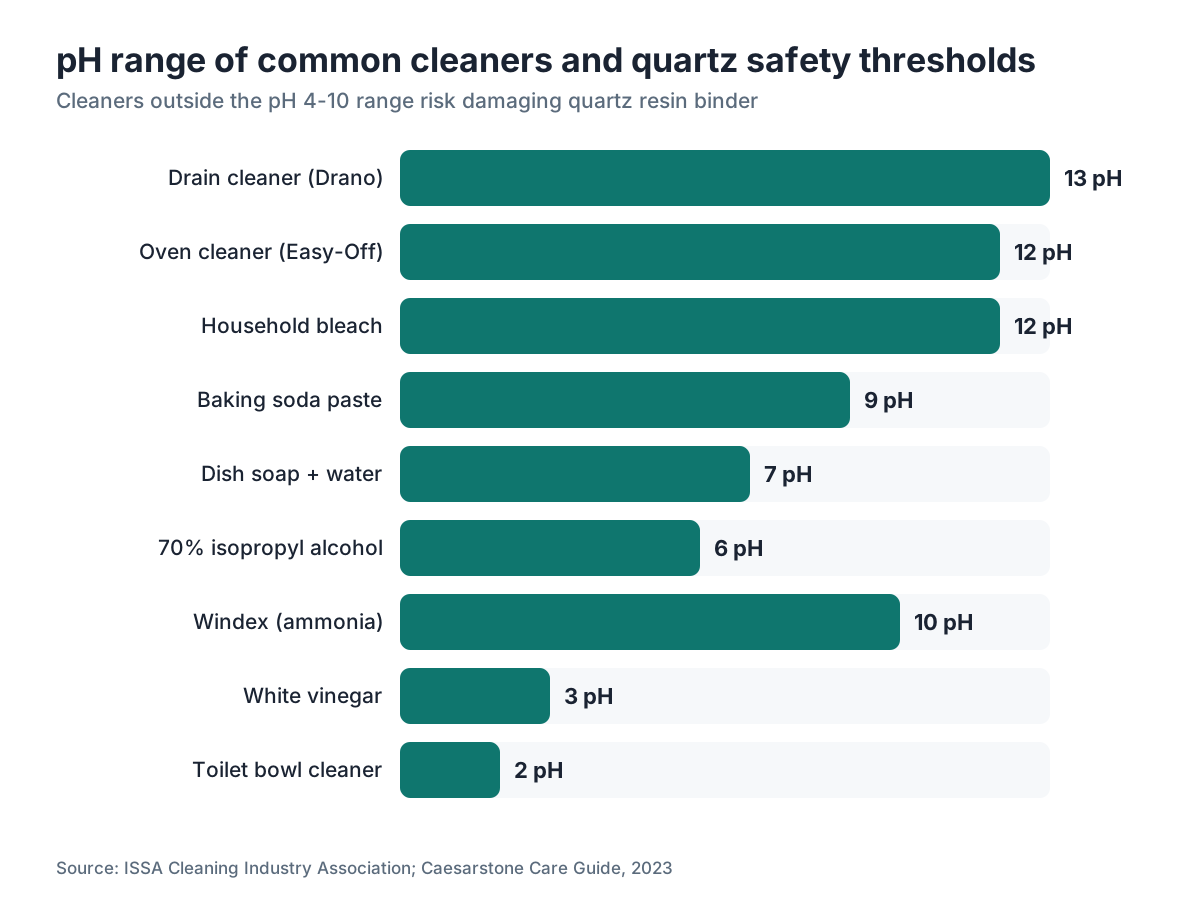
- Avoid bleach, abrasive scrubbers, acidic cleaners, and anything with a pH above 10 or below 4.
- Most stains come off with isopropyl alcohol or a diluted degreaser.
- Harsh chemicals can cloud the resin binder and void most manufacturer warranties.
What makes quartz countertops different from natural stone?
Quartz countertops are engineered, not quarried. A typical slab is roughly 90 to 95 percent ground quartz aggregate bound with polymer resins, pigments, and sometimes glass or metalite particles [1]. That resin binder is what earns quartz its non-porous, low-maintenance reputation. It also makes quartz behave very differently from granite or marble the moment a harsh cleaner touches it.
Natural stone has open pores that drink up sealers, oils, and stains. Quartz doesn't need sealing because there's almost nothing to absorb. But that same resin binder is vulnerable to strong alkaline and acidic chemicals that would roll off a sealed granite surface without a mark. An oven degreaser, a drain cleaner, or even some "natural" citrus sprays can etch or cloud quartz for good if they sit long enough [2].
Quartzite is a different animal. It's a metamorphic stone that needs sealing and follows its own cleaning rules. If your slab is labeled quartzite, read how to clean quartzite countertops before you use anything here.
What's the safest everyday cleaner for quartz countertops?
Warm water and a small amount of mild dish soap is the answer nearly every manufacturer lands on [2][3]. Apply it with a soft microfiber cloth, wipe in gentle circles, rinse with clean water, and dry with a second cloth. That's the whole routine.
You don't need specialized stone cleaners for daily use, though a pH-neutral stone spray is fine if you already own one. The phrase that matters is pH-neutral, meaning a pH close to 7. Cleaners marketed for granite work on quartz for the same reason [4].
Ammonia-based glass cleaners like Windex are borderline. Most manufacturers say occasional use won't hurt, but daily use builds a hazy film. Keep the glass cleaner for the backsplash tile and stick with dish soap on the stone.
One mistake people make: they leave standing water. Water itself is harmless. Hard water is the problem, because it leaves mineral deposits that turn into a chore later. Wipe dry after you clean.
Which cleaners and chemicals are actually dangerous to quartz?
The list of things to avoid matters more than the list of things to use.
High-pH (alkaline) cleaners are the biggest threat. Oven cleaners, drain openers, and industrial degreasers typically run at pH 12 to 14 [11]. At that alkalinity they attack the polymer resin and can cause clouding, discoloration, or surface breakdown you can't reverse. This isn't slow decay over years. With a concentrated product it can happen in minutes.
High-acid cleaners are nearly as bad. Vinegar sits around pH 2 to 3. Toilet bowl cleaners, rust removers, and some grout cleaners are just as acidic. Repeated acid exposure etches and dulls the surface. One vinegar spill you wipe up right away probably won't leave a mark. Cleaning with a vinegar-water mix every day will eventually dull the finish.
Abrasives of any kind scratch. Steel wool, the green scrubber side of a sponge, powdered cleansers like Comet, pumice sticks, all of them. Quartz aggregate is hard (Mohs 7), but the resin surface scratches more easily than those stone particles suggest.
Methylene chloride and paint removers can dissolve the resin outright. To pull cured paint or adhesive off quartz, use a plastic scraper first, then isopropyl alcohol [2].
Here's a quick reference:
| Cleaner type | Example products | Safe? |
|---|---|---|
| Mild dish soap + water | Dawn, Seventh Generation | Yes |
| pH-neutral stone spray | Method Daily Granite | Yes |
| Isopropyl alcohol (70%) | Rubbing alcohol | Yes, briefly |
| Ammonia-based glass cleaner | Windex original | Occasionally only |
| Bleach (diluted, <1%) | Clorox spray | See manufacturer; many say no |
| Vinegar/citrus spray | DIY vinegar cleaners | No |
| Oven/grill cleaners | Easy-Off | Never |
| Drain cleaners | Drano | Never |
| Abrasive powder | Comet, Bar Keepers Friend powder | Never |
| Paint remover | Goo Gone, Goof Off | Never on resin |
How do you remove common stains from quartz countertops?
Most stains on quartz sit on the surface because the resin is so dense. The fix depends on what left the mark.
Food and grease: Let dish soap and warm water sit on the spot for two to three minutes before wiping. Most food residue, coffee rings, and grease splatters let go without scrubbing.
Dried or caked-on food: Use a plastic putty knife or a wooden spatula to lift the bulk of the debris first. Then clean with soap and water. Never chip at dried material with a metal tool.
Permanent marker, ink, or Sharpie: Put 70% isopropyl alcohol on a soft cloth, apply it right to the mark, let it dwell 30 seconds, and wipe clean. Rinse with water afterward, because long alcohol contact isn't great for the resin either.
Nail polish: A small amount of non-acetone nail polish remover on a cloth is the standard fix for spills [3]. Acetone-based removers can dull the finish, so read the bottle before you reach for it.
Wine and juice: These respond to the dish soap method. The trick is catching them before they dry. A red wine spill wiped within a minute comes clean. If it sat overnight, try isopropyl alcohol first.
Hard water deposits and limescale: This is where quartz owners get into trouble, because the instinct is to grab vinegar or CLR, both acidic. Instead, use a hard water remover labeled safe for engineered stone, or mix a thin paste of baking soda and water. Baking soda is mildly alkaline at pH 8 to 9, borderline but fine for brief contact [4]. Apply, wait one minute, wipe off, and rinse well. Don't leave the paste on more than a few minutes.
Heat marks and scorch: If a hot pan discolored your quartz, that's resin damage and cleaning may not fully reverse it. A fabricator can sometimes buff out minor heat marks. Severe ones can mean a section replacement.
Does bleach damage quartz countertops?
It can, and this is a real gray area where manufacturer guidance splits. Caesarstone, one of the largest quartz brands, says household bleach should not be used on its surfaces [2]. Cambria, another major maker, says the same [3]. Both list bleach in their "avoid" category outright.
Here's the chemistry. Household bleach at typical concentrations (around 3 to 6% sodium hypochlorite) is strongly alkaline, usually pH 11 to 13 [5]. That sits in the danger zone for the resin binder. The risk isn't color stripping, because quartz pigments are mineral-based and stable. The risk is the alkalinity reacting with and breaking down the polymer resin over time.
If you're asking because a bottle of Clorox disinfecting spray touched your quartz, rinse it off with water right away and you're almost certainly fine. One brief contact is nothing like cleaning with bleach every week. Habitual use is the problem.
For real disinfection, 70% isopropyl alcohol works as a surface disinfectant and is far safer for quartz than bleach [5].
Can you use vinegar on quartz countertops?
No. This is one of the most common mistakes people make, because vinegar-and-water is the go-to "natural" all-purpose cleaner. It works fine on plenty of surfaces. On quartz it's a slow mistake.
Vinegar is acetic acid, with a pH usually between 2 and 3.5 depending on dilution. The quartz particles shrug off acid. The polymer resin does not. Diluted vinegar might not show damage in a week, but over months of daily use it dulls the finish and can micro-etch the resin.
One splash from cooking, rinsed off right away, won't ruin your countertop. The damage comes from the spray bottle of 50/50 vinegar and water that someone uses on the whole kitchen every day. That's the pattern that wears quartz down.
Want a natural cleaner? Mild castile soap (Dr. Bronner's, for one) diluted in water runs pH-neutral to mildly alkaline and treats quartz far better.
How do you clean quartz countertops around the sink and seams?
The area around the sink sees the most water, food debris, and cleaning product, so give it more attention.
The seam between the countertop and the sink (undermount sinks especially) is where silicone caulk sits. That caulk can grow mold and mildew, and the urge is to scrub it with bleach or a stiff brush. A soft toothbrush with dish soap handles routine buildup. For mildew already set into the caulk, a tiny amount of diluted bleach (roughly 1 teaspoon in a cup of water) applied only to the caulk, not smeared across the quartz, is the workaround most homeowners use. Keep it on the caulk. Rinse fast.
Around and under the sink lip you get standing water deposits. A damp cloth wiped daily is the only real prevention. Once deposits form, the baking soda method above is your safest bet.
Slab-to-slab seams (not the sink seam) need no special cleaning. Just don't let water pool in the seam line for long stretches, and don't poke at them with metal tools.
What about sealing, polishing, or waxing quartz countertops?
You don't seal quartz. It's non-porous by design, so a penetrating stone sealer has nowhere to go and nothing to do. Putting one on quartz wastes money and can leave a hazy residue [1].
Polishing is a different story. If your quartz has gone dull from buildup or from past use of the wrong cleaners, a quartz-specific polish can sometimes bring the surface back. Companies like Weiman make polishes formulated for engineered stone. Apply, buff with microfiber, done. It's a topical treatment, not a sealant.
Wax-based products (car wax, which some people try on stone) leave a soft film that grabs debris and fights removal. Skip them.
If your countertop is genuinely scratched, etched, or clouded from chemical exposure, polish won't fix it. That takes professional honing or, in bad cases, replacement. A fabricator who works with quartz all day can tell you whether a surface is worth saving.
If you're still weighing materials, kitchen countertops puts quartz next to granite, marble, laminate, and the rest side by side.
How do quartz manufacturer warranties handle cleaning damage?
Most major quartz makers offer a limited lifetime warranty to the original owner, but cleaning damage is spelled out as excluded in the fine print. Read the warranty before you assume a discolored spot is a claim.
Caesarstone's warranty states that damage caused by "improper cleaning, maintenance, or care" and contact with "chemicals or caustic substances" is not covered [2]. Cambria's residential warranty likewise excludes damage from cleaning products [3].
Here's what that means in practice. If you've been cleaning with oven cleaner or scrubbing with a green pad and the surface is now permanently dull, you're paying out of pocket for repair or replacement. The warranty covers manufacturing defects like cracks, voids, and color inconsistencies, not maintenance mistakes.
Fabricators who quote and install quartz usually walk through care instructions at installation. If yours didn't, ask for the manufacturer's care PDF when you buy. Every major brand publishes one.
What's the right routine for maintaining quartz long-term?
Daily: wipe down with a damp microfiber cloth and a drop of dish soap after cooking. Rinse and dry.
Weekly: do a fuller wipe with a pH-neutral countertop spray. Hit the sink perimeter and anywhere food residue builds up.
Monthly: check for hard water buildup near faucets and deal with it before it mineralizes.
Annually: there's nothing like granite's resealing schedule to keep up with. The one annual check is the silicone caulk around the sink. If it's cracking, separating, or discolored past what cleaning fixes, have a fabricator or handyperson recaulk it. Silicone caulk usually lasts 5 to 10 years, though exposure and cleaning habits move that number.
Habits matter more than any product. Use cutting boards (quartz can scratch, and it dulls your knives anyway). Use trivets for hot pots and pans, because the resin tolerates roughly 300 degrees Fahrenheit and direct pan contact blows past that. Clean spills fast, especially anything acidic or alkaline.
Fabricators who build quotes and manage customer relationships often track warranty periods and care reminders for their clients. If you work with a shop that runs software like SlabWise, those installation records and care notes are on file and easy to pull if a warranty question comes up later.
For natural stone options with different demands, how to clean stone countertops is a good overview, and for materials with a very different care profile, see butcher block countertops and marble countertops.
How does quartz cleaning compare to other countertop materials?
Quartz is genuinely lower maintenance than most alternatives. Granite needs periodic sealing (typically every 1 to 3 years depending on use and stone type) and shrugs off fewer acidic cleaners than people expect [6]. Marble is softer and more acid-sensitive than quartz, which makes it the highest-maintenance common countertop material [7]. Laminate and Formica take the same mild-soap care but scratch more easily and let water into their seams [8].
Corian and other solid-surface materials are engineered too, but they're acrylic-based rather than resin-and-quartz. Their edge over quartz is that scratches sand out. Their downside is easier staining and no better heat tolerance [9].
Soapstone is the outlier. It wants periodic oiling and is acid-resistant because it's mostly talc, so vinegar doesn't hurt it the way it hurts quartz [10].
| Material | Needs sealing? | Acid-safe? | Abrasion resistance | Heat resistance |
|---|---|---|---|---|
| Quartz (engineered) | No | No (resin etches) | High | Moderate (~300°F) |
| Granite | Yes (periodic) | Moderate (sealed) | Very high | High |
| Marble | Yes (frequent) | No | Moderate | High |
| Soapstone | No (oil optional) | Yes | Low-moderate | High |
| Laminate/Formica | No | Moderate | Low-moderate | Low |
| Corian/solid surface | No | Moderate | Low (scratches) | Low |
Still deciding? granite countertops, laminate countertops, and corian countertops each break down cost, care, and where they make sense.
Frequently asked questions
Can I use Magic Eraser on quartz countertops?
Magic Eraser (melamine foam) is a micro-abrasive. It works by physically abrading the surface, which means repeated use can dull the finish on quartz. For a stubborn stain, a single careful pass may be acceptable, but it's not a routine cleaning tool. Isopropyl alcohol on a cloth is a safer choice for the same kinds of marks.
What happens if I use an oven cleaner or Drano on quartz by accident?
Rinse with cold water immediately and keep rinsing for at least two minutes. These are highly alkaline products that attack the resin binder, but quick removal limits the damage. If you already see clouding or discoloration, that's likely resin damage. Contact your fabricator and the manufacturer's customer service line to see whether a warranty claim applies or what repair options exist.
Will rubbing alcohol damage quartz countertops?
Isopropyl alcohol at 70% is generally safe for brief use on quartz and is a common recommendation for ink and marker stains. The key word is brief. Prolonged contact, or daily cleaning with alcohol, can eventually affect the resin. Use it targeted on stains, then rinse. Don't make it your all-purpose daily spray cleaner.
How do I get dried food off quartz without scratching it?
Lay a wet cloth over the dried food for five to ten minutes to rehydrate it, then lift with a plastic scraper or the back of a spoon. Follow up with dish soap and water. Never use a metal spatula or blade on the surface, and never apply dry force. The rehydration step is what most people skip, and it's the difference between easy removal and a scratch.
Why does my quartz countertop look dull or hazy?
Haze on quartz usually traces to one of three things: soap residue from poor rinsing, hard water mineral deposits, or resin damage from a harsh cleaner. Try a thorough rinse and dry first. If haze remains, a pH-neutral quartz polish can clear residue and minor buildup. If the surface met bleach or an alkaline cleaner and the haze is permanent, that's likely resin degradation and cleaning alone won't reverse it.
Can I use Lysol or disinfecting wipes on quartz countertops?
Many Lysol and Clorox wipe formulations contain quaternary ammonium compounds or low levels of bleach. For occasional disinfecting (after handling raw meat, say), they're commonly used and unlikely to cause immediate damage. Routine daily use is more debatable, and most manufacturer care guides don't explicitly approve them. For disinfection without chemical risk, 70% isopropyl alcohol is the better option.
Does quartz stain permanently?
It can, but less often than natural stone. The polymer resin makes quartz nearly non-porous, so most liquids sit on top rather than soak in. Still, leaving highly pigmented liquids (red wine, beet juice, strong coffee) for long stretches, especially with heat involved, can cause staining that normal cleaning won't touch. Most stains that look permanent are actually surface residue that isopropyl alcohol or a targeted stone cleaner will lift.
How do I remove hard water stains from quartz near the faucet?
Avoid vinegar and CLR, both acidic. Your safest option is a thin baking soda paste (baking soda plus enough water to form a paste, pH around 8 to 9) applied for one to two minutes and rinsed thoroughly. You can also use a hard water remover labeled safe for engineered stone. Prevention is easier than removal: dry around the faucet base regularly.
Can you put hot pans directly on quartz countertops?
You shouldn't. Quartz resin binders handle everyday heat, but direct contact from a pan coming off the stove (easily 400 to 500°F) regularly beats the resin's tolerance, which most manufacturers put near 300°F. That can cause cracking, discoloration, or warping in the resin. It's a physical damage issue, not a cleaning one, but worth knowing, because heat damage looks like a stain and won't clean off.
Do I need to seal quartz countertops after installation?
No. Quartz is non-porous by design and needs no sealing. A penetrating stone sealer does nothing useful and can leave a hazy residue. This is one of the main selling points of engineered quartz over natural stone like granite, which does need periodic sealing. If a product claims to be a quartz sealer, it's either a topical polish (a different thing) or it's mislabeled.
Is Bar Keepers Friend safe for quartz?
The original powder is an abrasive (it contains feldspar and oxalic acid) and should not touch quartz. Bar Keepers Friend also makes a "Soft Cleanser" liquid that some users report using successfully, but it's still mildly abrasive and acidic. Most quartz manufacturers don't approve it. For the stubborn stains BKF usually targets, isopropyl alcohol or a dedicated quartz stain remover is safer.
How do you clean white or light-colored quartz without it yellowing?
White quartz can yellow over time from a few causes: strong UV light degrading the resin, cooking grease buildup, or oily products. For cleaning, the same rules hold: mild dish soap and water. Avoid oil-based products. For yellowing already present, a quartz-specific polish or a brief paste of baking soda and hydrogen peroxide is sometimes recommended, though results vary. Test in an inconspicuous spot first.
What's the difference between cleaning quartz and cleaning quartzite?
Quartz is engineered (stone plus resin). Quartzite is a natural metamorphic stone. Quartzite needs sealing, behaves more like granite, and while it's more acid-resistant than marble, it's still more porous than engineered quartz. Some cleaners safe for quartz (like isopropyl alcohol) are also safe for quartzite, but quartzite can take occasional diluted acidic exposure that quartz's resin cannot. See the dedicated quartzite cleaning guide for specifics.
Sources
- NSF International, Standard 51 (Food Equipment Materials): Quartz countertops are composed of approximately 90-95% ground quartz aggregate bound with polymer resins
- Caesarstone, Care & Maintenance Guide: Caesarstone advises against bleach and strongly alkaline or acidic cleaners, and excludes improper cleaning from warranty coverage
- Cambria, Care & Maintenance: Cambria recommends mild soap and warm water for daily cleaning and excludes cleaning-product damage from its residential warranty
- Silestone by Cosentino, Care and Maintenance: pH-neutral stone cleaners are approved for quartz; baking soda in brief contact is generally considered safe for engineered stone
- CDC, Guideline for Disinfection and Sterilization in Healthcare Facilities: 70% isopropyl alcohol is an effective surface disinfectant; sodium hypochlorite (bleach) solutions are typically pH 11-13
- Natural Stone Institute, Care and Maintenance of Natural Stone: Granite countertops typically require resealing every 1-3 years and are vulnerable to acidic cleaners when unsealed
- USGS, Marble Geology and Properties: Marble is composed largely of calcium carbonate, making it highly reactive to acids and requiring the most frequent sealing of common countertop stones
- Wilsonart, Laminate Care and Cleaning Guide: Laminate countertops require mild soap cleaning and are vulnerable to physical scratches and moisture infiltration at seams
- Corian Design by DuPont, Care and Maintenance: Solid surface (acrylic) countertops allow scratch repair through sanding but offer less heat resistance than engineered quartz
- Vermont Soapstone, Soapstone Care Guide: Soapstone is composed largely of talc and is acid-resistant, making it tolerant of vinegar-based cleaners that would damage quartz resin
- ISSA (Worldwide Cleaning Industry Association), pH Scale and Cleaning Products: Industrial alkaline cleaners such as oven and drain cleaners typically operate at pH 12-14, while common acidic cleaners like vinegar sit at pH 2-3.5
Last updated 2026-07-09