TL;DR
- Quartz countertops never need sealing, but they are not indestructible.
- Wipe spills fast with dish soap and warm water, never set a hot pan directly on the surface, skip bleach and acidic cleaners, and keep the slab out of direct sun.
- Follow those four rules and quartz lasts 25 years or more with almost no fuss.
What makes quartz countertops different to care for?
Quartz is engineered stone, not a natural slab pulled from a quarry. The typical recipe is 90 to 95 percent ground quartz crystals held together with polymer resins and pigments [1]. That resin binder changes the whole care math compared to granite or marble.
The surface is non-porous, so bacteria and moisture cannot soak into the stone the way they can with unsealed granite. You will never seal quartz. That is a real advantage, not marketing copy. NSF International has tested engineered stone surfaces and recognized them for food-contact use precisely because liquids and pathogens cannot get in [2].
The tradeoff is heat and chemicals. Natural stone is basically inert. The resins in quartz are not. Temperatures above roughly 150F (66C) can discolor or warp the polymer matrix, and strong oxidizers like bleach break it down over time. Once the resin is damaged, there is no sealing or polishing your way back. The damage is structural.
Get that one distinction, porous rock versus resin-bound composite, and the rest of this guide follows. Most quartz mistakes come from treating it like granite, or worse, like stainless steel that shrugs off anything you throw at it.
What is the best daily cleaning routine for quartz?
Warm water and a few drops of dish soap on a soft cloth. That handles 95 percent of your cleaning. Wipe down after cooking, dry with a clean cloth, done. Quartz countertops from every major brand, Cambria, Silestone, Caesarstone, all publish nearly identical daily care instructions because the chemistry is the same across the category [3].
A few specifics that actually matter:
- Use a non-abrasive sponge or microfiber cloth. Green Scotch-Brite pads and anything labeled "heavy duty scrubbing" will dull the polished finish over time.
- Rinse the soap off. Dish soap left to dry builds a filmy layer, especially in hard-water areas, and that film grabs more grime.
- Do not let standing water sit near seams or along the backsplash edge for hours. The quartz is fine with water. The substrate and adhesive beneath it are not.
Got sticky residue like cooking grease or dried jam? Dampen a cloth with warm soapy water and lay it on the spot for two or three minutes before wiping. On quartz, patience beats chemical aggression every time.
What cleaners are safe, and which ones will damage quartz?
This is where most damage happens, and most of it is preventable. The pattern to remember is simple: pH extremes and solvents are the enemy.
Safe to use:
- Mild dish soap (any pH-neutral variety)
- Diluted rubbing alcohol (70 percent isopropyl at no more than 1:1 with water) for disinfecting
- Dedicated stone or quartz sprays with a pH between 5 and 8
- Ammonia-free glass cleaner for a streak-free shine
Never use on quartz:
- Bleach or anything with sodium hypochlorite. Bleach breaks down the polymer resin and causes discoloration you cannot reverse. Silestone's care guide explicitly warns against cleaners with bleach or high-pH alkaline agents [3].
- Oven cleaners, drain cleaners, or any highly alkaline product (pH above 10). Bleach itself sits around pH 11 to 13 [8].
- Acidic cleaners: vinegar, lemon sprays, rust removers, lime-scale removers. Acid does not etch quartz the way it etches marble, but it can dull the finish and degrade the resin at the edges over time.
- Nail polish remover with acetone. Acetone is an aggressive solvent for resins. A small spill wiped up fast is not a crisis, but soaking a cloth and scrubbing is another story.
Stay in the mild middle of the pH scale and you are fine. One manufacturer bulletin puts the safe window at 5.5 to 8.5, which is basically anything you would call gentle [3].
For stubborn stains, a paste of baking soda and water applied gently with a soft cloth clears most pigment. Leave it five minutes, then wipe. Baking soda sits at pH 8.3, right at the edge of safe, so do not let it sit overnight.
Can you put hot pans on quartz countertops?
No. This is the single most important rule for quartz, and the one people break most because it seems backwards for a stone surface.
The polymer resin binding the crystals can degrade above roughly 150F, and a cast iron skillet from a 400F oven hits that threshold the instant it touches the slab [1]. The damage shows up as a permanent spot: sometimes a ring, sometimes a whitish haze, sometimes a dark scorch, depending on the pan and the slab color.
The quartz crystals themselves handle extreme heat fine. It is the resin that fails. And because the resin holds everything together and makes the surface non-porous, a heat-damaged spot is also a weakened spot.
Use a trivet or hot pad. A thick silicone trivet costs about four dollars. The alternative is a fabricator repair that often runs $200 to $400, and even a good repair shows under close light.
Same logic covers slow cookers, electric griddles, and toasters left sitting on the surface. Heat soak from a toaster running 45 minutes can reach damaging temperatures at the contact point even when the outside of the appliance feels only warm.
Does quartz need to be sealed?
No. Full stop.
The question comes up constantly because sealing is standard for granite and other natural stones. Quartz has no open pores for a sealer to fill. Put a granite sealer on quartz and all you get is a residue film you then have to scrub off [4].
The non-porous property comes from the resin binder, built in at the factory. It does not wear off, fade, or expire. You cannot seal quartz to make it tougher than it already is, and you cannot un-seal it if you make a care mistake.
If someone at a home improvement store tries to sell you an annual quartz sealer, they are misinformed or selling you nothing. Keep your money.
How do you remove stains from quartz countertops?
Most quartz stains sit on the surface rather than soaking in, so they respond to a little mechanical patience. The contrast with marble is stark: red wine on unsealed marble can etch into the calcite within minutes, while the same spill on quartz just waits on top for you to wipe it up [5].
For common food and drink stains: warm soapy water, a soft cloth, gentle pressure. If it has dried, soak a cloth and lay it over the spot for five minutes first.
For oil-based stains (cooking grease, lotion, lip balm): a dab of dish soap right on the spot, two minutes, then wipe with warm water. Dish soap is a surfactant built to break down lipids.
For ink, marker, or paint: a cotton ball with 70 percent isopropyl alcohol, rubbing gently. Do not flood the surface. Use just enough to lift it.
For dried gum, wax, or putty: a plastic scraper (never metal) to lift the bulk, then soapy water for the rest. Metal scrapers scratch.
For mineral deposits and hard-water spots: a cleaner made for quartz, or a very diluted white vinegar solution (no more than 1 tablespoon per cup of water) applied briefly and rinsed right away. Long vinegar contact is risky, so treat this as an occasional targeted fix, not a daily spray.
What does not work: abrasive powders like Comet or Bar Keepers Friend used hard. Bar Keepers Friend gets marketed as safe for some stone, but it is mildly abrasive and dulls quartz polish with repeated use.
If a stain survives all of that, call the manufacturer. Most major brands run a stain-removal helpline and can give you product-specific steps.
How do you protect quartz countertops from scratches?
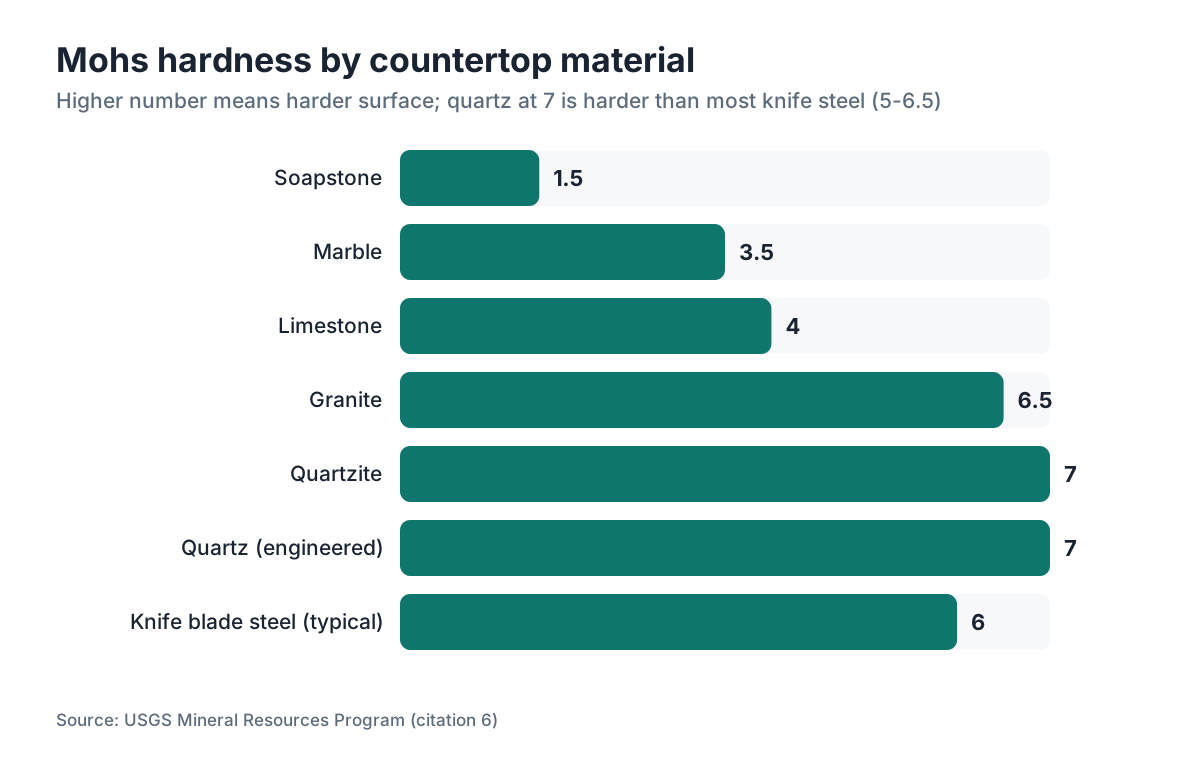
Quartz rates 7 on the Mohs hardness scale, harder than most kitchen knives, which land at 5 to 6.5 [1]. Even so, using your counter as a cutting board is a bad idea for two reasons.
First, a knife edge dragged across the surface can create micro-scratches in the polish that pile up into visible dullness. You probably will not scratch the crystals, but you can mar the polished resin.
Second, quartz will wreck your knives. The stone is harder than the blade steel. Use a cutting board.
For everyday scratch protection:
- Cutting boards for all food prep.
- Lift small appliances, do not drag them. Toaster bases and mixer feet often have rough plastic or silicone feet that drag gritty residue across the polish.
- Wipe up gritty debris like sand, dirt, or construction dust. Grinding silica particles against a polished surface under the weight of an appliance is exactly how polish fades.
Deep scratches from a sharp or heavy impact (a dropped cast iron, a knife landing point-down) can chip the resin. A fabricator can sometimes fill minor edge chips with color-matched epoxy, though the repair rarely disappears under direct light.
Shop owners tracking damage for insurance or warranty may want to document slab condition at install. Some fabricators use job management software like SlabWise to attach condition notes to each job record, which makes later warranty conversations shorter.
Does UV exposure damage quartz countertops?
Yes, and it catches people off guard. Polymer resins degrade under UV over time [1]. The same process that fades and cracks plastic patio furniture works on the resin in engineered quartz, just slower.
Indoor kitchen counters rarely have a problem, because ambient UV from interior lighting is tiny. But quartz in a sunroom, an outdoor kitchen, or against a large south-facing window with direct daily sun will fade and discolor over the years.
Nearly every major quartz maker excludes outdoor installs from warranty coverage for exactly this reason [3]. Caesarstone's warranty, for example, covers indoor residential use and specifically leaves out outdoor applications [4].
Building an outdoor kitchen? Granite countertops or soapstone are better picks, since natural stone has no resin binder to break down. For an engineered option outdoors, look for products rated for it, which use UV-stabilized resin.
For indoor counters near windows, pull-down shades or UV-filtering window film stop nearly all resin degradation from sunlight. The cost is nothing next to a replacement slab.
How do quartz countertops compare to other surfaces for maintenance?
Care burden varies a lot across countertop materials, and quartz sits in an interesting middle spot. Here is the honest comparison.
| Material | Sealing needed | Heat resistant | Scratch resistant | Stain resistant | Typical care effort |
|---|---|---|---|---|---|
| Quartz | No | Low (resin limit ~150F) | Good (Mohs 7) | Excellent | Low |
| Granite | Yes (annually) | Excellent | Good (Mohs 6-7) | Good when sealed | Medium |
| Marble | Yes (frequently) | Moderate | Poor (Mohs 3-4) | Poor | High |
| Quartzite | Yes (frequently) | Excellent | Very good (Mohs 7+) | Good when sealed | Medium-High |
| Butcher block | Yes (oiling) | Good | Low | Low | High |
| Laminate | No | Low | Low | Good | Low |
| Soapstone | No (oiling optional) | Excellent | Low (Mohs 1-2) | Excellent | Low |
Sources: Mohs hardness from USGS mineralogy data [6]; heat thresholds and care requirements from manufacturer guidelines [3].
Quartz scores well because you never seal it, it shrugs off most stains, and daily cleaning is trivial. Its weak spots (heat, UV, strong chemicals) are predictable and easy to avoid. Marble and quartzite ask for more ongoing attention; marble countertops in particular need regular sealing and careful acid avoidance. Butcher block countertops need periodic oiling and rot if you neglect moisture.
Want low maintenance in a normal modern kitchen, with hot pans near the stove, occasional spills, and no direct sun? Quartz is hard to beat. Cook over live fire outdoors, or want a natural stone with no resin limits? Granite or soapstone will treat you better over 20 years.
What should you do about chips, cracks, or deep scratches in quartz?
Do not panic, and do not ignore it either.
Small chips on edges or corners are the most common quartz damage, and a professional fabricator can usually repair them with color-matched polyester or epoxy filler. It will not vanish under a raking light, but it is functional and invisible under normal conditions. Repairs typically run $150 to $450 depending on location and size, based on fabricator pricing, and vary a lot by region.
Cracks are more serious. A hairline crack can signal a structural issue, like a cabinet that shifted or a span with no support beneath it. Before you fill a crack cosmetically, check that the cabinet or substrate under the counter is level and stable. A fabricator will likely check this too, but knowing it upfront saves you from paying for a repair that cracks again in six months.
Through-cracks or large chips that expose the substrate usually mean a section replacement. Most quartz gets installed in joined sections, so replacing one is often possible if your slab profile is still available from the original maker. That is one good reason to write down the brand and product name after install.
For fabricators handling warranty repairs, accurate job records tied to the original template and installation save real time. Knowing the exact edge profile, thickness, and seam placement from the first job kills hours of guesswork on a repair visit.
Still under warranty? Most residential warranties run 10 to 15 years, and Cambria offers a lifetime residential warranty [7]. Call the manufacturer first. Warranty repairs through their network often cost nothing out of pocket for manufacturing defects.
How do you keep the seams and edges looking good long-term?
Seams are the one part of a quartz install that ages differently than the surface, and they earn specific attention.
The filler at quartz seams is a color-matched epoxy or polyester adhesive. It is slightly more porous than the quartz and can stain from persistent dark liquids like coffee or red wine if you let a seam stay dirty. Wipe seam areas promptly and do not let liquid pool along a seam.
If seam filler darkens over the years, a fabricator can clean it out and re-fill it. Minor service, but on a light-colored slab the difference is obvious.
Edge profiles also collect grime in their recesses. An ogee or bullnose traps less debris than a dupont or stacked profile with undercut details, which grabs grease along the lower groove. Clean these with a soft toothbrush and soapy water twice a month and you head off staining before it starts.
For a replacement or new install, the countertop installation work matters most: proper substrate support, level cabinets, and tight seam fitting at fabrication decide how a counter ages over 20 years far more than your cleaning habits do.
Are there any long-term maintenance tasks that most people miss?
A few that rarely show up in the quick-tips lists:
Check the caulk around the sink and backsplash every year. The counter itself does not degrade, but the caulk seal at the sink cutout and against the backsplash does. Cracked or mildewed caulk lets water reach the substrate and cabinet below. Recaulking takes an hour and the materials cost under ten dollars.
Inspect for support changes after any plumbing or cabinet work. If a plumber or cabinet installer works under your counter, they might shift a support piece or leave a gap under a span. A counter fully supported at install that now has an unsupported twelve-inch span is a crack waiting to happen, especially if someone stands on it.
Reassess sunlight if window treatments change. Adding or removing blinds, resizing a window during a renovation, or installing a skylight can change the UV load a lot. If any change puts more direct sun on the surface, add UV-filtering film to the glass.
Clean under small appliances now and then. Gritty buildup under a toaster or stand mixer works like sandpaper every time the appliance vibrates. Slide it out, wipe the surface, wipe the feet, once a month.
None of these are dramatic. Together they explain most of the gap between a quartz counter that looks great at fifteen years and one that looks tired at eight.
Frequently asked questions
How often should I clean quartz countertops?
Wipe down after each use with warm soapy water and a soft cloth. That daily habit stops residue buildup and keeps the surface polished. A deeper clean, meaning clearing buildup at seams, cleaning under appliances, and checking the caulk around the sink, is worth doing once a month. There is no annual sealing or conditioning step the way natural stone needs.
Can I use Windex or glass cleaner on quartz?
Yes, ammonia-free glass cleaner is safe for quartz and leaves a streak-free shine. Skip glass cleaners with ammonia, which can degrade the resin surface with repeated use. Most major brands confirm that pH-neutral, gentle, ammonia-free cleaners are fine in their published care guides.
Will vinegar damage quartz countertops?
Vinegar is acidic, around pH 2.5, and can dull the finish or degrade the resin binder with prolonged or repeated exposure [8]. A brief, diluted application for a stubborn hard-water spot, rinsed right away, is unlikely to cause visible damage. Using vinegar as a regular spray is a bad idea for quartz, even though it is a popular cleaner for many other surfaces.
Can I cut directly on quartz countertops?
You technically can, since quartz is harder than most knife steel. But you should not. Repeated cutting slowly dulls the polished surface and leaves micro-scratches that build into visible haze. More practically, the hard surface dulls your knives fast. Use a cutting board. The counter and your knives both last longer.
What happens if bleach gets on quartz?
A brief accidental splash of diluted bleach, wiped up right away and rinsed, is unlikely to cause permanent damage. But routine cleaning with bleach products, or leaving a bleach solution on the surface for minutes, can break down the polymer resin and cause discoloration or a dull spot you cannot reverse. If you use bleach for disinfecting, keep it off quartz entirely.
Does quartz countertop color affect how easy it is to maintain?
Somewhat. Very light or white quartz shows staining and residue more readily and needs more attentive daily wiping to look clean. Very dark surfaces show water spots, fingerprints, and dried soap residue more easily. Mid-tone colors with some veining hide everyday dirt best. The maintenance steps are identical regardless of color; only the visibility of imperfections changes.
How do I get rid of a white haze or film on my quartz countertop?
A white haze or film on quartz is almost always hard-water mineral deposit or dried soap residue. Try a dedicated quartz cleaner, or a soft cloth dampened with a little 70 percent isopropyl alcohol, which dissolves both soap residue and mineral film. If it persists, a brief application of diluted white vinegar (1 tablespoon per cup of water), rinsed immediately, usually clears mineral deposits.
Can quartz countertops be repaired if chipped or cracked?
Yes. Small chips and cracks can be repaired by a professional fabricator using color-matched epoxy or polyester filler. The repair is functional and low-cost, roughly $150 to $450 depending on extent and region, though it rarely disappears under close inspection. Before repairing a crack, verify the cabinet support below is level and stable, since a structural issue will crack the same spot again.
Is quartz safe for food preparation directly on the surface?
Yes. Because quartz is non-porous, bacteria cannot survive in the surface the way they can in scratched wood or porous stone. NSF International has recognized engineered stone surfaces for food-contact use. That said, cutting directly on quartz is still a bad idea for the counter's looks and your knives. Use a cutting board and the food-safety benefit stays fully intact.
How do quartz countertops hold up in bathrooms compared to kitchens?
Quartz does very well in bathrooms. The non-porous surface resists moisture and mold, and bathroom products like toothpaste and soap sit well within the safe pH range. The main bathroom-specific caution is nail polish remover with acetone: wipe it up the moment it spills. Heat from a curling iron or flat iron set on the counter is a real risk, the same as a hot pan in the kitchen.
What is the lifespan of quartz countertops with proper care?
With proper care, quartz countertops realistically last 25 years or more in residential use. Several manufacturers, including Cambria, offer lifetime residential warranties, which signals confidence in long-term durability [7]. The resin binder does not expire or need reconditioning. The main threats to longevity are heat damage, UV degradation in direct sun, and impact chips, all of which are preventable.
Are quartz countertops harder to maintain than granite or marble?
Quartz is easier than both. Granite needs annual sealing and prompt attention to spills on unsealed surfaces. Marble is susceptible to acid etching from common kitchen items like lemon juice and wine, needs frequent sealing, and scratches more easily. Quartz needs no sealing, resists most stains, and takes everyday kitchen use well as long as you avoid heat, UV, and harsh chemicals.
Can I use disinfecting wipes like Lysol wipes on quartz?
In a pinch, yes, but not as a daily habit. Most disinfecting wipes contain citric acid, hydrogen peroxide, or other agents that fall outside the safe pH range for quartz with repeated use. For regular disinfecting, a solution of 70 percent isopropyl alcohol diluted 1:1 with water is more resin-safe and just as effective against common pathogens [9].
What is the difference between quartz and quartzite for care purposes?
Quartz is engineered stone (ground crystals plus resin); quartzite is a natural metamorphic rock. Care is almost opposite in some respects. Quartzite is porous and needs regular sealing, like granite. It handles heat well since there is no resin to melt. Quartz needs no sealing but must be protected from heat and strong chemicals. See the full guide on how to clean quartzite countertops for more.
Sources
- Natural Stone Institute (formerly Marble Institute of America), Dimension Stone Design Manual: Engineered quartz composition of 90-95% ground quartz bound with polymer resins; Mohs hardness approximately 7; resin susceptibility to heat and UV degradation
- NSF International, Certification Standards for Food Equipment: Non-porous engineered stone surfaces recognized for food-contact use due to inability of bacteria and liquids to penetrate
- Silestone by Cosentino, Care and Maintenance Guide: Warning against bleach and high-pH alkaline cleaners; safe pH window approximately 5.5 to 8.5; outdoor use excluded from warranty
- Caesarstone, Care and Maintenance: Quartz countertops do not require sealing due to non-porous nature; outdoor installations excluded from warranty
- USGS Mineral Resources Program, Marble: Marble Mohs hardness 3-4; calcite crystals susceptible to acid etching from common household acids
- USGS Mineral Resources Program, Mohs Hardness Scale: Mohs hardness ratings for common minerals: quartz at 7, calcite (marble) at 3, talc (soapstone) at 1-2
- Cambria, Residential Warranty: Cambria offers a lifetime residential warranty on its quartz surfaces for indoor use
- EPA, Safer Choice Program: pH ranges for common household cleaners; bleach (sodium hypochlorite) pH approximately 11-13; vinegar pH approximately 2.5
- CDC, Infection Control and Disinfection Guidance: 70% isopropyl alcohol effective against common pathogens on hard non-porous surfaces
- Cambria, Product Care: Daily cleaning with mild soap and water recommended; bleach-based products and abrasive cleaners listed as damaging agents
Last updated 2026-07-09