Will My Countertop Seam Be Visible? What to Expect
Quick Definition
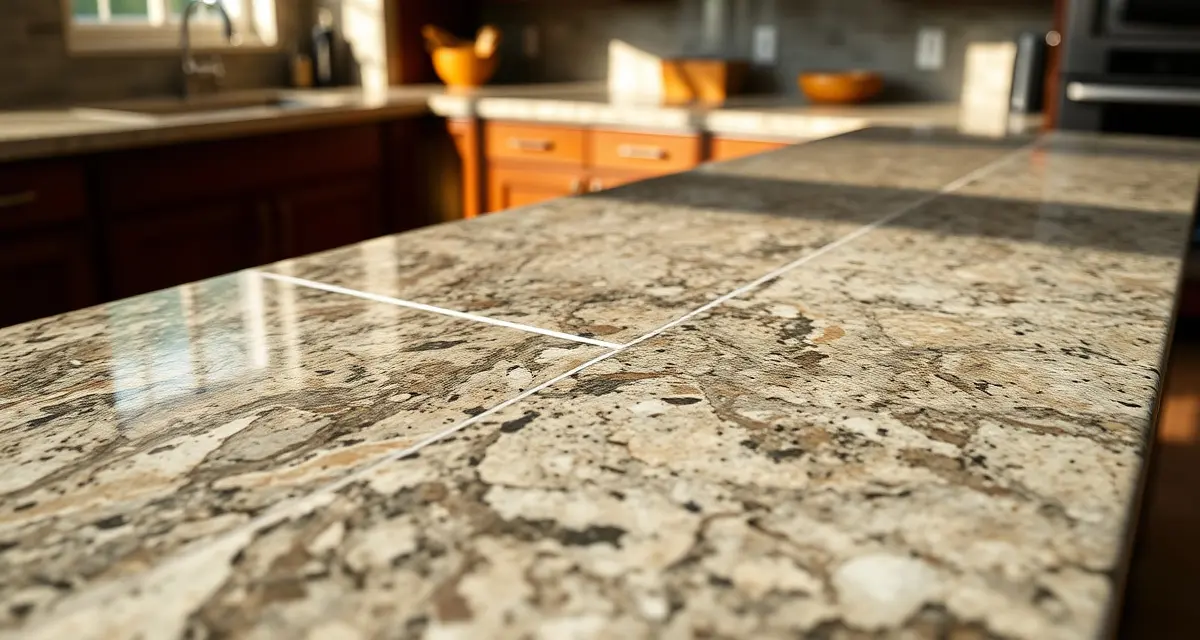
Yes, countertop seams are almost always visible if you look for them - but a well-made seam should be barely noticeable from a normal standing position. Good seams are 1/16 inch wide or less, color-matched with tinted epoxy, and placed at natural transition points. Bad seams gap, have mismatched colors or patterns, and draw your eye immediately. Seam quality depends on the fabricator's skill, the stone's pattern, and placement strategy.
TL;DR
- All multi-piece countertops have seams - most kitchens require 2-5 seam joints
- A quality seam is 1/16" wide or thinner and filled with color-matched epoxy
- Solid-color materials (Absolute Black granite, solid quartz) hide seams best
- Bold veined materials (Calacatta quartz, marble) show seams more because pattern interruption is obvious
- Seam placement matters hugely - behind the faucet or at an inside corner is far less visible than mid-run
- Fabricator skill is the biggest variable - experienced shops produce near-invisible seams
- Digital templating improves seam fit by providing precise measurements for cut-to-cut alignment
Why Countertops Have Seams
Slab Size Limitations
Standard stone slabs measure approximately 115-130 inches long by 65-75 inches wide (roughly 9.5-10.5 feet by 5.5-6 feet). Any countertop run longer than the slab length requires a seam.
Calculate your material waste savings
See exactly how much slab material and money you could save with optimized cutting layouts.
Try the free Waste CalculatorSince many kitchens have L-shaped or U-shaped layouts with total counter lengths of 15-25+ feet, seams are inevitable.
Transport and Access Constraints
Even when a slab is large enough for a single-piece counter, the fabricated piece may not fit through doorways, hallways, or around tight corners. Standard interior doorways are 32 inches wide. A 10-foot granite section can't turn a corner in a 3-foot-wide hallway.
Fabricators sometimes cut pieces smaller than necessary purely for access - then seam them together on-site.
Structural Reasons
L-shaped and U-shaped countertops need seams at the corner joints. A single piece of stone cut into an L-shape has an extremely fragile inside corner that's prone to cracking during transport and installation. Seaming two straight pieces at the corner is structurally stronger.
What Makes a Good Seam vs. a Bad Seam
Good Seam Characteristics
- Width: 1/16 inch (1.5mm) or less - sometimes as tight as a hairline
- Height match: Both pieces are flush - no step or lip between sections
- Color match: Epoxy filler is tinted to match the stone color precisely
- Pattern alignment: Veins or patterns flow across the seam as naturally as possible
- Placement: At a logical transition point (corner, behind sink, at cabinet joint)
- Edge alignment: The front edge profile matches perfectly across the seam
Bad Seam Characteristics
- Width over 1/8 inch - visible gap that catches crumbs and dirt
- Height mismatch - a lip or step you can feel when running your hand across
- Wrong epoxy color - white lines on dark stone, dark lines on light stone
- Broken pattern - veins that stop abruptly and restart at a different position
- Poor placement - in the middle of a visible run where the eye naturally rests
- Uneven edges - front edge profile misaligned between sections
Seam Visibility by Material
| Material | Seam Visibility | Why |
|---|---|---|
| Absolute Black granite | Very low | Uniform color, no pattern to match |
| Solid-color quartz | Very low | Consistent color and texture |
| Speckled granite (Santa Cecilia) | Low | Random pattern disguises the seam |
| Subtle veined quartz | Moderate | Veining must be aligned carefully |
| Bold veined quartz (Calacatta) | High | Any vein disruption is immediately obvious |
| White marble (Carrara) | High | Veining mismatch is conspicuous |
| Exotic granite (dramatic pattern) | High | Unique patterns make any interruption visible |
| Solid surface (Corian) | Nearly invisible | Chemical weld creates a true bond |
The general rule: the more pattern variation in your material, the more visible the seam. Simple, consistent materials hide seams effortlessly. Dramatic, veined materials make seams a design challenge.
Seam Placement Strategy
Where the seam goes matters as much as how well it's made.
Best Seam Locations
- Inside corners - L-shaped and U-shaped layouts should always seam at the corner. The joint is hidden by the corner geometry.
- Behind the faucet - the faucet and backsplash visually break the counter into two zones, masking the seam.
- At the sink center - a seam at the centerline of the sink is hidden by the faucet and soap dispenser.
- At a cabinet joint - placing the seam above a cabinet side panel provides structural support below.
- At a range/cooktop break - the cooktop cutout naturally interrupts the countertop, making an adjacent seam less noticeable.
Worst Seam Locations
- Mid-run on a visible stretch - a seam in the middle of an 8-foot run where nothing interrupts the view.
- On an island top - islands are viewed from all sides, making seams visible from multiple angles.
- Near the front edge - seams that interrupt the front edge profile are especially visible when sitting at a bar.
- Diagonal seams - angled seams on straight countertop runs look like a crack.
How Fabricators Create Better Seams
Template Accuracy
The foundation of a good seam is accurate templating. When template measurements are off by even 1/32 inch, the seam gap widens. Digital templating systems produce measurements accurate to 1/64 inch, which translates directly into tighter seams.
CNC Cutting Precision
CNC-cut seam edges are straighter and more consistent than hand-cut edges. The machine produces a perfectly flat mating surface that closes tightly when the two pieces come together. Hand-cut seam edges may have micro-irregularities that prevent full closure.
Dry Fitting
Before applying adhesive, experienced fabricators dry-fit the seam - setting both pieces in position without glue to check alignment, pattern flow, and height match. This 10-15 minute step catches problems before they become permanent.
Epoxy Color Matching
Seam epoxy comes in clear, white, black, and dozens of tinted colors. Skilled fabricators mix custom tint combinations to match the specific stone they're working with. Some shops keep a color library of pre-mixed epoxies for their most common materials.
Suction Cup Alignment
During glue-up, fabricators use suction cup seam setters that pull the two pieces tightly together while the epoxy cures. These tools apply even pressure across the seam length, preventing gaps and height misalignment.
Can You Request a Seamless Countertop?
Sometimes - but it depends on your kitchen layout and the slab dimensions.
Scenarios where seamless is possible:
- Straight run under 9 feet (well within a single slab)
- Small island (4' x 3' or smaller)
- Vanity tops (typically 24"-60" long)
Scenarios where seams are unavoidable:
- L-shaped or U-shaped layouts (must seam at corners)
- Runs over 10 feet (exceed slab length)
- Large islands requiring more than one slab width
If going seamless is important to you, discuss it with your fabricator during the template visit. They can plan the layout to minimize or eliminate seams when the geometry allows it.
FAQ
Are countertop seams noticeable?
A well-made seam by an experienced fabricator is barely noticeable from a normal standing position. You can find it if you look closely or run your finger across it, but guests and visitors typically don't notice seams in solid or speckled materials. Bold veined materials show seams more obviously.
Can you feel a countertop seam?
With a quality seam, you can barely feel it - a slight ridge no more than a playing card's thickness. A poor seam may have a noticeable lip or step that catches your fingertip. If you can feel a distinct edge, ask your fabricator to address it.
How do you hide a countertop seam?
Strategic placement (corners, behind faucets), tight fabrication, and precisely color-matched epoxy all reduce visibility. Choosing a solid or speckled material over a heavily veined one also helps significantly.
Do quartz countertops have seams?
Yes. Quartz countertops seam just like natural stone - any run longer than the slab allows or any corner joint requires a seam. Solid-color quartz hides seams well. Veined quartz (Calacatta patterns) shows them more.
Can seams be removed from countertops?
Not without re-fabrication. Once two pieces are joined with epoxy, the seam is permanent. The seam can be re-ground and re-polished to improve its appearance, but it cannot be eliminated without replacing the countertop sections.
How wide should a countertop seam be?
The industry standard for acceptable seam width is 1/16 inch (1.5mm) or less. Many quality fabricators achieve seams under 1/32 inch. Seams wider than 1/8 inch indicate a fabrication or installation problem that should be addressed.
Do fabricators guarantee seam quality?
Most reputable fabricators guarantee seams will be within industry standards (1/16 inch or less, height-matched, color-matched). Specific guarantees vary - ask about seam quality before signing a contract.
Which countertop material has invisible seams?
Solid surface materials (Corian, Hi-Macs) are the only countertop materials with truly invisible seams. The pieces are chemically welded using the same material, creating a monolithic surface with no visible joint line.
Can you match veining across a countertop seam?
Skilled fabricators can align veining patterns across seams, but a perfect match is rarely possible because the saw blade removes 1/8 inch of material at the cut. Book-matched slabs (sequential cuts from the same block) offer the best pattern continuity.
How many seams will my kitchen countertop have?
A typical kitchen has 2-5 seams depending on layout complexity. A simple galley kitchen might have zero seams. An L-shaped kitchen has at least 1 (at the corner). A U-shaped kitchen with an island typically has 3-5.
Tighter Templates Mean Tighter Seams
Seam quality starts with template accuracy. SlabWise's Template Verification runs a 3-layer check on every measurement, giving fabricators the precision they need to cut seam joints that close within 1/32 inch. That's the difference between a seam that disappears and one the homeowner complains about for years.
[Start Your 14-Day Free Trial →]
Try These Free Tools
- Photo to Template -- Snap a photo of an existing countertop and get an AI-generated DXF template.
- Template Compare -- Upload two templates and see every dimension change highlighted instantly.
- AI Template Verification -- Cross-check your template against manufacturer specs before cutting.
Sources & Further Reading
- Natural Stone Institute - Countertop Support Guidelines
- International Surface Fabricators Association - Structural Support Requirements
- National Kitchen & Bath Association - Countertop Installation Standards
- ASTM International - C1526 Standard Specification for Serpentine Dimension Stone