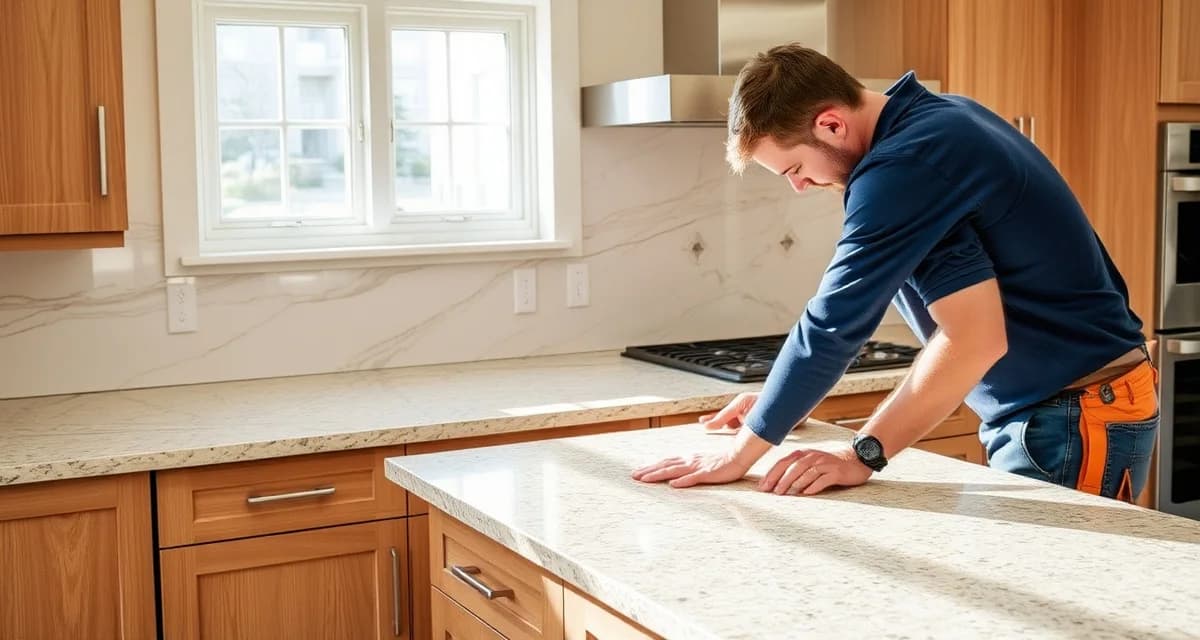
Backsplash Before or After Countertops?
Quick Definition: Install the countertop first, then the backsplash. This is the correct order in almost every situation. The backsplash sits on top of (or just above) the countertop surface, and installing it first would mean the countertop has to slide underneath -- which is extremely difficult with heavy stone slabs. There is one narrow exception: full-height slab backsplashes that are installed simultaneously with the countertop.
TL;DR
- Countertop first, backsplash second -- this is the standard and correct installation order
- Tile backsplash goes on the wall after the countertop is installed and caulked
- The bottom row of tile should sit just above the countertop surface (1/16" gap, filled with caulk)
- Stone slab backsplash (4" or full height) is typically installed at the same time as the countertop
- Installing the backsplash first creates a gap problem when the countertop goes in
- The joint between countertop and backsplash is always caulked, never grouted
- If you're replacing countertops in a kitchen with existing tile backsplash, the bottom row of tile may need to be removed or cut
Why Countertop Goes First
The logic is straightforward: the countertop is the reference surface. Everything above it (backsplash) and below it (cabinets) is positioned relative to the countertop height and position.
Calculate your material waste savings
See exactly how much slab material and money you could save with optimized cutting layouts.
Try the free Waste CalculatorIf you install the backsplash tile first:
- You'd have to slide the countertop underneath the bottom row of tile -- nearly impossible with a 200-400 lb stone slab
- Any gap between the tile bottom and the countertop surface would be visible and hard to caulk neatly
- If the countertop height is even slightly different than planned, the tile won't align
Installing the countertop first gives the tile installer an exact reference line. The bottom row of tile sits on (or just above) the countertop surface, creating a clean, tight junction.
Installation Sequence for Different Backsplash Types
Tile Backsplash (Subway, Mosaic, Natural Stone Tile)
Correct order:
- Countertop is installed
- Wait 24 hours for seam epoxy to cure
- Tile installer starts backsplash from the countertop surface upward
- Bottom row of tile sits ~1/16" above the countertop (shimmed with spacers)
- Tile is grouted (but NOT the bottom row against the countertop)
- The countertop-to-tile joint is sealed with silicone caulk (color-matched to grout)
Why caulk instead of grout at the bottom? The countertop and wall move independently -- thermal expansion, settling, and vibration cause different rates of movement. Grout is rigid and will crack at this joint. Silicone caulk flexes with the movement.
4-Inch Stone Backsplash (Same Material as Countertop)
Correct order:
- Countertop is installed
- 4" stone backsplash strips are set against the wall, sitting on top of the countertop
- Backsplash is adhesed to the wall with silicone or construction adhesive
- The joint between countertop and backsplash is caulked
Many fabricators install the 4" stone backsplash at the same time as the countertop, in a single visit. The backsplash pieces are pre-cut during fabrication.
Full-Height Slab Backsplash
Correct order:
- Countertop and full-height backsplash slabs are installed simultaneously
- The backsplash slab is positioned behind the countertop, running from countertop surface to the upper cabinets (or ceiling)
- Both are secured, leveled, and caulked
Full-height slab backsplashes require coordination between the countertop and backsplash because they're often cut from the same slab for pattern continuity.
Peel-and-Stick or Decorative Panel Backsplash
Correct order:
- Countertop first
- Adhesive panels applied to the wall above the countertop
- Sealed at the bottom edge
What If You Already Have a Backsplash and Are Replacing Countertops?
This is one of the trickiest scenarios in kitchen renovation. Options:
Option A: Remove the Bottom Row of Tile
The countertop installer removes the bottom row (or two) of backsplash tile, installs the new countertop, then the tile installer repairs the backsplash. This works if:
- The tile is standard and replacement tiles are available
- Only 1-2 rows need to come out
- You're OK with some patchwork
Option B: Cut the Bottom of the Existing Tile
If the new countertop is at a different height than the old one, a tile installer can sometimes cut the bottom edge of the existing tile with an oscillating multi-tool or grinder to create clearance. This creates a rough edge that's then covered by a caulk joint.
Option C: Remove All Tile and Start Fresh
If the backsplash tile is dated or damaged, remove it entirely, install the new countertop, then install a new backsplash. This is the cleanest result.
Option D: Stone Backsplash Overlap
If you're switching from tile to a 4" stone backsplash (matching the new countertop), the stone backsplash sits in front of the wall surface. You may be able to leave existing tile behind it if the thickness isn't a problem.
Common Mistakes in Backsplash/Countertop Sequencing
Mistake 1: Grouting the Bottom Edge
The countertop-to-backsplash joint must be caulked with flexible silicone, not grouted. Grout will crack within months as the surfaces shift independently.
Mistake 2: Tile Too Tight Against the Countertop
If tile is pressed directly against the countertop with zero gap, there's no room for caulk and no tolerance for movement. Leave a 1/16" gap.
Mistake 3: Not Accounting for Backsplash Thickness in Templating
If you plan to add tile backsplash after the countertop, the countertop will sit tighter to the bare drywall. When tile is added later (which adds 3/8" to 1/2" of thickness), the visual relationship changes slightly. This is usually fine aesthetically but worth noting.
Mistake 4: Installing Backsplash Before Countertop Is Caulked
Let the countertop settle and cure for at least 24 hours before starting the backsplash. This ensures seams are set and the countertop won't shift when tile work begins.
For fabricators, backsplash coordination is a common source of customer confusion and scheduling friction. SlabWise's Customer Portal lays out the installation sequence for homeowners in plain language -- so they know exactly when to schedule their tile installer relative to the countertop installation.
Timeline: Where Backsplash Fits in a Kitchen Remodel
| Step | Trade | Timing |
|---|---|---|
| 1. Demo old kitchen | GC/Demo crew | Week 1 |
| 2. Rough plumbing and electrical | Plumber/Electrician | Week 1-2 |
| 3. Drywall repair | Drywall crew | Week 2 |
| 4. Paint walls | Painter | Week 2-3 |
| 5. Install cabinets | Cabinet installer | Week 3 |
| 6. Countertop template | Fabricator | Week 3-4 |
| 7. Install countertops | Fabricator/Installer | Week 4-5 |
| 8. Install backsplash | Tile installer | Week 5-6 |
| 9. Plumbing reconnection | Plumber | Week 5-6 |
| 10. Final trim and touch-ups | GC | Week 6 |
FAQ
Should the backsplash or countertop be installed first? The countertop should be installed first. The backsplash is then installed on top of or just above the countertop surface.
Can you install a backsplash before the countertop? It's technically possible but creates significant fit problems. The countertop would need to slide under the tile, which is nearly impossible with stone slabs. This approach is not recommended.
Does the backsplash sit on top of the countertop? With a 4" stone backsplash, yes -- it sits directly on the countertop surface and is adhered to the wall. With tile backsplash, the bottom row sits just above the countertop (1/16" gap) and is sealed with caulk.
Should you grout or caulk between the countertop and backsplash? Always caulk. The joint between the countertop and backsplash is a movement joint. Grout is rigid and will crack. Use silicone caulk color-matched to the grout.
How long after countertop installation should you wait to install the backsplash? Wait at least 24 hours for countertop seam epoxy to cure. Some installers prefer 48 hours.
Do you paint the wall before or after the backsplash? Paint before. The wall behind the backsplash doesn't need to be painted (the tile covers it), but painting first prevents paint splatter on the tile or countertop.
Can you replace a countertop without removing the backsplash? Sometimes. If the backsplash tile doesn't extend below the countertop surface, the countertop can be removed without disturbing the tile. The bottom row may need minor repair. If the backsplash sits on the countertop, it will come off with it.
What if there's a gap between my backsplash and countertop? Fill it with color-matched silicone caulk. Gaps up to 1/8" caulk easily. Larger gaps may need a bead of caulk plus a trim piece.
Should the backsplash match the countertop? It doesn't have to. Many designs use contrasting backsplash and countertop materials. A 4" stone backsplash in the same material provides a cohesive look; tile backsplash offers more design flexibility.
How far up should a backsplash go? Standard height is 4 inches (stone) or 18 inches (tile, from countertop to upper cabinets). Full-height backsplash runs to the ceiling. The choice is aesthetic.
Keep Customers Informed on Installation Sequencing
For fabricators, clear communication about installation order prevents scheduling conflicts and customer frustration. SlabWise's Customer Portal walks homeowners through every step of the process, reducing calls about "what comes next?" and keeping your projects on track.
Try These Free Tools
- Cost Calculator -- Get instant countertop cost estimates by material and square footage.
- Kitchen Visualizer -- Upload a kitchen photo and preview different materials in place.
- Template Compare -- Upload two templates and see every dimension change highlighted.
Sources & Further Reading
-
Natural Stone Institute - Countertop Installation Best Practices Guide
-
National Kitchen & Bath Association - Kitchen Renovation Sequencing Guidelines
-
International Surface Fabricators Association - Professional Installation Standards
-
Remodeling Magazine - Kitchen Remodel Installation Order Best Practices