TL;DR
- Wholesale quartz slabs typically cost $15, $40 per square foot depending on brand, thickness, and color series, compared to $50, $120 per square foot installed retail.
- Fabricators and contractors buy direct from distributors or importers.
- Homeowners almost never access true wholesale pricing, but understanding the tiers helps you evaluate quotes and negotiate smarter.
What does 'wholesale quartz' actually mean?
Wholesale quartz means buying engineered stone slabs, or sometimes remnants, at a price that sits below what a retail customer pays at a kitchen showroom. There are really two things people mean when they search for it. First, a fabricator or contractor buying slabs direct from a distributor or importer at trade pricing. Second, a homeowner hoping to skip the fabricator markup entirely and source the stone themselves.
Those are very different situations with very different results.
Quartz is an engineered material, not a natural stone quarried in one piece. It runs roughly 93 percent ground quartz bound with polymer resin, pressed into slabs under high heat and pressure [1]. That manufacturing process is controlled by a handful of large producers: Caesarstone, Cambria, Silestone (Cosentino), MSI, and a cluster of Chinese-owned brands like Vicostone and Pental. Every slab that reaches a homeowner's kitchen passes through at least two or three hands before it gets there.
The supply chain looks like this: manufacturer sells to regional distributor, distributor sells to fabricator, fabricator sells finished countertop to homeowner. Each step adds margin. Wholesale pricing, in the strict sense, means buying at the distributor-to-fabricator step. Most distributors won't sell to homeowners at all, and the ones that will still charge above their cost because they have no reason not to.
True fabricator-tier wholesale pricing requires a business account, a tax resale certificate in most states, and regular purchase volume. If you're a homeowner, you're not getting it. What you can sometimes get is remnant pricing or slab-yard pricing from a fabricator who's willing to sell you material and let you arrange your own installation, which saves some money but shifts all the risk to you.
How much does wholesale quartz cost per square foot?
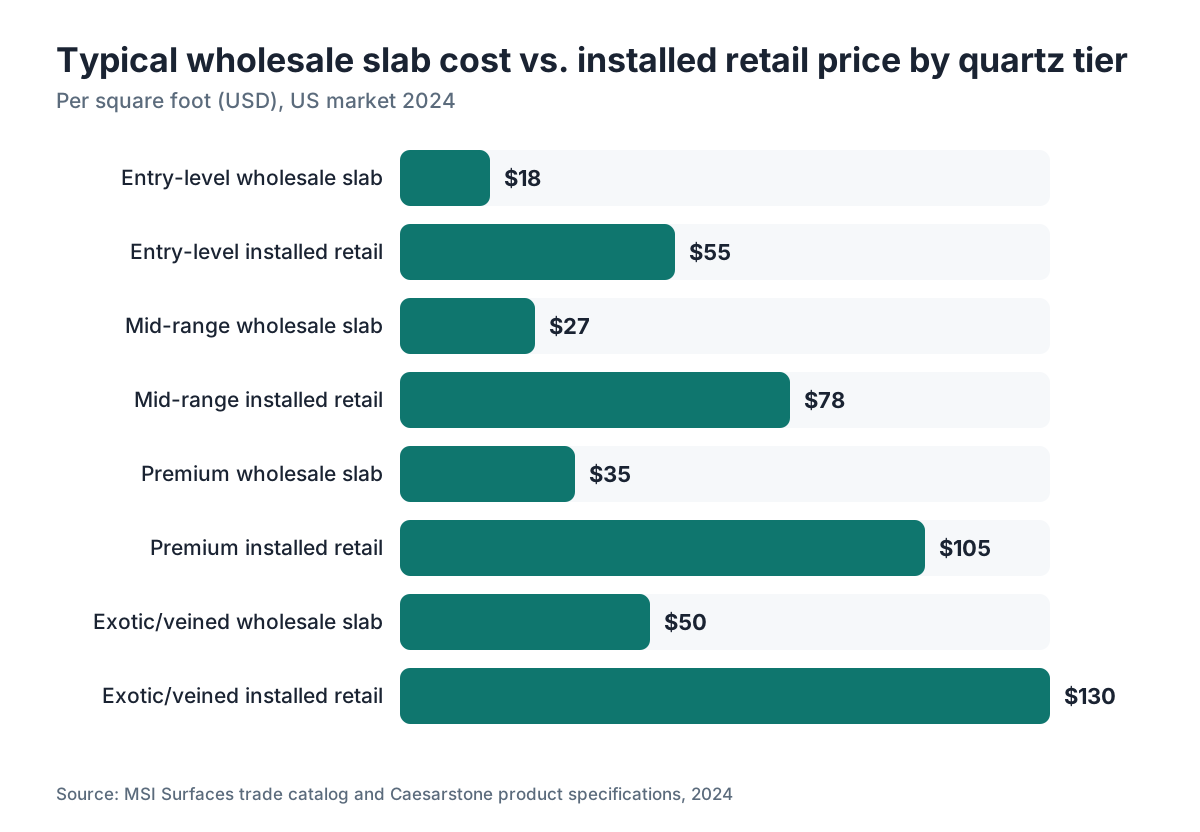
Raw slab pricing, before any fabrication, runs roughly $15, $40 per square foot at distributor-to-fabricator pricing [2]. Where a specific slab lands in that range depends on four things: brand tier, color series, thickness, and whether you're buying full slabs or remnants.
Here's how the tiers break down in practice:
| Tier | Brands (examples) | Slab cost ($/sq ft) | Typical retail installed ($/sq ft) |
|---|---|---|---|
| Entry-level / builder | MSI, Pental, generic imports | $15, $22 | $45, $65 |
| Mid-range | Caesarstone, Silestone, Vicostone | $22, $32 | $65, $90 |
| Premium domestic | Cambria | $30, $40 | $90, $120 |
| Exotic / veined series | Various | $40, $60+ | $100, $150+ |
Thickness matters more than most buyers realize. Standard 2 cm slabs (roughly 3/4 inch) cost less per square foot than 3 cm slabs (roughly 1-1/4 inch), but 2 cm installations typically need a plywood substrate underneath, which adds labor and material cost. Most residential fabricators default to 3 cm now because the installed price difference isn't huge and it eliminates the substrate step.
Slab size also affects your yield and therefore your effective cost. A standard quartz slab runs approximately 55 to 65 square feet [3]. If your countertop job is 45 square feet, you're buying a full slab and paying for roughly 15 square feet you can't use (unless the fabricator puts it in their remnant bin). That waste factor is built into fabricator quotes whether it's itemized or not.
For kitchen countertops specifically, the fabricator's material cost usually runs 30 to 45 percent of the total job price. The rest is labor, edging, cutouts, and overhead.
Can homeowners actually buy quartz wholesale?
Technically yes, practically rarely, and almost never at the prices that make the word "wholesale" meaningful.
Most quartz distributors are trade-only. Cosentino's distribution network (which carries Silestone), for example, operates through regional hubs that sell to fabricators and dealers, not to end consumers [4]. Cambria sells exclusively through dealers and fabricators and doesn't publish a trade pricing schedule for consumers [5]. MSI has showrooms in some markets where homeowners can see slabs, but purchasing still goes through a fabricator.
There are a few paths a homeowner can actually take:
Slab yards and stone importers sometimes sell direct to the public. You pay something close to trade pricing, often $20, $35 per square foot for the slab, but you need to measure your own job accurately, arrange your own transport, and find a fabricator willing to work with material they didn't supply. Some fabricators refuse because they can't warranty stone they didn't source. Others charge a "client-supplied material" surcharge that wipes out much of the savings.
Remnant sales are the closest thing to a genuine deal. A fabricator with a 20-square-foot piece left from another job might sell it for $5, $15 per square foot, which is well below any slab pricing. If your countertop is a small bathroom vanity or a single kitchen run, remnants are worth asking about.
Box-store programs at Home Depot and Lowe's use their purchasing volume to offer quartz at prices that feel like wholesale but are really just high-volume retail. You get the convenience of one contract but typically not a better price than a local fabricator quoting the same material.
The honest math: a homeowner who sources their own slabs and finds a fabricator to cut and install usually saves 10 to 20 percent versus a full-service fabricator quote. That savings comes with real logistical effort and the risk of measuring errors that cost more than the savings.
How do fabricators buy quartz at wholesale prices?
A fabricator buying quartz at wholesale pricing is doing a few things that a homeowner simply can't replicate.
First, they have a resale certificate (sometimes called a reseller's permit or tax exemption certificate) issued by their state's department of revenue. This lets them buy materials without paying sales tax at the point of purchase, because the tax is collected when they sell the finished product to the end customer [6]. Without this, a distributor has no legal mechanism to sell you goods tax-exempt, and most won't bother setting up a retail transaction.
Second, they have an established account with a regional distributor. Distributors like Dal-Tile, Floor & Decor's commercial division, Stone Source, and dozens of regional players extend trade pricing to fabricators based on volume commitments or just account history. The more a shop buys, the better their pricing tier.
Third, they buy in volume. A shop doing 40 jobs a month is buying multiple slabs per week. That velocity gives them room to negotiate.
Fabricators who want to improve their material costs have a few options beyond just buying more: negotiate quarterly volume rebates with their primary distributor, add a second distributor to create price competition, source directly from importers for commodity colors (white and gray quartz especially), and build a remnant resale program to recover value from offcuts.
For shops trying to get better visibility into material cost per job, quoting software that tracks slab usage and waste by job makes the real cost-per-square-foot obvious. SlabWise, for example, lets fabricators attach actual slab costs to each quote so the margin is calculated on real numbers rather than averages. That's the kind of operational detail that separates shops running 35% gross margin from shops running 20%.
What brands are available at wholesale, and does brand matter for price?
Brand matters significantly for price, and it also matters for what you can actually buy at wholesale through normal trade channels.
Caesarstone, founded in Israel and publicly traded, operates one of the widest distribution networks in the US and is available through most stone distributors. Their entry series runs close to commodity pricing; their premium collections with thick veining can approach Cambria territory.
Cambria is a family-owned Minnesota company and the only major quartz manufacturer that's made entirely in the US [5]. They charge a premium for domestic production and the brand carries real value in certain markets, especially the upper Midwest and among buyers who care about country of origin. You can read more about their specific product lines in our Cambria countertops guide.
Silestone by Cosentino is Spanish-made and has built a strong position in the US with their HybriQ technology, which incorporates recycled glass and mirror. Cosentino operates their own distribution centers in major US cities, which gives fabricators relatively consistent pricing [4].
MSI (M S International) is a US-based importer and distributor that carries many quartz colors under brands like Calacatta Belleza and their Q Premium line. They have warehouse locations across the country and sell to fabricators at competitive pricing. Their pricing tends to run lower than Caesarstone or Cambria for comparable-looking products.
For fabricators sourcing commodity white or gray quartz for builder projects, generic imports from Chinese manufacturers through importers like Pental or Arizona Tile can cut material cost meaningfully without sacrificing much on durability or appearance. The tradeoff is brand recognition, which matters in some markets and not at all in others.
One thing worth knowing: quartz is quartz in terms of durability. The NSF/ANSI 51 standard covers food-zone surfaces, and most major quartz brands meet it [7]. The engineering is similar across brands. You're largely paying for brand marketing, distribution infrastructure, and color and pattern design in the upper tiers.
What's the difference between wholesale quartz slabs and remnants?
These are two different things and the price gap between them is significant.
A wholesale slab is a full-sized piece, typically 55 to 65 square feet, that's never been cut. You're buying the whole slab and your fabricator cuts your countertop shapes from it. Any material left over is a remnant.
A remnant is any piece a fabricator has left over from a previous job. Remnants can range from 2 square feet to 30+ square feet depending on the original job layout. Fabricators price them based on size and desirability of the color. A 15-square-foot piece of a popular white quartz might sell for $8, $15 per square foot. A large piece of an unusual color nobody else wants might be cheaper or might just sit in the yard.
For homeowners, remnants are where the real savings live. A bathroom vanity runs 10 to 20 square feet. A laundry room folding counter might be 12 square feet. Both of those fit easily in remnant inventory at most fabrication shops. Ask specifically: most shops don't advertise remnants aggressively because their primary business is full slab jobs.
For fabricators, remnant management is a real operational question. Every remnant sitting in the yard is working capital tied up in stone. Selling remnants at any positive margin beats letting them sit. Some shops run a dedicated remnant room or list remnants online through their website or platforms like Slab Market. Others just price them low enough to move quickly. Neither approach is wrong; it depends on your storage space and how much time you want to spend on small retail transactions.
How does wholesale quartz compare to other countertop materials on price?
Quartz sits in the middle of the countertop market on price, more expensive than laminate and tile, less expensive than premium natural stone.
Granite countertops are the most direct comparison. Granite slab pricing at wholesale runs roughly $10, $35 per square foot depending on country of origin and rarity of the pattern. Common granites like Venetian Gold or Uba Tuba are cheaper than most quartz; exotic granites like Blue Bahia or Taj Mahal quartzite (often mislabeled) cost more. Granite requires sealing, quartz doesn't. Both need professional fabrication.
Marble countertops run $20, $50+ per square foot at wholesale for the slab alone, and Carrara (the entry-level Italian marble) has gotten more expensive as demand has grown. Marble etches and stains, which makes it a harder sell for kitchen use despite its appearance.
Laminate countertops like Formica countertops cost $2, $10 per square foot for the material. A laminate countertop is a fraction of the installed cost of quartz, and modern prints have improved a lot. For a budget build or rental property, laminate makes sense. For resale value and durability in a primary kitchen, quartz is generally the better investment.
Butcher block countertops run $10, $40 per square foot installed depending on wood species, and they require oiling and are vulnerable to water damage. They look great in the right kitchen and cost far less to install yourself than any stone option.
Corian countertops (solid surface) run $45, $85 per square foot installed and let you join sinks to the counter with no visible seam, but they scratch more easily than quartz.
For a fabricator quoting a mixed-material project, the material cost comparison usually isn't the deciding factor. Lead time, availability in a specific color, and the client's maintenance expectations matter more.
What should homeowners ask when getting a quartz countertop quote?
Most homeowners getting countertop quotes have no idea what the fabricator's material cost is, which makes it hard to judge whether the quote is reasonable. You don't need the exact wholesale number, but knowing a few things helps.
Ask for the brand and collection name of the quartz they're quoting. Then look it up. Most brands publish suggested retail ranges, and you can find slab pricing estimates through industry forums and distributor websites. If a fabricator quotes you 60 per square foot installed and the slab is a $16 commodity import, the margin math is worth knowing.
Ask how they calculate square footage. Many fabricators measure to the nearest half-slab boundary, meaning you pay for some material you don't get. This is standard and not deceptive, but the calculation method should be explained.
Ask what's included: edge profile (a bullnose vs. a waterfall edge can be a $200, $800 difference on a typical kitchen), sink cutout (standard drop-in cutout is usually included; undermount with polished edges costs more), cooktop cutout, and seams.
Ask about lead time. A fabricator ordering a slab they don't have in stock might quote 2 to 4 weeks; one with the slab on the floor might install next week. If your project is time-sensitive, stock matters.
Ask whether they template first. Templating, the process of measuring your exact cabinet layout before cutting any stone, is standard with a professional fabricator and critical for accuracy. A shop skipping template to save time is a red flag.
For countertop installation specifics, especially around what the installer actually does on the day of the job, our installation guide covers the full process.
Are there online wholesale quartz sources that actually work?
A few platforms exist, and their usefulness depends on whether you buy as a fabricator or as a homeowner.
For fabricators, direct importer relationships are the most effective path to low prices. Companies like MSI, Pental, and Arizona Tile operate as both importer and distributor, selling to fabricators with accounts. Some Chinese manufacturers sell direct through Alibaba or similar platforms, but the minimum order quantities are high (often full container loads of 20+ slabs), shipping is slow, and quality control requires someone who knows what to look for. Most small fabrication shops are not equipped for direct importing.
For homeowners, a few slab marketplaces let you browse available inventory:
Slab Market (slabmarket.com) aggregates inventory from stone yards and lets consumers search by material, color, and location. Pricing is listed for some slabs, though you still need a fabricator to cut and install.
Lowe's and Home Depot both have online quartz quote tools that are essentially retail, not wholesale, but they're transparent about pricing and convenient for comparison shopping.
Etsy and similar platforms have a small number of stone sellers offering remnants, mostly for small projects like bathroom vanities. Pricing is unpredictable.
The real answer for most homeowners is this: call three local fabricators, get three quotes, ask each one to break out material cost from labor, and compare. The variation between local shops is often larger than anything you'd save by sourcing material yourself. Competition between fabricators is your best pricing lever.
What quality factors matter when buying quartz slabs wholesale?
Not all quartz slabs are equal, even within a brand's product line. When you buy at wholesale, as a fabricator or as a homeowner who's sourced their own slab, you need to know what to look for.
Thickness consistency matters. A slab labeled 3 cm should be 3 cm across its entire surface. Variations in thickness create problems during fabrication and installation. Run a straightedge across the face of the slab at the yard if you can.
Color and pattern consistency matters for multi-slab jobs. If you're covering a large island and a perimeter run from separate slabs, they need to come from the same production batch (called a lot) or the color will drift visibly. Any reputable distributor can pull lot-matched slabs.
Surface defects include pinholes (small voids in the surface), chips on the edges, and cracks. Some chips on edges are acceptable if they'll be cut away. Pinholes and cracks in the field area of the slab are not acceptable; the slab should be rejected or heavily discounted.
Warping is rare in good quartz but can happen in entry-level imports that were stacked improperly or exposed to heat during shipping. A warped slab is hard to install flat and should be rejected.
Most reputable manufacturers offer a limited warranty on their slabs. Caesarstone offers a lifetime limited warranty for residential use [8]. Cambria offers a lifetime warranty that covers manufacturing defects [5]. Generic imports may offer no warranty at all. For a homeowner buying their own slab, the warranty question matters because if a defect shows up after installation, you need someone to call.
For fabricators who want to track slab quality issues by supplier over time, logging defect rates per distributor in your quoting and job-management system builds the data to renegotiate or switch suppliers. SlabWise's job tracking features make that kind of supplier-level data easy to pull without building a separate spreadsheet.
What are the tax and business considerations for buying quartz wholesale?
This section is relevant primarily for fabricators and contractors, but homeowners doing owner-builder projects sometimes run into it too.
In most US states, a business that resells fabricated countertops can buy raw materials (slabs) without paying sales tax at the point of purchase, because sales tax is collected on the final sale to the end customer. This requires a valid resale certificate, also called a reseller's permit or certificate of resale, issued by your state's department of revenue [6].
The mechanics vary by state. In California, the California Department of Tax and Fee Administration (CDTFA) issues seller's permits that function as resale certificates [9]. In Texas, the Texas Comptroller issues a sales and use tax permit. Most states have similar programs. If you're operating a fabrication business without one of these, you're likely paying sales tax on materials that you shouldn't be, and that cost is either compressing your margin or inflating your quotes unnecessarily.
For a contractor who installs countertops as part of a larger renovation project, the tax treatment gets more complicated. Some states treat countertops as real property improvements, which changes whether the contractor collects tax on labor, materials, or both. This is worth a conversation with a CPA who specializes in construction tax.
Homeowners doing owner-builder projects, pulling their own permits and acting as the general contractor, generally cannot claim resale exemptions because they're the end consumer of the materials. Some states have limited exceptions, but the general rule is that the resale exemption is for businesses that resell, not individuals who consume.
Import duties are another cost factor for fabricators sourcing directly from overseas manufacturers. The US has imposed tariffs on certain imported stone products from China. As of 2024, Section 301 tariffs on Chinese goods include many stone and ceramic products at 25 percent [10]. This has pushed some fabricators toward domestic distributors or manufacturers from countries not subject to the tariffs.
Frequently asked questions
Can a homeowner buy quartz slabs wholesale without a business license?
Usually no. Most quartz distributors require a business account and a state resale certificate to sell at wholesale pricing. Some stone yards and importers will sell slabs to the public, but at a price above true wholesale. Your best options as a homeowner are remnant purchases from local fabricators or getting competitive quotes from multiple shops, which often yields a better result than sourcing material yourself.
How many square feet are in a standard quartz slab?
A standard quartz slab runs approximately 55 to 65 square feet, typically measuring around 55 by 120 inches (roughly 4.5 by 10 feet). Jumbo slabs from some manufacturers run larger, up to 130 inches long. Your fabricator calculates how many slabs your job requires and includes the waste factor, since countertop shapes don't tile perfectly onto rectangular slabs.
Is wholesale quartz the same quality as what you get at a showroom?
Yes, if you're buying the same brand and collection. The slab a fabricator buys at wholesale is the same product sold at retail. The difference is only price and who's doing the transaction. Where quality can diverge is with generic imports that a showroom wouldn't carry, which may have less consistent thickness, less developed color lines, and no warranty backing.
What is the cheapest quartz countertop option right now?
Entry-level quartz from importers like MSI or generic Chinese-made brands distributed through regional stone yards runs $15, $22 per square foot for the slab, and $45, $65 per square foot fully installed. Simple colors (solid white, solid gray) are always cheaper than veined or exotic patterns. Remnants from local fabricators can go even lower for small projects, sometimes $5, $15 per square foot.
How do I find a quartz distributor near me?
The fastest approach is to call local stone fabricators and ask who their primary distributors are. Most will tell you. You can also search for regional stone distributors through the Marble Institute of America's member directory or the Natural Stone Institute's website. Brands like Caesarstone and Cosentino publish dealer locators on their websites that show which local shops carry their material.
Is Silestone or Caesarstone cheaper at wholesale?
Caesarstone tends to run slightly lower on mid-range colors; Silestone's pricing is comparable. The difference is rarely more than a few dollars per square foot and varies by region and your distributor relationship. Both are sold through regional distributors, and your negotiated pricing as a fabricator depends more on your purchase volume than on which brand you choose.
What's a fair price per square foot for quartz countertops in 2024?
For a full-service install from a local fabricator, $65, $90 per square foot is a reasonable midrange price for a quality quartz like Caesarstone or Silestone, including templating, fabrication, standard edge, cutouts, and installation. Budget builds using entry-level quartz can come in at $45, $65. High-end Cambria or exotic series with waterfall edges can run $100, $150 or more.
Do fabricators mark up quartz significantly?
Yes, and that's normal. A fabricator's material markup on quartz typically runs 30 to 60 percent over their wholesale cost, and their total margin on the job (including labor) runs 35 to 50 percent in a well-run shop. This covers their equipment, skilled labor, overhead, warranty, and templating. A quote that seems high isn't necessarily gouging; it may just reflect a shop with better equipment and tighter tolerances.
How long does it take to get quartz countertops after ordering?
If your fabricator has the slab in stock, installation typically runs 1 to 2 weeks after your cabinet boxes are in and a template is complete. If they need to order the slab from a distributor, add 3 to 10 business days for delivery. Custom orders or slabs that require a special factory run can take 6 to 12 weeks. Popular colors in stock at local distributors are the fastest path to installation.
What is a resale certificate and do I need one to buy quartz wholesale?
A resale certificate (also called a reseller's permit or tax exemption certificate) is issued by your state's department of revenue and allows businesses to buy goods for resale without paying sales tax at the point of purchase. Most quartz distributors require one to open a wholesale account. Homeowners generally cannot obtain one because they're the end consumer, not a reseller. Rules vary by state.
Are quartz countertops from China lower quality than US or European brands?
Not necessarily in terms of durability. Most quartz, regardless of origin, is 90 to 94 percent ground quartz in a resin binder and performs similarly under standard testing. Where Chinese imports sometimes fall short is thickness consistency, color accuracy between batches, and warranty support. Buying through a reputable US importer who does quality control on incoming containers reduces most of these risks.
Can I buy quartz remnants directly from a fabricator?
Yes, and this is one of the best deals available to homeowners. Most fabrication shops accumulate remnant pieces from large jobs and will sell them at significant discounts, sometimes $5, $15 per square foot for high-quality material. Call local shops and ask specifically about their remnant inventory. It's not always advertised. Small projects like bathroom vanities, laundry counters, or desk surfaces are ideal for remnant purchases.
Does buying quartz wholesale void the manufacturer's warranty?
No. Manufacturer warranties like Caesarstone's lifetime limited residential warranty or Cambria's lifetime warranty are attached to the product, not to who bought the slab. What matters for warranty claims is that the slab was installed correctly by a professional fabricator following manufacturer guidelines. Homeowners who source their own slabs and have them professionally installed retain warranty coverage in most cases, though always confirm with the specific manufacturer.
Sources
- Marble Institute of America / Natural Stone Institute, Quartz Surface Products overview: Engineered quartz is approximately 93% ground quartz bound with polymer resin, pressed under heat and pressure into slabs.
- MSI Surfaces, trade pricing and product catalog: Wholesale slab pricing for engineered quartz ranges approximately $15, $40 per square foot depending on brand tier and color series.
- Caesarstone, product specifications and slab sizing: Standard quartz slabs measure approximately 55 by 120 inches, yielding roughly 55 to 65 square feet per slab.
- Cosentino Group, US distribution network: Cosentino operates regional distribution centers in major US cities selling to fabricators and dealers, not directly to consumers.
- Cambria, company and warranty information: Cambria is manufactured entirely in the US and offers a lifetime warranty covering manufacturing defects; sales go exclusively through dealers and fabricators.
- Internal Revenue Service, Publication 334: Tax Guide for Small Business: Businesses that resell goods can purchase materials without paying sales tax at point of purchase by providing a valid state resale certificate.
- NSF International, NSF/ANSI 51 Food Equipment Materials standard: NSF/ANSI 51 covers materials used in food-zone surfaces; most major quartz brands certify compliance with this standard.
- Caesarstone, limited warranty documentation: Caesarstone offers a lifetime limited warranty for residential use covering manufacturing defects in their quartz surfaces.
- California Department of Tax and Fee Administration (CDTFA), seller's permit information: California's CDTFA issues seller's permits that function as resale certificates, allowing businesses to purchase materials for resale without paying sales tax at point of purchase.
- Office of the United States Trade Representative, Section 301 tariffs on Chinese imports: Section 301 tariffs on Chinese goods include many stone and ceramic products at 25 percent as of 2024, affecting fabricators sourcing quartz directly from Chinese manufacturers.
- Home Innovation Research Labs, 2023 Builder Practices Survey: Quartz and granite together account for the majority of countertop material specified in new US home construction, with quartz share growing annually since 2015.
Last updated 2026-07-10