TL;DR
- Most marble countertops need a penetrating (impregnating) sealer applied every 6 to 12 months.
- Sealing slows staining but does not prevent etching from acids.
- A 15-minute water-drop test tells you when the stone needs resealing.
- Topical coatings and wax belong on floors, not kitchen counters.
- Choosing the right sealer for your marble's porosity matters more than any calendar.
Does marble actually need to be sealed?
Yes, with an honest asterisk. Marble is metamorphosed limestone, calcium carbonate all the way through. Calcium carbonate reacts with acids (lemon juice, wine, tomato sauce, even plain water carrying dissolved CO2), and no sealer on the market stops that reaction. What a good sealer does is slow the stone's absorption rate, so oil and colored liquids have less time to soak in before you wipe them up.
The Natural Stone Institute, the main U.S. trade body for stone fabricators and installers, says in its care guidance that penetrating sealers "reduce the rate of absorption" rather than making stone stain-proof [1]. That framing matters. Go in expecting a sealed marble counter to shrug off a glass of red wine sitting overnight, and you'll be disappointed.
So yes, seal your marble. Pair it with realistic expectations. Sealing buys you time. It doesn't turn marble into quartz.
One more thing worth saying plainly: some marbles are dense enough that sealing does almost nothing. Tight, polished Calacatta or Statuario from certain quarries have absorption rates so low that a sealer can't meaningfully penetrate. The water test in the next section tells you which camp your slab is in.
How do you know when marble needs sealing (the water test)?
The water absorption test is the only honest diagnostic. Pour about a quarter-cup of water on the surface and leave it for 15 minutes. Wipe it up and look at the stone underneath.
If the spot is darker where the water sat, the stone drank some of it. The sealer has degraded (or was never there), and it's time to reseal. If the surface looks identical, no darkening at all, the stone is either well-sealed or dense enough that it doesn't need sealing right now.
The Marble Institute (now part of the Natural Stone Institute) used a version of this test as a standard field method [1]. It's the same check fabricators run on the job before deciding whether to seal a slab before installation.
Want a rigorous reading? The ASTM C97 test measures water absorption and bulk specific gravity of dimension stone in a lab [2]. That's lab-equipment territory. For a homeowner or a fabricator standing on a job site, the 15-minute puddle is close enough.
Repeat the test with mineral spirits in a separate spot if oil-based stains worry you. Darkening from the mineral spirits means the stone will absorb cooking oil, so sealer is worth applying no matter what the water test showed.
What types of sealer work on marble countertops?
Two broad categories exist: penetrating (impregnating) sealers and topical coatings. On countertops, you almost always want penetrating.
Penetrating sealers carry silicone, silane, siloxane, or fluoropolymer chemistry in a solvent or water base. The carrier evaporates and the active chemistry lodges in the pore structure below the surface. Because they sit below the surface, they don't change the look (or change it barely), and they don't peel, flake, or yellow under UV. Solvent-based versions generally go deeper and last longer than water-based ones, though water-based formulas have gotten much better in the past decade and are easier to apply safely indoors [3].
Topical coatings (acrylics, urethanes, epoxies, waxes) sit on top of the stone. They can look glossy, but they trap moisture beneath the film, peel or cloud on kitchen surfaces, and need full stripping before you can reapply. Stone floors sometimes take topical coatings. Countertops see far more heat, moisture, and abuse. Keep coatings off your counters.
Within penetrating sealers, fluoropolymer products (often sold as "oil and water repellent") are the premium tier. They fight both water-based and oil-based stains. Silicone-based sealers handle water but go weak against oil. If your marble sits near a cooktop, a fluoropolymer or fluorocarbon silane product earns its higher price.
A word on "food-safe" claims: the EPA does not register or certify stone sealers as food-safe [4]. The honest answer is that a fully cured penetrating sealer doesn't sit on the food-contact surface, so the risk is extremely low. If you want documentation, look for sealers that reference NSF 61 component compliance or carry GREENGUARD certification, which caps VOC emissions [5].
| Sealer type | Position on stone | Stain resistance | Etching resistance | Typical lifespan | Best for counters? |
|---|---|---|---|---|---|
| Fluoropolymer penetrating | Below surface | Oil + water | None | 3 to 5 years | Yes, top choice |
| Silicone/siloxane penetrating | Below surface | Water-based | None | 1 to 3 years | Yes |
| Acrylic topical coating | On surface | Good when new | None | 1 to 2 years (peels) | No |
| Wax | On surface | Poor | None | 3 to 6 months | No |
| Epoxy coating | On surface | Very good | None | 2 to 4 years | No (hard to strip) |
How often should you seal marble countertops?
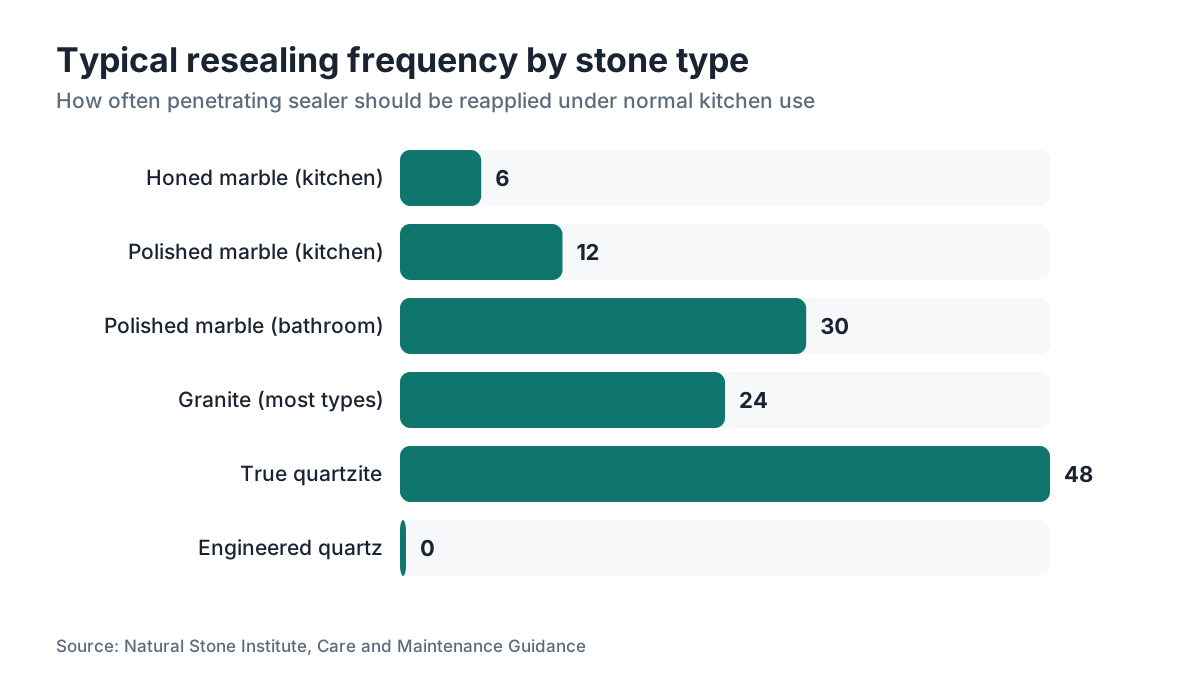
As often as the water test says, which for most kitchen marble means every 6 to 12 months. Bathroom vanity marble sees far less traffic and fewer aggressive liquids, so it can often go 2 to 3 years between coats.
The 6-to-12-month figure comes from Natural Stone Institute care guidance and matches what most fabricators tell homeowners at install [1]. Treat it as a starting point, not a law. Honed (matte) marble is more porous than polished and drinks sealer faster. White Carrara is more porous than many other marbles. A counter next to a cooktop that catches olive oil every week will burn through its sealer faster than one in a guest bath.
Solvent-based fluoropolymer sealers really do last longer. Some products claim 5-year intervals, and fabricators often report 3 to 4 years in practice for low-use spots. On kitchen counters, I'd still test yearly and trust the puddle over the label.
The worst move is assuming a freshly installed counter came sealed. Many fabricators seal before delivery. Some don't. And some sealer applied at the quarry or distributor level has long since worn off by the time the stone reaches your kitchen. Test the day you move in.
Step-by-step: how to seal marble countertops yourself
A careful homeowner can do this in about 90 minutes for a typical kitchen. No special tools.
What you need: a penetrating marble sealer suited to your stone, clean lint-free cloths or applicator pads, isopropyl alcohol (70% or higher) or a pH-neutral stone cleaner, and good ventilation if the product is solvent-based. Wear nitrile gloves. OSHA's Hazard Communication Standard requires the safety data sheet on any solvent product, and it will tell you the ventilation and PPE the manufacturer expects [9].
Step 1: Clean the surface thoroughly. Use a pH-neutral stone cleaner or diluted isopropyl alcohol on a clean cloth. Skip vinegar, bleach, and anything acidic. Let the surface dry completely, which can take 30 minutes in a humid kitchen. Sealer on damp stone traps moisture and cuts penetration.
Step 2: Run the water test. Confirm the stone actually needs sealing. If it passes with no darkening, stop. You'd only have excess product to buff off.
Step 3: Apply in small sections. Pour or spray sealer onto a 2-square-foot patch. Spread a thin, even coat with a cloth or pad. Follow the grain if you can see it. Skip the pooling. Thin coats penetrate better than thick ones.
Step 4: Wait for absorption. Most products say 5 to 15 minutes. Watch the surface. It should look damp, not pooled. If it dries fast, add a second thin coat before buffing. If sealer is still sitting wet after 15 minutes, the stone is dense and probably needs sealing less often than you thought.
Step 5: Buff off the excess. Before the sealer cures (check the product's "open time," usually 15 to 30 minutes), buff with a clean dry cloth in circles. Any sealer left to cure on top leaves a hazy residue that needs solvent to remove.
Step 6: Second coat (optional, recommended for new or very porous marble). Let the first coat cure 20 to 30 minutes, then repeat steps 3 through 5.
Step 7: Full cure. Most penetrating sealers reach full cure in 24 to 48 hours. Keep water off during that window.
If you're a fabricator tracking jobs and maintenance across multiple installs, SlabWise can attach sealer notes and follow-up dates to project files so nothing slips.
What products are actually worth buying?
I'll be straight: the stone sealer market is full of products that read identically on the label but differ a lot in chemistry. And there's almost no independent comparative test data from a credible source. What follows reflects widely reported fabricator experience, not a controlled study.
For kitchen marble, three names come up most in fabricator conversations: Tenax Proseal, Miracle Sealants 511 Impregnator, and StoneTech BulletProof. All three are penetrating sealers with solid track records. Proseal and BulletProof are fluoropolymer-based and lean toward the longer-lasting end. Miracle 511 is a workhorse silicone product that costs less and works fine in bathrooms or moderate-use kitchens.
For very porous honed Carrara or honed Calacatta, some fabricators lay down a pre-sealer or "densifier" first, then follow with a standard impregnator. The densifier (often a lithium silicate compound) partly closes the larger pores before the impregnator goes in. It isn't standard practice everywhere, but it's worth knowing about for problem slabs.
Whatever you buy, read the label for marble compatibility. Some sealers are built for granite and carry pH levels or carriers that dull a polished marble surface.
One thing that's genuinely a waste of money: sealer sold on "nano-technology" claims from brands you can't verify. Nano-silica and nano-fluoropolymer chemistry are real, but many products waving that language are ordinary sealers in a fancy bottle at a 3x markup. Professional-grade brands sold to fabricators (more than to homeowners at hardware stores) tend to run more consistent.
Does sealing prevent etching on marble?
No. This is the single most important fact about marble care, and marketing language buries it constantly.
Etching is a chemical reaction: acid dissolves calcium carbonate. You get a dull matte spot on a polished surface, or a slightly rougher patch on a honed one. It happens within seconds. Lemon juice, tomato juice, wine, vinegar-based cleaners, some hand soaps, even sparkling water can etch marble.
Sealer sits in the pores. It can keep a liquid from soaking into those pores. But the etch happens on the surface of the calcite crystals before any liquid has a chance to go deep. Sealer can't stop a surface reaction.
There are only three ways to manage etching. Keep acidic liquids off the surface (wipe spills right away). Accept etching as part of how marble ages. Or pick a honed finish, where etch marks read far less obviously than on a polish.
For homeowners who want the marble look with more etch resistance, quartzite countertops come up often, though true quartzite (not the soft marbles sometimes mislabeled as quartzite) is a harder, silica-based stone, not calcium-based. Engineered options like Cambria countertops are quartz-based and don't etch at all.
Can you over-seal marble countertops?
Yes, and it's a common mistake. Sealing stone that doesn't need it leaves residue on the surface. You'll see a hazy, smeared, or slippery film that normal cleaning won't touch, because it's a cured polymer layer. Removing it takes a solvent-based sealer stripper, which means extra work and cost.
Too heavy a coat is the other failure mode. A thick application can't fully sink in, so the excess cures on top and creates the same haze. Thin coats, fully buffed off before cure, always beat heavy single passes.
The fix for an over-sealed or hazy surface is usually a commercial impregnator stripper, a thorough clean, then a correct reapplication. In bad cases, where the product has sat for months, a professional stone restorer may need to hone or re-polish the surface mechanically.
That's why the water test before every application matters. If the stone isn't drinking, don't feed it more sealer.
How does marble sealing compare to sealing granite or quartzite?
Granite and quartzite are siliceous stones, built mostly from silica (quartz, feldspar) rather than calcium carbonate. They're generally harder, denser, and far more acid-resistant than marble. Most granites still benefit from sealing because they're porous, but porosity swings hugely by type. Some granites (Absolute Black is the classic example) are dense enough to fail the water test with no sealer at all and don't need it [6].
Quartzite is often the densest of the three. True quartzite is nearly all silica with very low absorption, so its sealing needs are minimal next to marble.
Marble is almost always the most demanding on sealing frequency of the three, because its porosity runs higher and its calcium carbonate makeup leaves it open to acids no matter how well you seal it.
Granite countertops and their sealing needs get their own guide, but the method is the same: water test, thin penetrating sealer, buff before cure.
| Stone type | Acid resistance | Typical sealing frequency | Etch risk? |
|---|---|---|---|
| Marble | Low | Every 6 to 12 months | Yes, high |
| Honed marble | Very low | Every 6 to 12 months | Yes, but softer looking on hone than polish |
| Granite (most) | High | Every 1 to 3 years | Minimal |
| Quartzite (true) | High | Every 2 to 5 years | Minimal |
| Engineered quartz | N/A | Never | None |
What cleaners are safe to use on sealed marble?
pH-neutral stone cleaners are the standard recommendation, and they're the right call. Anything acidic strips the sealer faster and etches the stone. Anything strongly alkaline (some degreasers, ammonia-based sprays) degrades sealer chemistry over time too.
Daily cleaning is simple. Warm water and a few drops of dish soap on a microfiber cloth, then a dry wipe. That's genuinely all most marble counters need day to day. Don't let soapy water sit.
Never use these on marble: vinegar (popular for "natural" cleaning, actively harmful here), lemon juice, bleach-based sprays, Windex, Fantastik, or anything listing citric acid. Bar Keeper's Friend, beloved for so many surfaces, contains oxalic acid and will etch marble.
For a full guide on safe daily maintenance, the how to clean stone countertops guide covers routine care in more detail.
Want a spray that's genuinely safe? StoneTech Revitalizer and Granite Gold Daily Cleaner are both pH-neutral and fine on sealed marble. They won't wear down the sealer faster than normal use.
Note that "marble cleaner" on a label doesn't guarantee pH neutrality. Read the ingredients and look for a stated pH between 7 and 8.
Does sealing marble affect its appearance?
A correctly applied penetrating sealer should be invisible on polished marble. No film, no coating you can feel, no change in gloss.
On honed or leathered finishes, some sealers darken the stone slightly (the trade calls it "color enhancement"). Some people love it, since it deepens the gray and gold veining. If you don't want it, look for a sealer labeled "natural finish" or "clear" and test on a hidden spot first. Most premium impregnators aimed at marble are built to stay neutral.
Solvent-based sealers applied too heavily can cloud a polished surface right after application, but the haze usually clears as the carrier evaporates. If cloudiness sticks around after full cure (24 to 48 hours), you've left excess product on top and need solvent to lift it.
Wax does change the look. It adds a soft sheen and can hide minor scratches for a while, but it builds up, yellows with heat, and grabs dust. It's no substitute for a real impregnating sealer, and it's more trouble than it's worth on a kitchen counter.
Is sealing marble countertops a DIY job or do you need a professional?
Sealing is DIY for most homeowners. The products are everywhere, from hardware stores to stone supply houses. The method is straightforward. The biggest risk (leaving excess sealer on the surface) is fixable with a little extra solvent work.
Where you do want a pro: deep stains that sealing won't touch call for a poultice or professional cleaning first. Significant etching or scratches mean a stone restorer should hone and re-polish before you seal. And for a large commercial install or a historic stone with an unusual finish or composition, a certified stone restorer is worth finding. The Natural Stone Institute offers Certified Installer and Certified Stone Restoration Specialist credentials [1].
Fabricators who sell and install marble should add sealer application to their install scope. It controls the outcome (no hazy film from a customer's first try), it's an easy upsell, and it sets clients up with realistic expectations. Pricing varies by region, but most shops charge $50 to $150 for sealer application on a standard kitchen install, a reasonable margin for 30 minutes of work.
To see how other fabricators price stone care services and track material costs, the SlabWise demo walks through the quoting workflow, including add-on services.
For how the full install runs before sealing enters the picture, the countertop installation guide has the earlier steps.
Frequently asked questions
How long after installing marble countertops should you wait before sealing?
Most fabricators recommend sealing marble within 24 to 48 hours of installation, once any adhesive or caulk has cured. If the fabricator sealed before delivery, run a water test first. The surface should be clean and fully dry before you apply anything. New marble from a distributor may have sat in a warehouse for months with degraded or no sealer, so don't assume it arrived protected.
Can you use olive oil or coconut oil to seal marble?
No. Cooking oils don't work as stone sealers. They have no polymer chemistry to fill pore structures, and they go rancid inside the stone over time, creating a permanent odor and stain problem. This myth circulates on DIY sites, but no stone care professional recommends it. Use only products formulated as penetrating stone sealers.
What happens if you don't seal marble countertops?
On porous marble, skipping sealer means liquids soak in faster and staining gets more likely. Cooking oil, red wine, and coffee are the main offenders. You won't see immediate disaster, but over months you'll notice darker areas that won't wipe clean. Etching still happens regardless of sealing. If your marble is very dense and passes the water test unsealed, skipping it has almost no downside.
How do you remove stains from marble even after sealing?
A poultice is the standard approach. Mix an absorbent powder (flour, baking soda, kaolin clay, or diatomaceous earth) with a liquid matched to the stain: hydrogen peroxide for organic stains, acetone for oil-based ones. Spread the paste over the stain, cover with plastic wrap, and leave it 24 to 48 hours. The poultice pulls the stain out as it dries. Repeat if needed. Natural Stone Institute care guidance describes this method.
Does sealing marble make it food-safe?
A fully cured penetrating sealer doesn't sit on the food-contact surface, so direct food safety risk from the sealer is very low. The EPA doesn't certify stone sealers as food-safe. If documentation matters to you, look for sealers with GREENGUARD Gold certification, which caps VOC emissions, or ones referencing NSF 61 component compliance. Let the sealer cure fully (24 to 48 hours) before preparing food on the surface.
Can you seal honed marble the same way as polished marble?
Yes, the method is identical. Honed marble is usually more porous than polished, because polishing partially closes surface pores. That means honed marble often needs more coats at initial application and may need resealing more often. Honed finishes also absorb sealer faster, so watch for the surface drying out mid-application and add a second coat before buffing.
Will sealing marble prevent water spots and rings?
A good penetrating sealer cuts water spotting and ring marks from glasses, because it slows water absorption. Hard water deposits (white mineral residue) can still form on top of a sealed surface, since they come from evaporation, not absorption. Remove hard water deposits with a damp cloth and a tiny bit of dish soap. Never use vinegar or lemon juice to lift them; both etch the marble.
How much does professional marble sealing cost?
Professional sealer application on a standard kitchen countertop runs roughly $50 to $150 when added to a fabrication or restoration job. A standalone visit from a stone care pro for sealing alone typically runs $100 to $300 depending on square footage and region. DIY product cost for a typical kitchen is $20 to $60 for a quality penetrating sealer. Restoration work (honing out etches before sealing) adds significant cost and varies widely.
Is there a type of marble that doesn't need sealing?
Dense, tightly crystallized marbles with very low porosity may fail the water test even without sealer, meaning they don't absorb enough to make sealing worthwhile. Some polished Statuario and certain dark marbles fall here. That said, porosity varies within the same stone type depending on the specific quarry block. Always test your actual slab instead of trusting the stone name alone.
Can you seal marble in a bathroom differently than a kitchen?
The chemistry is the same, but the priorities shift. Kitchen counters see more oil, heat, and acidic food contact, so a fluoropolymer sealer that handles both oil and water earns its cost. Bathroom vanities mostly face water, soap scum, and cosmetics. A standard silicone or siloxane impregnator works fine there and usually lasts 2 to 3 years. The application method is identical.
Does sealing marble change how you clean it daily?
Not much. Sealed or unsealed, marble wants pH-neutral products and a dry wipe. The practical difference is that a well-sealed surface gives you more time to blot a spill before it soaks in. You still avoid acidic cleaners regardless of sealing status. A sealed surface doesn't go maintenance-free; it just widens your margin for error a little.
What is the best sealer for Carrara marble specifically?
White Carrara is one of the more porous common marbles, so it gains the most from sealing. Fabricators frequently reach for fluoropolymer-based impregnators (Tenax Proseal, StoneTech BulletProof) on Carrara kitchen counters for oil repellency and longer life. For honed Carrara, plan on a two-coat first application. Test water absorption on your specific slab, since porosity varies even within the Carrara name.
Sources
- Natural Stone Institute, Care and Maintenance guidance: Penetrating sealers 'reduce the rate of absorption' rather than making stone stain-proof; water absorption field test methodology; certified installer and restoration specialist credentials
- ASTM International, ASTM C97 Standard Test Methods for Absorption and Bulk Specific Gravity of Dimension Stone: Standard laboratory method for measuring water absorption of dimension stone including marble
- U.S. Environmental Protection Agency, Safer Choice Program: Water-based formulations compared to solvent-based for indoor VOC exposure; EPA Safer Choice evaluates ingredient safety in cleaning and maintenance products
- U.S. Environmental Protection Agency, Pesticide Registration and Regulation: EPA does not register or certify stone sealers as food-safe; food-contact surface safety claims for stone sealers are not governed by EPA registration
- UL GREENGUARD Certification Program: GREENGUARD Gold certification limits VOC emissions from building materials and finishes including surface treatment products
- Natural Stone Institute, Dimension Stone Design Manual: Variation in porosity and absorption rates across stone types including granite; some dense granites have absorption rates near zero and may not require sealing
- U.S. Geological Survey, National Minerals Information Center: Marble is a metamorphic rock composed primarily of calcium carbonate (calcite or dolomite); mineral composition relevant to acid reactivity
- NSF International, NSF/ANSI 61 Drinking Water System Components: NSF 61 component compliance referenced for indirect food-contact and water-contact material safety
- OSHA, Occupational Safety and Health Administration, Hazard Communication Standard (HCS): Solvent-based stone sealers require adequate ventilation during application per OSHA HCS SDS requirements; nitrile glove use recommended with solvent-based products
- ASTM International, ASTM C503 Standard Specification for Marble Dimension Stone: Defines marble as metamorphic or sedimentary rock composed predominantly of calcite, dolomite, or serpentine; physical properties standards including absorption
Last updated 2026-07-09