TL;DR
- Most quartz chips and small cracks can be filled with color-matched epoxy or acrylic.
- DIY kits run $15 to $80.
- Professional repair costs $150 to $650 depending on damage size and location.
- Deep cracks that reach the substrate, damage near sink cutouts, or breaks along a seam usually need a pro or a full section replacement.
What kinds of damage can actually be repaired on a quartz countertop?
Small chips, surface scratches, and hairline cracks in the top layer are the ones that fix well. Deep structural cracks, breaks through a seam, and large missing chunks in a visible field area usually don't. The difference comes down to whether you're masking a cosmetic flaw or trying to reverse a structural failure.
Quartz is an engineered stone, roughly 90 to 93% ground natural quartz bound with polymer resins and pigments. [1] That composition decides what repair is realistic. The resin binder is what your repair material bonds to, and a good color-matched filler blends in well enough that a casual observer won't see it. A careful observer usually will.
Repairs that consistently work well: small chips at a corner or edge (under about 1 inch wide), surface scratches that haven't cut through the full thickness, hairline cracks confined to the surface layer, and minor heat discoloration on lighter stones. Repairs that work poorly or not at all: deep structural cracks that run across a significant span, cracks through a seam, damage that has fractured the slab into two pieces, and large chunks missing from a field area where color matching is unforgiving.
Edge chips are the most common repair call. They come from pots dropped on corners, dishwasher doors swinging into the underside, and appliances dragged across the surface. Those are almost always fixable.
A crack running from a sink cutout toward the cabinet edge is a different animal. The slab is telling you the stress at that point beat what the material can hold. Filling it with epoxy hides the symptom. It doesn't touch the stress.
One honest caveat: quartz from different manufacturers uses slightly different resins, pigments, and aggregate sizes. A repair that vanishes on solid gray can shout on a heavily veined Calacatta-style pattern. Set your expectations before you open a kit.
What does it cost to repair a chip in a quartz countertop?
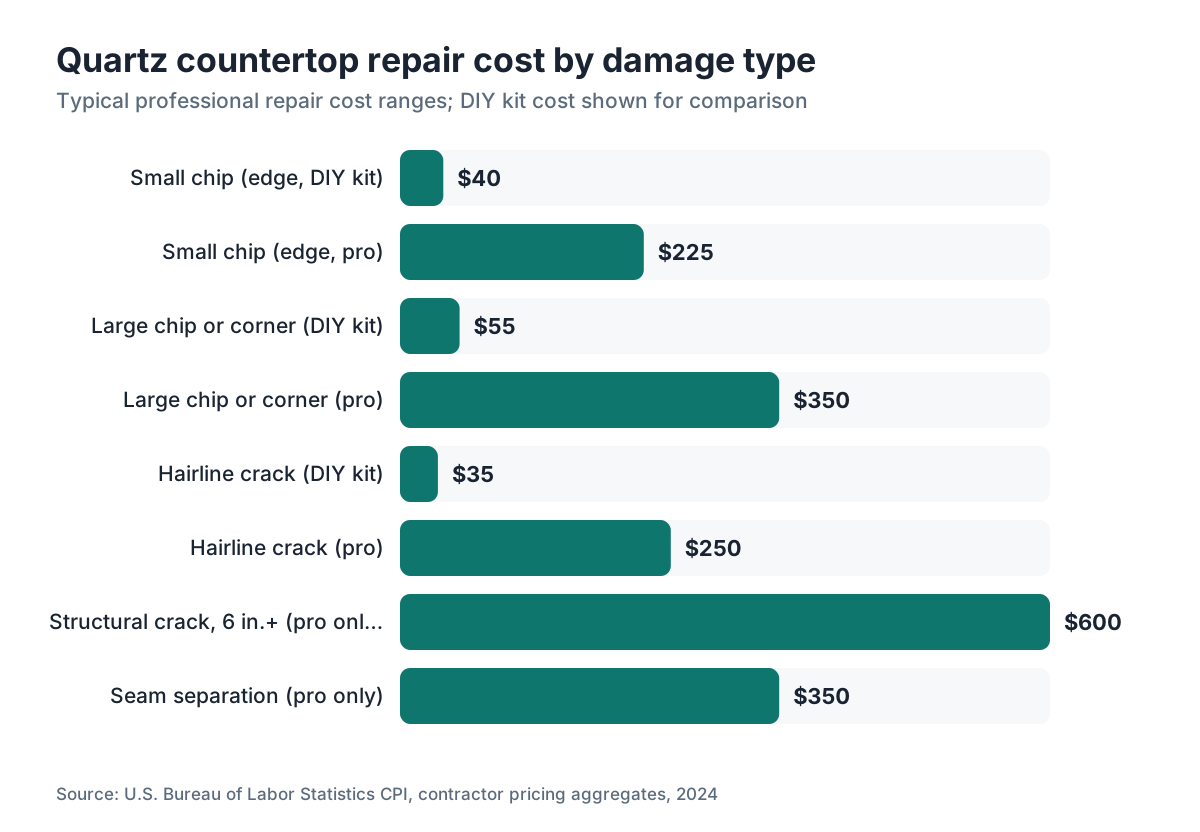
A small chip runs $15 to $50 as a DIY kit or $150 to $300 with a pro. Cost climbs with damage size, location, and whether the shop has to hunt down a matching remnant. Here's a realistic breakdown.
| Repair type | DIY cost | Pro cost |
|---|---|---|
| Small chip, edge (under 1 in.) | $15, $50 (kit) | $150, $300 |
| Large chip or corner break | $30, $80 (kit) | $250, $450 |
| Hairline surface crack | $15, $50 (kit) | $150, $350 |
| Structural crack, span > 6 in. | Not recommended DIY | $400, $800+ or replacement |
| Seam separation | Not recommended DIY | $200, $500 |
| Full section replacement | N/A | $300, $1,200+ depending on slab availability |
Those numbers come from contractor pricing databases and fabricator estimates. Specific prices move with region, material cost at the time, and whether the shop has to source a matching remnant. [2]
DIY kits sit at the low end. Most retail kits run $15 to $80 depending on whether they include a UV curing light, pigment sets, and a leveling tool. The cheap kits give you limited color options and no UV step, so the filler hardens slower and shrinks a bit more as it cures.
Professional pricing usually carries a minimum service call of $100 to $200 just to show up. Got multiple chips in one kitchen? Group them into a single visit and save real money. Call around. Countertop fabricators, stone restoration companies, and some tile specialists all do this work, and their pricing spreads wider than you'd guess.
Repairing a chip almost always beats replacing the top, which runs $75 to $200 per square foot installed for mid-range quartz. [2] A $500 professional repair looks cheap next to a $3,000 replacement.
Can you repair quartz countertops yourself with a kit?
Yes, for small chips and surface scratches. DIY success rides on your patience with color matching more than any technical skill. The filling itself is simple. The color is the hard part.
A quartz repair kit usually includes a clear or tinted epoxy or acrylic resin, pigment drops or pre-mixed color vials, a mixing tool or dual-syringe applicator, a razor blade or scraper for leveling, and sometimes a small UV lamp. Better kits add fine polishing compounds so you can buff the repair to match the surrounding sheen.
Step-by-step for a small chip:
- Clean the area with isopropyl alcohol. Any grease or residue stops the filler from bonding. Let it dry completely.
- Mix filler and pigments until the color matches the background of your stone as closely as you can get it. Test on a paper plate in good light.
- Overfill the chip slightly. Most resins shrink a little as they cure, and you want material above the surface so you can level it down instead of ending up with a dip.
- Cure per the kit instructions. UV-cure resins usually need 30 to 90 seconds under the lamp. Ambient-cure resins may need 4 to 24 hours.
- Scrape the cured filler flush with a razor blade held nearly flat. Go slow.
- Polish with progressively finer grits (the kit should specify) to match the surrounding finish.
The biggest DIY mistakes: underfilling (the shrinkage trap), skipping the color test, and rushing the cure. Quartz usually has a polished surface, so if your final polish doesn't match the sheen, the repair shows even when the color is dead-on.
Veined or heavily patterned quartz is genuinely hard to match at home. The vein lines want fine brush work with several pigment colors, and matching the pattern scale takes practice. That's not a reason to skip it. A mediocre repair that mostly hides the damage still beats an open chip. Just go in clear-eyed.
Which quartz repair kits are worth buying?
For one home repair, buy a mid-tier specialty kit with UV curing and a pigment set of at least 5 to 6 base colors. The market splits into three tiers: hardware store generics, online specialty kits, and professional systems sold to stone shops.
Hardware store generics (Loctite, PC-Clear, basic two-part epoxies): these work for structural gap-filling but give you almost no color-matching ability. On white or near-white quartz, a clear UV epoxy from this tier can disappear pretty well. Any color at all and you'll fight it.
Online specialty kits (Tenax, Akemi, Integra): these are closer to what fabricators actually use. Tenax Tefill and Akemi color kits have been stone-industry standards for years. They come with wider pigment ranges, are formulated for quartz and stone, and include better prep guidance. Prices run $30 to $80 depending on contents. [3] Integra Adhesives makes a line fabricators lean on for seaming and repair, and its retail-facing kits earn their price if you want a professional result.
Professional systems (Tenax Pro, Akemi Pro-series, shop-mixed color systems): this is fabricator gear. It's not always sold to consumers, needs more equipment, and assumes you know stone work. If you're a fabricator reading this, you already run your own system.
Plan to spend an extra 20 minutes mixing and testing color before you touch the chip. That 20 minutes is the whole difference between a visible patch and a repair you have to hunt for.
When should you call a professional fabricator instead of DIYing?
Call a pro when the crack is structural, when the damage sits near a cutout, when two pieces have separated, or when a DIY attempt already went sideways. In those cases a kit won't help and can make things worse.
The specifics: call a pro when the crack is longer than 2 to 3 inches and runs through the field of the slab (deeper than the surface layer), when there's movement in the crack (press gently on both sides; if you feel flex or hear cracking, the slab is structurally compromised), when the damage is within 2 to 3 inches of a sink or cooktop cutout, when two pieces of stone have actually separated, or when you've already tried a DIY repair and it looks terrible.
A fabricator working a structural crack often injects low-viscosity epoxy under pressure, clamps the slab, then does color-matched surface finishing. For seam separation, they re-open the seam, clean it, re-set with fresh adhesive, and reclamp. No kit handles either job.
A full-section replacement is sometimes the honest answer. If a large chunk is gone, the color match on your stone is discontinued, or the damage sits in a highly visible spot, the fabricator sources a matching remnant and replaces that section. That means re-templating and fabricating a new piece, which costs more but reads far better than a large filler repair.
Pricing a new install or a repair with real labor behind it? SlabWise's instant quote tool gives you a regional estimate to sanity-check what you're being quoted.
Does quartz warranty cover chips and cracks?
Usually not. Most quartz warranties cover defects in materials and workmanship, not physical damage from impact, thermal shock, or misuse. A dropped cast-iron pan is on you. A crack that appeared with no impact, especially near a cutout, is worth a warranty conversation.
Cambria offers a lifetime limited warranty but specifically excludes "chips, cracks, breakage, or damage resulting from impact, misuse, or abuse." [4] Silestone's language covers manufacturing defects but not installation or post-installation physical damage. [8] Caesarstone is structured the same way. [5]
A crack with no impact event, especially near a cutout, could point to a fabrication or installation defect (inadequate support, a bad cutout radius) rather than user damage. That's the case where a claim has legs.
If you think a claim is legitimate, document everything: photos with a ruler showing the crack, the date you found it, any messages with the installer, and a written account of how the damage showed up. Claims routed through the original installer tend to land better than ones filed straight with the manufacturer.
Homeowner's insurance sometimes covers countertop damage under a dwelling or personal property policy if the damage was sudden and accidental rather than wear and tear. It hinges on your specific policy. Call your agent before filing (not as a formal claim) to check whether it's worth pursuing. That's the low-risk move.
Can heat damage to quartz be repaired?
Sometimes, and often not fully. Light heat discoloration on pale quartz can respond to careful polishing. Thermal cracking is harder, because the heat that caused the crack may have degraded the resin throughout the area, so repair materials don't grip as well.
Quartz is more heat-sensitive than most homeowners expect. The resin binder can discolor, crack, or lose its bond above roughly 300 degrees F (150 degrees C). [1] Setting a hot pan straight on the surface is the most common cause of thermal damage.
Thermal damage usually shows up as a white or yellowish patch, sometimes with fine surface cracks, right where the heat sat. That discoloration is the resin breaking down. It's a different problem from a mechanical chip.
Light discoloration on white or light quartz sometimes responds to very fine polishing (2000 to 3000 grit wet-dry sandpaper, applied carefully). Try it before you write off the damage. Darker stones show the same discoloration, just more obviously against the background.
Actual thermal cracking is tougher. The repair steps match a mechanical crack (epoxy injection, surface fill, color match), but the compromised resin around the crack makes adhesion less reliable.
Honest answer: heat damage often stays visible. A small discolored spot in a quiet corner can sometimes be improved. A large heat crack near a cooktop, especially one that's also discolored, is a situation where getting replacement-section pricing is worth your time. Kitchen countertops that see heavy cooking might do better with granite near the range, since granite has no polymer binder to degrade.
How do fabricators match the color and pattern when repairing quartz?
By eye, mostly. Color matching is where professional repairs earn their premium. A fabricator starts with base resin (usually clear or near-clear) and builds color by adding pigment pastes or liquid pigments in small increments, comparing against the actual stone in natural light the whole time.
The process isn't as scientific as you'd hope. Experienced technicians work visually, nudging hue, value, and saturation until the mixed filler looks right on a test surface. Most use a colorant set like Tenax or Akemi, which carries 20 to 40 individual pigments to blend. [3]
Patterned quartz (veined designs, sparkle aggregates, concrete looks) means layering. Background color goes down first. Vein lines get drawn with a fine artist's brush and a different pigment mix. Then the whole area gets sealed. Getting the scale and curve of veins to run continuous across the repair line is real skill.
Aggregate sparkle (the metallic or glass-particle look in some quartz) is the hardest thing to fake. Some fabricators mix fine metallic particles or glass powder into the filler to approximate it. It's rarely perfect under close inspection, but it beats a flat-colored patch by a mile.
Fabricators who do stone restoration regularly beat fabricators who mainly install new slabs at this work. Ask about their repair portfolio, or at least how many repairs they do a month. Someone running 10-plus repairs monthly has calibrated hands that a 2-per-month shop doesn't.
What's the difference between a quartz crack and a quartz seam problem?
A crack is a fracture inside a single piece of stone. A seam problem is the adhesive bond between two joined slabs releasing. They look similar and get fixed differently. Every countertop wider than about 55 inches has at least one seam, because quartz slabs come in standard widths. [6]
A well-executed seam with color-matched adhesive and good clamping is nearly invisible and very durable. When it fails, the bond between the two slabs has partially or fully let go. Signs: a line that opens when you press one side, one slab sitting slightly higher than the other (proud), or visible adhesive that's discolored or crumbling.
A cracked slab is a fracture within one piece. Different causes (impact, inadequate support, thermal stress), different repair.
Professional seam repair means cleaning out the old adhesive, re-leveling the two slabs if they've shifted, applying fresh color-matched adhesive, and clamping. If the slabs have moved much, the top surfaces get ground flat across the seam after curing, which takes skill and equipment.
DIY seam repair is doable for a seam that's only partly opened and hasn't shifted. Inject fresh adhesive, clamp with C-clamps and cauls, let it cure. But once the surfaces sit uneven across the seam, you're into grinding and polishing, and that's not practical without stone polishing gear.
Tracking seam performance across a shop's jobs is one place precise templating data pays off. Fabricators using SlabWise can pull seam placement from their quoting and layout records, which helps when a repair call lands months later.
How do you prevent chips and cracks in quartz countertops?
Prevention costs almost nothing next to any repair. Use trivets, keep a cutting board by the sink, take your time moving appliances near edges, and make sure new installs have proper support. Quartz is hard (around 7 on the Mohs scale) but brittle, so edge and corner impacts chip it more easily than you'd expect from such a dense material. [1]
The highest-risk moments: dragging heavy cast iron or ceramic across the surface, sliding in a new refrigerator or dishwasher and clipping a corner, kids dropping heavy objects from height, and setting very hot items straight on the stone.
Steps that actually help: use trivets or heat pads for anything off the stove or out of the oven, keep a cutting board at the corner nearest the sink where pans get set down hard, and move appliances with a helper and patience around the edges. Edge profiles matter too. Eased or beveled edges chip less than sharp 90-degree edges, and bullnose is the most durable for heavy-use kitchens.
For cracks from bad support: on a new install, make sure the installer provides support every 24 inches under the span and within 6 inches of any cutout. The Marble Institute of America's installation guidelines set support spacing requirements for engineered stone. [6] An unsupported span over a dishwasher opening is one of the most common causes of quartz cracking in year one or two.
Comparing materials by durability? Granite and marble have their own failure modes (granite almost never chips but can crack; marble chips and etches). Laminate and Corian are actually easier to repair when they get damaged.
How do you clean quartz without damaging it before or after a repair?
Warm water and a few drops of dish soap on a soft cloth handles daily cleaning. Quartz is non-porous, so you never need to seal it. But the resin binder is vulnerable to certain chemicals, and that matters both for repair prep and for the life of the top.
For daily cleaning: wipe, rinse, dry. That's it. The NSF/ANSI 51 standard for food-contact surfaces informs the cleaning-product guidance most quartz makers follow. [7]
For repair prep specifically: isopropyl alcohol at 70% or higher cleans better than soap and water because it strips wax residue, grease, and silicone that soap leaves behind. Let it fully evaporate before you apply any filler.
Products to keep off quartz: bleach-based cleaners (they can discolor the resin over repeated use), oven cleaners (very high pH, will damage the surface), paint strippers and acetone (they dissolve the resin binder), and abrasive scrubbers or steel wool. Permanent marker and some stains come off with a dab of acetone on a cotton swab, wiped immediately, but leave acetone sitting and it dulls the surface.
Once a repair is done and fully cured, the same daily cleaning rules apply. There's nothing special to do to maintain a repaired area if the filler cured properly and sits level. For more on stone cleaning, the principles in how to clean stone countertops hold up, though quartz has its own chemical sensitivities that natural stone doesn't share.
Frequently asked questions
Can a chipped quartz countertop be repaired invisibly?
Rarely perfectly invisible, but often very close. Small chips on solid or low-pattern quartz at an edge can be repaired to where you have to look hard to find them. Large chips, heavily veined patterns, or chips in a field area (not the edge) are tougher. Professional repairs on simple patterns beat DIY on complex ones. Aim for 'barely noticeable' rather than 'invisible.'
How long does quartz countertop repair take?
A DIY chip repair takes about 30 to 60 minutes of active time plus cure time (1 to 24 hours depending on the kit). A pro spends 1 to 3 hours on site for a typical chip or crack. Seam repairs or structural crack work can run a full day if re-clamping and grinding are involved. Sourcing material for a section replacement adds days to weeks depending on slab availability.
Does homeowner's insurance cover quartz countertop damage?
Sometimes. Sudden, accidental physical damage may be covered under a homeowner's policy's dwelling or personal property provisions. Gradual damage, wear and tear, and heat damage from misuse are almost never covered. Before filing, call your agent to ask informally whether the damage type qualifies. A denied claim can still count as a claim inquiry at some insurers, so check before you file formally.
What is the best adhesive for quartz countertop repair?
Color-matched two-part epoxy or acrylic is the standard. For small chips, UV-cure resins from stone-specific brands like Tenax or Akemi are widely used by professionals. For structural cracks and seam repair, a low-viscosity two-part epoxy that injects under pressure gives better penetration. Clear super glue (cyanoacrylate) works in a pinch for very small chips but isn't as durable or colorable.
Can you repair a crack in quartz near the sink cutout?
You can fill it, but it usually comes back. Cracks near sink cutouts are structural. The cutout creates a stress concentration, and if the slab cracked there, something is wrong with the support or the cutout radius. A real fix means addressing the support (adding a bracket under the front edge near the cutout) and then repairing the crack. Filling without fixing the cause is a temporary cosmetic patch.
How do I know if my quartz crack is structural or just surface?
Press gently on both sides of the crack. If you feel flex, hear cracking sounds, or see the crack open and close, it's structural. A surface crack stays fixed in width no matter the pressure. Also shine a flashlight at a low angle across the surface to check depth. Structural cracks usually run to or through the underside of the slab.
Will a quartz repair kit work on Cambria or Silestone specifically?
Yes, repair kits work on all major quartz brands since the base material is the same polymer-bound quartz composite. The challenge is color matching, which depends on your specific slab's pattern and colorway, not the brand. Cambria and Silestone both run distinctive patterns that fight generic kit pigments. For complex patterns, professional repair from someone experienced with engineered stone gives better results.
How much does it cost to repair a seam in a quartz countertop?
Seam repair by a pro typically costs $200 to $500 depending on the extent of the separation and whether grinding and polishing are needed to level the surfaces after re-bonding. A seam that's only slightly opened and hasn't shifted sits at the low end. A seam where one slab is proud by 1/16 inch or more requires grinding, which means more labor and more cost.
Can you repair quartz countertop discoloration from bleach or chemicals?
Chemical discoloration on quartz (whitening, dullness, or a bleached-out patch from cleaners) is damage to the surface resin. Light cases sometimes respond to a fine polishing compound. Severe cases, especially where the surface texture has changed (feels rough or porous), are harder to reverse. Professional stone polishing can improve the surface but may not fully restore it. Prevention is the real answer: keep bleach cleaners off quartz.
Is it cheaper to repair or replace a damaged quartz countertop?
Almost always cheaper to repair, unless the damage is extensive. A professional repair costs $150 to $650 for most common scenarios. New quartz installed runs $75 to $200 per square foot, meaning a typical 40-square-foot kitchen top costs $3,000 to $8,000 to replace. [2] Replacement clearly wins only for large missing sections, discontinued patterns where remnants are gone, or multiple converging structural cracks across a big area.
How do I find a qualified quartz countertop repair professional?
Start with the fabricator who installed your countertop. They know the material and may have records of your slab lot. If that's not an option, search for stone restoration companies or natural stone contractors near you. The Marble Institute of America keeps a member directory that includes fabricators and restoration specialists. Ask specifically whether they do repair work (more than installation) and how many quartz repairs they do monthly.
Can you repair quartz yourself if you've never done it before?
Yes, for small edge chips on solid or simple-pattern quartz. The process is forgiving enough that a first-timer who reads the instructions and takes time on color matching gets a decent result. Complex veined patterns, large repairs, or damage in a very visible spot carry more risk for a first attempt. Practice the color mix on paper or a scrap piece before touching the actual chip. Worth the extra 10 minutes.
What should I tell a fabricator when calling for a repair quote?
Tell them the approximate size of the damage (measure it), where it is (edge, corner, field, near cutout), whether it's a chip or a crack, and the brand and color of your quartz if you know it. Send a clear photo in natural light. The more specific you are upfront, the more accurate the estimate. Ask whether they charge a separate service call fee and what it covers.
Does quartz scratch, and can scratches be repaired?
Quartz is hard enough (around 7 on the Mohs scale) that knives and ceramic plates won't scratch it under normal use. Steel wool, diamond rings, and abrasive pads can. Shallow scratches often buff out with a fine polishing compound (1500 to 3000 grit). Deep scratches that catch a fingernail are harder. A filler kit can fill them, but the repair may show. Don't cut directly on quartz.
Sources
- USGS National Minerals Information Center, Silica (Quartz) statistics and information: Engineered quartz countertops are approximately 90 to 93% ground natural quartz bound with polymer resins; the resin binder can degrade above roughly 300 degrees F (150 degrees C)
- U.S. Bureau of Labor Statistics, Consumer Price Index: Quartz countertop installation costs range from $75 to $200 per square foot installed for mid-range material; repair costs $150 to $650 professional for most common damage types
- Tenax USA, stone repair and color kit product line: Tenax and Akemi colorant sets carry 20 to 40 individual pigment colors for blending; retail specialty kits run $30 to $80
- Cambria, Warranty and Care Information: Cambria's lifetime limited warranty excludes chips, cracks, breakage, or damage resulting from impact, misuse, or abuse
- Caesarstone, Limited Residential Warranty: Caesarstone warranty covers manufacturing defects but not installation damage or post-installation physical damage from impact
- Marble Institute of America, Dimension Stone Design Manual: MIA installation guidelines specify support spacing requirements for engineered stone, including support within 6 inches of cutouts and every 24 inches along unsupported spans
- NSF International, NSF/ANSI 51: Food Equipment Materials: NSF/ANSI 51 standard for food-contact surfaces informs manufacturer guidance on safe cleaning products for quartz countertops
- Silestone by Cosentino, Warranty Terms: Silestone warranty covers manufacturing defects but excludes physical damage caused by impact, thermal shock, or misuse
- International Association of Certified Home Inspectors, Countertop Materials Reference: Quartz countertops have a Mohs hardness of approximately 7, resistant to everyday scratching but susceptible to chipping from impact due to brittleness
- Natural Stone Institute, Care and Cleaning of Stone: Stone restoration professionals and fabricators are the recommended resources for structural crack repair and seam failure in engineered stone
Last updated 2026-07-09