TL;DR
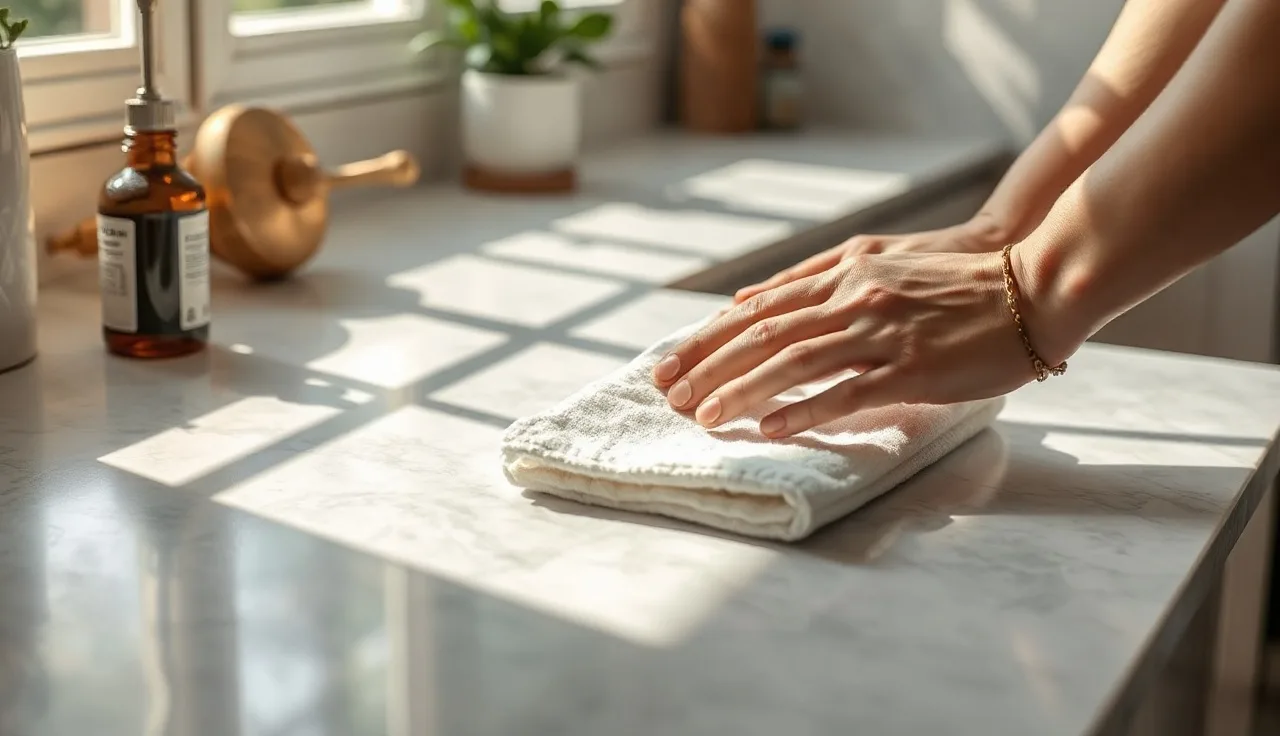
- Wipe a penetrating impregnator sealer onto clean, dry quartzite, let it soak 5 to 10 minutes, then buff off every trace of excess before it dries.
- Reseal once or twice a year.
- But test first: drop lemon juice on a hidden spot.
- If it etches or the water test shows absorption under 5 minutes, seal it.
- If not, you may not need sealer at all.
What is quartzite, and does it actually need sealing?
Quartzite is sandstone that got cooked. Heat and pressure inside the earth fused the original quartz grains and silica cement into one interlocking crystalline mass [1]. That makes it one of the hardest stones on any countertop, usually 7 on the Mohs scale, harder than granite at 6 to 6.5 [2]. And that hardness tells you almost nothing about whether it stains.
Porosity comes from how tightly the crystals fused during metamorphism, not from surface hardness. A dense quartzite can shrug off liquids entirely. A more porous slab, or one sold as quartzite that turns out to be marble or dolomite, drinks up water and acid fast. The U.S. stone supply chain is genuinely loose about what gets stamped "quartzite," so the label alone can't be trusted [3].
Here's the honest picture. Some quartzite needs sealing every six months. Some goes years. A few genuinely impervious slabs don't change one bit when you seal them. The only way to know which kind sits in your kitchen is the absorption test in the next section. Run it before you buy a single bottle.
How do you test quartzite to see if it needs sealer?
Two quick tests answer the question, and both are free. Fifteen minutes total.
The water test: pour a quarter cup of water on the surface and wait 15 minutes. Wipe it off and look. A darker wet patch that lingers past a few minutes means the stone absorbed water and wants sealer. If the water beads or the surface looks identical after wiping, the existing sealer (or the stone's own density) is holding the line [4].
The acid test: put a small puddle of lemon juice or a few drops of white wine vinegar on a hidden area for 5 minutes, then wipe. If the spot looks etched, dull, or discolored, the stone is either porous enough to need sealer or it isn't true quartzite at all. Marble and dolomite etch from acid. Dense quartzite doesn't. Etching bumps sealer up your priority list, and it's also your cue to have a fabricator confirm what stone you actually own before you settle into a care routine [3].
No absorption and no etching? Your quartzite is dense enough that sealing is optional. Seal it anyway if you like. It won't hurt. It also won't do much.
What kind of sealer should you use on quartzite?
Use a penetrating impregnator, not a topical coating. Impregnators soak into the pore structure below the surface and repel liquids from the inside. Topical sealers sit on top and build a film that can peel, yellow, or trap moisture. The stone industry recommends impregnators for natural stone because they leave the color and texture of the surface unchanged [4].
Inside the impregnator category you pick a chemistry: solvent-based or water-based. Solvent-based sealers penetrate deeper and last longer, often 1 to 3 years between coats, but they need real ventilation and careful disposal. Water-based sealers are easier to handle, smell less, and are safer indoors, but they usually want a fresh coat every 6 to 12 months [5].
Fluorocarbon-alkysilane formulas (marketed as fluoropolymer sealers) give the best oil and water repellency. They run more, roughly $30 to $60 for a 12 to 24 oz bottle, but a little covers a lot of a standard kitchen counter [5].
Skip anything labeled "enhancer sealer" unless you actually want to darken the stone. Those carry tints and resins that change the look for good.
On kitchen countertops, confirm the sealer is food-safe once cured. Most penetrating stone sealers are food-safe when fully dry (usually 24 to 72 hours), but the product's technical data sheet is where you verify it, not the front label [9].
What supplies do you need before you start?
The list is short. The sealer, a clean applicator (a lint-free cloth, foam brush, or the pad that often ships with the bottle), a second dry cloth for buffing off the excess, a stone-safe or pH-neutral cleaner, and clean water. That's the whole kit.
Never prep with acetone, bleach, or ammonia cleaners. They strip old sealer and can damage the stone. If you don't have a dedicated stone cleaner, a little isopropyl alcohol on a cloth cuts grease well before sealing [4].
Open a window or run a fan. Even water-based sealers put off some fumes, and you'll be nose-close to the surface for 15 to 30 minutes.
Step-by-step: how to seal quartzite countertops
Step 1: Clear the countertop completely. Every appliance, dish, and knickknack comes off. Corners and edges count, because the unsealed gaps are exactly where stains show up first.
Step 2: Clean the surface thoroughly. Wash with a pH-neutral stone cleaner or a few drops of dish soap in warm water. Wipe the whole surface, rinse with clean water, then dry with a clean towel. Grease, soap film, or dust left behind gets sealed in.
Step 3: Let the stone dry completely. This is the step people skip in a hurry, and it matters more than any other. Moisture trapped under the sealer causes milky hazing or white spots that fight you hard to remove. Wait at least 1 to 2 hours after cleaning, longer in humid climates. To be sure, run a hair dryer or heat gun on low to pull surface moisture, then wait another 15 minutes [5].
Step 4: Apply the sealer in small sections. Pour or spray a little onto a 2-foot by 2-foot patch. Spread it thin and even with your cloth or applicator, working it in with light circles. Don't flood it. You want a consistent film, not a puddle.
Step 5: Let it soak in for 5 to 10 minutes. Read the product instructions, because dwell times vary. The sealer needs to reach the pores, but leave it too long and it starts drying on top where it turns into a chore to remove. Set a timer.
Step 6: Buff off all excess before it dries. This is the step that decides everything. Take a clean, dry lint-free cloth and buff firmly to lift any sealer the stone didn't absorb. Miss a spot and let it dry, and you get hazy residue that takes serious effort (sometimes a solvent) to clear [4].
Step 7: Apply a second coat if the slab is porous. One coat often isn't enough on porous quartzite. Lay the second coat right after buffing the first, while the stone is still slightly receptive. The pores are already open, so the second coat sinks in faster.
Step 8: Let it cure fully before real use. Most sealers go touch-dry within an hour but need 24 to 72 hours to cure. Keep wet glasses and hot pans off during that window.
Step 9: Confirm it worked with the water test. After curing, repeat the water-drop test from the testing section. Water should bead and sit. If it still soaks in, add a third coat.
How long does quartzite sealer take to dry and cure?
Touch-dry runs about 30 to 60 minutes for water-based sealers and 1 to 2 hours for solvent-based ones, in normal indoor conditions near 70°F and 50% relative humidity. Cure time is a separate thing. That's the point where the sealer has fully hardened and gone chemically stable.
Full cure usually takes 24 to 72 hours. During that window, keep standing water, acidic liquids, and heavy objects off the surface. The polymers are still cross-linking and setting. A coffee ring left on an under-cured sealer can bond into the surface in a way that's brutal to remove.
Humidity slows curing a lot. In a humid coastal kitchen in July, tack on another 12 to 24 hours before you call it cured.
How often should you seal quartzite countertops?
It depends on your slab's porosity and how hard the counter gets used. The Natural Stone Institute's guidance is to reseal when the water-drop test shows absorption again, which beats following a calendar. Their care guidance puts it plainly: reseal when "water no longer beads on the surface" [4].
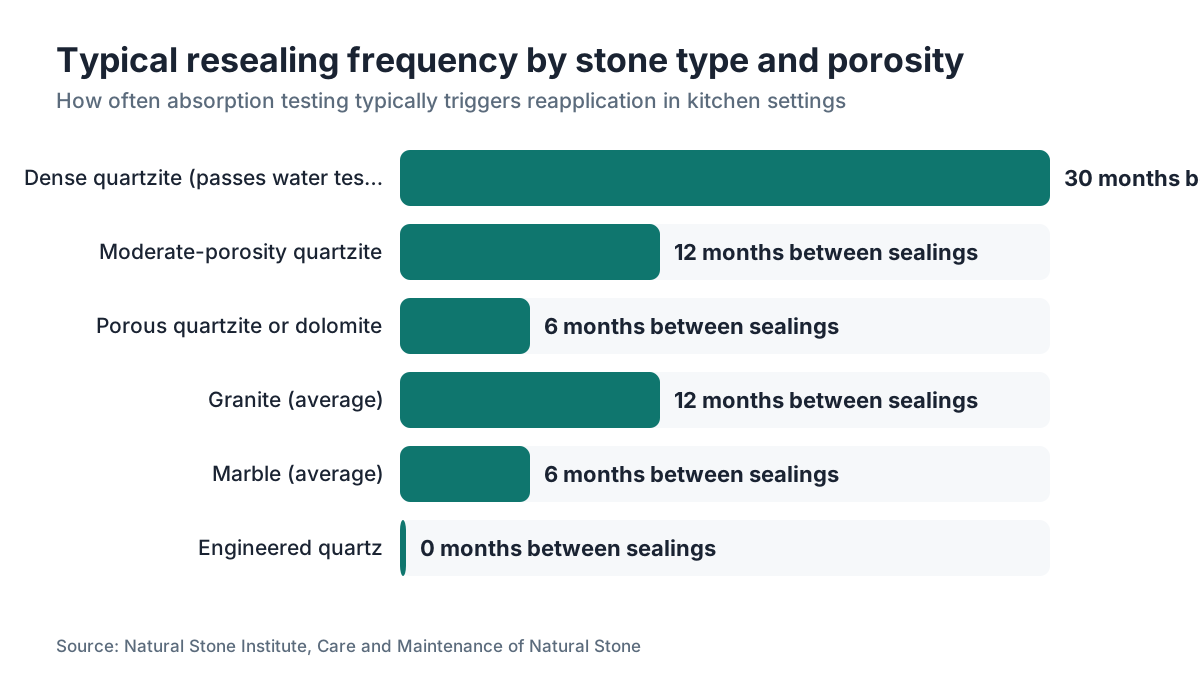
Practical ranges break down like this. Dense quartzite that passed both tests up front may go 2 to 3 years. A moderately porous slab in an active kitchen usually wants attention every 12 months. A very porous slab, or dolomitic marble wearing a quartzite name tag, might need it every 6 months.
The zones near the sink, the food-prep areas, and the spots where cutting boards land wear their sealer down fastest. Edges and the backsplash strip by the faucet almost always show it first.
Want a default that skips the testing? Seal once a year and run the water-drop test at the six-month mark. Beads, wait. Absorbs, seal.
For comparison, granite countertops run roughly the same schedule, and marble countertops often need more frequent care because acid etching stacks on top of the porosity problem.
What happens if you skip sealing or forget to reapply?
Staining is the usual result. Olive oil, red wine, coffee, and tomato sauce are the kitchen's worst offenders. Those liquids carry pigments that bond to the mineral grains inside an unsealed or under-sealed stone, and once they've set for more than an hour or two, they're nearly impossible to lift completely [4].
On true quartzite, acid etching from citrus, vinegar, or cleaners matters less than it does on marble. Dense quartzite handles acid well. But if your "quartzite" is actually a softer carbonate stone like dolomite, skipping the sealer and letting acidic food sit will etch the surface and change the finish for good, in a way no sealer fixes after the fact.
Skipping the seal won't hurt the stone structurally. Quartzite won't crack or split because you forgot. The damage is cosmetic: stains, dull patches, and permanent discoloration living in the pore network.
Can you seal quartzite yourself or should you hire a professional?
You can do this yourself, easily. Sealing a kitchen counter is one of the friendlier stone-care jobs. Materials run $20 to $60, the work takes about an hour, and the odds of real damage stay low as long as you buff off the excess before it dries.
Hiring a stone restoration pro makes sense in a few spots: a very large install (island plus perimeter runs), a job that needs sealing paired with polishing or honing, or a botched previous coat that left hazy residue needing professional removal. Professional sealing runs about $1 to $3 per square foot depending on region and complexity [6].
Fabricators who install stone often seal it as part of the package or as an add-on. If your counters went in recently, ask whether they sealed on site, which many do as standard. Shops running estimation and job-tracking software (like SlabWise) usually log it in the job notes, so one call can save you doing work that's already done.
If you go DIY, buy from a brand that publishes a technical data sheet. SCI Stone Care International, Tenax, Miracle Sealants, and Aqua Mix are known names. Read the TDS, not the marketing copy on the bottle, to confirm dwell time, coverage rate, and food-safety status [9].
What are common mistakes people make when sealing quartzite?
Sealing a wet or half-cleaned surface is the most common mistake and the one with the ugliest payoff. Trapped moisture causes milky hazing that takes heavy buffing or a professional to clear.
Using too much sealer comes second. Stone absorbs only so much. Flooding the surface doesn't speed anything up. It just leaves more excess to wipe and more dried residue to fight.
Waiting too long to buff off the excess is third, and it's related. Solvent-based sealers can skin over in as little as 5 minutes on a warm day. Once they dry, you need acetone or the manufacturer's stripper to remove them, and that risks the finish.
Grabbing an enhancing sealer when you wanted a clear one. Enhancers deepen the stone's color permanently. On a light or veined quartzite that can look gorgeous or awful. Test any enhancer in a hidden spot, like inside a cabinet, before you commit.
Sealing a stone that doesn't absorb, then wondering why nothing changed. If the slab passed both tests and the sealer had nowhere to soak, that's not damage. It's just wasted product.
For care that keeps your seal working, read our guide on how to clean quartzite countertops. Your daily cleaning routine directly sets how long the sealer holds.
Is sealing quartzite different from sealing granite or marble?
The process is basically the same: clean, dry, apply a penetrating impregnator, dwell, buff, cure. The differences live in frequency and stakes.
Granite countertops have a porosity range close to quartzite and follow the same general schedule. Some granites out-dense some quartzites, some don't.
Marble countertops are softer (around 3 to 4 on the Mohs scale) and etch when they meet acid, which no sealer prevents. You can seal marble to block liquid staining, but etching from lemon juice or wine is a surface reaction that happens sealer or not. True quartzite doesn't etch from acid the same way.
Soapstone plays by different rules and generally needs no penetrating sealer at all. It gets mineral oil to even out the color. Our how to clean soapstone countertops guide walks through that oil routine.
Engineered surfaces like Cambria countertops are non-porous and should never be sealed. They don't absorb liquid, so a sealer just sits on top doing nothing.
How do you remove sealer from quartzite if something goes wrong?
If sealer dried on the surface and left haze or streaks, your options hinge on how long it's been sitting.
Fresh residue (within a few hours) usually lifts with the manufacturer's recommended stripper or with isopropyl alcohol on a clean cloth, using firm circular buffing. Never use steel wool or abrasive pads on quartzite.
Cured residue (days or weeks old) usually needs a professional-grade stripper or a stone-safe solvent. Some stone care companies sell alkaline strippers built for this. Apply carefully, let it dwell per the instructions, then work it off with a plastic scraper and clean cloths.
If you applied the wrong type of sealer (a topical coating instead of a penetrating impregnator) and it's peeling or flaking, removal gets harder. You may need mechanical buffing or a pro with diamond polishing tools to bring the surface back. This is a real scenario, and it's a good reason to buy the right product category from the start [10].
For cleaning methods that are safe on a sealed quartzite surface without wearing down the seal, see how to clean stone countertops.
Frequently asked questions
How do I know if my quartzite countertop needs to be sealed?
Do the water test: pour a little water on the surface and wait 15 minutes. If the stone darkens or absorbs it, seal it. If water beads and the surface looks unchanged, the sealer (or the stone's density) is working. Also try lemon juice in a hidden spot. If the surface etches or dulls, sealing is urgent and you should confirm the stone's identity with a fabricator.
What is the best sealer for quartzite countertops?
A penetrating impregnator with fluoropolymer or fluorocarbon-alkysilane chemistry gives the best oil and water repellency. Brands like Miracle Sealants 511, Aqua Mix Sealer's Choice Gold, and Tenax Ager are widely used in stone fabrication. Solvent-based versions last longer (1 to 3 years); water-based ones are easier to apply indoors. Check the technical data sheet for food-safe status before you buy.
How long does it take to seal quartzite countertops?
Active application takes 30 to 60 minutes for a typical kitchen with 40 to 60 square feet of counter. Add 1 to 2 hours for surface prep and drying before you start. The sealer is touch-dry within an hour but needs 24 to 72 hours to fully cure. Keep the counter clear of wet objects and heavy use for that full curing window.
Can I use quartzite countertops right after sealing?
Light use, like setting dry items down, is generally fine once the sealer is touch-dry (30 to 60 minutes). But avoid standing water, acidic liquids, and hot pans for at least 24 hours, and 48 to 72 hours is safer. The sealer is still cross-linking during that time, and staining or bonding happens more easily on an under-cured coat.
How often does quartzite need to be resealed?
It depends on the slab's porosity and kitchen traffic, but roughly every 12 months for most installations. Dense quartzite in light-use kitchens may go 2 to 3 years. The most reliable check: run the water-drop test every 6 months. If water absorbs instead of beading, it's time to reseal. The area next to the sink usually degrades first.
Does quartzite need to be sealed at all, or is it naturally stain-resistant?
Some very dense quartzite slabs are nearly impervious and gain little from sealing. But many slabs sold as quartzite have enough porosity to stain from oil and wine without protection. Run the water and lemon tests on your specific slab before assuming it's impervious. The label and the price don't tell you the actual porosity.
What happens if you never seal quartzite?
You risk permanent staining from cooking oils, red wine, coffee, and acidic foods. The stone won't structurally fail, but pigments from liquids bond to the mineral matrix inside unsealed pores and are extremely hard to remove once set. If your quartzite turned out to be dolomite or marble, skipping the sealer also leaves it open to acid etching that changes the finish permanently.
Can I seal quartzite myself, or do I need a professional?
You can do it yourself. The process is straightforward, materials cost $20 to $60, and the main skill is buffing off excess sealer before it dries. Hire a professional if you need sealing combined with polishing or honing, if the installation is very large, or if a previous sealer job went wrong and left hazy residue that needs mechanical removal.
How do you clean quartzite before sealing?
Use a pH-neutral stone cleaner or a tiny amount of dish soap in warm water. Wipe the whole surface, rinse with clean water, and dry completely with a clean towel. Then wait at least 1 to 2 hours for the stone to dry fully before applying sealer. Avoid bleach, ammonia, and acidic cleaners during prep. Any grease or soap film left behind gets trapped under the sealer.
Is there a difference between sealing quartzite and sealing quartz countertops?
Yes, a big one. Quartzite is natural stone with pores that need sealing. Quartz (engineered stone) is man-made from ground quartz and resin; it's non-porous and should never be sealed. A sealer on engineered quartz won't help and can leave a sticky residue. Confirm whether you have natural quartzite or engineered quartz before buying any sealer.
What should I do if the sealer leaves a hazy residue on my quartzite?
Act fast. Fresh haze (within a few hours) often buffs off with isopropyl alcohol on a clean lint-free cloth. Older cured residue usually needs the sealer manufacturer's stripper or a professional-grade alkaline stone cleaner. If the wrong type of sealer (a topical coating) was applied and is now flaking, a stone restoration professional with diamond polishing equipment may be needed.
Does sealing quartzite change how it looks?
A penetrating impregnator should leave the appearance unchanged: same color, same sheen, same texture. If the surface looks slightly wet or darker right after application, that usually dries out within an hour. If the color changed permanently, you may have used an enhancing sealer by accident. Enhancers contain dyes or resins that deepen the stone's natural color, and the change is generally permanent.
How many coats of sealer does quartzite need?
Usually one to two coats. Apply the first, wait the dwell time, buff off the excess, then immediately apply a second on porous slabs while the stone is still receptive. After curing, run the water-drop test. If water still absorbs, add a third coat. Very dense quartzite may respond fully to a single coat. Let the stone's absorption rate guide you, not a fixed number.
Can sealing quartzite prevent etching from lemon juice or wine?
On true quartzite (metamorphosed sandstone), acid etching isn't a major concern because the stone resists acid well. Sealer blocks liquid staining by filling the pores, but it can't stop a chemical surface reaction. If your quartzite etches from lemon juice, it may actually be marble or dolomite. Sealing is still worth doing to block stains, but you'll need more care around acidic foods on that surface.
Sources
- U.S. Geological Survey, National Minerals Information Center: Quartzite is a metamorphic rock formed from sandstone by heat and pressure, resulting in interlocking quartz crystals.
- U.S. Geological Survey, Mohs Hardness Scale reference: Quartzite tests at approximately 7 on the Mohs scale; granite tests at 6 to 6.5.
- Natural Stone Institute, Consumer Resources: Stones sold commercially as quartzite sometimes include marble and dolomite; field identification requires acid and hardness tests.
- Natural Stone Institute, Care and Maintenance of Natural Stone: Penetrating impregnator sealers are the industry-standard recommendation for natural stone countertops; re-sealing should be triggered by absorption testing, not a fixed calendar.
- Marble Institute of America (now Natural Stone Institute), Technical Bulletin on Stone Sealers: Solvent-based sealers penetrate deeper and last 1 to 3 years; water-based sealers typically need reapplication every 6 to 12 months; fluorocarbon chemistry provides best oil and water repellency.
- Angi, Stone Countertop Sealing Cost Guide: Professional stone sealing services cost approximately $1 to $3 per square foot depending on region and project complexity.
- Penn State Extension: Porosity in metamorphic stones like quartzite varies significantly by sample and cannot be reliably inferred from hardness alone.
- ASTM International, ASTM C97 Standard Test Methods for Absorption and Bulk Specific Gravity of Dimension Stone: Industry standard absorption tests for dimension stone measure water uptake by weight; results vary widely across quartzite samples.
- U.S. EPA, Safer Choice Program: Food-contact surface safety of chemical sealers depends on specific formulation; consumers should verify food-safe status from product technical data sheets after full cure.
- Building Stone Magazine, Sealer Technology and Natural Stone (Natural Stone Institute publication): Topical or coating sealers on natural stone can peel, yellow, and trap moisture; penetrating impregnators are preferred for long-term performance.
Last updated 2026-07-09