TL;DR
- Butcher block needs oiling every 1-6 months depending on use and finish type.
- Unfinished or oil-finished surfaces get food-safe mineral oil or a beeswax blend; polyurethane-finished tops get wiped clean like any hard surface.
- Sand out stains and scratches with 80-120 grit, then re-oil.
- Keep water from pooling at seams and the sink cutout, and the wood will last decades.
What kind of finish does your butcher block have, and why does it matter?
Figure out the finish before you touch anything else. The maintenance routine changes completely depending on the answer, and the wrong move can wreck the surface.
There are three common finish types. The first is oil or wax, which soaks into the wood and leaves no hard film on top. The surface feels slightly matte, and water beads loosely. This is the most popular finish for kitchen counters because it's food-safe once cured, easy to reapply yourself, and forgiving of scratches. The second is polyurethane or varnish, a hard plastic-like film that sits on top of the wood. It looks glossier and holds off water better in the short term, but once it chips or scratches you're dealing with coating failure instead of bare wood. The third is hardwax oil, a hybrid popular in European installations: it penetrates like an oil but leaves a thin protective layer.
To test the existing finish, put a drop of water on the surface. If it soaks in within a minute or two, you have an oil or wax finish (or bare unfinished wood). If it beads and sits for several minutes, you have a film finish like polyurethane. This matters because you cannot apply oil over an intact polyurethane film. The oil has nowhere to go and just sits there tacky and useless.
Shopping for a new counter and want to see how each finish ages? Look at supplier galleries and real-estate listing photos. Oil-finished tops show character; polyurethane can look plasticky when it starts to peel. Most experienced installers lean toward oil or hardwax oil for kitchen use. More on what butcher block actually is, its costs, and installation options is covered in our guide to butcher block countertops.
How often should you oil butcher block countertops?
Oil a new or freshly sanded top every day for a week, once a week for a month, then once or twice a year after that. That's the practical baseline. It shifts with how hard the surface gets used and what oil or wax you pick. This schedule comes straight from the care guidelines published by major butcher block makers, including John Boos, whose maintenance instructions call for frequent initial conditioning followed by periodic reapplication [1].
Heavy-use surfaces near the sink, spots where you're actively cutting or prepping, and counters in dry climates or forced-air-heated homes want oil more often. Surfaces in humid coastal air or areas that rarely see moisture want it less. The tell is simple: if the wood looks lighter, feels slightly rough, or absorbs water unevenly, oil it.
The wood is not picky about timing as long as you don't let it go bone dry for long stretches. Dry wood shrinks, cracks form at the seams, and now you're doing a repair job instead of maintenance.
What oil or finish should you use on butcher block?
For food-contact surfaces, food-grade mineral oil is the standard. It's inert once cured, cheap (usually $2 to $8 per quart at a pharmacy or hardware store), and it won't go rancid. Linseed oil, walnut oil, and other food-derived oils penetrate well, but they can go rancid inside the wood over time, and walnut oil is a real concern for anyone with tree-nut allergies [2].
Mineral oil by itself is thin and leaves little surface protection. Many woodworkers mix it with beeswax or carnauba wax for a better finish. Commercial products like John Boos Mystery Oil or Howard Butcher Block Conditioner are basically oil-wax blends with small amounts of vitamin E. They work well and save you the mixing. You don't need anything fancier.
Skip anything labeled "danish oil" or "tung oil finish" on a kitchen surface. These often contain metallic driers and petroleum distillates that are not food-safe until fully cured, and "fully cured" can take weeks with poor ventilation [8].
For surfaces that never touch food (a laundry room counter, a bathroom vanity), polyurethane is a reasonable pick because it's harder and shrugs off water. But on a kitchen countertop, especially one you cut on, stick to food-safe mineral oil or hardwax oil products that state food-safe certification outright.
Here's a quick comparison of the common options:
| Finish | Food Safe | DIY Application | Scratch Repair | Reapplication || |---|---|---|---|---| | Mineral oil | Yes | Very easy | Easy (sand + re-oil) | 1-6 months | | Oil + beeswax blend | Yes | Easy | Easy | 3-12 months | | Hardwax oil | Yes (after cure) | Moderate | Moderate (local repair possible) | 1-3 years | | Polyurethane | No (until fully cured) | Moderate | Hard (full strip needed) | 5-10 years | | Linseed / walnut oil | Rancid risk | Easy | Easy | 1-6 months |
How do you apply mineral oil or conditioner to butcher block?
Clean the surface first. Pull off any debris, grease, or residue with mild dish soap and warm water, then dry it completely. The wood has to be dry before you apply oil or the oil won't sink in.
Pour a generous amount of mineral oil right onto the surface. Use a clean cloth, a paper towel, or a lint-free rag to spread it evenly across the whole top, working with the grain. Don't skip the sides and any exposed end grain; end grain is thirsty and can drink several times more oil than face grain. Conditioning a new countertop? Pour on enough that you see a wet sheen across the entire surface.
Let it sit at least 20 minutes. For the first few treatments on new or bare wood, leave it a few hours or overnight. The wood takes what it wants. After the soak, wipe off the excess with a clean dry cloth. Any oil left sitting on top turns sticky and grabs dust.
That's the whole job. No special equipment, no waiting for a hard cure, no hazardous waste to haul off. The surface is food-safe again the moment the excess is wiped off and it feels dry to the touch.
How do you remove stains from butcher block countertops?
Butcher block stains split into two kinds: surface and deep. Surface stains on an oil-finished top often lift with a paste of baking soda and water, left a few minutes and wiped clean. Coffee rings, light food coloring, and watermarks usually give up without any sanding.
Deep stains, dark water rings, mold spots, or cuts where beet juice or red wine soaked in need sanding. Start with 80-grit paper on a sanding block and go with the grain over the stained area. Work in a slightly oval shape to feather the edges so you don't leave a visible dish. Move to 100-grit, then 120-grit to smooth it, then re-oil immediately. Sanding opens the wood fibers, and the oil needs to go in right away or the raw wood absorbs moisture unevenly.
For stubborn stains that look black or bluish (a sign of iron-tannin reaction from contact with metal, or mold), a light wipe with dilute white vinegar (about 1 part vinegar to 4 parts water) before sanding lifts some of the discoloration. Let it dry, then sand. Skip the bleach on butcher block. It kills mold, sure, but it also oxidizes the wood fibers and leaves a grayish discoloration that's hard to sand out evenly.
A light sanding once a year, even with no visible stain, is smart on a heavily used top. It refreshes the surface, knocks off micro-roughness from cutting, and gives the next oil coat better bite.
How do you protect butcher block around the sink and edges?
Water is the main enemy of butcher block. The weak points are the sink cutout, any seams between sections, and the back edge against the wall where runoff from dishes pools out of sight. Those are the places where countertops fail.
For sink cutouts, the standard professional move is to seal the raw wood edge with a waterproof product before installation. Silicone caulk on the underside of the cutout, plus a heavy application of oil or a dedicated wood sealer on the exposed edge, gives you real protection. John Boos specifically recommends oiling all surfaces, including the bottom and edges, before installation, more than the top [1].
After installation, run a thin bead of clear silicone caulk where the countertop meets the back wall. That stops water from wicking under the surface. Check the caulk line every year and replace it if it's cracking or lifting.
For undermount sinks, the gap between the wood and the sink rim gets sealed during installation with silicone. On butcher block that seal matters more than on granite, because if water reaches the joint, the wood swells, the silicone breaks, and you have a runaway moisture problem. Inspect the seal every six months.
Spot the wood darkening near the sink, or a section that feels softer when you press on it? You already have water damage. Move fast. Sand back to bare dry wood, let it dry several days in a warm room if you can, then re-oil heavily and reseal the edges. The EPA recommends drying wet materials within 24 to 48 hours to head off mold [6]. Ignore it and you get mold and structural rot, which means replacement.
For a broader look at how butcher block stacks up against stone options, our kitchen countertops guide covers material-by-material tradeoffs including water resistance.
How do you repair scratches and cuts in butcher block?
Scratches are not a crisis. They come with a wood countertop, and most of them are fixable in under an hour.
For light scratches, sand with 120-grit paper along the grain, then re-oil. Usually that's enough. For deeper cuts or gouges, start with 80-grit to remove the damaged material, work through 100 and 120 to smooth it, then re-oil. On a small area, feather your sanding outward so the repair blends in instead of showing up as a flat depression.
End grain countertops (where the fibers run vertical, giving that honeycomb look) scratch and dent more visibly than edge grain or face grain. They also drink oil faster, and repairs take a bit more sanding to flatten. But end grain is more self-healing in a practical sense: it's what traditional butcher blocks have always been made from, and the fibers can close somewhat around small cuts.
If the whole top looks uniformly scratched and dull after years of use, rent a random-orbit sander and resurface it all at once: 80-grit to 120-grit to 150-grit, then oil. A full resurfacing of a standard kitchen island runs about one to two hours of work plus drying and re-oiling time. The counter looks nearly new afterward. This is one of butcher block's real advantages over harder surfaces.
What daily cleaning routine keeps butcher block in good shape?
Daily cleaning is simple. Wipe with a damp cloth and mild dish soap after use, then dry promptly. Don't let water sit. Don't run the dishwasher next to it and don't leave a wet sponge on the wood overnight.
Don't immerse any part of the countertop in water. Sounds obvious, but it comes up when people use the top as a staging area for washed vegetables or set wet pots down in the same spot again and again. None of that ruins a well-oiled top in one incident. It adds up.
Skip harsh cleaners. Bleach, ammonia sprays, and heavy degreasers strip the oil, dry the wood, and can lighten or discolor the surface. If you need to sanitize, dilute white vinegar (1:4 with water) is effective and won't harm the finish the way bleach does [3].
The USDA Food Safety and Inspection Service notes that wood cutting surfaces can hold bacteria in surface scratches and that regular cleaning with soap and hot water is the primary defense [3]. That's the honest answer on sanitizing: soap and water gets you 95-plus percent of the way there. The antimicrobial properties of certain woods (maple in particular showed measurable bactericidal behavior in lab work associated with UC Davis) are real, but they're no substitute for cleaning [4].
For rentals or high-traffic commercial settings, I'd lean toward a polyurethane finish or a non-porous material like quartz. Daily maintenance on an oil-finished surface is light, but it wants attention that not every user will give it.
Can butcher block countertops be used as a cutting surface?
Technically yes, though it shows wear over time. Whether that bothers you depends on your expectations.
End grain butcher block is what professional meat cutters have used for generations, precisely because the knife slips between the wood fibers instead of slicing across them. That preserves the knife edge and lets the surface partly self-heal. Face grain and edge grain tops show knife marks more visibly and more permanently.
On food safety, the USDA guidance is that both wood and plastic cutting boards carry risks, and thorough cleaning matters more than the surface material [3]. Research associated with UC Davis found that certain hardwoods (maple, beech, teak) showed bacteria counts declining over time on a cleaned surface, while knife-scarred plastic boards held bacteria in the grooves even after washing [4].
Cut directly on your countertop and those marks eventually become part of the surface character. Sand them back now and then. Want to keep the look pristine? Use a separate cutting board.
How do you maintain butcher block countertops that are already polyurethane-finished?
If your top has an intact polyurethane finish with no chips, cracks, or peeling, maintenance is easy: clean with a damp cloth and mild cleaner, dry promptly, and keep abrasive pads away from the coating. A polyurethane-finished butcher block gets maintained the same way you'd handle any hard film-coated surface.
The trouble starts when the coating fails. Polyurethane peels, chips, and scratches, and once the film breaks you have bare wood exposed in random spots. You can't spot-repair polyurethane cleanly. The only real fix is to strip the whole coating, sand back to bare wood, and start fresh, either with a new coat of polyurethane or by switching to oil.
Stripping polyurethane is real work: a chemical stripper or a belt sander, followed by sanding through the grits. Chemical strippers need good ventilation and protective gear, per the Consumer Product Safety Commission [9]. It's doable as a weekend project, but it's labor. If a fabricator is doing your kitchen renovation and you're picking new counters, factor this in. Fabricators who quote butcher block jobs often price finishing separately from the material; to see what that adds, SlabWise's quoting tool lets you model different finish scenarios inside a full countertop estimate.
For a peeling polyurethane top that's still structurally sound, the practical call is to strip and switch to oil. You get easier ongoing maintenance and the ability to do spot repairs without stripping the whole surface again.
What are common butcher block countertop problems and how do you fix them?
Here are the issues that show up most and what to actually do about them.
WARPING: A top humped in the middle or cupped at the edges means uneven moisture. Usually the top was oiled on one side and not the other, or the underside is picking up moisture from the cabinet while the top stays dry. Wood expands and contracts with moisture content, and uneven exposure across surfaces causes warping and seam failure [5]. The fix: oil all surfaces including the bottom, and if it's mounted flat, make sure the cabinet isn't trapping moisture. Minor warping often corrects itself over several days once the moisture equalizes. Severe warping usually means replacement.
CRACKS AT SEAMS: A seam pulling apart is almost always a moisture or humidity swing. The wood expanded and contracted and the joint opened. If it's minor (less than 1mm), fill with food-safe wood glue, clamp if you can, wipe the excess, and re-oil. If the seam is large or the wood around it feels soft, check for water damage underneath.
MOLD OR MILDEW: Gray or black spots, especially near the sink, mean moisture got in and stayed. Sand back to bare wood, let it dry completely (48 to 72 hours in a warm dry space), treat with dilute white vinegar, dry again, then re-oil. If the wood feels spongy there, rot has set in and that section may need replacing.
GRAYING: Butcher block left unfinished or allowed to dry out turns gray from UV exposure and surface oxidation. Sand back to fresh wood and re-oil. Light graying is purely cosmetic and sands off easily.
STICKY SURFACE AFTER OILING: You applied too much oil and didn't wipe the excess, or you used a product with a drying agent that didn't cure. Wipe down firmly with a clean dry cloth, let it sit another day, and wipe again. Still tacky after 48 hours? Lightly sand off the uncured oil layer and re-oil with a thinner coat, wiping all excess promptly.
How does butcher block maintenance compare to other countertop materials?
Butcher block asks for more active maintenance than granite, quartz, or laminate, and less than marble. Here's the honest tally.
Granite wants sealing roughly once a year but otherwise wipes clean and is nearly immune to scratches. Quartz (engineered stone) needs almost nothing beyond cleaning. Laminate countertops need nothing special but can't be sanded or repaired if the surface layer gets cut through. Marble countertops need frequent sealing and etch from lemon juice, vinegar, and other everyday kitchen acids.
Butcher block is the only common countertop material a homeowner can fully restore with sandpaper and oil. A granite top with a deep chip or crack needs professional repair. A butcher block top with equivalent damage gets sanded and re-oiled in an afternoon.
The tradeoff is steady attention. Wipe it dry and oil it a couple of times a year and it performs beautifully. Ignore it for two years and you're doing a full restoration. The material rewards people who cook and engage with their kitchen; it punishes neglect.
Comparing across all your options before you decide? Our kitchen countertops overview and the detailed look at granite countertops both give material-specific maintenance requirements alongside costs.
For fabricators running butcher block jobs alongside stone work, accurate material costing makes a real difference. SlabWise's quoting software handles wood countertop jobs as part of mixed-material kitchen quotes.
What products should you keep on hand for butcher block maintenance?
You don't need much. Here's what earns its place:
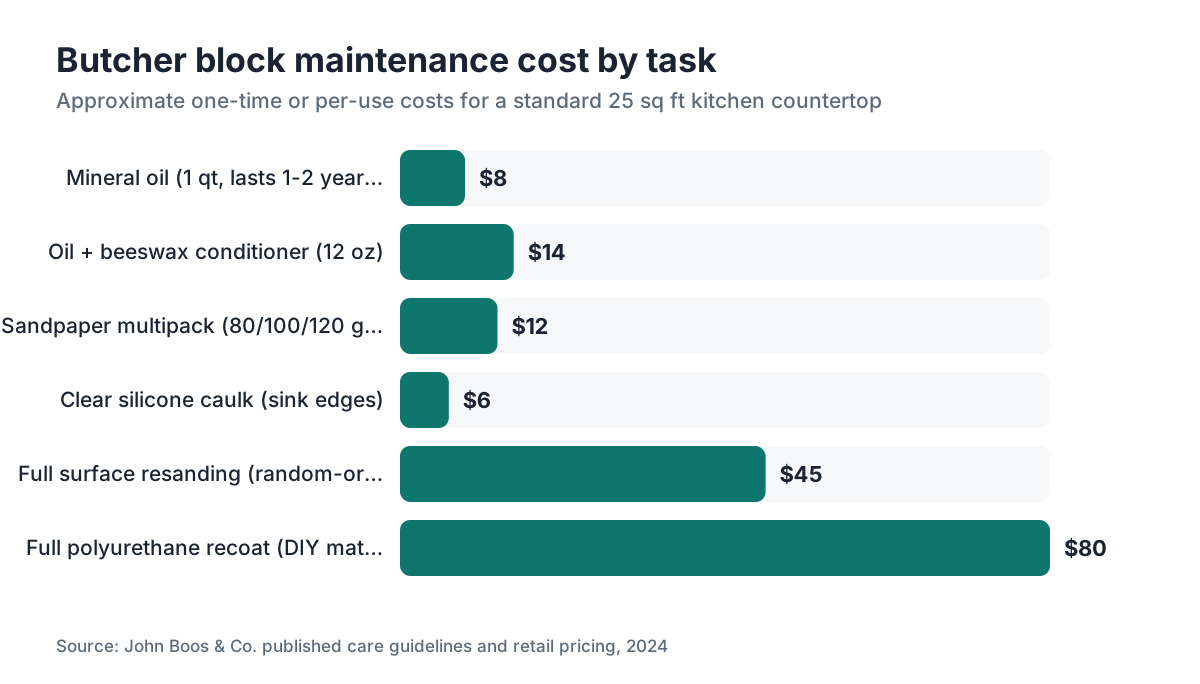
Mineral oil: buy food-grade, sold at any pharmacy. A quart costs $4 to $8 and lasts years for a typical kitchen [2]. This is the core product. Everything else is optional.
Beeswax or carnauba wax blend: John Boos Mystery Oil, Howard Butcher Block Conditioner, or a generic food-safe wood wax. Adds a bit more surface protection than oil alone. A 12-oz container runs $8 to $15 and covers several applications.
Sandpaper assortment: 80, 100, and 120 grit. Buy a multipack. You won't use it constantly, but when you need it you want it in the drawer.
Sanding block or small random-orbit sander: a $20 sanding block handles spot repairs. A random-orbit sander ($40 to $80) makes full-surface refinishing much easier.
White vinegar: already in most kitchens, good for surface sanitizing and light mold treatment.
Lint-free cloths or old cotton T-shirts: for applying oil. Paper towels work but you'll burn through them on a big surface.
Silicone caulk (clear): for sink edges and the wall junction. A $5 tube.
A full maintenance kit runs roughly $25 to $40 if you start from zero. After that, the recurring cost is just mineral oil refills every year or two. This is one of the cheaper countertop maintenance programs of any material.
Frequently asked questions
How often do you need to oil butcher block countertops?
Oil a brand-new or freshly sanded top daily for a week, weekly for a month, then roughly every one to six months depending on use. A surface near an active sink or in a dry climate needs oil more often than a low-use area. The visual cue is easy: if the wood looks lighter or feels rough, it's time. John Boos, a major butcher block manufacturer, recommends this progressive conditioning schedule in their published care guidelines.
What is the best oil to use on butcher block countertops?
Food-grade mineral oil is the best all-around choice. It's inert, doesn't go rancid, is inexpensive (about $4-$8 per quart at a pharmacy), and is safe on food-contact surfaces. A mineral oil plus beeswax or carnauba wax blend gives slightly better surface protection. Avoid linseed, walnut, or other food-derived oils due to rancidity risk; avoid danish or tung oil finishes on food-contact surfaces because they contain non-food-safe additives.
Can you use butcher block countertops around a sink?
Yes, but you need to protect the sink cutout edges and seams carefully. Seal the raw wood edge of the sink opening with oil or a waterproof sealer before installation, then use silicone caulk at the sink perimeter and the back wall joint. Inspect those seals twice a year. Butcher block around a sink is manageable with this routine; neglecting the sealing leads to water infiltration, swelling, and eventually rot or mold.
How do you get stains out of butcher block countertops?
Light stains often respond to a baking soda and water paste left for a few minutes, then wiped off. Deep stains, dark water rings, or mold spots need sanding: start with 80-grit sandpaper along the grain, work up to 120-grit to smooth, then immediately re-oil. A dilute white vinegar solution (1 part vinegar to 4 parts water) before sanding can help lift iron-tannin or mold stains. Don't use bleach; it discolors the wood.
How do you stop butcher block countertops from warping?
Oil all surfaces, including the underside and all edges, more than the top. Uneven moisture is the cause of warping: if the top gets oiled and the underside doesn't, the two sides expand and contract differently. Also avoid leaving wet items sitting on one spot repeatedly, and ensure the cabinet underneath isn't creating a moisture trap with poor ventilation. Minor warping sometimes corrects itself once you equalize the moisture on all sides.
Can you put hot pans on butcher block countertops?
You can, briefly, but it's not a good habit. High heat can scorch the wood surface, dry out the oil finish, and cause localized cracking in the wood fibers. A cast-iron skillet straight from the oven can easily reach 400-500 degrees Fahrenheit, well above what any wood surface handles well. Use a trivet or a silicone pad for hot cookware. Light heat from a warm pot for a minute or two won't cause lasting damage, but repeated direct heat contact will.
How do you clean butcher block countertops daily?
Wipe with a damp cloth and a small amount of mild dish soap after use, then dry promptly with a clean cloth. Don't let water sit. Avoid harsh cleaners: bleach, ammonia sprays, and heavy degreasers strip the oil finish and can discolor the wood. For sanitizing, a dilute white vinegar solution (1:4 with water) works well. The USDA recommends soap and hot water as the primary method for cleaning wood food-contact surfaces.
How do you restore an old or neglected butcher block countertop?
Start with 80-grit sandpaper on a sanding block or random-orbit sander, working with the grain across the whole surface. Move through 100-grit and then 120-grit to smooth. Wipe off all dust with a tack cloth or damp cloth, let it dry, then apply mineral oil generously and let it soak for several hours or overnight before wiping off excess. Repeat the oil application daily for a week. A full surface restoration typically takes a weekend of work.
Is butcher block harder to maintain than granite or quartz?
Yes, in terms of active effort. Granite needs sealing once a year and otherwise wipes clean. Quartz needs almost no maintenance. Butcher block needs oil every few months and prompt drying after every use. The compensating advantage is that butcher block is the only common countertop material homeowners can fully restore with sandpaper and oil; a scratched or stained butcher block top is repairable in an afternoon, while a damaged granite or quartz surface usually requires professional intervention.
What happens if you don't oil butcher block countertops?
The wood dries out, shrinks slightly, and becomes more porous and vulnerable. Surface scratches and cuts trap moisture and bacteria more easily. Seams and joints open as the wood moves. Over time, unprotected wood around the sink or in humid-dry cycles will crack and eventually rot. The good news is that most neglected tops short of rot can be recovered by sanding back to bare wood and re-oiling aggressively. Don't wait until the wood feels spongy to act.
Can you use Clorox or bleach on butcher block countertops?
Better not to, especially on a regular basis. Bleach kills surface bacteria effectively but it also oxidizes wood fibers, strips the oil finish, and leaves a grayish discoloration that's difficult to sand out evenly. For occasional deep sanitizing a very dilute bleach solution (1 tablespoon per gallon of water) is sometimes used, but you'll need to re-oil afterward and accept some cosmetic impact. For routine sanitizing, dilute white vinegar or soap and hot water is a better choice.
How do you seal butcher block countertops for more water resistance?
The most water-resistant option for butcher block is a full polyurethane coating, but it trades repairability for protection. For a food-safe option with good water resistance, a hardwax oil product (brands like Rubio Monocoat or Osmo Polyx) gives better water beading than plain mineral oil while staying repairable. Whichever product you use, applying it to all surfaces including the underside and edges before installation makes a significant difference in long-term moisture protection.
How long do butcher block countertops last with proper maintenance?
Decades, realistically. Antique butcher blocks from commercial kitchens routinely survive 50-plus years of hard use because they can be resurfaced repeatedly. A residential countertop with consistent oiling, prompt drying, and occasional sanding when needed will outlast most other countertop materials. The limiting factors are usually severe water damage at the sink cutout or neglect over many years, both of which are preventable with basic maintenance.
Sources
- John Boos & Co., Butcher Block Care and Maintenance Instructions: John Boos recommends conditioning new butcher block daily for a week, weekly for a month, then periodically, and applying oil to all surfaces including underside and edges before installation
- US Food and Drug Administration, Code of Federal Regulations Title 21, Sec. 172.878 (White mineral oil): Food-grade white mineral oil is affirmed as generally recognized as safe (GRAS) for use in food-contact applications at the FDA under 21 CFR 172.878
- USDA Food Safety and Inspection Service, Cutting Boards and Food Safety: USDA FSIS states that soap and hot water is the primary recommended cleaning method for wood food-contact surfaces, and that both wood and plastic boards carry bacteria risks managed by cleaning
- University of California Davis, Department of Food Science and Technology, Dean O. Cliver research on wood cutting surfaces: UC Davis research found that certain hardwoods including maple showed measurable bactericidal properties and that bacteria in scratched plastic boards survived washing while wooden boards showed declining counts after cleaning
- USDA Forest Service, Wood Handbook: Wood as an Engineering Material (FPL-GTR-282): Wood expands and contracts with changes in moisture content; uneven moisture exposure across surfaces causes warping, cupping, and seam failure in wood countertops
- EPA, Mold and Moisture in Homes guidance: The EPA recommends fixing water problems promptly and drying wet materials within 24-48 hours to prevent mold growth on organic materials including wood
- National Wood Flooring Association, Hardwood Species Guide: Maple (Acer saccharum) has a Janka hardness of approximately 1,450 lbf, making it one of the most common species used in butcher block countertops due to hardness and availability
- California Department of Pesticide Regulation, Wood Preservative Safety: Products containing metallic driers used in danish oil and some tung oil finishes require full cure before food contact use; cure time and ventilation requirements vary by product formulation
- US Consumer Product Safety Commission, Safe Use of Chemical Strippers: Chemical paint and finish strippers used to remove polyurethane coatings from wood surfaces require appropriate ventilation and personal protective equipment during application
- USDA Agricultural Research Service, Antimicrobial Properties of Wood: ARS research has documented that certain hardwood species show antimicrobial activity against common foodborne pathogens, supporting traditional use of hardwood in food preparation surfaces
Last updated 2026-07-09