TL;DR
- Clean countertop outlet cuts come down to matching the bit to the material: a diamond hole saw for stone and quartz, a reverse-tooth jigsaw blade for laminate, a Forstner bit or router for wood.
- Mark it precisely, drill a pilot where needed, keep the tool cool, and cut from the finish face to kill chip-out.
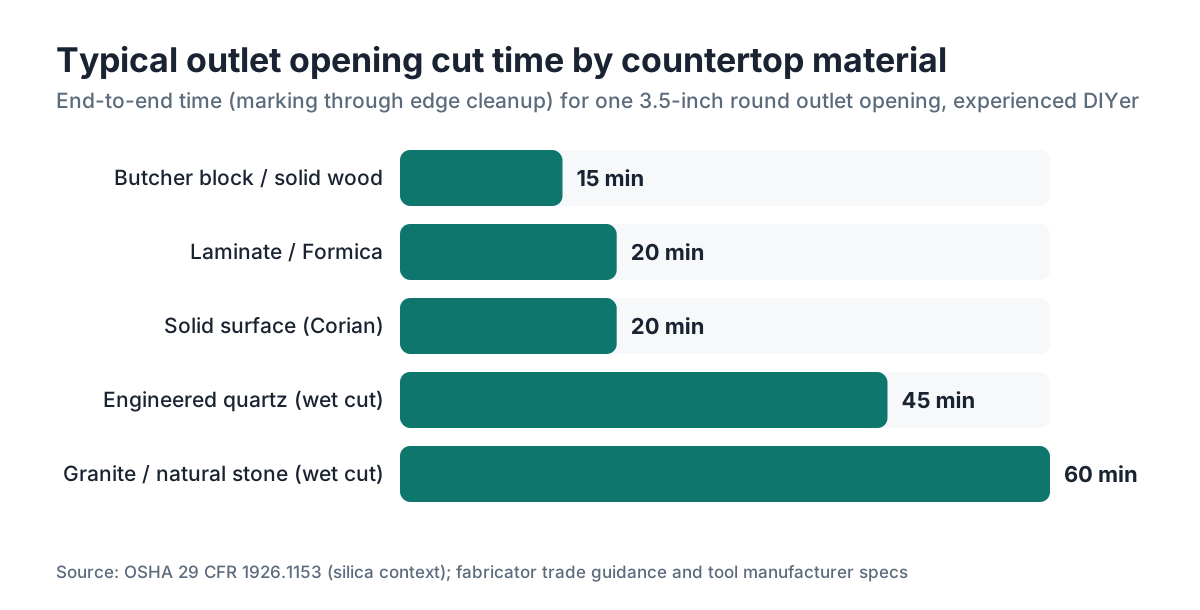
- Budget 15 to 45 minutes per opening.
What tools do you actually need to cut an outlet hole cleanly?
The tool list is short but it changes with the material. Get it wrong and you chip a slab that cost a small fortune or blow out laminate veneer in one pass.
For natural stone (granite, marble, quartzite, soapstone) and engineered quartz: a diamond-tipped hole saw, 3.5 inches for a standard duplex box, a continuous-rim diamond blade if you need a rectangle, and a steady water source or wet-cutting attachment to keep the bit cool. Dry-cutting a single hole in stone is possible, but you risk overheating and killing the bit early.
Laminate and Formica need a sharp carbide-tipped jigsaw blade. A reverse-tooth blade cuts on the downstroke, which pulls chip-out away from the show face. Add a drill with a small pilot bit and painter's tape over the line. On post-form laminate, where the top is the face you see, cut from the top with a reverse blade or rout from underneath.
Solid wood, butcher block countertops, and bamboo take a Forstner bit for round openings and a jigsaw or router for rectangles. Wood is the forgiving one. You can clean up tear-out with a chisel.
Solid surface like Corian countertops takes a carbide router bit, a sharp jigsaw blade, or a utility knife for scoring. It machines beautifully and scratches sand out, so there's real margin for error.
One tool you need no matter the material: a sharp pencil and a real outlet box template, or the box itself. Sloppy marking wrecks more cuts than bad technique ever does.
How do you mark the outlet location accurately?
Accuracy here decides everything downstream. A line that's 1/4 inch off can leave a gap the cover plate won't hide, and countertop pop-up cover plates are sized tight.
Start by confirming where the electrical box sits in the cabinet. Hold the outlet box (or the pop-up housing) against the underside of the counter and trace the opening with a grease pencil or fine permanent marker. Do this with the countertop in its final installed position if you can, because cabinets aren't always square or exactly where the plan says.
Working from a paper or cardboard template? Tape it down, trace it, then pull it before cutting. Confirm the marked opening centers over the box and that the cover plate will overlap the cut edge on all four sides. Most standard pop-up covers need 3/8 to 1/2 inch of overlap per side.
For round pop-ups, find the center with intersecting diagonals, then set the circle with a compass or the hole saw's pilot bit. On stone, use a grease pencil. Marker wicks into porous granite and gets hard to remove.
One last check before your hands go near that hole: is the circuit dead? The National Electrical Code (NEC), NFPA 70, requires safe work near live conductors, and OSHA 29 CFR 1910.333 states, "deenergize electric equipment before employees work on or near it" [2]. Kill the breaker, use a non-contact voltage tester, confirm it's dead.
What's the step-by-step process for cutting granite or quartz?
Stone and quartz are the hardest materials and the ones most likely to crack or chip if you hurry. Slow down. This works for granite, quartzite, marble, and engineered quartz like Cambria.
Step 1: Tape the cut area. Two layers of blue painter's tape over the outline cuts surface chip-out from the saw collar and gives you a clean surface to re-mark the line.
Step 2: Build a water dam if you're cutting an installed top. Ring the cut area with plumber's putty, then fill it with water to keep the bit cool. Or have a helper pour a thin stream right at the bit as you go. Pros sometimes dry-cut a single hole with quality bits, but it shortens bit life a lot and heat can seed micro-cracks in the stone.
Step 3: For round holes, drill a center guide hole with the pilot bit that comes in most kits. This stops the big bit from walking across the polish.
Step 4: Start the hole saw tilted at about 45 degrees to score a groove, then bring it slowly to vertical. That keeps the bit from skating on the polished surface at the start.
Step 5: Steady, moderate downward pressure. Let the diamonds do the work. Forcing it heats the bit and dulls it fast. A 3.5-inch hole in 3/4-inch granite runs 5 to 15 minutes with a good bit.
Step 6: At about 3/4 of the way through, ease off and slow down. The last bit of material cracks or chips if the bit punches through hard.
Step 7: Clean up the edge. The saw leaves a slightly rough rim. Work it with a diamond hand pad (80 to 200 grit) to bevel and smooth the exposed edge. That stops chipping in use and looks intentional.
Quartz has one extra rule. Manufacturers including Cambria note in their fabrication guidelines that cutting and grinding creates silica dust, a serious health hazard [3]. Wet-cutting is mandatory, and you need a NIOSH-approved respirator if any dry grinding happens. OSHA's construction silica standard, 29 CFR 1926.1153, limits worker exposure to respirable crystalline silica to 50 micrograms per cubic meter as an 8-hour time-weighted average [4].
How do you cut a clean outlet opening in laminate countertops?
Laminate is unforgiving in exactly one way: the top surface chips if you cut it the wrong direction. That's the whole problem you're solving.
The trick is to cut from the top with a blade that cuts on the downstroke (a reverse-tooth jigsaw blade, sometimes sold as a downcut or laminate blade). The teeth pull chip-out toward the underside instead of the face. The face stays clean.
Here's the process for a rectangular opening in a laminate countertop or Formica countertop:
Step 1: Tape the whole marked area with painter's tape. It cuts chip-out further and gives you a fresh line to mark.
Step 2: Drill a starter hole inside one corner of the rectangle, big enough to pass the jigsaw blade (usually 3/8 to 1/2 inch). Keep it on the waste side of the line.
Step 3: Drop the reverse blade in and cut slowly along the line, base flat on the surface. Don't force it. Let the blade do the work.
Step 4: At corners, stop, back up a hair, make a curved relief cut, then come at the corner from the other side. That keeps the blade from pulling sideways as it exits and tearing out the corner.
Step 5: After the cut-out drops, peel the tape. Run a fine file or 220-grit sandpaper along the edge to knock off burrs.
On kitchen countertops with post-form laminate (built-up front edge and backsplash), watch for the particle board substrate and any buildup strips underneath. Your blade has to reach all the way through.
What's the right method for cutting outlet holes in wood countertops?
Wood is the easiest material to cut a clean outlet hole in, and the easiest to fix when something goes sideways. You still want a clean result the first time.
For round pop-up openings, a Forstner bit is the cleanest option going. It cuts a flat-bottomed, smooth-sided hole with almost no tear-out on the face. Most hardware stores stock them up to about 2.5 inches. For anything bigger, switch to a hole saw.
For rectangles in butcher block or solid wood, use a router with a straight or spiral upcut bit and a template. A template-guided router gives you the cleanest, most repeatable rectangle possible in wood. Cut the template from 1/2-inch MDF, sized so the router's guide bushing follows the template edge and produces the exact opening you need.
Or drill corner holes and run a jigsaw. Faster to set up, more cleanup after.
Once the hole is cut, sand the inside edges to 120 or 180 grit. Then coat the raw wood inside the opening with food-safe mineral oil or whatever finish the countertop wears, so moisture can't wick in and swell the substrate. This matters most on the end grain that gets exposed in thicker slabs.
How do you avoid the most common chip-out mistakes?
Chip-out is the enemy of a clean outlet cut. Here's where it comes from and how to stop it.
Most stone chip-out happens at the very end, when the core plug drops free. The fix: ease off pressure near breakthrough, or drill a small relief hole from the underside to remove the last of the material before the main bit punches through. Some fabricators tape a scrap of wood or foam under the cut so the core is supported and doesn't free-fall.
On laminate, chip-out is almost always the wrong blade direction or a jigsaw base vibrating the material. Fix the direction (reverse/downcut), and if the laminate is thin or flexes, clamp a stiff backup board underneath.
Rushing is the single biggest cause across every material. A faster feed rate means more vibration, more heat, and a much better chance the tool catches and tears instead of shearing clean. Slow down.
Second biggest cause: dull tooling. A dull diamond bit or jigsaw blade tears material instead of cutting it. A diamond bit rated for 10 to 15 holes in granite will start chipping the stone if you push it to 30. Laminate eats jigsaw blades. Keep a fresh one on hand and don't be cheap about swapping it.
Does the electrical rough-in location affect how you make the cut?
Yes, and homeowners usually find this out at the worst possible moment. The box position in the cabinet has to be set before the countertop is templated, ideally before fabrication. If the box is off after the top is installed, you're either repositioning it (an electrician, possibly opened drywall) or living with a cover plate that sits off-center.
Pop-up outlets mount from above, so the hole has to line up exactly with the power wires coming up through the cabinet. A locknut or mounting ring secures the pop-up from below, and that ring needs clearance from the cabinet walls.
Templating a top with an outlet in the plan? Mark the outlet location clearly on the template. Shops running digital templating or fabrication software (like SlabWise, which handles countertop quoting and shop workflow) can flag cutout locations in the cutting plan so they don't land on the wrong side of the slab or get missed.
Code note: NEC 210.52 requires countertop receptacles at set spacings in kitchens, and pop-up countertop outlets have to be listed for countertop use and installed per the manufacturer's instructions [1]. Confirm your outlet assembly is UL-listed for the application before you cut.
What bit sizes do you need for standard outlet openings?
Here's where people trip: there is no single universal outlet hole size. It rides on the outlet type.
A standard rectangular duplex outlet (the kind in a vertical wall box) mounted horizontally in a countertop surface-mount box usually needs a rectangle around 1.5 by 3.5 inches, but that shifts by brand and box. Measure your specific box before cutting.
Pop-up countertop outlets (press to raise them) are usually round. The common face diameters are 3.375 and 3.5 inches, with a bore hole requirement anywhere from 2.5 to 3.5 inches depending on the model. Read the instructions. The hole in the stone or laminate is usually smaller than the face because the ring seats on top of the surface.
USB-integrated pop-ups vary more: some want a 3.5-inch bore, others 2.9 or 3.1 inches. Check the spec sheet.
| Outlet Type | Typical Bore Hole | Notes |
|---|---|---|
| Round pop-up (standard) | 3.375" to 3.5" | Check specific model spec |
| Round pop-up (compact/USB) | 2.9" to 3.1" | Varies by brand |
| Rectangular surface-mount | 1.5" x 3.5" (approx) | Cut with jigsaw, not hole saw |
| In-counter island outlet strip | Varies by unit | Usually routed rectangular slot |
Pull the spec sheet for your outlet assembly before you touch a tool.
Is it safe to cut a countertop outlet hole yourself, or should you hire a pro?
Cutting the physical hole is within reach for a careful DIYer on laminate and wood. Stone and quartz are a different conversation.
Laminate is low stakes. A jigsaw with a good blade runs $80 to $200, blades cost a few dollars each, the material can be replaced if you botch it, and the technique is learnable on the first try. Most homeowners with basic tool sense can handle it.
Granite, marble, quartzite, and quartz raise the stakes hard. A 3 cm slab of granite runs $80 to $250 per square foot installed [6]. One crack or bad cut-out can ruin a $1,500 to $5,000 section. Diamond hole saws for stone cost $40 to $150, and quality matters a lot. If you've never cut stone and the top is already installed and finished, the risk-reward math points toward hiring a fabricator or an experienced tile/stone contractor.
The electrical side is separate. Installing or extending a circuit for a countertop outlet needs a licensed electrician in most jurisdictions. The plug, box, and wiring is not a DIY job in most states. The hole is the mechanical part you might do yourself. The connection is a regulated one.
A clean split: cut the hole yourself, then have an electrician wire it. Many fabricators will also cut outlet openings as an add-on when they install a top, often $50 to $150 per opening, which is usually money well spent on stone.
What about health and safety hazards when cutting stone countertops?
This part gets skipped in DIY guides. It shouldn't.
Cutting engineered quartz and granite throws respirable crystalline silica dust. Silica is a known human carcinogen, classified Group 1 by the International Agency for Research on Cancer [5], and chronic inhalation causes silicosis, an irreversible and sometimes fatal lung disease. The risk peaks with dry grinding and cutting. Wet-cutting drops airborne silica sharply, but wet-cutting one hole on an installed top takes some setup.
OSHA's crystalline silica standard, 29 CFR 1926.1153, requires engineering controls (wet methods or vacuum dust collection) for stone work, with a permissible exposure limit of 50 micrograms per cubic meter as an 8-hour TWA [4]. A homeowner doing one hole isn't under OSHA, but the biology doesn't care. Wear an N95 at minimum. A P100 half-face respirator is better. Ventilate well or work outdoors. Wet-cut.
Safety glasses are mandatory. Diamond hole saws fling small stone chips at speed, and you're leaning right over the work. Hearing protection helps too. Angle grinders and rotary tools in a closed kitchen are loud enough to grind down your hearing over time.
How do fabricators approach this cut differently than homeowners?
Pros work this systematically, and a few of their habits are worth stealing even for one hole in your kitchen.
Shop fabricators almost always cut outlet openings at the bench during fabrication, not on-site after install. Cutting a slab on sawhorses or a CNC table gives you better access, better tool control, and no risk of vibration cracking an installed piece. Know you need an outlet opening? Flag it before the slab goes in.
Many shops run a CNC bridge saw or a dedicated CNC router for outlet openings in stone. These machines produce perfectly sized rectangles or circles with zero chip-out. The tradeoff is cost and lead time. For one-off jobs, most shops make the cut by hand with a diamond hole saw or a jigsaw carrying a diamond or carbide blade.
On the digital side, fabrication management tools (like SlabWise) track cutout requests during quoting so outlet holes don't get lost when the job hits production. A missed cutout found at install means a return trip, an on-site re-cut, and an unhappy customer.
On-site cuts in finished stone happen. When they do, pros bring a right-angle grinder with a core bit, a wet-cutting hood or water-fed attachment, and a HEPA vacuum. They tape the work area, wet-cut slowly, and finish the edge with a diamond hand pad. Same goal as the shop: clean edge, no cracks, no silica cloud.
How do you finish and seal the cut edge after the outlet opening is made?
The edge inside an outlet opening is exposed, raw material. Leaving it unfinished is a mistake on most materials.
Granite and natural stone: the inside edge doesn't need a mirror polish, but smooth it with a diamond hand pad (80 grit, then 200 grit) so there are no sharp points to chip from. Then hit the exposed edge with stone sealer. The inside of an outlet opening is exactly where moisture and cleaning products sneak in, especially near a sink. Sealing it slows staining and moisture.
Quartz: the cut edge is already sealed by the material (it's polymer-bound), but sand it smooth with diamond pads if the hole saw left roughness. Check whether your brand (like Cambria) calls for any edge treatment on cut openings.
Laminate: a little clear waterproof glue or edge sealer on the particle board core at the cut edge keeps it from drinking moisture and swelling over time. This matters most near sinks.
Wood: finish the raw wood with mineral oil, cutting board oil, or the countertop's own finish. Do it before installing the outlet assembly, because you can't get a brush in there afterward.
Across all materials: once the assembly is in, the cover ring or mounting plate usually hides the top edge. The underside opening (visible from inside the cabinet) usually isn't covered. A neat bead of silicone around the underside of the mounting ring seals the gap and keeps insects and moisture from traveling through.
Frequently asked questions
What size hole saw do I need for a pop-up countertop outlet?
Most round pop-up countertop outlets need a bore hole between 3.375 and 3.5 inches, but this varies by brand and model. Check the installation instructions that come with your specific assembly before cutting. Some compact or USB-integrated units want 2.9 to 3.1 inches. The wrong size means the mount ring won't seat or the unit won't fit through at all.
Can I cut an outlet hole in an already-installed granite countertop?
Yes, but it's harder and riskier than cutting at the bench during fabrication. You need a diamond hole saw, a wet-cutting method (water dam or a helper with water), respiratory protection (P100 respirator), and a steady hand. Vibration from the cut can crack installed stone if the piece isn't fully supported. Many homeowners hire a fabricator for on-site cuts in granite, typically $50 to $150 per opening, to skip the risk.
Does cutting a countertop outlet hole require an electrician?
The physical hole is a mechanical task, so no license is needed for that part. Installing or extending the circuit, wiring the outlet, and connecting to your panel almost always requires a licensed electrician under local codes and NEC requirements. The hole is your part. The wiring is theirs. Confirm the rules with your local building department.
What jigsaw blade should I use for cutting laminate countertops?
Use a reverse-tooth (downcut or downstroke) jigsaw blade, sometimes labeled a laminate blade. The teeth are oriented to cut on the downstroke, pulling chip-out toward the bottom of the material and away from the face. Paired with painter's tape over the line, a sharp reverse blade gives clean, chip-free results in laminate and Formica.
How do I keep a diamond hole saw from walking when I start a cut in stone?
Two methods work. First, use the pilot bit that comes with most diamond hole saw kits to drill a small center guide hole before attaching the full saw. Second, start the saw tilted at about 45 degrees to score a groove in the stone, then bring the tool slowly to vertical once you have that groove to guide it. Starting flat on polished stone lets the bit skate sideways.
How long does it take to cut an outlet hole in granite?
Expect 5 to 15 minutes of actual cutting for a 3.5-inch hole through 3/4-inch to 1.5-inch granite, using a quality diamond hole saw with water cooling. Total time including setup, marking, water dam, and edge cleanup runs 30 to 60 minutes for a careful first-timer. Cutting faster than the bit can handle overheats it and dulls it quickly.
Is silica dust from cutting quartz countertops actually dangerous for one hole?
Yes. Crystalline silica is classified as a Group 1 human carcinogen by the International Agency for Research on Cancer, and even short high-level exposure carries risk. One wet-cut hole with proper precautions is very low risk, but dry grinding or dry cutting (even briefly) in a closed kitchen can build dangerous concentrations fast. Wear at least an N95, wet-cut, and ventilate. There's no established safe exposure threshold.
What's the best way to cut a rectangular outlet opening in a quartz countertop?
For rectangles in quartz, a continuous-rim diamond blade on an angle grinder with a straightedge guide handles straight cuts. Or drill corner relief holes with a diamond hole saw, then connect them with careful straight cuts. A CNC router is the professional choice for precise rectangles in quartz. Whatever method you use, wet-cut to control silica and heat, and finish the inside edges with diamond hand pads.
How do I seal the cut edge inside a granite outlet opening?
Smooth the cut edge with a diamond hand pad at 80 grit, then 200 grit, to remove sharp points and rough spots. Then apply a penetrating stone sealer to the exposed edge. The inside of an outlet opening is exposed to moisture and cleaning products, especially near kitchen sinks. Sealing prevents staining and slows moisture into the stone. Reapply sealer annually as part of normal stone maintenance.
Can outlet holes be cut in Corian or solid surface countertops?
Solid surface like Corian machines very easily. Use a carbide router bit for rectangles (a router with a template is ideal) or a carbide hole saw for round openings. A sharp jigsaw blade also works. The upside of solid surface: chips and scratches sand out, there's no silica hazard, and the material doesn't crack under normal tool use. Sand the cut edges to 220 grit for a smooth finish.
Where should a countertop outlet be positioned to meet code?
NEC 210.52 governs kitchen receptacle placement and requires countertop receptacles at set intervals along counter runs. Pop-up outlets can count toward that requirement if they are UL-listed for the application and installed per manufacturer instructions. Placement also has to meet local amendments to the NEC. Consult your local building department or a licensed electrician before positioning to confirm compliance.
Does cutting an outlet hole void a quartz countertop warranty?
It can. Many quartz manufacturers, including Cambria, specify in their warranty terms that fabrication and installation must follow published guidelines, which typically require wet cutting and professional installation. DIY cutting that ignores those guidelines can void the warranty on the affected section. Check your specific manufacturer's warranty and fabrication guide before proceeding, especially if the top is new or under warranty.
How much does it cost to have a fabricator cut an outlet hole professionally?
Most stone fabricators charge $50 to $150 per outlet opening as a stand-alone on-site service, though prices vary by region and complexity. Bundled into the original fabrication job, it's often $25 to $75 per opening added to the quote. Getting the cut done at the shop during fabrication is cheaper and lower-risk than a return trip on-site after install.
Sources
- OSHA, 29 CFR 1910.333, Selection and Use of Work Practices: OSHA 29 CFR 1910.333 states: 'deenergize electric equipment before employees work on or near it' as a core electrical safety requirement.
- Cambria, Fabrication and Installation Guidelines: Cambria fabrication guidelines indicate that cutting and grinding quartz creates crystalline silica dust, a serious health hazard, and that wet-cutting is required.
- OSHA, 29 CFR 1926.1153, Respirable Crystalline Silica in Construction: OSHA's silica standard for construction limits worker exposure to respirable crystalline silica to 50 micrograms per cubic meter as an 8-hour time-weighted average.
- IARC, Monographs on the Evaluation of Carcinogenic Risks to Humans, Volume 68: The International Agency for Research on Cancer (IARC) classifies crystalline silica inhaled from occupational sources as a Group 1 carcinogen (known human carcinogen).
- HomeAdvisor / Angi, Countertop Cost Guide: Granite countertop installed cost ranges roughly from $80 to $250 per square foot depending on grade and region, per consumer cost aggregator data.
- NIOSH, Hierarchy of Controls for Silica Dust in Stone Fabrication: NIOSH recommends wet methods and engineering controls as primary protections against silica exposure in stone fabrication, with respiratory protection as a secondary control.
- UL (Underwriters Laboratories), UL 498 Standard for Attachment Plugs and Receptacles: UL 498 is the listing standard that countertop pop-up outlet assemblies must meet to be considered listed for countertop installation use.
- OSHA, Worker Exposure to Silica in Construction Fact Sheet: OSHA identifies countertop fabrication as a high-exposure operation for crystalline silica dust when dry cutting or dry grinding methods are used.
Last updated 2026-07-11