TL;DR
- Custom stone fabrication in Macomb County, Michigan runs roughly $40 to $200 per square foot installed.
- Material, edge profile, and shop choice drive the number.
- Granite and quartz cover most residential jobs.
- Template to install takes 7 to 14 business days at a typical local shop.
- Get three itemized quotes and walk the slab yard before you commit.
- That habit alone saves money and regret.
What does custom stone fabrication actually mean?
Custom stone fabrication is the process of taking a raw stone slab, cutting it to the exact dimensions of your kitchen, bathroom, or commercial space, profiling the edges, cutting the sink and cooktop openings, and installing it. Nothing sits pre-cut at a warehouse. Your cabinet layout, corner angles, and sink location drive every cut.
The word "custom" gets thrown around loosely in marketing. In the trade it means something specific. The shop makes templates of your actual space (or captures digital measurements) and works straight from those. No two jobs come out identical. That's the opposite of a big-box program where you pick from fixed slab sizes and a short list of edge profiles.
For a Macomb County homeowner, the practical point is this: you're hiring a local stone shop, not ordering something off a shelf. The shop owns CNC bridges, edge polishers, and either wet saws or waterjet machines. Your slab gets processed on that equipment by people who do this all day. The quality of what lands in your kitchen depends more on how well the shop maintains its machines and trains its operators than on the material brand you picked.
What stone materials do Macomb County fabricators typically work with?
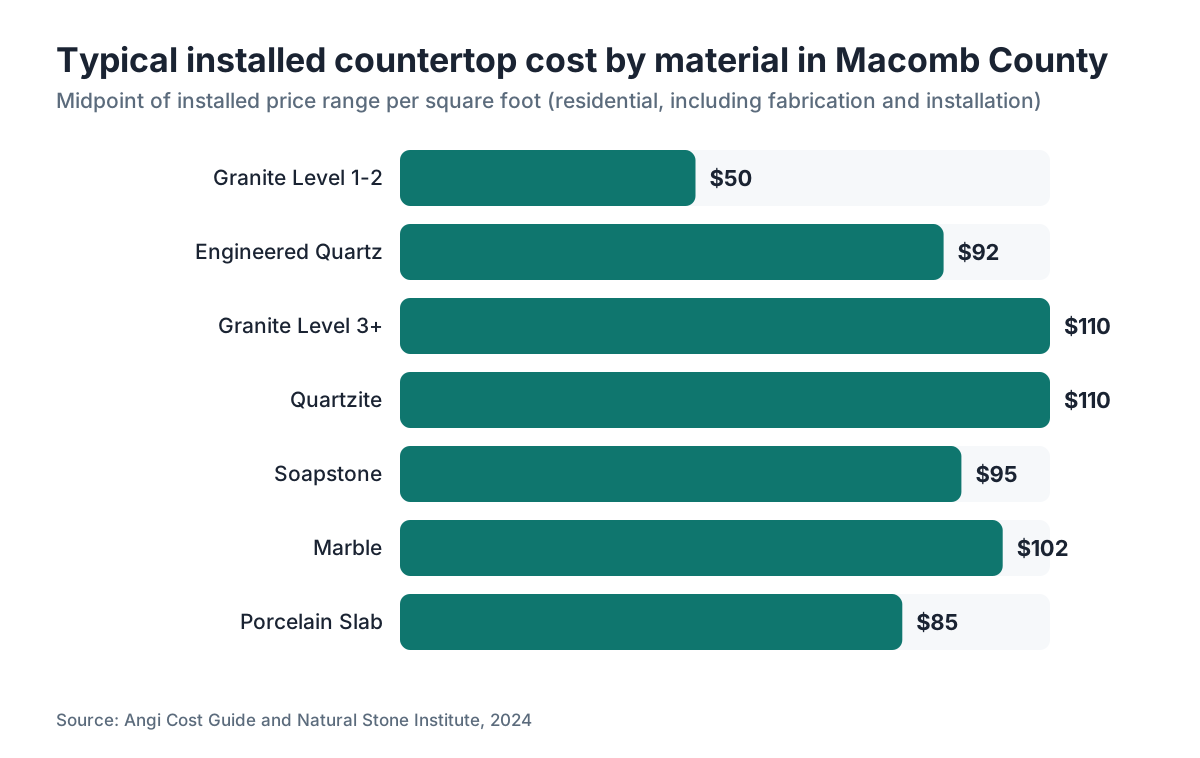
Granite is still the most fabricated natural stone in southeastern Michigan [1]. Supply is deep, so pricing stays competitive, and most local shops have cut enough of it to handle any quirk in the material. Entry-level granite (Level 1 or 2) runs $40 to $60 per square foot installed. Premium exotics can hit $150 or more.
Engineered quartz, sold under names like Cambria, Silestone, MSI, and Vadara, lands in the $65 to $120 per square foot installed range for most residential work. It's non-porous, so it never needs sealing. For a busy family kitchen in Macomb, quartz is the choice I'd probably make on a practical basis, even though natural stone is more interesting to look at.
Marble is beautiful and etches if you look at it wrong. Fabricators will cut and install it without complaint, but acid from lemon juice or vinegar leaves a permanent dull spot in the surface chemistry. Want the look without the maintenance? Quartzite (not to be confused with quartz) is a metamorphic natural stone that's much harder. How to clean quartzite countertops covers the care side once you're installed.
Here's a quick comparison of materials Macomb fabricators handle regularly:
| Material | Avg. installed cost (sq ft) | Sealing required? | Heat resistance |
|---|---|---|---|
| Granite (Level 1-2) | $40 to $60 | Yes, every 1-3 yrs | Excellent |
| Granite (Level 3+) | $70 to $150 | Yes, every 1-3 yrs | Excellent |
| Engineered quartz | $65 to $120 | No | Moderate (avoid direct heat) |
| Marble | $75 to $130 | Yes, frequently | Poor (etches) |
| Quartzite | $80 to $140 | Yes, every 1-2 yrs | Good |
| Soapstone | $70 to $120 | No (oil instead) | Excellent |
| Porcelain slabs | $60 to $110 | No | Excellent |
Porcelain slabs show up more often in Macomb shops as commercial work grows. They're large-format fired ceramic panels that mimic stone, need no sealing, and take heat well. Marble countertops and granite countertops have fuller material guides if you want to go deeper on either one. [1][2]
How much does custom stone fabrication cost in Macomb County?
The honest range for a typical Macomb County kitchen, say 45 to 55 square feet of granite or quartz with a standard undermount sink cutout and eased edge, is $2,500 to $5,500 all-in. That covers material, fabrication labor, sink cutout, and installation. It does not cover plumbing reconnection, backsplash tile, or cabinet prep work.
Shops price by the square foot of finished stone, not raw slab. You pay for the surface area in your final layout. The waste from cutting (drops and remnants) belongs to the shop unless you negotiate otherwise. On a tight kitchen you might use 60% of the slab you paid for. On a large island the yield is better.
Edge profiles add cost. A standard eased or beveled edge usually sits in the base price. Ogee, mitered waterfall, or full-bullnose profiles can add $15 to $40 per linear foot [3]. On a kitchen with 20 linear feet of exposed edge, that's a real number.
Sink cutouts run $100 to $250 each depending on complexity. A farmhouse apron sink takes more labor than a standard oval undermount. Cooktop cutouts run similar. Faucet holes are usually $30 to $60 each.
Commercial stone fabrication in Macomb (restaurant counters, reception desks, retail display surfaces) uses the same process at a larger scale. Some shops require signed drawings or architectural specifications before they'll quote. Commercial jobs sometimes call for thicker slabs (3 cm is standard; some specs want 4 cm or custom laminated edges) and longer lead times, because that material gets ordered rather than pulled from stock. [3]
How do you find a reputable custom stone fabricator in Macomb County?
The best lead is a referral from someone who had stone installed recently, not a neighbor who had it done six years ago. Shops change ownership, staff turns over, equipment gets replaced. Recent experience matters.
Beyond word of mouth, look for:
A physical slab yard or a partnership with a local distributor. Shops that let you walk the yard and pick your actual slab (called slab selection) give you real control over what ends up in your house. Color variation in natural stone is large. Two pieces from the same quarry lot can look quite different.
Membership in the Marble Institute of America (MIA+BSI) or the Natural Stone Institute. These groups maintain fabrication standards, and some member shops employ Certified Stone Fabricators [4]. Membership doesn't guarantee quality, but it tells you the shop takes the trade seriously.
A real showroom with installed samples. Not a brochure rack. Fabricators who are good at their work are proud to show it, and a showroom with edge profiles you can physically touch means they're doing enough volume to stay current.
Get at least three quotes, and make sure they're itemized. An "installed price" with no line-by-line breakdown makes comparison impossible. You need to see material cost, fabrication labor, edge profile charge, cutouts, installation, and whether removal of your old countertop is in there.
Macomb County's Better Business Bureau listings and Google reviews are imperfect signals. But a pattern of complaints about missed install dates or bad seam placement is worth taking seriously [5].
What is the fabrication process from start to finish?
The process has six steps and usually takes 7 to 14 business days from template to install on a residential job, assuming your material is in stock at the local distributor.
Step 1 is your slab selection visit. You go to the fabricator's yard or a nearby stone distributor (Tucker Materials, Arizona Tile, MSI's Michigan warehouse, and others serve the Macomb area) and pick the actual slab or slabs you want. You mark them. The shop holds them.
Step 2 is templating. A technician comes to your home and measures the exact dimensions of your cabinets, walls, and appliances. Modern shops often use a digital templating system (laser or LiDAR-based tools) that produces a file fed straight into the CNC machine. This step takes one to two hours on a typical kitchen.
Step 3 is layout. The shop maps your cut pieces onto the slab to minimize waste and position the stone's veining or pattern on purpose. On a book-matched marble island or a veined quartzite, this is where you specify how the grain should run.
Step 4 is fabrication. The CNC bridge cuts the slab to your dimensions. Edges get ground and polished on separate machines. Sink and cooktop cutouts get made. On a typical kitchen this takes about half a day of machine time.
Step 5 is a quality check. Finished pieces get inspected for chip-free edges, consistent polish, and square corners. This is where a good shop catches problems before the stone leaves the building.
Step 6 is installation. The crew shows up, carries the stone in, sets it on the cabinets, applies adhesive and silicone, and makes final field adjustments. A typical kitchen install takes two to four hours. Seams get filled, edges get a final wipe, and the installer checks level and overhang consistency. [6]
What questions should you ask a Macomb stone shop before signing?
Ask who does the templating and whether they use digital tools or cardboard templates. Cardboard works fine in skilled hands, but digital templating cuts errors on complex layouts and speeds up fabrication.
Ask whether the fabrication happens in-house or gets sent out. Some shops run mainly as showrooms and outsource the actual cutting. That's not disqualifying, but you want to know, because quality control gets harder across facilities.
Ask about the seam plan. On a countertop over 10 feet long you'll likely have at least one seam. Where the fabricator plans to place it, and how they'll match the stone pattern across it, is worth settling before the template gets cut.
Ask what the warranty covers. A reputable shop warrants its labor (seam failure, cracking from installation error) for at least one year. Material defects fall under the stone distributor or manufacturer warranty, not the fabricator.
Ask for references from jobs with a similar material and complexity to yours. A shop that cuts granite Level 2 all day may not be your best pick for a book-matched quartzite island.
Ask whether the quote includes old countertop removal. Many shops leave it out. Budget $150 to $400 for removal and disposal if it's not on your quote. [3][7]
How does stone fabrication for commercial projects in Macomb differ from residential?
Custom stone fabrication for commercial projects runs the same physical process, but the business side is a different animal. Commercial clients (restaurant owners, general contractors building out office space in Sterling Heights, healthcare facility managers) usually need shop drawings approved before fabrication starts. The stone shop produces dimensioned drawings and sometimes 3D renders for the GC or architect to sign off.
Lead times run longer. Commercial jobs often spec materials that aren't sitting in stock, and orders to quarries or national distributors can add two to six weeks. If you're a GC in Macomb County coordinating a commercial kitchen buildout, get the stone shop at the table during design, not after permits are pulled.
Thicker profiles show up more often on commercial work. Laminated edges (two layers of stone bonded together) create the look of a 4 cm or thicker slab while keeping material cost manageable. You see this on restaurant host stands and hotel reception counters.
Pricing for commercial custom stone fabrication in Macomb usually runs through a formal bid process. The shop works from architectural drawings and hands over a fixed-price proposal. Changes after fabrication starts trigger change orders. [8]
For shop owners quoting commercial and residential at the same time, software that handles both slab nesting and customer-facing quotes in one place saves real hours. SlabWise was built for stone fabrication shops that want to cut quoting time and reduce material waste on complex jobs.
What are the most common mistakes homeowners make during stone fabrication projects?
Not visiting the slab yard. This is the single most common regret. You pick a color from a 4-inch sample in a showroom, and the real slab has movement and variation you never saw coming. Select your slab in person, every time.
Not confirming cabinet levelness before template day. Fabricators set countertops to the cabinet surface. If your cabinets are out of level by more than a few millimeters, the countertop can look crooked or open up gaps at the wall. The fix is shimming cabinets before the template visit, not after the stone is cut.
Underestimating the backsplash gap. If you're getting a tile backsplash after the countertop, the stone goes in first. Make sure your fabricator knows your tile thickness and planned grout line so the countertop height leaves room for the tile installer.
Choosing an edge profile you've never touched. Ogee edges look elegant in photos and catch crumbs aggressively in real kitchens. Eased or slightly beveled edges are easier to clean and hold up better over time. That's my honest opinion. Plenty of people love their ogee edge.
Ignoring seam placement. On a straight run with a window above the sink, a seam directly under the window is often unavoidable, since most natural stone slabs are only 55 to 65 inches wide. But on an L-shape or island, seam placement is negotiable. Ask to see the proposed layout before the shop finalizes the cut file. [6][9]
How do Macomb County stone shops handle templating and measurements?
Digital templating is the standard at most mid-to-large shops in the area. Systems like Prodim Proliner or LT-55 laser templaters scan the space and produce a digital file. That file feeds straight into the CNC machine's programming software, cutting out the transcription errors you'd get with cardboard or wood templates.
On simple rectangular kitchens, some shops still use cardboard or luan templates cut by hand. For experienced templaters this works fine. Trouble starts when the templater is rushed or a field dimension gets written down wrong. A 1/8-inch error on a long wall can mean a visible gap or a piece that won't fit.
For a Macomb County homeowner, the practical ask is simple. Find out which method the shop uses, and ask if you can be home during the template visit. You can catch issues, confirm the sink position, and ask about island overhang while the tech is still standing there.
Some shops template the day cabinets go in. Others want the cabinets to settle for at least 24 hours. Either way, fabrication can't begin until the template is done. This is the step that usually sets the clock. [6]
For countertop installation specifics beyond fabrication, the installation guide covers what to expect on install day.
How should you care for your new stone countertops after installation?
Natural stone needs sealing, with soapstone and some dense granites as the exceptions. The fabricator usually applies a first seal before installation, but resealing on a schedule is on you. Granite wants resealing every one to three years depending on traffic and the porosity of the specific stone. Quartzite and marble may need it annually. The water bead test is a decent guide: drop water on the surface, and if it soaks in instead of beading, it's time to seal [10].
For everyday cleaning, pH-neutral stone cleaner or mild dish soap diluted in water is all you need. Skip anything acidic or abrasive. How to clean stone countertops has the full protocol. For specific materials, how to clean soapstone countertops and how to clean quartzite countertops are worth bookmarking.
Engineered quartz needs no sealing, but it isn't indestructible. Set a hot pan directly on quartz and you can crack the resin matrix permanently. Every major quartz brand lists that as a warranty exclusion. Use trivets.
For kitchens that take heavy use and where low maintenance is the priority, engineered quartz or porcelain slabs are the pragmatic pick. For kitchens where the look of natural stone is the whole point, seal annually and accept the occasional care requirement. [10][11]
What should fabricators in Macomb know about running a stone shop efficiently?
Labor and material waste are the two biggest controllable costs in a stone shop. On the labor side, estimating jobs consistently matters more than shaving a few dollars off material cost. A quote that misses the seam count by one, or forgets a cooktop cutout, eats the margin on a job that looked profitable on paper.
Nesting, meaning how you plan the cuts across a slab to minimize drop waste, hits the bottom line directly. On a 50-square-foot kitchen job using a 100-square-foot slab, a sloppy nest might yield only 45% material utilization. A better layout gets you to 70% or higher, and the difference in drops is stone you can use for smaller jobs or sell as remnants.
SlabWise's quoting and nesting software is built for fabrication shops handling exactly this kind of work. Getting quotes out in minutes instead of hours, with accurate slab utilization built in, is where a lot of Macomb shops are leaving money on the table. A free demo is at slabwise.com.
On the customer side, clear communication during the template-to-install window cuts callbacks. Customers who know the seam plan, understand why the stone varies naturally, and hear exactly what's in the quote rarely cause problems at installation. Most post-install complaints trace back to a conversation that never happened before fabrication. [12]
Frequently asked questions
How long does custom stone fabrication take in Macomb County?
Most residential jobs in Macomb run 7 to 14 business days from templating to installation, assuming the material is in stock at a local distributor. If the shop has to order an exotic stone from a national warehouse, add two to four weeks. Commercial jobs that need shop drawing approvals take longer, often four to eight weeks from contract to install.
What is the average cost per square foot for granite fabrication in Macomb, Michigan?
Installed granite in Macomb County averages $40 to $60 per square foot for Level 1 and 2 material, and $70 to $150 or more for premium or exotic granites. A standard kitchen of 45 to 55 square feet with one undermount sink cutout and an eased edge typically runs $2,200 to $4,500 all-in. Edge upgrades and extra cutouts push that higher.
Can I pick my own slab at a Macomb stone shop?
Yes, and you should. Most Macomb fabricators either have an on-site yard or a relationship with a local distributor where you can walk the yard and mark the slab you want. With natural stone especially, color and veining vary a lot from slab to slab. Shops that don't allow slab selection are either working from remnants or running a high-volume operation where your input is limited.
What is the difference between quartz and quartzite countertops?
Engineered quartz is a manufactured product, roughly 90% ground quartz crystals bound with polymer resin. Quartzite is a natural metamorphic stone formed from sandstone under heat and pressure. Quartz never needs sealing and resists stains well but can be damaged by sustained heat. Quartzite is harder and handles heat better but is porous and needs periodic sealing. They look different and behave differently.
Do Macomb stone fabricators handle commercial projects?
Many do, though not every residential-focused shop has the equipment or workflow for large commercial jobs. Commercial custom stone fabrication in Macomb typically requires shop drawings, longer lead times for material procurement, and fixed-price formal bids. If you're a contractor or business owner, confirm upfront that the shop has done comparable commercial work and can meet your schedule.
What edge profiles are available from Macomb fabricators?
Standard options include eased, beveled, half-bullnose, full bullnose, ogee, dupont, and mitered waterfall. Most shops include a basic eased or beveled edge in the base price. Decorative profiles like ogee or full bullnose typically add $15 to $40 per linear foot. Mitered waterfall edges for island sides need extra material and labor and can add several hundred dollars to a job.
Does the fabricator remove old countertops before installing new ones?
Not always. Many Macomb fabricators charge separately for removal and disposal, typically $150 to $400 depending on size and material. Some shops won't do removal at all and expect the homeowner to have old countertops out before the install crew arrives. Confirm this in writing before you sign, because missing this detail on install day is a real problem.
How many seams will my countertop have?
That depends on the layout and the slab width. Most natural stone slabs are 55 to 65 inches wide. Any run longer than that needs at least one seam. L-shaped kitchens usually have one seam at the corner. Large islands may need two slabs and one seam. Ask your fabricator to show you the proposed layout with seam locations marked before they finalize the cut file.
What is the best stone for a kitchen in a busy household?
Engineered quartz is the most practical choice for high-use kitchens. It's non-porous, needs no sealing, resists most stains, and comes in hundreds of colors and patterns. Dense granites (Level 2 and above) are also durable and need less sealing than softer stones. Marble looks beautiful but demands consistent maintenance and etches easily from acidic foods and cleaners.
Can stone remnants be used for smaller projects like bathroom vanities?
Yes. Remnants from a larger kitchen project often work for a bathroom vanity, laundry room surround, or fireplace hearth, and they price lower than a full slab because the material cost is partly covered already. Ask the fabricator what remnants are available before you start shopping. A well-stocked shop has a remnant rack worth browsing.
How do I verify a Macomb stone fabricator is legitimate?
Check for a physical location you can visit, confirm they carry general liability insurance (ask for a certificate), look up their Michigan business registration at the state's business entity search tool, and read recent Google and BBB reviews. Membership in the Natural Stone Institute or MIA+BSI is a positive sign. Any shop that won't give you an itemized written quote is a shop to avoid.
Is porcelain slab a good alternative to natural stone in Macomb kitchens?
It's a solid option, especially if you want a maintenance-free surface. Large-format porcelain slabs are non-porous, heat-resistant, and need no sealing. The main downside is repairability: a chip or crack in porcelain is very hard to fix invisibly, while a chip in granite or quartz can often be filled with a matching epoxy. Porcelain typically costs $60 to $110 per square foot installed.
What permits or inspections are required for countertop replacement in Macomb County?
Countertop replacement alone generally does not require a building permit in Macomb County townships, since it's a cosmetic replacement rather than structural work or new construction. If the project involves moving plumbing (relocating a sink) or adding a new gas cooktop, plumbing and mechanical permits may apply. Always confirm with your specific township's building department before starting work.
Sources
- U.S. Geological Survey, Mineral Commodity Summaries: Stone (Dimension): Granite is the most widely consumed dimension stone in U.S. fabrication, with the largest use being countertops and architectural applications.
- Natural Stone Institute, Countertop Material Standards: Engineered quartz and natural granite together account for the majority of residential countertop surface area installed annually in the U.S.
- Angi, Countertop Installation Cost Guide: Edge profile upgrades typically add $15 to $40 per linear foot above a base eased edge; sink cutouts add $100 to $250 per cutout.
- Natural Stone Institute, Accreditation and Certification Programs: The Natural Stone Institute administers a Certified Stone Fabricator (CSF) program that tests shop personnel on fabrication standards and quality control.
- Better Business Bureau, Macomb County Business Profiles: BBB complaint data is available for stone fabricators operating in Macomb County, Michigan.
- Natural Stone Institute (formerly MIA+BSI), Dimension Stone Design Manual: Standard residential fabrication-to-installation lead times run 7 to 14 business days when material is in stock; digital templating reduces dimensional error rates compared to cardboard templates.
- Michigan Department of Licensing and Regulatory Affairs, Residential Builder Licensing: Michigan requires residential builders and some remodeling contractors to hold a licensed residential builder credential under LARA oversight.
- Construction Specifications Institute, MasterFormat Division 04: Masonry and Stone: Commercial stone fabrication specifications often require shop drawing submittals and approved samples before fabrication may begin.
- Natural Stone Institute, Technical Resources on Seam Placement: Natural stone slabs are typically 55 to 65 inches wide, requiring at least one seam on countertop runs exceeding that dimension.
- U.S. Geological Survey, Geology Science Explorer: The porosity of granite and other natural stones varies by type and quarry; porous stones absorb water and staining agents unless sealed.
- NSF International, NSF/ANSI 51 Food Equipment Materials Standard: Non-porous surfaces including engineered quartz meet NSF/ANSI 51 criteria for food contact surfaces more readily than unsealed natural stone.
- Macomb County, Michigan, Official Government Portal: Macomb County townships have individual building departments; permit requirements for kitchen remodels vary by township.
Last updated 2026-07-09