TL;DR
- Butcher block works in a laundry room if you seal it right and keep standing water off it.
- Expect $30 to $100 per square foot installed.
- Oil finishes suit low-moisture setups.
- Polyurethane or epoxy suits rooms with heavy splash.
- Skip wood entirely if your room has zero ventilation or floods regularly.
Is butcher block a good choice for a laundry room countertop?
Yes, with conditions. Butcher block is warm, fairly cheap, and easy to work with as a DIY project. A laundry room usually sees water from a utility sink, detergent spills, and steam off a dryer or steamer. None of that rules out wood. It just raises the stakes on your finish and your install.
A laundry room is gentler on butcher block than a kitchen in some ways. Nobody cuts raw chicken on it. Nobody parks a cast iron skillet fresh off the burner on it. The stress here is moisture, not knives and heat. So your finish does most of the work, and if you get the finish right, the wood under it lasts decades.
Butcher block fails in laundry rooms for one of three reasons almost every time: no finish at all (some people buy it and install it raw), a finish slapped over wet wood, or water pooling around the sink cutout that nobody wipes up for months. Fix those three and butcher block is a genuinely good option. Ignore them and you'll be tearing the slab out in two years.
Want a side-by-side on every surface for this room? Read the laminate countertops guide next to this one. Laminate is the other budget pick, and it handles moisture in a completely different way.
What does a butcher block laundry room countertop actually cost?
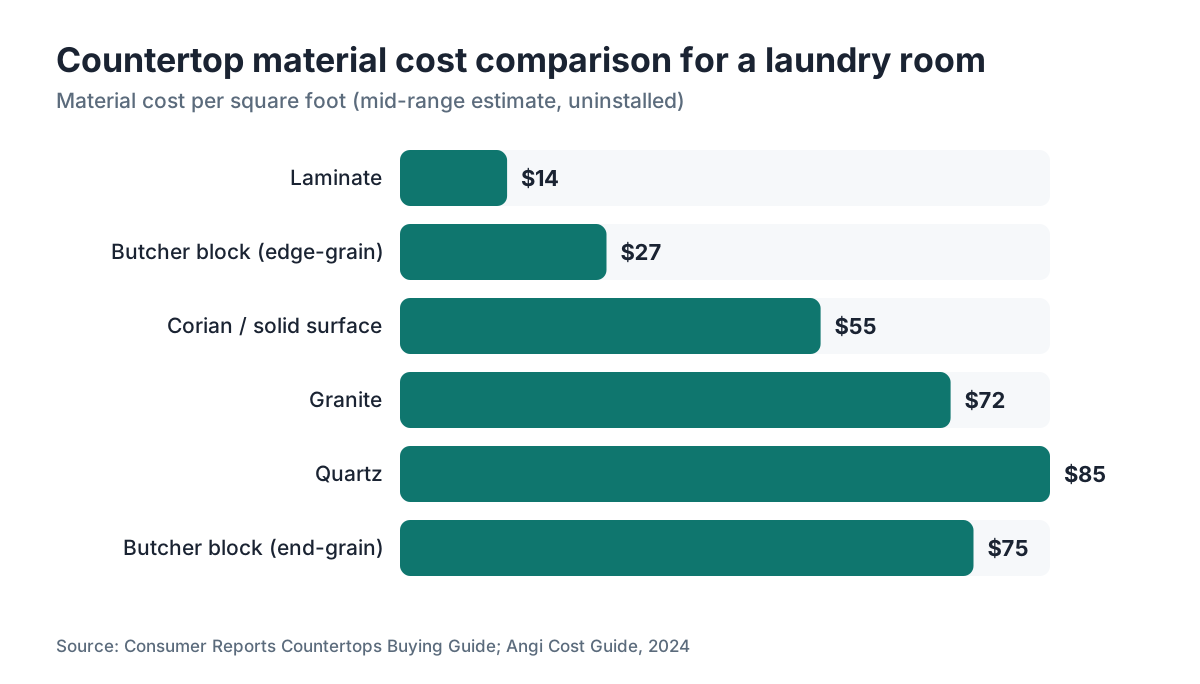
Material runs $20 to $80 per square foot depending on species and how the block is built. Edge-grain maple from a big-box store sits around $20 to $30 per square foot for the slab alone. End-grain walnut from a specialty supplier hits $80 to $100 per square foot before any labor. Most laundry rooms are small, 10 to 25 square feet of counter, so total material usually lands between $200 and $2,000 [1].
Hire a fabricator or handyman and installed cost adds $30 to $60 per linear foot for cutting, edge profiling, and sink cutouts. A 10-foot run with one sink cutout runs $300 to $600 in labor depending on your market.
Here's how butcher block stacks up against the usual suspects:
| Material | Material cost/sq ft | Moisture resistance | DIY-friendly? |
|---|---|---|---|
| Butcher block (edge-grain) | $20, $35 | Moderate (needs finish) | Yes |
| Butcher block (end-grain) | $50, $100 | Lower (more porous) | Harder |
| Laminate | $8, $20 | High (factory seal) | Yes |
| Quartz | $50, $120 | Very high | No |
| Granite | $45, $100 | High | No |
| Corian / solid surface | $40, $80 | High | Limited |
For most laundry rooms, edge-grain maple or birch at $20 to $35 is the sweet spot. End-grain looks stunning and absorbs water at the cut ends much faster, which is exactly the wrong trait for this room.
Shops quoting mixed-material jobs sometimes price butcher block right alongside stone and solid surface in one estimate using software like SlabWise. Keeps the comparison honest for the customer.
Which wood species hold up best to laundry room moisture?
You want hardness and tight grain. Hard woods shrug off dents from a dropped detergent jug. Tight grain slows moisture from working into the wood between coats of finish.
Maple is the standard. Hard maple (Acer saccharum) has a Janka hardness of 1,450 lbf, one of the hardest domestic species [2]. The grain is tight and low-porosity, so sealers soak in evenly and film finishes bond well. It's also the most widely stocked wood, which makes it the cheapest.
Teak earns a mention because its natural oil content gives it real water resistance built in. Shipbuilders have used teak in wet places for centuries. The catch: teak butcher block runs $60 to $100 per square foot, and those same natural oils can interfere with some polyurethanes unless you wipe the wood with a solvent first. Good to know before you buy.
White oak is a strong middle option. Janka hardness of 1,360 lbf, close to maple, and its tyloses (tiny structures that plug the pore openings) make it far less permeable than red oak [10]. That's why wine barrels and boat frames are white oak, not red. In a laundry room that property earns its keep.
Walnut is beautiful, softer at 1,010 lbf, and more porous. Fine for a low-splash room where looks matter more than muscle. Cherry (950 lbf) is softer still, and I'd skip it in any room with a utility sink.
Pine, fir, and other softwoods turn up in some cheap butcher block. Don't use them here. They dent under a fingernail, drink water, and go ratty within a few years of laundry room duty.
What finish should you use on butcher block in a laundry room?
This is the decision that makes or breaks the whole thing. The finish decides how the wood handles daily moisture, and the wrong pick sinks an otherwise solid install.
Two families of finish exist. Penetrating finishes (oils and waxes that soak into the wood) and film-forming finishes (polyurethane, lacquer, or epoxy that sit on top as a protective skin).
For a laundry room, film finishes win. Penetrating oils like pure tung oil, Danish oil, or mineral oil are great on cutting boards and food surfaces where you want easy spot repair and food safety. But they need reapplication every one to three months in a busy room, and they barely protect against the steady moisture a laundry sink throws off. A wet rag left on an oiled surface for an hour leaves a mark. An oiled counter under a dripping faucet grows a soft gray patch within a season.
Waterlox Original Sealer/Finish is a tung oil resin hybrid that builds more of a film than straight oil. Plenty of installers use it as a middle ground, four to six coats. More water-resistant than oil, still not as tough as poly. Decent for a room where the sink rarely runs.
Water-based polyurethane is the practical pick for most laundry rooms. Three to four coats, a light 220-grit scuff between each. It dries faster than oil-based poly, off-gasses less VOC, and cures hard and water-resistant. The EPA notes water-based finishes carry lower VOC content than oil-based equivalents [3]. Full hardness takes about 30 days, though the surface is usable after 72 hours. Oil-based poly is tougher and amber-toned, which looks warm on maple. It's slower between coats, 24 hours versus 2 to 4 for water-based.
Epoxy is the most waterproof option going. A self-leveling epoxy coat, done right, turns your butcher block into a sealed surface. The trade-offs: it can yellow, it's a pain to repair when scratched, and it changes the look and feel of the wood a lot. Some people think it looks plasticky. For a utility-first room with a hard-working sink, it's worth a look.
Whatever you pick, finish all six sides of the slab before it goes in. Raw undersides and edges are how water sneaks in from below and warps the top. People skip this step constantly, and it causes most of the failures I see.
How do you install a butcher block countertop over a washer and dryer?
The classic laundry room move is a butcher block slab spanning the washer and dryer to make a folding surface. Structurally simple. A few details matter a lot.
First, vibration. Washers shake during spin, sometimes hard. A slab resting on the machines with nothing tying it to the wall or cabinets will walk. Fix it to the wall behind with a cleat, or to flanking cabinets on either side. A 2x4 ledger screwed into wall studs does the job. You don't need to fasten the slab to the machines themselves.
Second, leveling. Front-loaders run roughly 34 to 36 inches tall, which matches standard counter height. But they're rarely level with each other out of the box. Check with a level before you cut anything. You might shim a machine or plane the underside of the slab to get flat. An eighth-inch height difference across a 5-foot slab is enough to bug you every time you fold a shirt.
Third, clearance. Wood moves. Butcher block expands 1/8 to 1/4 inch across its width with the seasons, more in humid climates. Box it in tight against walls on both ends with no gap and it buckles or cracks the drywall. Leave 1/8 inch each side and hide the gap with caulk or trim.
Installing over cabinets instead of freestanding machines? The process mirrors a kitchen countertop. The countertop installation guide walks through the bracket and adhesive methods.
Sink cutouts in laundry room butcher block need special care. Cut with a router or jigsaw, stay inside your line, sand the edge smooth. Then hit that raw cut edge with three to four coats of finish before the sink drops in. That edge is the weakest spot on the whole counter, because you've exposed end-grain right where water lives.
Can butcher block handle the humidity and steam in a laundry room?
Steam is the real stress test. A dryer vented indoors (not code-compliant in most places, but it happens) or a steam-dry cycle can shove room humidity to 70 or 80% for a while. The EPA warns that indoor relative humidity above 60% promotes mold growth on organic materials, wood included [9]. At that level, raw or thinly finished wood soaks up moisture fast.
With a real polyurethane or epoxy finish, a sealed slab handles laundry humidity fine. The finish caps how much moisture trades between the wood and the air. The wood still expands and contracts a little with the seasons, but it won't cup or crack as long as the finish stays intact.
The failure always starts at a gap in the finish. The unfinished underside. The unsealed cutout edge. A crack in the surface coat that lets water through. Wood moving under an intact film is invisible. Wood moving where water is actively getting in is where you get warping, cupping, and cracking.
One practical move: if your laundry room runs humid in general, add a small dehumidifier or improve airflow before you install any wood. The International Residential Code requires mechanical ventilation for laundry rooms in many configurations, partly for this reason [5]. Good airflow protects the whole building and adds years to any surface, more than wood.
How do you maintain and clean butcher block in a laundry room?
It comes down to which finish you chose. With a film finish like polyurethane, daily cleaning is easy: wipe with a damp cloth, mild soap for detergent spills, and dry the surface after anything wet has sat on it. You're cleaning the finish, not the wood, so harsh cleaners threaten the finish more than the wood. Keep bleach off poly-finished wood. Bleach doesn't hurt the wood, but it breaks down the polymer coat over time [6].
Went with oil despite everything above? Reapply every one to three months. Wipe on a thin coat, let it soak 20 to 30 minutes, wipe off every bit of excess. Oil left to pool and go rancid is a real problem. It turns into a sticky, smelly film.
Here's butcher block's best trick: you can sand and refinish it. When a poly finish scratches or chips, sand the spot and recoat. Laminate chips and you replace the whole sheet. Quartz chips and you fill it with epoxy that never quite matches. With butcher block, a random-orbit sander with 100-grit, then 150, then 220, takes a dull, scratched top back to bare wood and you start over. The wood underneath is reusable nearly forever if it's thick enough.
Big-box butcher block is usually 1.5 inches thick. You can sand off maybe 1/4 inch over its life before you hit the joinery. That's five to ten full refinishes, way more than most people will ever run through.
What are the downsides of butcher block in a laundry room?
Honest answer: mostly maintenance, plus how it reacts to steady moisture if the install is sloppy. A few other things are worth naming too.
Staining is one. Detergent and bleach left sitting will stain the finish, and if the finish is broken, the wood. Rust stains from metal objects are especially stubborn in wood. A rust-stained faucet dripping over the sink cutout leaves orange marks that need sanding to remove. That doesn't happen on quartz or granite countertops, which are basically stain-proof on the surface.
Heat is less of an issue here than in a kitchen. Nobody parks a hot pan on a laundry counter. A warm iron? Sure. But modern irons don't run hot enough on the base to hurt a film-finished wood surface. Test first if you're nervous. In practice it's a non-issue.
Expansion and contraction is something you manage, not something you kill. In climates with big seasonal humidity swings, a butcher block counter moves a noticeable amount. Box it in tight or screw it down rigidly and that movement cracks or buckles something. Most install failures trace right back here: somebody locked the slab down too hard, the wood moved, and something gave.
Weight, finally. A 1.5-inch maple slab weighs roughly 6 to 8 pounds per square foot [7]. A 20-square-foot counter runs 120 to 160 pounds. Fine on cabinets, fine on a proper cleat, and probably fine spanning a washer and dryer if the edges are supported. Worth knowing before you try to muscle it in alone.
How does butcher block compare to other laundry room countertop options?
The main rivals in a laundry room are laminate, quartz, solid surface (like Corian countertops), and sometimes leftover stone from a kitchen job.
Laminate is cheaper, water-resistant out of the box, and needs zero maintenance. Downsides: it can't be refinished, it chips at corners, and the seams around a sink cutout are the long-term weak point where water eventually gets in. For a pure utility room where you want to spend and do the least, laminate countertops are a fair call.
Quartz is the opposite. Expensive, near-zero maintenance, and close to indestructible for this use. A quartz slab over a laundry room is probably overkill unless you're doing a high-end reno or you already have offcuts from a kitchen. Fabricators sometimes sit on remnants that make the math work. Ask your local shop.
Solid surface (Corian and its cousins) is waterproof at the seams because it's thermoformed as one piece with an integral sink, which kills the most common failure point. It scratches easier than quartz but repairs like butcher block. Installed price runs $40 to $80 per square foot.
Tile is worth a mention for really wet rooms. It's grout-dependent (grout stains and molds), but large-format tile with sealed grout handles water perfectly. It's harder to work on than a smooth slab, and it's nearly indestructible.
Butcher block wins when you care about warmth, doing it yourself, cost, and being able to fix it later. It loses when you want zero maintenance and maximum water resistance.
Can you put a sink in a butcher block laundry room countertop?
Yes, and it's a common setup. A utility sink (also called a laundry tub or slop sink) dropped into butcher block works well with the right prep. The cutout is the most moisture-prone spot on the whole install, so it earns the most attention.
Drop-in sinks beat undermount sinks with butcher block. A drop-in rim overlaps the counter and covers the cutout edge, which cuts water contact way down. An undermount exposes bare wood at the cutout edge to direct water every single time the sink runs. Go undermount and you need a truly waterproof finish on that edge plus a silicone seal you check every year.
After cutting the opening, do this before anything else goes in: four coats of finish on the raw cut edge, each coat dried fully. This is the single most important step in a sink-adjacent install. That edge is end-grain, far more porous than the face, and it's exactly where water gathers. Seal it before the sink ever drops in.
Run a bead of waterproof silicone around the sink rim before you set it. Once the sink is in, run another bead at the joint between the rim and the counter on the top side. Tool it smooth and let it cure 24 hours before you use the sink. Replace that seal the moment it cracks or pulls away.
Is it hard to DIY a butcher block laundry room countertop?
This is one of the friendlier DIY countertop jobs, especially a span-over-appliances install with no sink. Butcher block cuts with a circular saw or jigsaw, takes standard drill and router bits, and needs no specialized gear.
A basic folding-surface install over a washer and dryer takes most people three to five hours including finish, though you'll come back over several days to lay down the extra coats. You need a circular saw, a drill, a sander, and basic measuring tools.
Sink cutouts raise the difficulty. A plunge router with a straight bit and a template gives the cleanest edge. A jigsaw works but wants steady hands and a fresh blade. Practice on scrap if you've never done it.
Finish is where most DIYers lose patience and cut corners. Three to four coats of poly with proper dry time between them takes four to seven days done right. The urge to stop at two coats and call it finished is strong. Don't. The extra coats matter a lot for long-term water resistance.
If your room is small and you're comfortable with basic tools, DIY pencils out. A fabricator might charge $300 to $600 to install a slab you buy yourself. Want stone instead? You need a pro no matter what. Most stone work, even remnants, needs professional templating and cutting. That's where shops running quoting and estimating tools for small jobs earn their money, and platforms like SlabWise are built for exactly that mixed-material, small-job estimating.
What size and thickness should you choose?
Standard butcher block thickness from most suppliers is 1.5 inches, and that's the right call for a laundry room. It's heavy enough to feel solid, gives you material to refinish later, and spans a washer-and-dryer gap (typically 50 to 60 inches) without flexing under normal loads.
Thicker slabs (2.25 inch, 3 inch) exist and show up in commercial kitchens. They're heavier and pricier, and unless you're building something meant to take serious abuse for 50 years, 1.5 inches is plenty.
For depth, standard washers and dryers run 26 to 32 inches deep [8]. A 25-inch slab sits flush with or a touch behind the machine fronts, which works. A 30-inch slab overhangs the fronts and gives you something to grab when you lean over to fold. Most people like the overhang. Just make sure it clears the dryer door swing.
Width is whatever the space needs. Butcher block comes in standard widths (25, 30, 36, 48 inch) from big-box stores. Custom widths from specialty suppliers cost more and get you exactly what fits. For a custom room with flanking cabinets, measure twice and order once.
Frequently asked questions
Will a washing machine's vibration damage a butcher block countertop over it?
Vibration alone won't hurt the wood. The risk is the slab shifting or walking off the machines over time. Secure it to a wall cleat or flanking cabinets instead of trusting the machines to hold it. Rubber anti-vibration pads between the machine tops and the slab dampen movement and protect the finish from rubbing.
How often do you need to refinish butcher block in a laundry room?
With a polyurethane film finish, most people go five to ten years before a full refinish. Wear shows up first in high-contact spots, near the sink and along the front edge. A light scuff-sand and a fresh coat of poly over the worn area stretches the timeline. Oiled finishes need reapplication every one to three months, which is why I push film finishes for this room.
Can you use butcher block over a front-loading washer and dryer without cabinets?
Yes. It's one of the most popular laundry room setups. The slab spans both machines and rests on them. Secure it to the wall behind with a ledger board screwed into studs. Front-loaders usually run 34 to 36 inches tall, landing at standard counter height. Check that both machines are level with each other before you set the slab.
What happens if water gets under the butcher block in a laundry room?
Standing water on the underside swells the wood, cups it, and eventually grows mold. It usually shows as warping you can see from the front. Prevention is finishing all six sides before install. If it's already in and you suspect moisture underneath, pull the slab, let it dry fully (weeks, not days), sand and refinish the underside, and reinstall with better edge waterproofing.
Is end-grain or edge-grain butcher block better for a laundry room?
Edge-grain wins for a laundry room. End-grain has that beautiful checkerboard look and gets picked for cutting boards because knife marks close back up in the grain. But end-grain drinks water fast at the cut face, the wrong trait for a wet room. Edge-grain seals more easily and holds a film finish better.
Can you put a butcher block countertop next to a laundry room utility sink without it warping?
Yes, if the cutout edge is sealed with four or more coats, the sink is set in waterproof silicone, and the surface finish stays intact. Most warping near sinks comes from a badly sealed cutout edge, not ambient moisture. Check the silicone seal once a year and reseal if it's cracking or pulling away.
Does bleach damage butcher block countertops in laundry rooms?
Bleach is a real concern. Diluted bleach (laundry splashes) on an intact film finish mostly wipes off with no damage if you clean it fast. Concentrated bleach left sitting breaks down polyurethane over time and dries out and bleaches bare wood. Keep bleach products off the counter and wipe spills right away.
What kind of oil should you use on butcher block in a laundry room?
If you go oil despite the limits in a wet room, use pure tung oil or a tung oil resin product like Waterlox rather than mineral oil. Mineral oil never fully cures and barely resists water. Pure tung oil polymerizes as it dries, building a thin but real protective layer. Apply thin coats and wipe off all excess within 30 minutes.
How do you cut a sink hole in butcher block for a laundry room?
Mark the cutout with the sink's template (most utility sinks include one). Drill a starter hole inside the cut line, then use a jigsaw or plunge router. A router with a template gives the cleanest edge. After cutting, sand the raw edge smooth and apply at least four coats of finish to it before setting the sink. Do not skip that.
Is butcher block cheaper than quartz for a laundry room countertop?
Generally yes. Edge-grain butcher block runs $20 to $35 per square foot for material, versus $50 to $120 for quartz [11]. For a 15-square-foot counter, that's roughly $300 to $525 for butcher block material against $750 to $1,800 for quartz. Labor is similar or lower for butcher block since it's DIY-friendly and needs no wet saw or stone tools.
Can I use food-safe finish on laundry room butcher block?
You can, but you don't need to. Food-safe finishes matter when food touches the surface directly. A laundry counter won't have food on it. Standard oil-based or water-based polyurethane gives better moisture protection than food-safe oils like mineral oil or beeswax, and there's no reason to box yourself into food-contact finishes here.
How long does butcher block last in a laundry room?
With a good install and a film finish, 20 to 30 years is realistic. Butcher block refinishes multiple times over its life, which resets the clock on surface wear. The main life-limiter is moisture damage at the sink cutout or underside. Get those details right at install and you're looking at a very long-lived surface.
What's the best way to support butcher block that spans a washer and dryer?
A ledger board (2x4 or 2x6) screwed into wall studs behind the machines is the most reliable support. The slab rests on the machines and the ledger stops backward or sideways movement. With flanking cabinets, you can also drive corner brackets up through the cabinet tops into the slab underside. Leave a 1/8-inch expansion gap at any wall contact.
Sources
- HomeAdvisor (Angi) - Butcher Block Countertop Cost Guide: Butcher block countertop material costs $20, $80 per square foot; installed costs range higher depending on species and labor market
- USDA Forest Products Laboratory - Wood Handbook: Wood as an Engineering Material (Chapter 4, Mechanical Properties): Hard maple (Acer saccharum) has a Janka hardness of approximately 1,450 lbf, among the hardest domestic hardwood species
- EPA - Safer Choice program: Water-based polyurethane finishes have lower VOC output than oil-based equivalents; full cure typically takes 30 days though surfaces are usable sooner
- International Code Council - International Residential Code (IRC) Section R303, Ventilation Requirements: The IRC requires mechanical ventilation for laundry rooms in many configurations, addressing moisture buildup from dryers and utility sinks
- USDA Forest Products Laboratory - Finishing of Wood (General Technical Report FPL-GTR-190): Bleach and oxidizing agents degrade polyurethane and other film-forming wood finishes over time; concentrated bleach can also extract lignin from wood surfaces
- The Wood Database - Comparing wood densities and weights: Hard maple at standard moisture content weighs approximately 44 lb/ft³; a 1.5-inch slab calculates to roughly 5.5 to 7 lb per square foot depending on moisture content
- Association of Home Appliance Manufacturers (AHAM): Standard front-loading washers and dryers have a depth of 26 to 32 inches and a height of 34 to 36 inches
- EPA - Indoor Air Quality (IAQ): Indoor relative humidity above 60% promotes mold growth on organic materials including wood; controlling ventilation and moisture sources is the primary prevention strategy
- USDA Forest Products Laboratory - Wood Handbook Chapter 3: Structure and Function of Wood: White oak contains tyloses that block the pores of the wood, making it far less permeable to liquids than red oak, a property exploited in barrel and boat construction
- Consumer Reports - Countertops Buying Guide: Quartz countertops range from $50 to over $120 per square foot installed; laminate ranges from $8 to $20 per square foot installed
Last updated 2026-07-09