What Is Overhang? Definition & Guide
Quick Definition
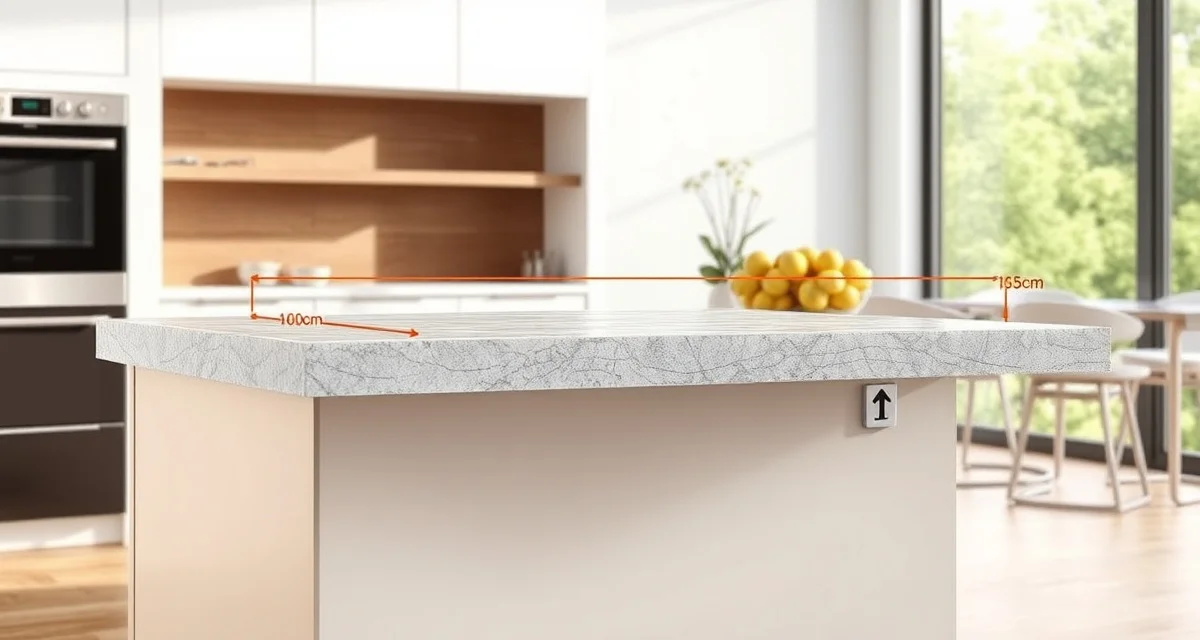
Overhang is the portion of a countertop that extends beyond the front edge of the cabinet or support structure beneath it. Standard countertop overhang is 1 to 1.5 inches past the cabinet face frame. Bar and island overhangs for seating range from 12 to 15 inches and typically require additional support brackets or a substrate panel. Overhang dimensions must be precisely captured during templating and verified before fabrication to prevent installation issues.
TL;DR
- Overhang is the countertop material that extends past the cabinet edge below
- Standard front overhang: 1-1.5 inches past the cabinet face
- Seating overhang (bar/island): 12-15 inches for comfortable stool seating
- Overhangs beyond 8-10 inches (material-dependent) require support brackets or corbels
- Granite and marble can span 8-10 inches unsupported; quartz typically 10-14 inches
- Overhang dimensions must be captured during templating and included in fabrication plans
- Incorrect overhang measurements cause visible misalignment and structural risk
Types of Overhang
Standard Front Overhang
Every countertop has a front overhang - the slight extension past the face of the cabinet below. This overhang:
Calculate your material waste savings
See exactly how much slab material and money you could save with optimized cutting layouts.
Try the free Waste Calculator- Prevents water and crumbs from dripping directly onto cabinet doors
- Creates a comfortable edge to lean against while working
- Provides a shadow line that gives the countertop a "floating" appearance
Standard front overhang is 1 to 1.5 inches. Some designs call for zero overhang (flush with the cabinet face), but this is uncommon because it exposes the cabinet surface to spills.
Side Overhang
Where a countertop extends past the side of an end cabinet. Typical side overhang is 0.5 to 1 inch. Too much side overhang on an end cabinet without support creates a breakage risk.
Seating Overhang (Bar/Island)
The extended portion of an island or peninsula countertop designed for bar stools or seating. This is the most structurally demanding type of overhang.
| Overhang Depth | Seating Comfort | Support Required? |
|---|---|---|
| 10-12" | Tight - usable but not ideal | Usually yes |
| 12-15" | Standard - comfortable for most stools | Yes |
| 15-18" | Generous - very comfortable | Yes, with reinforcement |
| 18"+ | Uncommon - requires engineered support | Always |
Overhang Support Requirements by Material
Different countertop materials have different unsupported span capabilities. Exceeding these limits without support risks cracking, sagging, or catastrophic breakage.
Granite (3cm)
- Unsupported span: Up to 8-10 inches for most varieties
- Support method: Steel brackets, corbels, or plywood substrate
- Notes: Granite is strong in compression but brittle under bending stress. Overhangs near sinks or cutouts are weaker.
Quartz (3cm)
- Unsupported span: Up to 10-14 inches (varies by manufacturer)
- Support method: Steel brackets or plywood substrate
- Notes: Quartz is more flexible than granite, allowing slightly longer unsupported spans. Always check the manufacturer's specific recommendations.
Marble (3cm)
- Unsupported span: Up to 6-8 inches
- Support method: Steel brackets, corbels, or hidden support rail
- Notes: Marble is softer and more prone to cracking under stress than granite or quartz.
Porcelain (12mm or 20mm)
- Unsupported span: Minimal - 2-4 inches maximum without substrate
- Support method: Plywood or MDF substrate, steel frame
- Notes: Porcelain is thin and brittle. Any significant overhang requires a full support substrate beneath the slab.
Overhang and Templating
Accurate overhang measurement during templating is critical. The templater must record:
- Front overhang dimension along the entire run (it may vary if cabinets aren't perfectly aligned)
- Side overhang dimensions at end cabinets
- Seating overhang depth and the total span to be supported
- Support bracket locations - where they'll be installed relative to the counter edge
- Cabinet face alignment - whether all cabinets are flush or if some are recessed
Common Templating Errors
- Assuming uniform overhang: Cabinets are rarely perfectly aligned. Measuring overhang at only one point can produce a countertop that's visually uneven.
- Forgetting support brackets: Noting that brackets are needed but not recording their locations means the countertop may be cut without clearance for the bracket hardware.
- Measuring from the wrong reference: Measuring overhang from the cabinet box edge rather than the face frame (or vice versa) creates a consistent dimensional error.
Overhang and Fabrication Planning
Impact on Slab Nesting
Larger overhangs mean larger countertop pieces, which affects how templates nest onto slabs. A 15-inch island overhang adds significant depth to the island piece, potentially requiring a different slab allocation than a standard 1.5-inch overhang design.
Seam Considerations
Never place a seam within the unsupported overhang area. Seams in overhangs are structurally weak and subject to stress from people leaning on the countertop. Seams should be positioned over supported cabinet sections, at least 6 inches away from the overhang's unsupported edge.
Edge Profile Impact
The overhang edge is the most visible edge on the countertop - it's the edge people see and touch most often. The chosen edge profile (eased, beveled, ogee, bullnose, etc.) must be fabricated precisely because it's on full display.
Support Options for Extended Overhangs
Steel Brackets
L-shaped steel brackets mounted to the cabinet side and supporting the underside of the countertop. Available in various sizes and finishes. Most common support method for residential applications.
Corbels
Decorative wood or stone supports that serve both structural and aesthetic purposes. Popular in traditional kitchen designs but less common in modern/contemporary styles.
Hidden Support Rails
Steel rails concealed inside the cabinet or behind a panel. Provide clean support without visible brackets. More expensive but preferred for minimalist designs.
Plywood Substrate
A sheet of plywood mounted on top of the cabinets, extending to the full overhang depth. The stone is then installed on top of the substrate. Common with thin materials like porcelain.
What is overhang on a countertop?
Overhang is the portion of the countertop that extends beyond the edge of the cabinet or support structure beneath it.
How much overhang is standard for kitchen countertops?
Standard front overhang is 1 to 1.5 inches past the cabinet face frame.
How much overhang do you need for bar seating?
12 to 15 inches is standard for comfortable bar stool seating at a kitchen island or peninsula.
When does a countertop overhang need support brackets?
When the overhang exceeds 8-10 inches for granite, 10-14 inches for quartz, or 6-8 inches for marble. Always check the specific material manufacturer's recommendations.
Can quartz overhang more than granite without support?
Generally yes. Quartz is more flexible and can typically span 10-14 inches unsupported compared to granite's 8-10 inches. But this varies by quartz manufacturer and product line.
What happens if overhang isn't properly supported?
The countertop can crack, sag, or break - especially under repeated stress like people leaning on it. This creates both a safety hazard and a costly replacement.
Should seams be placed in the overhang area?
No. Seams should always be placed over supported cabinet sections, at least 6 inches away from the start of any unsupported overhang.
How is overhang measured during templating?
The templater measures from the cabinet face frame (or box edge, depending on cabinet construction) to the desired front edge of the countertop at multiple points along the run.
Does overhang affect countertop pricing?
Indirectly. Larger overhangs mean more material per job and potentially more complex support requirements, both of which increase costs.
Can porcelain countertops have large overhangs?
Only with a full support substrate (plywood or steel frame) beneath the porcelain. Unsupported porcelain overhangs beyond 2-4 inches risk cracking.
What edge profiles work best on overhangs?
Any profile works, but the overhang edge is highly visible, so the choice matters aesthetically. Simpler profiles (eased, beveled) are most popular; decorative profiles (ogee, dupont) suit traditional designs.
How does overhang affect slab nesting?
Larger overhangs increase the depth of countertop pieces, which can change how they fit onto slabs during nesting. Extended overhangs must be accounted for in the nesting layout.
Get Overhang Dimensions Right the First Time
Overhang mistakes show up at installation - when it's too late and too expensive to fix. SlabWise's template verification system flags overhang issues before fabrication, and the nesting engine accounts for extended overhangs when optimizing slab layouts.
Start your 14-day free trial →
Try These Free Tools
- Nesting Optimizer -- AI-powered slab layout that maximizes yield considering vein direction and defects.
- Defect Mapping -- Upload a slab photo and AI maps every fissure, pit, and color issue.
- Value Engineering -- Find dollar-quantified suggestions to save material without cutting margin.
Sources & Further Reading
- Natural Stone Institute - Fabrication Guidelines and Best Practices
- International Surface Fabricators Association - Waterjet Cutting Technology Standards
- ASTM International - Standard Guide for Abrasive Waterjet Machining
- OSHA - Safety Guidelines for Waterjet Operations